
Revenue, 2025
USD 1.00 Bn

Forecast, 2035
USD 1.93 Bn

CAGR, 2026 - 2035
6.8%

Report Coverage
Country

Published By
Vidyesh Swar

Reviewed By
Aditi Shivarkar

Reviewed By
Aman Singh
Europe PE-Free Aqueous Coating Market Size and Key Highlights
The Europe PE-free aqueous coating market size stood at USD 1.00 billion in 2025 and is predicted to exceed USD 1.93 billion by 2035, experiencing a CAGR of 6.8% from 2026 to 2035.
What is Plastic-Free Paper Cup Board?
Plastic-free paper cup board is an environmentally-friendly feedstock that produces single-use food containers and cups. They possess characteristics like zero plastic, excellent biodegradability, superior printability, and standard recyclability. They have excellent heat resistance and are produced using sustainable materials. Plastic-free paper cup board offers benefits like high compostability, excellent consumer appeal, and easier recyclability. They are used in applications like food containers, portion-controlled cups, beverage cups, catering trays, food sampling containers, and others.
Europe PE-Free Aqueous Coating Market Companies
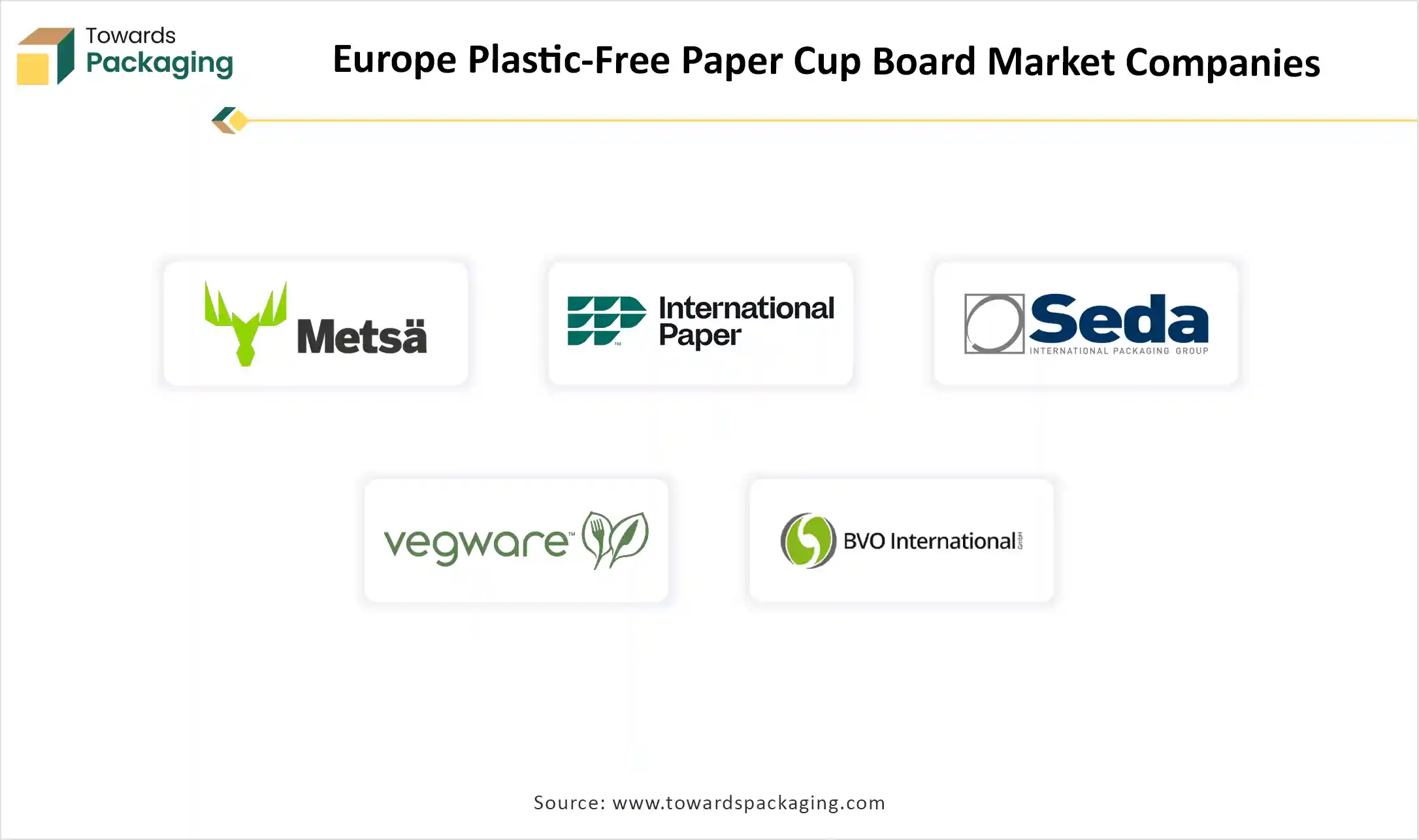
- Metsa Board
- International Paper
- Seda International Packaging Group
- Vegware
- The Cup Folk
- BVO International
Proceed To Buy
Make Every Move Strategic. Get Insights, Fully Customized
- On-Demand Metrics & KPIs
- Industry-Specific Dashboards
- Quick Turnaround, No Compromises
Quick Contact
- sales@towardspackaging.com
- NA : +1 804 441 9344
- APAC : +91 9356 9282 04
- EU : +44 7782 560 738
Our Client

Europe PE-Free Aqueous Coating Market Report
Europe PE-free aqueous coating market is forecast to reach USD 1.93 billion by 2035, supported by recyclable packaging and sustainability initiatives.