


ALPLA offers Advanced Blow Moulding (ABM) and injection technologies to generate ultra-lightweight containers that notably decrease resource consumption while preserving structural integrity. By merging their in-house recycling proficiency with enhanced-precision production, they generate packaging options for sectors such as pharmaceuticals, dairy, and personal care that lessen the carbon footprint of goods.
In an era where performance, cost-efficiency, and sustainability must coexist, packaging producers are under high pressure for innovation. Among worldwide leaders answering to this challenge, ALPLA has positioned itself through its improved blow molding technologies, mainly in the growth of ultra-lightweight plastic containers.
Ultra-lightweight containers are no longer just a cost-saving process; they show a planned response to ecological guidelines, circular economy goals, and brand owner expectations. ALPLA’s journey in this domain illustrates how incremental technological enhancements, when mixed with system-level thinking, can result in transformative market outcomes.
Plastic packaging, mainly PET bottles, has been scrutinized for its ecological footprint. While plastics provide unmatched versatility and resistance properties, their overuse and improper disposal have contributed to worldwide waste issues. Governments and organizations globally have responded with severe guidelines, enhanced manufacturer responsibilities, and recycling necessities.
In this context, lightweighting has been shown as the most impactful and immediate option. Decreasing the quantity of resources utilized in each container directly decreases carbon releases, transportation charges, and raw materials consumption. However, the challenge lies in attaining this decrease without compromising bottle strength, compatibility, or shelf life with enhanced-speed filling lines.
ALPLA identified early that resolving this issue needed much more than only thinning bottle walls; it necessitated a holistic, all-inclusive rethinking of blow moulding technology.
At the center of ALPLA’s invention is its progressive stretch blow molding (SBM) technology. Conventional SBM procedures include heating a preform and stretching it into a mold utilizing high-pressure air. While effective, this process has inherent boundaries when pushing the limitations of lightweighting.
ALPLA represented these limitations via a mixture of precision manufacturing and digital optimization. One of the major benefits exists in the enhanced performance pattern. By redistributing resources more effectively within the performance, ALPLA confirms that important stress points like the bottle shoulder, neck, and base retain enough strength even as complete weight is decreased.
Equally vital is the refinement of heating profiles. ALPLA utilizes extremely controlled infrared heating processes that confirm uniform temperature supply across the preform. This precision permits for more consistent resource stretching, decreasing weak spots, and allowing thinner walls without mechanical failure.
Another breakthrough has been in the mold pattern. ALPLA employs simulation-influenced mold manufacturing, utilizing finite element analysis (FEA) and computational fluid dynamics (CFD) to simulate how PET behaves under several conditions.
Lightweighting is not only about machinery, but also equally dependent on resource science. ALPLA has worked extensively with PET resin producers to grow grades precisely suited for ultra-lightweight usages. These advanced resins exhibit enhanced melt strength and improved stretchability, permitting greater elongation without tearing. Furthermore, ALPLA has incorporated rPET into its lightweight bottles, positioning itself with a circular economy focus. Integrating rPET shows variability in resource properties, but ALPLA’s system manages to confirm consistent output quality.
One notable feature of their approach is the balance between rPET and virgin PET content. By carefully calibrating this ratio, ALPLA preserves bottle transparency, food safety, and strength compliance while decreasing dependency on virgin resources.
An important element of ALPLA’s success lies in its capacity to harmonize aesthetic patterns with functional performance. Lightweight bottles must still fulfil customer expectations in terms of usability, visual appeal, and grip.
ALPLA employs geometric reinforcement techniques and structural ribbing to improve bottle rigidity. These features permit the container to resist internal pressure mainly crucial for carbonated beverages, while utilizing low resources. The base pattern, sometimes an important failure point, has been re-manufactured to distribute stress more evenly, protecting deformation at the time of transportation and storage.
Ergonomics also plays an important role. Lightweight bottles can often feel flimsy, which negatively influences customer perception. ALPLA shows this by integrating subtle pattern cues that improve perceived strength, like textured surfaces or deliberately placed indentations.
Beyond resource savings, ALPLA’s progressive blow molding processes are planned for energy efficiency. Modern SBM equipment consumes a huge quantity of electricity, mainly during the heating and air compression phases.
ALPLA has shown an energy recovery procedure that covers and reutilizes heat created during the process. Moreover, optimized air management processes decrease the quantity of compressed air needed for bottle creation. These enhancements not only reduce operational charges but also lead to decreased greenhouse gas releases.
Digitalization and automation further improve efficacy. ALPLA’s manufacturing lines are equipped with a real-time observation process that tracks parameters like cycle time, temperature, and pressure. This data-influenced approach enables predictive maintenance, reducing downtime and confirming consistent product integrity.
ALPLA’s most widespread ultra-lightweight containers are a segment of their advanced "Eco-Bottle" and "Simple One" lines, which focus on resource reduction and recyclability. These items are mainly designed for industrial and consumer brands instead of direct retail to individual customers.
The future of lightweight packaging will include even greater incorporation of digital technologies. Machine learning and artificial intelligence could enable real-time optimization of blow molding procedures, further decreasing resource utilization and energy usage. Bioplastics and substitute resources may also play an important role, although PET is anticipated to remain dominant because of its performance and recyclability properties.
Another rising trend is created for recyclability. As guidelines become stricter, packaging must not only be lightweight but also completely compatible with recycling processes.
ALPLA’s progressive blow molding options show a noteworthy leap forward in the quest for ultra-lightweight containers. By mixing manufacturing precision, resource invention, and sustainability-influenced design, the industry has shown that it is possible to decrease ecological impact without compromising profitability or performance. With the world shifting towards sustainable future industries, ALPLA will play an important role in redefining this need.
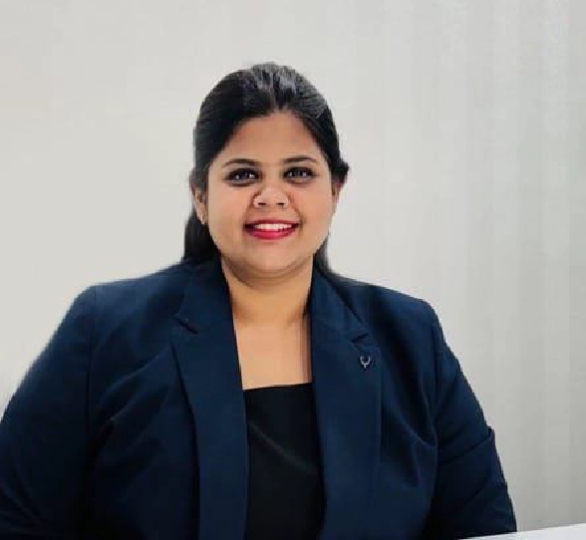
Aditi serves as Vice President at Towards Packaging, bringing over 15 years of experience in market research, innovation, and business strategy within the packaging industry. She works across segments such as sustainable packaging, flexible materials, and industrial packaging solutions. Aditi studies evolving consumer demands, material advancements, and regulatory changes, then turns those insights into clear strategies for businesses. She helps organizations stay competitive, improve product positioning, and respond effectively to shifting market trends.

Aman Singh has spent more than 13 years working in research and consulting, with a strong focus on the global packaging sector. He tracks developments in areas like eco-friendly materials, smart packaging technologies, and supply chain changes. At Towards Packaging, Aman leads the research team and ensures every study delivers accurate and useful insights. He breaks down complex industry developments and helps companies understand where opportunities lie and how to act on them.

Piyush Pawar works as Senior Manager for Sales and Business Growth at Towards Packaging, bringing over a decade of experience in client-facing roles within the packaging industry. He connects businesses with the right research and helps them apply insights to real-world decisions. Piyush understands market challenges and works closely with clients to provide solutions that support growth. He focuses on building strong partnerships and helping companies turn industry knowledge into practical results.
ALPLA Drives Ultra Lightweight Packaging Innovation Through Advanced Blow Molding


 Request Consultation

