


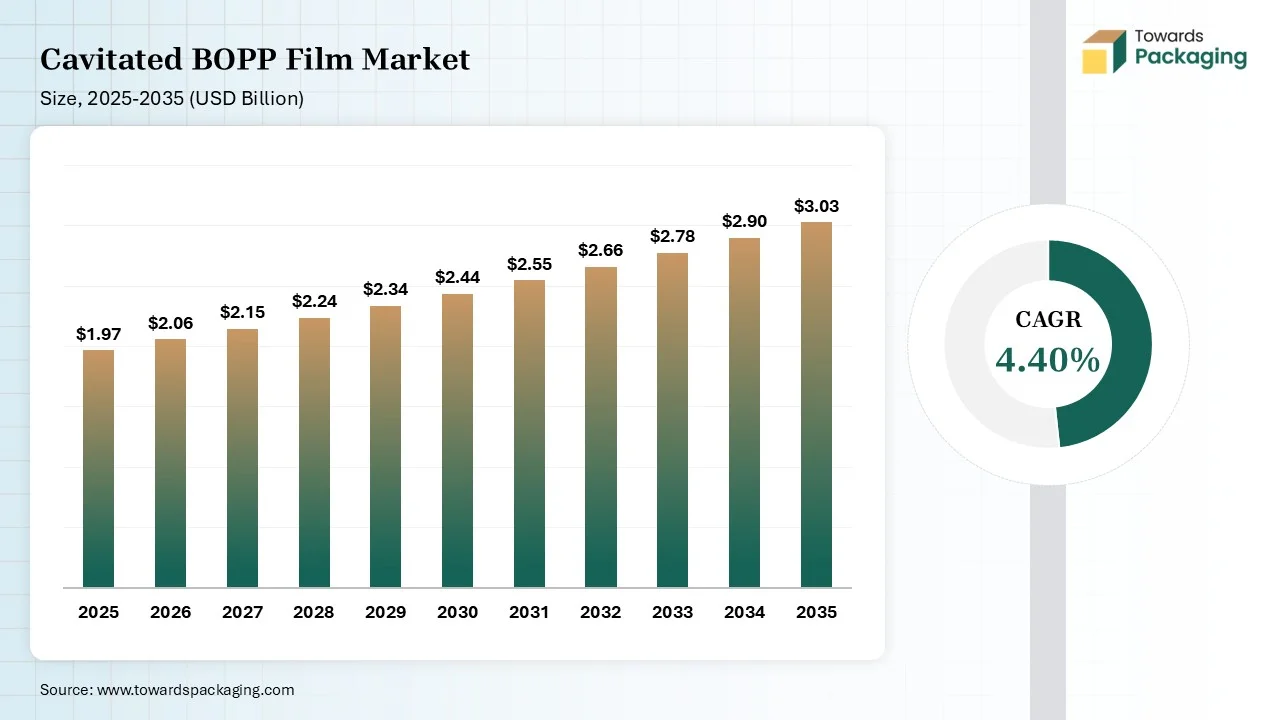
According to Vidyesh Swar, who has extensive expertise in BOPP film, cavitated BOPP film trends, and packaging solutions. The cavitated BOPP film market size was estimated at $1.97B in 2025 and is predicted to reach approximately $3.03B by 2035. The market is expected to grow at a 4.40% CAGR during the forecast period. Major market drivers are high confectionery demand, focus on enhancing shelf appeal, recyclability focus, and high snack consumption. The major global players are Tagleef Industries, Jindal Poly Films, Cosmo First Limited, and Innovia Films.
Cavitated BOPP film is a plastic film developed by stretching PP film. Its features include micro-cavities, a pearlescent look, high opacity, a glossy finish, heat sealability, low density, high printability, and stiffness. The manufacturing process includes compounding, extrusion, and biaxial stretching. Cavitated BOPP film benefits include product protection, high yield, and superior print adhesion. It is widely used in candy bar packaging, dry food packaging, beverage bottle labels, ice cream wraps, pressure-sensitive labels, and packaging bakery items. Cavitating agents like PBT, specialty organic masterbatches, calcium carbonate, and polycarbonate are used in cavitated BOPP film.
The cavitated BOPP film market reached USD 1.97 billion in 2025. White Cavitated BOPP films hold the majority share of 43% in the market in 2025. The food & beverage industry accounts for the highest share of 65% in the market in 2025. Asia Pacific leads the market with a 40% share in 2025 and is expected to grow with the fastest CAGR during the forecast period.
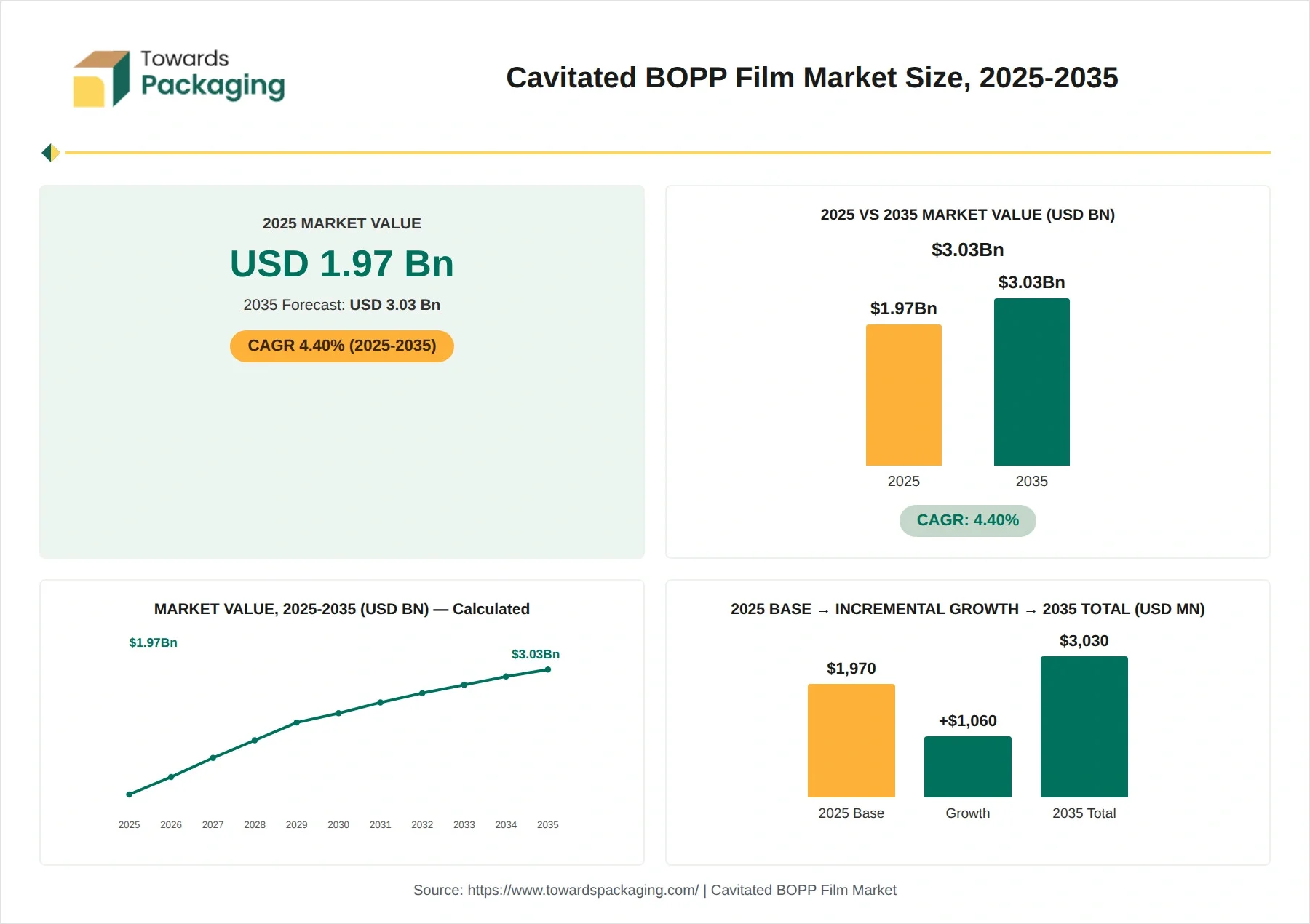
The size of the cavitated BOPP film market was USD 1.97 billion in 2025. The market is expected to compound at a 4.40% CAGR between 2025 and 2035. The high use of cavitated BOPP film in the food industry drives the growth. The key growth drivers are interest in low-density films, burgeoning confectionery packaging, innovations in pressure-sensitive labels, industries' transition to BOPP, growth of the e-commerce industry, rise in gas-flushed packaging, and rapid industrialization. Companies like Tagleef Industries, Uflext Ltd., Cosmo First Limited, SRF Limited, and Jindal Ply Films Ltd. contribute to the growth in 2025.
The market is expected to reach $3.03B by 2035. The incremental growth of the market is predicted to be $1.060 over the decade. The market growth is driven by the preference for flexible packaging, the exploding global food industry, the rise in product labeling, the surge in retail infrastructure, the shift away from BOPET films, demand fr high-speed printing, innovative micro-void technology, and the transition to mono-material recyclability. Players like UFlex Limited, Cosmo First Limited, and Tagleef Industries develop lightweight films and expand global manufacturing capacity.
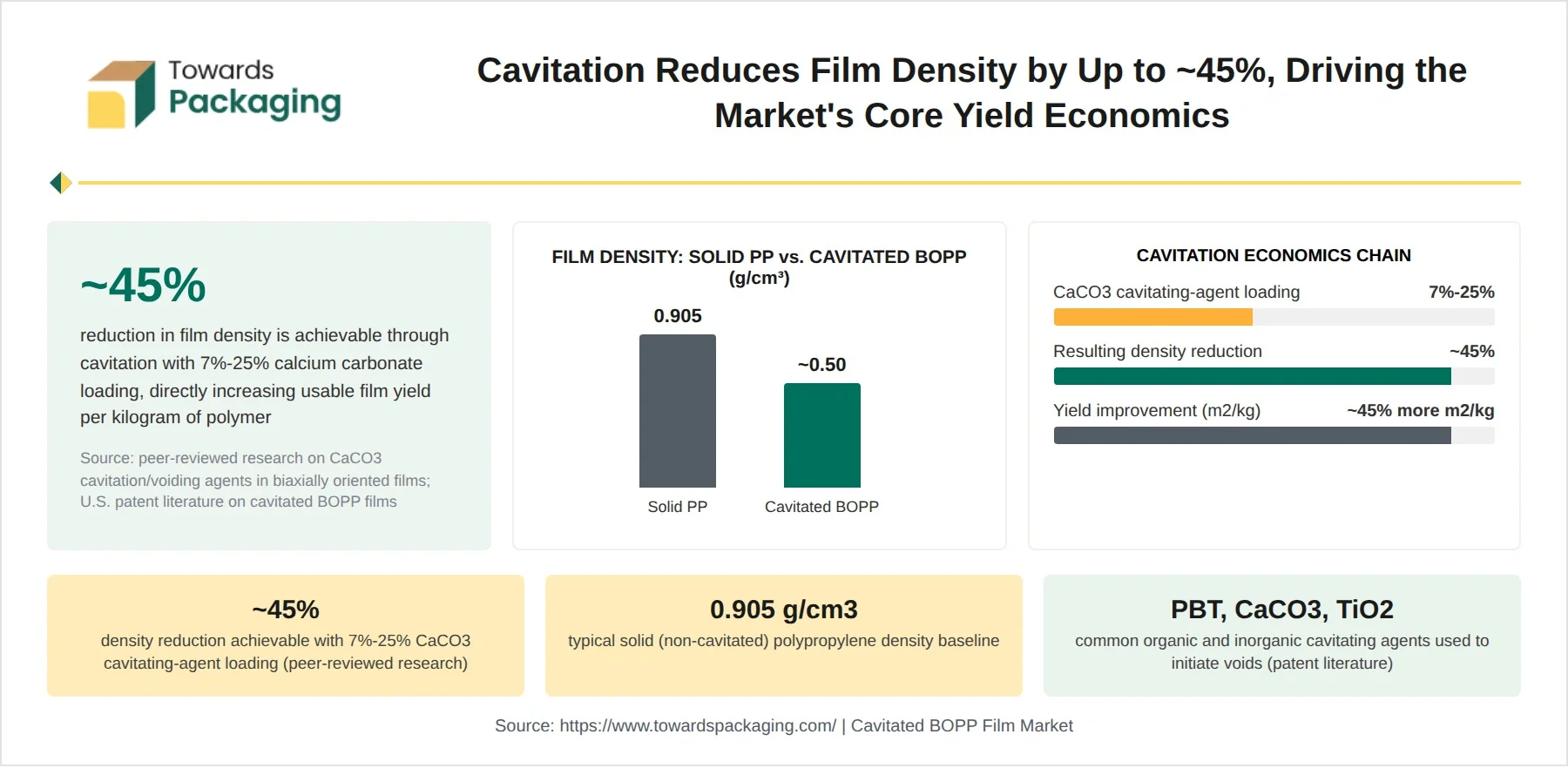
The cavitation process helps lower film density by approximately 45%. It lowers film density by phase change, average density drop, formation of a vapor pocket, and expansion of volume. Cavitation agents like calcium carbonate reduce the film density by 7-25%. The commonly used cavitation agents are TiO2, PBT, and CaCO3. The total film density of solid PP is approximately 0.905 g/cm3, whereas the film density of cavitated BOPP is approximately 0.50 0.905 g/cm3. Solid PP film density is high due to high crystallinity and no voids.
Source: Peer-reviewed research on CaCO3 cavitation/voiding agents; U.S. patent literature (Application #20230311465, #20200376819)
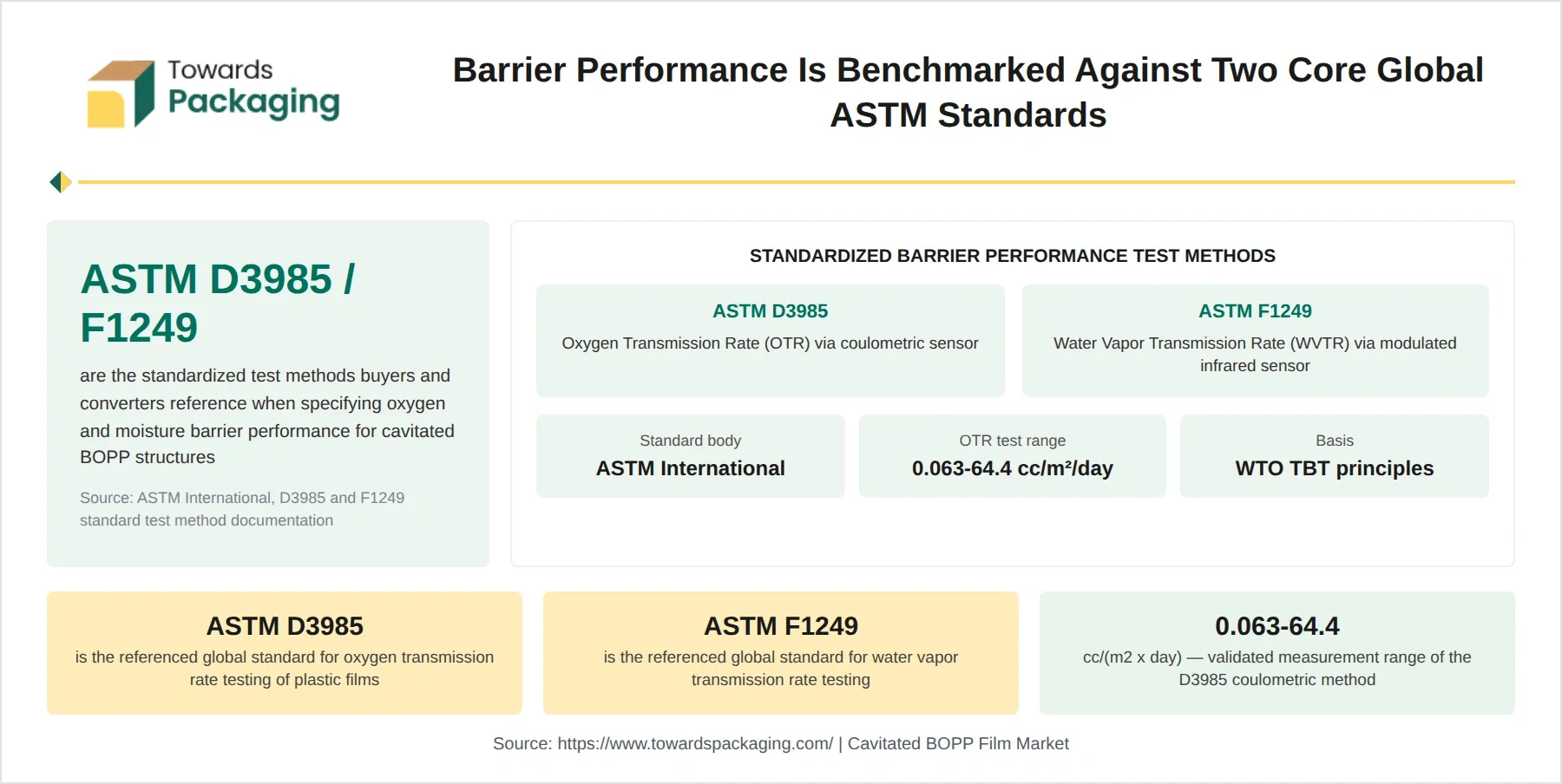
ASTM D385 and ASTM F1249 are standardized methods for testing cavitated BOPP structures. The methods are used for specifying moisture barrier and oxygen barrier performance. ASTM D385 is used for testing OTR in plastic films. ASTM F1249 is used for testing WVTR globally. The validated range for OTR testing is 0.063-64.4 cc/m2/day. ASTM F124 is used for shelf-life prediction, moisture barrier evaluation, and infrared detection. ASTM F1249 supports chamber setup and the creation of precision films.
Source: ASTM International, D3985 and F1249 standard test method documentation
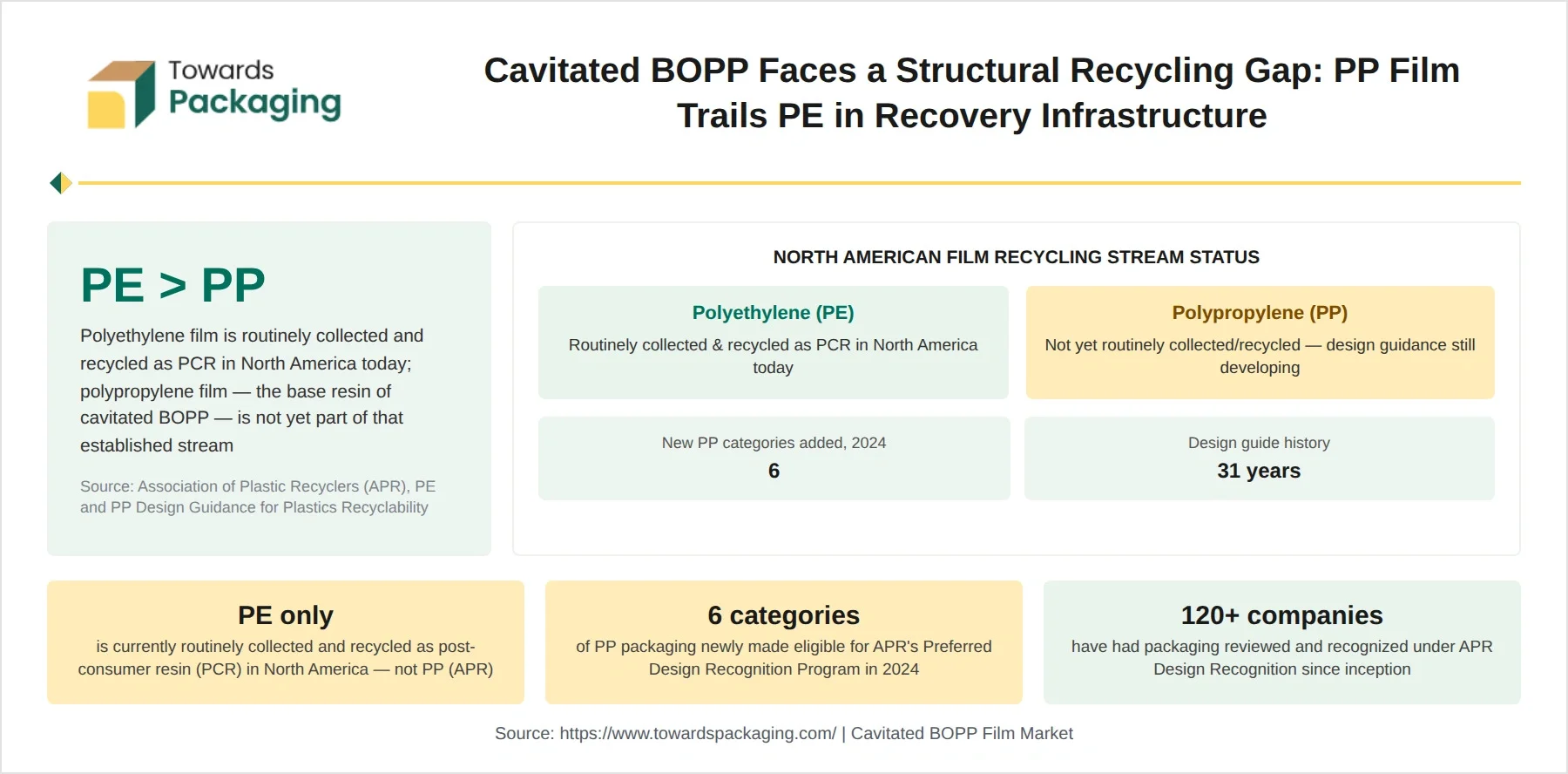
Source: Association of Plastic Recyclers (APR), PE and PP Design Guidance for Plastics Recyclability
Polyethylene is easily collected and recycled regularly in the North American region as PCR. PP film is a base for BOPP film development, but there is no established stream for collecting & recycling PP. In 2024, a total of 6 new categories were added to the APR Preferred Design Recognition Program. 120+ companies' packaging is recognized in the APR Design Recognition. The 6 new categories include:-
| Sr.No. | New Categories |
| 1 | PP Base Resins |
| 2 | Direct Print for PP Packaging |
| 3 | Complete and Unprinted Label Constructions for PP Packaging |
| 4 | PP Packaging Constructions |
| 5 | Closures, Fitments, and Liners for PP Containers |
| 6 | PP Containers, Bottles, and Rigid Packages |
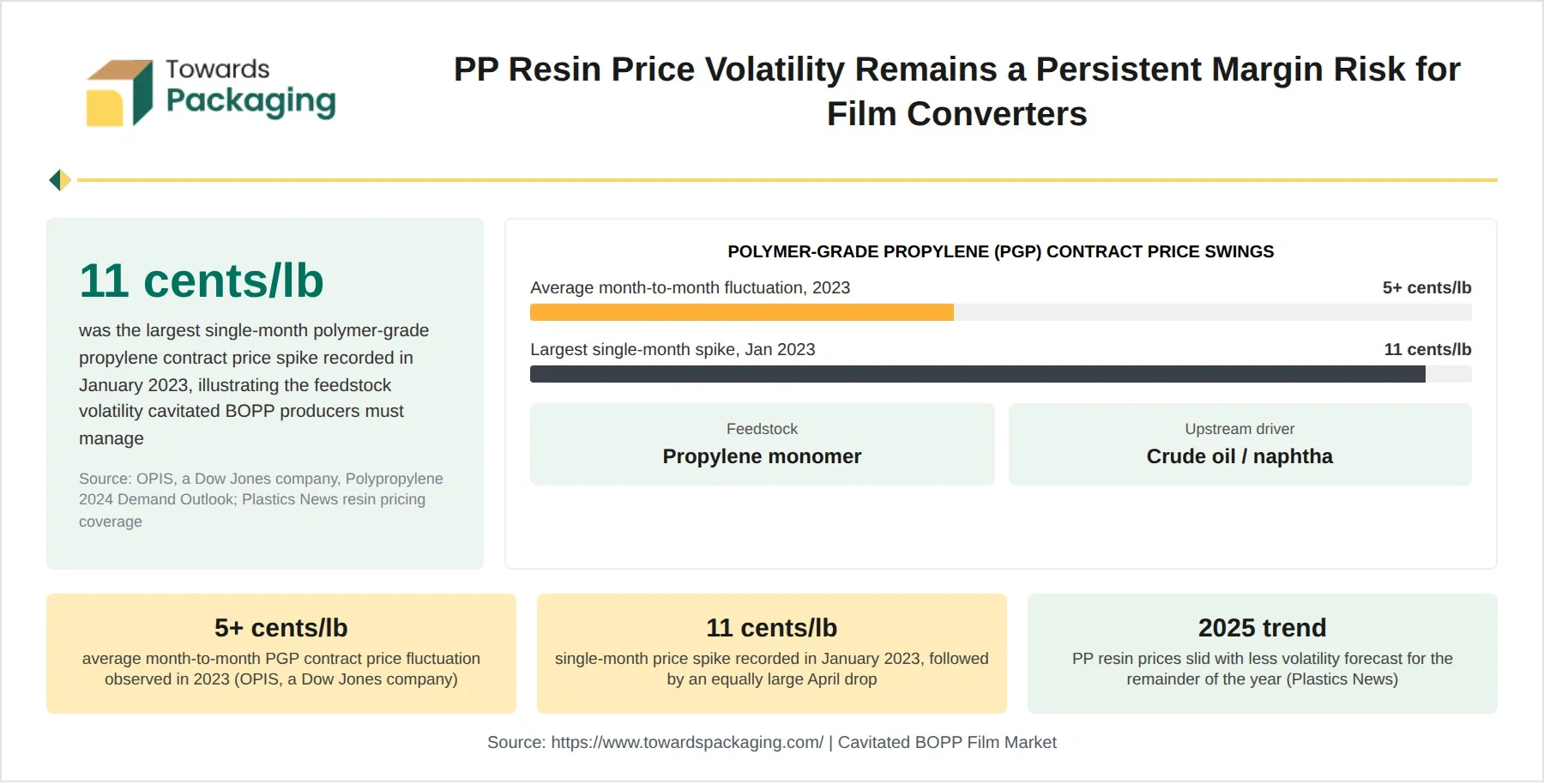
Source: OPIS, a Dow Jones company, Polypropylene 2024 Demand Outlook; Plastics News resin pricing coverage
The largest fluctuations in the price of polypropylene happened in January 2023. The single month recorded fluctuations of 11 cents/lb. The average month-to-month price fluctuations are 5+ cents/lb. The PP resin price fluctuates due to volatility in PGP prices, tensions in oil-producing regions, unexpected petrochemical plant outages, changing demand, and inventory adjustments. The fluctuations in PP resin prices is lowered for late 2025.
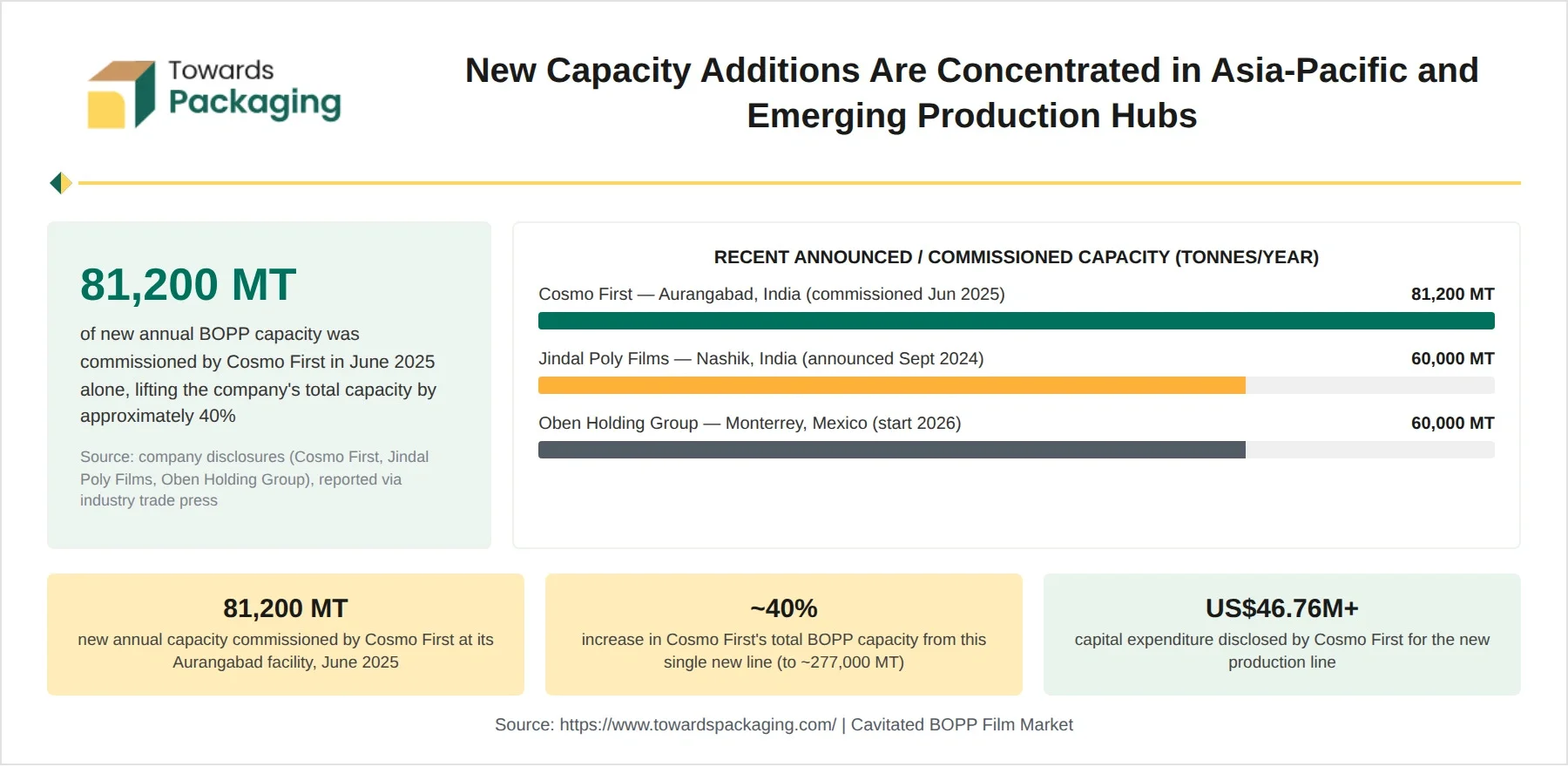
Source: Company disclosures (Cosmo First, Jindal Poly Films, Oben Holding Group), reported via industry trade press
In June 2025, Cosmo expanded its annual BOPP production capacity in Aurangabad, India. The newly introduced annual capacity is 81200 metric tonnes. The company’s BOPP capacity increased by approximately 40%. The current total annual capacity of the company is 2,77,000 metric tonnes. The capital expenditure disclosed by the company is US$ 46.76M+. In September 2024, Jindal Poly Films plans to develop 60,000 metric tonnes of capacity for BOPP film production in Nashik. At the start of 2026, Oben Holding Group plans to launch 60000 metric tonnes BOPP facility in Mexico.
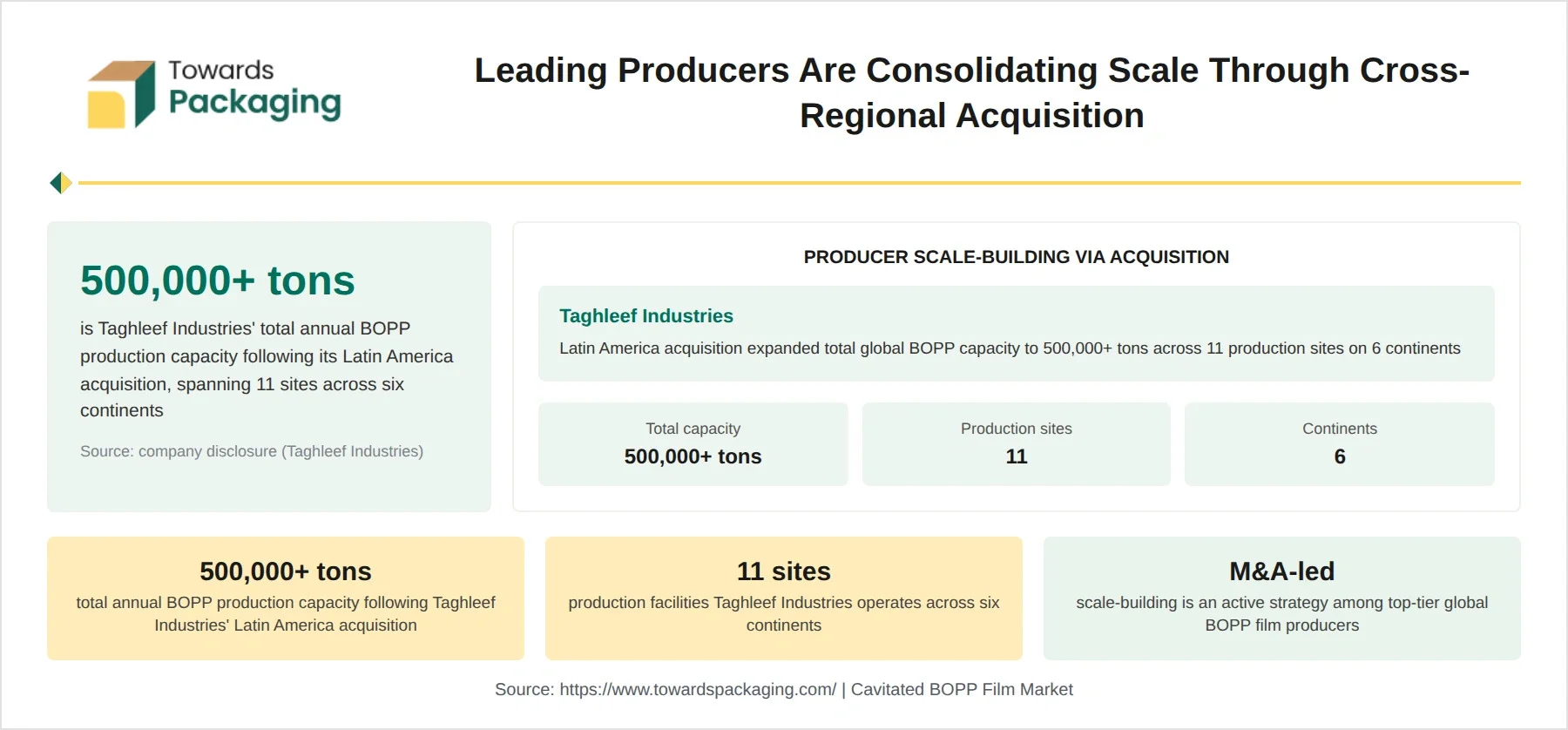
Source: Company disclosure (Taghleef Industries)
The total annual BOPP film production capacity is 500,000+ for Tagleef Industries across 6 continents. There are a total of 11 production sites of the company. The annual production capacity has increased due to the Latin America acquisition. The company acquired Biofilm S.A. in January 2019. The company gained production plants present across Altamira, Mexico, and Cartagena, Colombia. The acquisition was completed for $160 million and strengthened vacuum-deposited, clear barrier, & ultra-high barrier solutions.
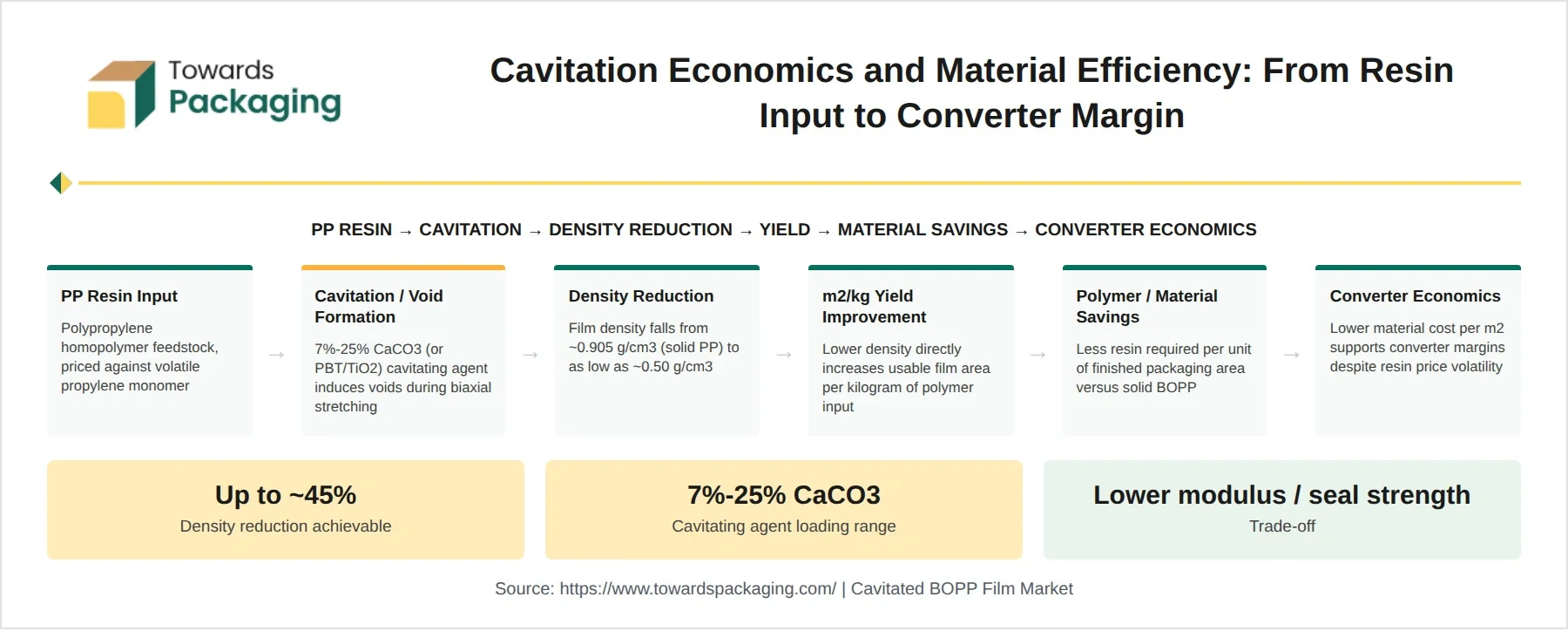
Source: Peer-reviewed research; U.S. patent literature; synthesis analysis
The synthesis process uses polypropylene homopolymer feedstock. The 7% to 25% calcium carbonate and other cavitating agents form voids during biaxial stretching. The initial density of the film is approximately 0.905g/cm3, reduced to 0.50g/cm3. The decreased film density helps in producing higher yields, sustainability, lowering cost, and increasing per kilogram usable areas. The density reduction supports material savings in final finished packaging. The total density is reduced up to approximately 45%. Density reduction offers benefits like lower shipping weight and minimizes plastic usage.
White cavitated BOPP film dominated the cavitated BOPP film market with a 43% share in 2025. The rise in snack pouch laminations and focus on protecting ice cream increases the use of white cavitated BOPP film. The high aesthetics, light blocking, essential sealing, and high material efficiency in white cavitated BOPP film drive the growth. The pearlized cavitated BOPP film held a 29% share in 2025. The surge in snack wrappers and focus on improving food labels increase the use of pearlized cavitated BOPP film. The high recyclability compatibility, natural opacity, and strong aesthetic appeal of pearlized cavitated BOPP film support the growth. Matte cavitated BOPP film is expected to grow at a 5.7% CAGR in the market during the forecast period. The focus on upscaling food packaging and organized supermarket environments increases the adoption of matte cavitated BOPP film. The superior label performance, built-in opacity, and superior aesthetics boost the overall growth.
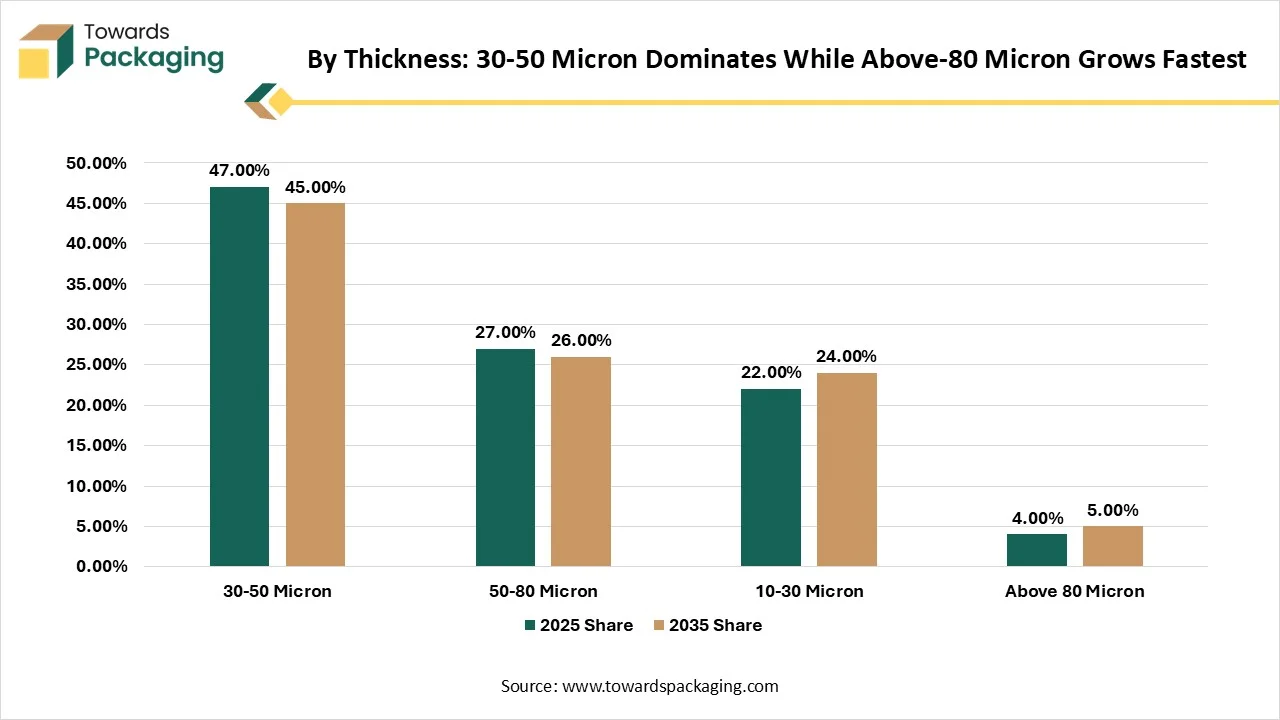
30-50 micron dominated the cavitated BOPP film industry with a 47% share in 2025. The development of pressure-sensitive labels and the creation of light confectionery wraps increase the use of 30-50 micron. The superior opacity, exceptional tear resistance, and excellent machinability of 30-50 micron drive the growth. 50-80 micron held a 27% share in the market in 2025. The protection of bulk goods and the rise in frozen food bags increase the use of 50-80 micron. The enhanced UV protection, high stiffness, and heavy-duty protection in 50-80 micron drive the growth. Above 80 micron is expected to grow with the fastest CAGR of 6.9% during the forecast period. The need for book laminations and barrier protection requirements in sensitive foods increases the use of above 80 microns. The enhanced whiteness and rigid structural integrity of above 80 microns boost the growth.
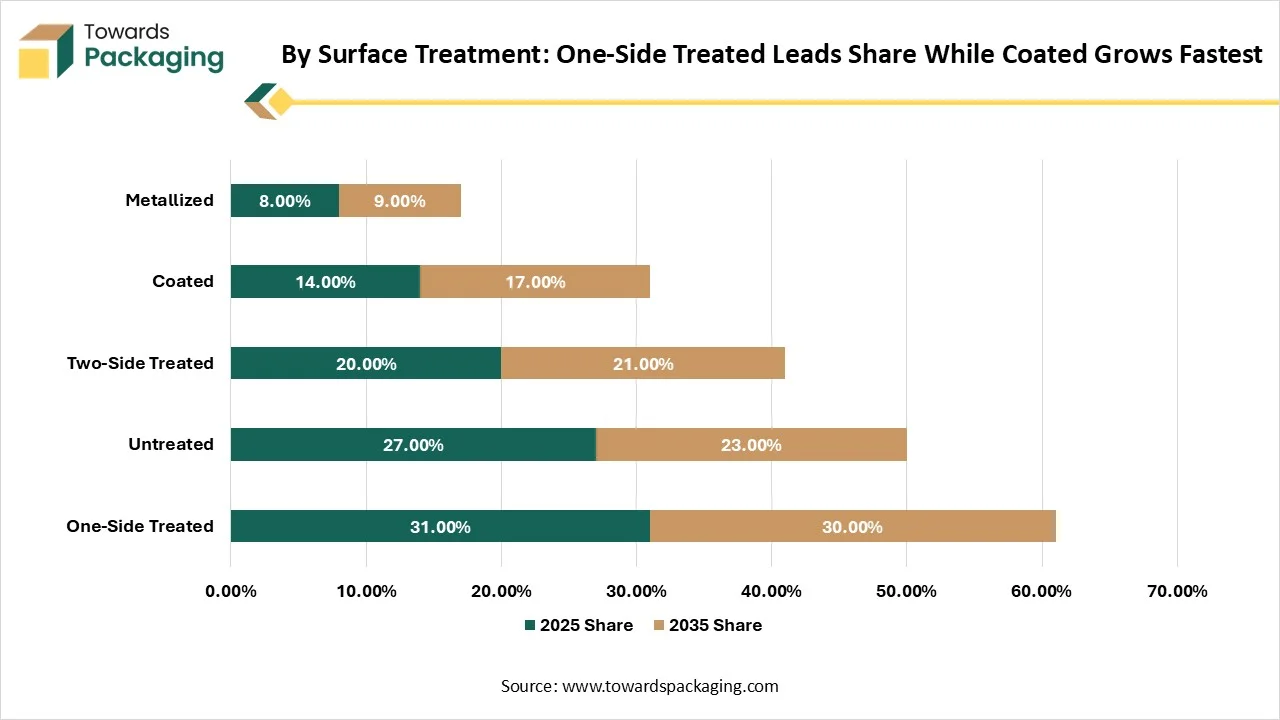
One-side treated dominated the cavitated BOPP film market with a 31% share in 2025. The surge in laminated wrappers in confectionery products and the expansion of standard wrap applications increase the use of one-side treated surface treatments. The high lamination efficiency and targeted functionality in one-side treated drives the growth. Untreated held a 27% share in the market in 2025. The rise in customized secondary processing and the expansion of specialized lamination increase the use of untreated surface treatments. The high process flexibility and low weight of untreated supports the growth. Coated is expected to grow at a 6.5% CAGR during the forecast period. The expansion of FMCG brands and the focus on sharper graphics performance increases the use of coated surface treatments. The enhanced printability and high functional versatility of coated surfaces boost the growth.
Heat-sealable dominated the cavitated BOPP film industry with a 62% share in 2025 and is expected to grow with the fastest CAGR of 4.7% during the forecast period. The high production of ice cream wrappers and the focus on keeping dairy fresh increases the use of heat-sealable films. The material lightweighting, high-speed machinability, aesthetic opacity, and light barrier of heat-sealable films drive the growth. Non-heat-sealable held a 38% share in the market in 2025. The production of confectionery wrappers and the rise in reverse printing increase the use of non-heat-sealable films. The high design flexibility, superior surface treatment, and ultra-low density of non-heat-sealable films support the overall growth.
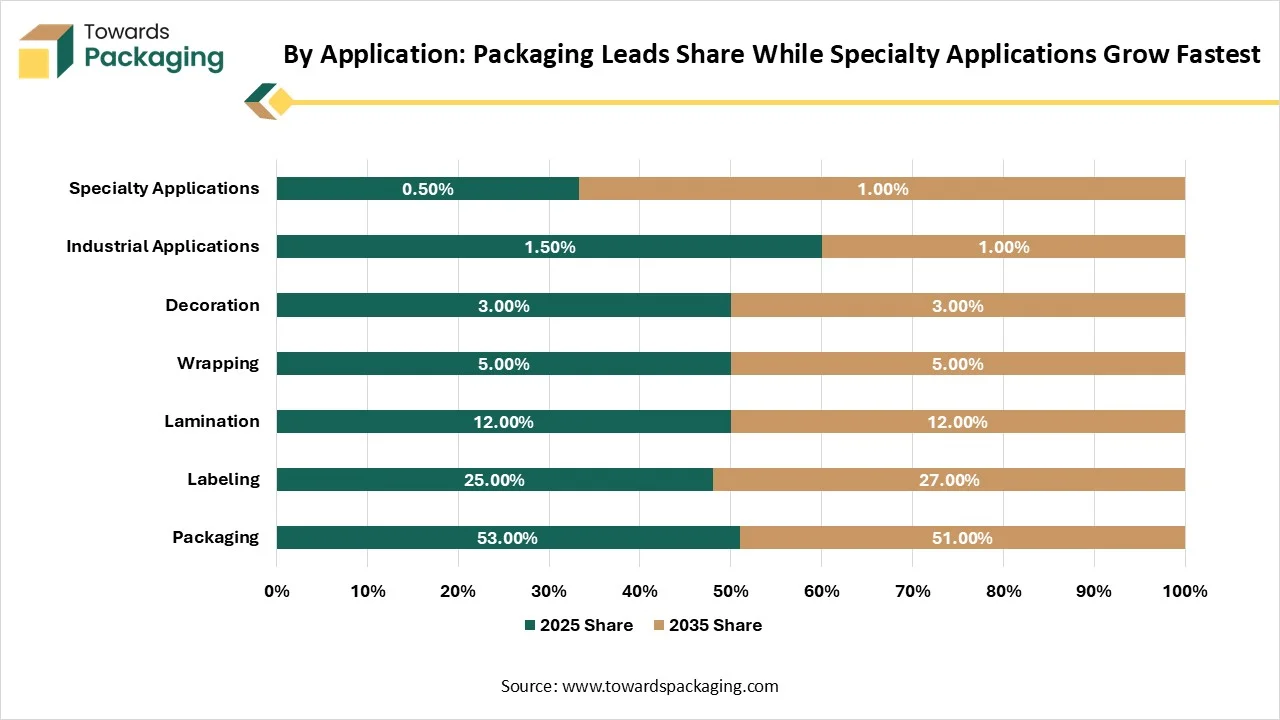
Packaging dominated with a 53% share in the cavitated BOPP film market in 2025. The increase in snack packaging and the preference for flexible pouches in the FMCG industry increase the use of cavitated BOPP film. The rise in light-sensitive content packaging and the preservation of snack foods increase the use of cavitated BOPP film. Labeling held a 25% share in the market in 2025. The growing demand for cut-and-stack label formats and the production of laminated flexible pouches increase the use of cavitated BOPP film. The expansion of wrap-around beverage labels and the rise in personal care goods labels increase the use of cavitated BOPP film. Specialty applications are expected to grow with the fastest CAGR of 11.4% during the forecast period. The rise in graphic thermal lamination and the expansion of in-mold labeling increase the use of cavitated BOPP film. The explosion of roll-fed labels and the rise in ice cream novelties boost the growth.
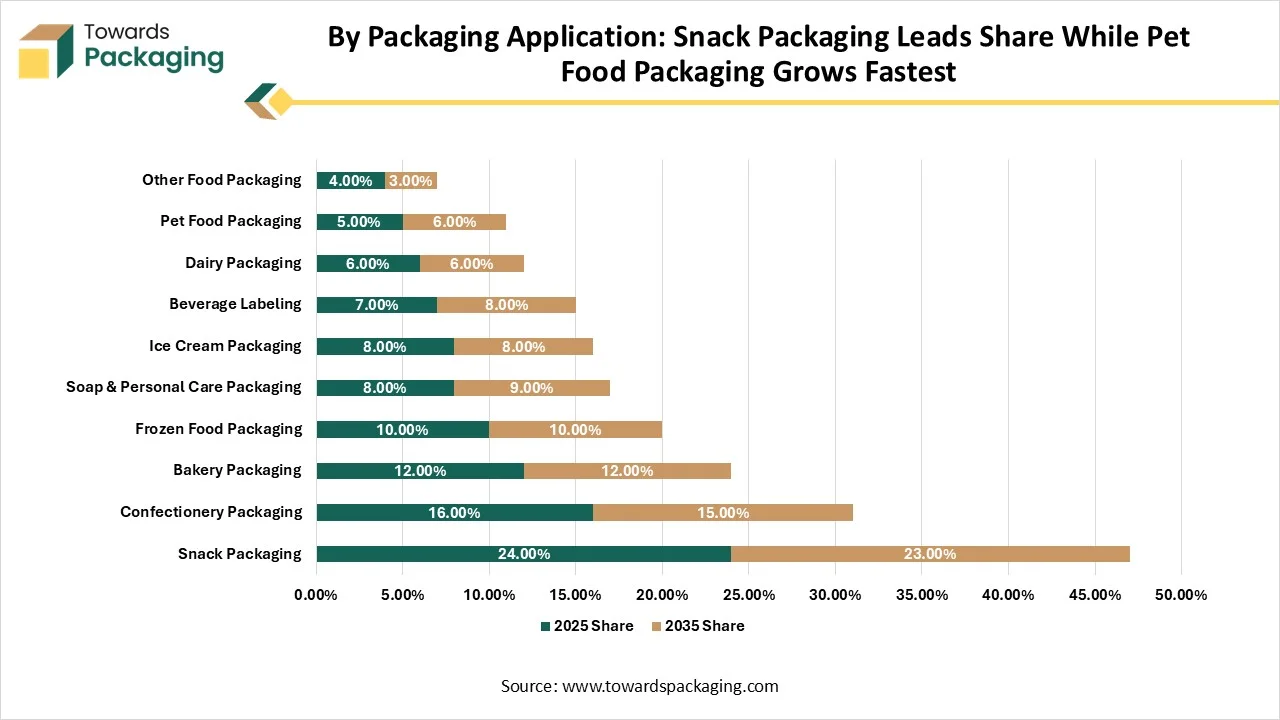
Snack packaging dominated the cavitated BOPP film industry with a 24% share in 2025. The production of salty snacks and the focus on shielding sensitive snacks increase the use of cavitated BOPP film. The focus on enhancing shelf presence in retail snack aisles and the rise in family-size snack pouches supports the overall growth. Confectionery packaging held a 16% share in the market in 2025. The mass production of sweets and the focus on preventing stickiness in sugar-based products increase the use of cavitated BOPP film. The rise in wrapping chocolate bars supports the growth. Pet food packaging is expected to grow with the fastest CAGR of 6.4% during the forecast period. The focus on blocking light in pet food and maintaining crunch increases use of cavitated BOPP film. The thriving premium pet care and the focus on lightening heavy dry kibble packages boost the overall growth.
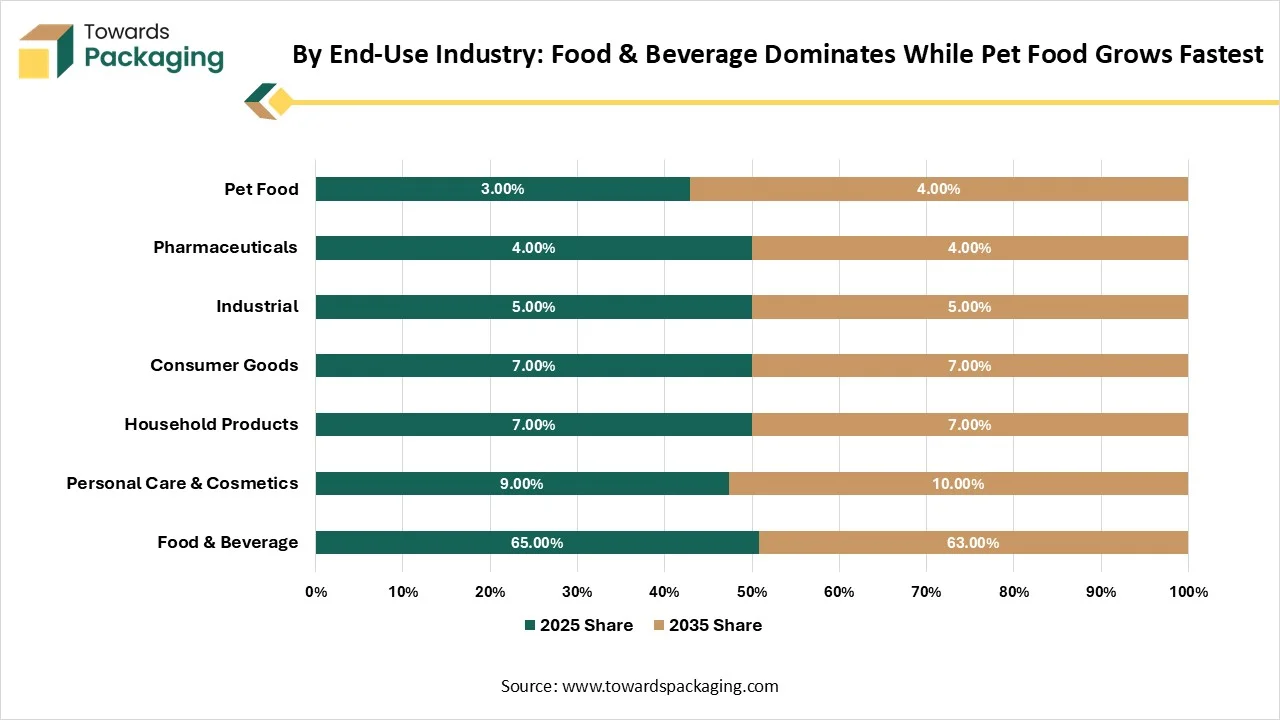
Food & Beverage dominated the cavitated BOPP film industry with a 65% share in 2025. The requirement to protect hygroscopic foods and the need to prevent degradation of sensitive foods increase the use of cavitated BOPP film. The focus on printing nutritional facts on food products and surging global demand for confectionery products supports the overall growth. Personal care & cosmetics held a 9% share in the market in 2025. The improvement in brand distinction of luxury cosmetics and the protection of skincare formulations increases the use of cavitated BOPP film. The growing use of hygienic wet wipes and the development of moisture-sensitive skincare formulations support the growth. Pet food is expected to grow with the fastest CAGR of 7% during the forecast period. The need for UV light protection in pet treats and high-resolution pet food branding increases the use of cavitated BOPP film. The production of sharp-edge pet kibble and the focus on keeping pet food uncontaminated boost the overall growth.
Coextrusion dominated the cavitated BOPP film industry with a 48% share in 2025. The demand for light protection for sensitive food contents and shipping weight reduction increases the use of coextrusion. The enhanced sealability, opaque look, controlled cavitation, and material optimization in coextrusion drive the growth. Sequential stretching held a 38% market share in 2025. The focus on lowering operating overhead and the creation of precise cavities increases the use of sequential stretching. The independent ratios, functional finish, and high density control in sequential stretching boost growth. Simultaneous stretching is expected to grow at a 5.8% CAGR during the forecast period. The focus on the formation of a uniform cavity and enhancement of usable film areas increases adoption of simultaneous stretching. Better thickness control, even void formation, production flexibility, and uniform thickness of simultaneous stretching boost the growth.
Source: Towards Packaging Database
Asia Pacific dominated the cavitated BOPP film market in 2025 with a 40% share. The growing demand for confectioneries and the rise in product labeling increase the use of cavitated BOPP film. The large packaging converter base and rapid hypermarket expansion increase adoption of cavitated BOPP film. The integrated manufacturing base and organized retail chains drive the growth. China holds a dominant position in the market in the Asia Pacific region. The large polypropylene base and the high growth in online retail shipping increase the use of cavitated BOPP film. The strong industrial base in areas like Guangdong helps with expansion. The massive shipping volume and the high demand for light-blocking wrapping support the growth.
North America held the second-largest share of 24% in the cavitated BOPP film industry in 2025. The transition to mono-material laminates and the higher demand for premium products increase adoption of cavitated BOPP film. Established automated fulfilment centers and the use of flexible packaging increase adoption of cavitated BOPP film. The regional healthcare expansion boosts the growth. United States is the leading contributor in the region. The high flexible packaging consumption and the rapid rise in online retail fulfilment increase the use of cavitated BOPP film. The sustainability regulations and shift to advanced polymer processing increase adoption of cavitated BOPP film. The stringent health packaging guidelines boost the growth.
Europe held a 21% share in the cavitated BOPP film industry in 2025. The circular-economy directives and higher preference for lightweight flexible packaging increase the adoption of cavitated BOPP film. The production of wrap-around labels and growing premiumization increases the use of cavitated BOPP film. The lightweight goals and focus on high-visibility beverages boost the market growth. Germany dominates the European region. The packaging waste regulations and focus on material reductions increase adoption of cavitated BOPP film. The preference for opaque packaging in the food industry and strong labeling sector increases use of cavitated BOPP film. The presence of Innovia Films supports the growth.
Latin America held a 9% share in the cavitated BOPP film industry in 2025. The expansion of packaged beverages & other packaged products and the focus on high-impact branding increase the use of cavitated BOPP film. Sustainability brand initiatives and modern supermarkets' growth increase the use of cavitated BOPP film. The higher demand for dairy products boosts the overall growth. Brazil is a key player in the region. The high consumption of sweets and adoption of premium-looking packaging increases the use of cavitated BOPP film. The transition to mono-material PP structures helps with growth. The presence of Oben Group supports the growth.
The MEA held a 6% share in the cavitated BOPP film industry in 2025. The petrochemical proximity in the GCC and growing upstream investment increase production of cavitated BOPP film. The growth in packaged confectionery and rise in western-style supermarkets increase use of cavitated BOPP film. Retail modernization boosts the overall growth. Saudi Arabia is a major shareholder in the MEA region. The availability of cheap polypropylene feedstock and low manufacturing prices increases the production of cavitated BOPP film. The surge in food outlets and label development increases cavitated BOPP film use. The preference for light-blocking packaging boosts the overall growth.
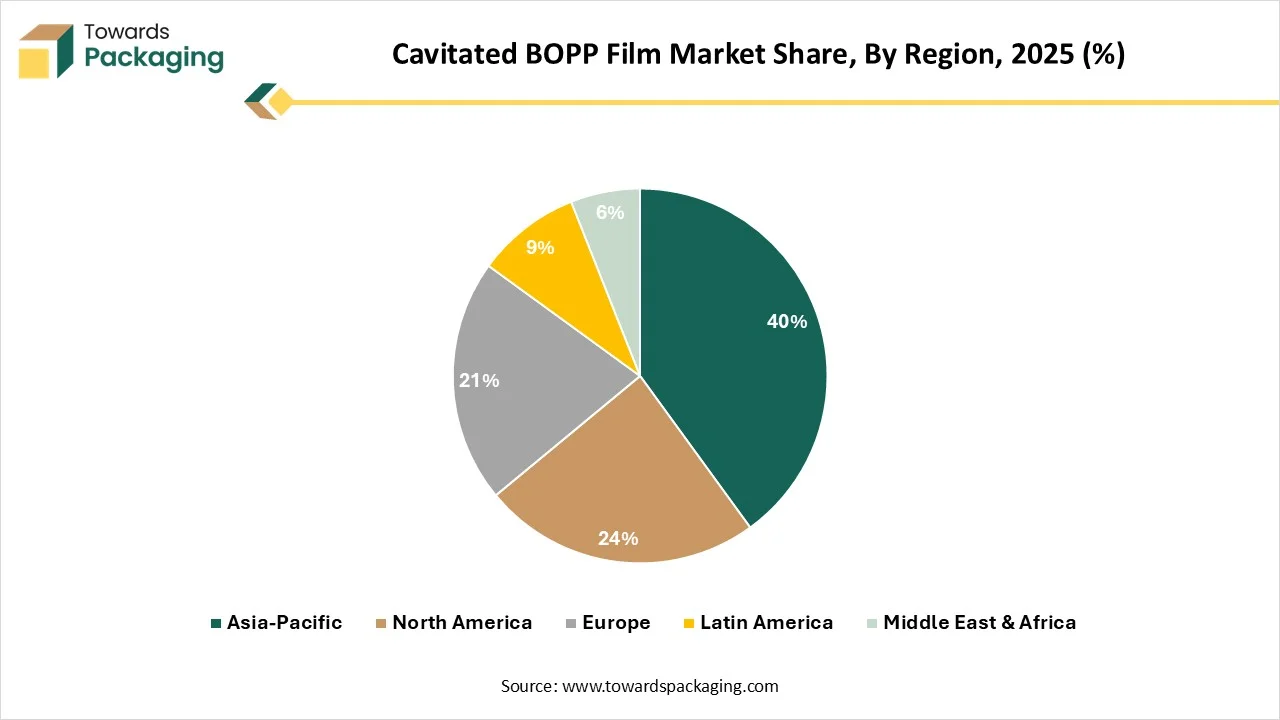
Asia Pacific held a leading 40% market share in 2025 due to the booming FMCG industry, online shopping growth, and high manufacturing capacity. North America held a 24% market share in 2025 due to strong machinery, heavy baked goods consumption, and regulatory mandates. Europe held a 21% share of the market in 2025 due to a mature labeling industry, demand for waste reduction, and high production prices. Latin America held a 9% market share in 2025 due to small retail scale and lower confectionery scaling. MEA held a 6% share in the market in 2025 due to a small retail base and high import reliance.
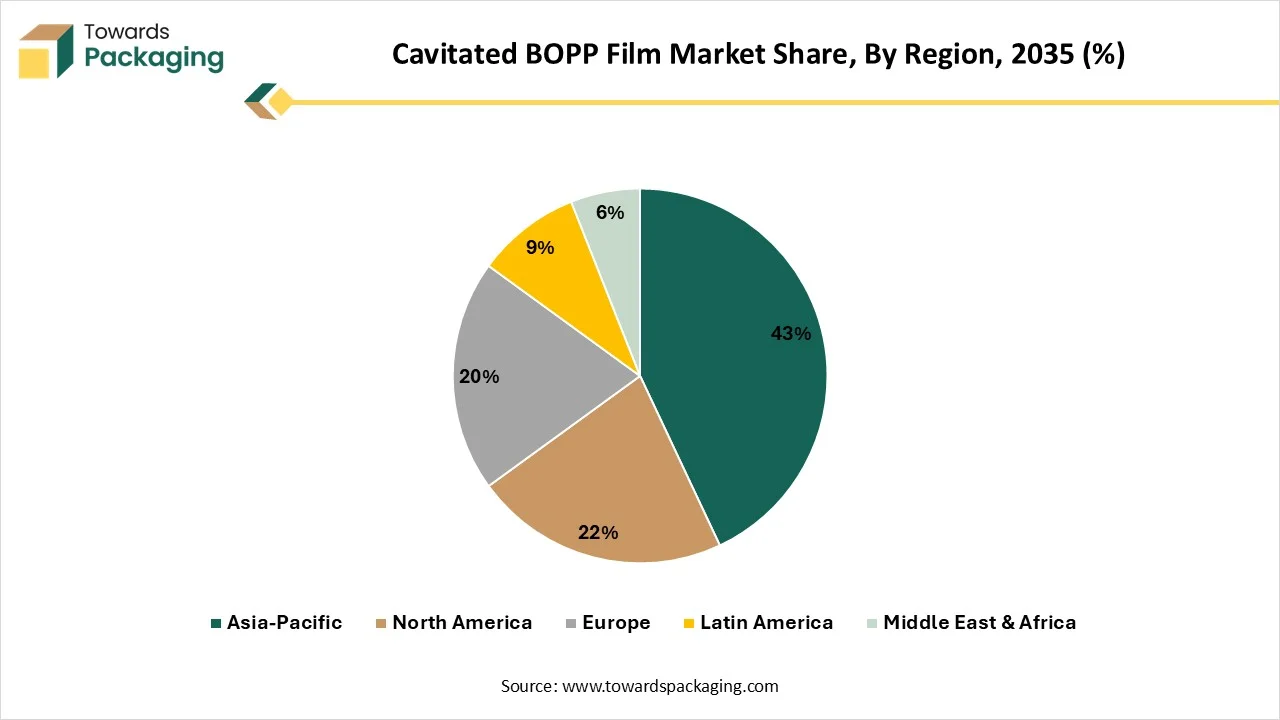
Asia Pacific is predicted to hold a 43% share in the cavitated BOPP film market by 2035 due to the increasing packaged snacks consumption in the middle class and growing regulatory changes. North America is predicted to hold a 22% market share by 2035 due to growing demand for ice cream wraps, advanced extrusion capabilities, and steady integration. Europe is predicted to hold a 20% market share by 2035 due to advanced food processing and stricter European Union policies. Latin America is predicted to hold a 9% market share by 2035 due to the rise in lightweight labeled goods and high import dependence. MEA is predicted to hold a 6% market share by 2035 due to the rise in domestic organized supermarkets and small cavitation manufacturing plants.
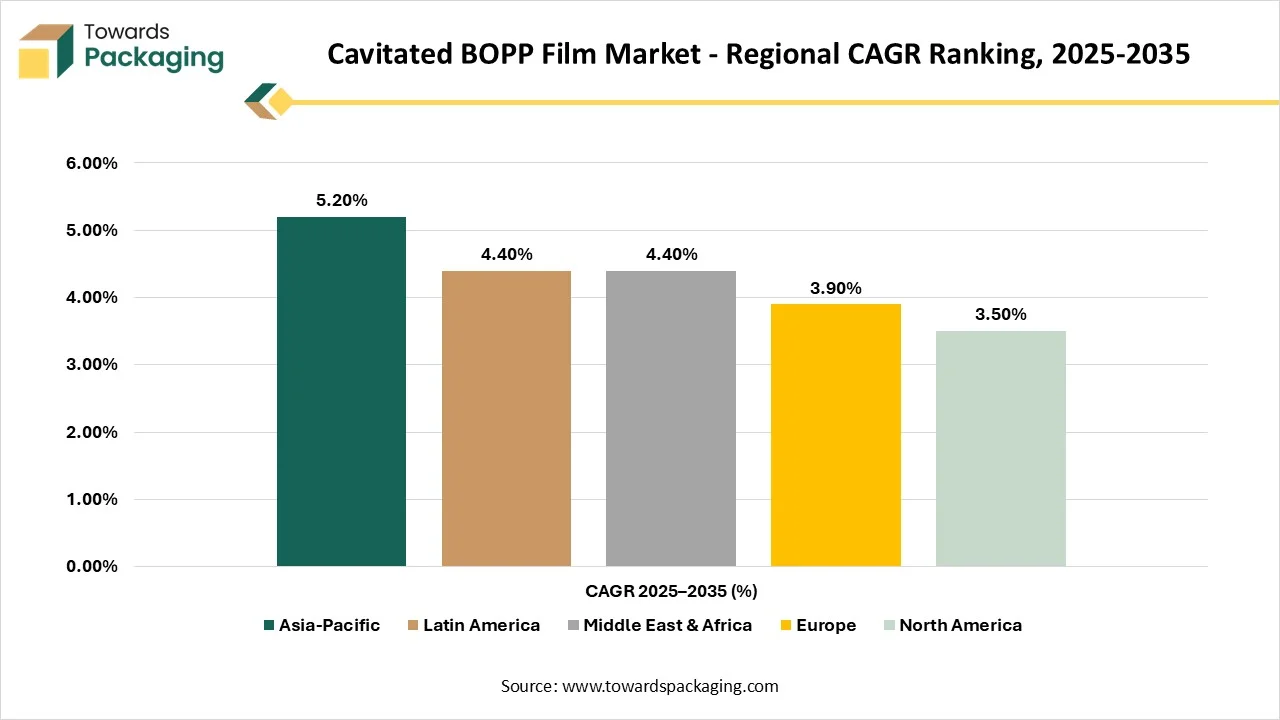
Asia Pacific is expected to grow with a 5.2% CAGR in the cavitated BOPP film market during the forecast period due to changing dietary preferences, e-commerce growth in South Asia, and continuous addition in local manufacturing capabilities. Latin America is expected to grow with the second-fastest CAGR of 4.4% in the market during the forecast period due to retail chain growth, SMEs' interest in flexible packaging, and regulatory preference. MEA is expected to grow with a 4.4% CAGR during the forecast period due to supermarket proliferation and a strong local petrochemical base. Europe is expected to grow with a 3.9% CAGR during the forecast period due to high energy costs and a mature packaging base. North America is expected to grow with a 3.5% CAGR during the forecast period due to the steady replacement and recycling complexities.
According to my research, the cavitated BOPP film market is growing significantly due to the growth in the Asia Pacific retail sector, rising confectionery demand, and circular economy goals. Factors like demand for cost-efficient packaging films, heavy e-commerce shopping, compatibility with curbside recycling mandates, and high-production capacity in China support the growth. The major established cavitated BOPP film manufacturing companies like Jindal Poly Films, Innovia Films, Oben Group, Cosmo First Limited, and Toray Plastics support growth.
Vidyesh Swar performed primary research, including market size in 2025, incremental growth, regional shares, segmental shares, and market forecast size.
Aman worked on key companies, cavitated film, ASTM standards, structural recycling gaps, fluctuations in PP resins, Asia Pacific production capacity, and cross-regional acquisitions.
Aditi reviews the overall document, verifies findings, corrects factual errors, checks references, reviews consistency, and ensures the report is well-structured and follows organizational quality standards.
By Film Type
By Thickness
By Surface Treatment
By Sealability
By Application
By Packaging Application
By End-Use Industry
By Manufacturing Process
By Region























Principal Research Analyst
Vidyesh Swar is a Senior Research Analyst at Towards Packaging, bringing over 4 years of dedicated expertise in market intelligence and strategic analysis across the dynamic world of packaging technologies and solutions.
Learn more about Vidyesh Swar

Reviewed By
Aditi Shivarkar, with 14+ years in packaging market research, specializes in food, beverage, and eco-friendly packaging. She ensures accurate, actionable insights, driving Towards Packaging Analytics & Consulting 's excellence in industry trends and sustainability.
Learn more about Aditi Shivarkar


Cavitated BOPP Film Market
 Table of Content

 Download Sample
 Schedule a Meeting