


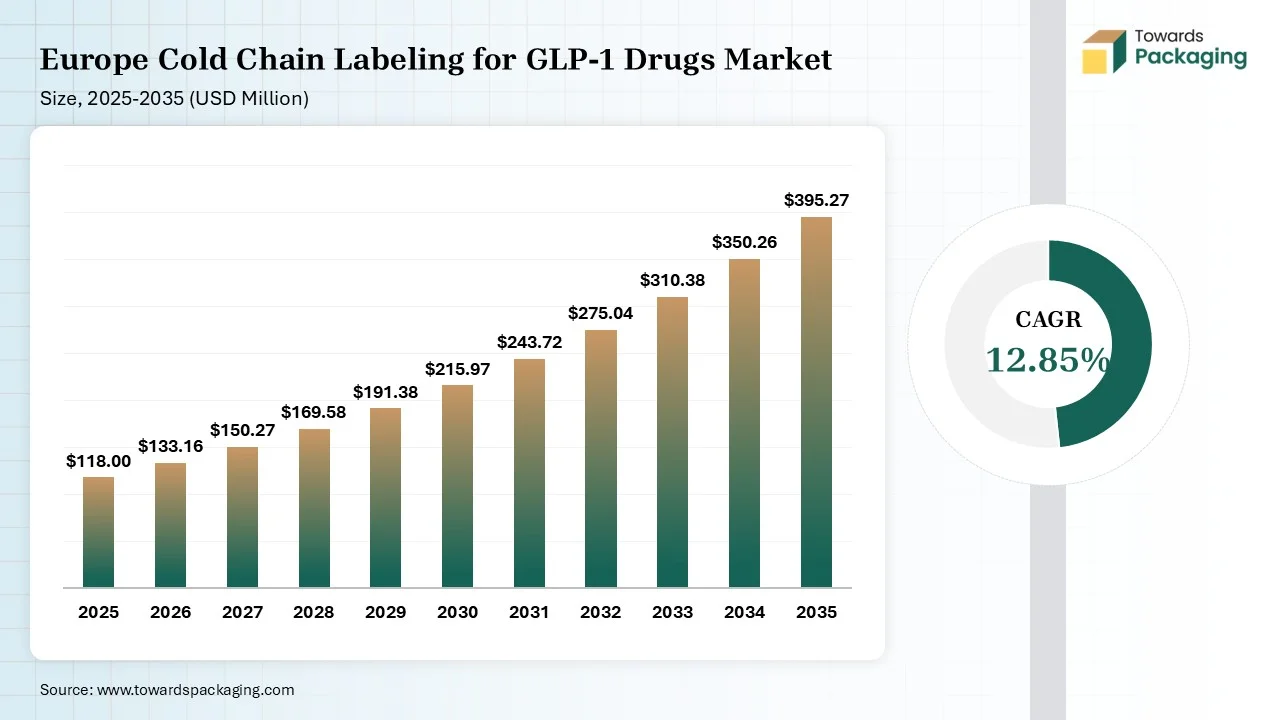
According to Vidyesh Swar, who is highly experienced in cold-chain labeling, GLP-1 drug packaging, and overall packaging solutions. The Europe cold chain labeling for GLP-1 drugs market size was estimated at $118 M in 2025 and is forecast to grow at a 12.85% CAGR during the forecast period. The market is predicted to reach USD 395.3 M by 2035. Factors like burgeoning prescription volumes, incorporation of digital serialization, and the expansion of specialized cold-chain logistics drive the market growth. Specialized companies like Gerresheimer AG, Nordic Cold Chain Solutions, and EMBALL’ISO support the market growth.
Cold chain labeling for GLP-1 drugs is a special type of label that includes alert indicators, tracking information, and other parameters. These labels are developed to withstand refrigerated environments. Its core elements are handling warnings, temperature indicators, storage parameters, adhesive integrity, and traceability data. The core labeling needs include traceability barcodes, storage range text, and handling cautions. Its benefits include instant visual verification, waste reduction, efficacy preservation, and patient safety. GLP-1 drugs use cold chain labeling to ensure patient safety, preventing degradation and stopping freezing damage.
The Europe cold chain labeling for GLP-1 drugs market held a value of $118 million in 2025. Factors like adoption of Wegovy drugs, stringent temperature compliance, and prevention of supply shortages drive the growth. Germany held a leading market share of 22% in 2025. Smart temperature labels are growing with the fastest CAGR in the market during the forecast period.
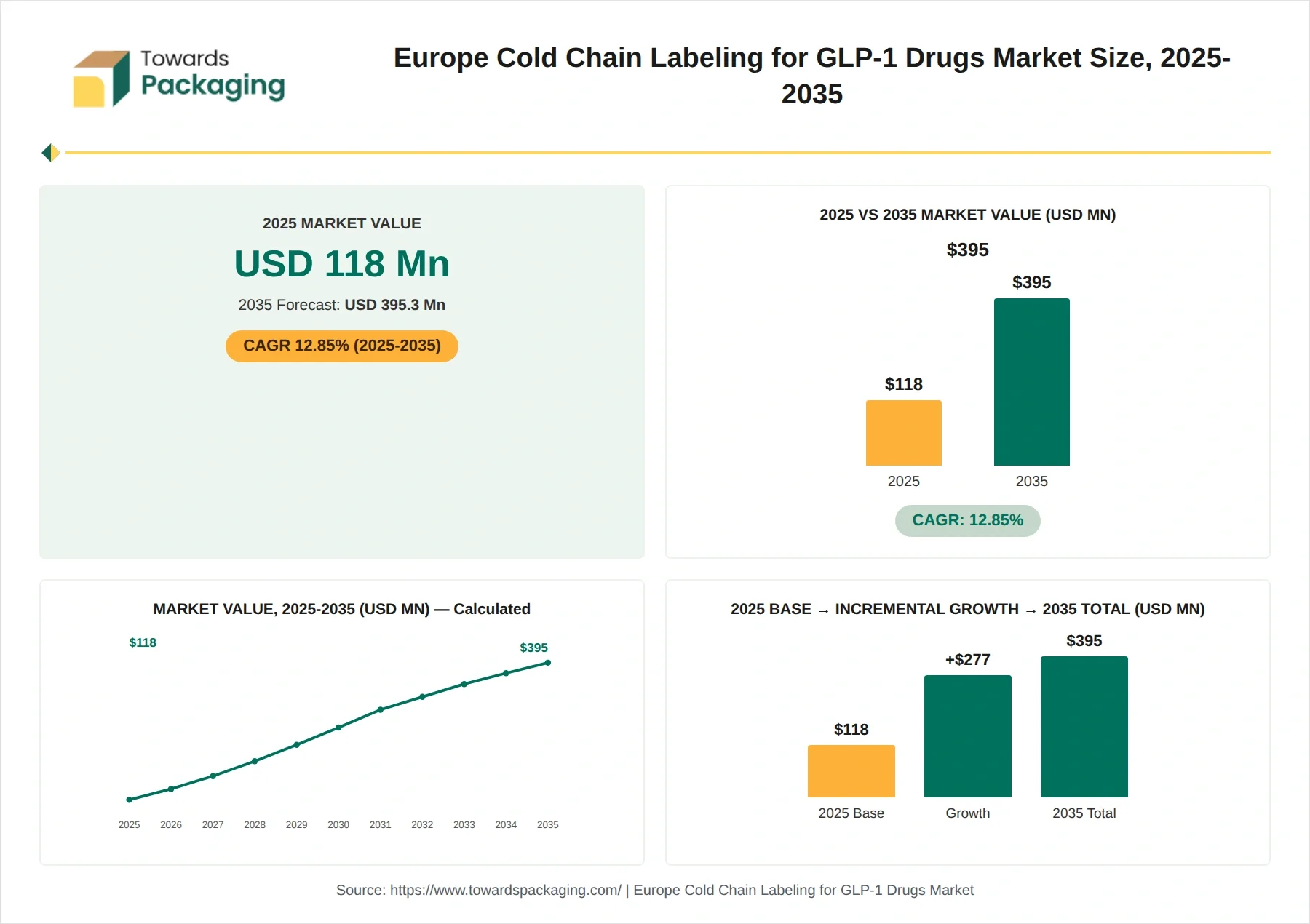
The Europe cold chain labelling for GLP-1 drugs market size reached $118 million in 2025. The market is predicted to grow at 12.85% CAGR during 2025-2035. Factors like the rise in peptide treatments, aggressive regulatory compliance, incorporation of smart labels, the rise in unique serialized barcodes, an explosion of label indications, the presence of major drugmaker hubs, growing risks in last-mile delivery, and complexity in excursion thresholds drive the market growth. Top players like Eli Lilly, Kuehne+Nagel, SkyCell, Novo Nordisk, and DHL Group contribute to the market growth.
The market is predicted to reach USD 395.3 million by 2035. The incremental growth value of the market is $277 million. Factors like growing diabetes in adults, the need for chain-of-custody labeling, the rise in online pharmacy dispensing, expansion of IoT labels, proliferation of biosimilars, high need for counterfeit prevention, upgrades in cold-chain logistics hubs, and high biopharma investments will help drive growth. Pharmaceutical producers like Eli Lilly and Company & Novo Nordisk A/S boost the growth.
Source: European Commission Community Register (Wegovy product information); manufacturer product information cross-referenced with SmPC/FDA prescribing information
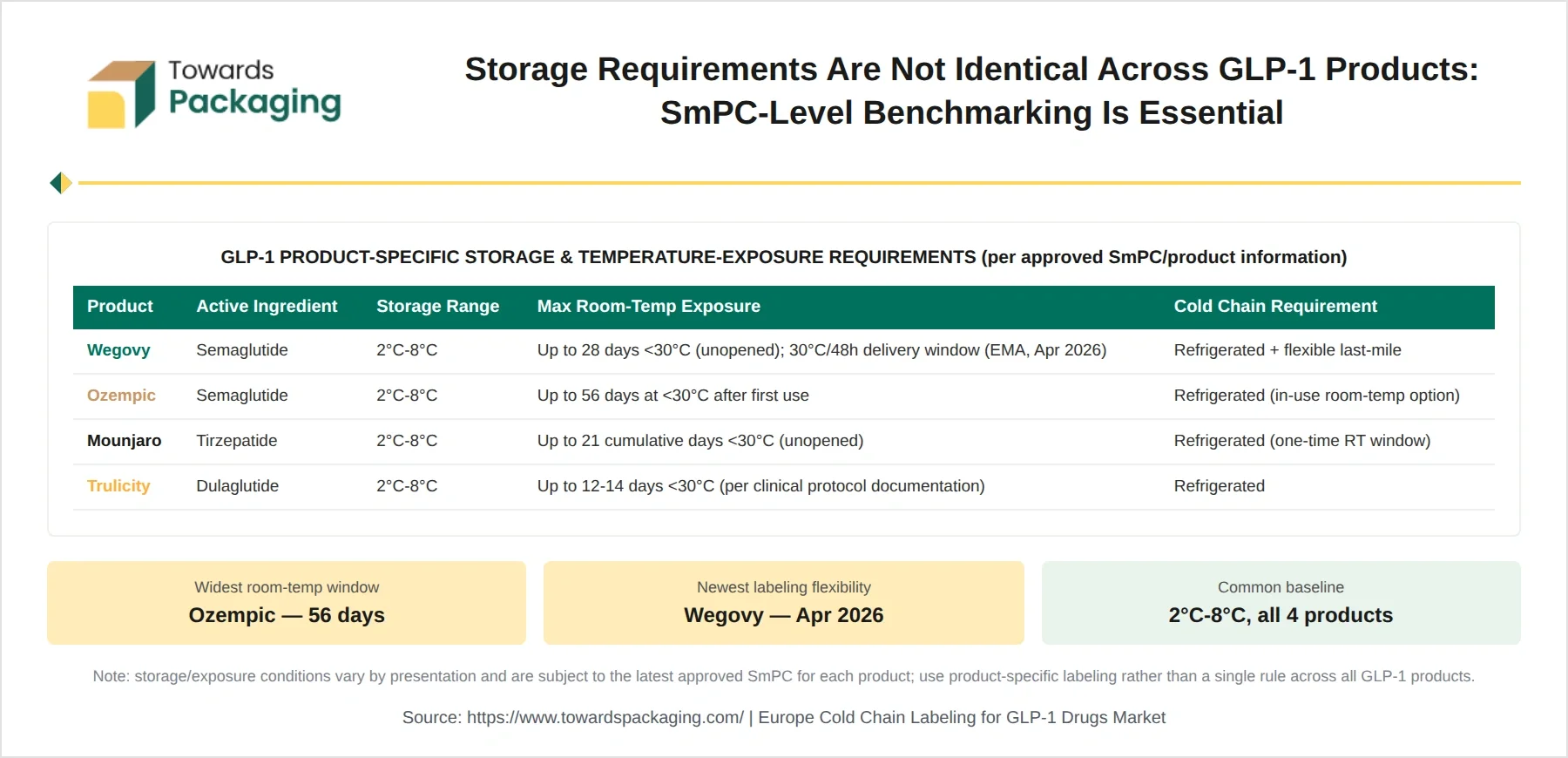
The diverse GLP-1 products, including Wegovy, Mounjaro, Ozempic, and Trulicity, have different storage requirements. SmPC-level regulations are needed for GLP-1 products. Wegovy is tolerated for up to 28 days in 300C temperature. The delivery window for Wegovy is 48 hours up to 300C. Wegovy and Ozempic contain the active ingredient semaglutide. Ozempic is stored at room temperature (300C) for up to 56 days. The unopened Mounjaro is stored for up to 21 days at 300C of room temperature. Trulicity is stored for up to 12-14 days at room temperature. Mounjaro contains the active ingredient Tirzepatide, and Trulicity contains Dulaglutide. The storage range for all 4 GLP-1 products is 20C to 80C.
Source: Novo Nordisk A/S company disclosure; UK MHRA product information update, reported via PharmiWeb
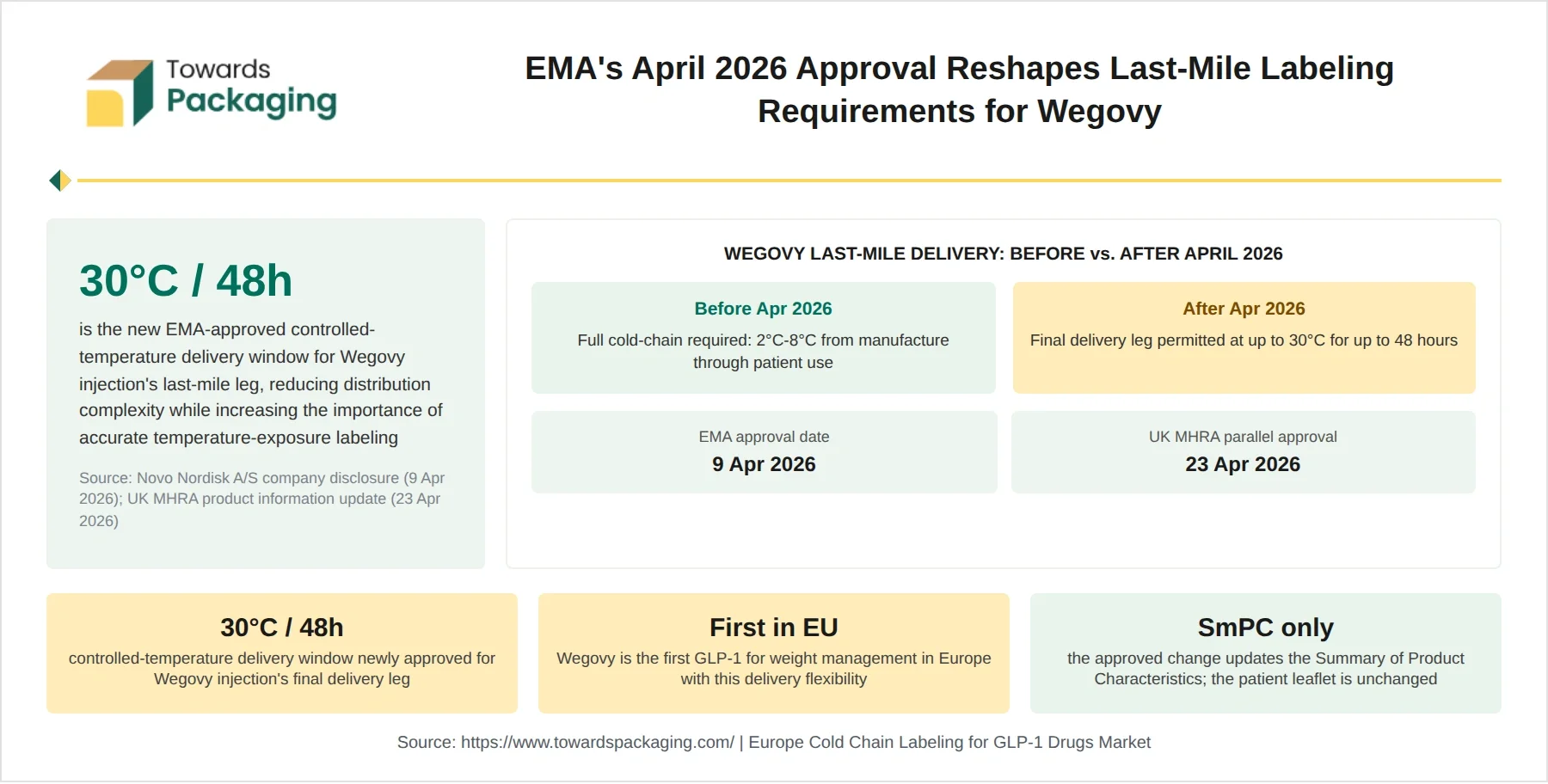
The last-mile delivery of Wegovy injections has a controlled-temperature delivery window of 48 hours at 300C temperature. This window lowers the distribution complexity and supports accurate temperature-exposure labeling. This window offers unique logistical flexibility. The EMA approved the Wegovy injection delivery window on 9 April 2026. Before the approval, cold-chain distribution requires 20C to 80C temperature throughout the entire process. UK MHRA also approved Wegovy injection on 23 April 2026. It is the first GLP-1 product in the European Union with this delivery flexibility. SmPC has been updated for the approved product.
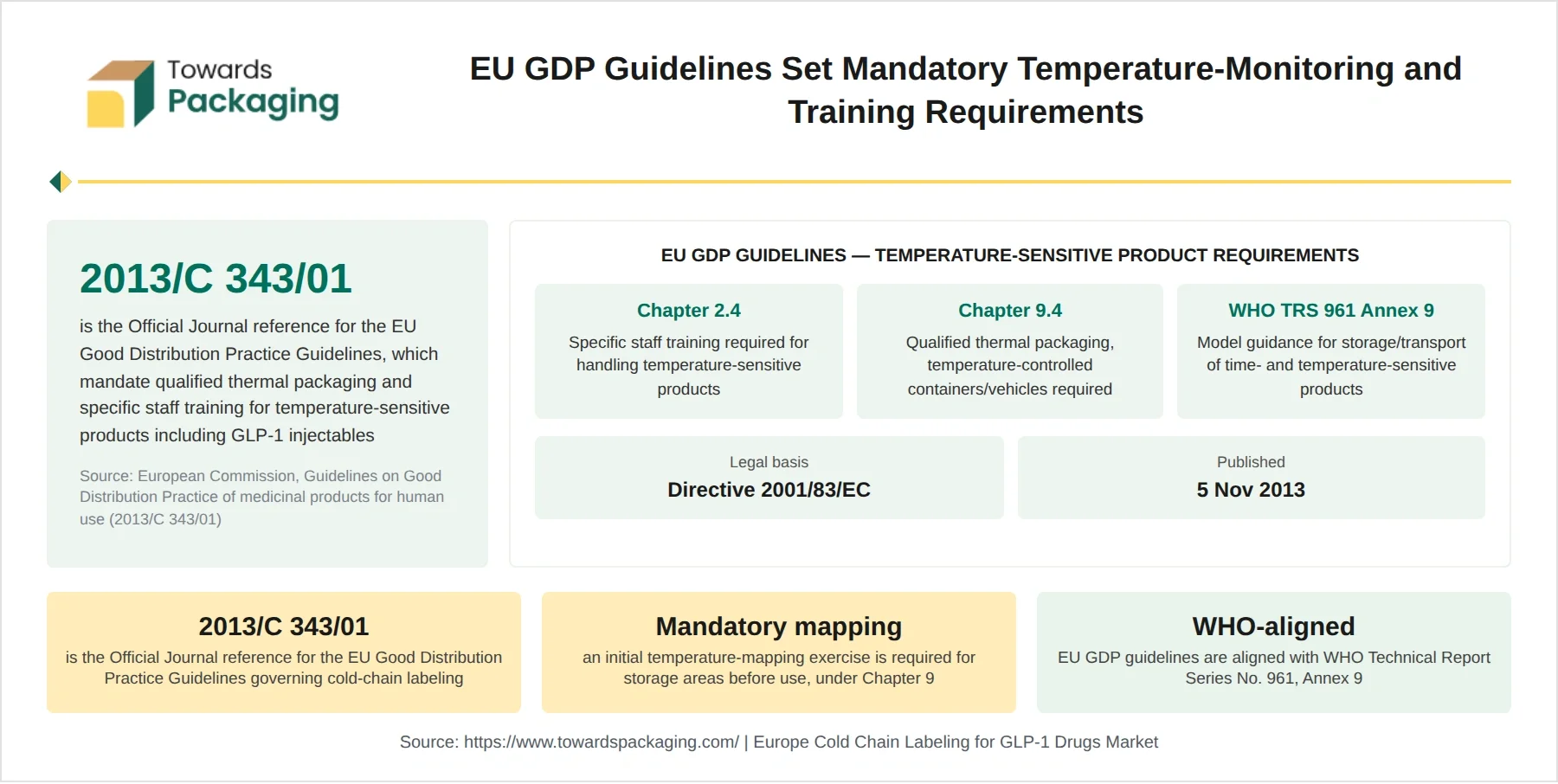
Source: European Commission, Guidelines on Good Distribution Practice of medicinal products for human use (2013/C 343/01)
The specific GDP guideline for temperature-sensitive GLP-1 products is 2013/C 343/01. The guidelines focus on storage conditions, temperature excursions, RP, transportation safety, and supply chain security. Chapter 2.4 of the EU GDP guidelines focuses on specific training, record keeping, falsified medicines, and effectiveness assessment. Chapter 9.4 covers qualified equipment, maintenance, customer proof, temperature mapping, and customer proof. Annex 9 of WHO TRS offers guidance on transportation and storage of temperature-sensitive products. It focuses on supply chain integrity, regulatory compliance, and temperature mapping. The updated EU guidelines were released on 5 November 2013.
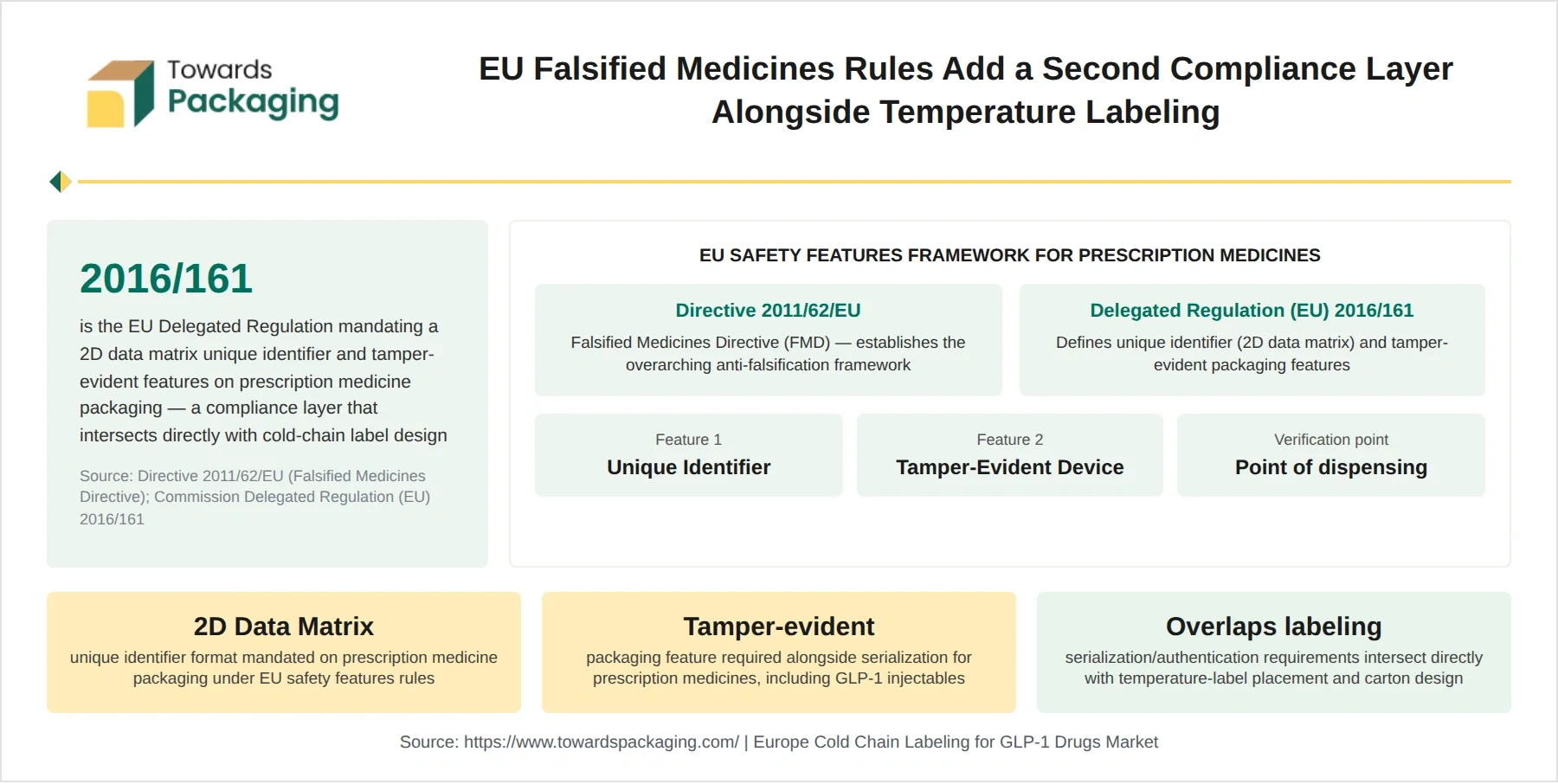
Source: Directive 2011/62/EU; Commission Delegated Regulation (EU) 2016/161
EU Falsified Medicines Directive (FMD) prevents the entry of counterfeit medicines into supply chains. The EU FMD provides features like end-to-end verification, unique identifiers, and anti-tampering devices. The supply chain rules for EU FMD include safe import of active ingredients, a clickable online pharmacy logo, and stricter controls in wholesale. The EU 2016/161 acquainted from 9 February 2019. The regulation provides stringent safety regulations for medicine packaging. It includes safety features like anti-tampering devices and unique identifiers. The verification system focuses on end-to-end checking, decommissioning codes, and supply chain checks. The labelling rules include readability priority, a ban on obscuring data, and avoidance of label overlapping.
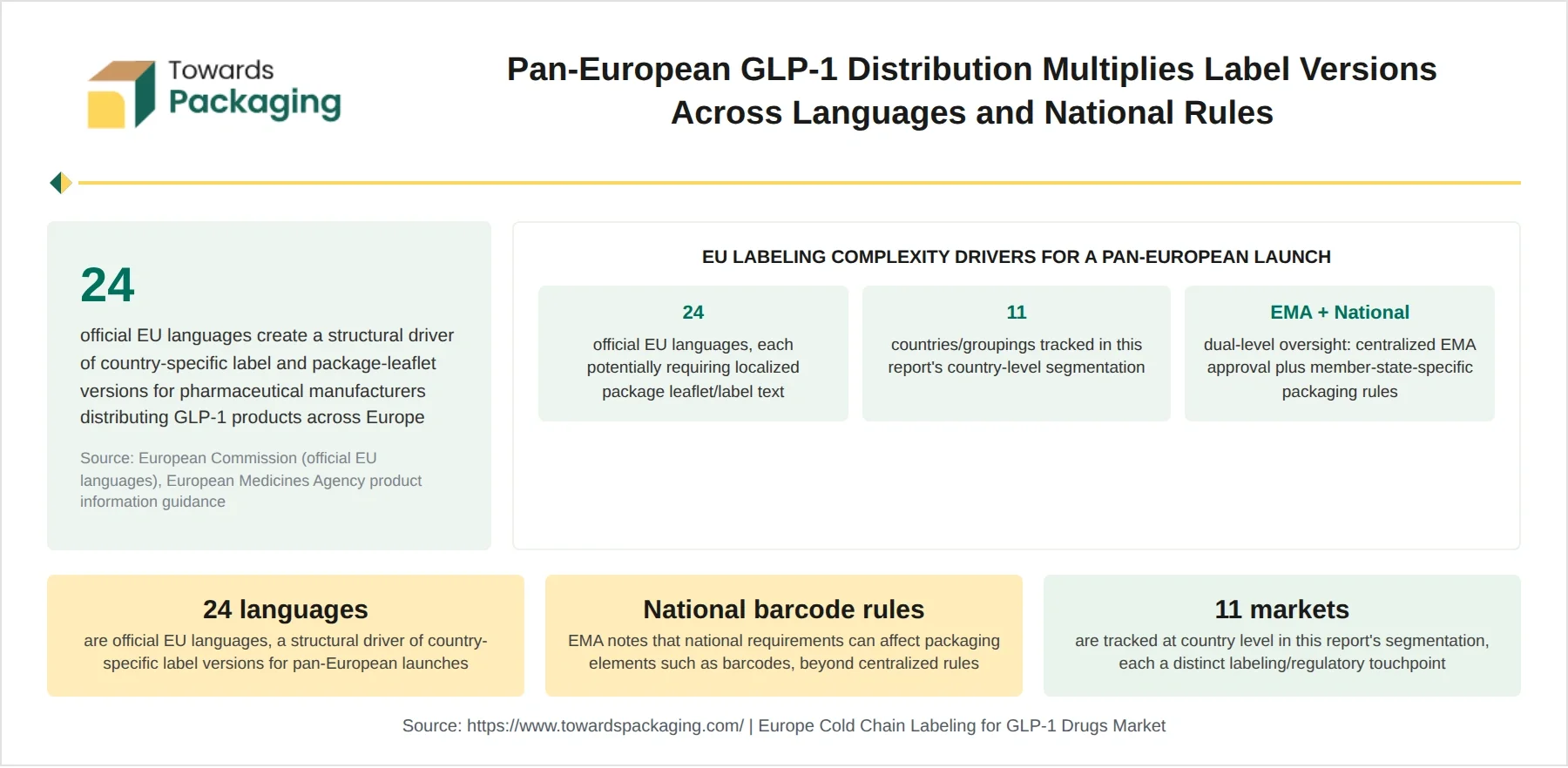
Source: European Commission; European Medicines Agency product information guidance
In the European Union, a total of 24 languages are official. The different EU languages create demand for package-leaflet versions and country-based labels for GLP-1 products. The complexity in EU labeling increases demand for PAN-European labels. Multi-language labeling demand is growing due to focus on cross-border flexibility and regulatory pushes. Regulatory agencies like the European Medicines Agency push for the development of labels in different languages.
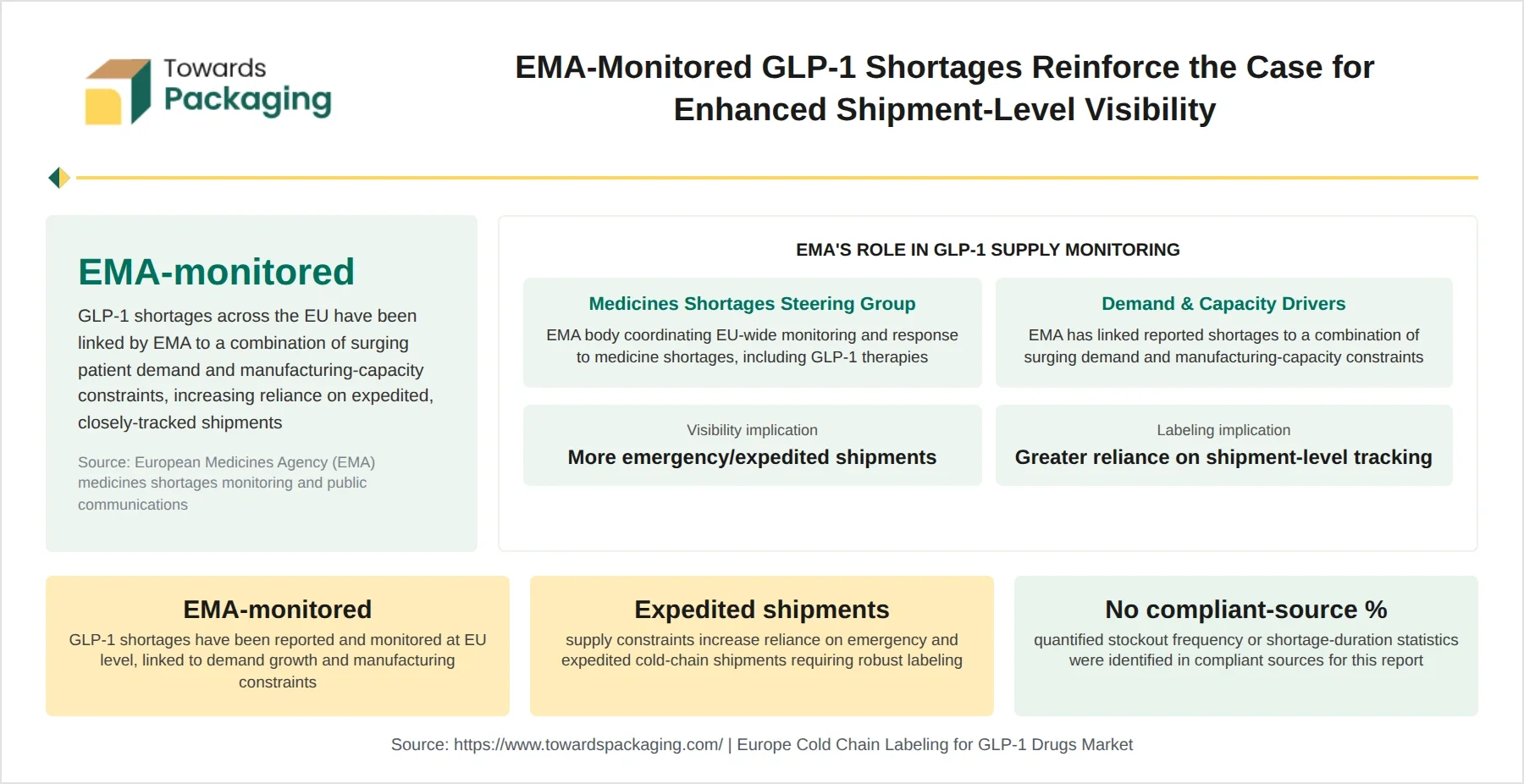
Source: European Medicines Agency (EMA) medicines shortages monitoring and public communications
European Medicines Agency observes shortages in GLP-1 products. Factors like high patient demand, off-label use, bottlenecks in manufacturing capacity, and counterfeit risks are responsible for GLP-1 shortages. The dependence on shipment-level tracking is a major labelling implication. The supply shortages increase dependence on cold-chain shipments, which creates higher demand for robust labelling. The shortages of GLP-1 products, including Saxenda, Victoza, Ozempic, and Trulicity, are growing. Actions like digital tracking, prohibitions on off-label use, and industry accountability help in lowering shortages.
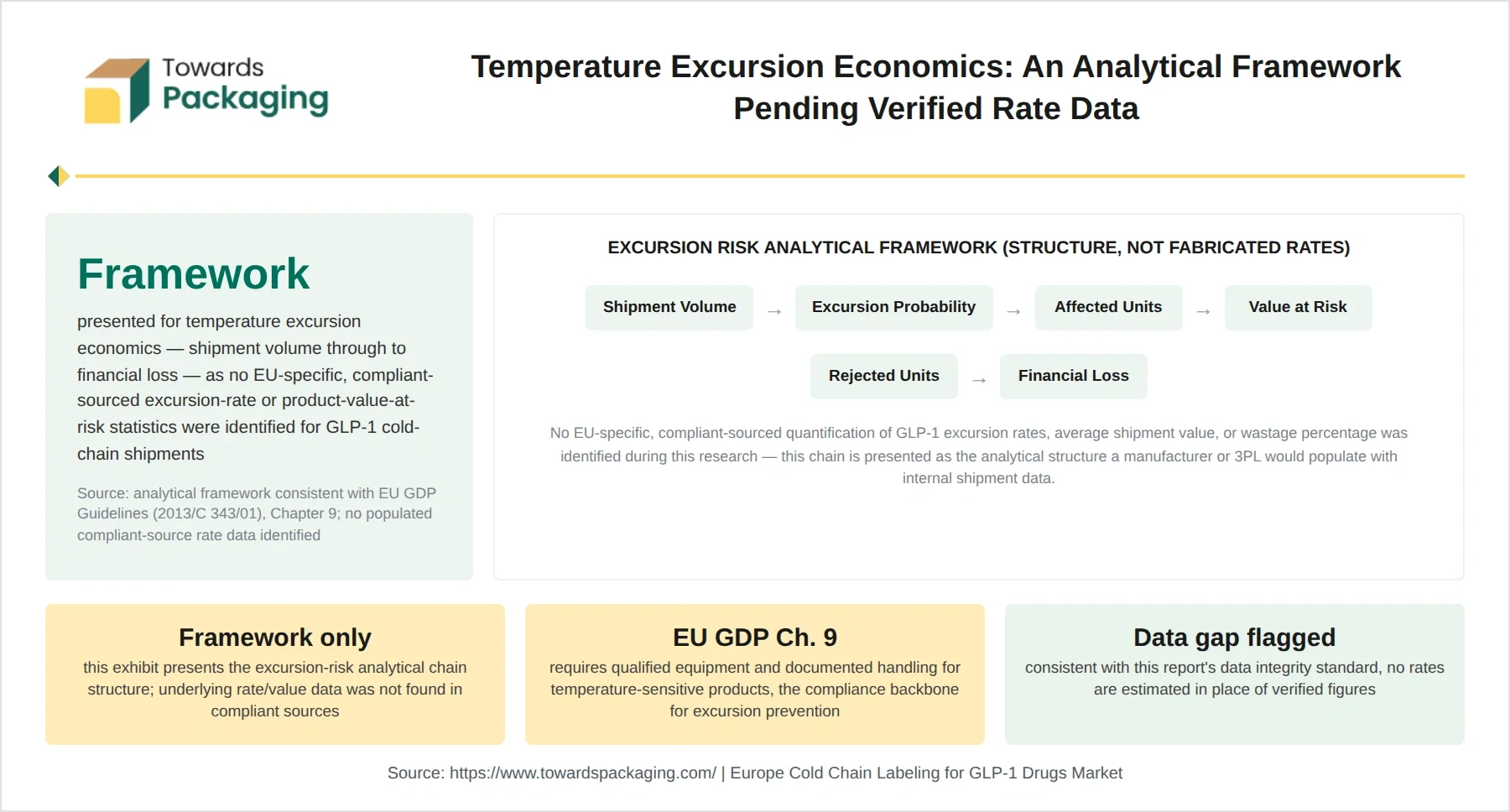
Source: Analytical framework consistent with EU GDP Guidelines (2013/C 343/01), Chapter 9; no populated compliant-source rate data identified
The excursion risk analytical framework includes shipment volume, excursion probability, affected units, value at risk, rejected units, and financial loss. Shipment volume is calculated by aggregating physical cargo size and packed unit volume. Excursion probability focuses on thermal profiling, lane risk analytics, cumulative stability budgets, and regulatory thresholds. Affected units are individual packages affected by temperature sensitivity. Value at risk focuses on stringent temperature tolerances and high financial density. Units are rejected due to data logger failures, freezing, and excursion breaches. Financial loss causes due to logistics overhead, brand impact, product write-offs, and compliance penalties.
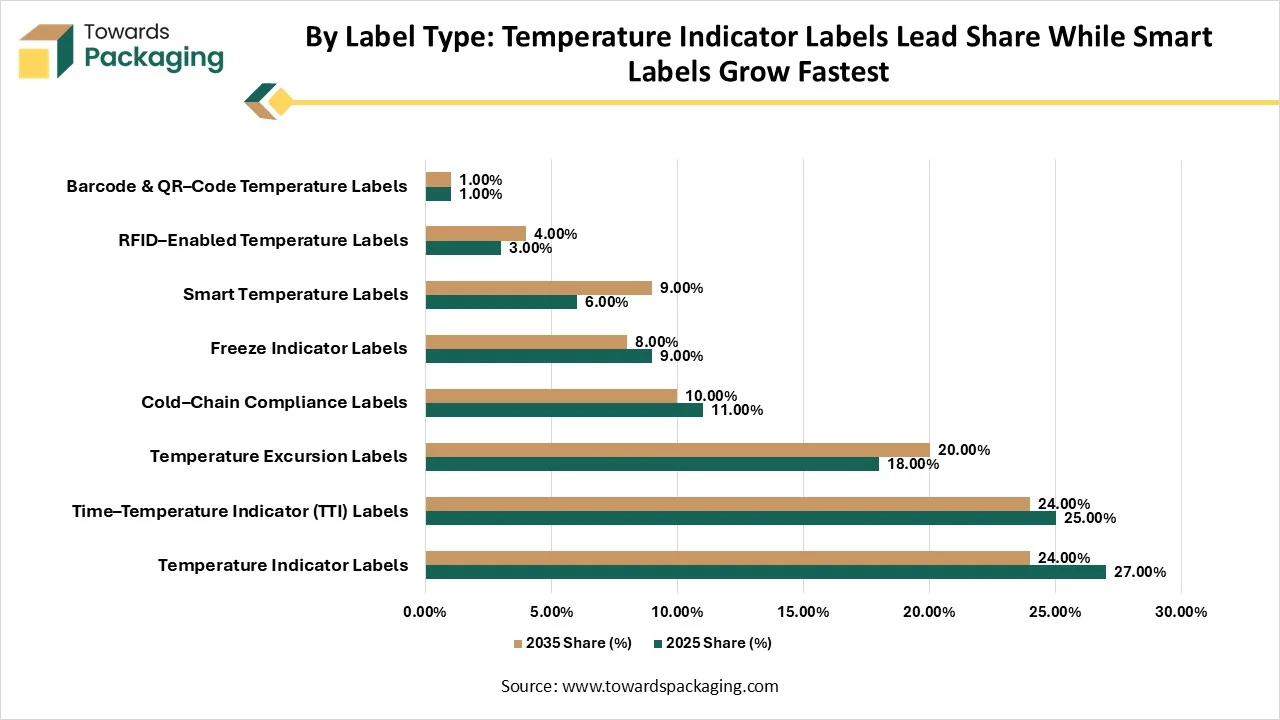
Temperature indicator labels dominated the Europe cold chain labeling for GLP-1 drugs market with a 27% share in 2025. The EU GDP guidelines for sensitive drugs and freezing risks in GLP-1 medications increase the use of temperature indicator labels. The rise in direct-to-pharmacy deliveries and expanding weight management indications increases the use of temperature-indicator labels. Time-temperature indicator (TTI) labels held a 25% market share in 2025. The high sensitivity of peptide-based injectables and focus on cumulative exposure tracking increases adoption of TTI labels. The rise in weight-loss therapies and the focus on instant visual verification drive the growth. Smart temperature labels are growing with the fastest CAGR of 17.5% during the forecast period. The stringent temperature limits and explosion of diabetes treatment increase the use of smart temperature labels. The rise in NFC smart labels and last-mile exposure boost the overall growth.
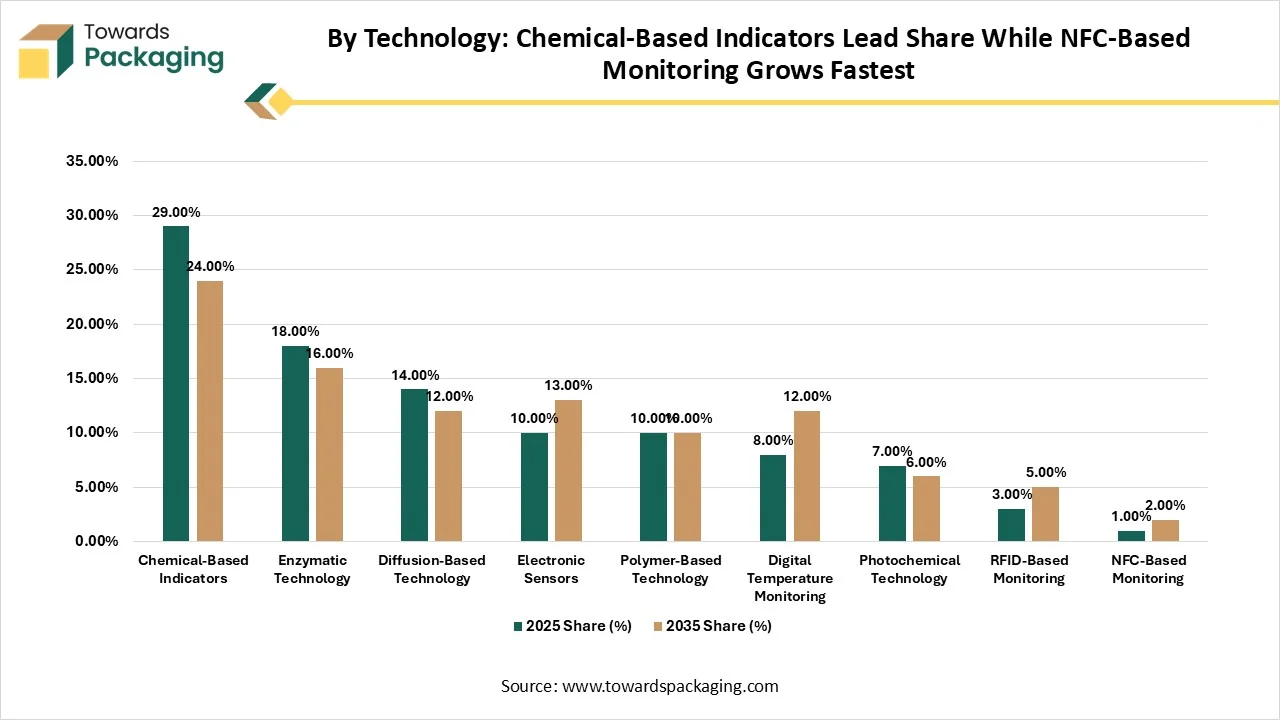
Chemical-based indicators dominated the Europe cold chain labeling for GLP-1 drugs industry with a 29% share in 2025. The need for immediate visual evidence and the rise in last-mile pharmaceutical distribution increase the adoption of chemical-based indicators. The low-unit cost, patient-centric usability, and last-mile simplicity of chemical-based indicators drive the growth. Enzymatic technology held an 18% share in the market in 2025. European pharmaceutical regulations and the growing demand for weight management solutions increase the use of enzymatic technology. The sustainable logistics and irreversible precision of enzymatic technology boost the growth. NFC-based monitoring is growing with the fastest CAGR of 20.1% during the forecast period. The growing demand for point-of-care verification and the need for last-mile visibility increase the use of NFC-based monitoring. The smartphone accessibility and sustainability of NFC-based monitoring boost the market growth.
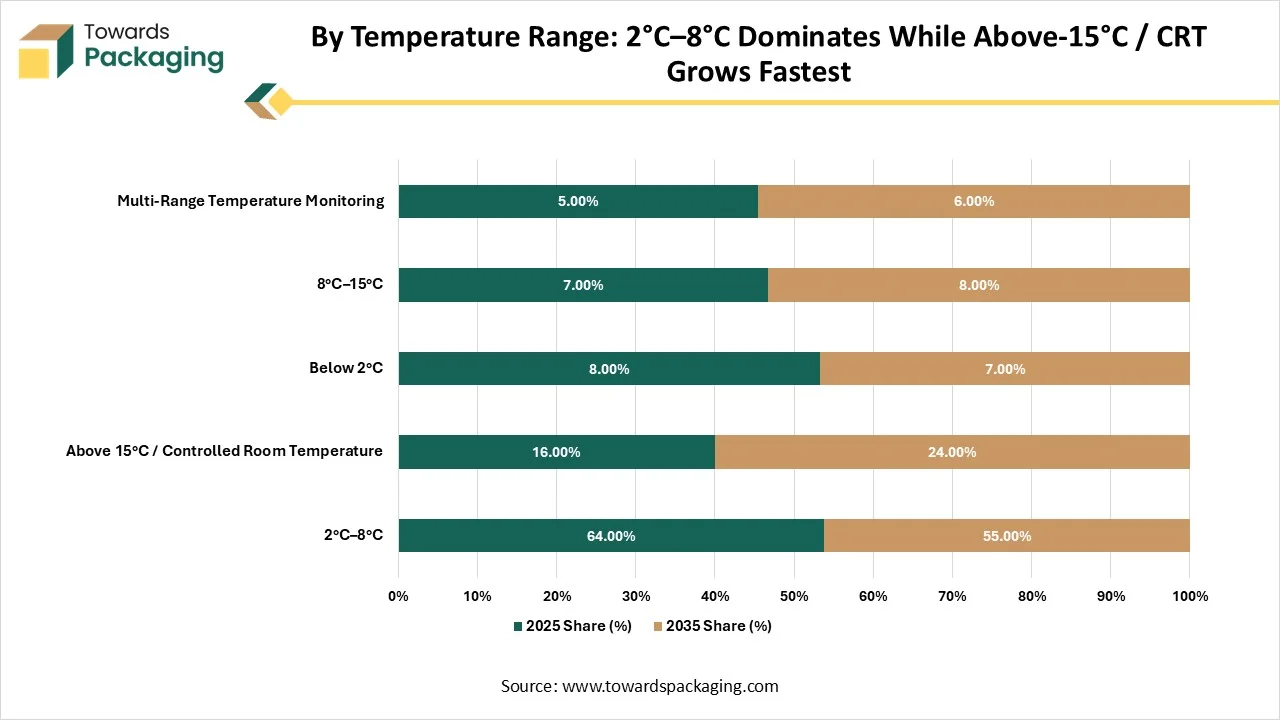
20C-80C dominated the Europe cold chain labeling for GLP-1 drugs industry with a 64% share in 2025. The primary wholesale distribution of medications and the focus on the chemical stability of peptide-based medications are increasing the use of 20C-80C. The zero freezing tolerance and high clinical efficacy of 20C-80C drive the market growth. Above 150C or controlled room temperature is growing with the fastest CAGR of 18% during the forecast period. The rise in weight management solutions home delivery and the expansion of bulky cold-chain boxes increase the use of above 150C or controlled room temperature. The regulatory flexibility, waste reduction, and enhanced patient access of above 150C supports the growth. Below 20C held an 8% market share in 2025. The prevention of freezing of active pharmaceutical ingredients and the utilization of freeze-indicator labels increase the use of below 20C. The growing diabetes volume and EMA regulations boost the overall growth.
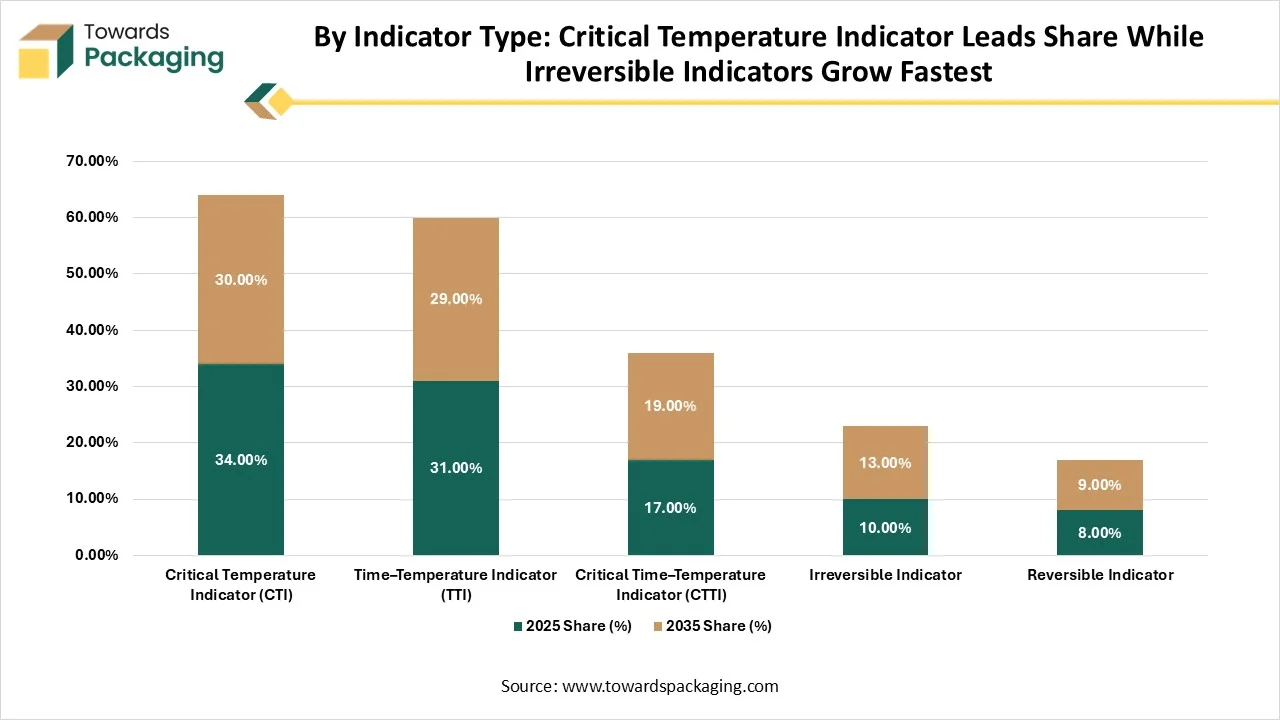
Critical temperature indicator (CTI) dominated the Europe cold chain labeling for GLP-1 drugs industry with a 34% share in 2025. The growing degradation risks and the expansion of decentralized pharma channels are increasing the use of critical temperature indicators. The focus on preventing invisible spoilage and the high therapeutic value of GLP-1 drugs increases adoption of CTI. Time-temperature indicator (TTI) held a 31% share in the market in 2025. The high temperature sensitivity of peptide medications and stringent European regulations increase the use of TTI. The thriving diabetes GLP-1 treatments and the rise in color-changing TTI labels boost the overall growth. Irreversible indicators are growing with the fastest CAGR of 16% during the forecast period. The focus on preventing the loss of therapeutic effectiveness of GLP-1 drugs and the reduction of invisible spoilage increases the use of irreversible indicators. Counterfeit prevention and GDP compliance in irreversible indicators boost growth.
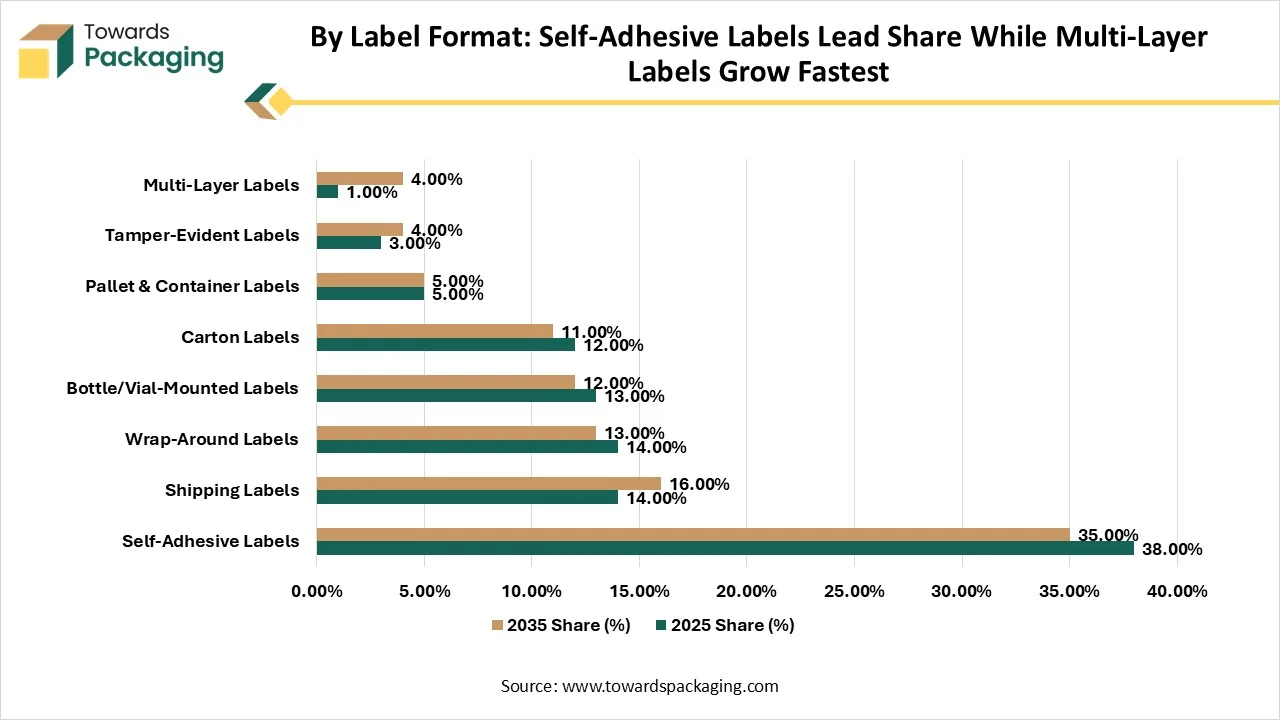
Self-adhesive labels dominated the Europe cold chain labeling for GLP-1 drugs market with a 38% share in 2025. The rise in injection pens and complex distribution networks in Europe increases the use of self-adhesive labels. The high substrate compatibility, condensation defense, and tamper evidence in self-adhesive labels drive the growth. Shipping labels held a 14% share in the market in 2025. The need for advanced thermal indicators and the growth in diabetes treatments increase the use of shipping labels. The rise in D2C pharmacy distribution and focus on verifying temperature breaches by pharmacists increase adoption of shipping labels. Multi-layer labels are growing with the fastest CAGR of 26% during the forecast period. The rise in small vials and focus on anti-tamper features increase use of multi-layer labels. The high adhesive durability, tiny surface areas, and smart integration in multi-layer labels boost the growth.
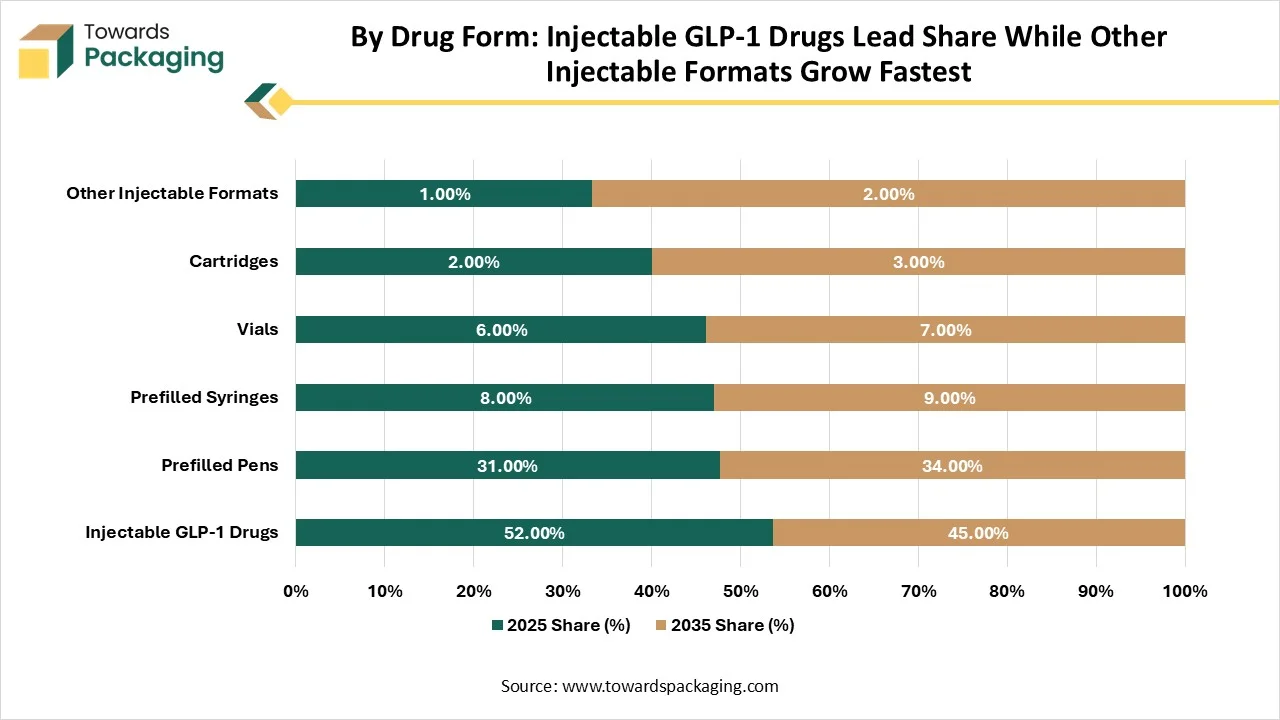
Injectable GLP-1 drugs dominated the Europe cold chain labeling for GLP-1 drugs industry with a 52% share in 2025. The focus on effective weight loss and lowering stroke risks increases the use of injectable GLP-1 drugs. The high clinical obesity rates and improved corporate investment drive the growth. Prefilled pens held a 31% share in the market in 2025. The high use of self-injection pens in home treatment and the growing counterfeit incidents increase the use of prefilled pens. The growing chronic conditions and focus on self-care support the overall growth. Other injectable formats are growing with the fastest CAGR of 20.1% during the forecast period. The increased shortages of pen devices and surging online pharmacy delivery increase the use of other injectable formats. The management of kidney diseases and multi-million investments boost the overall growth.
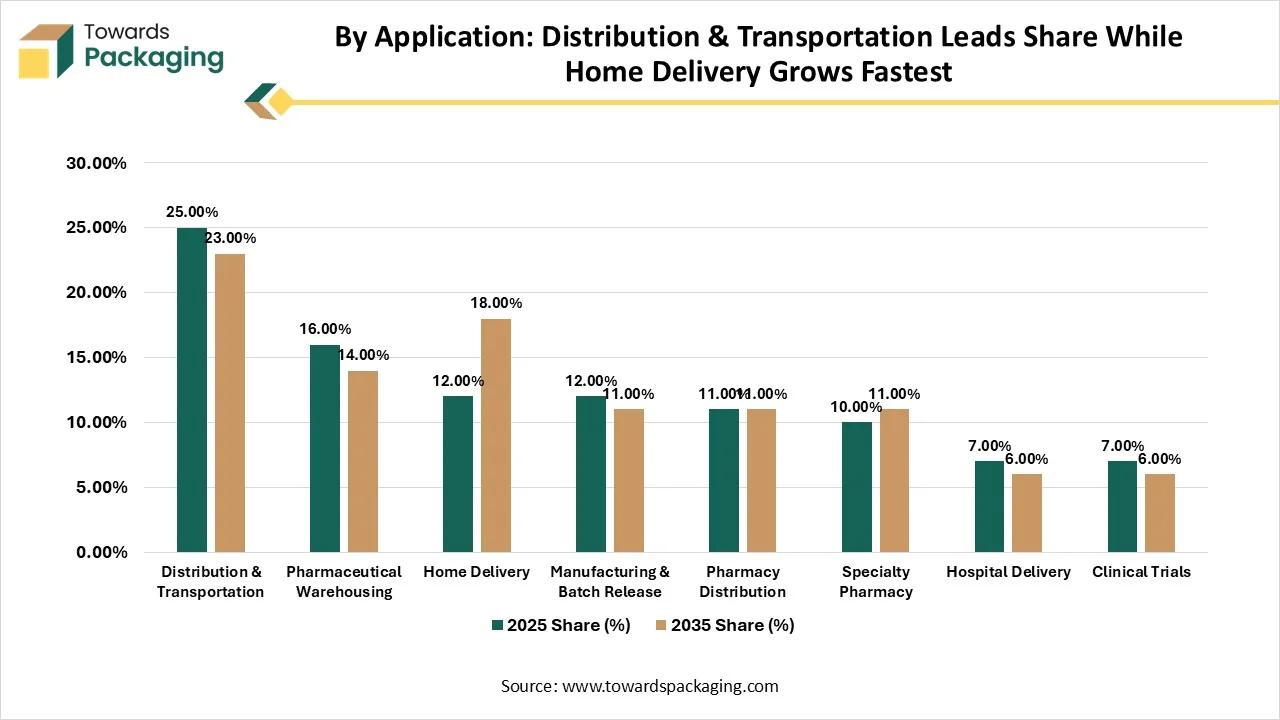
Distribution & transportation dominated the Europe cold chain labeling for GLP-1 drugs industry with a 25% share in 2025. The focus on maintaining the structural stability of GLP-1 drugs and high-density transit helps with expansion. The massive rise in home-delivery formats and surging cross-border movement drives the growth. Pharmaceutical warehousing held a 16% share in the market in 2025. The dependence on advanced refrigerated warehouses and late-stage customization increases the use of pharmaceutical warehousing. The modernized cold storage and rise in multi-language labelling boost the overall growth. Home delivery is expected to grow with the fastest CAGR of 17.4% during the forecast period. The preference for doorstep drop-offs of medications and the development of online pharmacy platforms help with the growth. The high adoption of telehealth and the rise in lighter insulated mailers boost the overall growth.
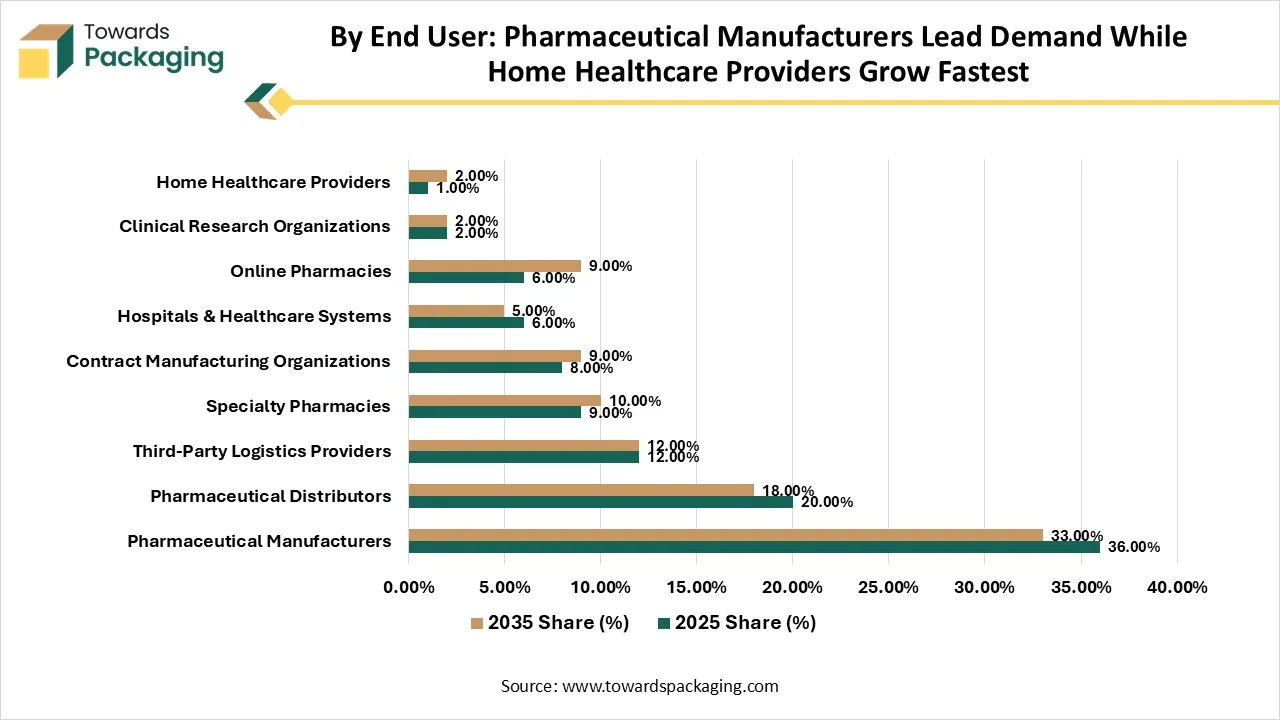
Pharmaceutical manufacturers dominated the Europe cold chain labeling for GLP-1 drugs industry in 2025 with a 36% share. The manufacturing of pen injectors and the interest in cold-chain branding help with expansion. The presence of Eli Lily and stricter quality assurance in GLP-1 medications drives the growth. Pharmaceutical distributors held a 20% share in the market in 2025. The increased supply of prescribed diabetes medications and the management of temperature sensitivity increase the use of pharmaceutical distributors. The use of Mounjaro and the focus on shortage management boost the overall growth. Home healthcare providers are growing with the fastest CAGR of 20.1% during the forecast period. The focus on avoiding visiting clinical settings and regulatory approvals for home delivery logistics helps with expansion. The innovative cold-chain labeling and the need to lower outpatient strain support the growth.
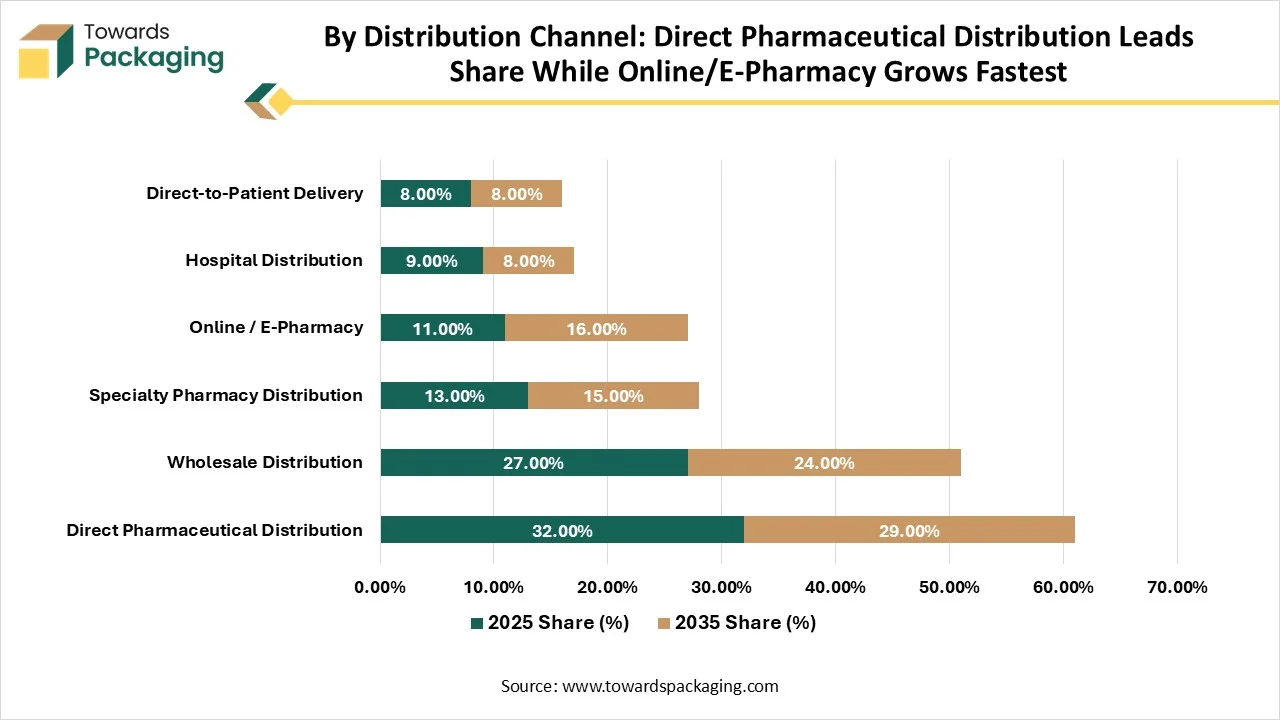
Direct pharmaceutical distribution dominated the Europe cold chain labeling for GLP-1 drugs market with a 32% share in 2025. The stringent thermal parameters in direct distribution and the rise in wholesale bulk handling help with expansion. Manufacturing control and counterfeit prevention in direct pharmaceutical distribution boost growth. Wholesale distribution held a 27% share in the market in 2025. The high volume of weight loss treatments and the focus on maintaining continuous compliance increase use of wholesale distribution. The rising patient volumes and localized re-labeling drive the growth. The online/e-pharmacy is expected to grow with the fastest CAGR of 17.2% during the forecast period. The growing patient demand for home shipping and domestic electronic prescription systems increases the use of online/e-pharmacy. The fast development of e-prescription networks and the rise in licensed digital platforms drive the overall growth.
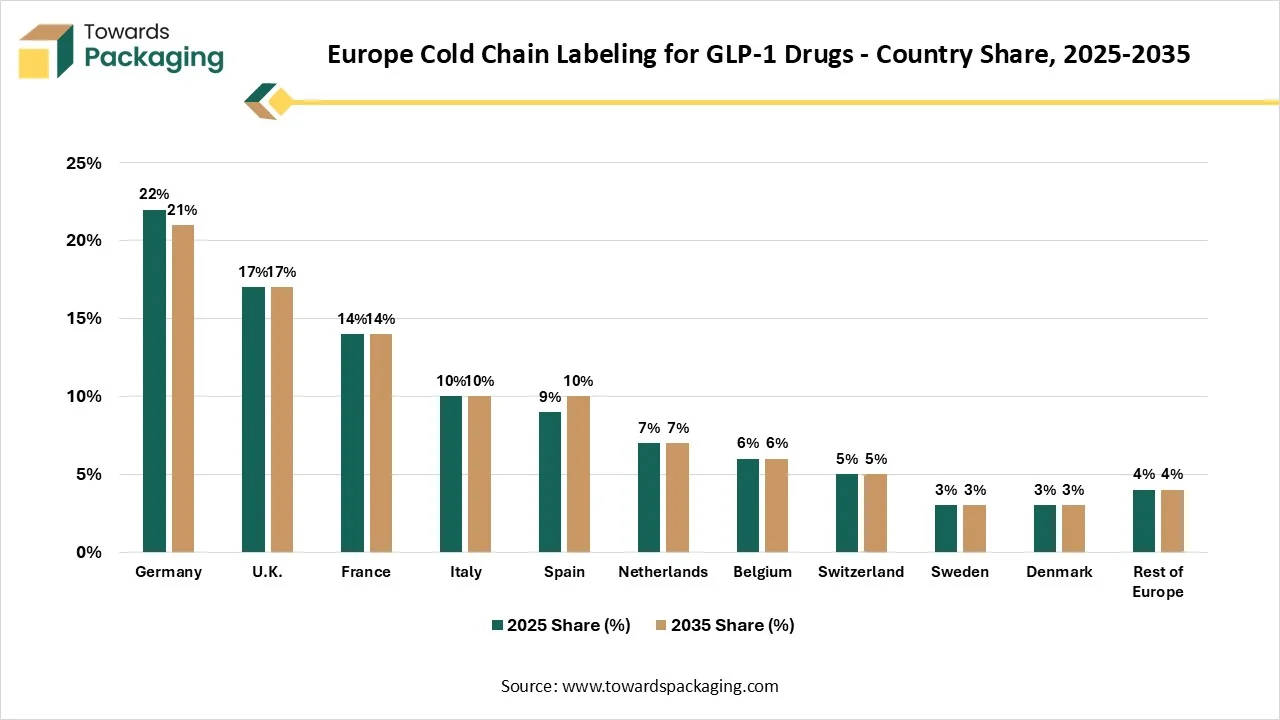
Germany dominated the Europe cold chain labeling for GLP-1 drugs market with a 22% share in 2025. The strong transport hubs and smart packaging capabilities increase the production of cold chain labelling. The focus on reducing temperature excursion risks and the integration of IoT-enabled sensors helps with expansion. The growing number of type 2 diabetes patients boosts the overall growth of the market.
United Kingdom held the second-largest share of 17% in the market in 2025. The surging demand for temperature-sensitive injectables and enhanced digital traceability helps with expansion. The rise in home delivery models and real-time data loggers increases the production of cold chain labelling. The major logistics providers support the overall growth.
France held a 14% market share in 2025. The rise in metabolic conditions and formal state inclusion increases the use of GLP-1 drugs. The surge in temperature-sensitive peptide formulations and core pharmaceutical distribution hubs helps with the expansion. The presence of Novo Nordisk and the high volume of cold packaging drives the market growth.
Italy held a 10% market share in 2025.
Spain held a 9% share in the market in 2025 and is expected to grow with the fastest CAGR of 13.9% during the forecast period. The growing type-2 diabetes prescription rates and incorporation of blockchain-based temperature tracking help with expansion. The advanced life-science production and the high demand for GLP-1 increase the use of cold chain packaging. The strong presence of supply chain operators boosts the overall growth.
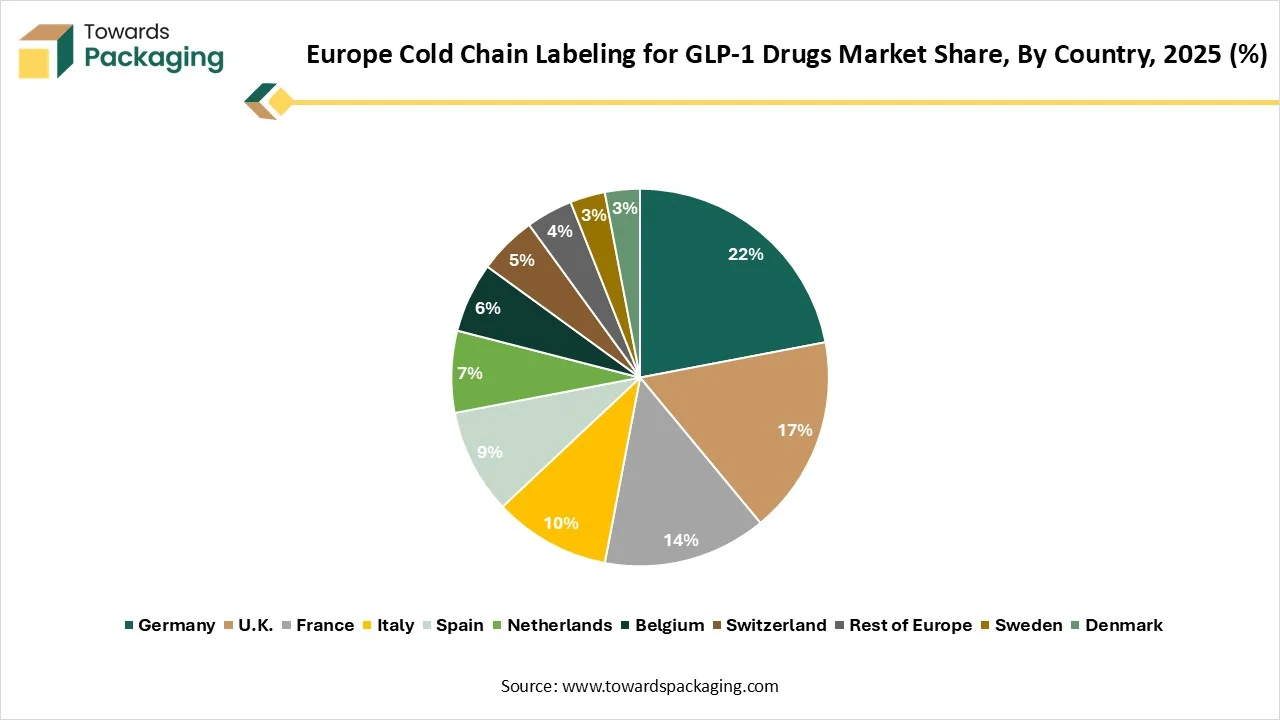
Germany leads the market with a 22% share in 2025 due to high biopharmaceutical production, advanced real-time tracking, and the presence of digital pharmacies. U.K. held a 17% share in 2025 due to the surging demand for GLP-1 medications and telehealth expansion. France held a 14% share in 2025 due to the widened prescription capacities and stringent temperature rules. Italy held a 10% share in 2025 due to the rise in anti-diabetic treatments, focus on handling sensitive biologics, and burgeoning home delivery networks. Spain held a 9% share in the market in 2025, driven by the expansion of temperature-sensitive injectables and the expansion of value-added pharmaceutical services.
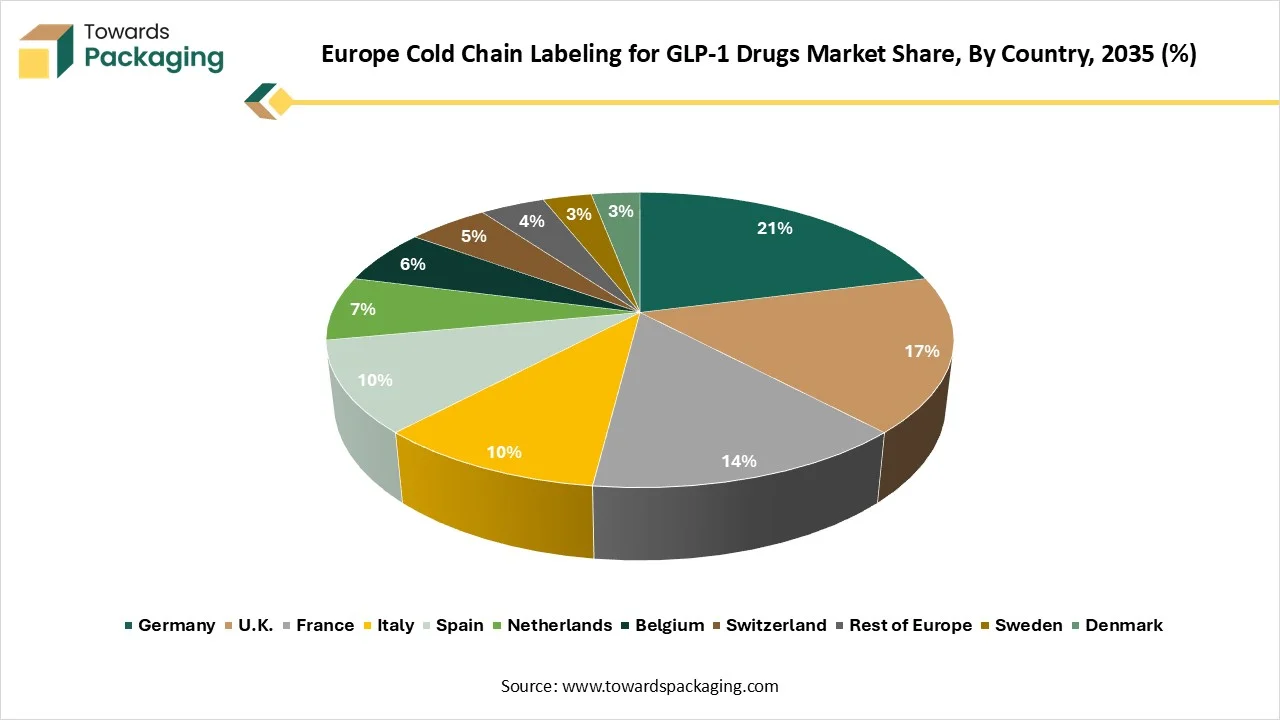
Germany is predicted to reach 21% in the Europe cold chain labeling for GLP-1 drugs market by 2035 due to strong industrial corridors, a rise in cold-resistant labelling, and the expansion of metabolic indications. U.K. is predicted to reach a 17% share by 2035 due to the expansion of GLP-1 therapies and growth in online private prescriptions. France is predicted to reach 14% in the market by 2035 due to growing obesity rates and established centralized pharma logistics. Italy is predicted to reach 10% in the market by 2035 due to the high prevalence of type-2 diabetes and the expansion of sensitive biopharmaceutical packages. Spain is predicted to reach 10% in the market by 2035 due to the high rates of chronic weight management and advanced pharmaceutical logistics.
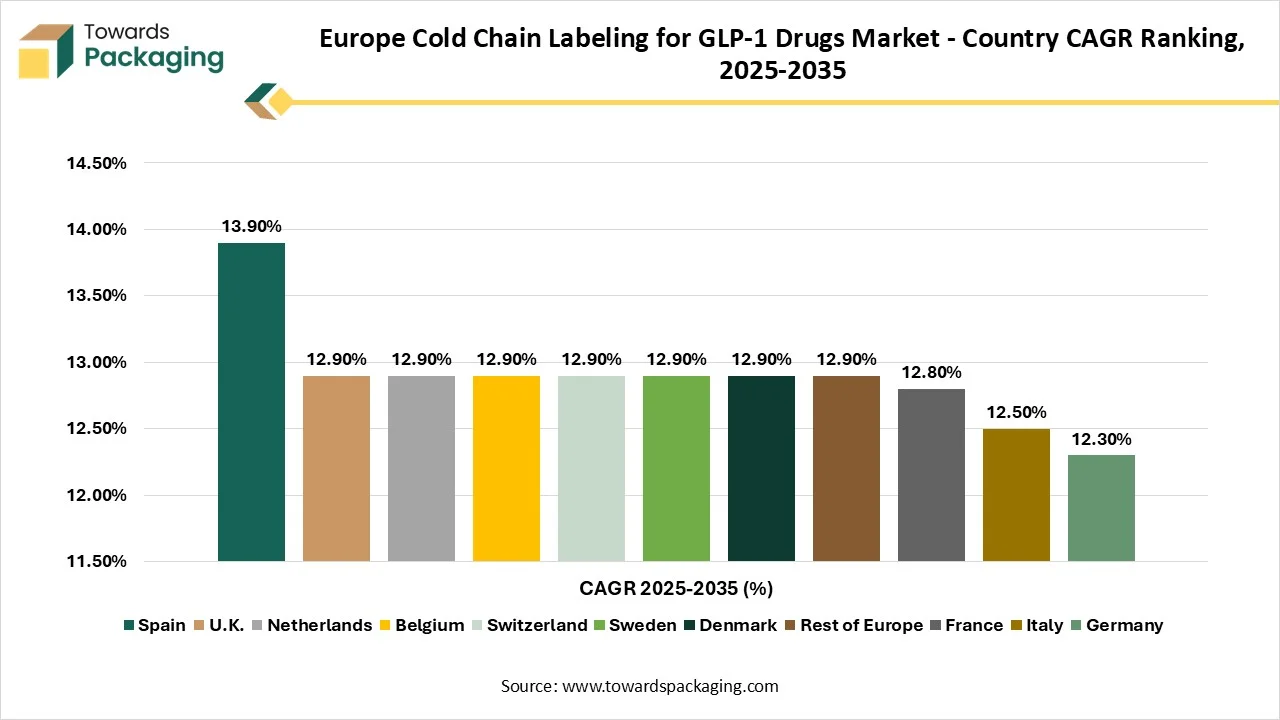
Spain is expected to grow with the fastest CAGR of 13.9% in the market during the forecast period due to the high domestic demand for GLP-1 receptor, interest in digital serialization verification, and cold-chain integration. United Kingdom is expected to grow at a 12.9% CAGR in the market during the forecast period due to the focus on chronic weight management and growth in medication prescribing channels. Netherlands is expected to grow at a 12.9% CAGR during the forecast period due to the presence of an advanced refrigerated logistics hub and the growing use of GLP-1 in diabetes. Belgium is expected to grow at a 12.9% CAGR during 2025-2035 due to the expansion of cold-chain labelling infrastructure and a strong biotech research cluster. Switzerland is expected to grow at a 12.9% CAGR during 2025-2035 due to the presence of major drug manufacturers and the huge production of weight-loss drugs.
According to research, cold chain labeling for GLP-1 drugs is growing rapidly due to the rise in diabetes, stringent sensitivity, home delivery growth, European manufacturing Expansion, and the rise of smart labeling. Germany dominated the market in 2025 with a major share due to high technology adoption and advanced logistics infrastructure. Major manufacturers like Eli Lilly, DSV A/S, SpotSee, Novo Nordisk A/S, Nordic Cold Chain Solutions, and DHL Group supported the market expansion.
Vidyesh Swar performed primary research on market forecast size, current size, country-level share in 2025 & 2035, and segmental shares.
Aman worked on GLP-1 storage requirements, recent developments, last-mile labeling requirements, EU GDP guidelines, GLP-1 shortages, temperature excursion economies, and key market companies.
Aditi reviewed the entire document, corrected factual errors, identified inconsistencies, and maintained quality standards according to organizational requirements.
By Label Type
By Technology
By Temperature Range
By Indicator Type
By Label Format
By Drug Form
By Application
By End User
By Distribution Channel
By Country




























Principal Research Analyst
Vidyesh Swar is a Senior Research Analyst at Towards Packaging, bringing over 4 years of dedicated expertise in market intelligence and strategic analysis across the dynamic world of packaging technologies and solutions.
Learn more about Vidyesh Swar

Reviewed By
Aditi Shivarkar, with 14+ years in packaging market research, specializes in food, beverage, and eco-friendly packaging. She ensures accurate, actionable insights, driving Towards Packaging Analytics & Consulting 's excellence in industry trends and sustainability.
Learn more about Aditi Shivarkar

Europe Cold Chain Labeling for GLP-1 Drugs Market
 Table of Content

 Download Sample
 Schedule a Meeting