


Electric Vehicles industry is expanding significantly throughout North American region rapidly. Huge adoption of such vehicles has raised the demand for enhanced component packaging. It is widely adopted with the increasing demand for lightweight, durable, and eco-friendly packaging options. Huge customization options available in this packaging sector has pushed its demand. Its high recyclability and durability have enhanced the acceptance of this packaging production.
Plastic packaging is high on demand as it has huge potential to prevent components from adverse condition and also appeared as critical component in the automotive logistics. It confirms the safety of the vehicle components while transported to a longer distance from several external agents such as moisture and various other factors. Customized thermoformed plastic inserts and trays are progressively in demand to guard subtle automotive apparatuses, particularly those utilized in electric vehicles, like sensors and batteries. This firm development is projected to be pushed by the growth in electric vehicle (EV) manufacturing, the requirement for effectual logistics in multifaceted supply chains, and the rising trend in the direction of sustainable packaging options.
Plastics have changed the automotive sector by contributing a plethora of profits. Plastic thermoforming permits producers to generate fuel-effectual vehicles with improved security features while instantaneously decreasing production charges and reducing ecological impact. The capability to plan parts utilizing thermoformed plastics has showed new paths for continuing invention and originality in the automotive sector. Plastics is one of the indispensable elements, transforming vehicle pattern and production. Their durable and lightweight properties have made it the go-to resource for an extensive variety of usages while still fulfilling strict safety guidelines.
Two major thermoforming techniques are: pressure forming and vacuum forming. Both processes include extending a heated thermoplastic sheet on a mould's surface, each technique has exclusive advantages suitable for specific pattern preferences. The selection between these two techniques pivots on the exact requirements according to the project. In this process, a plastic piece is formed inside a mould cavity utilizing vacuum or air pressure. Each mold hollow is made to produce an exact part, with the complete mold arrangement, generally recognized as "tooling," including various such cavities.
Thermoforming contains of upfront steps which making it an ideal process for speedily creating bulk numbers of molded objects. This includes reliably showing thermoplastic sheets inside a heating chamber to enhance its shape. For bigger components, distinct thicker sheets are handled distinctly. Some setups integrate an extrusion apparatus before the thermoforming phase. Furthermore, certain shapes permit for the immediate production of numerous parts by retaining moulds with various cavities in single press hit.
FTAs have confirmed as one of the most operative methods for U.S. exporters to admittance foreign industries which is making it calmer and cheaper for the trades in U.S. In 2023, the United States exported $44.7 billion in plastic resources and goods to 20 FTA partners and $1.9 billion in equipment and moulds for plastics. The United States relished a trade excess of $17.1 billion in plastic resources and goods, while facing a trade shortage of $253 million in equipment and moulds with FTA associates. FTA trade includes 59.5% of total exportations for plastic resources and goods and 60.6% for machinery and shapes for plastics.
Three top countries of North America boosting the growth of automotive thermoformed packaging are:
With the rising usage of automotives there is a huge demand for packaging of its components for safe transportation and storage. These are considered as suitable option as it can be easily customized, lightweight, durable, and cost-efficient solution available. These countries are also considered as top manufacturers of these packaging which help to grow the industry with meeting consumers' demand.
The future of these thermoforming packaging in the automotive sector looks promising. With the rising demand for plastic elements which is influenced by the growth of electric vehicles, underlines the status of plastic thermoformed packaging in determining the future of automotive industry for transportation. As technology expand, we can predict further progressions in plastic resources and production processes which is opening up new potentials for sustainability and innovation in the rising automotive sector. Producers are accepting AI-influenced, automated thermoforming to enhance consistency, decrease resource wastage and accelerate construction of intricate automotive parts.
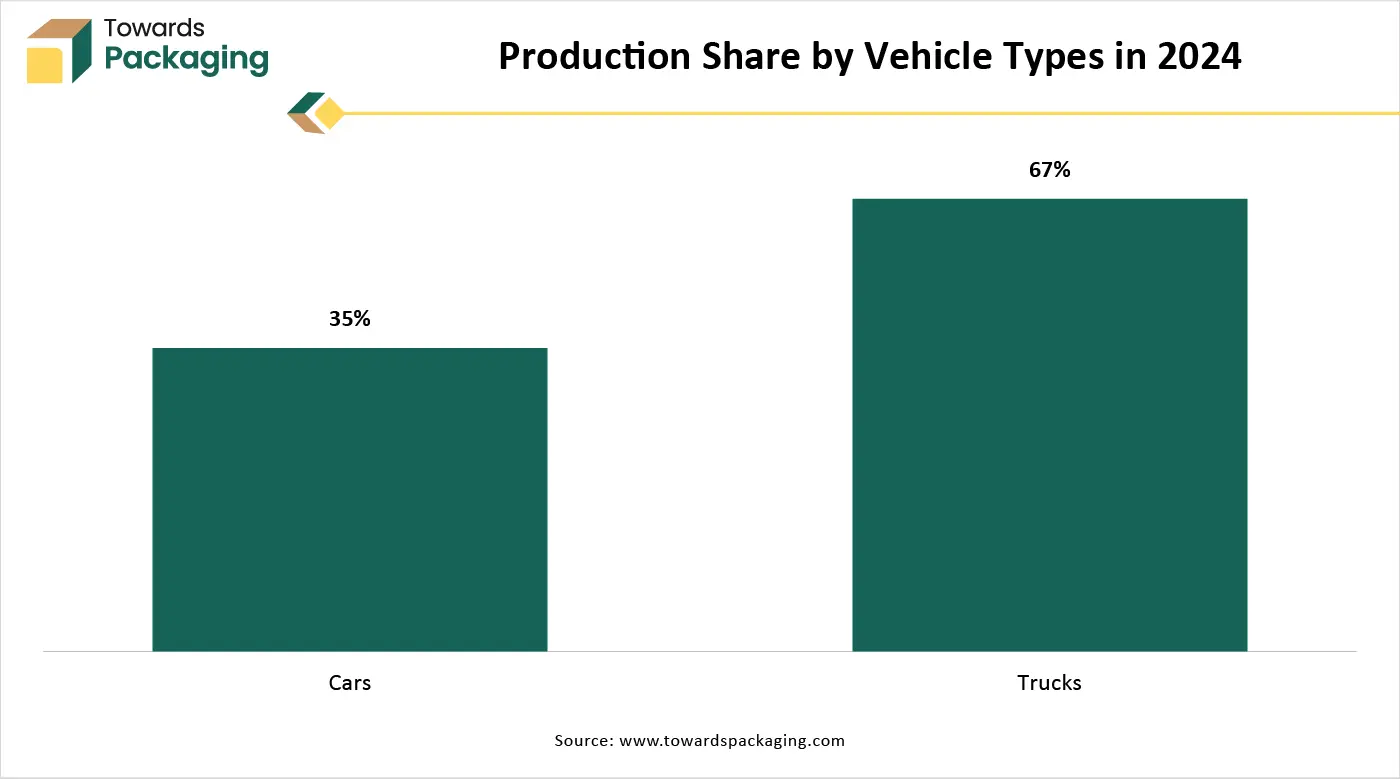
The United States has one of the major automotive sectors in the world. In 2024, the United States was reported as the world's second-largest sector for production as well as sales of vehicle. According to the International Organization of Motor Vehicles, in 2024, the United States manufactured 10.6 million motor vehicles and motor vehicle sales reached 16.3 million.
Foreign-possessed automakers preserve a noteworthy and rising occurrence in the United States. From past 30 years, foreign-owned automakers have approximately tripled their U.S. production services and fuelled motor vehicle manufacturing in the United States by 145%. In 2024, foreign-possessed automakers offered to around half of all motor vehicle manufacturing in the United States.
| United States PHEV | 0.3 million |
| United States BEV | 1.2 million |
Automotive companies planned vehicle machineries to lessen crash occurrence and traffic mortalities. Some machineries advanced by the automotive industry later on became uniform and essential by federal supervisors and accepted across the trade. Automotive producers have invented some security machineries such as the three-point seat belt and several other vehicle security technologies have invented from federally and non-federally reinforced research. Automotive producers continue to plan and improve additional security technologies like automotive reserve braking, track departure cautionary, and lane possession assistance.

Aditi serves as Vice President at Towards Packaging, bringing over 15 years of experience in market research, innovation, and business strategy within the packaging industry. She works across segments such as sustainable packaging, flexible materials, and industrial packaging solutions. Aditi studies evolving consumer demands, material advancements, and regulatory changes, then turns those insights into clear strategies for businesses. She helps organizations stay competitive, improve product positioning, and respond effectively to shifting market trends.

Aman Singh has spent more than 13 years working in research and consulting, with a strong focus on the global packaging sector. He tracks developments in areas like eco-friendly materials, smart packaging technologies, and supply chain changes. At Towards Packaging, Aman leads the research team and ensures every study delivers accurate and useful insights. He breaks down complex industry developments and helps companies understand where opportunities lie and how to act on them.

Piyush Pawar works as Senior Manager for Sales and Business Growth at Towards Packaging, bringing over a decade of experience in client-facing roles within the packaging industry. He connects businesses with the right research and helps them apply insights to real-world decisions. Piyush understands market challenges and works closely with clients to provide solutions that support growth. He focuses on building strong partnerships and helping companies turn industry knowledge into practical results.
North America Automotive Thermoformed Plastics Packaging Market


 Request Consultation

