





The flexible intermediate bulk container market is worth USD 8.48 billion in 2025 and is on track to reach USD 14.37 billion by 2035, a CAGR of 5.42%. That is steady, durable growth for a product most people never think about.
Look at what is driving it and the picture gets more interesting. The growth isn't coming from industrial output alone. A large part of it is sustainability, turned from a compliance cost into a buying reason.
Here is how the boring bulk bag became a growth story.
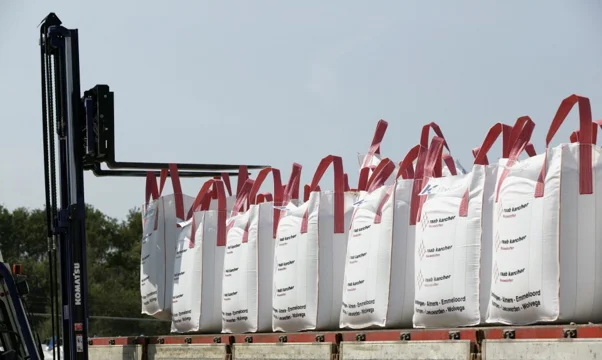
Demand for big bags is no longer one market. It is separating into two.
On one side sits the commodity segment, where standard bags compete on price and nothing else. On the other sits a higher-value segment built around performance, safety, and sustainability, where service and innovation command a premium. That second segment is where the margin is, and it is the one regulation keeps feeding.
In Europe, the regulatory push for sustainable packaging is the single biggest driver. It is creating real demand for reusable FIBC loops and bags made with recycled polypropylene. North America is now the fastest-growing region in the market, lifted by the same shift toward recyclable, large-scale packaging. Asia Pacific still holds the largest share, carried by industrial expansion across China and India.
The pattern is consistent across all three. Sustainability is not a side conversation anymore. It is the demand driver.
Strip away the market language and the reason is practical. A bulk bag reduces waste in four ordinary ways, and they stack.
One bag replaces many. A single FIBC does the work of a stack of smaller packages. Less material goes in, so less comes out as waste. You are not recycling better. You are not making the waste in the first place.
It is often suitable for reuse. A well-made bag is strong enough to take heavy loads without tearing, which is what makes reuse possible, depending on how it is applied and handled. Most carry up to around 2,000 kg, depending on construction and safety factor.
The material is recyclable. FIBCs are made from polypropylene, which can be reprocessed rather than dumped. That is what makes the recent moves into recycled content matter. Manufacturers are now launching bags built from rPET and rPP, and even plants that turn recycled bottles into bulk bags. Mono-material designs are being engineered specifically to recycle more easily at end of life.
The empties travel flat. An empty bag folds down to a fraction of its volume, so return logistics ship far less air than rigid containers do. Fewer trips, less fuel, lower transport emissions. For anyone tracking scope 3, that is a concrete lever.
None of these is dramatic on its own. Added across a full operation, they move packaging from a waste line item to one that quietly cuts waste.
The growth is not spread evenly. It clusters where bulk handling is heaviest.
Chemicals and fertilizers form the largest end-user segment, driven by the volume of bulk material moving from plants to agriculture. Building and construction, food and beverages, mining, and pharmaceuticals follow. By capacity, bags above 750 kg dominate, because that is what chemicals and construction need. By format, Q-bags lead, since their square shape holds roughly 30% more than standard bulk bags and stacks more efficiently in transit.
This is also where product protection becomes a sustainability factor in its own right. Spoiled product is waste too, and an expensive kind. Liners guard against moisture, oxygen, and contamination, with PE, PE/aluminium, and PE/EVOH options for different jobs. Ventilated bags keep produce like potatoes and onions fresh by preventing temperature shock. Packaging specialists such as NNZ build their big bags to match the product and the logistics flow, which is the difference between a bag that cuts waste and one that creates it.
There is one detail worth understanding, and it works in favour of the better suppliers.
A big bag is only as sustainable as it is durable. A bag made from the right material and built to a high standard takes its full load, survives rough handling, and comes back for more trips, which is where the reuse and recycling benefits actually come from. Thin material and weak construction fail early and never deliver on that promise. This is exactly why specification matters, and it is why the market value is shifting toward manufacturers that compete on performance and sustainability rather than price alone. Choosing a well-engineered bag from an established specialist is the difference between packaging that cuts waste and packaging that becomes it.
For food, feed, and other controlled materials, the bag also has to meet the right standard, so it is always worth confirming which certification applies to your product and market before specifying.
Put the pieces together and the trajectory is clear. The FIBC market grows at a healthy 5.42% through 2035, but the value increasingly sits in the sustainable, high-performance end rather than the commodity floor.
For producers, the read is simple. The bag that ships more efficiently, wastes less material, and now carries recycled content is also the one regulation is pushing toward. The greener choice and the commercial choice have converged on the same bulk bag. That convergence is the growth engine, and it is not slowing down.
For more information visit NNZ.
03 August 2026
03 August 2026
03 August 2026
03 August 2026