


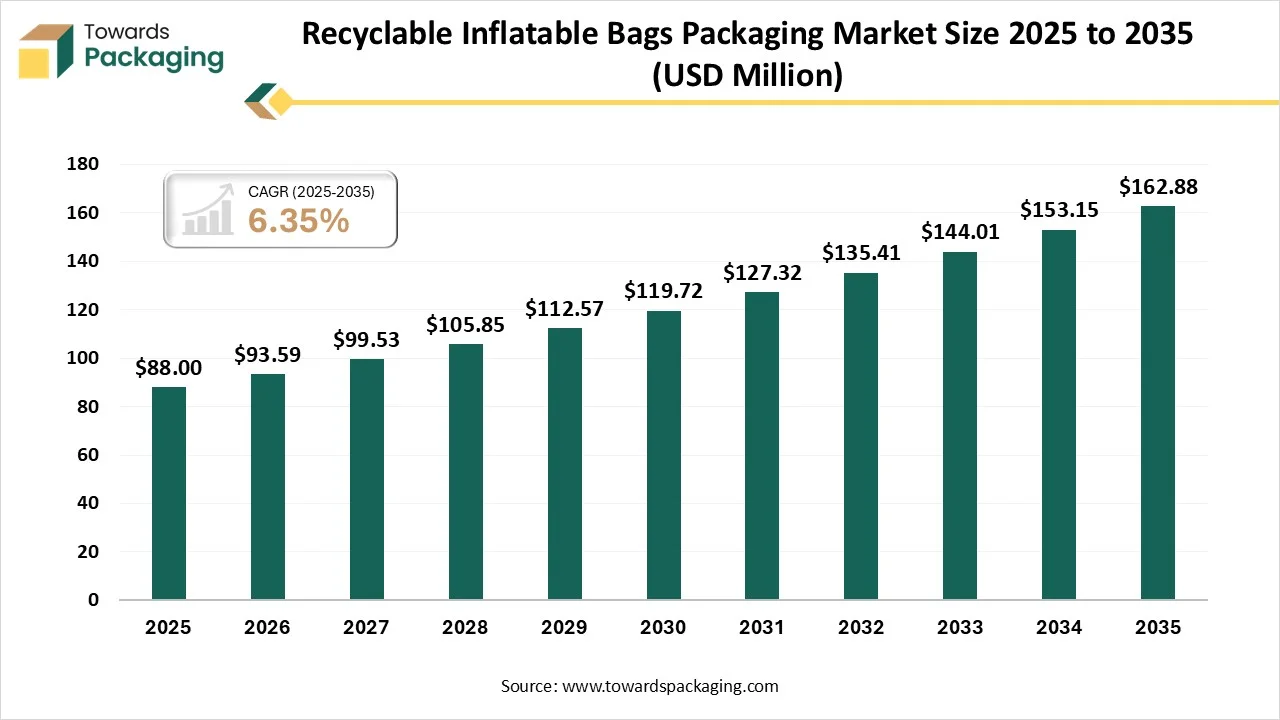
The recyclable inflatable bags packaging market is projected to grow from USD 93.59 million in 2026 to USD 162.88 million by 2035, registering a steady CAGR of 6.35% during 2026-2035. The market growth is driven by rising environmental awareness, increasing regulatory pressure on sustainable packaging, and growing demand for lightweight and space-efficient protective packaging solutions. Our report provides comprehensive coverage of market size evaluation, detailed segment data by material type, end-use industry, and application, along with regional performance analysis. It also includes in-depth company profiling, competitive landscape assessment, value chain analysis, trade statistics, and detailed insights into manufacturers and suppliers operating in the global market.
Recyclable inflatable bags packaging is a sustainable defensive transporting option made from resources such as recyclable LDPE (Low-Density Polyethylene) or specific films, planned to cushion goods which is 100% recyclable. These bags packaging are sometimes sent flattened, saving storing space, and includes 99% air, decreasing transporting weight and ecological influence, commonly utilized for bottles, electronics, and fragile products. Recyclable bags packaging is manufactured from resources that can be utilized again, generally after handing out, and covers packing resources such as aluminium, glass, paper, steel, cardboard and some plastics.
Technological transformation in the recyclable inflatable bags packaging market plays a significant role by enhancing material recyclability. Huge shift from mixed-material laminates to mono-material polyethylene (PE) films which is completely recyclable. Producers are integration higher proportions of post-consumer recycled (PCR) resources in air pillows. Developments in polymer manufacturing have formed high-strength, ultra-thin films that utilize minimum plastic while offering better puncturing barrier and excellent cushioning.
The major raw materials utilized in this market are recycled polyethylene, high-density polyethylene, PBAT, and starch-based films. Multi-layer and recyclable films are planned to offer both recyclability and durability.
The component manufacturing in this market comprises film material, extrusion and layering, and air cushion machine. These films are available for custom printing for several brands which support in establishing unique packaging.
This segment ensures damage reduction, logistics charges reduction, warehouse automation, and efficient storage. It is widely useful in the packaging of fragile products such as bottles, ceramics, and electronics.
The dunnage/air-bags segment dominated the market with highest share in 2025 due to its significant role in heavy-duty cargo stabilization. Strict sustainability guidelines have pushed the utilization of dunnage/air-bags which fuelled the growth of this segment. The huge demand for high volume containerized for international trade, mainly in the electronics and automotive industries, generated a huge requirement for such air-bags to protect load shifting throughout long sea passages. The acceptance of IoT-allowed smart dunnage air-bags permitted real-time tracking of cargo integrity and pressure, and it became a finest standard for high-worth shipments. The utilization of heavy-duty dunnage air-bag to stabilise palletised cargo in trucks to confirm damage-free and on-time delivery.
The in-line inflatable systems segment is expected to grow at the fastest CAGR during the forecast period. This segment is growing due to superior operational efficacy. Their capacity to automate packing procedures, coupled with increasing sustainability demands for recyclable resources which has made them the ideal, high-speed option for e-commerce sector. As e-commerce industry needs fast fulfilment as these automated structures offer high-speed packaging proficiencies, growing consistency and productivity in packing quality. These processes are extremely valued in 3PL as well as courier operations for decreasing shipping capacity, which reduces transportation charges, and for offering excellent cushioning to protect damage to electronics as well as customer products.
The e-commerce segment dominated the market with highest share in 2025 due to huge upsurge in worldwide parcel volumes. These are safe for packaging of fragile cosmetics and electric products that are transported form outside countries. This segment requires minimizing expensive returns. Recyclable inflatable bags offer excellent shock absorption which protect fragile items such as cosmetics and electronics, decreasing damage risks throughout intricate last-mile deliveries. Major retailers such as Walmart and Amazon arranged these recyclable substitutes to fulfil plastic decrease targets. These bags packaging enhance the unboxing experience of the consumers which has pushed manufacturing companies to produce huge quantity.
The food & beverage segment is expected to grow at the fastest CAGR during the forecast period. This segment is growing due to rising demand for eco-friendly and protective packaging. The rising online food, beverage, and wine sales needs durable packing that is also space-effective and lightweight. Enhanced utilization of recyclable polyethylene (PE) and several other environment-friendly resources in food-grade packing. Automated, on-demand rise systems are utilized by food producers to enhance warehouse efficacy. Stringent sustainability guidelines and the requirement for lightweight, cost-operative options to decrease transport releases. Eco-friendly, recyclable, and decreased plastic, driving the food sector to move in the direction of progressive recyclable inflatable bags choices.
Asia Pacific held the largest share in the market share in 2025, due to rapid growth of e-commerce sector. Massive development in electronics industry and rising sustainability guidelines has boost the demand for this packaging industry. Huge demand for damage-decreasing, lightweight, and environment-friendly defensive packaging has boosted the growth of this sector. Inflatable bags packaging provides excellent shock absorption as it reduces damage throughout transportation which is an important aspect for shipping cross-border. The lightweight properties of these recyclable inflatable bags decrease shipping weight and charges which is making them extremely attractive to producers and looking for optimization of their supply chain distribution.
China Recyclable Inflatable Bags Packaging Market Trends
Rising demand for high-performance cushioning packaging have driven the demand of the market in China. These packaging is progressively utilized in China's growing e-commerce industry for transportation of fragile products such as cosmetics, electronics, and minor customer goods. It offers excellent, lightweight safety, which decreases transportation charges and storage space associated to traditional packing. Producers are accepting progressive, automated on-demand inflation structures and capitalizing in research to enhance the sustainability and durability of the packaging.
North America expects the fastest growth in the market during the forecast period. High product return rate and rising e-commerce sector have driven the demand of the market in North America. The rapid growth in 3PL operations and online shopping needs effective, lightweight, and defensive resources to decrease transportation charges and damage risks. Strict guidelines against non-recyclable resources in the U.S. are influencing a change in the direction of recyclable packaging in few cases, biodegradable packaging films. Enhanced venture in on-demand rise in automation, technology, and digital printing allows faster more tailored packaging options. Growth of highly-recycled-content and durable packaging films that offer excellent protection for medical devices, electronics, and cosmetics.
The U.S. Recyclable Inflatable Bags Packaging Market Trends
Dominance of e-commerce sector and sustainability focus have driven the demand of the market in the U.S. Supervisory pressures and company ecological-goals are influencing the change toward, biodegradable and recyclable inflatable resources. Producers are developing goods such as 80% recycled material air bubbles, permitting brands to enhance sustainability without altering workflows. The business is shifting away from multi-material, non-recyclable, packaging in the direction of mono-materials that are highly easily recovered. The cosmetics sector requires robust shield for high-worth goods, delicate, while food & beverage demand is rising because of improved online grocery, imposing hygienic & lightweight options.
By Product Type
By End Use
By Region









Research & Advisory Analyst
Yogesh Kulkarni is an experienced Research Analyst specializing in the packaging sector, with a strong foundation in statistical analysis and market intelligence. He currently contributes his expertise to Towards Packaging.
Learn more about Yogesh Kulkarni

Reviewed By
Aditi Shivarkar, with 14+ years in packaging market research, specializes in food, beverage, and eco-friendly packaging. She ensures accurate, actionable insights, driving Towards Packaging Analytics & Consulting 's excellence in industry trends and sustainability.
Learn more about Aditi Shivarkar

Recyclable Inflatable Bags Packaging Market
 Table of Content

 Download Sample
 Schedule a Meeting