



Sustainable packaging reduces ecological impact using environmentally friendly materials, improved resource utilization, and enhanced biodegradability or recyclability throughout a products lifespan. Major initiatives include reducing resource use, implementing Extended Producer Responsibility (EPR) guidelines, and transitioning to innovative materials such as paper or bio-based plastics. As worldwide involvement about ecological impact rises, businesses are progressively adopting environmentally friendly efforts. Its not just about accepting green resources and effective packaging options; its about responding to customer demand for more sustainable packaging. This change towards environmentally friendly packaging shows a stronger trend of corporates taking accountability for their ecological footprint and struggling to fulfil the expectations of a more aware customer base.
Sustainable packaging includes designing resources for a circular lifecycle, reducing weight, and rejecting harmful materials to fulfil strict new ecological guidelines. Influenced by the EU Packaging and Packaging Waste Regulation (PPWR) taking effect, compliance needs rigorous credentials, EPR responsibility, and a change toward mono-material designs. Producers must prove that packaging volume and weight have been reduced to the necessary level for functionality. For corporations, the deadline is important as compliance is no longer just a voluntary sustainability goal. The European Commissions 2026 guidance ensures that the guidelines show practical obligations and clarifies how corporations should interpret its necessities. The message is clear: corporations are required to shift from sustainability commitments to demonstrable, documented compliance.
Under updated guidelines effective from April 1, 2026, Indias Plastic Waste Management Rules legally command that manufacturers, importers, and company owners increase post-consumer recycled (PCR) content in rigid plastic packaging to 40%, on the way to a strict 60% requirement by 2028-2029. By 2030, the PPWR wants to have fixed minimum shares of plastic packaging with 30% post-consumer recycled content for contact-sensitive PET, whereas 10% for contact-sensitive plastics. Huge industry demand for recycled plastics drives more innovation, investment, and development in recycling by confirming balanced demand for recycled feedstocks. As a result, this supports the extension of community recycling systems to collect both more types and more tons of recyclable plastics.
In the European Union, the Packaging and Packaging Waste Regulation establishes minimum recycled fountain necessary for plastic packaging, which is generating a stronger legal industry or secondary or secondary resources and decreasing dependence on virgin plastic. The regulation commonly aims to improve recycled plastic utilization while decreasing consumption of primary raw resources. This change is already observed in beverage packaging.
Under the EU Single-Use Plastics Directive, plastic beverage bottles must contain at least 25% recycled plastic in PET bottles from 2025, which is focused to grow up to 30% recycled plastic in all plastic beverage bottles by 2030. For packaging manufacturers, this shifts the commercial equation. Recycled material is not simply a sustainable feature that will differentiate the product; for forward-thinking packaging, it progressively becomes a compliance necessity. Corporations will require reliable, recycled resource supply, traceability, verification, and documentation. As guidelines generate guaranteed demand, recycled polymer could become a progressively planned input instead of an optional ecological upgrade.
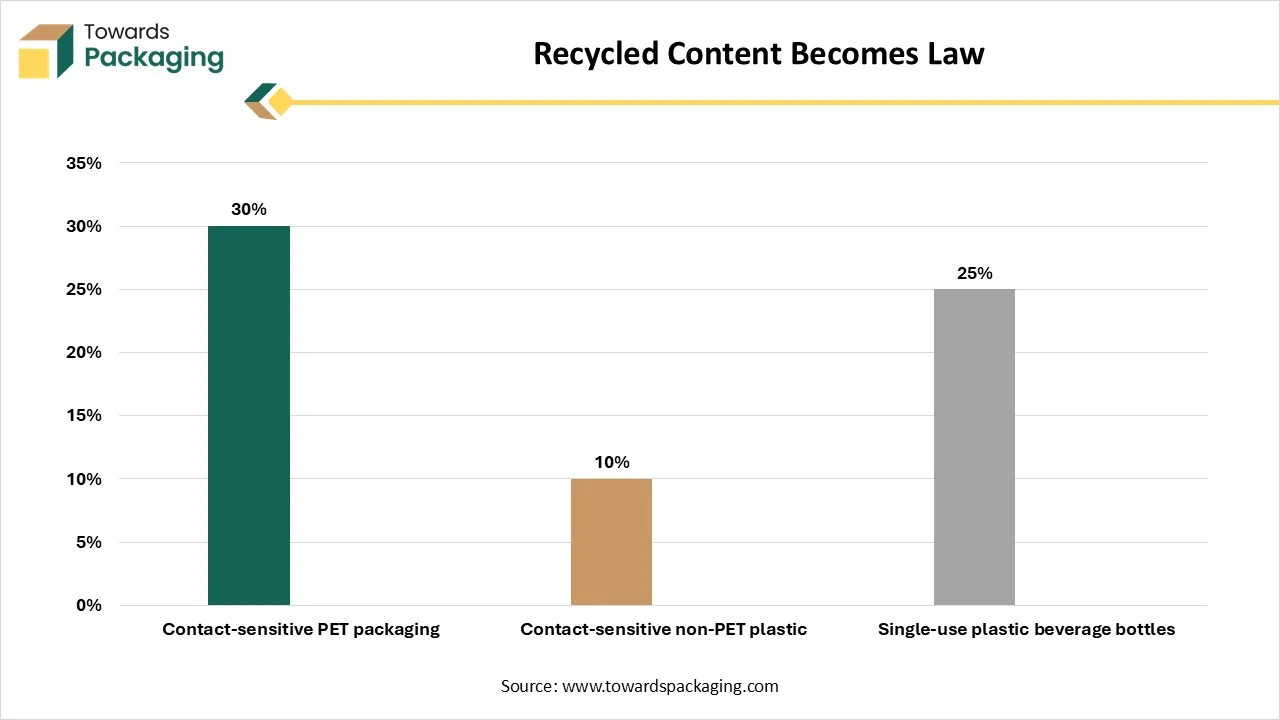
Source: European Council, PPWR Article 7 and Annex I; EU Single-Use Plastics Directive recycled-content targets.
A complex and confusing patchwork of state laws is getting shaped across the United States. In the absence of inclusive federal legislation, states are individually hurrying to control developing challenges such as surveillance pricing, artificial intelligence, and data privacy. The lack of a complete federal privacy law implies the U.S. patchwork is expected to endure for the foreseeable future. As state lawmakers continue to refine their methods and as new topics such as AI and automated decision-making receive improved attention, administrations will need to stay adaptable and engaged. Seven states Maine, California, Washington, Maryland, Colorado, and Minnesota now have packaging extended producer responsibility laws, but their requirements, program structures, and timelines vary. For companies selling nationwide, this developing patchwork can set different reporting requirements, fees, definitions, and compliance dates across states. The result is a more complex regulatory landscape and a robust incentive for corporations to structure packaging with several state necessities in mind.
A patchwork of state packaging law is m taking shape across the United States, generating a more complex compliance landscape for industries selling products across state lines. Instead of one nationwide outline, individual states are creating their own requirements for packaging reduction, recycling, reporting, producer responsibility, and recyclability. Washington has grown a different manufacturer responsibility model. Under state law, manufacturers must join a registered manufacturer responsibility organization. This system covers packaging and paper products and requires manufacturers to support financing collection, processing, and delivery. These differences matter, as corporations cannot predict that compliance in one state automatically fulfills requirements elsewhere.
Definitions of covered resources, manufacturer obligations, fees, implementation dates, targets, and reporting processes can differ. For packaging companies, the rising lesson is that the U.S. regulatory landscape is becoming a collection of state-level necessities instead of a single rulebook. Corporations will progressively require packaging plans, information processes, and compliance system which has the capacity to respond to several jurisdictions simultaneously.
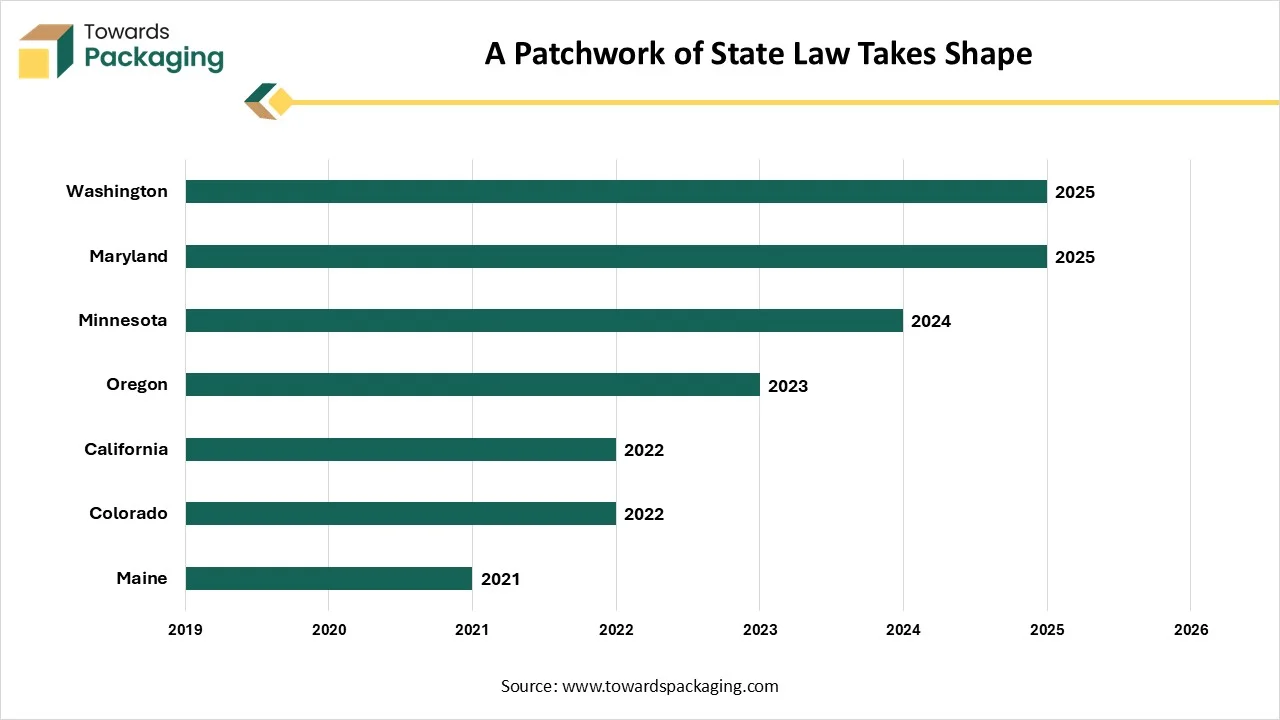
Source: Tonkon Torp, Mayer Brown, Holland & Knight, and Proskauer Rose legal alerts on state EPR laws, 2025-2026.
Pallones review could drive a boost for countrywide legislation on the subject, but transitory federal laws concerning customer privacy have been historically problematic, according to Williford and Beth Shirley, an AI, data privacy, and cybersecurity attorney at the firm Burr & Forman, both distinguished, so the future of centralized investigation pricing lawmaking is doubtful.
Only around 9% of all plastic waste ever manufactured gets recycled. The huge remnants go to landfills, are mismanaged and leak into the atmosphere or waterways, or are flared in burners. From 1950 to 2017, the world manufactured a massive 8.3 trillion kilograms of plastic. Around 6.3 trillion kilograms of that has become discarded plastic. The global plastic waste handling sector was worth around 38 billion dollars in 2024. The market is responsible for processing, collecting, and transporting plastic waste that essentially comes from the richest countries of the world. A rising share is burned in waste-to-energy services or open fires, emitting harmful chemicals and greenhouse gases. The problem extends beyond what happens at the end of the products life.
In 2019, predicted 22,000,000 tonnes of plastic leaked into the environment, with river incineration acting as a significant pathway for plastic entering oceans. The OECD predicts that 6.1 million tons reached aquatic ecosystems that year. These figures show why recycling alone cannot solve this plastic pollution issue. Applicable solutions need decreasing non-essential plastic utilization, enhancing collection processes, structuring packaging for circularity, and eliminating waste from entering the ecology in the first place. The recycling figures are revealed.
Although 15% of plastic waste was collected for recycling, nearly 40% of the collected resources were lost during the recycling procedure which required disposal elsewhere. This shows why positioning plastic in a recycling bin does not essentially mean it is recycled. Collection, processing potential, viable end market, sorting, and contamination all drive the outcome. Plastic leakage is a major concern. Plastic waste does not just disappear after disposal. Most of it is burned, buried, lost during the recycling process, or leaked into the environment. An efficient solution therefore needs decreasing non-essential plastic, extending collection and processing organization, generating a robust market for recycled products, and designing for genuine recyclability.
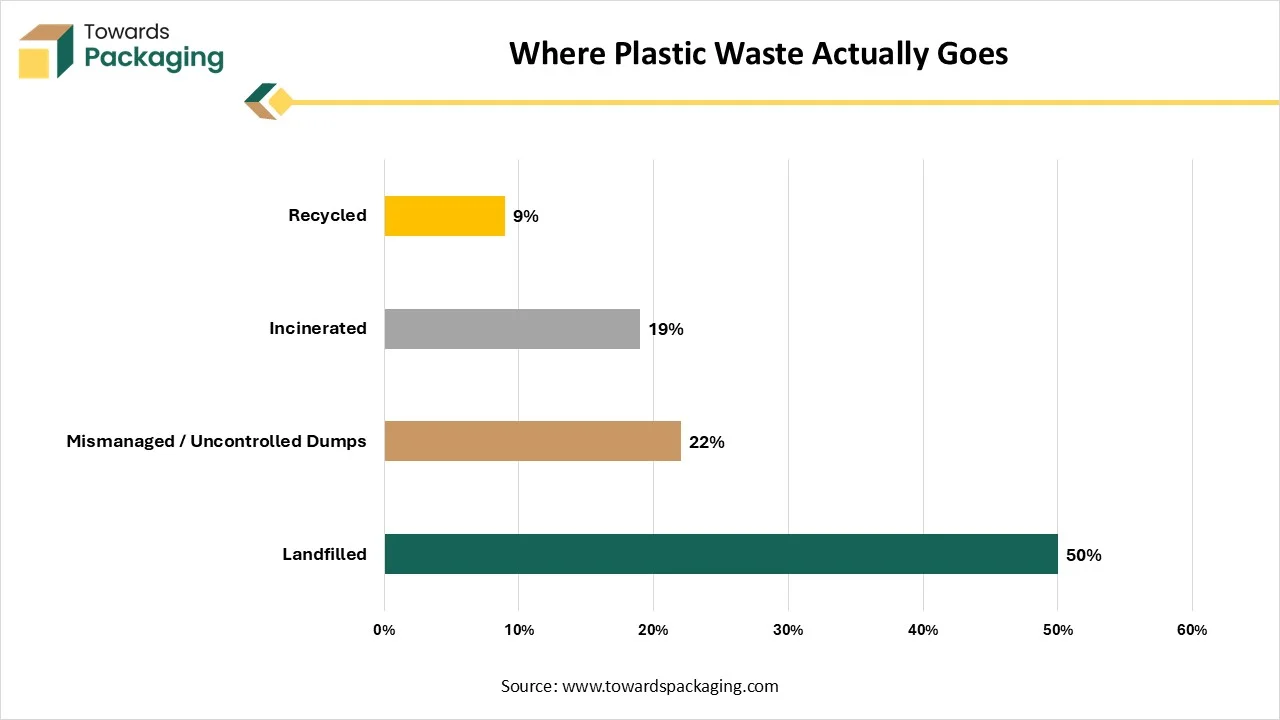
Source: OECD Global Plastics Outlook, 2022.
Industry leaders are pulling ahead in the AI and digital revolution not by paying more for technology, but by essentially attracting it. Research reflects an expanding gap where a small percentage of companies acquire most of the profitable value through robust data foundations, scaling, and cultural alignment outside pilot stages. Leaders confirm information is clean, enterprise-wide, and available, while laggards face serious analytics latency and information silos. The benefit comes from improving operational replicas and plans instead of purely acquiring new AI or software models. Successful revolutions are individually influenced by managers who handle the shift and remove organised conflict instead of committing oversight entirely. Industry leaders are progressively pulling ahead in sustainable packaging by shifting beyond wider commitments and putting scalable changes into practice. As packaging guidelines stringent and sustainability prediction rise, corporations with the resource to restructure products from my invest in recycling processes and enhance recovery methods can gain benefit. Recent corporation disclosure demonstrates what this leadership can look like. Amazon reported that it has eliminated 4.2 million metric tons of plastic packaging 2015 via packaging reduction efforts. Nestle claimed that recycled content showed 40.8% of its packaging resources by weight at the end of 2025. PepsiCo has also increased its goal, containing a target of reducing virgin plastic death derived from non-renewable sources by around 20% by 2030.
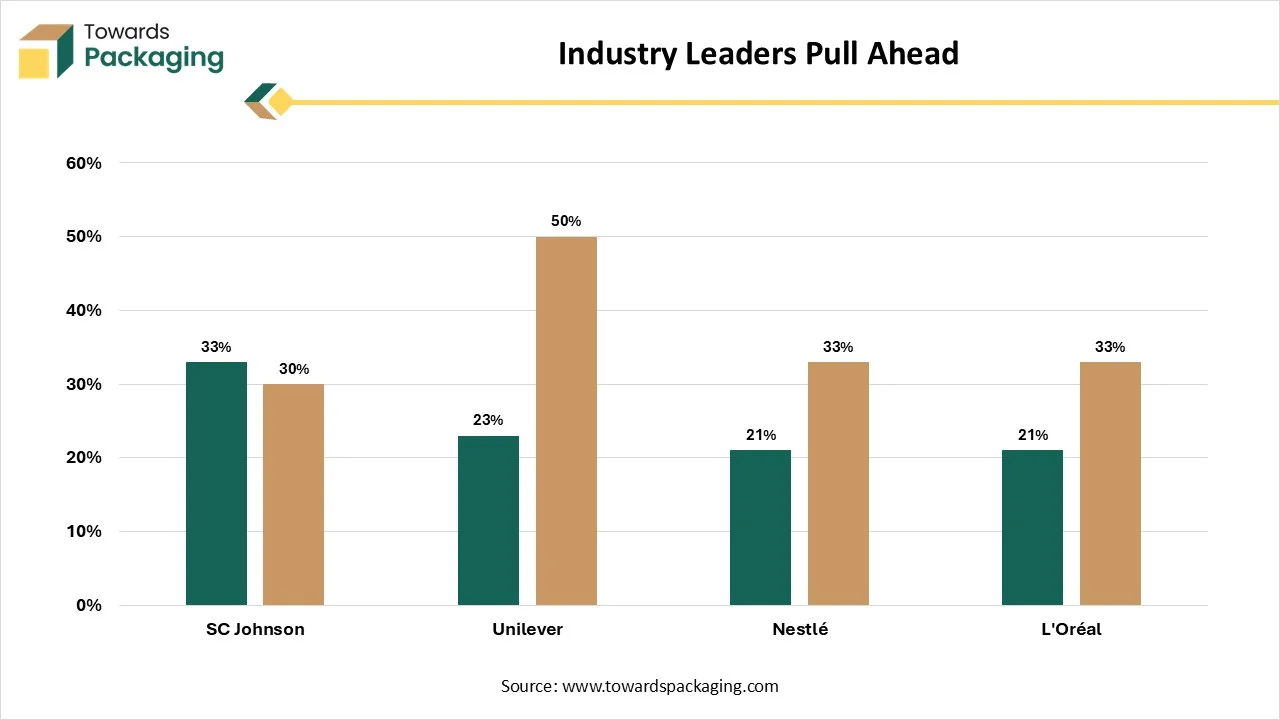
Source: Ellen MacArthur Foundation, Global Commitment 2025 Progress Report, November 2025.
Voluntary commitments work as powerful preliminary signals of committed market direction, or ethical arrangement, but they regularly try to reach systemic measures without hard obligations, standardized confirmation, or predictable economic incentives. Whether in commercial climate action, the carbon removal industry, or emerging technology governance, deliberate promises reflect a structural tension between symbolic goals and actual implementation. Voluntary sustainability commitments signal that companies identify the need to decrease packaging waste, ecological impacts, and virgin plastic utilization. However, current practices reflect that translating these promises into change at scale remains challenging. These companies may redesign products or decrease plastic by choosing formats, but these actions have limited process impact unless they are replicated across large product volumes and supported by efficient collection and recycling systems.
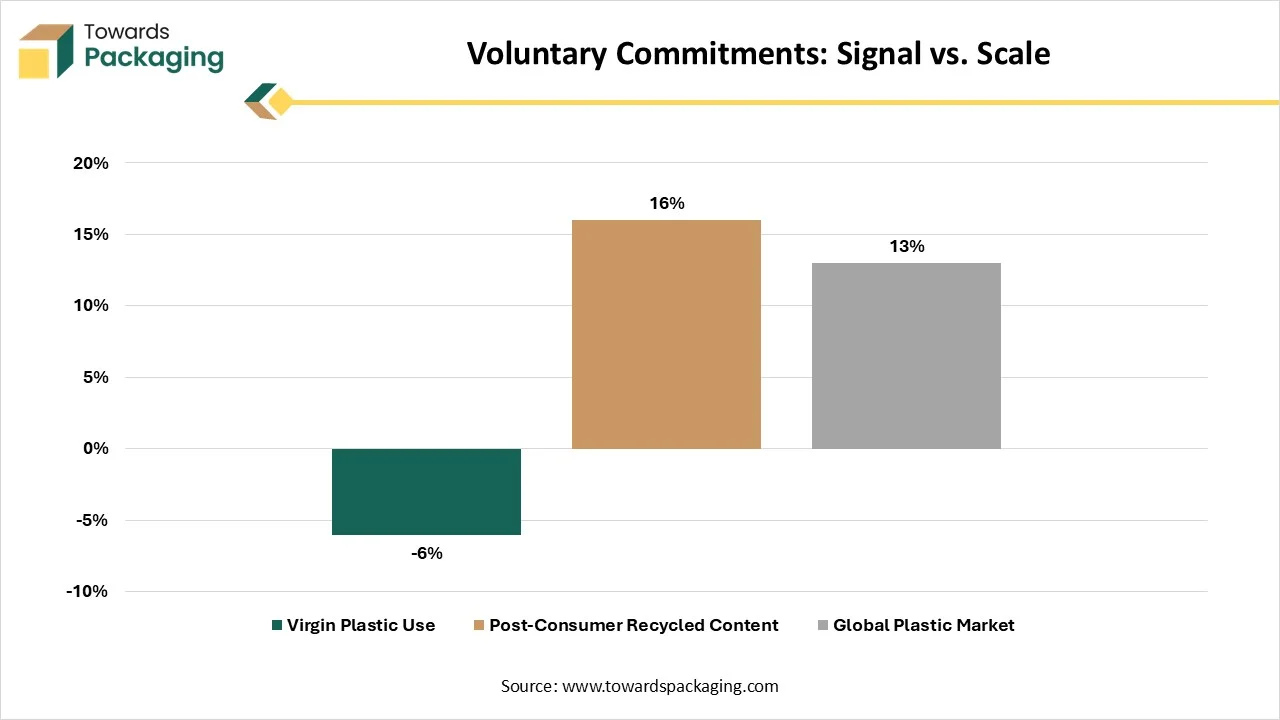
Source: Ellen MacArthur Foundation / UN Environment Programme, Global Commitment 2025 Progress Report.
The global plastic treaty illustrates the difficult gap between ambition and agreement. More than 3 years after the process started, countries had still not reached a binding agreement. The timeline therefore conveys a clear story: three-plus years of negotiations created substantial diplomatic growth, but no binding global plastic strategy yet. The challenge is shifting political ambition into a workable agreement. UN members failed to reach consensus on a legally binding global plastics treaty at both INC-5 in Busan and INC-5.2 in Geneva.
Source: UN Environment Programme press releases; World Economic Forum and IUCN INC-5.2 coverage, August 2025
Bio-based materials are growing beyond small-scale experimentation as corporations seek substitutes to fossil waste inputs. Startups and smaller businesses are adding growing resources from biological resources, agricultural residue, algae, organic waste, and various other renewable feedstocks, but scaling remains one of the biggest challenges in this sector. Recent policy action is progressively emphasizing on supporting these initiatives, shifting from laboratories and pilot projects into commercial sectors; for small businesses, successful scaling will rely on safe finance, production capacity, competitive charges, and biomass supplies. As manufacturing expands and technologies improve, bio-based products can become more cost-competitive with traditional substitutes.
Bio-based products utilise biological materials to produce all resources, chemicals, and other products that can decrease reliance on fossil-based feedstocks. The focus on scaling is significant, as promising laboratory technologies do not automatically become commercially competitive resources. Corporations require dependable food stocks, production capacity investment, consumers, and suitable supervisory frameworks. The OECD similarly emphasizes the significance of policy support, funding, and sustainable biomass management in growing a commercially viable bioeconomy. The opportunities are therefore not just to manufacture more bio-based products, but to scale them accountably. Utilizing agricultural residues, organic waste, and various other secondary biomass can support and decrease pressure on primary materials while generating new industrial value chains.
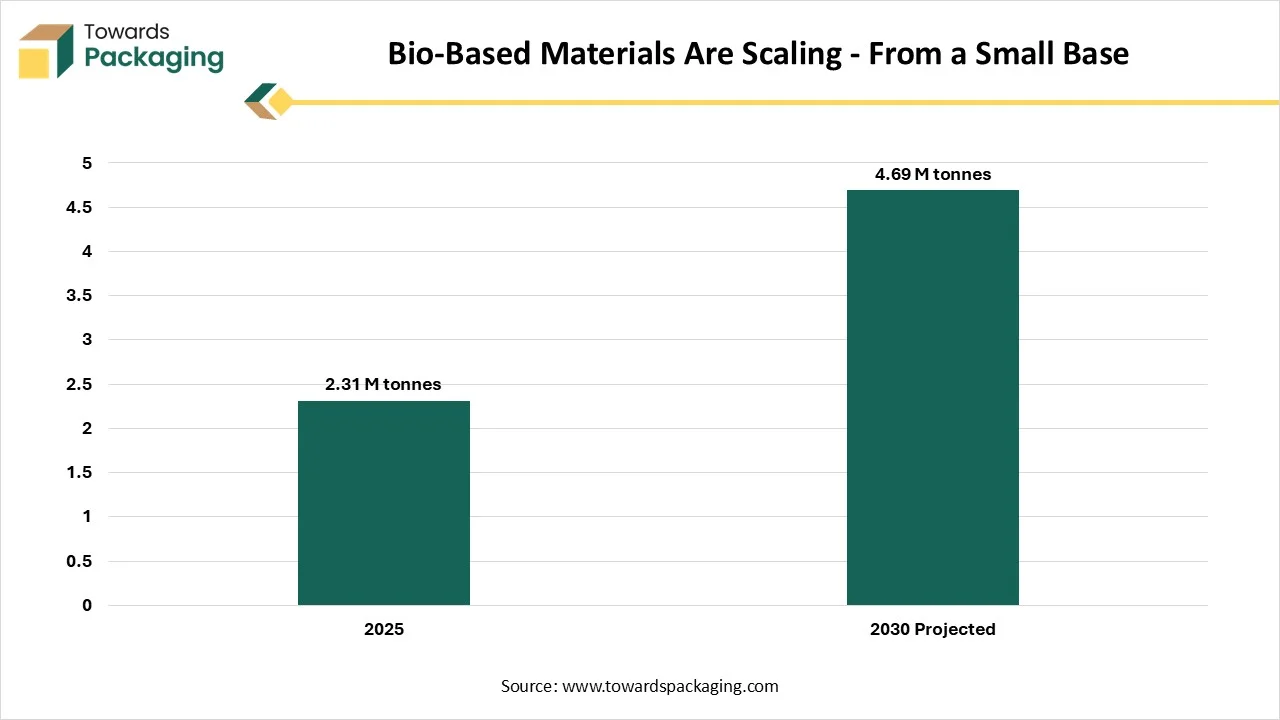
Source: European Bioplastics / nova-Institute, Bioplastics Market Development Update 2025.
E-commerce channels have changed the humble box into a huge packaging challenge. As online shopping with standing, products progressively travel individually from meeting centers to homes, generating extra demand for delivery boxes form of protective resources, and BDS other packaging various other packaging. Research on Indias ecommerce industry recognises packaging plastic waste as a major and developing concern, emphasising the requirement for stronger waste reduction strategies and extended producer responsibilities. The box itself is not significantly the issue; ineffective packaging can be. Oversized boxes utilise more resources and generate space that must often be filled with protective materials. Better box sizing can hence decrease resource utilization, delivery volume, and transport impact. Research also shows that reusable packaging is not automatically the most sustainable; its ecological performance relies heavily on aspects like shipping distances and the number of times it is reused. The future of ecommerce packaging will therefore rely on reuse where practical, resource efficiency from her right sizing, and efficient recycling processes. The target is not just a greener box, but less packaging waste in the complete shipping process.
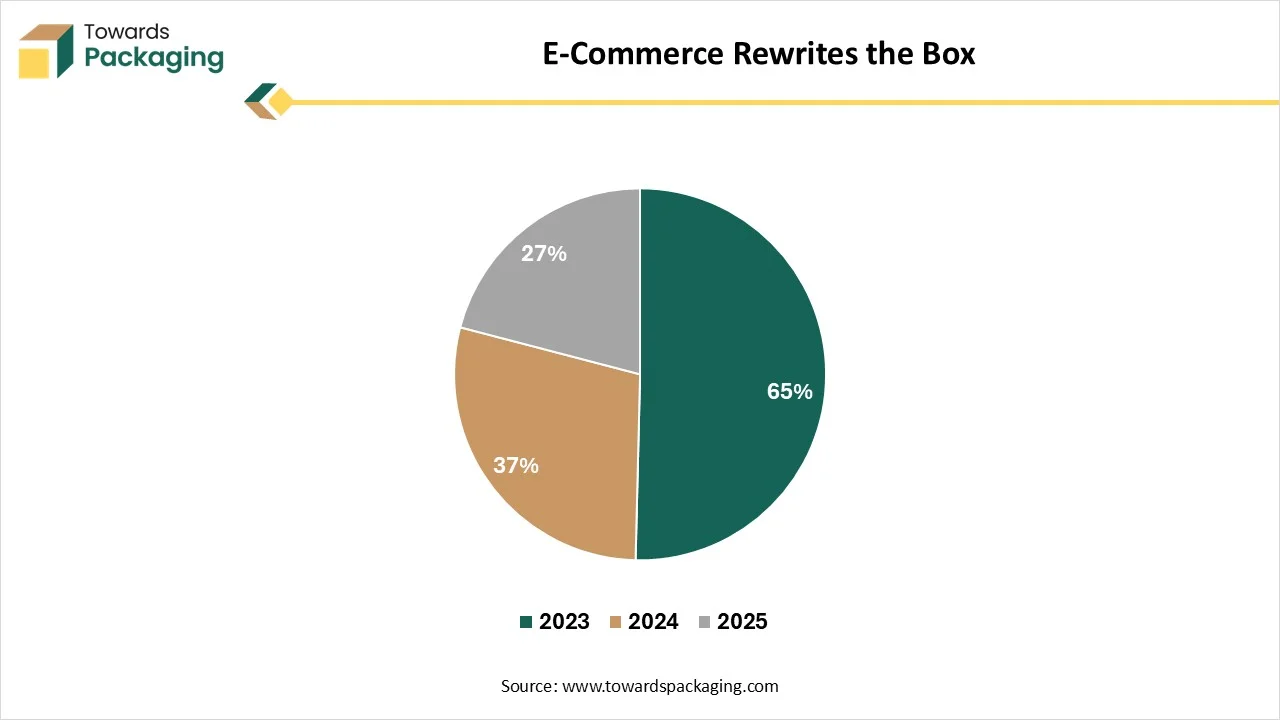
Source: Amazon 2024 and 2025 Sustainability Reports; As You Sow shareholder engagement reporting.
Consumers progressively expressed support for sustainable products, but the desire to pay does not translate equally across households dont stop. PwCs 2024 Voice of the Consumer Survey, which cant encompass more than 20,000 customers in 31 countries and territories, found that 80% were ready to pay more for sustainable packaging or sustainability-sourced products, with responded shows an average desire to pay a 9.7% premium. However, PwC found that inflation, financial volatility, and cost-of-living pressures can block this intention from becoming actual spending. The gap becomes transparent when accessibility is considered. In PwCs 2023 research, 69% of customers expressed that they were holding back on unnecessary spending as living charges raised, even though 77% still desired to pay more for goods produced from recycled, environmentally friendly, or sustainable resources. This generates a significant challenge for sustainable packaging: customers may support better resources in principle, but price remains a huge factor in purchasing while purchasing. For corporations, the chances lie in making sustainable packaging cost-effective instead of depending only on customers to absorb enhanced charges.
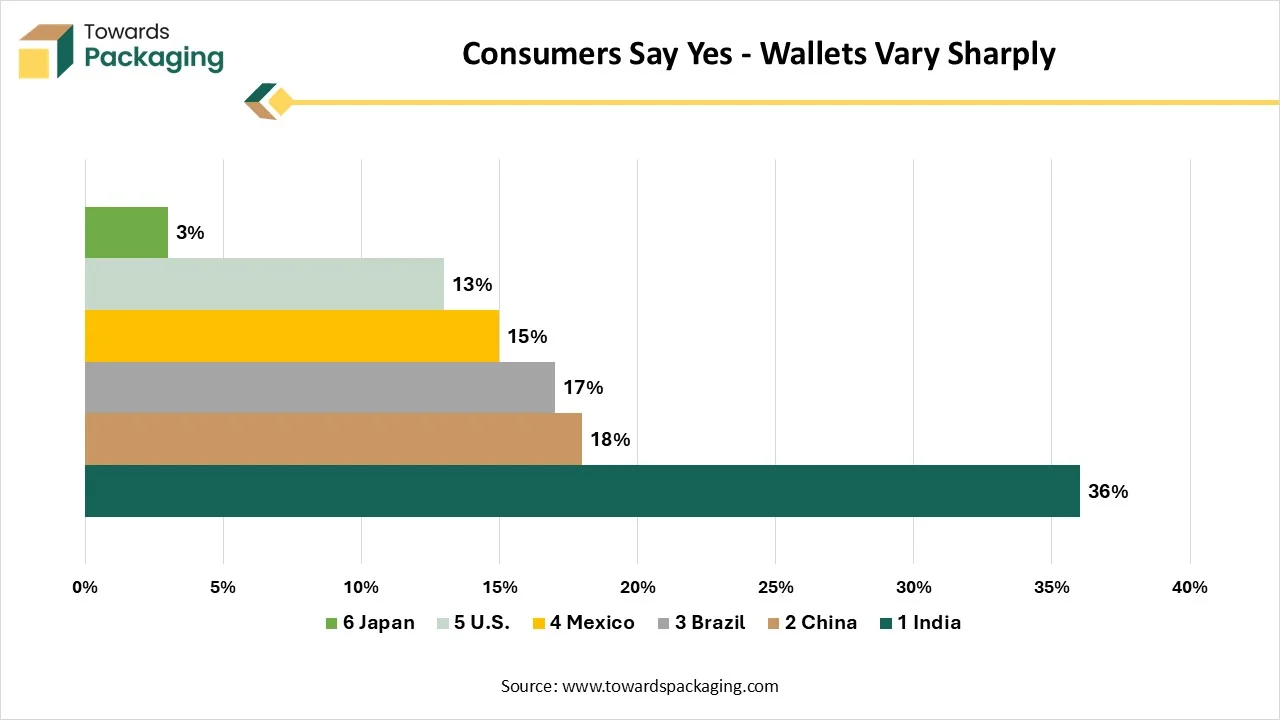
Sources: McKinsey & Company, "Sustainability in Packaging 2025: Inside the Minds of Global Consumers," June 2025.
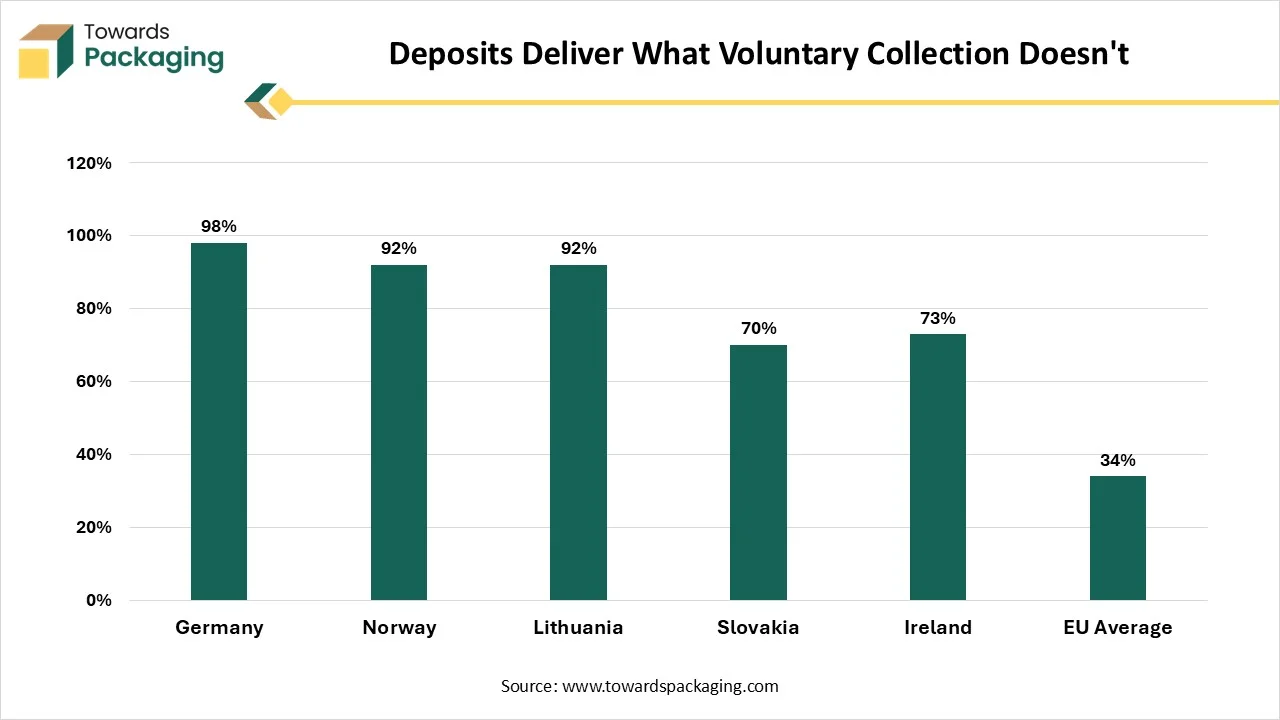
Deposit return process shows what voluntary collection alone sometimes struggles to achieve: consistent participation and a dependable flow of packaging back into the recycling process. Under a deposit return process, customers pay a small, refundable amount when buying a covered beverage vessel and receive the deposit back when they return it. This ecological incentive can transform waste disposal from an optional behaviour into a scalable return process. The OECD reports that the deposit refund process can enhance both the quality and integrity of recycling, extend reuse, decrease littering, and drive customer behaviour.
The Global Plastics Outlook states that a deposit return process for beverage bottles can attain a collection rate of more than 90% while substantially decreasing litter. The contrast with voluntary collection is significant. Traditional recycling relies heavily on customer selection to separate and correctly dispose of the resources; mobile collection organizations decide whether those resources can actually be recovered. OECD evidence reflects that access to the collection process is highly linked with recycling behaviour, with households having curbside plastic packaging collection recycling more plastic waste than those depending on drop-off facilities. However, deposits are not a significant solution. The OECD cautions that the deposit process mainly covers only a limited share of total plastic waste. They therefore work best as one element of a broader system that comprises EPR, recycling potential, packaging redesign, convenient collection, and sorting organization.
Source: TOMRA Deposit Return Scheme comparisons; Reloop Global Deposit Book 2024.
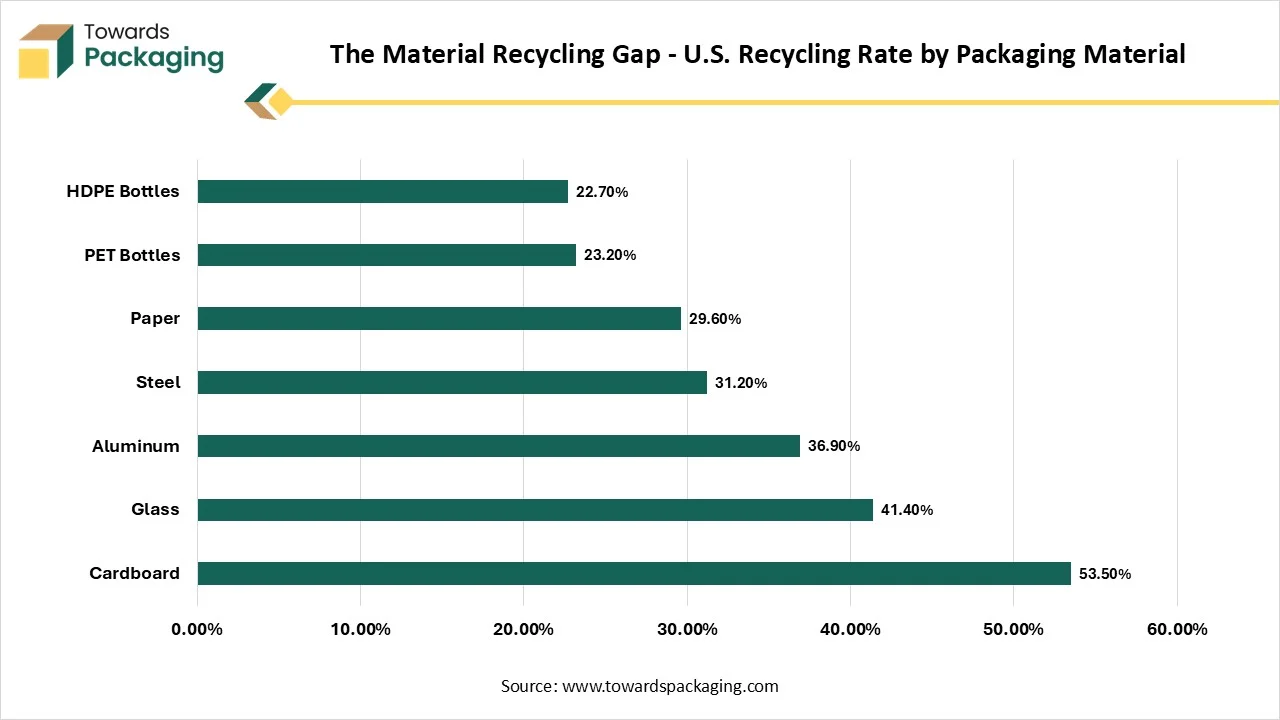
The US recycling system faces a major resource recycling gap: recyclable material exists in the waste stream, but collection, sorting, processing, and end-market potential do not always operate at the scale required to recover them. The U.S. Environmental Protection Agencys 2024 assessment of the US recycling system calculated that packaging and organic resources account for nearly 82% of the municipal solid waste stream. Yet closing organizational gaps needs a predicted $ 36.5 billion to $ 243.4 billion in investment by 2030. EPA predicts that these investments could support the recovery of an extra 82 to 89 million tons of packaging and organic waste, and it has the capacity to increase the national recycling rate from 32% to 61%, extending the U.S. target of reaching 50% by 2030.
The gap is not just about building more recycling services. EPA states requirements across the complete system, including collection access, processing organization, education, stronger end markets, sorting, and contamination reduction for recycled resources. The evaluation also excludes resources like plastic as lamination in data, marked industries, and proven large-scale recovery processes. Ultimately, the resource recycling gap demonstrates that structuring recyclable packaging is only the first step; organization must exist to collect, process, and recycle it effectively.
Source: U.S. EPA, "An Assessment of the U.S. Recycling System," 2024 (2019 data).
Chemicals of concern are progressively facing stringent control in European Packaging, mainly where food contact and human health are concerned. In December 2024, the European Commission agreed to ban bisphenol A (BPA) in food contact resources as of its harmful health effects. The measure also reports various other hazardous bisphenols that may pose similar risks. The packaging and packaging waste regulation takes this guidance further. Article 5 limits some substances in packaging, including polyfluoroalkyl substances in food contact packaging. Food contact packaging containing PFAS above certain concentration limits is not allowed on the EU market. These measures signal a wider change in packaging guidelines; performance alone is not sufficient. Packaging must progressively show that its chemical composition supports circularity, safety common and recyclability.
The PPWR is structured to decrease ecological impacts during the packaging lifespan while promoting safer and more sustainable resources. For producers, the implications are essential. Corporations will require stronger chemical inventories, testing, materials selection systems, and supplier documentation. Once the substances are valued for durability, common processing benefits, or performance barrier may need to change where regulatory restrictions are applied. The direction is progressively clear: chemical shop concerns are shifting from written formulation options to visible compliance challenges, and packaging structure must be adopted accordingly.
Source: European Commission BPA ban announcement, Dec 2024; PPWR Article 5 and food-contact PFAS provisions.
Sustainability matters to consumers, but packaging still must perform its fundamental job. McKinsey and Company and sustainability in packaging, Inside the Minds of Global Consumer survey, consisting of more than 11,000 customers across 11 countries, concluded that price and quality remain the most significant product properties driving buying decisions. For packaging mainly on our food safety and shelf life are the parameters that are ranked highest, while ecological impact remains considerably lower on the list. This does not mean customers have stopped caring about sustainability.
McKinsey found that the step of customers considering ecological inference essential has remained relatively balanced. The challenge is that sustainability competes with practical considerations at the point of purchase. Packaging must protect products, deliver acceptable value, maintain freshness, and offer convenience before ecological credentials can become a decisive benefit. The finding has significant implications for advancement in sustainable packaging. Changing traditional resources with greener substitutes is unlikely to succeed if the new solution compromises convenience, affordability, protection, or shelf life.
McKinsey research also demonstrates that recycling is the major sustainability property customers consider when accessing packaging. Green packaging cannot only be sustainable, but it must also work. The robust option well mixes ecological advantages with the performance customers already anticipate from the packaging industry.
Source: McKinsey & Company, "Sustainability in Packaging 2025: Inside the Minds of Global Consumers," June 2025.

Aditi serves as Vice President at Towards Packaging, bringing over 15 years of experience in market research, innovation, and business strategy within the packaging industry. She works across segments such as sustainable packaging, flexible materials, and industrial packaging solutions. Aditi studies evolving consumer demands, material advancements, and regulatory changes, then turns those insights into clear strategies for businesses. She helps organizations stay competitive, improve product positioning, and respond effectively to shifting market trends.

Aman Singh has spent more than 13 years working in research and consulting, with a strong focus on the global packaging sector. He tracks developments in areas like eco-friendly materials, smart packaging technologies, and supply chain changes. At Towards Packaging, Aman leads the research team and ensures every study delivers accurate and useful insights. He breaks down complex industry developments and helps companies understand where opportunities lie and how to act on them.

Piyush Pawar works as Senior Manager for Sales and Business Growth at Towards Packaging, bringing over a decade of experience in client-facing roles within the packaging industry. He connects businesses with the right research and helps them apply insights to real-world decisions. Piyush understands market challenges and works closely with clients to provide solutions that support growth. He focuses on building strong partnerships and helping companies turn industry knowledge into practical results.
What Is Sustainable Packaging Regulation Corporate Action and the Materials Race


 Request Consultation

