


Internet of packaging is working as a bridge between digital world and physical packaging industry. As there is a huge growth towards digital transformation in several industries so packaging industry is also shifting towards advanced technology. With the integration of advanced technologies such as QR codes, sensors, NFC chips, RFID tags, and various other ways that help consumers in getting detailed information about the product. It plays an important role in marking authenticity of the product. These smart technologies in the packaging industry support in tracking the product while transporting and also monitoring its condition with actual-time data exchange.
Internet of packaging is useful in interacting with packaging in distinct ways for brands, consumers, retailers, and regulators. It shifts containers to an active data carrier that has the capability of consumers engagement and high product safety. These packaging plays a significant role in industries such as consumer electronics, pharmaceuticals, food, cosmetics, and e-commerce. As these sectors encourage digital traceability as well as smart labelling to enhance the safety of the products and regulatory compliance.
The Internet of Packaging states the incorporation of internet connectivity and digital technologies into packaging process. These advanced solution in packaging industry enable to communicate data about lifecycle, condition, authenticity, and origin. With the help of digital identifiers like RFID chips, QR codes, and NFC tags are the gateway to digital information that support to get accessed by smartphones or creativity systems. When consumers scan QR codes over the packaging it helps them to get all the information associated with the products.
The IoP is swiftly developing to address customer demands for clarity and acquiescence with safety guidelines like food safety and traceability laws. The technology plays an important role for the forthcoming of logistics, allowing automated, information-rich distribution chains and generating a "smart" involvement for both brands as well as consumers. The industry for intelligent packing is increasing quickly, with noteworthy development expected as more industries accept these technologies.
The current is rotating on plastic waste, and the thrust for alteration is sturdier than ever. Customers are influencing this change with their demand for sustainability, and companies are answering by accepting more circular packing options. The journey in the direction of a sustainable forthcoming period is additionally being enhanced by digital innovation, like digital item passports that are transforming how to track, manage, as well as enhance sustainability in packaging sector. It proclaims a new future where ecological-conscious choices and advanced technology go parallelly. This increasing demand for sustainable packaging is convincing brands to become clear. Customers now anticipated detailed data about goods origins, production procedures, and end-of-life choices. This clarity is important in maintaining and building customer trust.
a) Smart inventory management
IoT allows packaging industries to have a complete understanding of their record in actual time. Smart shelves and vessels fortified with sensors can observe stock levels, robotically reorder when essential, and decrease the options of overstock or stockouts situations.
b) Quality assurance
Entrenched sensors can uninterruptedly monitor the situations within the packing, confirming that goods are transported and stored in ideal surroundings. This not only protect spoilage and harm but also guarantees end customers of the superiority of the creation they are acquiring.
c) Interactive packaging
Envision a creation where the packaging itself connects with customers. NFC tags and QR codes on packing can offer customers with admittance to extra product details, elevations, or even collaborative involvements.
a) Sustainable packaging
IoT plays a significant role in sustainable packaging production. Smart packaging can support monitor and optimise the usage of resources, decrease waste, and improve recycling efforts. This brings into line with the rising worldwide focus on ecological consciousness.
b) Improved consumer experiences
The incorporation of IoT in packing will carry about a standard change in the way customers interact with goods. From customized packaging to enhanced experiences, the potentials are huge. Brands can forge sturdier networks with their consumers by offering unique, technology-influenced experiences.
c) Supply chain revolution
The distribution chain is the support of the packaging sector and IoT is constantly revolutionise it. Actual-time tracking, analytical information, and autonomous arrangements will rationalize operations, decrease inadequacies, and generate a more strong and approachable supply chain.
The world is observing a seismic shift of digital alteration in packing which is a sector already rolling to an astounding $12.5 billion in 2023 and anticipated to double by the end of 2030 as technologies such as smart packaging shift from novelty to requirement.
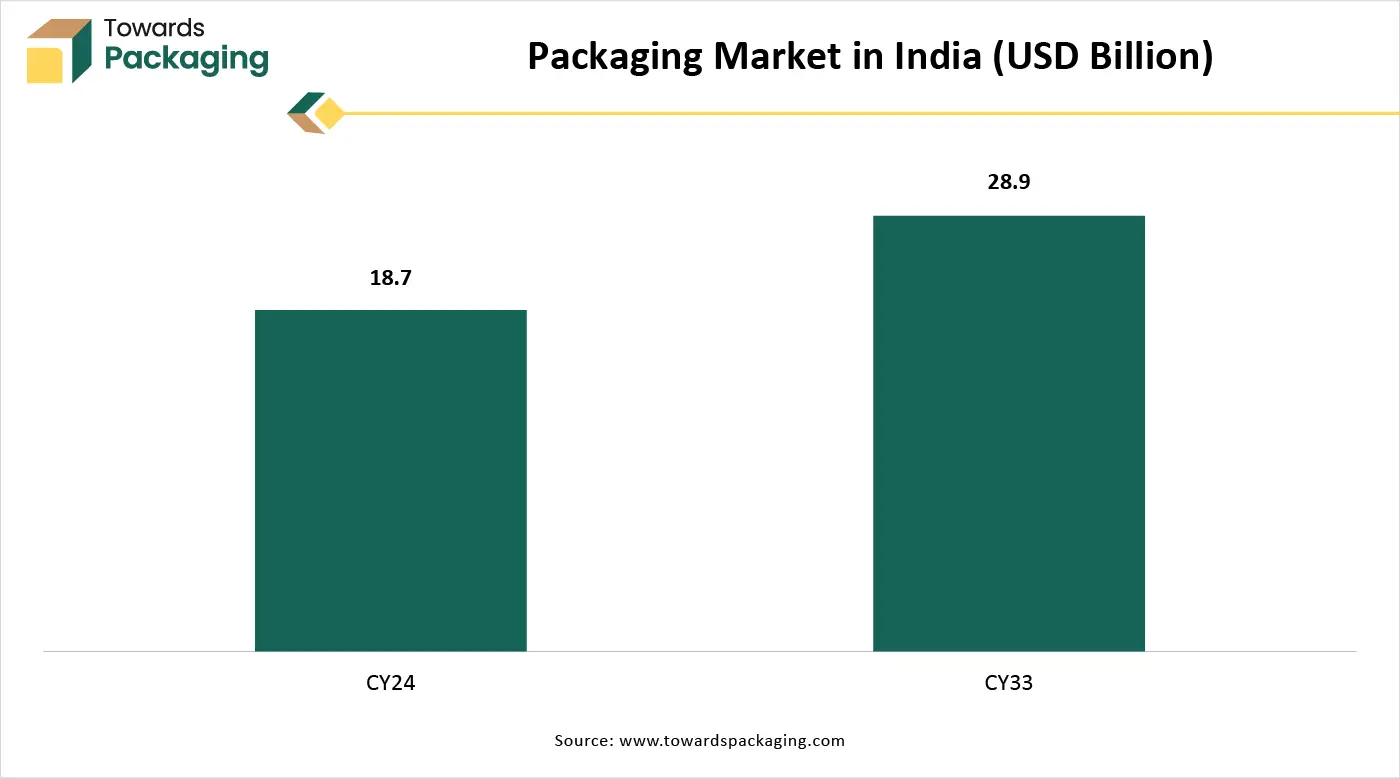
Packaging is now the 5th largest industry of Indian economy and is anticipated to develop at a compound annual growth rate (CAGR) of 26.7% to reach US$ 204.81 billion by 2025. The stance for India’s paper and packaging sector relics highly auspicious, maintained by an increasing disposable earnings, growing population, and rapid urbanisation. The rise in e-commerce sector and packaged food consumption is influencing strong demand, while a rising focus on sustainability is inspiring invention in environment-friendly resources and practices. Government initiatives like MSME support, Make in India, and high-scale set-up growth are anticipated to additionally strengthen production capacity and rationalize distribution chains.
Petroleum-based polymers have attended the packaging sector in several methods as foamed containers, films, rigid containers, pouches, and other elements for food, medical, and other packaging usages. Though, rising concerns about ecological impact, consciousness of greenhouse gas emission and their hostile effects, amplified oil prices, and disposal and landfill problems are forcing scholars and the companies to grow sustainable packaging. Biobased resources, those influenced from biological foundations rather than petroleum bases, are preferably appropriate to fulfil these new sustainability needs. Though biobased resources like paper have been used for packaging widely.
In current years, the packaging sector has performed extremely well. Though, the belongings from were not established well with European legislators. This is because of the fact that inside the last decade, packaging waste has raised by 25%. This is in straight difference to the EU’s area of creating a sustainable circular economy by 2050. It is anticipated the new EU Packaging Regulation PPWR will be concluded as planned in autumn 2024. It will take consequence no later than 18 months after journal and specifies, among several other things, that all packing in the EU must be recyclable by 2030. The gesture parliamentarians require to regulate protracted certifications and labelling needs. It also specifies that certain extents of post-consumer recycled resource (PCR) must be utilized for packaging. In conclusion, the rate of reusable wrapping will probably grow. This is a determined plan for the packaging sector, with its often-huge running lengths and also longer product cycles.

Aditi serves as Vice President at Towards Packaging, bringing over 15 years of experience in market research, innovation, and business strategy within the packaging industry. She works across segments such as sustainable packaging, flexible materials, and industrial packaging solutions. Aditi studies evolving consumer demands, material advancements, and regulatory changes, then turns those insights into clear strategies for businesses. She helps organizations stay competitive, improve product positioning, and respond effectively to shifting market trends.

Aman Singh has spent more than 13 years working in research and consulting, with a strong focus on the global packaging sector. He tracks developments in areas like eco-friendly materials, smart packaging technologies, and supply chain changes. At Towards Packaging, Aman leads the research team and ensures every study delivers accurate and useful insights. He breaks down complex industry developments and helps companies understand where opportunities lie and how to act on them.

Piyush Pawar works as Senior Manager for Sales and Business Growth at Towards Packaging, bringing over a decade of experience in client-facing roles within the packaging industry. He connects businesses with the right research and helps them apply insights to real-world decisions. Piyush understands market challenges and works closely with clients to provide solutions that support growth. He focuses on building strong partnerships and helping companies turn industry knowledge into practical results.
Transforming Smart Packaging with Internet of Packaging


 Request Consultation

