


According to Vidyesh Swar, who is an expert in the packaging sector. He tracks growth opportunities in the nicotine warning-label packaging market. The global nicotine warning-label packaging market size was estimated at $1.12 billion in 2025 and is expected to grow with a CAGR of 8.90% during the forecast period. The market is projected to reach approximately $2.63 billion by 2035. The market is growing due to the WHO FCTC regulations, regulations on nicotine pouches, integration of advanced printing, and expanding nicotine consumption. Top tobacco and nicotine brands are Philip Morris International, Imperial Brands, and British American Tobacco. Packaging leaders are Amcor plc, Mondi Group, and ITC Limited.
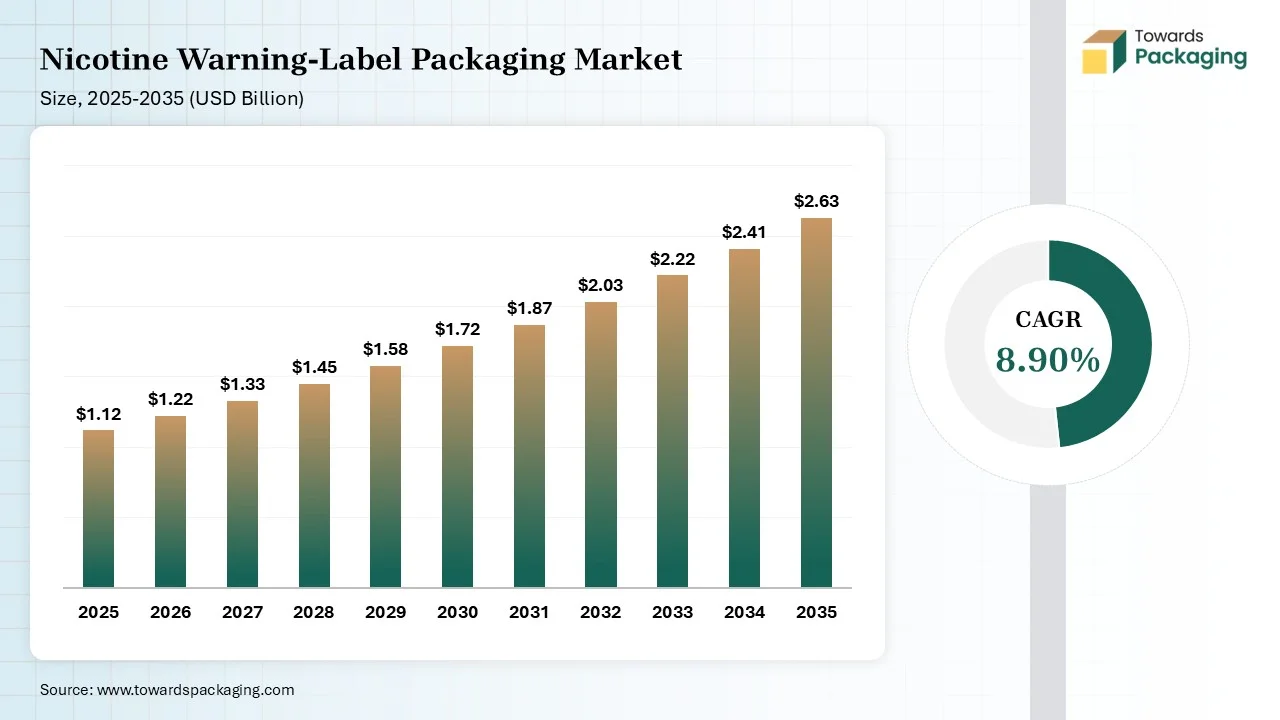
Nicotine warning-label packaging is the process of displaying health notices in the form of graphics or text on products like nicotine & tobacco. Its purposes are raising awareness about diseases, encouraging quitting of the products, overcoming literacy barriers, and fulfilling legal requirements. Its various design types are text-only warnings, direct-on-product warnings, pictorial warnings, and plain packaging. Nicotine warning-label packaging offers benefits like low-product appeal, cost-effective education, and risk awareness. The global nicotine warning-label packaging market size was valued at $1.12B in 2025. Factors like demand for larger surface areas for warning labels, plain packaging compliance, burgeoning nicotine pouches, surge in heated tobacco units, adoption of variable digital printing, strong focus on anti-counterfeit measures, and rise in sustainable substrates drive the growth.
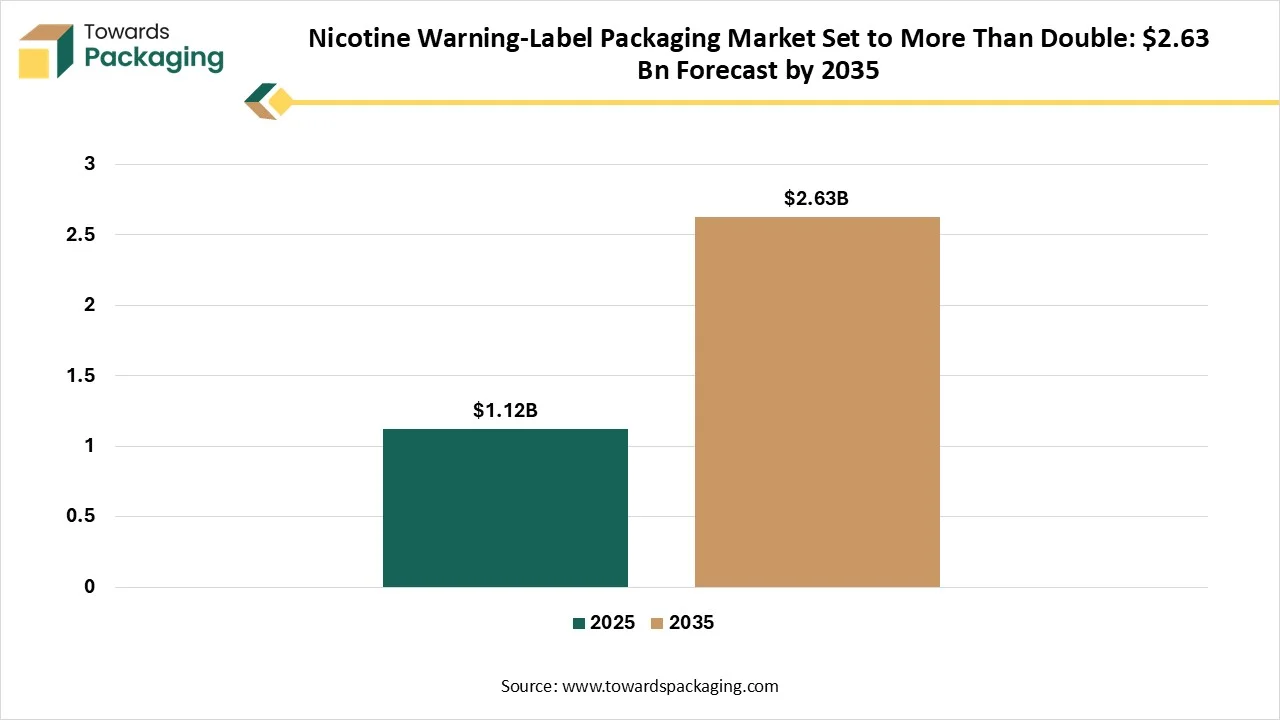
The market is predicted to reach $2.63B by 2035. The key growth factors are global health authorities' regulations, rise of smoke-free items, integration of variable printing technology, burgeoning illicit trade concerns, shift to recyclable paperboards, rise in anti-counterfeit serialization, and expansion of flexible warning-label packaging. Players like Smurfit Westrock, Huhtamaki, Amcor, Siegwerk Druckfarben, and Mondi Group support the manufacturing of nicotine warning-label packaging.
The market is expected to grow at an 8.90% CAGR during the predicted timeframe. The market was valued at $1.12B in 2025 and is expected to reach $1.22B by 2026. The market is predicted to reach 1.328 by 2027, 1.446 by 2028, and 1.575 by 2029. The market is predicted to achieve 1.715 by 2030, 1.868 by 2031, and 2.034 by 2032. The market is predicted to reach $2.215 by 2033 and 2.413 by 2034. The market is predicted to reach 2.627 by 2035. Factors like higher demand for track-and-trace compliance, burgeoning graphic warnings, popularity of oral nicotine among consumers, and expansion of secure manufacturing drive the growth.
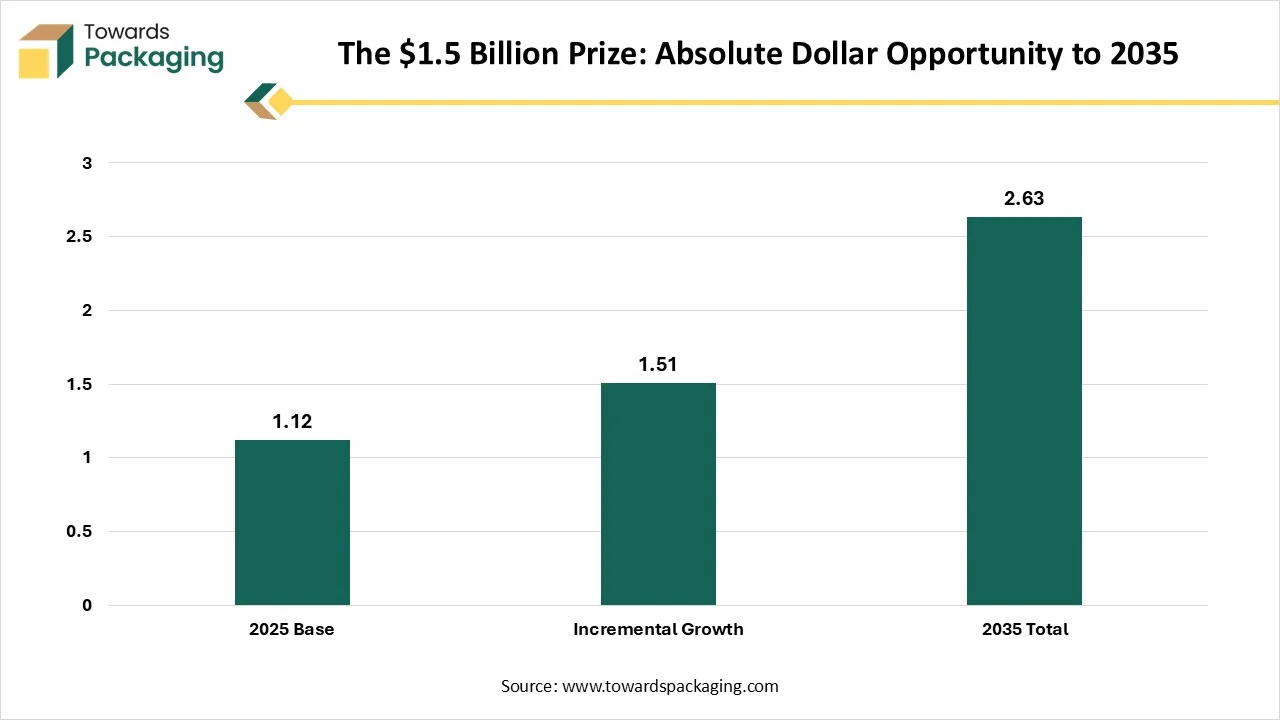
The market reaches $1.12B in 2025 and is predicted to reach $2.63B by 2035. The incremental growth of the market is $1.51B from 2025 to 2035. Factors like standardized plain packaging rules, stricter GHW rules, expanded next-gen products, rise in multi-language labeling, popularity of rotating warning systems, innovations in anti-counterfeit technology, advancing flexible films, expansion of reduced-risk products, corporate compliance budgets, and stringent retail display control boost the growth.
Source:- Towards Packaging Database
The total number of tobacco users across the globe was 1.38B in 2000. In 2010, total global tobacco users reached $1.32B. In 2024, total global tobacco users reached $1.2B. The use decline by $1.2B in 2024 compared to 2000. The use decline by 27% in 2024 compared to 2010. The number of people vaping globally is 100+ million. One in five adults still consumes tobacco. Between age category of 13-15 at least 15 million adolescents are addicted to vaping. AT least 86 million adults worldwide are addicted to vaping.
Key Insights:- The total global tobacco consumed in 2024 was 1.2B.
Source:- World Health Organization, Global Report on Trends in Prevalence of Tobacco Use 2000-2030 (October 2025 update).
According to the Canadian Cancer Society report, in 2025, almost 140 countries adopted graphic picture health warnings. In 2018, 117 countries adopted graphic picture health warnings on cigarette packs. In 2023, 138 countries adopted graphic picture health warnings. Almost 66% of the world population is covered. 212 countries were ranked in the report, and Canada became the first country in 2001 to adopt picture warnings.
Source:- Canadian Cancer Society, Cigarette Package Health Warnings: International Status Report (18 November 2025)
In 2025, 130 countries mandated warnings on at least half of the pack. The warning covered half of the package front & back on average. In 2008, 24 countries mandated this rule. In 2018, 107 countries mandated warning coverage on at least half of the pack. EU Tobacco Product Directives grant 50% warning size on side panels and 65% on front or back sides. Türkiye and Timor-Leste dominate global cigarette health warning size. The average warning size is 92.5%. Nepal and Bhutan are also among the top rankers in cigarette health warning size, and the combined average is up to 90%.
Source:- Canadian Cancer Society, International Status Report (2025); WHO Regional Office for Europe
In 2025, plain packaging, or standardized packaging, was adopted by 27 countries. In 2018, a total of 9 countries adopted plain packaging, and in 2023 the number was 25. Australia was the first country to adopt plain packaging in 2012. United Kingdom and France adopted plain packaging in 2016. Recently, in 2025, Myanmar and Georgia adopted plain packaging for tobacco products. Countries like Syria and Iceland are going to implement plain tobacco packaging by 2027. Canada printed additional required warnings in 2024, and Australia printed them in 2025 on individual cigarettes.
Source:- Canadian Cancer Society, Cigarette Package Health Warnings: International Status Report (18 November 2025)
U.S. FDA announced 11 new cigarette health warnings in March 2020. The new rule integrates photorealistic color graphics and text. The warning includes the health consequences of smoking. The rule provides specifications for rotation and display size of warnings. The new rule states that packaging cycles through 11 warnings. These 11 warning displayed equally over 12 months across the brands. The warnings cover the top 50% of the back and front panels. In December 2022, the new rule was abandoned by a Texas district court. In March 2024, it was upheld on appeal. FDA compliance deadline for 11 new cigarette health warnings is 10 February 2025.
Source:- US Food and Drug Administration, 21 CFR Part 1141 and CTP enforcement guidance (2020-2024)
On May 31, 2023, a total of 67 countries joined the WHO FCTC Protocol. The protocol helps prohibit illicit cross-border trade of tobacco products. 28 high-income countries joined the WHO FCTC Protocol in May 2023. 15 upper-middle-income countries participated in the WHO FCTC Protocol, and 14 lower-mid income joined the protocol in May 2023. 10 low-income countries joined the protocol in May 2023. The protocol was introduced on 25 September 2025. The protocol offered 5 years deadline for developing a global track-and-trace regime.
Source:- WHO FCTC Secretariat; SmokeFree Partnership, status analysis of Illicit Trade Protocol implementation (2023)
WHO introduced the MPOWER technical package for tobacco control measures. 6.1B people live in countries that have implemented at least one tobacco control measure. 75% of the population is covered by at least one measure from MPOWER. 40% of countries are still not covered by any best-practice tobacco control measures. A total of 110 countries use graphic health warnings on tobacco packaging. 25 countries give preference to plain packaging. MPOWER measures include monitoring tobacco use, protecting people from smoke, warning about smoking dangers, providing help for quitting, enforces band, and raising taxes.
Source:- World Health Organization, Report on the Global Tobacco Epidemic 2025
3.3B people globally live in countries that have adopted electronic nicotine delivery systems. At least 86 million adult vapers are present across the globe, and 15 million adolescent vapers are present. The total number of vapers present across the globe is 100+ million, according to WHO’s 2025 tobacco trends. Adolescents (ages 13-15) are vaping on average 9x more than adults. Tobacco companies attract young users by marketing with candy flavors and fruit flavors. Nicotine addiction is growing among younger adults.
Source:- World Health Organization, Report on the Global Tobacco Epidemic 2023; WHO Tobacco Trends Report (6 October 2025)
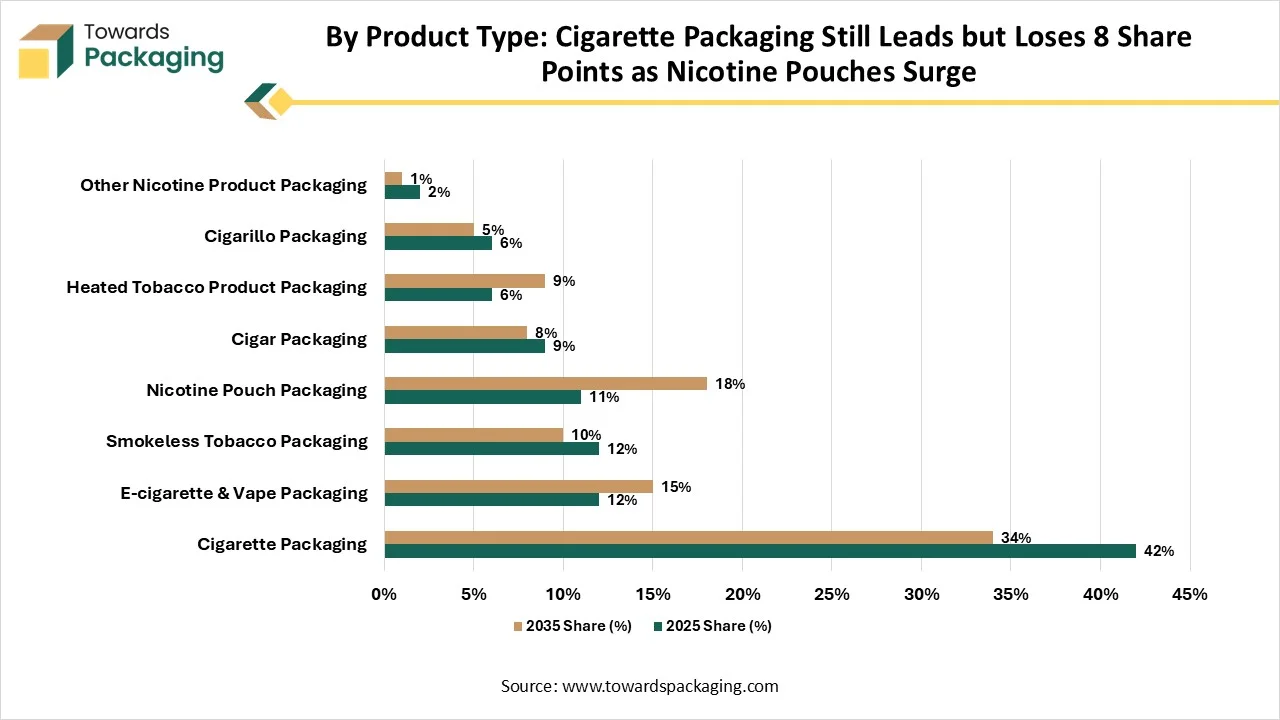
Cigarette packaging dominated the nicotine warning-label packaging industry with a 42% share in 2025. The high retail cigarette sales and the demand for incorporation of warnings on cigarette pack surfaces increase the use of cigarette packaging. The high daily shipping of cigarettes and the high cigarette production increase the use of cigarette packaging. E-cigarette & vape packaging held a 12% share in the market. Consumer transition to vaping products and the explosion of disposable vapes increase the use of e-cigarettes & vape packaging. The rise in e-liquids and incorporation of tamper-evident packaging in e-cigarettes drives the growth. Nicotine pouch packaging is expected to grow with the fastest CAGR of 14.5% during the forecast period. The growing global utilization of nicotine pouches and adult consumers' transition to smoke-free options increases use of nicotine pouch packaging. The availability of commercial shelf space and the transition away from combustible cigarettes support the growth.
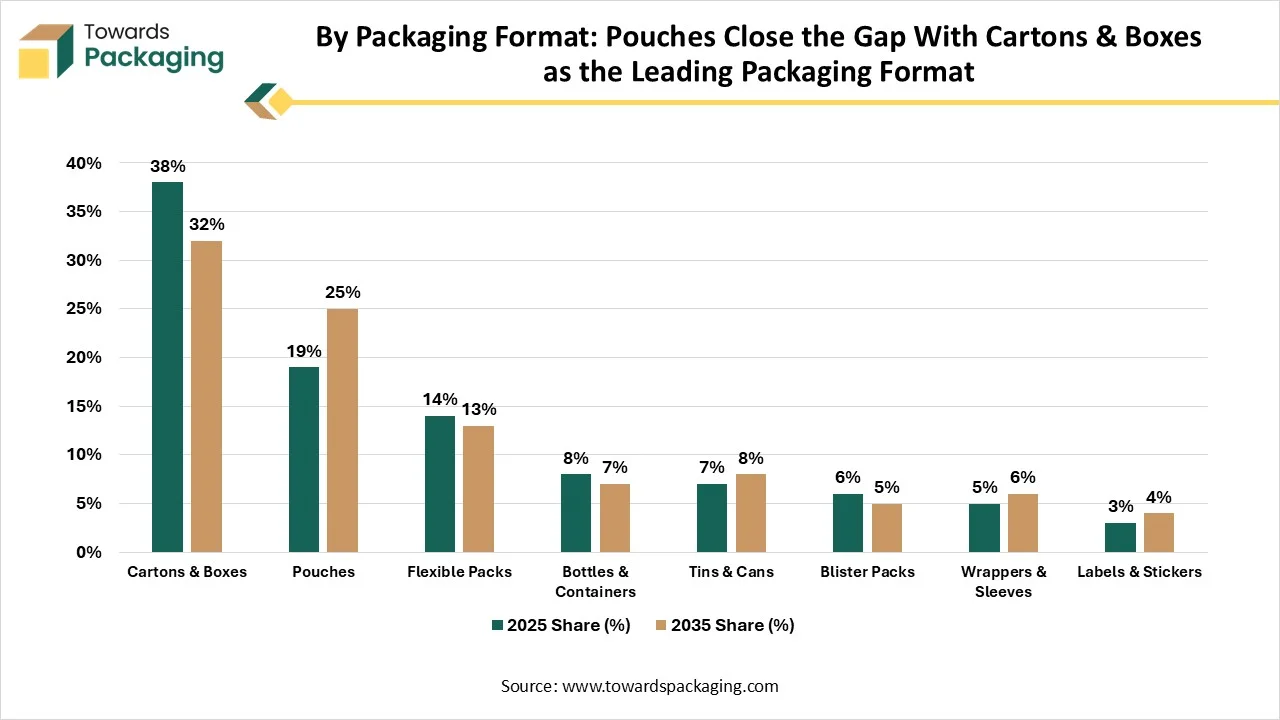
Cartons & boxes lead the nicotine warning-label packaging industry with a 38% share in 2025. The high traditional cigarette production volume and the protection of fragile contents increase the use of cartons & boxes. The flat canvas areas and plain packaging regulations increase the use of cartons & boxes. The high-speed efficiency and recycling compatibility drive the growth. Pouches are growing with the fastest CAGR of 12.1% during the forecast period. Consumer demand for smoke-free products and the adult consumer focus on diverse flavors increase the adoption of pouches. The high digital visibility, standardized safety, discreet design, and child-safety features of pouches drive the growth. Flexible packs held a 14% share in the market in 2025. The thriving oral smokeless items and consumer interest in pocket-friendly products increase the use of flexible packs. The explosion of lozenges increases flexible pack use. The low material cost, portability, and high surface adaptability of flexible packs drive the growth.
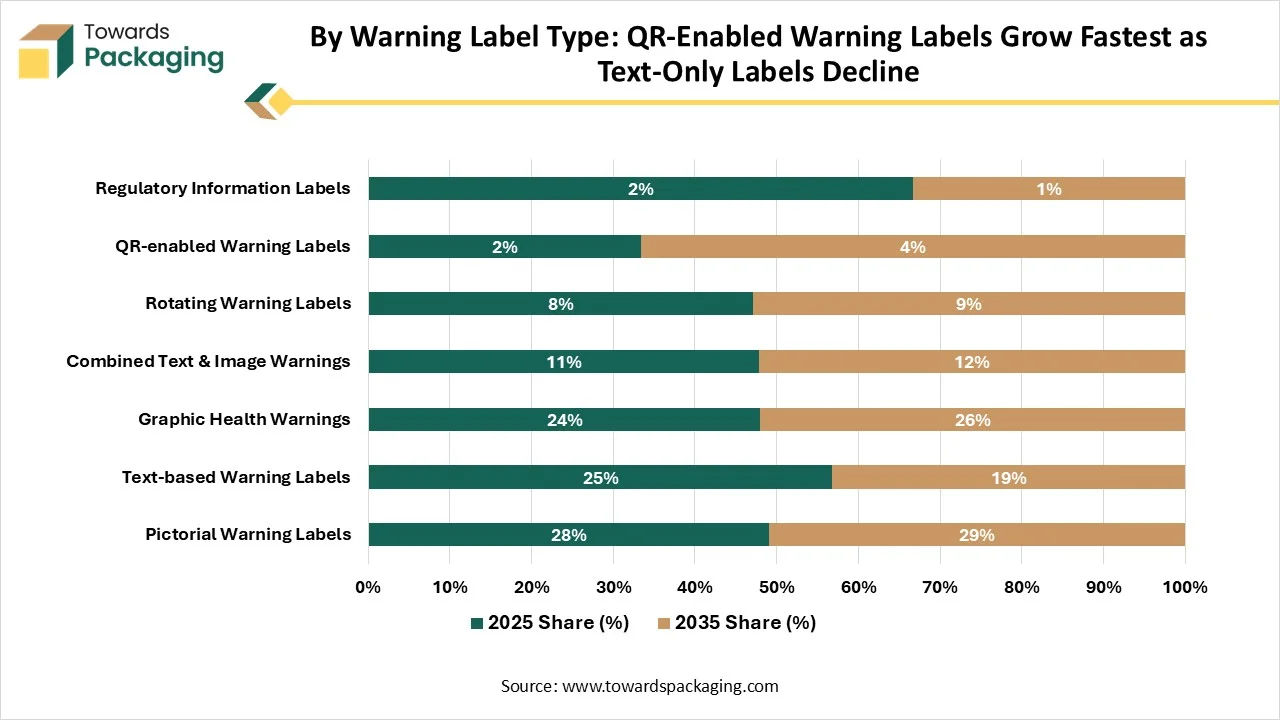
Pictorial warning labels dominated the nicotine warning-label packaging industry with a 28% share in 2025. The tobacco brands' focus on attractive promotional designs increases the use of pictorial warning labels. The superior viewer retention, high emotional impact, counteracting branding, and high cognitive impact of pictorial warning labels drive the growth. QR-enabled warning labels are expected to grow at a 16.2% CAGR during the forecast period. The higher need for unit-level serialization and focus on providing unique digital identity increases the use of QR-enabled warning labels. The risks of counterfeit tobacco products and the focus on instant authenticity verification increase the use of QR-enabled warning labels. The space-saving design and multilingual guides on QR codes support the growth. Text-based warning labels held a 25% share in the market in 2025. The global government mandates and plain packaging regulations increase the use of text-based warning labels. The growth in disposable devices and vape pods increases adoption of text-based warning labels. The space constraints and manufacturing efficiency boost overall growth.
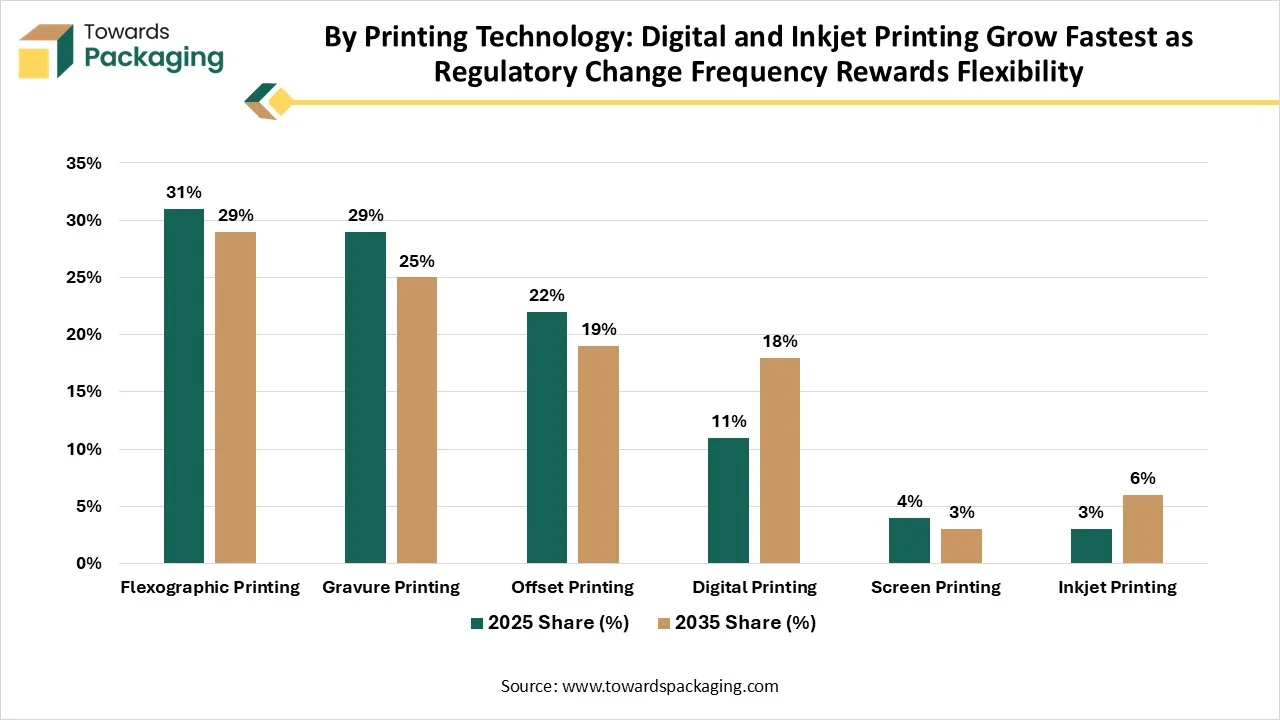
Flexographic printing dominated the nicotine warning-label packaging market with a 31% share in 2025. The large-scale development of nicotine products and massive tobacco volume increases the adoption of flexographic printing. Its compatibility with self-adhesive label stocks and flexible plastics helps with expansion. The use of fast-drying inks and regulatory adaptability drives the growth. Inkjet printing is expected to grow with the fastest CAGR of 16.5% during the forecast period. Government changes in health warnings and short production size increases use of inkjet printing. The printing of unique tracking codes and demand for fast design updates increases adoption of inkjet printing. Its compatibility with flexible film packaging supports the growth. Gravure printing held a 29% share in the market in 2025. The demand for high-definition imagery and a focus on fine-detail production increases the use of gravure printing. The interest in photorealistic warning imagery increases gravure printing use. The exceptional color consistency, unmatched press speeds, and high-volume efficiency of gravure printing drive the growth.
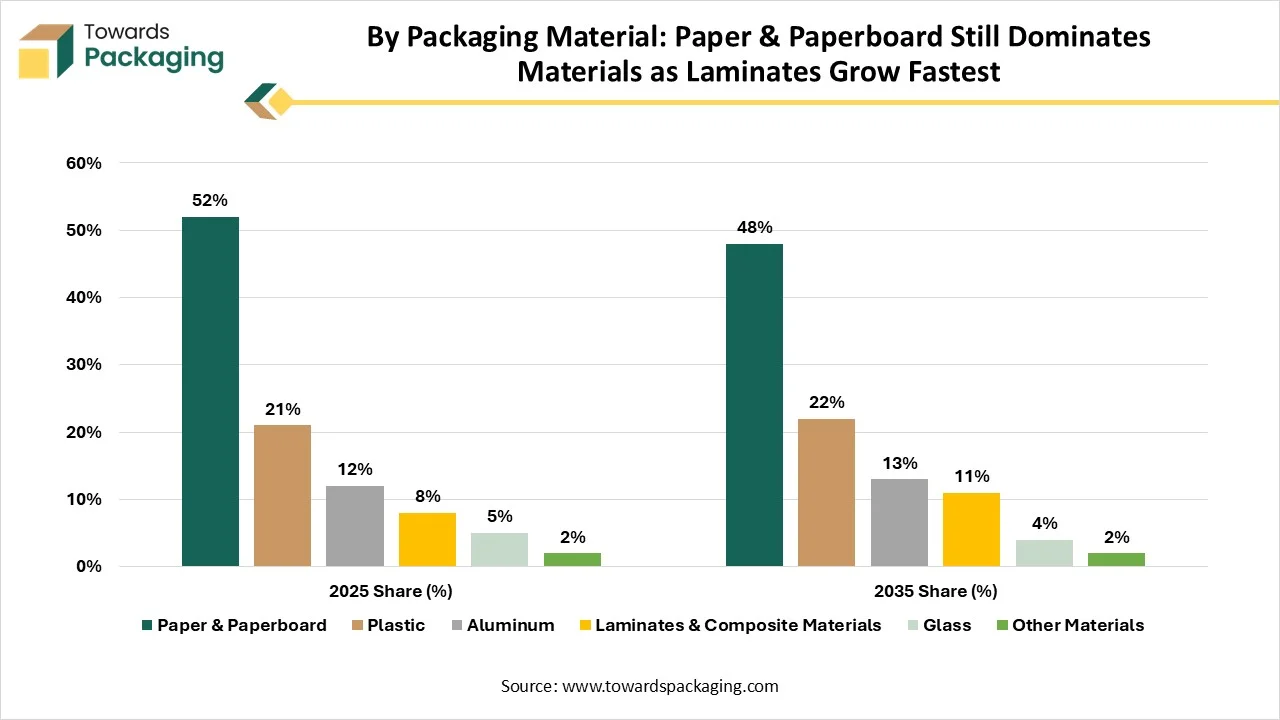
Paper & paperboard leads the nicotine warning-label packaging market with a 52% share in 2025. The printing of diverse pictorial warning labels and the restrictions on soft plastic pouches increase the use of paper & paperboard. Its compatibility with high-output cigarettes and the development of hinge-lid cigarette boxes increase the use of paper & paperboard. The structural rigidity and easy manufacturing integration of paper & paperboard drive the growth. Laminates & composite materials are expected to grow at the fastest CAGR of 12.4% during the forecast period. The prominent health-warning label demand and focus on protecting heated tobacco units increase adoption of laminates & composite materials. A surge in smoke-free oral nicotine increases laminates and composite material use. The high moisture barriers and mandated space in laminates & composites support the growth. Plastic held a 21% share in the market in 2025. High consumption of nicotine pouches and focus on keeping e-liquid fresh increases use of plastic. The high safety features, freshness control, and durability of plastic boost growth.
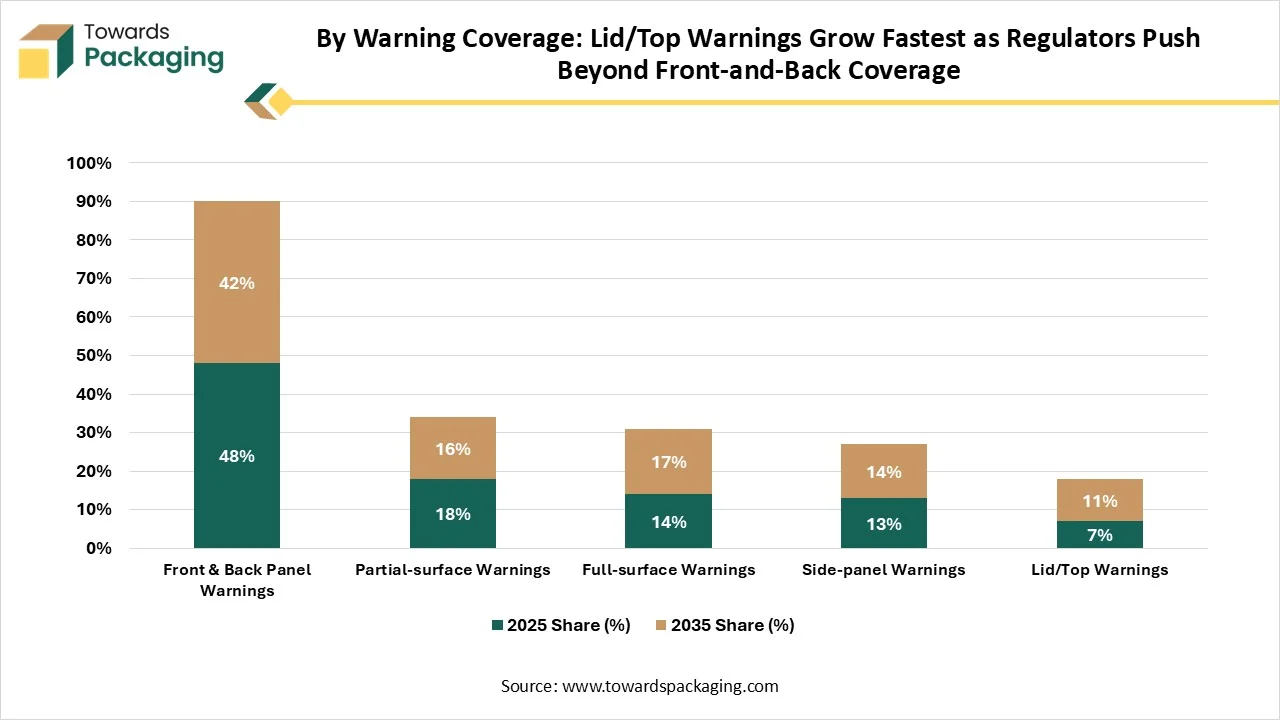
Front & back panel warnings dominated the nicotine warning-label packaging industry with 48% in 2025. The focus on maximum visibility of warnings and standards like WHO frameworks increases the use of front & back panel warnings. Some governments demand 50% to 85% surface coverage, increasing demand for front & back panel warnings. The high pictorial integration and maximum salience of front & back panel warnings, support the growth. Partial-surface warnings held an 18% share in the market in 2025. The popularity of heat-not-burn sticks and other small items increases use of partial-surface warnings. The small container sizes and the preservation of brand identity increase use of partial-surface warnings. Lid/top warnings are expected to grow with the fastest CAGR of 14% during the forecast period. The growth in smoke-free goods and focus on high message retention increases use of lid/top warnings. The rise in youth-focused branding and availability of nicotine products on small round cans increases use of lid/top warnings. The high surface utilization supports the growth.
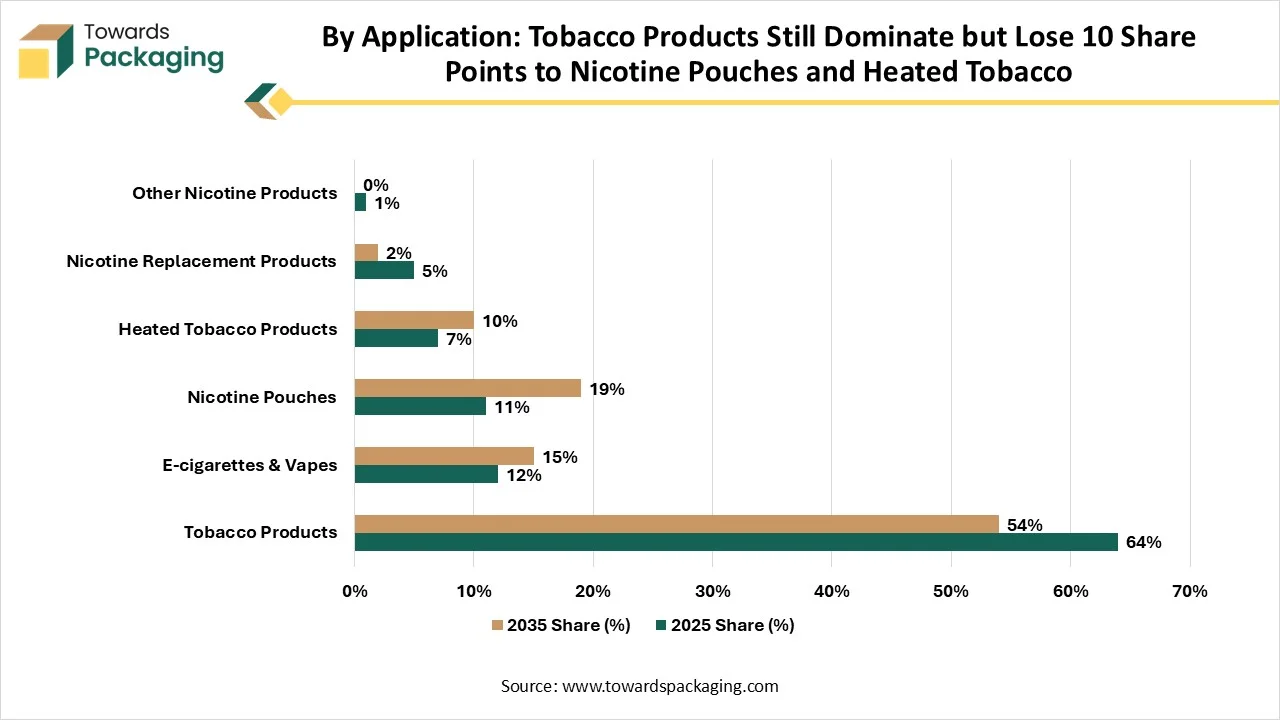
Tobacco products dominated the nicotine warning-label packaging industry with a 64% Share in 2025. The high production of combustible cigarettes and frequent redesigns of tobacco products increase the use of nicotine warning-label packaging. The high loose tobacco demand and the need for large pictorial warnings on tobacco drive the growth. Nicotine pouches are expected to grow at the fastest CAGR of 14.9% during the forecast period. Consumer demand for smoke-free appeal and discreet consumption convenience increases demand for nicotine pouches. The harm reduction, aggressive marketing, and legitimization effect of nicotine pouches drive the growth. E-cigarettes & vapes held a 12% share in the market in 2025. The boom of e-liquids and high global vape consumption increases the use of nicotine warning-label packaging. The thousands of flavor options and sleek look increase consumption of e-cigarettes & vapes. The focus on satisfying strong nicotine cravings supports the growth.
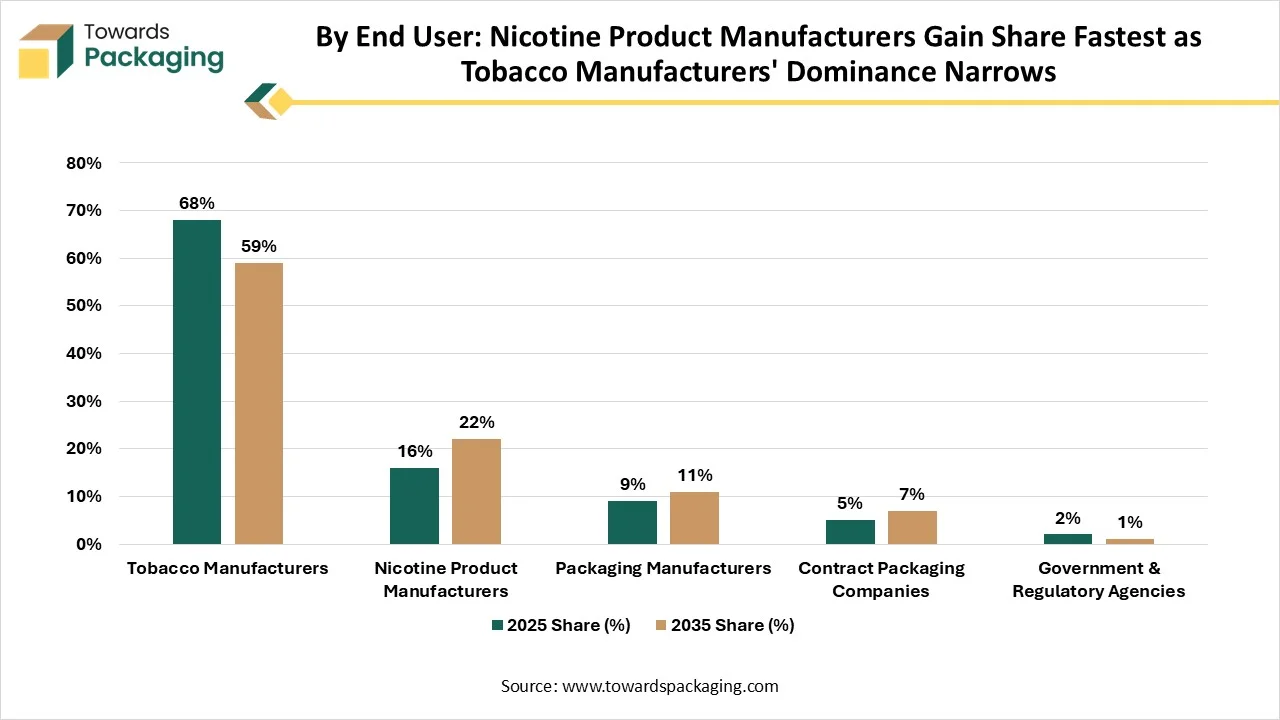
Tobacco manufacturers held a 68% share in the nicotine warning-label packaging industry in 2025. Tobacco manufacturers' demand for mild text warnings and demand for generic labels increases the use of nicotine warning-label packaging. Tobacco manufacturers' focus on mass production, high sales, visual attractiveness, and liability shields drives the market growth. Nicotine product manufacturers held a 16% share in the market in 2025. The development of new nicotine products and thriving nicotine pouches increases the use of nicotine warning-label packaging. The expanded production of vape pods, shift away from traditional brand elements, and manufacturers' focus on redesigning budgets boost growth. Contract packaging companies are expected to grow with the fastest CAGR of 12.4% during the forecast period. Contract packaging companies focus on creating specialized blister cards, and changing regional requirements increase demand for nicotine warning-label packaging. The brands' transition to third-party packers increases adoption of contract packaging companies. The high agility, low costs, and flexibility of contract packaging companies boost growth.
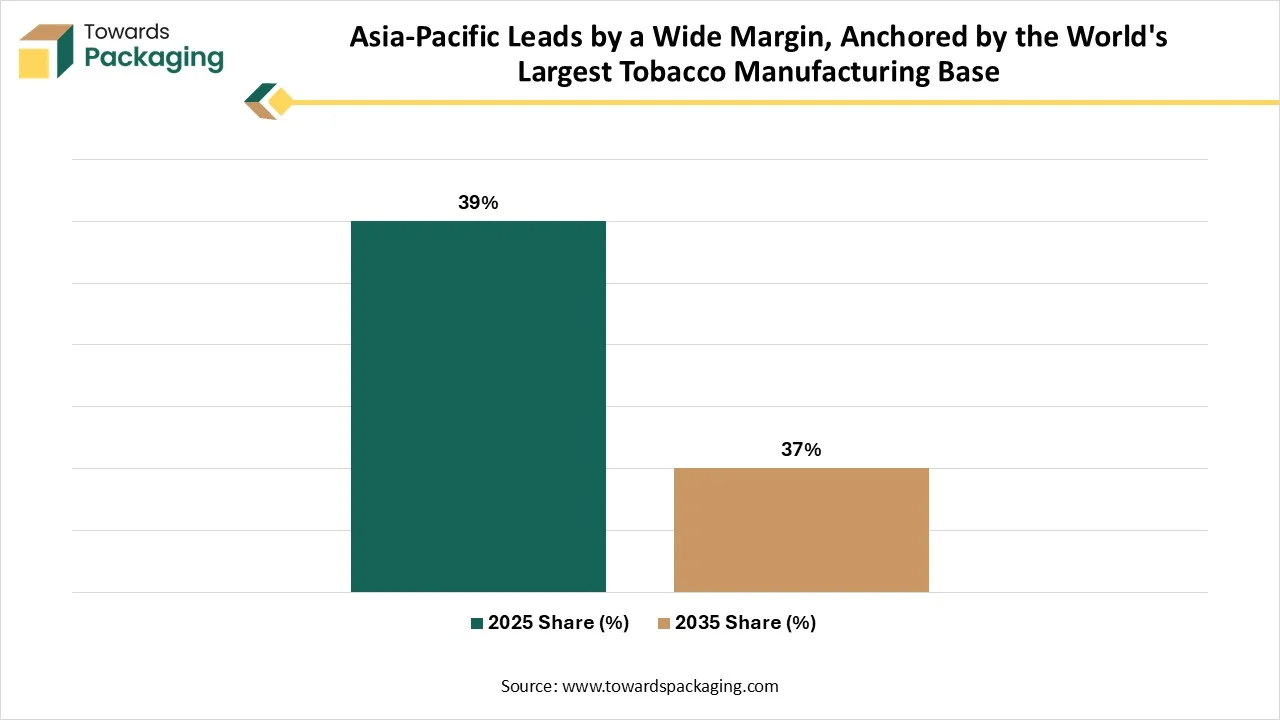
Asia Pacific held a 39% share in the nicotine warning-label packaging market in 2025. The high daily consumption of tobacco and the growing product demand in the rural population increase the use of nicotine warning-label packaging. The huge production of conventional cigarettes and massive cultivation hubs increase the use of nicotine warning-label packaging. Massive consumption of nicotine goods and expanding e-cigarettes drive the growth. India is rapidly expanding in the market. The COTPA regulations and the presence of millions of tobacco consumers increase adoption of nicotine warning-label packaging. The preference for smokeless tobacco products and the incorporation of advanced flexographic solutions help with expansion. The stringent textual warning mandates and high bidi consumption boost growth.
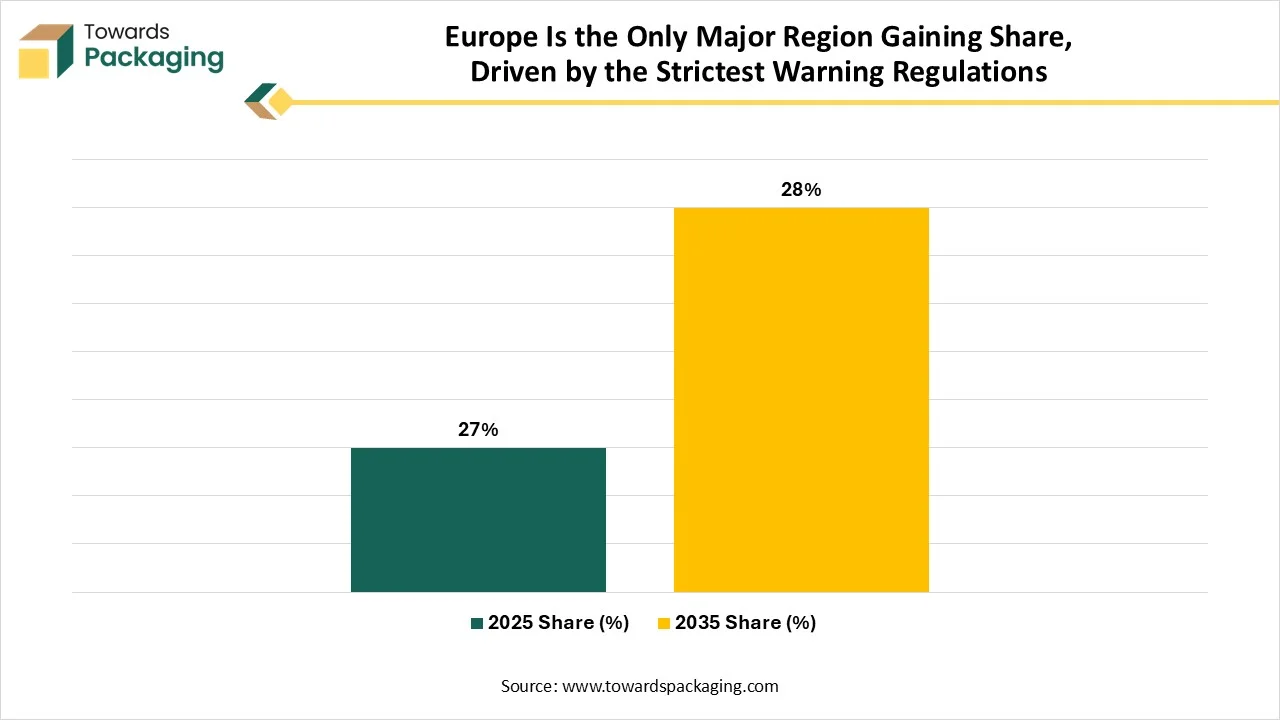
Europe held a 27% share in the nicotine warning-label packaging industry in 2025. The mandates for massive graphic warnings and the increase in e-cigarette sales increase the use of nicotine warning-label packaging. National focus on lowering tobacco use and the availability of mandated coverage help with expansion. The rise in high-tech serialization and the expansion of heated tobacco items drive the growth. Germany is a key contributor to the market. The interest in smoke-free goods and focus on specialized labeling materials increase the adoption of nicotine warning-label packaging. The explosion of modern oral nicotine solutions and the expansion of pictorial notices help with the growth. The rise in recyclable warning-label substrates boosts the growth.
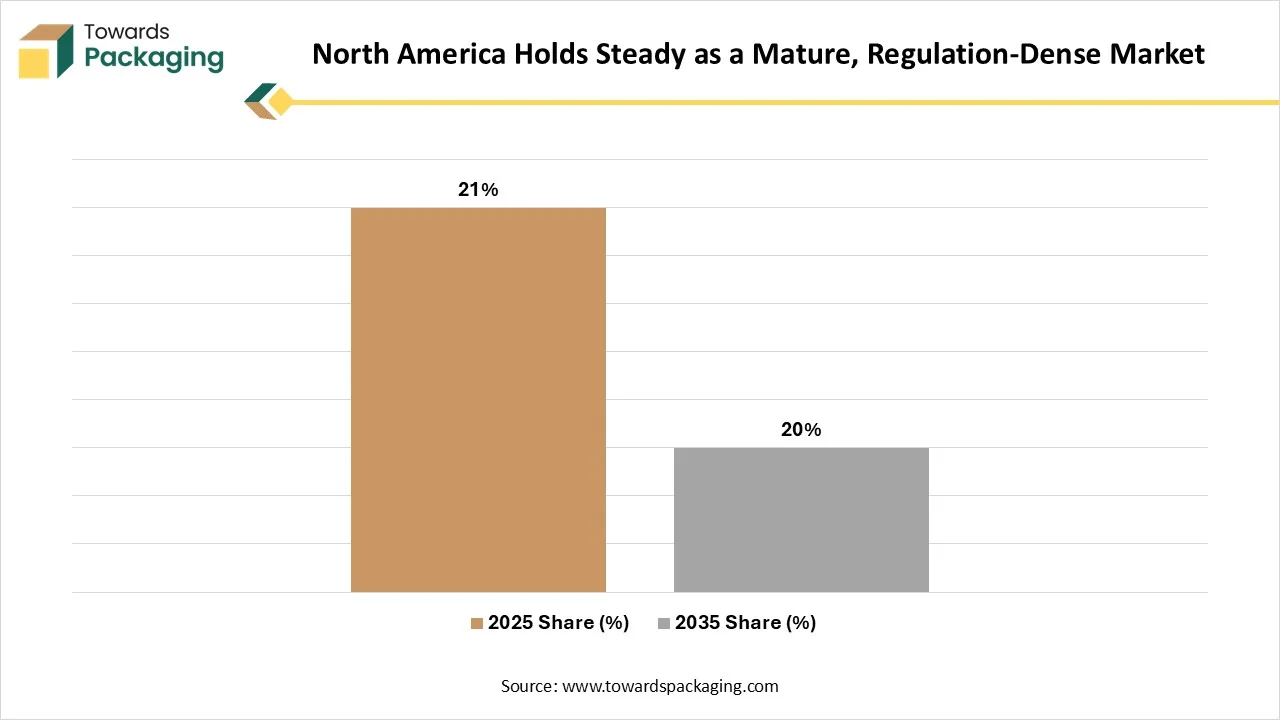
North America held a 21% share in the nicotine warning-label packaging market in 2025. The government's focus on explicit health warnings and frequent updates in labeling laws helps with expansion. The transition to smoke-free items and the need for child-resistant warning designs increase the adoption of nicotine warning-label packaging. The explosion of vapes and use of biodegradable laminates supports the growth. United States is a major player in the market. FDA enforcement on synthetic nicotine and updated federal guidelines increase the use of nicotine warning-label packaging. The boom of nicotine pouches and rapid growth in vaping devices increases adoption of nicotine warning-label packaging. The high investment in digitally integrated packaging boosts the growth.
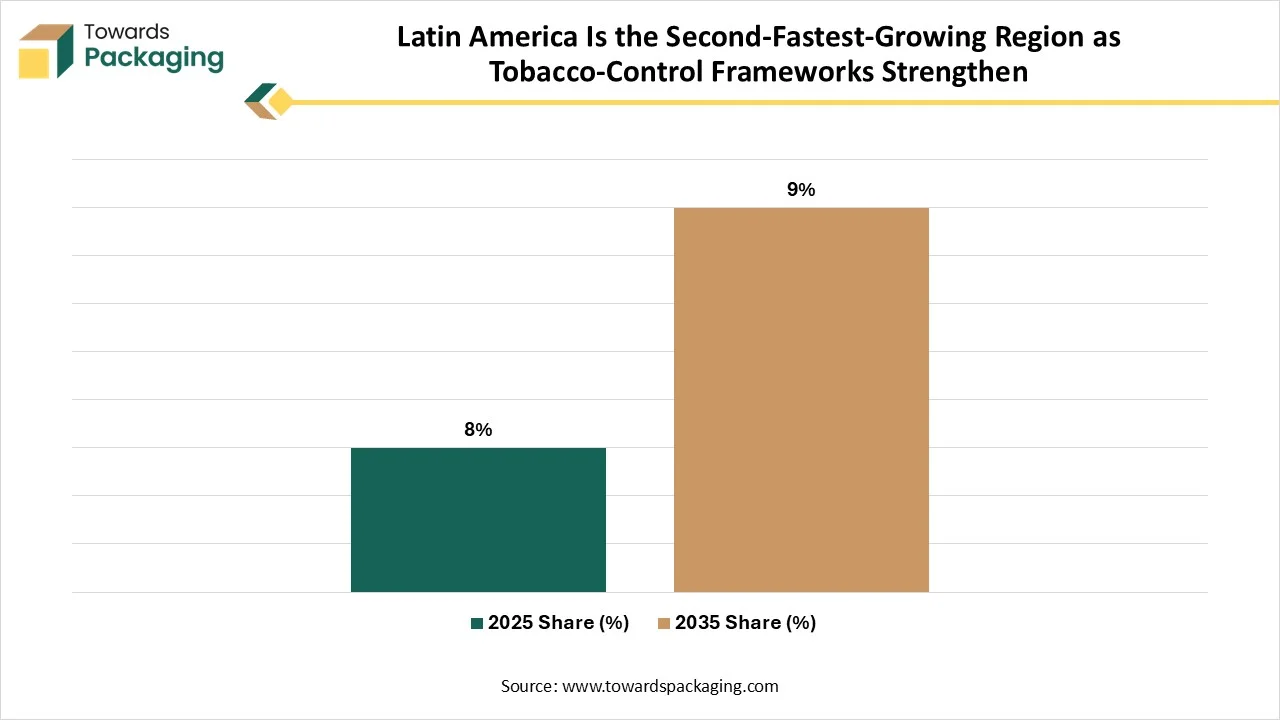
Latin America held an 8% share in the nicotine warning-label packaging industry in 2025. The strong mandates for pictorial health warnings and the presence of major tobacco companies increase the use of nicotine warning-label packaging. The bans on misleading brand descriptors and the interest in high-opacity warning graphics help with expansion. The rise in heated tobacco boosts growth. Brazil held a dominant position in the market. The high domestic tobacco manufacturing and heavy investment in labeling infrastructure increase use of nicotine warning-label packaging. The stringent text warnings and harsher labeling laws support the growth.
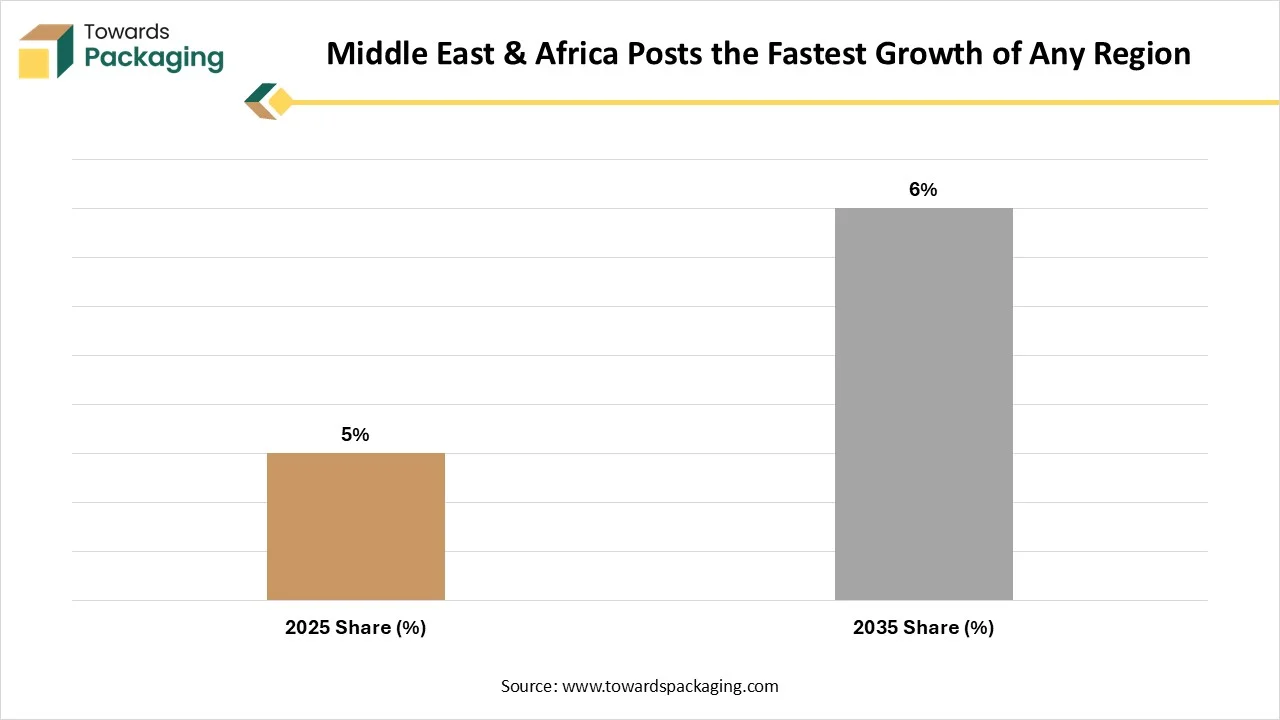
The MEA held a 5% share in the nicotine warning-label packaging market in 2025. The stringent tobacco control mandates and transition to heated tobacco increase the use of nicotine warning-label packaging. The exploding GCC retail infrastructure and growing illicit trade rates increase adoption of nicotine warning-label packaging. The surge of e-cigarettes in Saudi Arabia and burgeoning modern nicotine solutions support the growth. United Arab Emirates is rapidly growing in the market. The stricter standards for tobacco-free nicotine pouches increase the use of nicotine warning-label packaging. Surging vaping alternatives and high interest in e-vapour products increase adoption of nicotine warning-label packaging. The bilingual labeling mandates boost the market growth.
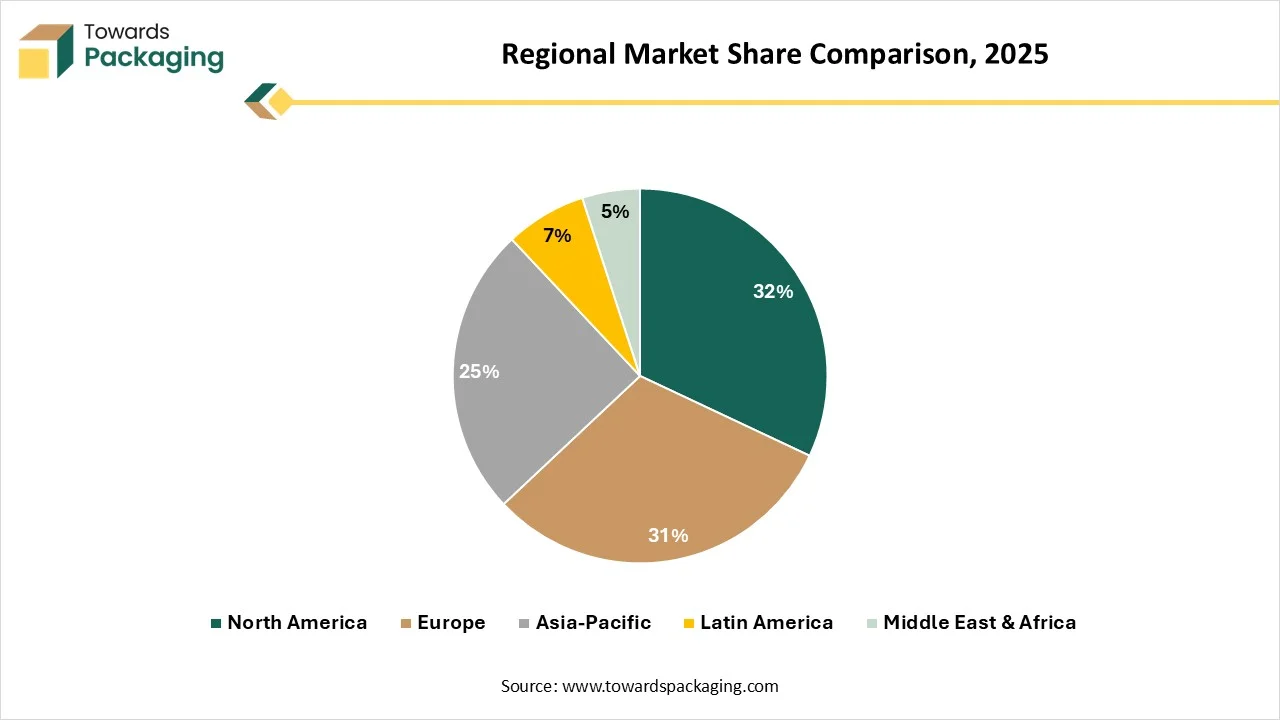
Asia Pacific held a 39% share in the nicotine warning-label packaging market in 2025, driven by rapid expansion of smokeless tobacco, serialization requirements, and evolving warning labels. Europe held a 27% share in the market in 2025 due to high tobacco consumption among youth and the explosiveness of nicotine pouches. North America held a 21% share in the market in 2025 due to a move towards vaping products and federal regulations for health warning disclosures. Latin America held an 8% share in the market in 2025 due to delays in accepting labeling policies and growing illicit trade concerns. MEA held a 5% share in the nicotine warning-label packaging industry in 2025 due to smaller infrastructure for packaged nicotine and a shift to capsule cigarettes.
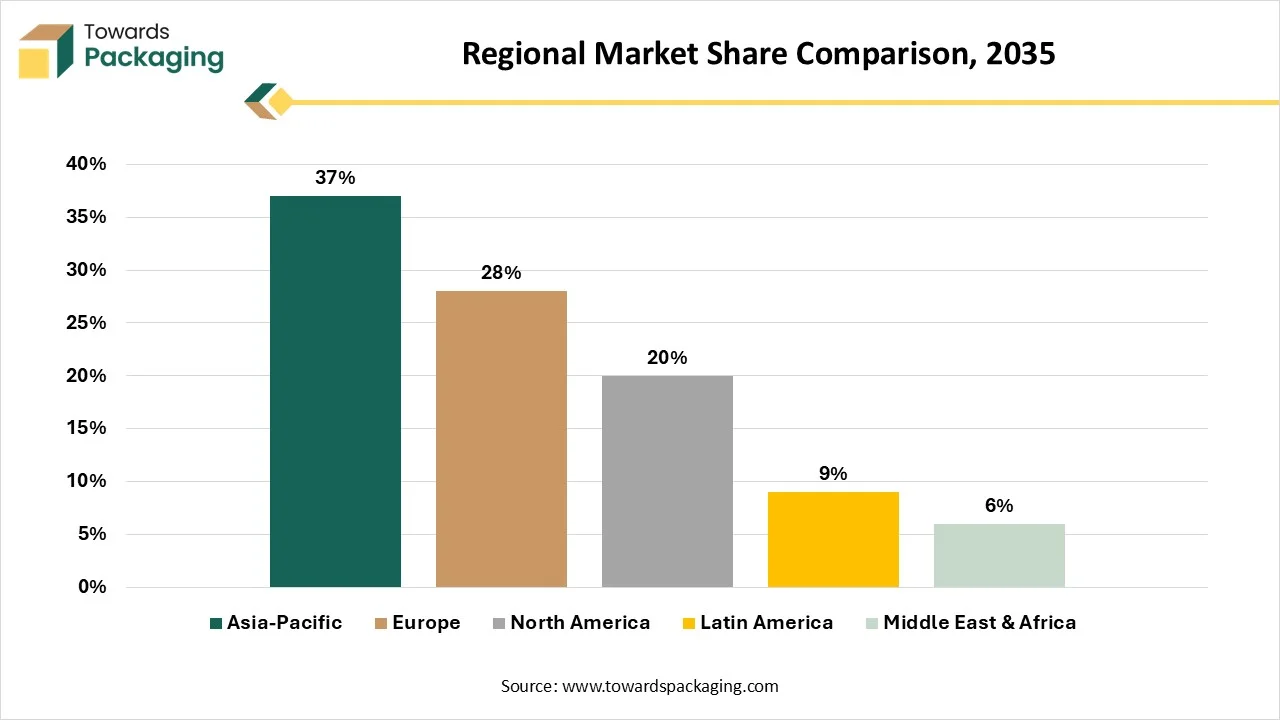
Asia Pacific is expected to hold a 37% share in the nicotine warning-label packaging market by 2035 due to huge demand for traditional cigarettes and a rise in modern oral pouches. Europe is expected to hold a 28% share in the market by 2035 due to high traditional cigarette consumption hubs and the growth of e-liquids. North America is expected to hold a 20% share in the market by 2035 due to the rise in smoke-free alternatives and demand for child-resistant packaging. Latin America is expected to hold a 9% share in the market by 2035 due to a smaller consumer pool and slow awareness of new products. MEA is expected to hold a 6% share in the market by 2035 due to low consumption volume and the preference for unbranded methods.
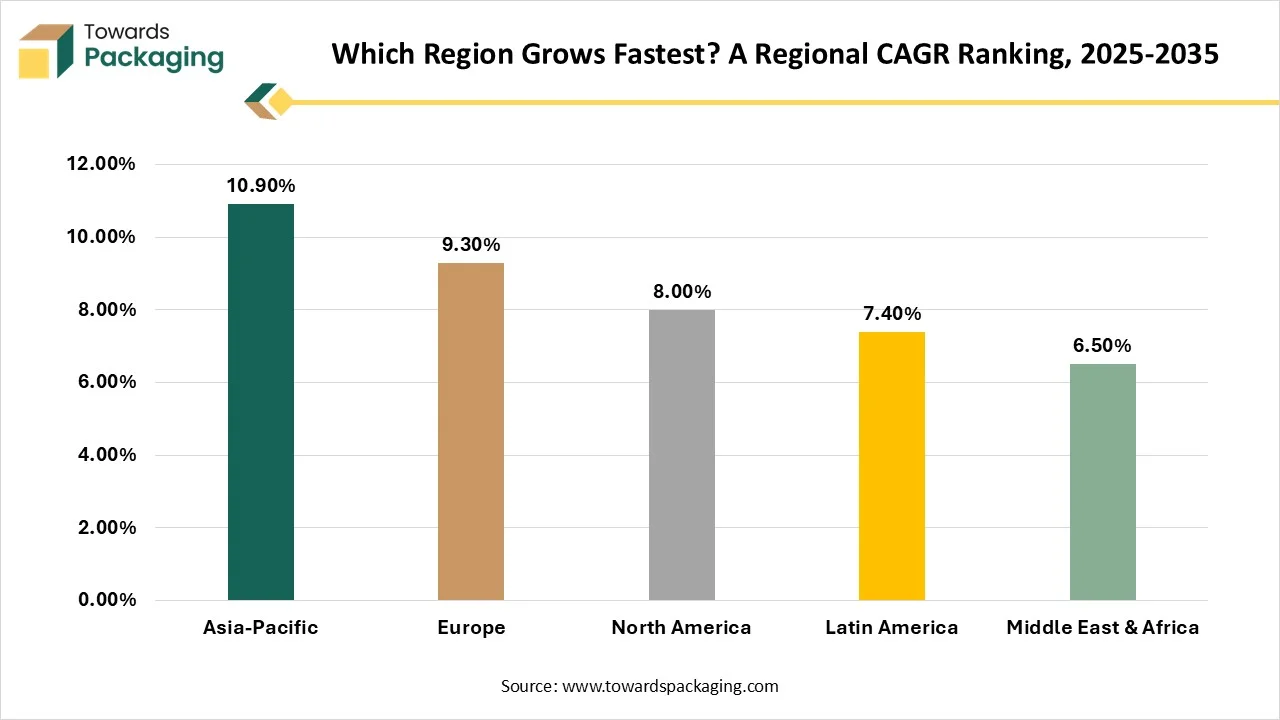
Middle East & Africa is expected to grow with the fastest CAGR of 10.8% in the nicotine warning-label packaging market during the forecast period due to the high interest in e-cigarettes and the increased availability of box products in digital storefronts. Latin America is expected to grow at a 10.2% CAGR during the forecast period due to the popularity of flavored cigarettes and commercial production of heated tobacco products. Europe is expected to grow at a 9.3% CAGR during the forecast period due to the smoke-free transition and rise in plain-packaging laws. Asia Pacific is expected to grow at an 8.4% CAGR in the market during the forecast period due to emerging growth in heated tobacco and growing premiumization of nicotine products. North America is expected to grow at an 8.3% CAGR during the forecast period due to the lowering smoking rates and higher adoption of e-cigarettes.
Source:- Towards Packaging Database
According to my research, the nicotine warning-label packaging market is growing at the fastest rate due to the availability of e-vapor packaging, stringent regulations for warnings, and trending plain packaging. Regulatory bodies like WHO, the National Health Ministry of India, the U.S. FDA, and the European Commission TPD are increasing adoption of nicotine warning-label packaging. Factors like frequent policy updates, transition to hidden authentication, trending e-cigarettes, and substrate upgradation support the growth. Top manufacturers like Smurfit Westrock, International Paper, Amcor, and ITC Limited boost the market growth.
By Product Type
By Packaging Format
By Warning Label Type
By Printing Technology
By Packaging Material
By Warning Coverage
By Application
By End User
By Region
Towards Packaging Database
Independently Researched Sources

























Principal Research Analyst
Vidyesh Swar is a Senior Research Analyst at Towards Packaging, bringing over 4 years of dedicated expertise in market intelligence and strategic analysis across the dynamic world of packaging technologies and solutions.
Learn more about Vidyesh Swar

Reviewed By
Aditi Shivarkar, with 14+ years in packaging market research, specializes in food, beverage, and eco-friendly packaging. She ensures accurate, actionable insights, driving Towards Packaging Analytics & Consulting 's excellence in industry trends and sustainability.
Learn more about Aditi Shivarkar


Nicotine Warning-Label Packaging Market
 Table of Content

 Download Sample
 Schedule a Meeting