


According to Sudeep Pednekar, who specializes in research related to PHA bioplastics, processing technology, bioplastics grades, and packaging services with 5+ years of experience in industry analysis & market research, extensive analysis indicates strong opportunities in the PLA and PHA bioplastic market growth. The global PLA and PHA bioplastic market size was estimated at USD 3.90 billion in 2025 and is predicted to increase from USD 4.61 billion in 2026 to approximately USD 3.9 billion by 2035, and is expected to grow at a CAGR of 18.20% during 2025-2035. His analysis showcases that the PLA and PHA bioplastic market is robustly growing due to the single-use bans, strong focus on natural decomposition, growing brand commitments, and scaling retail packaging. The major players in the market are NatureWorks LLC, Corbion N. V., Kaneka Corporation, and TotalEnergies Corbion.
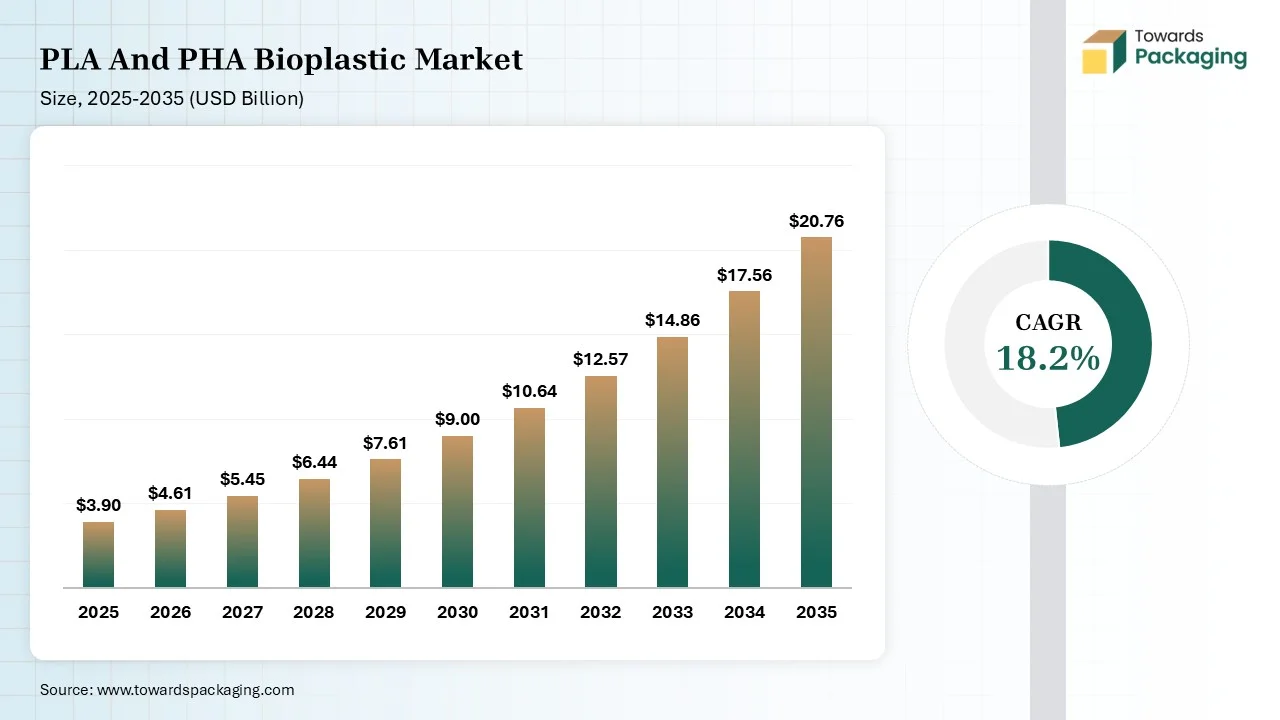
PLA bioplastic sustainable thermoplastic polyester developed from plant-based materials, whereas PHA bioplastic is a bio-based plastic made from microorganisms. PLA bioplastic is widely used in salad trays, bioresorbable surgical sutures, hygiene products, FDM printers, and takeaway containers. PHA bioplastic is used in biodegradable agricultural films, biocompatible medical items, and single-use cosmetic jars. PLA bioplastic offers benefits like industrial compostability and lower emissions. PHA bioplastic provides benefits like versatile performance, full biodegradability, and medical compatibility. The global PLA and PHA bioplastic market size was estimated at USD 3.90 billion in 2025 and is expected to grow at a CAGR of 18.20% during 2025-2035.
Source:- Towards Packaging Database
The PLA and PHA bioplastic market is valued at USD 3.90 billion in 2025. The market growth is driven by the global legislation phases, expansion of multinational consumer brands, growing government bio-preferences, expansion of closed-loop materials, increasing barrier improvements, rise in waste-derived fermentation, rapid expansion of agricultural mulch films, increasing use of low-toxicity PHA, and increased upgradation of blend performance. The market is growing at a CAGR of 18.20% during the predicted timeframe due to growing producer accountability, rising industrial compostability, EPR policies, and expanding consumer goods industry.
Source:- Towards Packaging Database
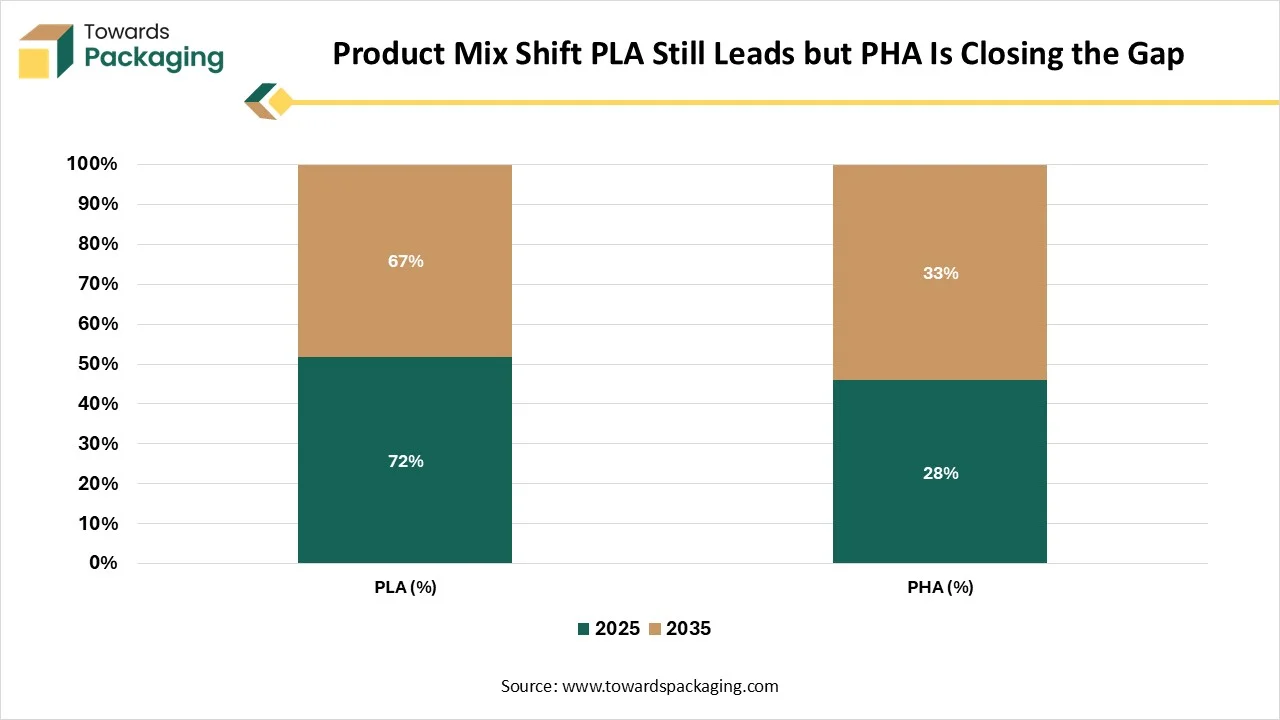
PLA held a 72% share in 2025 due to the availability of cheaper raw materials. The abundance of crop starches and the rise in bacteria-synthesized PHA help with growth. The focus on regulatory alignment and drop-in-compatibility increases the production of PLA. It is produced using bacterial fermentation and requires a low production cost. PHA is expected to grow at a CAGR of 20.8% during the forecast period. The complete biodegradability and the interest in green packaging options increase the use of PHA. The growing PHA demand in regions like Asia Pacific, Europe, and North America helps with the expansion. The development of medical sutures and public sustainability targets helps with the growth.
Source:- Towards Packaging Database
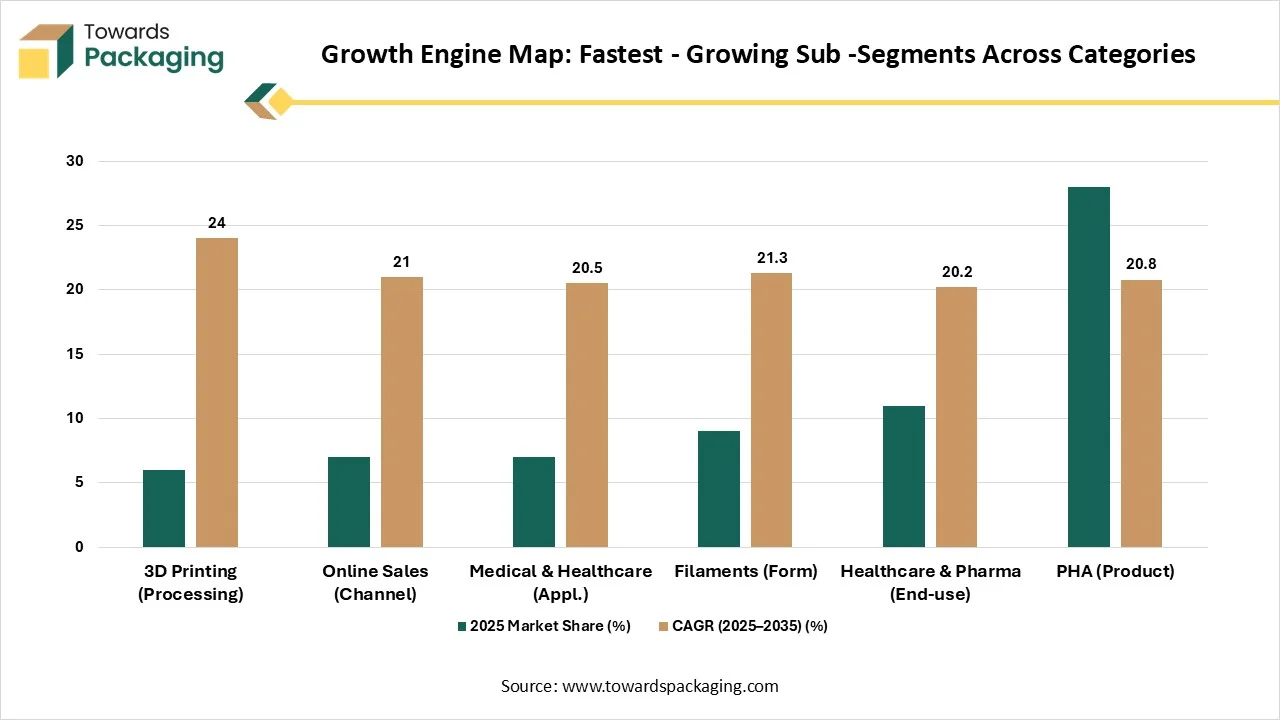
3D printing is expected to grow at the fastest CAGR of 24% during the forecast period due to the user-friendly processing. Online Sales expected to grow at a CAGR of 21% during the forecast period, driven by the expansion of digital tools. Filaments are expected to grow at the fastest CAGR of 21.3% during the forecast period due to the robust growth in 3D printing. The PHA is expected to grow at a CAGR of 20.8% during the forecast period, driven by the no plastic residue. Medical & healthcare is expected to grow at the fastest CAGR of 20.5% during the forecast period due to the interest in bioresorbable implants. Healthcare & pharma is expected to grow at the fastest CAGR of 20.2% during the forecast period due to the expansion of implantable devices.
Source:- Towards Packaging Database
Danimer Scientific filed Chapter 11 on March 18, 2025. The filing done on the U.S. Bankruptcy Court. The company listed debt of $381 million. Issues like cash depletion, high debt, and slow market growth were faced. The company got $15 million DIP financing. The company secured a roll-up of protection bridge loans of $12 million and new money of $3 million. The facility was meant to pay for administration of Chapter 11, fund payroll, and window operations. The company’s assets, like operations, manufacturing facilities, workforce, and intellectual property, were sold to Teknor Apex on May 30, 2025, for $19M. The liquidation plan of Danimer Scientific was confirmed by the court on July 18, 2025.
Source: U.S. Bankruptcy Court for the District of Delaware (Case No. 25-10518, Stretto claims registry); Plastics News; C&EN Global Enterprise; bioplastics MAGAZINE (March 2025)
Aman’s research states that the regulation (EU) 2025/40 is applicable from August 12, 2026. The regulation focuses on recycling and packaging sustainability. The tea/coffee bags & produce labels focus on meeting industrial composting by February 12, 2028. The bags focus on using certified bio-based materials. The waste reduction targets focus on implementing 4R in corporate, integrating recycling, and prohibiting solid landfill waste. The recycled content mandates start from January 1 2030. The core focus is supply chain transformation, waste reduction, and demand creation.
Source:- Official Journal of the European Union, Regulation (EU) 2025/40; European Commission guidance document (2026); Freshfields, Gleiss Lutz, Baker McKenzie regulatory briefings
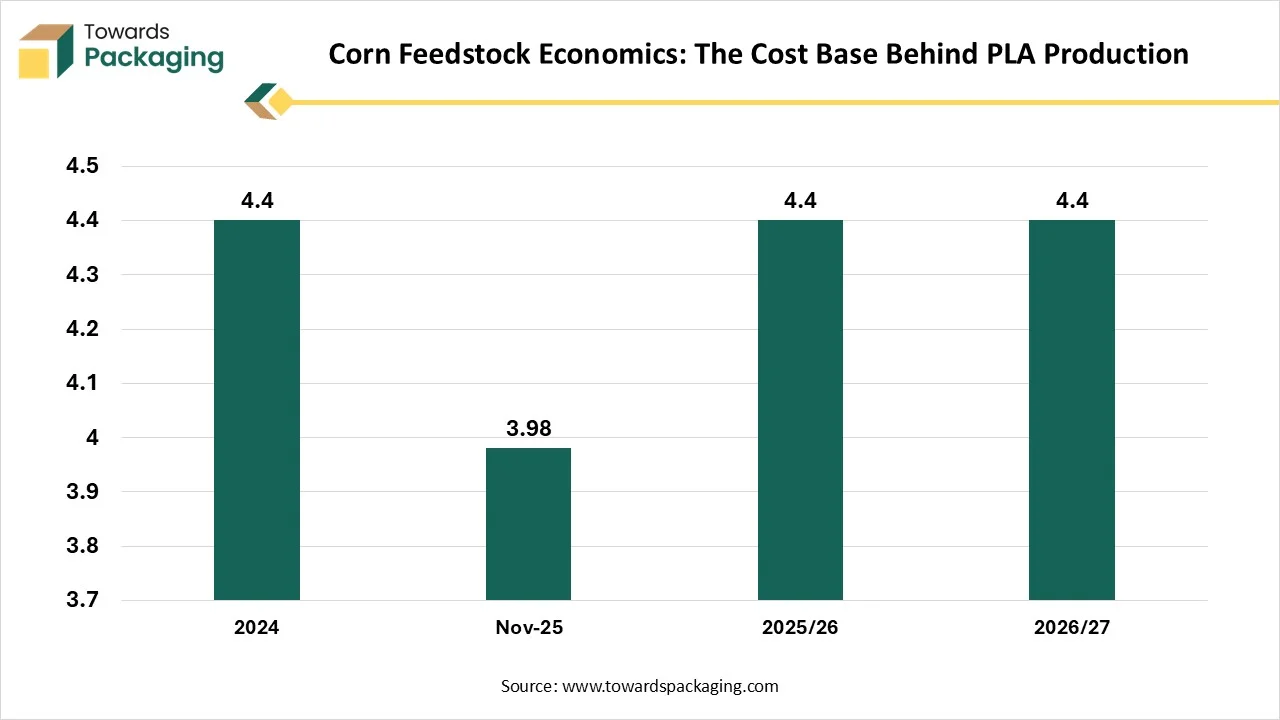
According to analysis, for 2025/26 and 2026/27, the U.S. corn farm price forecast at $4.40/ bushel. The pricing is driven by factors like reduced overall production, constraints on feed use, and lower acreage. The monthly price is $ 3.98/bushel in November 2025, driven by bumper harvest yields and growing seasonal crop movement. Global competitiveness and steady consumption influence the market. In the years 2025 and 2026, the United States corn production forecasts are at a record 15.585 billion bushels due to the larger planted acreage. The growing ethanol production and rising total domestic use drive the growth. Corn feedstock supports starch extraction, sugar conversion, and fermentation into lactic acid in PLA production. Corn feedstock supports microbial accumulation and internal polymer storage in PHA production.
Source: USDA WASDE, June 2026; USDA Economic Research Service, Feed Outlook FDS-25h (Aug 2025); USDA NASS, Agricultural Prices report (Dec 2025)
The bio-based polymer industry is projected to expand from 765000 tonnes in 2023 to 2.53 million tonnes in 2026. The market is expected to expand at a CAGR of approximately 49%. The industry is expanding rapidly due to plastic bans, growing local chemical giants, growth in everyday goods, and implementation of green plans. The restriction on conventional plastics and the major domestic industry increases the use of PLA and PHA bioplastics. The continuous growth in the delivery sector and the growing private equipment investment increase the production of PLA and PHA biopolymers.
Source: nova-Institute, "Bio-based and Biodegradable Plastics Industries in China" (May 2024)
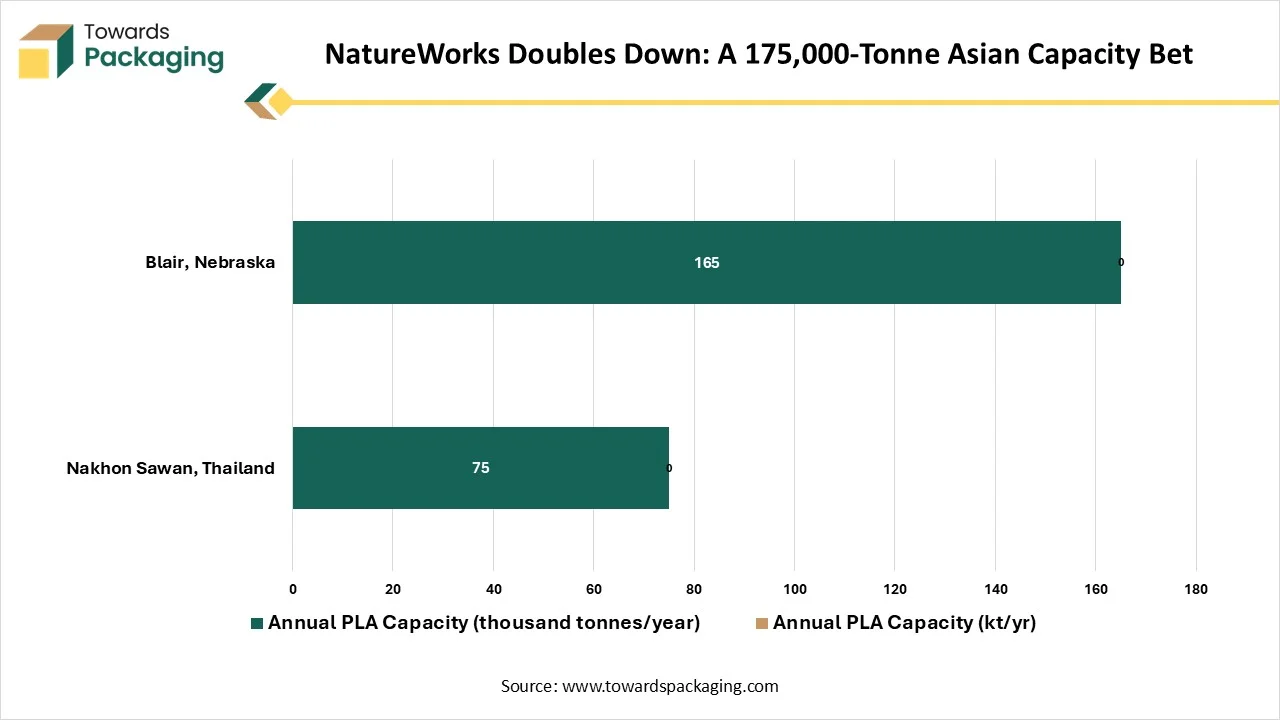
New Ingeo PLA facility opened by NatureWorks in Nakhon Sawan, Thailand. The yearly production capacity of the facility is 75000 tons. The Krungthai Bank PCI invested $350 million. The company’s United States plant has a yearly production capacity of 150000 metric tons. The new facility uses sugarcane as a feedstock. The facility integrates polymer manufacturing, lactic acid production, and lactide monomer output. The current global total production capacity of the company is 225000 tons. The company supports applications like compostable food serviceware, hygiene products, flexible packaging, nonwoven fibers, and 3D printing filaments.
Source:- PTT Global Chemical newsroom (2025); NatureWorks press releases (2023–2025); Renewable Carbon News
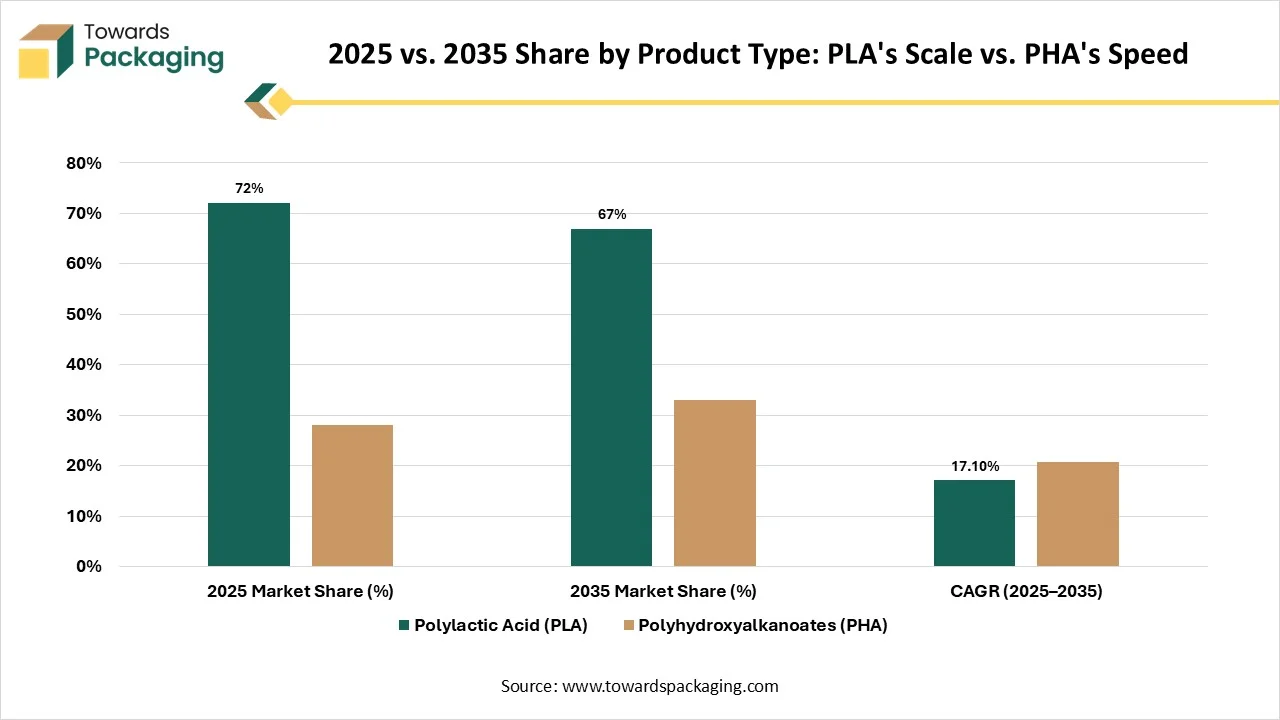
The graph showcases the evolution of PLA and PHA across industries. PLA dominated the market with the highest revenue share of 72% in 2025 due to the lower manufacturing cost, corporate carbon goals, and its high machine compatibility. PHA held the 28% share in 2025 and is expected to grow at the fastest CAGR of 20.8% during the forecast period due to the growing optimization of fermentation technology, rising use in simple food packaging, and tough environmental rules. Additionally, PLA is used in food containers, filament materials, surgical items, drug delivery, and wraps. PHA is used in food packaging, personal care, surgical implants, and single-use items.
Source:- Towards Packaging Database
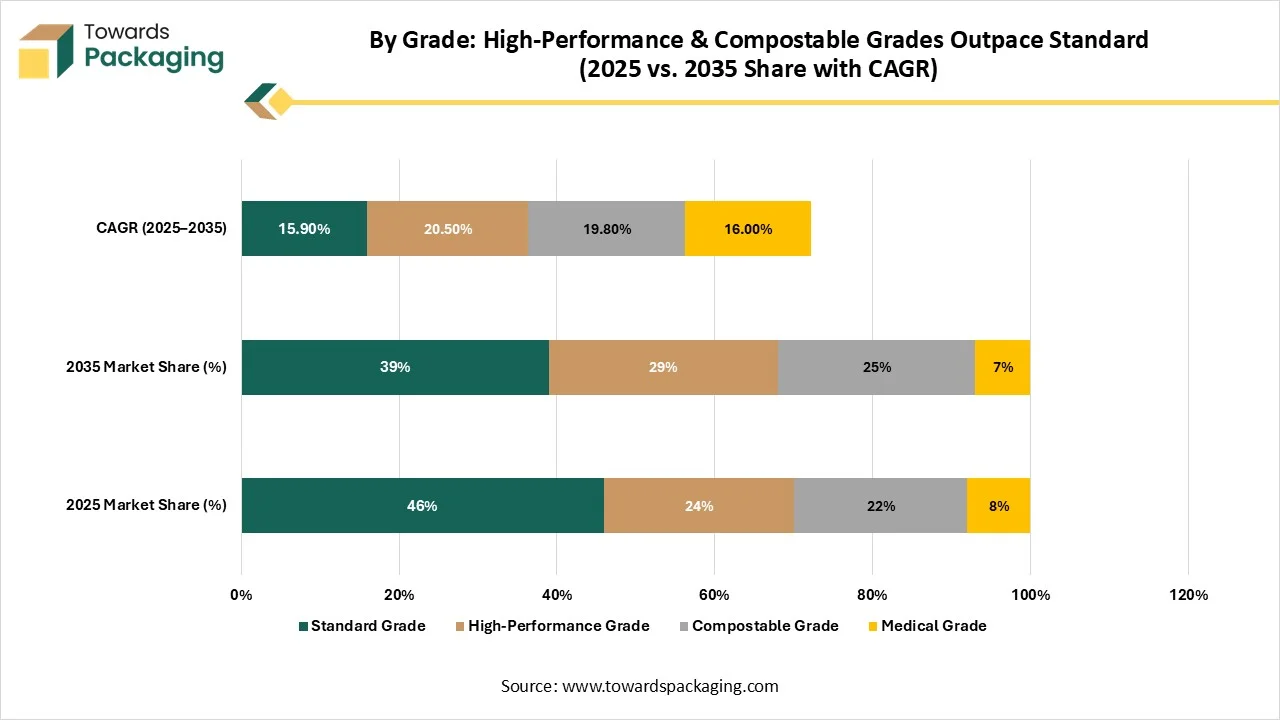
As per my research, different grades of PLA and PHA bioplastics are standard grade, high-performance grade, compostable grade, and medical grade. Standard grade holds the dominant position with a 46% share in 2025, driven by its less expensive production, presence of large-scale facilities, and growing packaging volume. High-performance grade held a 24% share in the market and is expected to grow at a CAGR of 20.5% during the forecast period due to its increased thermal limits, growing use in electronic casing, and the rise in advanced packaging. The compostable grade held a 22% share in the market, driven by. The medical grade held an 8% market share in 2025 due to the advancements in microbial engineering and the higher use of certified compostable grades in food service brands.
Source:- Towards Packaging Database
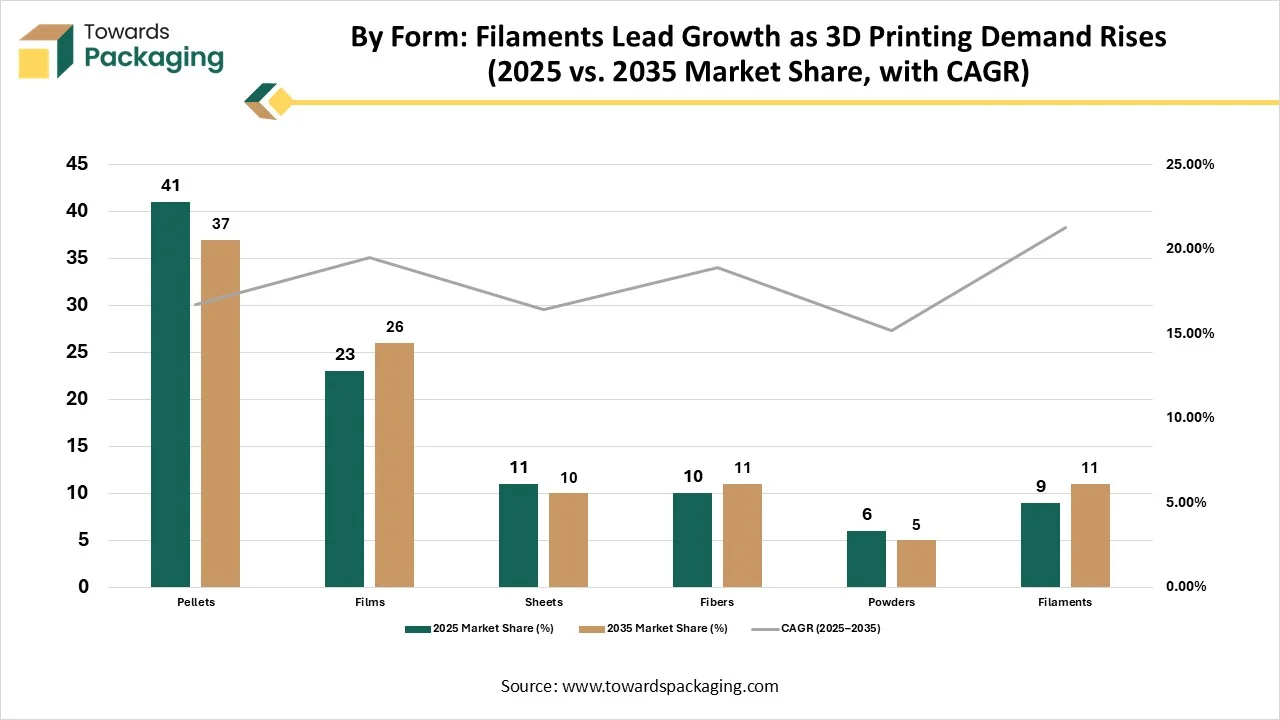
The graph demonstrates that pellet form dominates the market, and filament demand is expected to surge in the forecast period. Pellets lead the market with a 41% share in 2025 due to their consistent melt flow, high blending capabilities, and higher utilization in food service items. The films held a 23% share in the market in 2025, driven by the increased production of agricultural mulch films and their optimized barrier properties. The filaments held a 9% share in the market in 2025 and are expected to grow at a CAGR of 21.3% during the predicted timeframe due to the expanding 3D printing frameworks and small businesses' transition to sustainable formats.
Source:- Towards Packaging Database
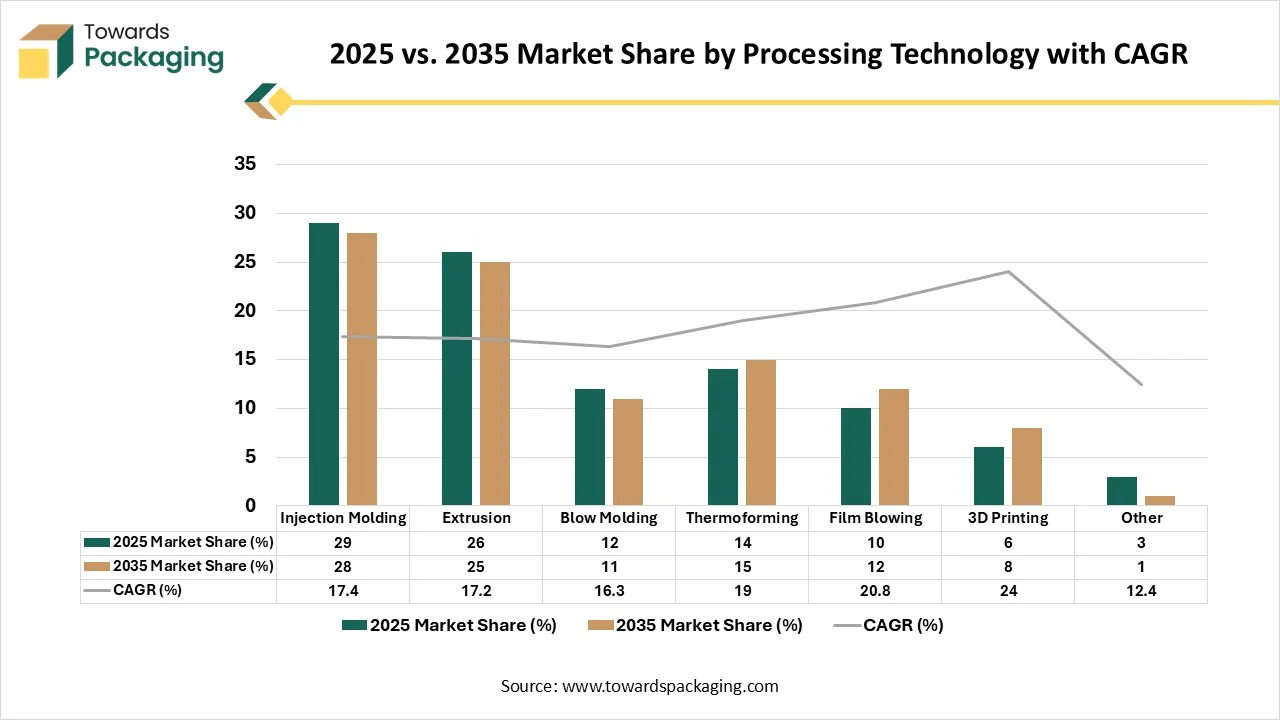
The processing technologies like injection molding, extrusion, blow molding, thermoforming, film blowing, and 3D printing are used in PLA and PHA processing. Injection molding held the dominant position with a 29% share in 2025, driven by rigid packaging applications, high utilization in durable housing, and its high material adaptability. Extrusion held a 26% market share in 2025 due to its use in the food packaging sector and advancements in polymer blending. 3D printing held a 6% share in the market in 2025 and is expected to grow at a CAGR of 24% during the predicted timeframe due to its better heat tolerance, ease of printing, low warping, and flexibility.
Source:- Towards Packaging Database
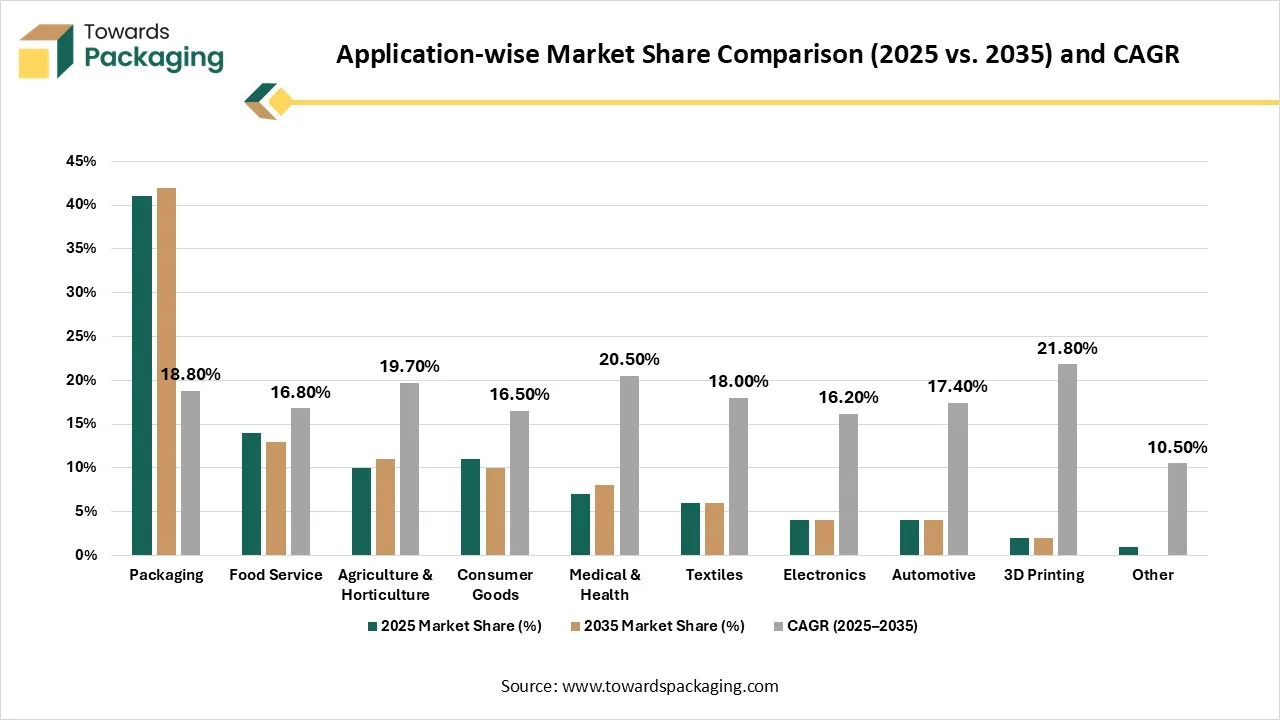
According to my research, packaging dominated the market with a 41% share in 2025 due to EU regulations across diverse packaging like retail brands, food, and others. The incorporation of bio-based polymers in packaging and increased manufacturing capacity drives the growth. The medical & healthcare industry held a 7% share in 2025 and is expected to grow at a 20.5% CAGR during the forecast period due to the preference for controlled drug delivery, increased development of temporary implants, and high compatibility with medical sterilization. 3D printing is expected to grow at a 21.8% CAGR in the market during the predicted timeframe due to the rise in on-demand customization and the demand for plant-based feedstocks in 3D printing.
Source:- Towards Packaging Database
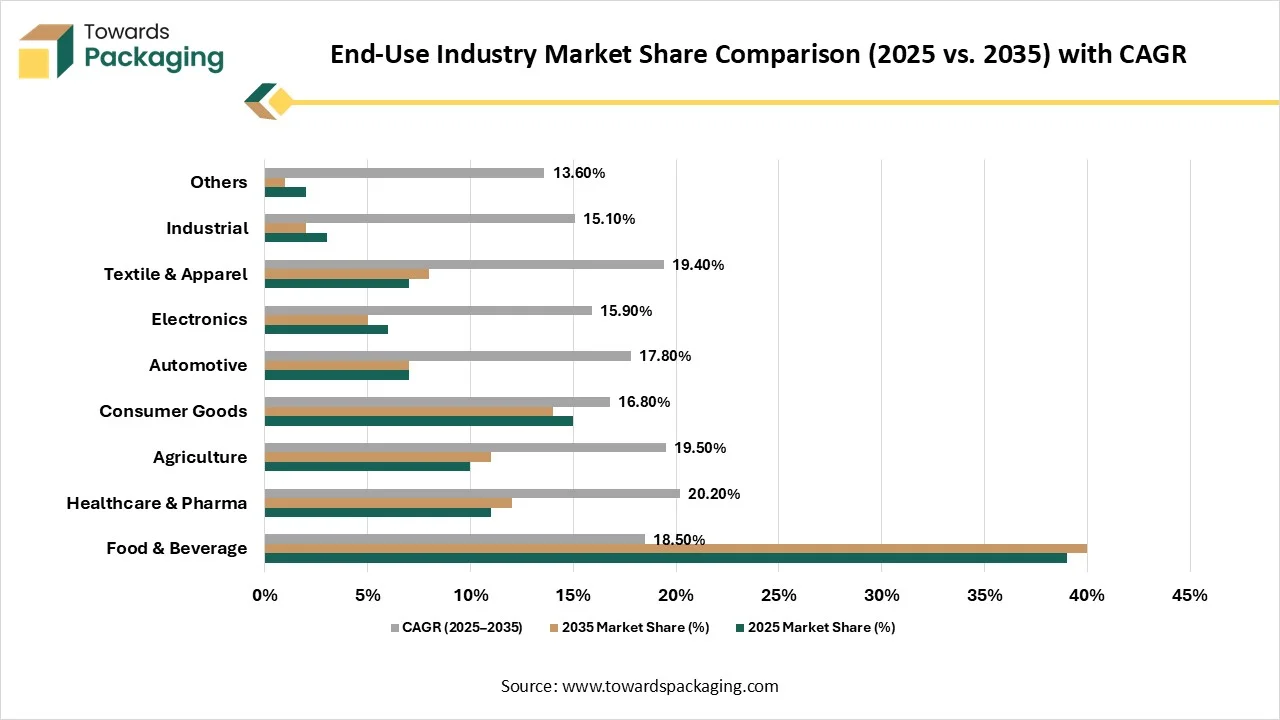
The end-user industry analysis indicates how PLA and PHA bioplastic used across industries like food & Beverage, healthcare & pharma, agriculture, and many others. The food & beverage industry held the highest revenue share of 39% in the market in 2025 due to the single-use regulations, increased manufacturing of cold drink cups, and the expansion of F&B packaging infrastructure. Healthcare & pharma is expected to grow at the fastest CAGR of 20.2% during the forecast period, driven by the growing use of controlled-release carriers, adoption of biopolymers by hospitals, and the need for sterile medical kits. Agriculture held a 10% share in the market in 2025 due to the increased development of various horticulture products, interest in crop covers, focus on lowering cleanup costs, and expanding use of mulch films.
Source:- Towards Packaging Database
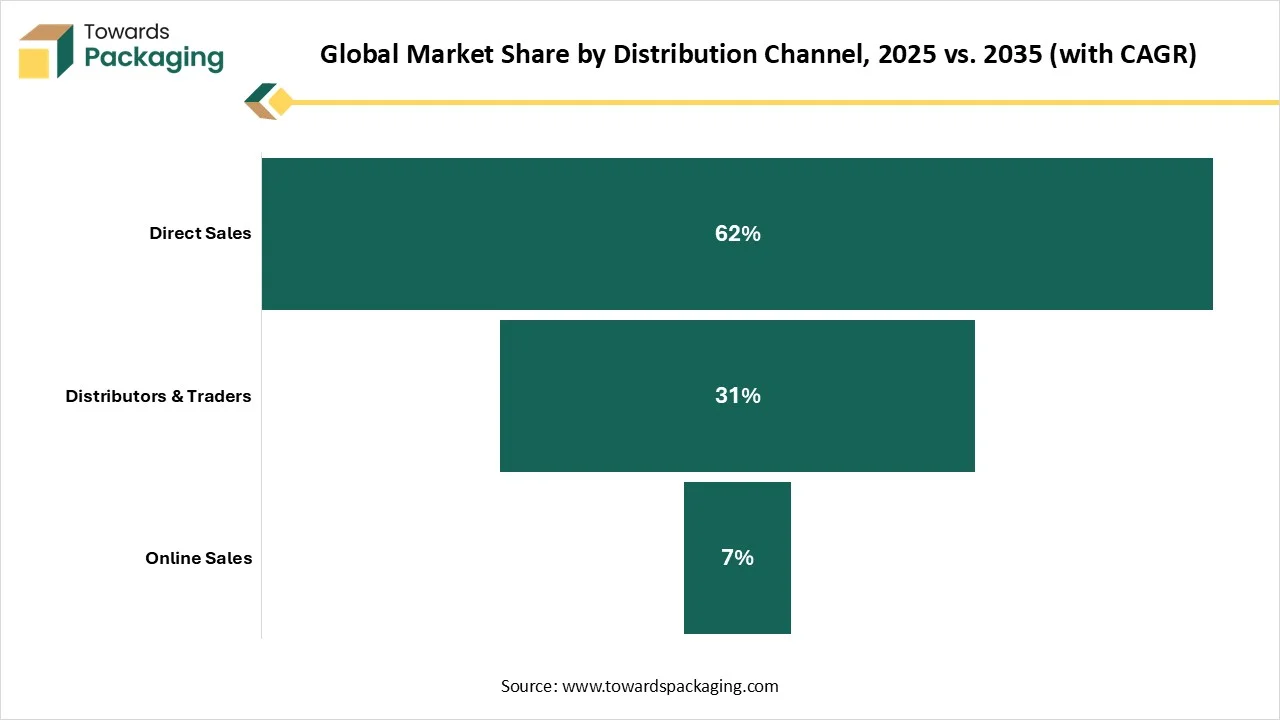
The graph showcases direct sales dominance in the market. Direct sales dominated the market with 62% in 2025 due to the growing demand for technical customization across the industrial base, preference for direct contract negotiations, and the focus on regulatory traceability. Distributors & traders held the 31% market share in 2025, driven by the high availability of certified compostable grades, high technical guidance, and supply fragmentation. Online sales are expected to grow at the fastest CAGR of 21% during the predicted timeframe due to the growing use across the 3D printing community, transparency in the supply chain, and the explosion of SMEs.
Source:- Towards Packaging Database
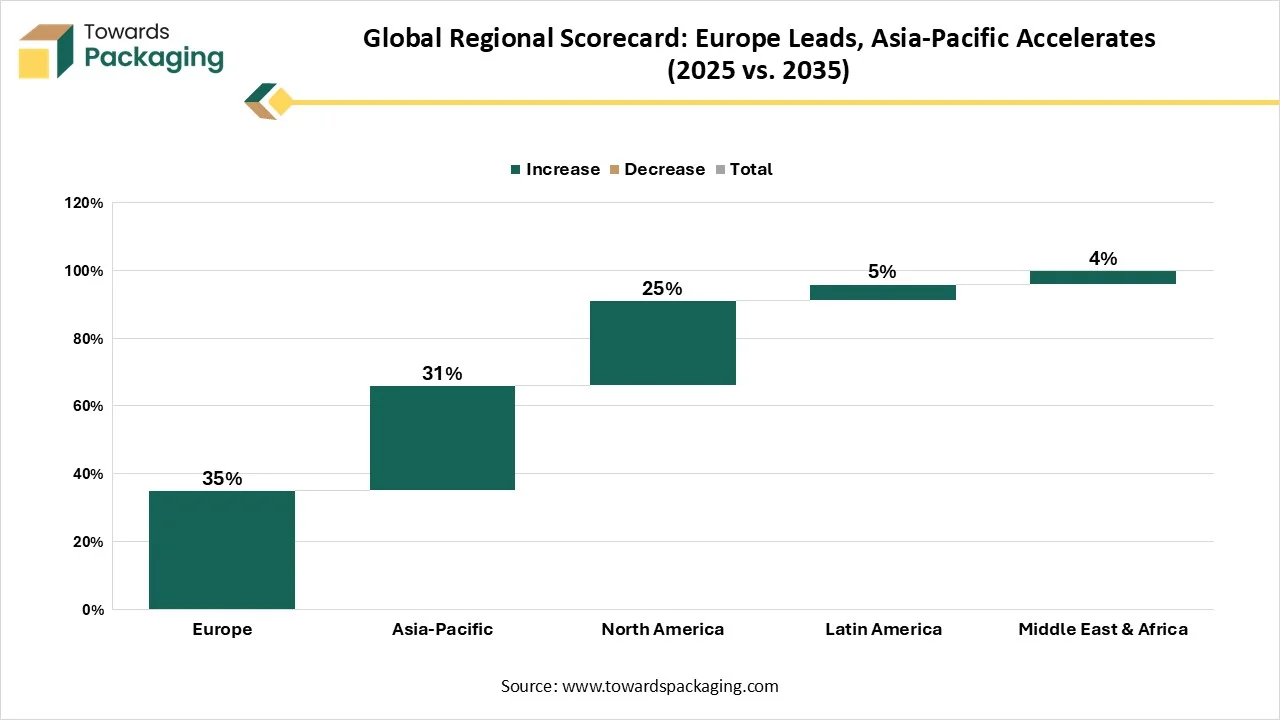
The regions covered in the report are Europe, Asia Pacific, North America, Latin America, and Middle East & Africa. Europe dominated the market with the highest share of 35% in 2025 due to the strong focus on carbon border adjustment, enhancement in composting networks, high eco-awareness, and the prohibitions on conventional plastics. Asia Pacific is expected to grow at a CAGR of 21.2% during the predicted timeframe due to the expansion of local packaging and the high preference for low-carbon products. North America held the 25% share in 2025, driven by federal support and the rise in automotive lightweighting. Latin America held the 5% share in 2025 in the market due to the high sugarcane availability and the growing plastic waste crisis. MEA held the 4% share due to the national green agendas and the presence of key food service providers.
Source:- Towards Packaging Database
According to the analysis, Europe held the dominant position with a 35% share in the market in 2025. The European Union prohibitions on single-use items and the preference for green materials increase the use of PLA and PHA biomaterials. The developed industrial composting facilities and circular economy initiatives increase the production of PLA and PHA biomaterials. The increased investments in regional biorefineries and plastic reduction targets help with the growth. Germany is a major contributor to the market due to the transition away from oil-based plastics. The strong chemical networks, large subsidies, and growing automotive engineering in Germany increase the use of PLA and PHA bioplastics. The burgeoning academic-industrial partnerships and rising packaging engineering drive the market growth.
Source:- Towards Packaging Database
Asia Pacific held a 31% share in 2025 in the market and is expected to grow at the fastest CAGR of 21.2% during the predicted timeframe. Government plastic bans and interest in sustainable bioplastic projects increase the adoption of PLA and PHA bioplastics. Easy feedstock access and the shipping of billions of packages globally increase the use of PLA and PHA bioplastics. The higher use of degradable films and the interest in green products increase the adoption of PLA and PHA bioplastics. China is a key contributor in the market due to the stringent prohibitions on plastic packaging. The locally available plant-based raw materials and dual carbon goals increase the use of PLA and PHA bioplastics. The strong manufacturing networks, expansion of agricultural mulch films, and burgeoning online retail support the market growth.
Source:- Towards Packaging Database
North America held a 25% market share in 2025. The transition to earth-friendly substitutes due to public policies and the brands’ focus on meeting public expectations increases the use of PLA and PHA bioplastics. The higher living standards of consumers and the need to promote eco-friendly materials increase the production of PLA and PHA bioplastics. The use of sustainable packaging in the foodservice industry and the explosion of organic recycling help with the growth. United States is the leading contributor in the North American region due to logistical efficiency and investments in advanced R&D. Growing local legislation, the development of sustainable cups, and the preference for bio-preferred manufacturing increase the use of PLA and PHA bioplastics. The NatureWorks presence boosts the production of PLA and PHA bioplastics.
Source:- Towards Packaging Database
Latin America held a 5% share in the PLA and PHA biopolymer market in 2025. The low-cost feedstock availability and the established local farming industry increase the production of PLA and PHA bioplastics. The increased generation of plastic waste daily and the retail sector's focus on meeting green targets increase the use of PLA and PHA bioplastics. The brands' focus on redeveloping supply chains helps with the expansion. Brazil is a key contributor to the market due to the strong local supply of starch. The growing state-level bans and the strong local agribusiness industry increase the production of PLA and PHA bioplastics. The flexible packaging preference supports the growth.
Source:- Towards Packaging Database
The Middle East & Africa held a 4% share in 2025. The stringent prohibitions and the focus on long-term sustainability increase the production of PLA and PHA bioplastics. The replacement of petroleum plastics in food packaging and the expansion of free zones increase adoption of PLA and PHA bioplastics. The shift away from traditional shopping bags and expanding food service helps with the growth. Saudi Arabia is a key contributor due to the Saudi Green Initiative and the replacement of regular plastic in food wraps. The established local biotech startups, growing packaging use, and the interest in safe medical plastics boost the overall growth.
Source:- Towards Packaging Database
According to my research, the market is shifting towards broadening commercial scale. I see strong demand for home-compostable consumer goods and sustainable packaging solutions. Factors like composting realities, production cost competitiveness, and performance optimization will decide the future success. The partnerships between key leading players will grow across the global market.
Sudeep Pednekar led the primary research, analyzed market trends, competition, strategic opportunities, methodology development, segmentation, and forecasts.
Aman was responsible for collecting regulations, feedstock data, company information, partnerships, and other quantitative data that helps in strengthening market estimations.
Aditi reviewed the overall research document, checked findings, corrected inconsistencies, performed quality checks, and finalized the entire report, ensuring clarity and publication-ready quality.
| Category | Segments |
| By Product Type | Polylactic Acid (PLA); Polyhydroxyalkanoates (PHA) |
| By Grade | Standard Grade; High-Performance Grade; Compostable Grade; Medical Grade |
| By Form | Pellets; Films; Sheets; Fibers; Powders; Filaments |
| By Processing Technology | Injection Molding; Extrusion; Blow Molding; Thermoforming; Film Blowing; 3D Printing; Other Processing Technologies |
| By Application | Packaging; Food Service Products; Agriculture & Horticulture; Consumer Goods; Medical & Healthcare; Textiles; Electronics; Automotive; 3D Printing; Other Applications |
| By End-use Industry | Food & Beverage; Healthcare & Pharmaceuticals; Agriculture; Consumer Goods; Automotive & Transportation; Electronics; Textile & Apparel; Industrial; Others |
| By Distribution Channel | Direct Sales; Distributors & Traders; Online Sales |
| Region-North America | U.S.; Canada; Mexico |
| Region-Europe | Germany; U.K.; France; Italy; Spain; Netherlands; Rest of Europe |
| Region-Asia-Pacific | China; Japan; India; South Korea; Thailand; Australia; Rest of Asia-Pacific |
| Region-Latin America | Brazil; Argentina; Rest of Latin America |
| Region-Middle East & Africa | GCC; South Africa; Rest of Middle East & Africa |














Principal Research Analyst
Vidyesh Swar is a Senior Research Analyst at Towards Packaging, bringing over 4 years of dedicated expertise in market intelligence and strategic analysis across the dynamic world of packaging technologies and solutions.
Learn more about Vidyesh Swar

Reviewed By
Aditi Shivarkar, with 14+ years in packaging market research, specializes in food, beverage, and eco-friendly packaging. She ensures accurate, actionable insights, driving Towards Packaging Analytics & Consulting 's excellence in industry trends and sustainability.
Learn more about Aditi Shivarkar


PLA And PHA Bioplastic Market
 Table of Content
 sales@towardspackaging.com
 +1 804-441-9344
 Download Sample
 Schedule a Meeting