


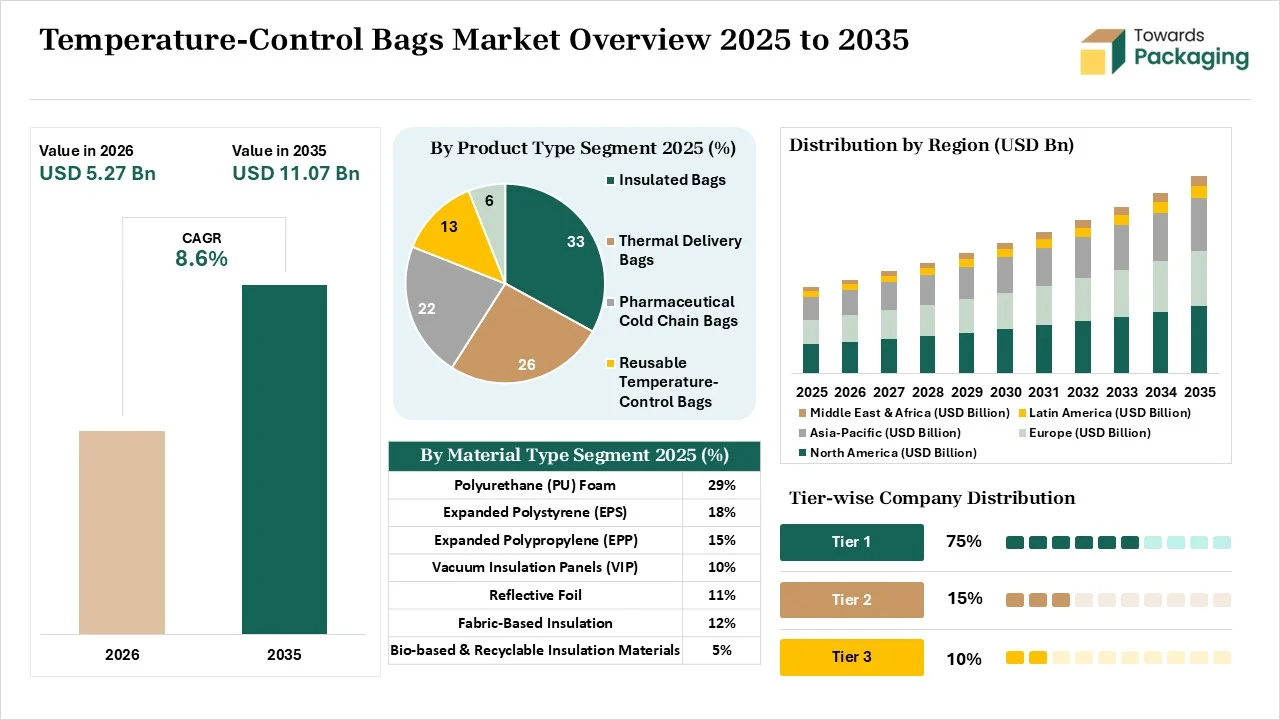
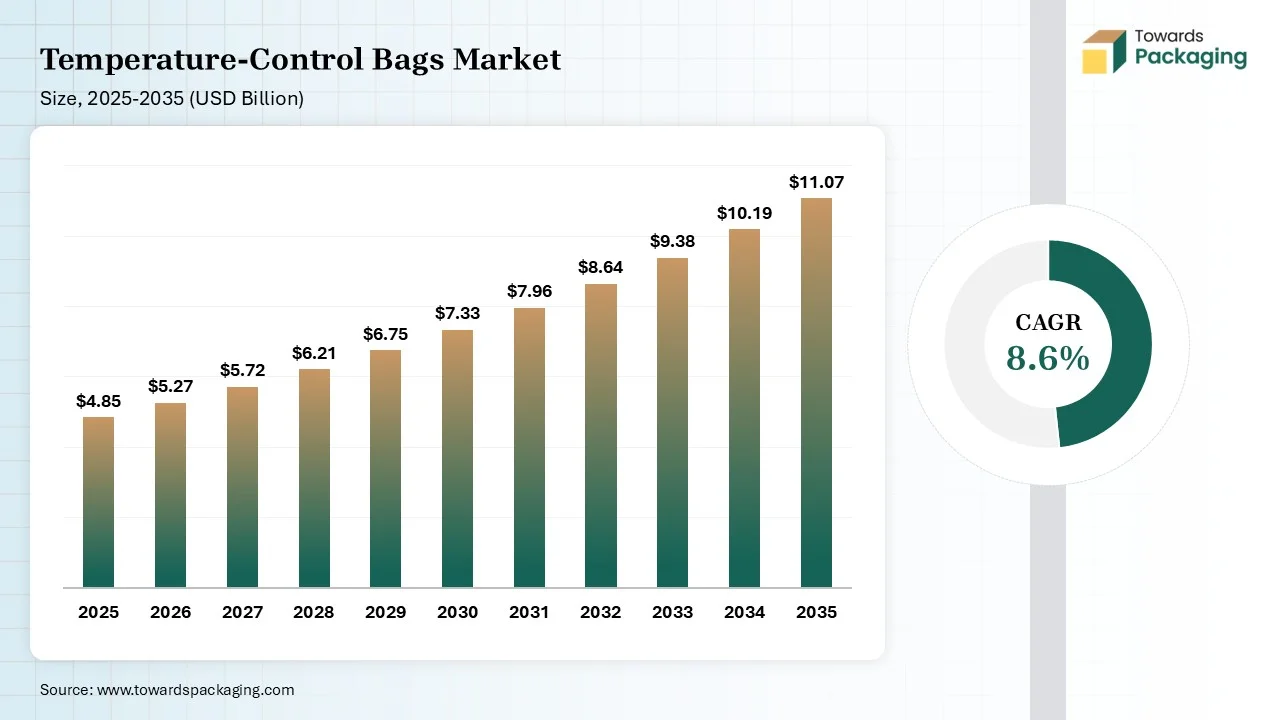
The temperature-control bags market is projected to grow from USD 5.27 billion in 2026 to USD 11.07 billion by 2035, registering a CAGR of 8.6% during the forecast period. The report provides comprehensive coverage of market size, forecast, segment analysis, regional and country-level insights, company profiles, competitive landscape, value chain analysis, pricing trends, trade (import/export) analysis, manufacturers, suppliers, distribution network, technological advancements, sustainability trends, regulatory framework, and key growth opportunities. It also evaluates demand across food delivery, pharmaceuticals, healthcare, logistics, retail, and outdoor applications.
Temperature-control bags are portable, insulated storage containers designed for maintaining internal temperature. It is also known as thermal bags and has a waterproof outer fabric. It possesses characteristics like multi-layer insulation, active temperature elements, airtight closures, and durability. According to Vidyesh Swar's research, the purpose of temperature-control bags is food delivery, medical transport, grocery shopping, storing chilled beverages, and catering. It blocks heat types, including radiation, conduction, and convection. The insulation technologies like closed-cell foams, phase change materials, reflective radiant barriers, and vacuum insulated panels are used. The role of temperature-control bags in preservation is preventing spoilage of product, maintaining cosmetic integrity, lowering heat transfer, enhancing transport conditions, and preserving pharmaceuticals.
According to my research, factors like stricter safety mandates, a higher rate of convenience food consumption, a push towards sustainability, biopharmaceuticals growth, and smart packaging are responsible for the evolution of the industry. In the past, passive packaging formats were widely used for shipments. Still, for the short-haul shipments, passive packaging is used. The increased sensitivity of medications created a strong demand for active packaging. Technologies like mechanical refrigeration, hybrid powered systems, cryogenic cooling, and many more are widely used in active packaging for temperature control during transition. The integration of technologies like RFID, GPS trackers, and IoT sensors offers real-time data visibility, tracks environmental data in real-time, and provides the location of shipments.
According to the research I have done, the boundaries in the market are ambient temperature conditions, puncture limits, load limitations, external environmental exposure, loose sealing, and insulation R-values, which can hamper the growth. The commonly used temperature-control bag products are insulated lunch bags, insulated grocery bags, insulated pallet covers, PCM medical cooler bags, and food delivery backpacks. Temperature-control bags are used in applications like hot food transport, vaccine distribution, blood transport, cold chain maintenance, travel, catering operations, and medication transport. The materials like woven polypropylene, nylon, and polyester are used in the outer layer. The PU foam, VIP, EPE foam, & Styrofoam are used in the insulation layer. Inner lining uses materials like PE film, aluminum foil, and PEVA. The end users, like retail consumers, the F&B industry, and the pharmaceutical industry, mainly use temperature-control bags. The regions like North America, APAC, MEA, Europe, and Latin America use the temperature-control bags for purposes like e-commerce and pharmaceutical distribution.
The continuous movement of cargo shipments and the increased standard scooter deliveries increase the use of temperature-control bags due to their product integrity. The online shopping of items from personal care to pharmaceuticals increases the use of insulated bags. The shift away from refrigerated trucks and the surging medications home delivery platforms increases demand for temperature-control bags. These bags offer a doorstep dwell time buffer and handle multi-stop routes. These bags lower the overall operational costs and prevent thermal excursions. The last-mile logistics growth is a key driver for the market expansion.
The growing culture of outdoor recreation increases the use of temperature-control bags for keeping food fresh. The growing activities like hiking, high-altitude trekking, camping, golfing, and hiking increase demand for temperature-control bags like insulated bags, waterproof coolers, specialized thermal pouches, and lunch-style thermal bags. The focus on keeping sensitive items fresh and the demand for lightweight portable bags increase the adoption of temperature-control bags. The growing number of nature-centric holidays and beach visits increases the adoption of temperature-control bags due to the lack of refrigeration access and safety purposes. The growing outdoor recreation is a driver for the market growth.
The complex manufacturing of advanced thermal insulation materials like VIPs and the energy-intensive manufacturing process, such as supercritical drying, increase the cost. According to my study, the use of special raw materials like specialty silica, non-woven polypropylene, and others increases the cost. The mass production limit and low manufacturing volume increase the cost of materials. The need for the delicate handling of materials and the labor-intensive installation process is responsible for the high cost. The high cost of advanced thermal insulation materials is a restraint for market growth.
The extreme weather conditions, such as freezing winters and high summer temperatures, increase the risk of moisture accumulation and thermal breaks. The extreme weather creates issues like thermal stress, settling, material degradation, and moisture infiltration. The extended transportation creates cargo challenges like condensation, lower payload efficiency, perishables' exposure to environmental factors, and insulation degradation. It provides finite thermal bridging and causes leakage in extreme logistics conditions. The performance limitations in extreme logistics conditions are a challenge to market growth.
The government regulations for avoiding the use of non-biodegradable packaging material and the industry's adoption of recyclable materials increase the development of eco-friendly thermal packaging. The availability of paper-based insulation materials and biodegradable plastic-based liners increases the production of eco-friendly thermal packaging. These materials help in the reduction of freight volume. The brands are differentiating themselves from other brands and trying to meet consumer expectations by using eco-friendly thermal packaging. The development of eco-friendly thermal packaging creates an opportunity for the growth of the market.
The industry value chain starts from raw material sourcing and ends at disposal.
The key participants from the healthcare & pharmaceutical industry are Envirotainer, Cold Chain Technologies, CSafe Global, and Pelican BioThermal. According to research I have done, the key participants from industrial & commercial sectors are DGP Intelsius, Sonoco Products Company, and Va-Q-Tec. The key players from Lifestyle and Consumer brands are Coleman, YETI, and Thermos.
Factors like multi-layered insulation, transition away from bulky hard-shell coolers, changing lifestyle trends, growing local travel, clinical trial products transportation, meal-kit deliveries, and e-commerce expansion are influencing the market growth.
The manufacturers of temperature control bags are collaborating with industrial players to develop specialized insulated products. Factors like eco-friendly material growth, sector-specific customization demand, smart logistics integration, and cold chain expansion drive the collaboration in the industry.
The manufacturing cost depends on factors like material selection, hardware, regulations, production methods, and batch sizes. The raw material requires 50-60% of total cost, manufacturing work & labor takes 15-20%, and compliance & testing takes 25-30% of total cost.
According to my research, the average selling price depends on factors like insulation technology, application sector, material composition, customization, thermal duration, and volume. For example, large soft coolers average selling price ranges between Rs. 500 and Rs. 1200. The average selling price of large isothermal bags for pharmaceutical storage ranges between Rs. 5000 and Rs. 30000+.
The strong last-mile grocery delivery and pharmaceutical GDP across North America increases demand for temperature-control bags. The premium bags prices range from $15-$300+USD. The aggressive sustainability mandates in Europe increase the development of sustainable bags, and prices range from around €15 - €200+ EUR. In the APAC region, the price range for medium-sized bags is $5 - $50 USD.
The raw materials like polyester, non-woven polypropylene, aluminum foil, expanded polyethylene foam, polyester batting, coolants, Oxford canvas, PET film, PU foam, and PEVA are required.
Material processing includes foam extrusion, metalizing, and integration of PCM & gel. Conversion includes lamination, applying coating, cutting of the laminated roll, slitting, sealing of edges, and stitching of the bag.
Design focuses on thermal insulation mechanics, material layering systems, pattern drafting, seam engineering, closure systems, hardware requirements, and creating passive or active bags. Prototyping includes 3D modelling, creating a pattern draft, testing of material, thermal testing, and usability trials.
In June 2026, UPS invested $48 million in 27 temperature-controlled freight cross-dock facilities across the globe. The investment strengthens the cold-chain network of the company. The company's invested facilities are IATA CEIV Pharma certified, and the investment eliminates handoffs between providers. The company offers greater accountability of temperature-sensitive therapies and proactively monitors shipments.
The insulated bags segment dominated the temperature-control bags market with 33% share in 2025. The burgeoning hyperlocal deliveries and the rise in distribution of temperature-sensitive meals increase the use of insulated bags. The passive temperature-controlled demand and the safe vaccine distribution increase the use of insulated bags. The frozen goods preservation and the focus on food hygiene in catering services increase the use of insulated bags. The portability, dual temperature control, reusability, and low cost of insulated bags drive the segment growth.
The pharmaceutical cold chain bags segment held the 22% market share in 2025 and is expected to grow at the fastest CAGR of 10.4% during the forecast period. The need for temperature control in modern biologics and the boom in decentralized clinical trials increase the use of pharmaceutical cold chain bags. The growth in CGT and the expansion of e-commerce pharmacies increase the use of pharmaceutical cold chain bags. The integration of real-time tracking in drug transport bags helps with the expansion. The rise in direct-to-patient delivery services supports the segment growth.
The polyurethane (PU) foam segment dominated the temperature-control bags market with 29% share in 2025. The development of custom rigid panels and the focus on making bags that are easy to carry increase the use of PU foam. The need to preserve the structural rigidity of bags and the expansion of commercial insulators increase the use of PU foam. The need to maintain insulating properties of bags and the focus on keeping pharmaceuticals cold increase the use of PU foam. The high humidity resistance, design versatility, and excellent R-value of PU foam drive the segment growth.
The vacuum insulation panels (VIP) segment held the 10% market share in 2025 and is expected to grow at the fastest CAGR of 11.2% during the forecast period. The rise in high-value vaccines and the need to keep bags lightweight increases the use of VIP. The growth in temperature-sensitive shipments and the focus on minimizing coolant volume in e-commerce companies increase the use of VIP. The demand for freezing temperatures for storing food items and the need to avoid costly temperature excursions increase the use of VIP. The lower shipping costs, maximum space, and extended temperature control in VIP support the segment growth.
The refrigerated (2°C to 8°C) segment dominated the temperature-control bags market with 42% share in 2025. The demand for chill standards for storing food and the distribution of temperature-sensitive insulin increases the adoption of refrigerated ranges. The high institutional demand for temperature-control bags and the use of passive refrigerant bags help with the expansion. The demand for small grocery bags and the expanding Amazon Fresh platforms increases the use of refrigerated ranges. The protection of pre-cooked meals and the food safety boards drive the segment growth.
The multi-temperature bags segment held the 14% market share in 2025 and is expected to grow at the fastest CAGR of 10.3% during the forecast period. The focus on receiving fresh produce and the need to prevent temperature abuse in products increases the adoption of multi-temperature bags. The delivery platforms focus on carbon reduction, and increased ordering of dairy products increases the use of multi-temperature bags. The distribution of standard medications and the demand for multi-component meals increase the use of multi-temperature bags. The advanced technology adoption in multi-temperature bags supports the segment growth.
The 10-25 liters segment dominated the temperature-control bags market with 39% share in 2025. The growing use of last-mile delivery fleets for delivery and the transportation of diagnostic samples increases the use of 10-25 liter bags. The shift away from bulk containers and the focus on accommodating fast-food takeouts in single bags increases the use of 10-25 liter bags. The small batch transportation of biological materials and the rise in multi-item grocery orders increase the use of 10-25 liter bags. The optimal thermodynamic efficiency and exceptional portability of 10-25 liters drive the segment growth.
The 25-50 liters segment held the 25% market share in 2025 and is expected to grow at the fastest CAGR of 9.8% during the forecast period. The standardized bags demand across delivery riders and the moving of medium batches of clinical samples increases the use of 25-50 liters. The rise in family-sized meal orders and the preference for local travel increases the use of 25-50 liters. The surge in multi-day meal prepping and the expanding two-wheeler delivery riders increases the adoption of 25-50 liters. The thriving eco-tourism and the expanding multiple grocery bags increase the use of 25-50 liters, supporting the segment growth.
The food & beverage delivery segment dominated the temperature-control bags market with 38% share in 2025. The growing platforms like Uber Eats, Meituan, DoorDash, Swiggy, and others increase the demand for temperature-control bags. The expansion of food delivery providers and the focus on the perfect temperature of perishable goods increase the use of temperature-control bags. The need to avoid microbial growth in foods and the prevention of foodborne illnesses increase the use of temperature-control bags, driving the overall segment growth.
According to my analysis, the pharmaceuticals segment held the 28% market share in 2025 and is expected to grow at the fastest CAGR of 10.5% during the forecast period. The rise in mRNA treatments and the storage demand for GLP-1 receptor agonists increases the use of temperature-control bags. The pharmaceutical company's preference for drug integrity and the transportation of APIs increases the use of temperature-control bags. The development of monoclonal antibodies and the regulations like the WHO, & many more, increases the demand for temperature-control bags. The pharmacy's controlled environment supports the segment growth.
The food delivery service providers segment dominated the temperature-control bags market with 34% share in 2025. The massive daily food orders and the hot food expectations increase the use of temperature-control bags. The food service providers focus on retaining business, and the focus on keeping food at a safe temperature increases the use of temperature-control bags. The focus on preserving cold food crispness and the expansion of dark stores increase the use of temperature-control bags, driving the overall growth of the segment.
The pharmaceutical companies segment held the 24% market share in 2025 and is expected to grow at the fastest CAGR of 10.4% during the forecast period. The increased heat sensitivity of GLP-1 weight-loss medications and the burgeoning clinical trials increase the use of temperature-control bags. The integration of AI-driven data loggers in pharmaceutical packaging helps with the expansion. The prevention of medication spoiling and the stricter thermal regulations in mRNA treatments increase the use of temperature-control bags. The increased distribution of life-saving medicines supports the segment growth.
According to my analysis, the direct sales segment dominated the temperature-control bags market with 45% share in 2025. The demand for a tailored thermal solution and focus on avoiding regulatory fines increases the adoption of direct sales. The demand for integrated technological offerings and consultative partnerships increases the use of direct sales. The growing high-volume industries and the negotiation of B2B contracts increase the use of direct sales. The requirement for specific technical features and the healthcare companies' preference for buying from specialized manufacturers increase the adoption of direct sales, driving the overall segment growth.
The e-commerce segment held the 18% market share in 2025 and is expected to grow at the fastest CAGR of 10.1% during the forecast period. The robustly growing food aggregators and the expanding third-party logistics increase the use of e-commerce. The secure transportation demand and the increased popularity of fitness meal preparation increase the use of e-commerce. The rise in hyperlocal quick-commerce and the increased rate of cosmetics online orders increase the use of e-commerce. The variety and easy comparison availability on e-commerce supports the overall growth of the segment.
North America dominated the temperature-control bags market with a 34% share in 2025. The stricter FDA regulations regarding temperature in biologics and the consumer preference for online grocery shopping increase the adoption of temperature-control bags. The increased participation in hiking & other recreational activities increases the use of temperature-control bags for storing lunch. The large logistic network and the distribution of temperature-sensitive specialty medications increase the use of temperature-control bags. The expanding frozen prepared meals industry drives the market growth.
United States
The United States dominated the market in 2025. The transportation of sensitive drugs and the stringent compliance for pharmaceutical handling increase the use of temperature-control bags. The highly integrated logistics and the rise in perishable food home delivery increase the use of temperature-control bags. The mature cold-chain ecosystem helps with the expansion. The strong pharmaceutical companies like Johnson & Johnson, Amgen, Eli Lilly and Company, Pfizer, & AbbVie support the market growth.
Canada
Canada is expanding in the market. The increased availability of RTE subscriptions and the thriving biotechnology industry increases demand for temperature-control bags. The transportation of clinical trial samples and the harsh swings in seasonal temperature increase demand for temperature-control bags. The CFAI regulations and the growing converter investment in recyclable thermal materials increase the production of temperature-control bags.
Europe held the 28% market share in 2025. Convenient grocery buying through e-commerce apps and the stricter GDP guidelines for the distribution of pharma products increase the demand for temperature-control bags. The replacement of older foams and the interest in outdoor leisure increase the use of temperature-control bags. The explosion of high-value pharmaceuticals and the integration of IoT in temperature-control bags drive the market growth.
Germany
Germany held the major share of the market. The rising use of advanced monitoring technologies in pharmaceutical transportation increases the demand for temperature-control bags. The intensive pharmaceutical research and the focus on the safe supply of clinical drugs increase demand for isothermal bags. The surging prepared meal deliveries and the burgeoning biotech export increase the use of temperature-control bags, supporting the market growth.
United Kingdom
The United Kingdom is rapidly expanding in the market. The expansion of e-grocery markets and the personalized medications transportation increases the adoption of temperature-control bags. The increased investment by pharmaceutical players in the insulated shippers helps with the expansion. The interest in reusable thermal bags and post-Brexit customs increases the use of technologically integrated temperature-control bags. The well-established life-science clusters boost the market growth.
According to my analysis, Asia Pacific held the 27% share of the market in 2025 and is expected to grow at the fastest CAGR of 10.2% during the forecast period. The growing doorstep delivery of food items & other products and the production of clinical trial materials increase the use of temperature-control bags. The unified logistics digital platforms and the consumer priority for fresh groceries increase the use of temperature-control bags. The increased cross-border export of clinical trial materials and the rising sales of doorstep delivery increase the use of temperature-control bags. The seafood products exports in ASEAN countries drive the market growth.
China
China held the largest share of the market. The worldwide higher demand for specialty drugs and the demand for safe transport of processed meat increase the use of temperature-controlled packaging. The huge manufacturing of multi-layer insulated bags and the consumer interest in personalized cooler bags help with the expansion. The massive digital retail infrastructure and the burgeoning biopharmaceutical export increase the demand for temperature-control bags, boosting the overall market growth.
India
India is robustly growing in the market. The thriving use of durable thermal bags for the last-mile transit of various products helps with the expansion. The global vaccine production base and the urban population demand for fresh food increase the use of insulated packaging. The use of materials like vacuum insulation panels helps to expand. The rise in weekend gateways and the extreme climate conditions increases the use of temperature-control bags, supporting the overall market growth.
Based on my study, Latin America held the 6% market share in 2025. The growing exports of protein-based items and the increased local eating of processed foods increase demand for temperature-control bags. The expansion of temperature-sensitive biosimilars and the healthcare companies' focus on harsh climates increases the use of temperature-control bags. The changing transport conditions and the growing urban grocery delivery increase the use of temperature-control bags, driving the overall market growth.
Brazil
Brazil held the dominant position in the market in the Latin American region. The heightened demand for specialty drugs and the explosion of meal kits in Rio de Janeiro increase the use of temperature-control bags. The integration of IoT-enabled temperature sensors helps with the expansion. The preference for recyclable temperature-controlled materials and a safety focus in perishable agricultural products increases the use of temperature-control bags, supporting the market growth.
Argentina
Argentina is growing in the market. The surge in chronic diseases and the demand for biological temperature-monitoring items increases the adoption of temperature-control bags. The heightened online shopping of pharma products and the high fruit export increase the use of temperature-control bags. Outdoor recreation increases the use of customized cooler bags that boost the overall market growth.
The Middle East & Africa held the 5% market share in 2025. The distribution of pharmaceuticals and the focus on enhancing clinical infrastructure increase demand for temperature-control bags. The need to avoid the spoiling of beverages and the interest in convenience culture increase demand for temperature-control bags. The healthcare infrastructure investment and the adoption of advanced insulation materials help with the expansion. The interest in monitored cold chain packaging drives the market growth.
Saudi Arabia
Saudi Arabia is a key contributor to the market. The increased summer temperature and the presence of the Saudi FDA increase the use of temperature-control bags. The demand for reliable home delivery of food products and the national tracking goals increase the use of sensors in the temperature-control bags. Advancing temperature-sensitive vaccines and the preference for reusable insulated containers support the segment growth.
UAE
UAE is rapidly expanding in the market in the MEA region. The surge in the internet increases the online order rate of meals, which require temperature-control bags. The high temperatures in summer and the increased demand for active-cooling bags. The exploding delivery aggregators like Noon and the growing clinical trials in KEZAD increase the use of temperature-control bags. The dependence on food imports supports the overall market growth.
The leading players in the market are Sonoco ThermoSafe, Cold Chain Technologies, Softbox Systems, Intelius, Envirotainer, Nordic Cold Chain Solutions, Pelican BioThermal, Cryopak, va-Q-tec AG, Sealed Air Corporation, Sofrigam SA, CSafe Global, and Emball’iso.
| Rank | Company | Headquarters | Major Contribution to Temperature-Control Bags Market | Key Packaging Products and Services |
| 1 | Sonoco ThermoSafe | Arlington Heights, Illinois, United States | The company offers temperature-controlled bulk shipping containers through its agreement with Cathay and Swiss WorldCargo. | Parce Shippers, Pallet Shippers, PolarPack Gel Packs, Foam Bricks, Infectious Shippers |
| 2 | Cold Chain Technologies | Fraklin, Massachusetts, 02038, United States | The company acquired Tower Cold Chain to expand its portfolio by adding temperature-controlled pallet shippers and containers. The company acquired PTG for manufacturing sustainable thermal shipping solutions. | Multi-Use Systems, Thermal Covers, Single-Use Parcel Shippers, Pallet Shippers |
| 3 | Pelican BioThermal | Maple Grove, Minnesota, United States | The company focuses on expanding into regions like Asia, the United States, and Europe. The company collaborated with Asiana Airlines to incorporate advanced thermal covers. | Credo ProMed Series, Credo Cube, CredoGo, Credo Vault, Credo Xtreme |
| 4 | Sofrigam | Rueil-Malmaison, France | The company collaborates with healthcare professionals to develop products like the Initial Cooling Bag range. The company incorporated smart data loggers in their bags by collaborating with Logmore. | Elite Insulated Bag, Initial Boxes, Initial Insulated Bag, Coolvax Pouches |
| 5 | Cryopak | Edison, New Jersey, United States | The company acquired the Garden State Gold Storage gel-pack facility for manufacturing gel-packs. The company focuses on NexTherm innovation. | TimeSaver Series, CryoCube PUR & EPS, Phase 22, Flexible Ice Blankets, EcoPak, VIP Shippers |
As per Vidyesh Swar's analysis, temperature-control packaging is expected to experience rapid growth during the forecast period due to growing use across the pharmaceutical industry. Factors like healthcare expansion, smart packaging, sustainability initiatives, and food deliveries are responsible for driving the growth. The food & beverage industry is a major contributor to the market growth. The higher perishable demand, regulatory compliance, and meal deliveries increase demand in the F&B industry. Platforms like Zomato, Blue Apron, Mealawe, Daily Harvest, Swiggy, EatSure, Home Chef, Factor, and many more are increasing the meal delivery rate. The United States is a key contributor to the growth. The robust pharmaceutical sector, online grocery boom, compliance frameworks, and technological innovations in the United States help the market expansion. Companies like Cryopak Industries, Sofigram SA, Sealed Air Corporation, and va-Q-tec AG help in the expansion and development of new products.
By Product Type
By Material
By Temperature Range
By Capacity
By Application
By End User
By Distribution Channel
By Region








Principal Research Analyst
Vidyesh Swar is a Senior Research Analyst at Towards Packaging, bringing over 4 years of dedicated expertise in market intelligence and strategic analysis across the dynamic world of packaging technologies and solutions.
Learn more about Vidyesh Swar

Reviewed By
Aditi Shivarkar, with 14+ years in packaging market research, specializes in food, beverage, and eco-friendly packaging. She ensures accurate, actionable insights, driving Towards Packaging Analytics & Consulting 's excellence in industry trends and sustainability.
Learn more about Aditi Shivarkar

Temperature-Control Bags Market
 Table of Content

 Download Sample
 Schedule a Meeting