


Amcor accelerates recyclable packaging innovation via planned partnerships, resource science developments, and progressed digital patterns. By associating with major market players, the company promptly grows and tests fibre-based, recycle-ready, and mono-material packaging that coordinates traditional functioning. By introducing advanced next-generation recycling technology, the company has fuelled the recycling process. One of the major proprietary technologies, such as CleanStream®, is used to convert household polypropylene (PP) waste into higher-quality resources ideal for contact-sensitive applications.
Sustainability is a major concern among consumers, which has pushed the company to innovate recycling processes that support packaging manufacturing. The company has focused on the production of high-quality recycled materials. The major compostable options are reusable and recyclable solutions for packaging.
Amcor’s sustainability goals focus highly on attaining net-zero emissions and a circular economy. Major milestones comprise effectively striking its 2025 undertaking for packaging complexity, while its 2030 objectives emphasise scaling recycled content and significantly decreasing greenhouse gas (GHG) releases. Amcor realized its universal objective of guaranteeing that its goods are designed to be compostable, recyclable, and reusable. The company established recycle-ready selections for 96% of its flexible packaging technology. The company is enhancing the waste-to-discarding drop, with many sites operational with zero waste-to-discarding.
Amcor finished the transformational amalgamation with Berry Global (Berry). This planned mixture brought together two extremely complementary firms to generate one of the business’s most complete, multiform collections of initial packaging options for wellness, nutrition, health, and beauty.
With market-leading invention, universal scale and concentrated packaging proficiency, the new Amcor is further ready than ever to offer invention options that support consumers in attaining their sustainability targets. Those improved facilities will support Amcor to develop and advance a circular packaging solution.
Mono-material packaging solutions utilize a one-time polymer instead of mixed-material films. This pattern rationalizes recycling into an extremely efficient procedure, yielding enhanced-quality recycled resources and decreasing ecological impact without compromising product safety, shelf-life, or puncture barrier. Conventional multi-layer combinations are tough to manage and normally end up in landfills, as their layers cannot be distinguished. Mono-materials can be effortlessly managed in ongoing recycling flows. These options are progressively replacing non-recyclable coats across several industries. Latest innovations permit mono-material response bags to withstand sterilization temperatures for the packaging of food products. Evolution to a circular economy pattern helps worldwide sustainability goals, actively influencing brands to renovate packaging compositions.
The circular economy is a structure where resources are never discarded, and nature is restored. In a circular economy, materials and products are retained in circulation via methods like recycling, refurbishment, maintenance, reuse, composting, and remanufacturing. The circular economy handles climate change and different other universal challenges, like pollution, biodiversity loss, & waste, by separating economic movement from the spending of finite assets. Apeel is a well-known company that has introduced an innovative process to remove one-time utilization and reduce wrap plastic need for packaging of fresh veg and fruit, simultaneously tackling food surplus.
Recyclable flexible packaging innovations are significantly changing from multi-material coatings to mono-material patterns. Water-soluble glues that permit layers to be separated through recycling, bio-based resistance coverings, molecular chemical recycling, and digital waterlines for programmed sorting. Invisible digital secret code printed on the packaging permits enhanced resolution arranging abilities to simply recognize, separate, and direct the resources to the appropriate recycling flow. Technologies like depolymerization and pyrolysis break down integrated or polluted flexible plastic waste into its fundamental chemical building blocks, which can be recreated into a completely new, virgin-quality flexible container. Amcor is primarily focusing on circularity and ecological issues. The company has put emphasis towards developing packaging solutions that fulfil the needs of the consumers. It manages ecological impacts that support efficiencies and decrease future risks to fulfil the expectations of the customers. It offers a healthy, safe, and engaging workplace that helps in attracting the best talent towards this industry.
Amcor is collaborating with 35 major companies in consumer goods and services to reduce the utilization of plastic materials to produce packaging products. The two major packaging rules are to enhance the economic viability of PET bottle recycling by eliminating colouring pigments and labelling that influence recycling charges, and to eliminate resources that are difficult for recyclers from all forms of plastic packaging.
Amcor facilities with major companies across the world to safeguard their goods and the people who depend on them, separate brands, and enhance supply chains via a variety of rigid and flexible packaging, closures, speciality cartons, and facilities. The company is emphasising making packaging that utilizes less resources, is progressively reusable and recyclable, and is manufactured with more recycled materials.
Amcor is influencing circularity in packaging by spending profoundly in advanced recycling to change combined post-consumer plastic waste into enhanced-quality, food-grade resources. Their planned proposals span direct setup investment, worldwide supply collaborations, and technological invention. In Fiscal 2025, Amcor’s legacy procedures attained a complete recordable occurrence charge of 0.27, with 68% of the sites functioning injury-free for the complete year, which is a testament to the persistent emphasis on generating a safe, comprehensive and high-performing workshop. As Amcor welcome over 30,000 new teammates from Berry, these are committed to developing on the mixed robust security trace record as the company pursues its goal of zero injuries.
Amcor’s R&D strategy for circular packaging is influenced by a responsibility to plan all its outcomes to be compostable, recyclable, and reusable. The plan emphasises four core pillars: planning for recyclability, incorporating recycled content at an industrialised scale, lightweighting, and restoring challenging resources with paper or bio-based substitutes. It has designed a recyclability technology to enhance the sale of the flexible plastic packaging. The major focus on founding a circular society is established with the design of packaging options. Through intelligent design and progressive materials, they engineer flexible packaging for circularity - prioritising reusability, recyclability and lesser ecological influence from the beginning.
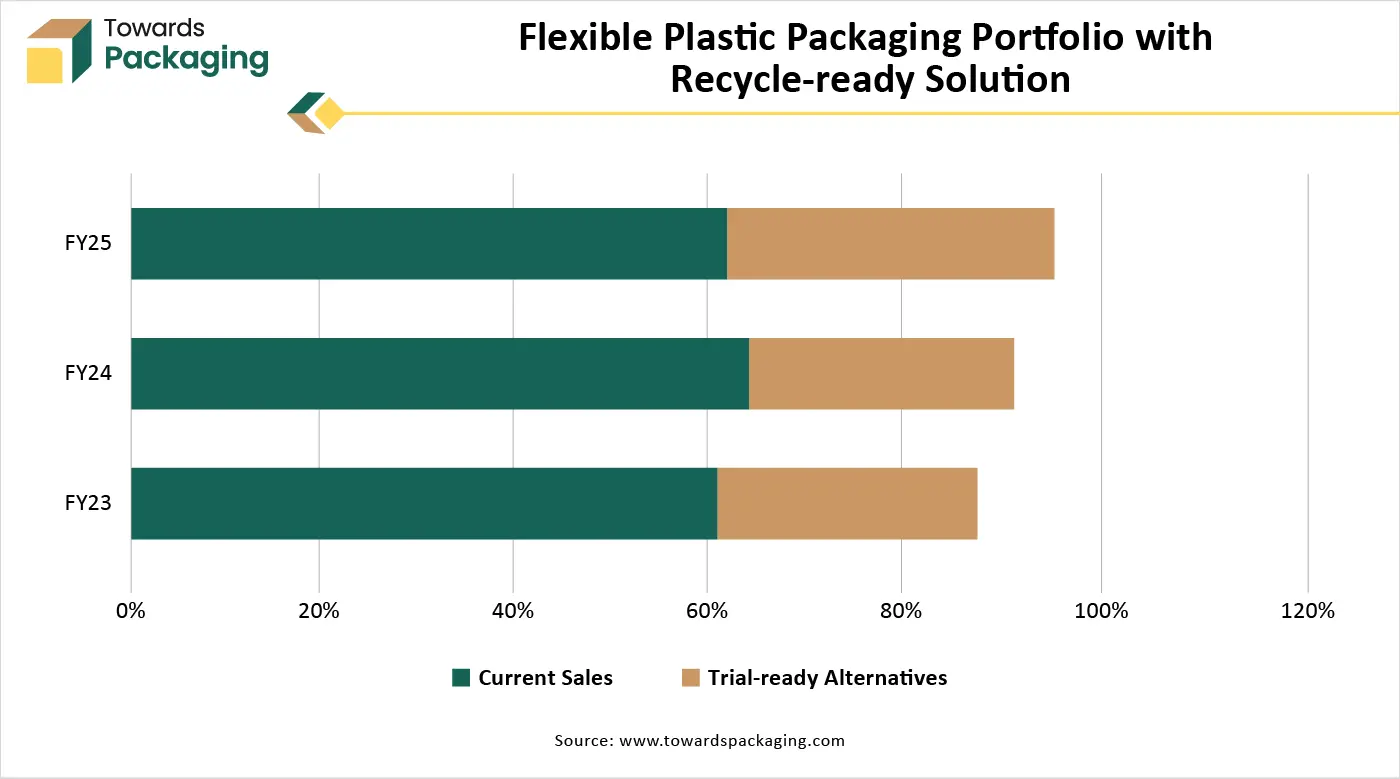
The regional expansion of recyclable packaging production is rising to fulfil the sustainability demands of consumers. Regional potential is increasing via local investments, infrastructure expansion, and contained supply chains. This change supports companies decrease their carbon footprint, fulfil strict ecological guidelines, and prevent supply chain disruptions. Extended Producer Responsibility (EPR) rules delegate plastic and paper packaging manufacturers to fulfil phased recycling and gathering goals. Amcor is enthusiastically developing its universal production of recycle-ready and recyclable packaging to meet increasing consumer request and strict regional guidelines, like the EU's Packaging & Packaging Waste Regulation (PPWR). The major investments are determining localized, enhanced-tech hubs to help large-scale production across major regions. The company has significantly extended printing, lamination, and altering competencies for the protein sector. This regional investment transports state-of-the-art tools to resource non-forming and thermoforming packaging, with a profound focus on presenting recycle-ready film options.
Amcor's regulatory compliance initiatives period worldwide ecological laws, food security, and severe commercial governance. They proactively associate their procedures with evolving circular-economy authorities, ethical guidelines, and excellence certifications to prove to consumers globally. They collaborate with third parties to confirm that raw resource mining, labour systems and agricultural supervision are constantly maintained to the utmost ethical and ecological needs. The company implements a strict set of compliance guidelines, comprising openly available outlines like the Biodiversity and Fiber Sourcing Policy and Anti-Bribery and Corruption Policy.
Amcor influences cost deduction via lightweight packaging by reducing raw resource utilization, decreasing Extended Producer Responsibility (EPR) charges, and optimizing supply chain logistics. By manufacturing innovative resources such as mono-plastics and lightweight paper, they offer financial savings while dropping a good’s carbon footprint. The lightweight UniPak round vessel needs fewer resources without negotiating strength and decreases carbon releases. Lighter packages permit industries to fit around 30% more output per truckload, significantly reducing transportation and warehousing charges. Fewer resources per package, straight lower buying and manufacturing charges. Transitioning to recycled and lighter resources can yield around 75% savings on these constitutional charges.
Recycling flexible plastics shows huge obstacles for packaging supervisors, mainly because of difficult resource structures, sorting boundaries at recycling facilities, and problematic market finances. Enhance presentation flexible packaging, such as retort bags, which frequently use several-layer sequences of unrelated plastics, such as PET and aluminium foil, to block bacteria, oxygen, and moisture. These strongly bonded combined resources are contradictory to standard recycling flows. Flexible packaging is lightweight and simply blown nearby, making it hard for conventional single-stream Materials Recovery Facilities (MRFs) to isolate it from rigid and paper plastics. Progressed technologies such as digital watermarking and optical grouping are needed to separate these resources effectively.
Aditi serves as Vice President at Towards Packaging, bringing over 15 years of experience in market research, innovation, and business strategy within the packaging industry. She works across segments such as sustainable packaging, flexible materials, and industrial packaging solutions. Aditi studies evolving consumer demands, material advancements, and regulatory changes, then turns those insights into clear strategies for businesses. She helps organizations stay competitive, improve product positioning, and respond effectively to shifting market trends.

Aman Singh has spent more than 13 years working in research and consulting, with a strong focus on the global packaging sector. He tracks developments in areas like eco-friendly materials, smart packaging technologies, and supply chain changes. At Towards Packaging, Aman leads the research team and ensures every study delivers accurate and useful insights. He breaks down complex industry developments and helps companies understand where opportunities lie and how to act on them.

Piyush Pawar works as Senior Manager for Sales and Business Growth at Towards Packaging, bringing over a decade of experience in client-facing roles within the packaging industry. He connects businesses with the right research and helps them apply insights to real-world decisions. Piyush understands market challenges and works closely with clients to provide solutions that support growth. He focuses on building strong partnerships and helping companies turn industry knowledge into practical results.
How Amcor Is Driving the Future of Recyclable Packaging Innovation


 Request Consultation

