


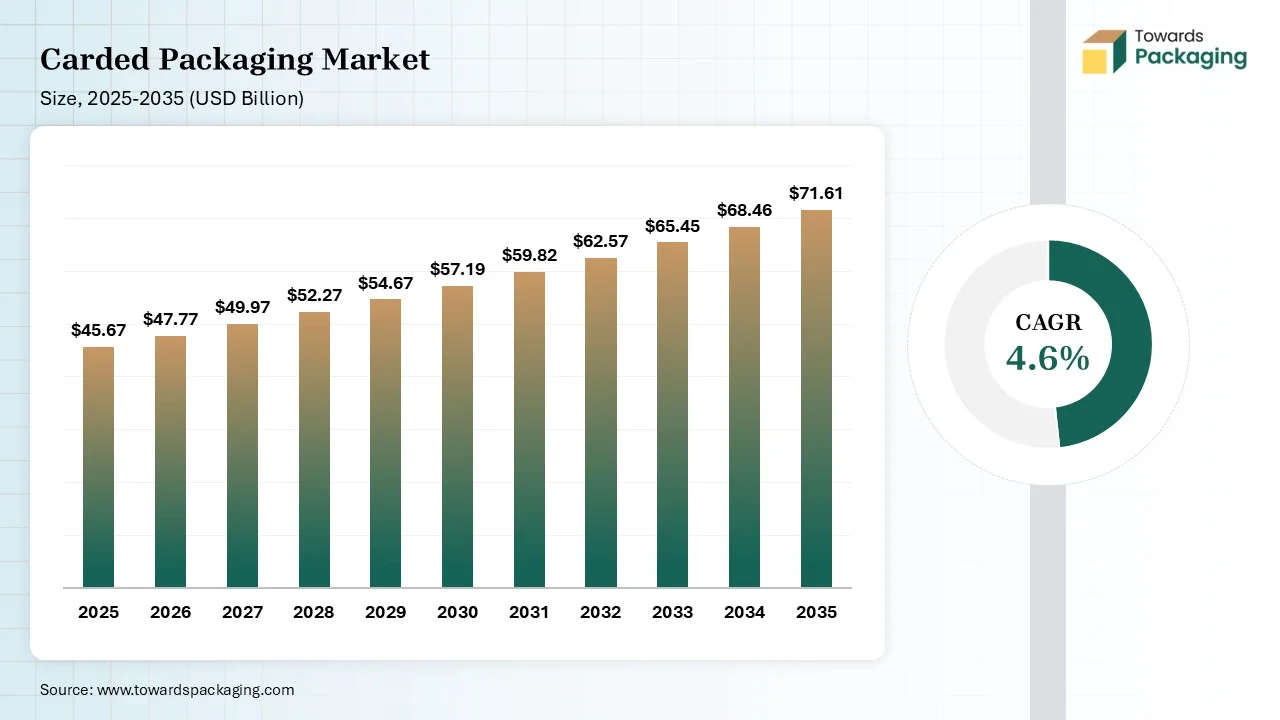
The carded packaging market is forecasted to expand from USD 47.77 billion in 2026 to USD 71.61 billion by 2035, growing at a CAGR of 4.6% from 2026 to 2035. This expansion is set to drive a revolution in sustainable transportation, fueled by increasing demand for eco-friendly and efficient packaging solutions.
The key players operating in the market are focused on adopting inorganic growth strategies like acquisition and mergers to develop advance technology for manufacturing carded packaging which is estimated to drive the global carded packaging market over the forecast period.
Card packaging is known as a type of packaging that combines a rigid card (usually made of paperboard) with a plastic film or covering to develop a durable and visually appealing package. It is extensively utilized to display, protect, and transport various products while offering branding opportunities and tamper-proof features.
The carded packaging helps in product visibility and often includes transparent window or covering to showcase the product. The carded packaging is tamper evidence and securely seals to make tampering noticeable, ensuring product integrity. The branding space offered by carded packaging provides ample surface area for instructions, printed designs, and logos. The carded packaging is cost effective and combines inexpensive materials with a professional presentation. The carded packaging provides shielding to the product from damage, contamination, and moisture during storage and transit.
Rising demand for environmentally friendly materials like bio-based and biodegradable carded packaging. This aligns with increasing global awareness of cutting-down environmental impact and achieving circular economy goals. Consumers and governments are emphasizing eco-friendly packaging solutions. Biodegradable and recyclable materials are becoming popular, aligning with global sustainability goals. Brands are investing in innovative materials that reduce environmental impact while maintaining functionality.
Advances in materials and printing technologies, such as digital and flexographic printing, are enhancing the design and functionality of carded packaging. These innovations cater to industries like food, electronics, and pharmaceuticals that prioritize product safety and aesthetics.
Carded packaging finds extensive utilization across various sectors, including pharmaceuticals, consumer goods, hardware, and food & beverages, offering versatile and customizable solutions.
AI-driven design tools help create innovative, eco-friendly, and functional packaging solutions. These tools can simulate various design scenarios, optimizing materials and shapes for sustainability and cost-effectiveness. Advanced software predicts consumer preferences and industry trends, allowing manufacturers to stay ahead in a competitive market. AI improves supply chain management by predicting demand and optimizing inventory levels. This reduces waste and ensures timely delivery, especially crucial for industries like e-commerce and healthcare.
AI-powered automation in production lines enhances precision and speed, minimizing errors and production costs. Technologies like computer vision ensure quality control by identifying defects in real-time. Integration of Internet of Things (IoT) with AI allows predictive maintenance of machinery, minimizing downtime. Integration of AI and robotics in the carded packaging industry can enhance warehouse operations, packaging assembly, and logistics. AI-powered analytics provide insights into regional trends, enabling market-specific adaptations for global players.
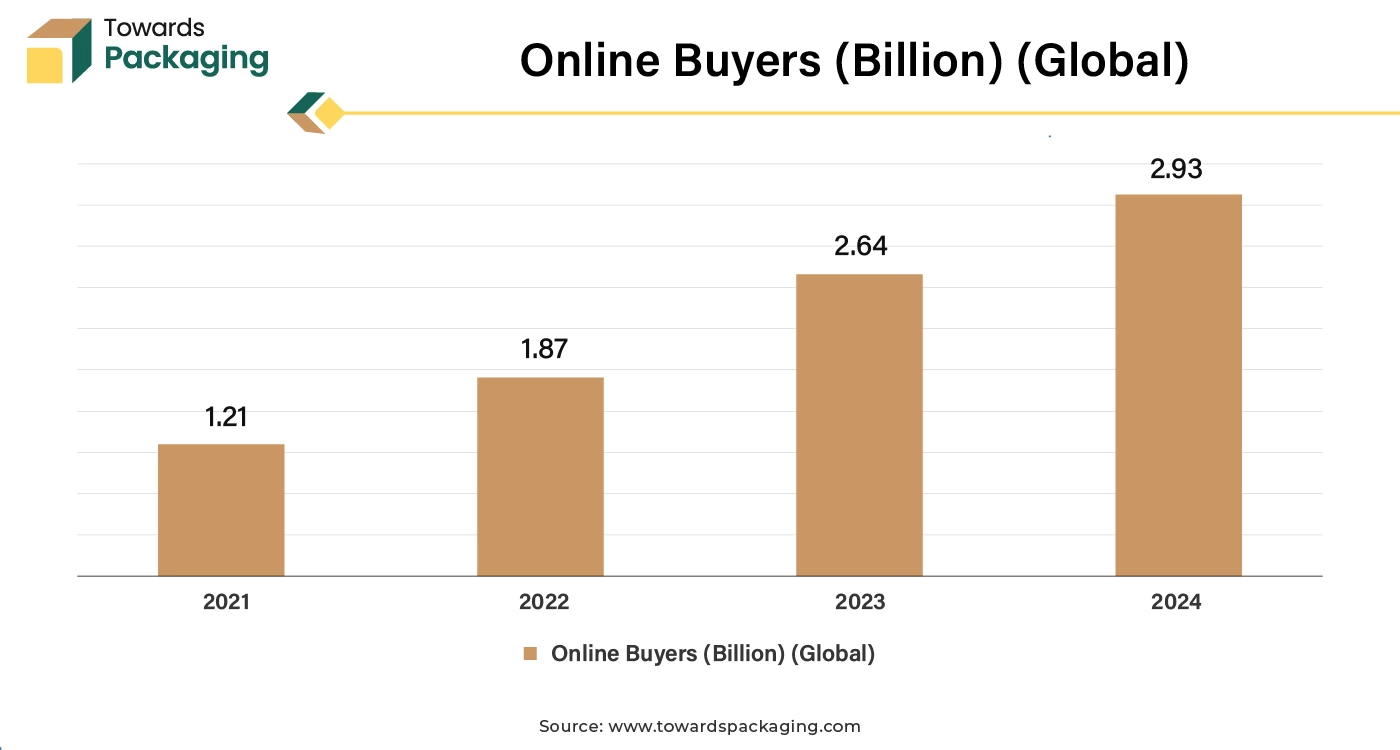
The rapid growth of e-commerce has developed a surge in demand for lightweight, protective, and customizable carded packaging to ensure safe delivery and enhance customer experience. Thereby the rapid expansion is seen to promote the overall growth of the carded packaging market. According to the data published by eCommerce Association of India (ECAI), is estimated that as of 2025, the number of commerce sites worldwide has increased by 3.83% to 26.6 million. For 2023 and 2025, this means that 2,685 Commerce websites were launched every day. The United States is home to about half of the world's commercial sites. The majority of online stores are powered by Shopify and Wix, which together account for 19.07% and 11.84% of all stores.
According to estimates, the worldwide online pharmacy market was worth 32 billion dollars by the end of 2025. Its place as one of the biggest online pharmacy markets is expected to be cemented when this number rises to about 5.7 billion in the US. However, China leads the global pharmaceutical e-commerce market, bringing in close to 8.5 billion dollars annually. Given China's leadership, it is not surprising that the fastest-growing market category in Asia for digital health is digital pharmacies.
The key players operating in the market are facing issue in fulfilling the stringent regulatory norms and technology barriers, which may restrict the growth of the carded packaging market in the near future. Fluctuations in raw material availability and costs, particularly for sustainable materials, can disrupt production and increase costs. Geopolitical issues and global supply chain disruptions, like those experienced during the COVID-19 pandemic, have impacted the timely availability of materials. Adopting advanced manufacturing and AI technologies requires skilled labor, which may not be readily available in all regions. Small and medium-sized enterprises (SMEs) often lack the resources to invest in cutting-edge technology, limiting their competitiveness. The carded packaging market faces competition from alternative packaging types, such as flexible and rigid packaging, which may offer more cost-effective or customizable solutions for certain applications.
Growth in pharmaceutical and medical devices products fuels demand for tamper-proof and hygienic carded packaging solutions, which has estimated to create lucrative opportunity for the growth of the carded packaging market in the new future. Injectable products, often sensitive to contamination and damage, require secure and protective packaging. Carded packaging, such as blister packs, ensures individual product containment, preventing breakage or contamination during transportation and storage.
Carded packaging offers clear visibility of the injectable product while providing space for essential information such as usage instructions, dosage, and safety warnings. This feature is particularly valuable for medical professionals and end-users. The rise of biologics and biosimilars, which are often administered via injection, has created a surge in demand for specialized packaging. Carded packaging is ideal for such high-value, sensitive products.
For instance, in December 2024, Baxter International Inc., pharmaceutical and healthcare products providing company, revealed the introduction of the five new injectable pharmaceutical products. The following are the five new products that Baxter Pharmaceuticals has introduced in the United States, which have been mentioned here as follows: Micafungin in 0.9% Sodium Chloride Injection single-dose, Cyclophosphamide Injection, Pantoprazole Sodium in 0.9% Sodium Chloride Injection, Cefazolin in Dextrose Injection, and Levetiracetam in Sodium Chloride Injection.
| Rank | Company | Headquarters | Country | Why Relevant to This Packaging Market | Key Packaging Products/Services |
| 1 | Sonoco Products Company | Hartsville, South Carolina | USA | Global leader in retail blister, skin, and carded packaging with strong consumer packaging capabilities | Blister packaging, skin packaging, retail carded packaging |
| 2 | Smurfit Westrock | Dublin | Ireland | Leading supplier of paperboard packaging and retail display solutions supporting carded packaging applications | Paperboard cards, retail packaging, display packaging |
| 3 | TekniPlex | Wayne, Pennsylvania | USA | Major producer of blister films and healthcare packaging materials | PET blister films, thermoformed packaging |
| 4 | Klöckner Pentaplast | London, England | United Kingdom | Global leader in rigid films used for blister and carded packaging | PET, APET and PVC blister films |
| 5 | DuPont | Wilmington, Delaware | USA | Provides specialty materials and lidding solutions used in medical and retail carded packaging | Lidding materials, specialty packaging films |
| Rank | Company | Headquarters | Country | Why Relevant to This Packaging Market | Key Packaging Products/Services |
| 1 | Display Pack | Grand Rapids, Michigan | USA | Specialist manufacturer of custom blister and carded packaging | Blister cards, trapped blister packs |
| 2 | Rohrer Corporation | Wadsworth, Ohio | USA | Leading North American producer of thermoformed and carded retail packaging | Skin packaging, blister cards |
| 3 | Placon | Madison, Wisconsin | USA | Manufactures thermoformed PET blister packaging and retail containers | PET blister packaging |
| 4 | Nelipak | Cranston, Rhode Island | USA | Produces thermoformed packaging for healthcare and medical device markets | Medical blister and carded packaging |
| 5 | Anchor Packaging | St. Louis, Missouri | USA | Manufactures rigid thermoformed packaging adaptable for retail carded applications | Thermoformed PET packaging |
| Rank | Company | Headquarters | Country | Why Relevant to This Packaging Market | Key Packaging Products/Services |
| 1 | VisiPak | St. Louis, Missouri | USA | Specializes in custom thermoformed retail packaging | Blister packs, clamshells |
| 2 | Jamestown Plastics | Brocton, New York | USA | Produces custom thermoformed blister and retail packaging | Blister packaging and trays |
| 3 | Universal Package | Wooster, Ohio | USA | Supplies custom retail blister and skin packaging | Carded packaging solutions |
| 4 | Plastiform | Addison, Illinois | USA | Focuses on thermoformed blister and retail display packaging | Blister cards and clamshells |
| 5 | Blisterpak | Queensbury, New York | USA | Provides contract blister packaging and retail carded packaging services | Face-seal blister packs, contract packaging |
The plastic segment held a dominant presence in the carded packaging market in 2025. Plastics like PP (polypropylene), PET (polyethylene terephthalate), and HDPE (high-density polyethylene) are extensively utilized due to their flexibility, strength, and adaptability for various packaging designs. PET and similar plastics offer superior clarity and transparency compared to PVC, making products more visible and appealing on retail shelves. PET and other recyclable plastics are increasingly preferred over PVC, which has faced environmental concerns due to its difficulty in recycling and potential release of harmful chemicals during production and disposal.
The PVC segment is expected to grow at the fastest rate in the carded packaging market during the forecast period of 2026 to 2035. PVC is often cheaper in cost than other plastics, making it suitable for low-cost packaging solutions. PVC can be heat-sealed to a variety of substrates, which is useful in blister packaging. Its stiffness makes it ideal for certain types of carded packaging requiring a rigid structure.
The pharmaceutical segment registered its dominance over the global carded packaging market in 2025. Pharmaceuticals rely heavily on blister packaging, a key type of carded packaging, for capsules, tablets, and other small doses. This ensures product safety, dosage accuracy, and tamper resistance. The pharmaceutical industry is subject to stringent regulations that prioritize safety, hygiene, and traceability. Carded packaging meets these requirements effectively.
The growing healthcare sector, fueled by aging populations, chronic diseases, and increasing access to medications in developing regions, drives consistent demand for pharmaceutical carded packaging. The pharmaceutical sector dominates the carded packaging market due to its reliance on strict safety standards, blister packs, and consistent demand globally. While the food sector contributes significantly, its applications are more niche compared to the widespread utilization in pharmaceuticals.
North America region held a significant share of the carded packaging market in 2025. North America benefits from a mature supply chain infrastructure, ensuring the efficient production and distribution of carded packaging. This supports timely delivery and cost optimization. North American companies are leaders in adopting advanced technologies, such as digital printing and smart packaging, enabling customization and enhanced product appeal. Innovation also extends to the use of sustainable material. The presence of strong key companies like WestRock, International Paper, amcor, Berry Global Group Inc., Ball Corp., Crown Holdings Inc. and Avery Dennison Corp., in North America makes it dominant region for carded packaging.
The Asia Pacific region is anticipated to grow at the fastest rate in the carded packaging market during the forecast period. The region's large and growing population, particularly in countries like China and India, drives demand for consumer goods, including electronics, pharmaceuticals, and packaged food, which rely heavily on carded packaging. Asia-Pacific is witnessing rapid growth in e-commerce, fueled by increased internet penetration and smartphone usage. This creates a high demand for durable and visually appealing packaging solutions for shipping and branding. The packaging is being increasingly used for shipping small consumer goods, electronics, apparel, and cosmetics, as carded packaging offers durability and product visibility while minimizing damage during transit.
By Type
By Applications
By Region









Research & Advisory Analyst
Yogesh Kulkarni is an experienced Research Analyst specializing in the packaging sector, with a strong foundation in statistical analysis and market intelligence. He currently contributes his expertise to Towards Packaging.
Learn more about Yogesh Kulkarni

Reviewed By
Aditi Shivarkar, with 14+ years in packaging market research, specializes in food, beverage, and eco-friendly packaging. She ensures accurate, actionable insights, driving Towards Packaging Analytics & Consulting 's excellence in industry trends and sustainability.
Learn more about Aditi Shivarkar

Carded Packaging Market
 Table of Content

 Download Sample
 Schedule a Meeting