


Biaxially Oriented Polypropylene (BOPP) films are extensively used for flexible packaging resources worldwide majorly in region like North America. These films are manufactured by stretching polypropylene in both transverse and machine directions that conclude in improving clarity, printability, strength, and barrier properties. These BOPP films play a vital role in the packaging of industrial applications, labelling, and food sectors. These films offer excellent printability that support in branding and also lightweight packaging films. BOPP films are mainly known as an environment-friendly, recyclable, and sustainable packaging resources.
BOPP films are widely accepted due to its enhanced moisture-resistance properties, cost-effectiveness, and transparency that help consumers to observe the quality of the products. Such transparency enhances reliability of the consumers and provide a premium appearance to the product. These films are extensively utilized for premium and luxurious packaging to appeal huge consumers.
Environmental Protection Agency issued the National Recycling Strategy November 2021 and confirmed the aim to enhance the U.S. recycling rate to 50% by 2030. The Strategy recognizes strategic purposes and actions required to generate a robust, more tough, and cost-operative U.S. municipal solid waste recycling process. Recycling played an important role in the EPAs decades-long exertions to rule the Resource Conservation and Recovery Act (RCRA) and fresh efforts to trail a Sustainable Materials Management (SMM) method, which goals to decrease the ecological influences of resources across their growth.
| Term | Definition |
| Thermoplastics | It is a type of polymer plastic that is pliable or moldable at high temperatures and then solidifies while cooling. |
| Thermosets | These are the polymers that went through an irreversible chemical procedure to form a rigid and 3D cross-linked structure that fortifies upon heating and it cannot be reshaped or remelted. |
| Bioplastics | These are plastics extracted from renewable biomass sources like sugarcane, corn starch, microbes or cellulose rather than old-style petroleum. |
| Composites | It is something produced from several distinct parts, elements, or resources united into a single article. |
| Macroplastics | These are huge plastic matters, certainly defined as having a diameter of 0.5 cm. |
| Microplastics | These are tiny plastic particles smaller than 5 millimeters. |
Some of the major behaviour of the consumers boosting the growth of this sector are rapid urbanization, demand for convenient packaging and rising e-commerce industry. These BOPP films are majorly utilized in snacks packaging, bakery products, frozen food, and confectionery packaging. Plastics are strongly demanded in the food sector to avoid any risk of spillage and transparency. Huge growth in packaged food consumption has fuelled the growth of this market.
Rapid growth in e-commerce sector has fuelled the demand for BOPP films due to its lightweight, customization options, durability, and cost-effectiveness. It needs enhanced protection of the products and also decrease transportation charges. These films meet the demand for packaging of food products.
| Material | Recycling Rate | Key Insight |
| Paper & Cardboard | 80.9% | Highly Recyclable |
| Steel Packaging | 73.8% | Efficient Recycling System |
| Plastic Packaging | 13.6% | Major Sustainability Gap |
Major innovations in BOPP films industry are:
Such innovations are majorly focused to align with supervisory needs to maintain the performance of the packaging sector. These films are also utilized for labelling, industrial wrapping, adhesive tapes, and insulation.
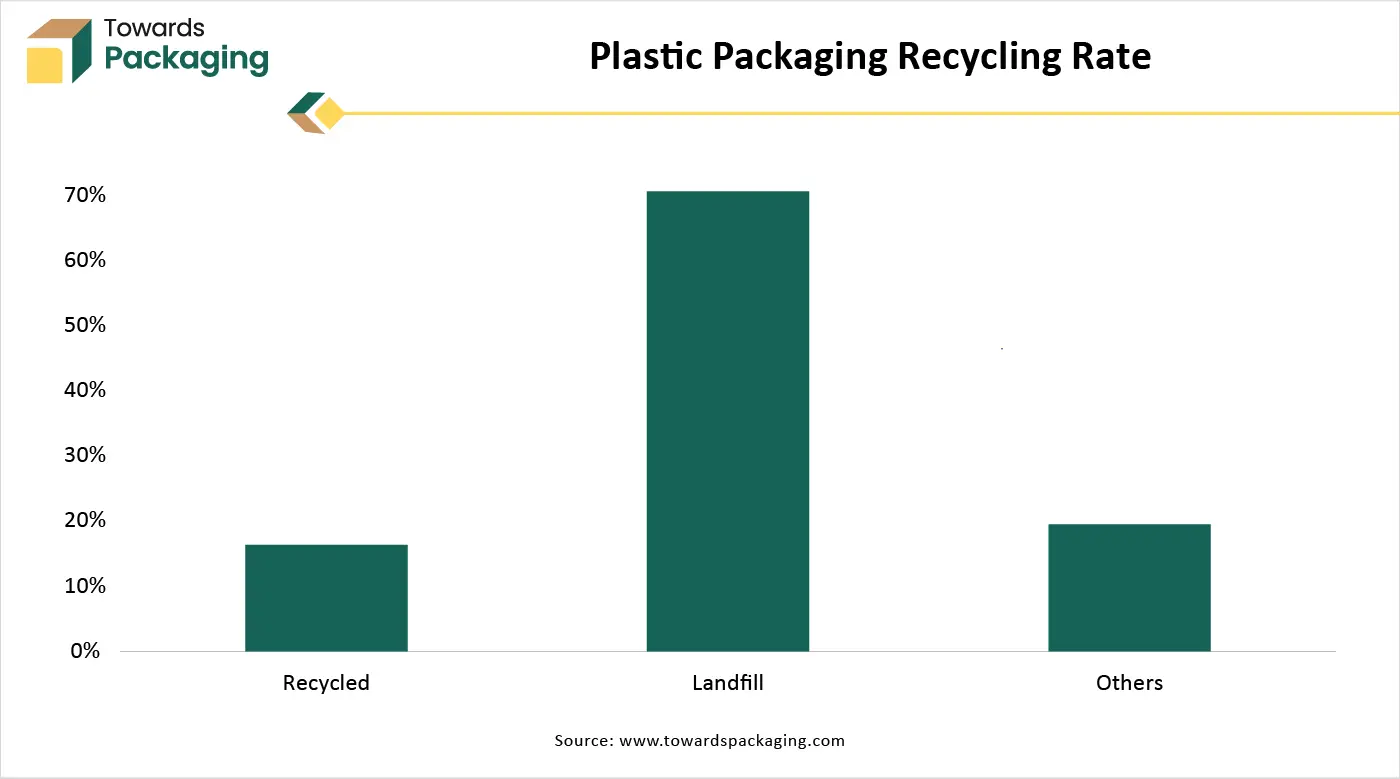
On America Recycles Day, 2020, the U.S. Environmental Protection Agency (EPA) declared a National Recycling Goal to enhance the U.S. recycling rate of resources produced in municipal solid waste (MSW) to 50% by 2030. To additional this aim and focus towards building of new recycling infrastructure via Bipartisan Infrastructure Law (BIL), EPA established a map showing projected generation of recyclable resources, projected recycled measures, current recycling infrastructure, possible recycling end industries, and other MSW infrastructure like transfer stations and landfills. The map is utilized to recognize infrastructure gaps, facilitate a requirements analysis, and enhanced understand where subsidy could be owed to improve markets.
This dataset offers locations of recycling of 15 diverse types of recycling and several other municipal solid waste infrastructures. The dataset comprises 15 diverse types of recycling infrastructure: resource recovery facilities (MRFs), anaerobic digesters, composting services, electronics recyclers, glass recycling services, glass secondary workstations, MSW landfills, metals recycling services, paper recycling services, plastic recycling services, textile recycling services, tire recycling services, transfer stations, wood recycling services, and wood secondary mainframes.
There is a huge regulatory and sustainability pressure associated with this industry. As these can be recycled easily there is a huge adoption for these films. Rising startup industries are majorly focusing towards developing material that can be recycled easily which has also boosted the expansion of this packaging sector. Presence of major market players in North America has also fuelled the demand for these packaging films.

Aditi serves as Vice President at Towards Packaging, bringing over 15 years of experience in market research, innovation, and business strategy within the packaging industry. She works across segments such as sustainable packaging, flexible materials, and industrial packaging solutions. Aditi studies evolving consumer demands, material advancements, and regulatory changes, then turns those insights into clear strategies for businesses. She helps organizations stay competitive, improve product positioning, and respond effectively to shifting market trends.

Aman Singh has spent more than 13 years working in research and consulting, with a strong focus on the global packaging sector. He tracks developments in areas like eco-friendly materials, smart packaging technologies, and supply chain changes. At Towards Packaging, Aman leads the research team and ensures every study delivers accurate and useful insights. He breaks down complex industry developments and helps companies understand where opportunities lie and how to act on them.

Piyush Pawar works as Senior Manager for Sales and Business Growth at Towards Packaging, bringing over a decade of experience in client-facing roles within the packaging industry. He connects businesses with the right research and helps them apply insights to real-world decisions. Piyush understands market challenges and works closely with clients to provide solutions that support growth. He focuses on building strong partnerships and helping companies turn industry knowledge into practical results.
Advanced Packaging Drives BOPP Films Adoption Across Industries


 Request Consultation

