





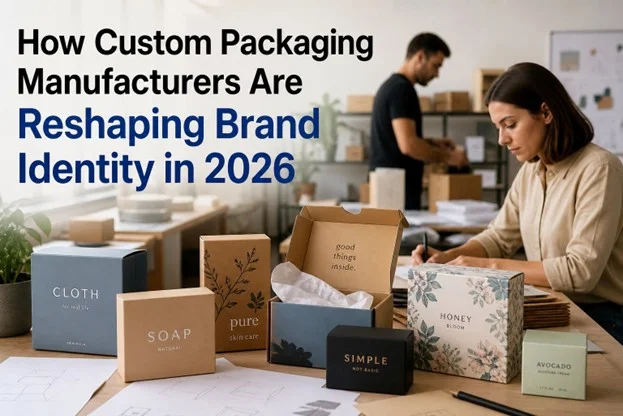
Brand identity is arguably more contested and more important than ever. Consumers are faced with a deluge of products in an overcrowded and multilayered shopping environment. In the blink of an eye they are able to make purchasing decisions based on initial impressions and the perceived values of a brand. In an era of rapid decision making packaging has become the most immediate and tangible expression of brand identity for businesses of all sizes. It is a key brand building investment that forward thinking brands use to connect with their customers on an emotional level at the point of first encounter with the physical product. Brands partnering with specialist custom packaging manufacturers are recognising that packaging is not an after the fact consideration but an important brand identity building investment.
Over the past decade the packaging industry has experienced a sea change that has made truly customised packaging solutions available to every kind of business. Gone are the days of high minimum order quantities or excessive plate setup costs preventing smaller businesses from having truly custom packaging. As manufacturers have flocked online to court the growing number of independent start-ups, competition has driven down prices while vastly increasing the number of customisation options available at affordable prices.
There has never been such a democratization of custom packaging options available to retailers. And at the same time, there has never been a time where consumers have been more attuned to the quality of a package. Regular exposure to the white-glove unboxing experiences of digital native vertical brands has gotten customers accustomed to premium materials and custom design elements. What once were neutral packaging options now communicate mediocrity, missed opportunity, or indifference to your brand. The brands driving customer loyalty in 2026 are those that have realized the value of packaging at any size or category and have made investments to meet new, elevated consumer expectations.
What's happening in the marketplaces that makes custom packaging not a luxury but a necessity for levels of branding experience small companies and new products can afford? Custom packaging manufacturing services are now accessible to small businesses, independent makers and rapidly growing companies allowing them to compete on brand experience with large competitors for the first time.
One of the key trends in how custom packaging manufacturers work with brands in 2026 is that packaging design strategies need to begin at the same time as brand strategy. The most successful and cohesive brand identities are those where packaging has been considered at the same time as other key brand elements such as logo, colour, typography and tone of voice, from the very start, and not treated as an afterthought.
An integrated approach allows for brand experiences where packaging feels natural and inevitable as opposed to applied. Packaging and brand identity should be developed hand in hand so that the values and personality embedded in the packaging materials are consistent with the values and personality embedded in all of the other touchpoints a customer may have with a brand. When packaging and brand identity are developed in isolation, customers may experience a feeling of inconsistency that they may not be able to articulate. For example, a brand that conveys a premium and considered image online can feel quite ordinary when it is received in packaging that seems irrelevant to the identity that drew the customer in the first place.
Custom packaging manufacturers that understand brand communication are evolving from simply being production suppliers to becoming brand partners. As packaging manufacturers with expertise in packaging design, knowledge of the packaging materials, and the various finishing capabilities, they can be of great value to the brand development process. By integrating themselves into the conversation early enough, they can still have an influence over the brand experience as it pertains to the physical delivery of the package to the end customer.
Candles illustrate the transformative effect that specialist custom packaging can have on a category. The candle market has experienced significant premiumisation over the last decade, with consumers increasingly prepared to pay high prices for candles that are marketed and sold as an integral part of the lifestyle of premium living. Specialist suppliers such as candle packaging providers have worked with brands to create innovative packaging that visually conveys a luxury message through the use of high quality materials, advanced design and luxurious finishes that standard packaging solutions are not able to deliver.
Candles illustrate a number of key learnings when it comes to packaging specialist products. Firstly, packaging and product must communicate consistent quality messages. A premium candle packaged in a generic outer package may look and feel like a cheaper product creating cognitive dissonance with the customer and undermining the premium positioning of the product. Secondly, packaging for luxury products needs to have value in the package experience. It needs to add to the overall value of the product. Simply being a box or tube is not enough. Thirdly specialist packaging manufacturers who have a deep understanding of a particular product category are able to develop packaging solutions that a generalist supplier could not. Category specific knowledge underpins every decision made from initial concept right through to final finished solution, whether this be through the design of the structure, choice of materials or application of finishes.
The packaging of the candle market has evolved in line with the dynamics of the gifting economy that packaging excellence can enable across industry. Products that are positioned and packaged as gifts are able to command a premium price point and be sold on purchasing occasions that a basic packaging solution may not allow. Packaging and printing with a premium feel and the use of high quality materials, sophisticated structures and finishes can help to transform standard products into gifts that can increase the total addressable market for a brand.
New material innovations from custom packaging manufacturers hitting the market in 2026 will offer exciting opportunities for brand differentiation not available even a few years prior. As sustainability measures become increasingly important, but also simultaneously, as manufacturers are under pressure to deliver premium positioning, new materials are being developed that are sustainable but also offer the tactile luxury feel that is necessary for high-end products.
Recycled and recyclable paperboard products can now be printed to the same high standards as products printed with virgin materials, allowing natural and healthy products to benefit from high print quality whilst communications around packaging can truthfully promote sustainability. Bio-based coatings can provide equivalent moisture and grease resistance to plastic laminates whilst enabling packaging to remain fully recyclable. Moulded fibre packaging solutions offer the same high quality product protection as plastic vacuum-formed trays but with a more environmental profile and unique natural appearance which can further communicate sustainable values.
The material innovations that are emerging enable packaging solutions that are in line with both the demands of environmentally conscious consumers and the perception of quality that brands are trying to create. By showcasing the sustainable aspect of such packaging to consumers, brands can leverage this transparency to create authentic brand value and, via a multiplier effect, significant long-term brand equity.
Future custom packaging will leverage digital elements, incorporating innovation into packaging design in order to transform packaging from simple, static brand messages to active, immersive brand experiences. In packaging seen in 2026, consumers will interact with QR codes, NFC enabled information and augmented reality enabled packaging assets to seamlessly connect packaging across the brand experience to deliver increased value beyond initial unboxing.
Digital integration applications that custom packaging manufacturers are implementing for brand clients include:
Integrating different digital applications into packaging gives products packaging that continues to communicate brand value even after the first purchase experience and thus turns a one-time use product into a communication medium that continues to extend brand experience.
In 2026 packaging quality will be increasingly a key factor in levels of market position that companies are able to achieve by lifting the quality of their packaging. Consumers are increasingly using packaging as a surrogate for product quality, particularly in situations where there is little time to evaluate a product fully and where a wealth of information is available to the consumer. Brands investing in custom printed boxes UK are finding that packaging quality functions as a credible proxy that shapes purchasing decisions before product claims are even evaluated.
There is proxy value in packaging investment. The returns generated extend to pricing power, customer retention and even helping to carve out a competitive niche or proposition that would otherwise cost a lot in marketing spend to achieve. If a brand conveys a premium proposition through packaging, it can maintain higher price points, lower customer acquisition costs and higher customer lifetime values as a result of the loyalty and word of mouth that your brand experience generates.
Those custom packaging manufacturers leading the industry in 2026 will recognise that what they are really providing to brands is a strategic feeling that will translate to all future interactions with customers. This is why brands are looking for the most valuable manufacturing partnerships, those where there is a genuine strategic understanding of the importance of packaging as a brand investment. It is time to take packaging out of the packaging department and into the boardroom where it belongs.
24 August 2026
24 August 2026
24 August 2026
24 August 2026