


The automated e-commerce packaging market is forecasted to expand from USD 969.58 million in 2026 to USD 3,079.12 million by 2035, growing at a CAGR of 13.7% from 2026 to 2035, trends in automation and sustainability, segmentation by type (fully‑automated vs semi‑automated) and application (food & beverage, cosmetics, apparel & footwear, consumer electronics, home appliances, household products, pharmaceuticals, others), regional data across North America, Europe, Asia‑Pacific, Latin America and MEA, key companies, competitive analysis, full value‑chain mapping, trade data outlining import/export flows, and detailed data on manufacturers and suppliers.
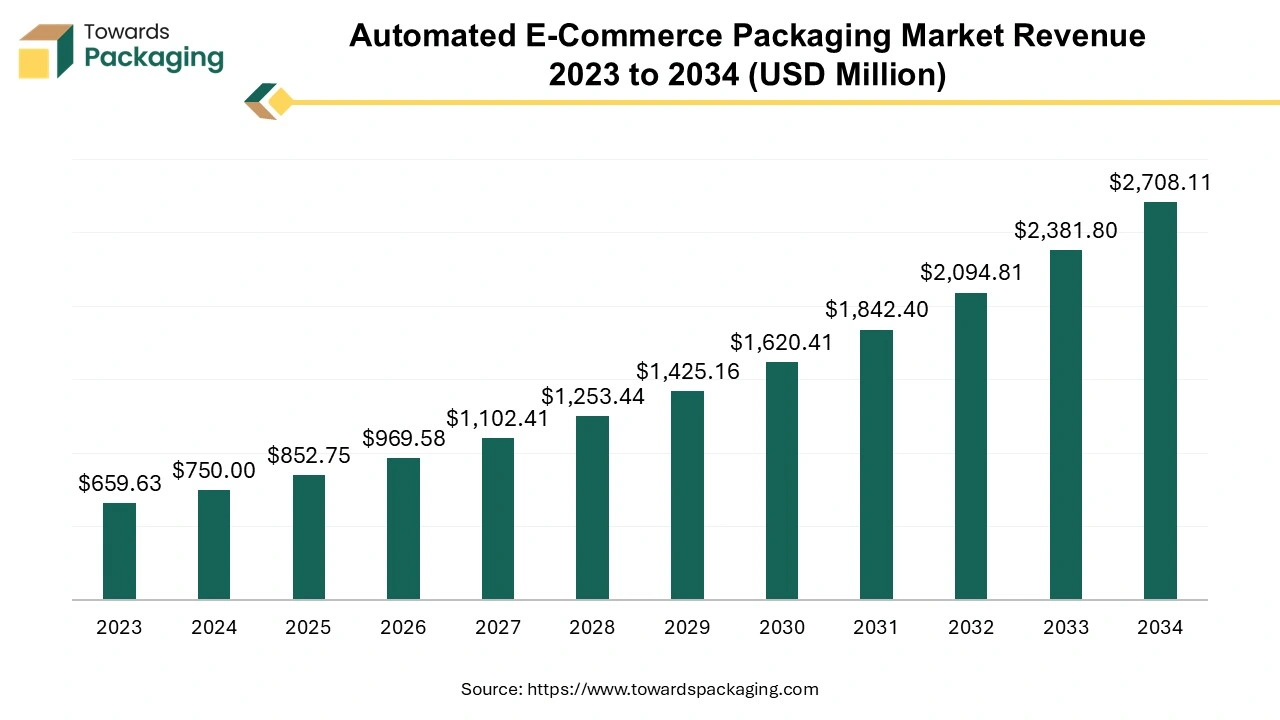
Several market players are developing advanced technology for manufacturing e-commerce packaging, which is expected to drive the market over the forecast period.
Automated e-commerce packaging refers to the use of technology and machinery to streamline the packaging process for online orders. This can include automated systems for measuring, packing, sealing, and labeling products, which enhances efficiency, reduces labor costs, and minimizes packaging waste. The goal is to improve the speed and accuracy of order fulfillment while maintaining product safety during shipping. Automated e-commerce packaging is transforming the logistics landscape, enabling retailers to meet the demands of a growing online market. By enhancing efficiency, reducing costs, and promoting sustainability, automated packaging solutions are becoming essential for businesses looking to stay competitive in the e-commerce sector.
Automation speeds up the packaging process, allowing businesses to handle larger volumes of orders with less labor. Lower labor costs and reduced material waste contribute to overall savings. Automation can also minimize packaging errors, leading to fewer returns and customer complaints. Automated systems deliver uniform packaging quality, enhancing brand reputation and customer satisfaction. Automated packaging solutions can easily scale to meet fluctuating demand, making them ideal for businesses experiencing growth or seasonal spikes. Many automated systems are designed to optimize the use of materials, contributing to sustainable practices by reducing waste and using eco-friendly packaging options. The global packaging industry size is growing at a 3.16% CAGR.
The rapid increase in online shopping, especially post-pandemic, has led to a higher volume of orders, necessitating efficient packaging solutions to manage the demand. Higher e-commerce sales result in a greater number of orders that need to be processed and packaged efficiently. Automation helps businesses manage this increased volume without sacrificing speed or accuracy. Consumers expect rapid delivery times. Automated packaging systems streamline the packing process, allowing companies to fulfill orders more quickly and meet customer expectations.
E-commerce encompasses a wide range of products. Automated packaging systems can be easily adjusted to handle various item sizes and types, accommodating the diverse offerings of online retailers. As e-commerce grows, so does the emphasis on sustainable practices. Automated packaging can optimize material usage and facilitate the incorporation of eco-friendly packaging solutions, meeting consumer demand for sustainability. In summary, the rise in e-commerce sales creates a pressing need for efficient, scalable, and cost-effective packaging solutions. Automated e-commerce packaging systems address these challenges, driving their market growth alongside the expansion of online retail.
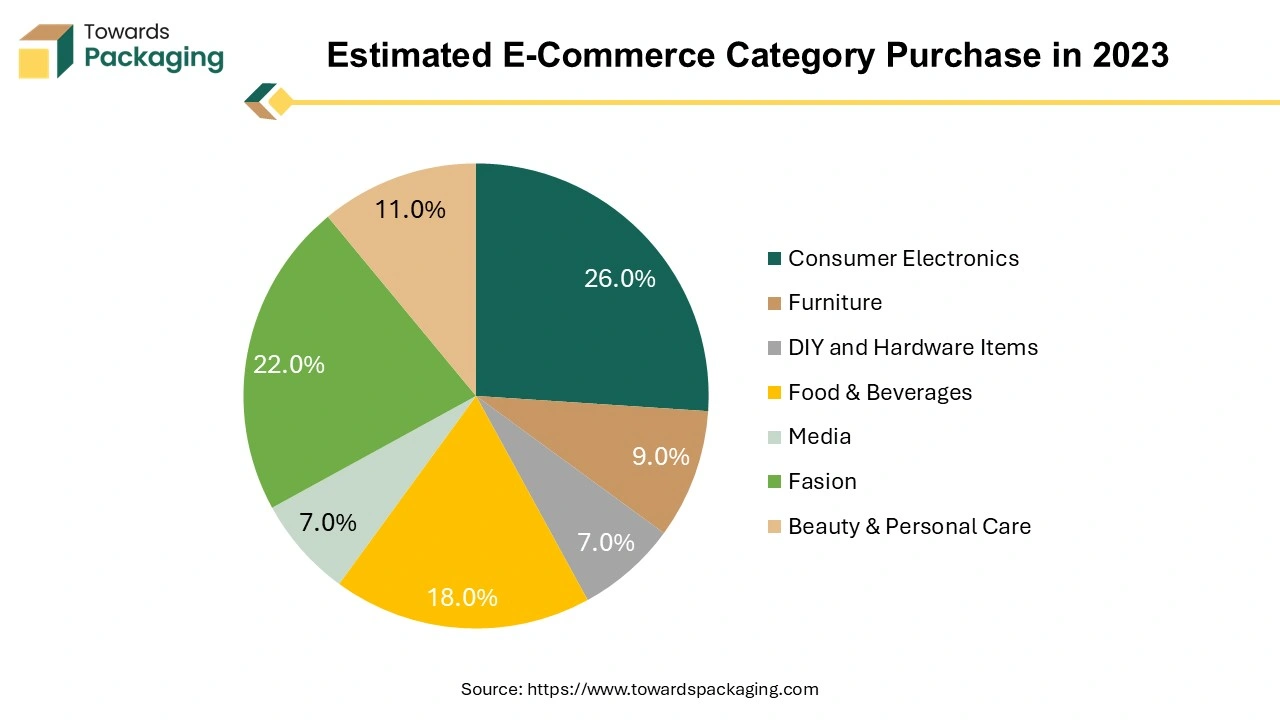
Automation that integrates with existing supply chain technologies can improve overall efficiency and reduce costs, appealing to businesses looking to optimize operations. As consumers seek personalized experiences, automated solutions that offer customization in packaging can tap into this trend. Key players operating in the market are focusing on business strategies to develop automated e-commerce packaging solutions, which is estimated to create lucrative opportunities in the the automated e-commerce packaging market in the near future.
Several factors may restrain the growth of the automated e-commerce packaging market:
| Rank | Company | Headquarters | Country | Why Relevant to This Packaging Market | Key Packaging Products/Services |
| 1 | Packsize | Salt Lake City, Utah | USA | Pioneer in on-demand right-sized packaging automation for e-commerce fulfillment centers | Right-sized box-making systems, packaging automation software |
| 2 | CMC Packaging Automation | Città di Castello | Italy | Global leader in automated e-commerce packaging systems serving major online retailers and logistics companies | Automated parcel packaging systems, right-sized packaging equipment |
| 3 | Sparck Technologies | Drachten | Netherlands | Leading provider of fit-to-size automated packaging systems for high-volume fulfillment operations | CVP automated packaging systems |
| 4 | Ranpak | Concord Township, Ohio | USA | Global leader in automated paper-based protective packaging solutions integrated into e-commerce fulfillment | Automated cushioning, void-fill systems, paper packaging automation |
| 5 | Sealed Air | Charlotte, North Carolina | USA | Major supplier of automated protective packaging equipment, mailer systems, and fulfillment automation | Automated packaging systems, protective packaging, fulfillment solutions |
| Rank | Company | Headquarters | Country | Why Relevant | Key Packaging Products/Services |
| 1 | Pregis | Deerfield, Illinois | USA | Offers automated bagging, protective packaging, and fulfillment systems for e-commerce operations | Automated bagging, protective packaging systems |
| 2 | BEUMER Group | Beckum, North Rhine-Westphalia | Germany | Integrates automated packaging with warehouse logistics and parcel handling systems | Fulfillment automation, conveyor and packaging integration |
| 3 | ABB | Zürich | Switzerland | Supplies robotic automation solutions widely deployed in automated packaging lines | Packaging robots, palletizing, automation systems |
| 4 | KUKA | Augsburg, Bavaria | Germany | Provides robotic solutions for automated e-commerce packaging and warehouse operations | Industrial robots, packaging automation |
| 5 | Signode | Tampa, Florida | USA | Global supplier of automated packaging equipment for distribution centers and logistics operations | Carton sealing, stretch wrapping, strapping automation |
| Rank | Company | Headquarters | Country | Why Relevant | Key Packaging Products/Services |
| 1 | Sparck Technologies* | — | — | Duplicate not permitted; replaced below. | — |
| 1 | Panotec | Cimadolmo | Italy | Develops customized on-demand box-making systems for logistics and e-commerce | Automatic box-making machines |
| 2 | BVM Brunner | Sonnenbühl | Germany | Manufactures automated packaging equipment for e-commerce and industrial fulfillment | Packaging automation systems |
| 3 | Sitma Machinery | Spilamberto | Italy | Provides automated wrapping and e-commerce packaging systems for logistics providers | E-commerce wrapping and sorting systems |
| 4 | Senzani Brevetti | Bologna | Italy | Supplies end-of-line packaging automation and case packing systems | Automated case packing solutions |
North America dominated the global automated e-commerce packaging market in 2025. Advances in robotics and automation technologies are making packaging processes faster and more efficient, encouraging investment in automated solutions. These technologies help optimize packaging processes, reducing waste and improving overall efficiency. The key players operating in North America are focused on developing advanced technology for automated packaging solutions, further bolstering the growth of the automated e-commerce packaging market in North America.
Asia Pacific is anticipated to grow at the fastest rate in the global automated e-commerce packaging market during the forecast period. The Asia Pacific region has witnessed significant growth in e-commerce, driven by increasing internet penetration, smartphone usage, and changing consumer behaviors. With rapid urbanization and a growing middle-class population, the demand for efficient and sustainable packaging solutions have surged. As the largest e-commerce market, China leads in automated packaging solutions, with companies investing heavily in technology to streamline operations. With a burgeoning online retail market, India is gradually adopting automated packaging to meet rising demand, though infrastructure challenges remain. Countries like Singapore and Indonesia are investing in automated packaging technologies due to their strategic locations and growing logistics capabilities.
The convergence of technological advancements, consumer expectations, and sustainability concerns drives the growth of automated e-commerce packaging in the Asia Pacific region. While challenges exist, the overall trend toward automation represents a crucial step for businesses looking to thrive in a competitive landscape. As the market evolves, investments in automation are likely to become increasingly essential for success in the rapidly expanding e-commerce sector.
The fully automated segment is expected to grow at a significant rate during the forecast period. The fully automated e-commerce packaging machine is widely used for its better efficiency, consistency and quality, scalability, and improved safety. These machines significantly speed up the packaging process, allowing companies to handle higher volumes of orders with less labor. These machines significantly speed up the packaging process, allowing companies to handle higher volumes of orders with less labor. Automating packaging reduces labor costs and minimizes material waste, leading to overall cost savings. Automated machines ensure uniformity in packaging, which enhances the professional appearance of products and reduces the likelihood of errors.
As e-commerce businesses grow, automated packaging systems can easily be scaled to meet increasing demand without major overhauls. Many automated machines are designed to maximize workspace, allowing for better use of facilities. These systems can integrate with inventory and order management systems, streamlining the entire fulfillment process. Reducing manual handling minimizes the risk of injuries associated with repetitive tasks. Overall, the efficiency, cost-effectiveness, and improved quality control make fully automated packaging machines essential in the competitive e-commerce landscape.
By Type
By Application
By Region








Principal Research Analyst
Vidyesh Swar is a Senior Research Analyst at Towards Packaging, bringing over 4 years of dedicated expertise in market intelligence and strategic analysis across the dynamic world of packaging technologies and solutions.
Learn more about Vidyesh Swar

Reviewed By
Aditi Shivarkar, with 14+ years in packaging market research, specializes in food, beverage, and eco-friendly packaging. She ensures accurate, actionable insights, driving Towards Packaging Analytics & Consulting 's excellence in industry trends and sustainability.
Learn more about Aditi Shivarkar

Automated E-Commerce Packaging Market
 Table of Content

 Download Sample
 Schedule a Meeting