


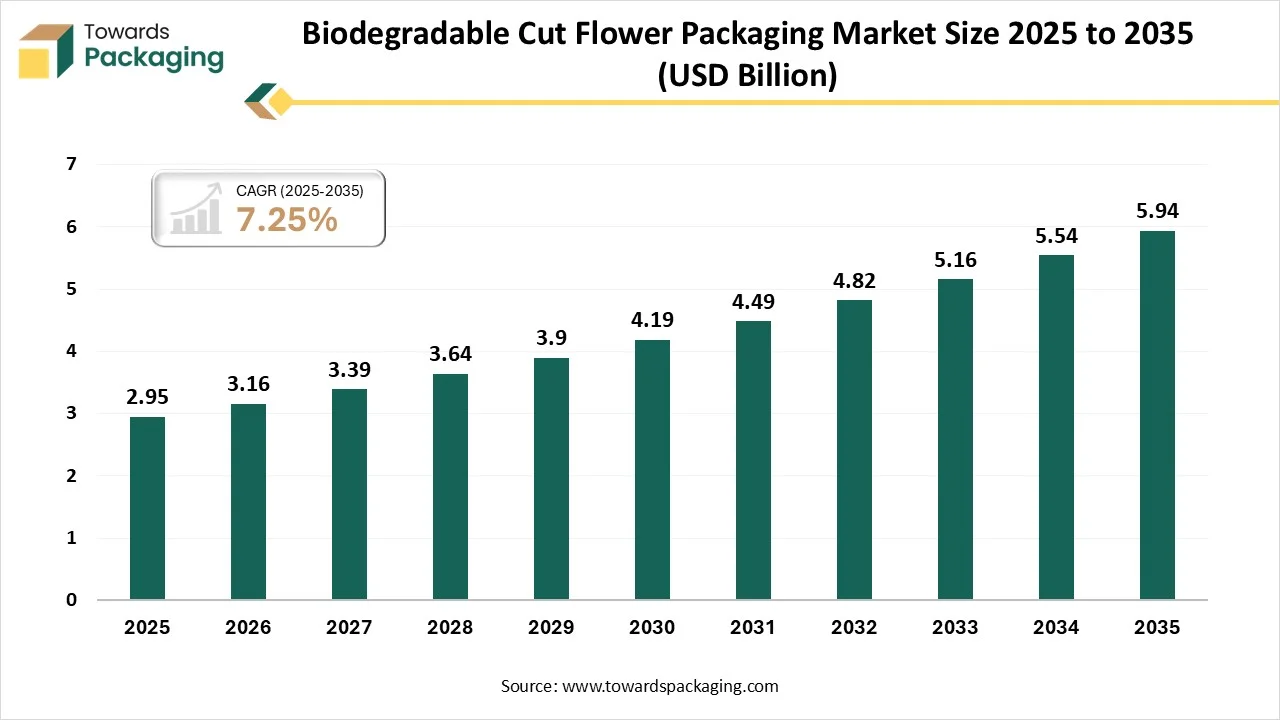
The biodegradable cut flower packaging market is projected to grow from USD 3.16 billion in 2026 to USD 5.94 billion by 2035, expanding at a CAGR of 7.25% during 2026-2035. The report provides detailed insights including market size statistics, segment-wise data by packaging type, material, and application, along with company profiles, competitive analysis, value chain evaluation, trade statistics, and comprehensive data on manufacturers and suppliers shaping the industry.
Biodegradable cut flower packaging contains of environment-friendly, compostable resources like cardboard, plant-based cellulose, paper, or bio-plastics planned to break down indeed, decreasing landfill waste. It preserves humidity throughout transport, often disintegrating within 3–12 months. Since the highest charge of paper-aluminum-plastic compound resource amongst all those resources, BOPP and HDPE are more appropriate moisture-barrier packaging resources for cut flowers. This change to environment-friendly, plant-based resources is influenced by the requirement to reduce the ecological influence of the floriculture sector, which has conventionally relied profoundly on non-recyclable wraps made up of plastic.
Technological transformation in the market plays a significant role by developing advanced eco-friendly materials. Rapid innovation in the active packaging technology has influenced the market to grow significantly. Development of anti-fog biodegradable packaging that control ethylene, moisture, and gas levels to interruption wilted. A significant change includes repurposing flower excess itself into biodegradable, compostable packaging resources, generating a circular economy.
The major raw materials includes are cellulose, jute and natural fibre, wood pulp, flower waste, sugarcane bagasse, corn starch, agricultural waste, seaweed & plant-based polymers. To produce environment-friendly as well as compostable packaging solution in order to replace traditional plastic packaging.
The component manufacturing in this market comprises biopolymer extrusion, casting and coating, wrapping paper, hydration wraps, and corrugated boxes. These processes comprise moulding, casting, and film extrusion to generate durable, water-absorbing or water-resistant components.
This segment ensures protective designs, active packaging, and hydration kits. It supports in reduction of missed delivery attempts. It helps in meeting the demand for strong and lightweight packaging.
The paper & paperboard segment dominated the market with highest share in 2025 due to its high customizable and eco-friendly packaging option. Rapid switch from traditional plastic packaging to recyclable and biodegradable packaging has pushed the production process to meet the demand of the consumers. It offered necessary protection at the time of transit and provide aesthetic appeal. Huge innovation like reinforced corrugated boxes, water-resistant coatings, and molded pulp inserts has boost the demand for this segment.
The compostable coatings & inserts segment is expected to grow at the fastest CAGR during the forecast period. This segment is growing due to high moisture resistance properties. Its enhanced performance and high protection have pushed this market to grow extensively. Growing e-commerce and retail sector has raised the production of this segment. Development of compostable inserts and coatings appeal huge number of consumers towards this industry.
The sleeves segment dominated the market with highest share in 2025 due to its high operational efficiency and rapid technological advancement. It has improved shelf demand for instinct-buy products in retail chains. It maintains air circulation and humidity, suggestively encompassing the container life of flowers throughout transportation. It offers structural help for high visibility and stems for blooms. Enhanced sustainability compliance and rising e-commerce demands has fuelled the market to grow significantly.
The boxes & carton segment is expected to grow at the fastest CAGR during the forecast period. This segment is growing due to its high protection and enhanced durability. Boxes & cartons are important for defending delicate flowers throughout transport, providing superior stack ability and barrier to humidity. The change from using one-time plastics to biodegradable substitutes such as corrugated, compostable kraft paper is fuelled by ecological guidelines. Developments in resources offer enhanced moisture control, ethylene absorption, and breathability, helped in maintaining freshness of the flower and decreasing waste.
Asia Pacific held the largest share in the market share in 2025, due to rising ecological concern and expansion of floriculture industry. Rapidly booming event management industry, wedding, and festival majorly in countries like India and Southeast Asia, has create constant demand for huge, environment-friendly packing. Increasing disposable earning and the fast growth of online delivery of floral products require robust packaging of the products. Robust customer trends in the direction of sustainable, "green" lifestyles, united with cultural ethnicities of gifting, hasten the move from plastic towards biodegradable substitutes.
Rapid shift towards sustainable packaging have driven the demand of the market in China. Huge expansion of biodegradable packaging market with a wide range of products availability has fuelled the demand for this sector profoundly. Rising online flower delivery facilities has influenced the demand for eco-friendly yet durable packaging that preserves freshness of flower throughout transport. Growth of "smart" packing that comprises moisture resistance and sensors for observing freshness is a developing trend.
North America expects the fastest growth in the market during the forecast period. The major factors influencing the growth of market are regulatory and consumer demand, e-commerce & retail adoption, active & smart packaging, huge demand for sustainable packaging. Enhanced restrictions on single-time use of plastics are driving a move to environment-friendly choices. There is a rising demand for packing that encompasses shelf life and expands traceability. Enhanced use of paperboard boxes, bio-based films, and jute. Major market players are emphasizing on strategic partnership, vertical incorporation, and sustainable resource invention.
Increasing regulatory pressure and demand for durable packaging has influenced the development of the market. Wraps and sleeves are the utmost sought-after with increasing focus towards moisture-absorbent, compostable resources. This sector is highly influenced by increasing consumer consciousness and the requirement for sustainable options. Packaging producers are collaborating with retailers and growers to grow dedicated, sustainable, and smart traceable packaging. Huge demand for customization and precise designing has pushed the growth of this industry due to development of advanced technology to meet the demand of the consumers.
Rapid innovation in material science have influenced the demand for the biodegradable cut flower packaging market. Enhanced emphasis on utilizing environment-friendly resources that can resist cold chain logistics without surrendering durability or ecological standards. Increasing sales of cut flowers in markets and over online services are improving the requirement for environment-friendly packaging options. Research is severely emphasis on resources that offer moisture barrier, breathability, and humidity control to confirm freshness although being biodegradable.
Rapid shift towards compostable packaging have driven the demand of the biodegradable cut flower packaging market in Germany. The inclination towards luxury, high-worth, and transparent packing that enhance the industry is rising. Major influencers, forcing a change from one-time usage plastics to environment-friendly, compostable, and biodegradable substitutes. Presence of strong, manufacturing-focused industrial sector emerging advanced and sustainable resources. Rapid growth in environment-friendly as well as recyclable options has fuelled this market to grow in this region
By Material
By Product
By Region








Research & Advisory Analyst
Yogesh Kulkarni is an experienced Research Analyst specializing in the packaging sector, with a strong foundation in statistical analysis and market intelligence. He currently contributes his expertise to Towards Packaging.
Learn more about Yogesh Kulkarni

Reviewed By
Aditi Shivarkar, with 14+ years in packaging market research, specializes in food, beverage, and eco-friendly packaging. She ensures accurate, actionable insights, driving Towards Packaging Analytics & Consulting 's excellence in industry trends and sustainability.
Learn more about Aditi Shivarkar

Biodegradable Cut Flower Packaging Market
 Table of Content

 Download Sample
 Schedule a Meeting