


The bopet lidding film market is forecasted to expand from USD 1.47 billion in 2026 to USD 2.24 billion by 2035, growing at a CAGR of 4.8% from 2026 to 2035. The report provides comprehensive coverage of market size, segment-wise data by end use such as food & beverages, healthcare, and electronics, along with detailed regional insights across Saudi Arabia, UAE, and other Middle Eastern countries. It includes competitive landscape analysis, company profiles, value chain assessment, trade data, and detailed information on manufacturers and suppliers operating across the market.
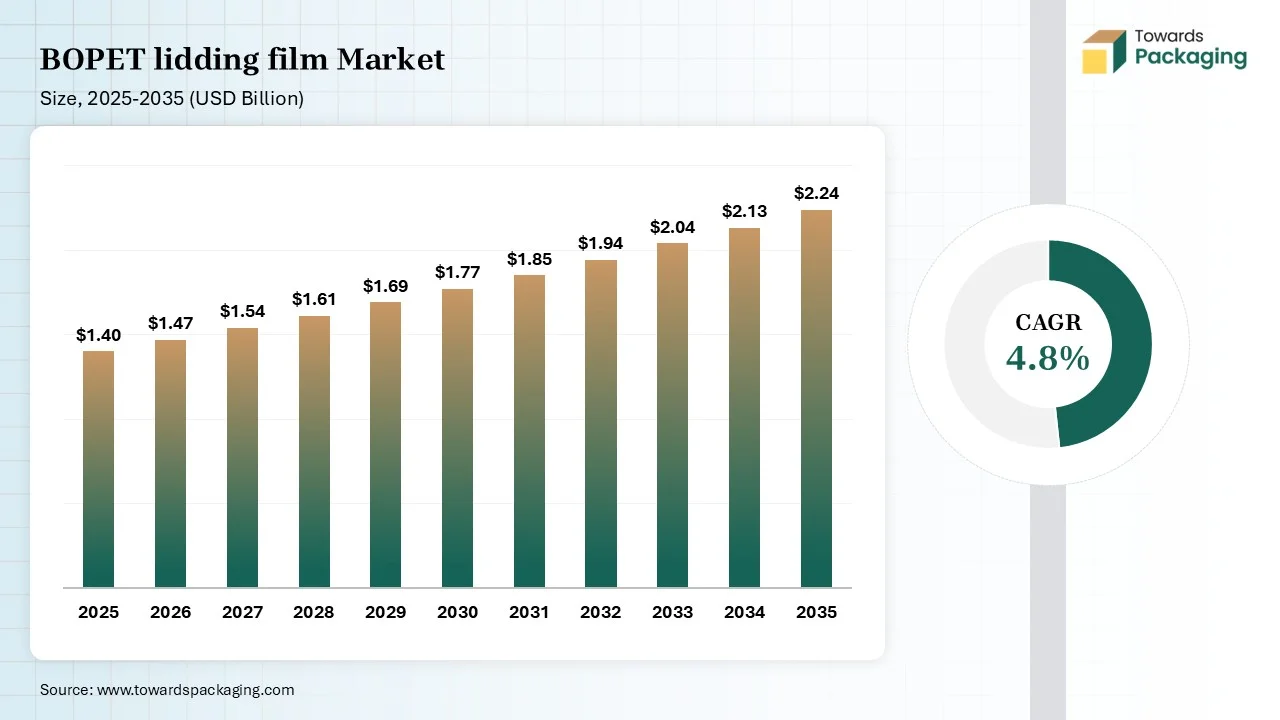
BOPET lidding film states biaxially oriented polyethylene terephthalate (polyester) film planned for fastening food & consumer vessels. It is valued for its huge stretchable strength, superior transparency, and excellent resistance possessions against gases and moisture that is making it suitable for frozen food, yogurt, snack and dairy packaging.
Technological transformation in the BOPET lidding film market plays a significant role by integrating smart technology and high-barrier functionality. Major shift of the consumers towards advanced co-extrusion technologies and ultra-thin packaging has fuelled the demand for this sector. Intense emphasis towards introducing recyclable, bio-based, biodegradable BOPET films to bring into line with worldwide ecological guidelines. Incorporation of technologies such as NFC and RFID straight into lidding film that is allowing enhanced safety and traceability for customers.
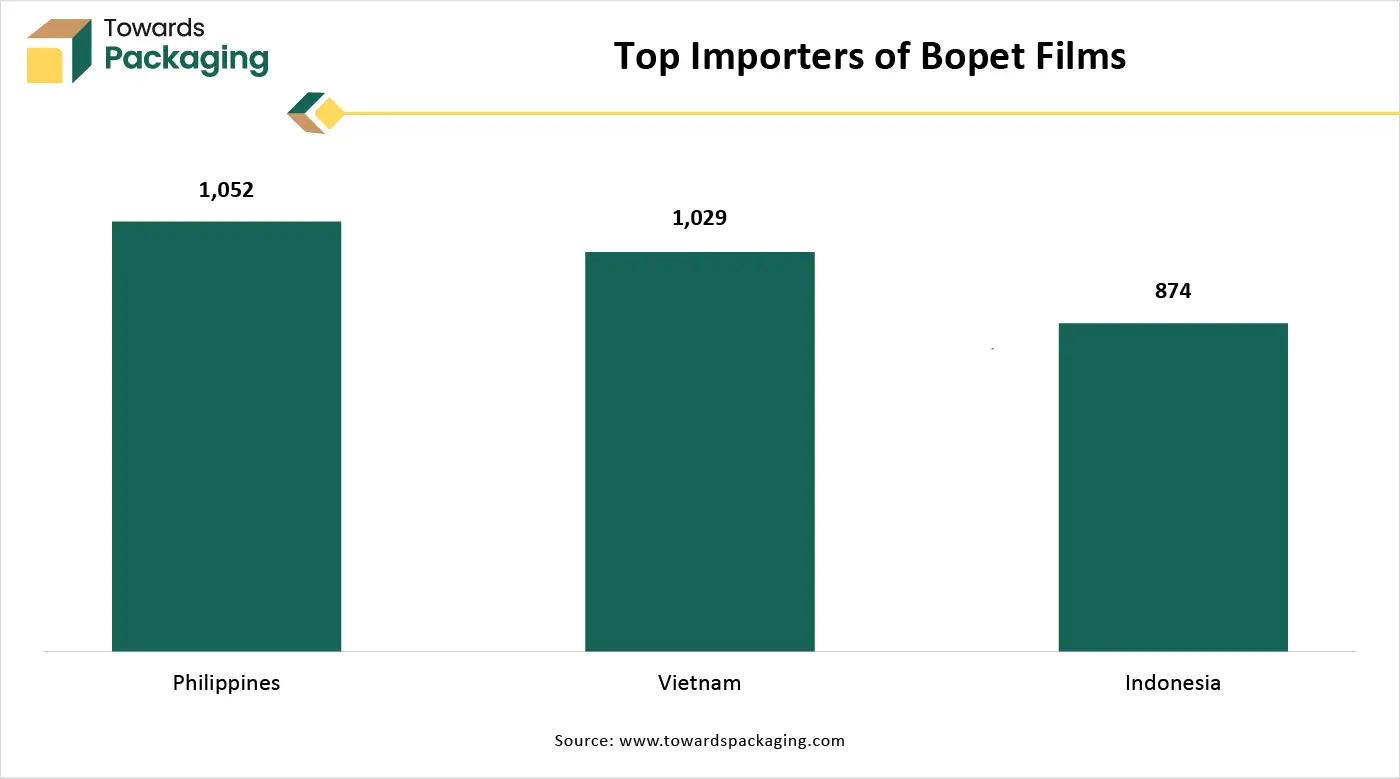
The major raw materials utilized in this market are ethylene glycol, terephthalic acid, PET resins and CoPET. These materials are used for excellent tensile strength, and high transparency.
The component manufacturing in this market comprises extrusion, plasticizing, biaxial orientation, longitudinal and transverse stretching. These are offering seal integrity, peel ability, and sometimes antifog nature.
This segment emphasizes on preserving the integrity of the films and quick deliveries. It sometimes utilizes incorporated manufacturing and controlling processes.
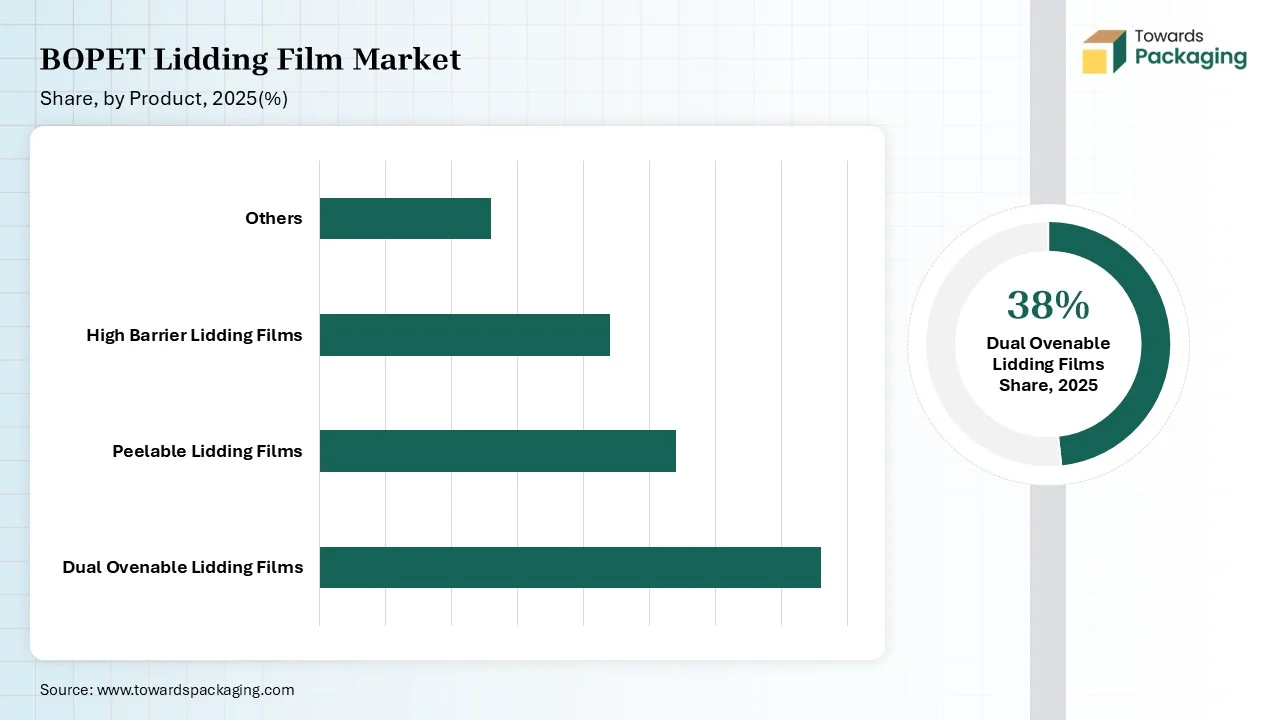
The dual ovenable lidding films segment dominated the market with highest share in 2025, due to its potential to extend shelf life of products and rising safety concern. These lidding films are precisely manufactured to resist high temperatures in microwave and conventional ovens. A worldwide shift in the direction of busy, on-the-go routines has manufactured one-time serve, fast-preparation meals crucial. These technologies offer actual-time information on cooking status and freshness, improving customer engagement and distribution chain clarity. These lidding films act as an excellent barrier against bacteria, oxygen, and moisture that is important for expanding the shelf life of perishables and processed foods such as meat.
The peelable lidding films segment is expected to grow at the fastest CAGR during the forecast period. This segment is growing due to rising concern towards consumer safety and convenience. These lidding films offering safe, tamper-resistance seals that can be easily opened, satisfying the need of on-the-go and consumer-friendly packaging. These peelable lidding films are manufactured to offer excellent oxygen and moisture resistance that is important for expansion of the shelf life of food items which is a major need for current cold-chain logistics. These comes with anti-fog nature that has dominated retail sector and confirming high transparency and visually appealing in chilled food exhibitions. These films became the ideal option for sealing tubs, trays, and cups in quickly increasing industries such as pharmaceuticals, ready-to-eat meals, and dairy. Inventions in this sector emphasis on refining the peel strength and confirming that these films peel off neatly without any residue.
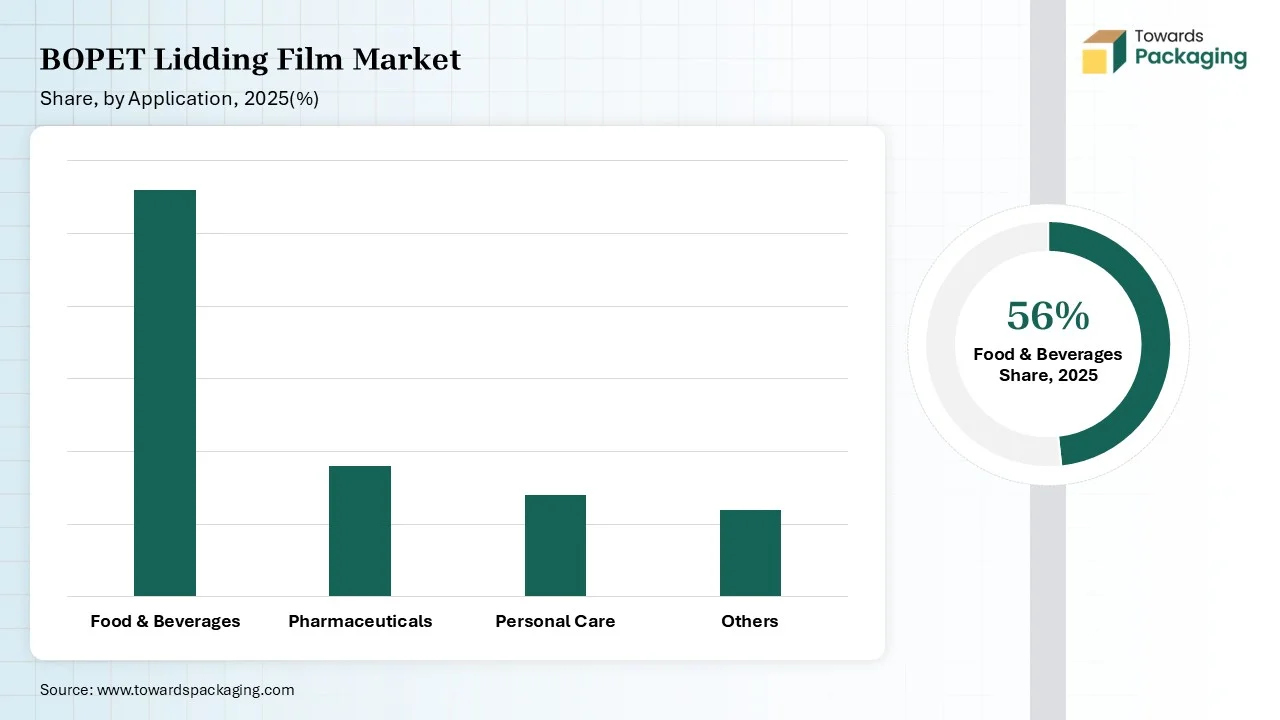
The food & beverages segment dominated the market with highest share in 2025 due to huge demand for preserving perishable products for longer period. BOPET films offer an excellent resistance against aromas, oxygen, and moisture which is important for enhancing the shelf life of ready-to-eat meals, snacks, dairy, and meats. The resource is indeed heat-resistant, stable, and fulfils strict worldwide food security standards. Increasing urbanization and changing lifestyles have spiky demand for transportable food and ready-to-eat set-ups that rely on progressive lidding for easy-open yet safe sealing. As brands shifting away from BOPET's recyclability, rigid plastics and the growth of bio-based alternatives bring into line with current ecological mandates. Developments in anti-fog coverings and metallization have extended its use in specific applications such as vacuum-packed and altered atmosphere packing.
The pharmaceutical segment is expected to grow at the fastest CAGR during the forecast period. This segment is growing due to regulatory compliances, barrier performance, and product safety. Pharmaceutical items such as capsules and tablets are extremely sensitive to oxygen and moisture. The sector depends on BOPET lidding for its capability to generate safe, tamper-evident closures on medical device trays and blister packs, that is important for customer patient safety and trust. Enhanced worldwide demand for generic drugs and vaccines, majorly from hubs, has enhanced the requirement for high-performance and sterile packaging that can resist rigorous distribution chain conditions. New inventions such as pharma-level PET blister films comprising recycled content that permit producers to fulfil tightening ecological guidelines while preserving medical-grade value. Pharmaceutical packaging necessitates enhance-quality printing for precise dosage data and branding that BOPET’s excellent surface flatness as well as printability service better than several substitute resources.
| Segments | Share 2025 (%) |
| Retail | 49% |
| Food Service | 34% |
| Others | 17% |
The retail sector segment dominated the market with highest share in 2025 due to increasing demand for extended shelf life and product safety. Urban lifestyles have shifted consumer habits toward pre-packaged, microwaveable, and convenience-driven food formats. It provides the high ductile strength as well as puncture barrier essential to protect goods through several transit stages. It offers high resistance properties against light, oxygen, and moisture which can expand the shelf life of fragile retail products. It allows retail sectors to implement hyper-limited or seasonal advertising movements straight for the adoption of BOPET lidding film.
The food service segment is expected to grow at the fastest CAGR during the forecast period. This segment is growing due to increasing online food delivery services. Huge order for single serving food meals has fuelled the demand for this segment. It provides huge barrier from oxygen, moisture, and heat that pushed brands to use these packaging profoundly. It supports in extending the shelf life of the products due to high thermal stability. These are lightweight as well as recyclable packaging which has fuelled the demand for this industry.
OPET lidding film supply chain through the use of recycled PET, eco-friendly production processes, and circular economy initiatives. To cut carbon emissions during the production of films, manufacturers are implementing energy-efficient technologies and using fewer materials. Although multilayer structures continue to present difficulties, efforts are concentrated on enhancing collection, sorting, and recycling systems to transform used films back into reusable raw materials at the end-of-life stage. To improve material recovery rates and satisfy the increasing regulatory and consumer demand for environmentally friendly packaging options, businesses are also working with recyclers and investing in cutting-edge recycling technologies.
By requiring more recycled content, enforcing stricter regulations for the management of plastic waste, and promoting circular economy practices, government policies are encouraging recycling in the BOPET lidding film market. Manufacturers are held accountable for post-consumer waste under regulations like extended producer responsibility, which encourages investments in infrastructure for collection and recycling. Directives in places like the European Union encourage the use of more recyclable and recycled materials, while nations like India are bolstering their frameworks for managing plastic waste to increase recycling rates. Governments are also providing funding and incentives for cutting-edge recycling technologies, which enhances material recovery and facilitates the shift to sustainable BOPET lidding film production.
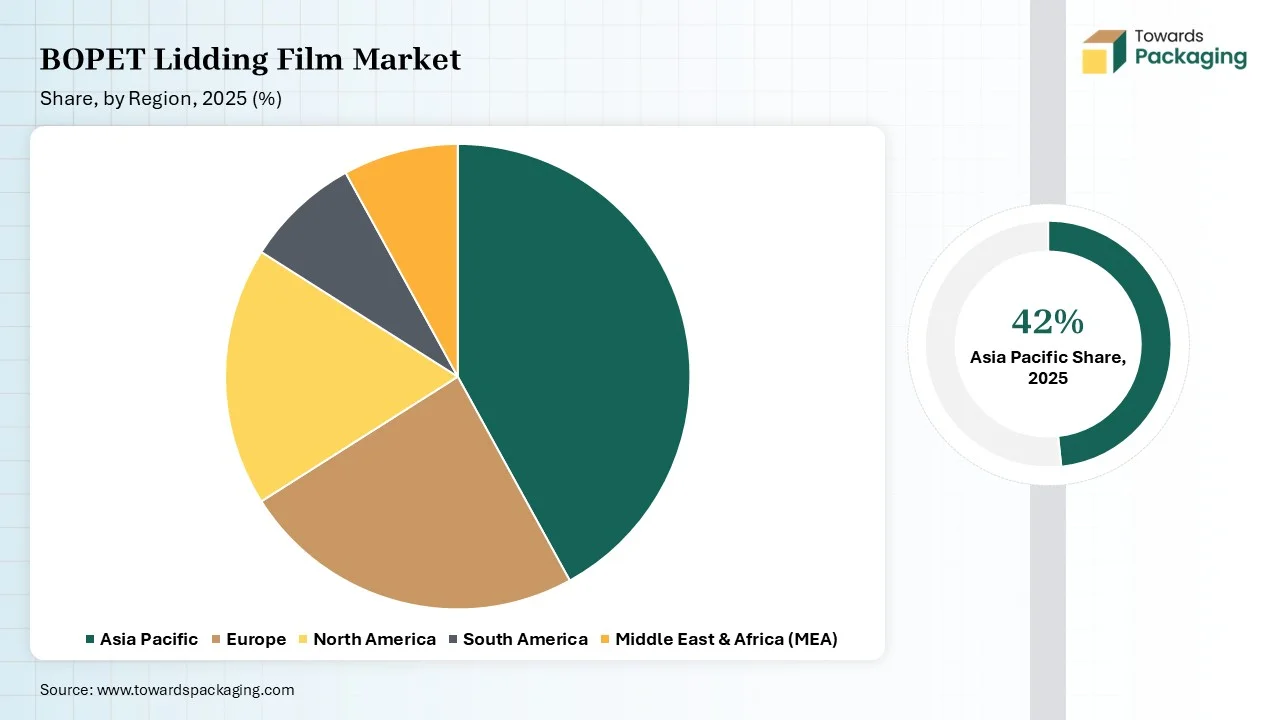
Asia Pacific held the largest share in the market share in 2025, due to rising demand for sustainable and smart packaging. This market is undergoing a rapid change in the direction of biodegradable and recyclable PET films, fulfilling with growing ecological guidelines. This comprises the acceptance of dual-oven lidding films those are in huge demand for processed and ready-to-eat foods. With a rapidly changing lifestyle, customers are influencing the demand for smaller pack sizes, on-the-go products, and share control. BOPET lidding films offer huge-barrier natures, important for defensive pharmaceuticals and food, expanding the shelf life while preserving goods freshness and clarity. This region is a leader in special films, containing progressive metallized and coated BOPET variations that offer improved barrier shield, heat barrier, and excellent printability for company branding. The development of the e-commerce industry has amplified the demand for durable and lightweight packaging resources that can resist transportation with rising the usages of flexible BOPET films.
China BOPET Lidding Film Market Trends
Rising expansion of shelf life and high-barrier packaging has fuelled the expansion of the BOPET lidding film market in China. Amplified emphasis on recyclable and sustainable packaging options because of state-level guidelines is compelling a change in the direction of thinner and environment-friendly resources. Rising demand for best lidding films with excellent moisture and oxygen barrier nature to protect food freshness, mainly for dairy products, ready-to-eat meals, and meat. Incorporation of progressive coatings for improved seal ability and enhanced printable surfaces, enabling better goods branding. Producers are accepting AI-enabled, smart, or automated manufacturing procedures to enhance quality control and decrease manufacturing waste.
Rising demand for eco-friendly and sustainable packaging demand has fuelled the expansion of the BOPET lidding film market in Europe. These are chosen for their superior seal strength, tamper barrier, and optical transparency, which improve product transparency on shelves. Producers are progressively emphasizing on manufacturing of bio-based plastics, green BOPET films, and packaging films with enhanced recycled content to bring into line with ecological guidelines. Evolving recyclable multilayer assemblies without cooperating presentation is a huge industry attention. High-resistance, lightweight, as well as durable packaging films are in demand.
Germany BOPET Lidding Film Market Trends
Increasing demand for recyclable and reusable packaging has pushed the expansion of the BOPET lidding film market in Germany. There is a robust, ongoing change from rigid packaging in the direction of flexible options majorly in food industry. These are chosen for their excellent moisture/oxygen barrier nature that extend the shelf life of products. Producers are growing ultra-thin films to decrease plastic utility while preserving protective and strength properties that is offering to sustainability goals.
Rising demand for high performance packaging demand has fuelled the expansion of the BOPET lidding film market in North America. Intense emphasis towards growing mono-resource and recyclable films to bring into line with that rising circular economy goals. The upsurge in ready-to-eat and single-person food products influences the demand for focused, high-temperature barrier lidding. Robust demand has resulted in noteworthy investments in manufacturing capacity, comprising projects present in the U.S. to supply to rising local demand.
U.S. BOPET Lidding Film Market Trends
Rising demand for high barrier and thin film packaging demand has fuelled the expansion of the BOPET lidding film market in the U.S. Huge upsurge for films offering excellent oxygen and moisture resistance properties that is important for shielding food superiority and decreasing waste. The rise in on-the-go products, ready-to-eat meals, and snacks influences the requirement for consistent, aesthetically appealing and easy-peel lidding. Rising acceptance of anti-fog expertise for dairy and fresh produce usages to enhance product clarity and shelf appeal. Producers are emphasizing on decreasing film thickness but upholding strength and resistance performance to decrease complete resource consumption and charge.
Raw Material Sourcing : BOPET lidding films are produced using polyester resins derived from petrochemical feedstocks such as purified terephthalic acid and nonethylene glycol, with increasing use of recycled PET inputs to support sustainability goals.
Key Players: Major raw material suppliers include Indorama Ventures and Reliance Industries Limited.
Logistics and Distribution: Efficient transportation and storage systems are essential to deliver BOPET films to food packaging and industrial customers, with a focus on maintaining film quality and minimizing damage during transit.
Key Players: Leading logistics providers such as DHL and Maersk support global distribution networks.
Recycling and Waste Management: Recycling efforts are increasing for BOPET films, focusing on collection, sorting, and reprocessing into rPET materials, although multilayer structures can pose recycling challenges.
Key Players: Companies like Veolia and SUEZ are actively involved in plastic waste management and recycling initiatives.
By Product Type
By Application
By End-User
By Region







Research & Advisory Analyst
Yogesh Kulkarni is an experienced Research Analyst specializing in the packaging sector, with a strong foundation in statistical analysis and market intelligence. He currently contributes his expertise to Towards Packaging.
Learn more about Yogesh Kulkarni

Reviewed By
Aditi Shivarkar, with 14+ years in packaging market research, specializes in food, beverage, and eco-friendly packaging. She ensures accurate, actionable insights, driving Towards Packaging Analytics & Consulting 's excellence in industry trends and sustainability.
Learn more about Aditi Shivarkar


BOPET Lidding Film Market
 Table of Content
 sales@towardspackaging.com
 +1 804-441-9344
 Download Sample
 Schedule a Meeting