


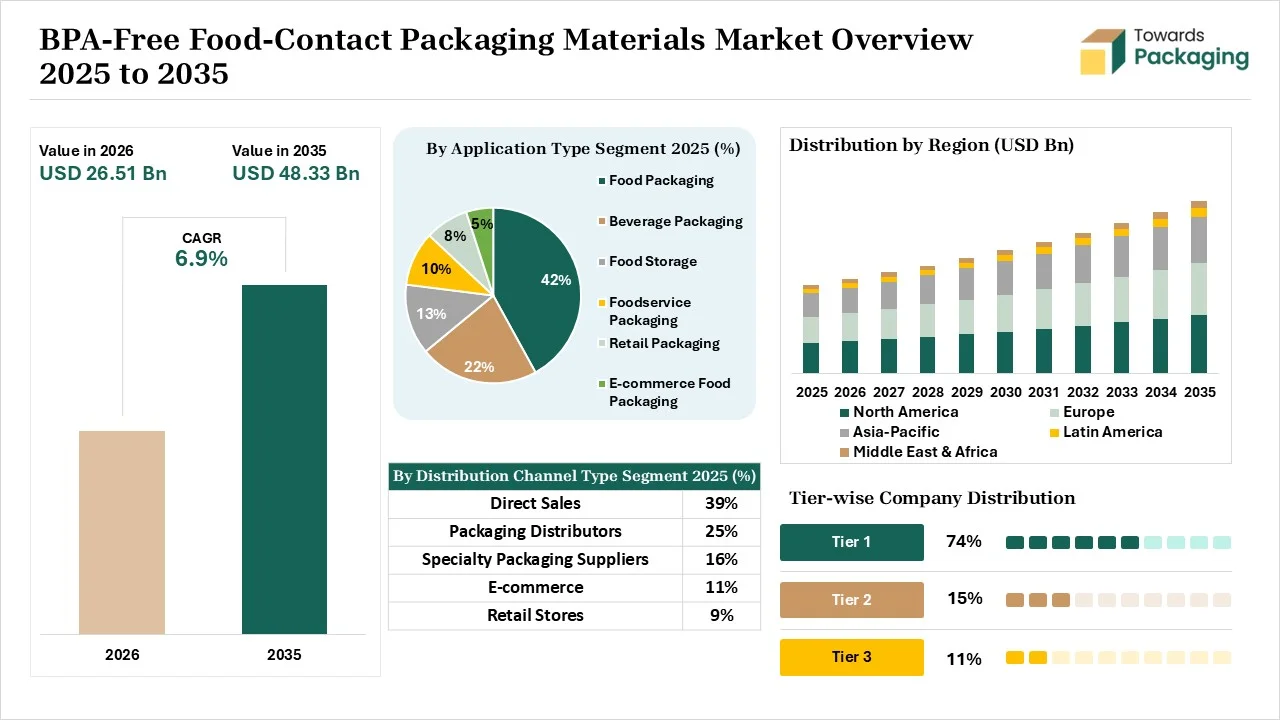
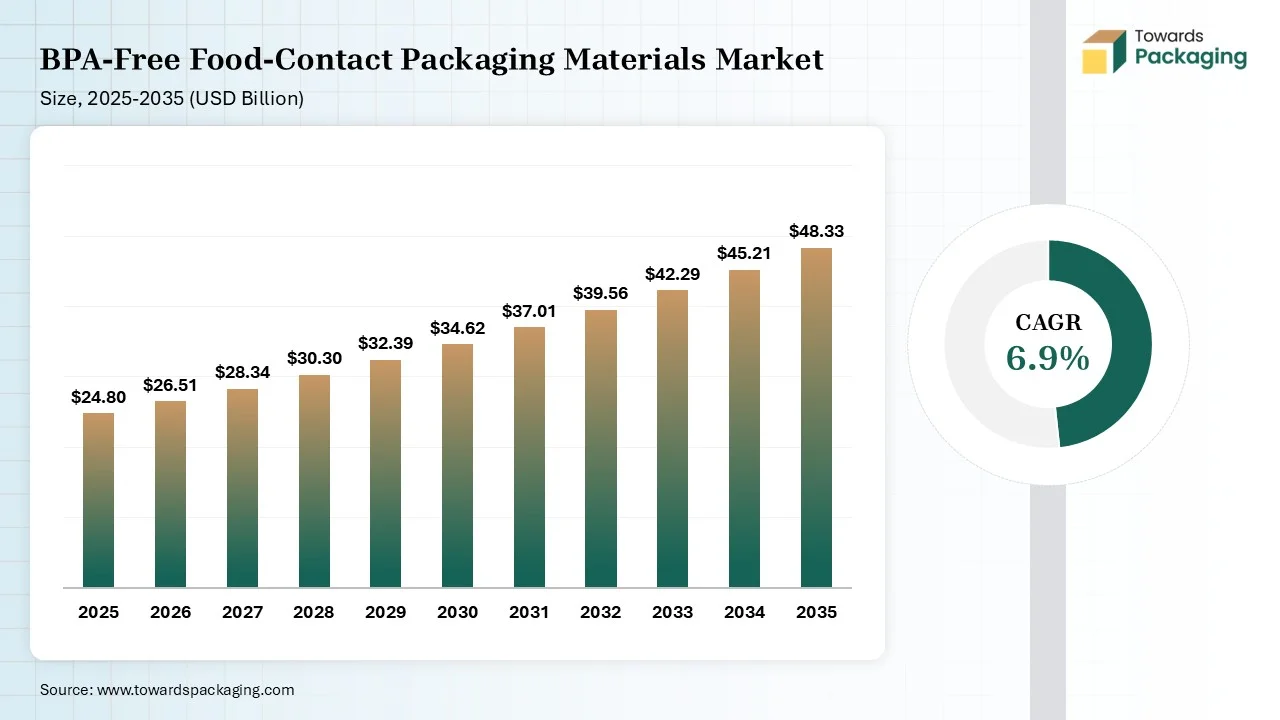
According to Vidyesh Swar, the global BPA-free food-contact packaging materials market size was estimated at USD 24.8 billion in 2025 and is predicted to increase from USD 26.51 billion in 2026 to approximately USD 48.33 billion by 2035, expanding at a CAGR of 6.9% from 2026 to 2035. Factors like FDA restrictions, increased information about BPA migration, consumption of shelf-stable meals, interest in non-BPA coatings, expansion of metal cans, key food brands' commitments to safe packaging, burgeoning ecosystem of food delivery, rise in active food packaging, expansion of retail private labels, robustly expanding canned goods, and health issues are drivers for the market growth. The role of BPA-free food-contact packaging materials in food safety is to provide consumer transparency, eliminate chemical leaching, and lower endocrine disruptions. Innovations like integration of plant-based coatings, rise in carbon-capture polymers, and the development of advanced copolyesters help market expansion.
BPA-free food-contact packaging materials are packaging materials developed without Bisphenol-A. It features characteristics like zero chemical leaching, no estrogenic activity, chemical stability, and material diversity. It offers benefits like food quality preservation, environmental sustainability, and high heat resistance. The common alternatives are polypropylene, stainless steel, platinum-grade silicone, bio-based plastics, glass, and Tritan. BPA-free solutions are important for better child development, environmental safety, hormone balance, and better taste. Its role in consumer protection is retail safety, regulation of hormones, and safe food contact.
In 1950, the development of polycarbonate plastic occurred. This plastic is made using BPA and is lightweight. This plastic is adopted for many applications like storage containers, water bottles, and others. BPA is also used in the creation of epoxy can linings, which prevents corrosion of beverage cans. In the period 1990-2010 researcher discovered that BPA mimics estrogen due to its leaching. Research found BPA causing serious health issues, which led to regulatory bans. Then many countries banned BPA in food packaging and infant products. In early 2010, manufacturers found plastics that do not require BPA for production. Materials like co-polyesters, PET, and others are widely used for developing food packaging. In the present time, bio-based plastics, polypropylene, and plant-based materials are widely used for creating BPA-free packaging. Modern industries mainly use food-grade silicone and glass for food storage.
The market is driven by growing health awareness. The market includes packaging types like bottles, cups, pouches, jars, bowls, sachets, food containers, cans, flexible packaging, trays, and cartons. The market includes food types like dairy products, fresh fruits, frozen foods, beverages, meat, baby food, pet food, vegetables, bakery, and ready-to-eat meals. The market covers end users like food & beverage manufacturers, retail, e-commerce food retailers, food service providers, restaurants, and household consumers. The excluded products include enamelware, trace substances, paper, and pet food materials. The geographical scope includes the U.S. FDA, the EU, and India’s FSSAI.
Factors like longer work hours, growing household incomes, increased accessibility of modern retail, and development of new products are drivers for the increased packaged food consumption. The extended exposure of packaged food products and the consumer focus on health risk minimization increases the adoption of BPA-free food-contact packaging materials. Regulations like EU food safety and modern families' consumption of convenience foods increase the use of BPA-free food-contact packaging materials. The growing packaged food consumption is a driver for the market growth.
Advanced BPA-free materials like Tritan and food-grade stainless steel are high-cost. The raw materials, like bio-based resins and complex chemical structures of advanced materials, increase the cost. The stringent toxological testing and the need for advanced equipment require high cost. The regulatory verifications and continuous-flow chemistry increase the cost. The lower production volumes and cross-contamination prevention during production increase the cost. The high cost of advanced BPA-free materials is a restriction for market growth.
Factors like high smartphone penetration, long workdays, expansion of digital payment services, and cooking avoidance are responsible for the growing food delivery industry. The heat-induced leaching in delivering food and chemical migration risks in ordered food increase demand for BPA-free food-contact packaging materials. The rise in delivery-only restaurants and daily spending on food ordering increases use of BPA-free food-contact packaging materials. Delivery platforms focus on food safety, which helps with expansion. The growing food delivery industry creates an opportunity for market growth.
The stakeholders include metal packaging leaders, flexible converters, resin formulators, consumer goods brands, and regulatory agencies.
The collaborations between material suppliers, metal packaging companies, standard organizations, and metal packaging companies are growing due to stricter regulations.
In June 2026, Eastman collaborated with Cabrellon Srl for the adoption of Eastman Tritan Renew in industrial chocolate molds. The new material features 25% certified recycled content, and the collaboration showcases a transition to BPA-free materials. The new material offers excellent performance and dishwasher durability.
The manufacturing price of BPA-free food-contact packaging materials depends on factors like feedstock volatility, energy costs, packaging design, production methods, and certifications. The selling price depends on factors like production complexity, value-added features, material selection, supply chain, and order volume.
The per-kg cost of polyethylene terephthalate is $1.50 to $2.50; the per-kg cost of LDPE & HDPE is $1.50 to $2; the per-kg cost of PET is $1.50 to $2.50; and the per-kg cost is $5.50 to $8.00. The polymers take $ 1.20- $ 1.65 per kg; paper fibers take $0.40-$0.50 per kg volume, and bio-based materials account for $2.50 to $6.00 per kg.
Asia Pacific pricing depends on factors like raw material pricing, manufacturing infrastructure, and regional taxes. European pricing depends on factors like sustainability laws and green taxes. North America has a premium price for BPA-free packaging due to compliance testing infrastructure and the demand for labelled BPA-free products.
Raw materials like PET, acrylic resins, oleoresinous coatings, LDPE, and polyester resins are required.
Material processing involves resin synthesis and formulation. Conversion includes lining application, injection molding, curing, and solidification.
Design focuses on material selection, barrier functionality, and regulatory compliance. Prototyping focuses on 3D printing, shelf-life testing, and short-run tooling.
The polyethylene (PE) segment dominated the BPA-free food-contact packaging materials market with a 24% share in 2025. The compatibility of polyethylene in squeeze bottles and rigid containers helps with expansion. The use of the blow-molding process and the demand for extension of food products' shelf life increase the use of polyethylene. Properties like excellent barrier properties, free from bisphenol A, and low production cost drive the segment growth.
According to my research, the polyethylene foranoate (PEF) segment held a 3% market share in 2025 and is expected to grow at the fastest CAGR of 9.8% during the forecast period due to compatibility of PEF with existing mechanical recycling infrastructure. The beverage freshness demand and the demand for material which generates less carbon footprint increase the use of PEF. The bio-based safety need and the focus on retaining carbonation in packaging increase the use of PEF. The improved thermal strength and no toxic leaching in PEF support the segment growth.
The bottles & jars segment dominated the BPA-free food-contact packaging materials market with a 21% share in 2025. Carbonation preservation in preserved foods and interest in reusable water bottles increase use of BPA-free bottles. The rise in dairy-based drinks and the expanding commercial retail market increases use of BPA-free bottles & jars. The rise in utilization in the beverage industry and pasteurization processes drives the market growth.
The pouches & sachets segment held a 9% market share in 2025 and is expected to grow at the fastest CAGR of 7.9% during the forecast period. The portion-controlled demand among consumers and the focus on utilizing less space for storage increase the adoption of BPA-free pouches & sachets. The expansion of single-serve options and rise in biodegradable substrates increase production of BPA-free pouches & sachets. The high chemical safety and excellent light protection in BPA-free pouches & sachets support the segment growth.
The rigid packaging segment dominated the BPA-free food-contact packaging materials market with a 47% share in 2025. The high protection demand against environmental damage and the surge in on-the-go beverages increase the use of BPA-free rigid packaging. The demand for high-barrier containers in dairy products and the surging home-delivered foods increases the use of BPA-free rigid packaging. The tamper-evidence and excellent portability of BPA-free rigid packaging support the segment growth.
The flexible packaging segment held a 35% market share in 2025 and is expected to grow at the fastest CAGR of 7.8% during the forecast period. The avoidance of chemical preservation in packaging and the increase in demand for portable packaging increase the use of BPA-free flexible packaging. The demand for resealable formats in modern lifestyles and the shift away from toxic chemical softeners increase the use of BPA-free flexible packaging. The high sustainability profile and advanced safety support the segment growth.
According to my research, the beverages segment dominated the BPA-free food-contact packaging materials market with a 22% share in 2025. The expansion of infant formulas and growing sterilization in beverages increases the use of BPA-free food-contact packaging materials. The consumption of functional drinks and consumers' grab-and-go lifestyles help with the expansion. The integration of BPA-free labels on beverages drives the segment growth.
The ready-to-eat meals segment held a 12% market share in 2025 and is expected to grow at the fastest CAGR of 7.9% during the forecast period. The focus on preventing hormone-related issues and the increased buying of baby food increase demand for BPA-free food-contact packaging materials. Busy metropolitan schedules and clean-label convenience increase demand for ready-to-eat meals. Microwave safety and packaging innovations in BPA-free food-contact packaging materials support the segment growth.
The food packaging segment dominated the BPA-free food-contact packaging materials market with a 42% share in 2025. Food manufacturers are shifting to sustainable coatings, and the need to retain the freshness of food increases the use of BPA-free food packaging. The stricter regulations on indirect food additives and the increased sales of packaged food increase demand for BPA-free food packaging. The expanding retail food space drives the segment growth.
The foodservice packaging segment held a 10% market share in 2025 and is expected to grow at the fastest CAGR of 7.8% during the forecast period. The modern diners' adoption of non-toxic materials and the popularity of ghost kitchens increase demand for BPA-free food-contact packaging materials. The increased takeout of meals and the major foodservice chains increase the use of BPA-free food-contact packaging materials. The consumer trusts on restaurants supports the segment growth.
The food & beverage manufacturers segment dominated the BPA-free food-contact packaging materials market with a 44% share in 2025. Manufacturers' awareness of BPA-free labels and the maintenance of brand loyalty increase the use of BPA-free food-contact packaging materials. Carbonated beverage production and avoidance of chemical migration help with the expansion. Manufacturing of canned foods and the rise in sensitive food applications drive the segment growth.
The foodservice providers segment held a 18% market share in 2025 and is expected to grow at the fastest CAGR of 7.8% during the forecast period. The foodservice providers focus on lowering environmental hazards, and cafes shift to clean-label increases use of BPA-free food-contact packaging materials. The sustainability pledges in QSRs and the growing BPA-free branding increase adoption of BPA-free food-contact packaging materials. The rising number of foodservice chains supports the segment growth.
According to my research, the direct sales segment dominated the BPA-free food-contact packaging materials market with a 39% share in 2025. Brands' demand for transparent communication and the need for direct assurance increase the use of direct sales. The growing direct-to-consumer sales and the focus on better profit margins increase the use of direct sales. The demand for authenticity and customization availability helps with expansion. The lower counterfeiting risk drives the segment growth.
The e-commerce segment held a 11% market share in 2025 and is expected to grow at the fastest CAGR of 8.4% during the forecast period. The longer distribution networks and focus on building immediate trust increase the use of e-commerce platforms. The expanded DTC volumes and the growing number of food vendors in e-commerce increase adoption of e-commerce platforms. The creation of a loyal customer base and expanding online marketplaces support the segment growth.
North America dominated the BPA-free food-contact packaging materials market with a 34% share in 2025. The prohibitions on the use of certain chemicals in the food industry and the rise in clean-label organics increase the use of BPA-free food-contact packaging materials. The massive R&D infrastructure and the high canned goods consumption increase the use of BPA-free food-contact packaging materials. The strong frameworks like the U.S. FDA and the well-educated population increase the use of BPA-free food-contact packaging materials. The vast fast-food chains drive the market growth.
United States
The United States dominated the market in 2025 and is expected to grow at the fastest CAGR during the forecast period. The bans in Washington and the expansion of baby bottles increase the use of BPA-free food-contact packaging materials. The strong food service chains and food additive regulations help with the expansion. The negative effects of BPA on endocrine systems and the expansion of packaged goods retailers increase the use of BPA-free food-contact packaging materials. The strong R&D-based packaging players support the segment growth.
Canada
Canada is growing in the BPA-free food-contact packaging materials market in 2025. The transition away from BPA in baby bottles and the growing Canadian shoppers' awareness about the negative impact of BPA increase the use of BPA-free food-contact packaging materials. The production of deli containers and the shift away from hazardous chemical additives increase the use of BPA-free food-contact packaging materials. The on-the-go lifestyle rise supports market growth.
Europe held a 30% market share in 2025. The restrictions on BPA and the awareness about hormonal concerns increase the use of BPA-free food-contact packaging materials. The growing long-term health issues due to BPA increase the development of BPA-free packaging. The adoption of compliant packaging materials and strong food brands increases the use of BPA-free food-contact packaging materials. The increased metabolic impact of BPA supports market growth.
Germany
Germany held the largest revenue share in the BPA-free food-contact packaging materials market in 2025. The shift away from traditional epoxy coatings and the move away from BPA in certain consumer goods increases use of BPA-free food-contact packaging materials. The growing polycarbonate replacement and the strong eco-friendly packaging infrastructure in North Rhine-Westphalia increase use of BPA-free food-contact packaging materials. The organic food consumption culture drives the market growth.
United Kingdom (UK)
The UK is expected to grow at the fastest CAGR during the forecast period. The transition to safer packaging alternatives and the interest in transparent food packaging increase the use of BPA-free food-contact packaging materials. The rising BPA-free innovations and the focus on avoiding disruptions in food businesses increase the use of BPA-free food-contact packaging materials. The increased spending on certified packaging supports the market growth.
According to my research, Asia Pacific held a 27% share in the BPA-free food-contact packaging materials market in 2025 and is expected to grow at the fastest CAGR during the forecast period. The comprehensive prohibitions on the use of harmful chemicals in the packaging of food products and the awareness of negative impacts of chemical leaching on consumer lifestyle increase the use of BPA-free food-contact packaging materials. The expanding food delivery sectors and the phasing out of polycarbonates increase demand for BPA-free food-contact packaging materials. The transition away from wet markets and innovative acrylic resin liners drives the market growth.
China
China dominated the market with the highest share in 2025. The well-established chemical value chains and the globally vast e-commerce sector increase demand for BPA-free food-contact packaging materials. The focus on meeting global safety expectations and the advanced manufacturing capabilities increase the use of BPA-free food-contact packaging materials. The surge in chemical-free packaging supports the market growth.
India
India is expected to grow at the fastest CAGR in the market during the predicted timeframe. The urban consumer interest in hygienic packaged products and the food service boom increase the use of BPA-free food-contact packaging materials. The FSSAI regulations and the adoption of BPA-free epoxy help with the expansion. The food premiumization and the increased export of packaging materials boost market growth.
Latin America held a 5% market share in 2025. FMCG companies transition to BPA-free options, and the development of food products increases the use of BPA-free food-contact packaging materials. Rising use of safe packaging in retail markets and the emphasis on flexible materials helps with the expansion. The growing agrifood exports and the enhancement of standards of living increase demand for BPA-free food-contact packaging materials. The exploding grocery chains drive the market growth.
Brazil
Brazil held the largest revenue share in the BPA-free food-contact packaging materials market in 2025. The increased export of agro-industrial items and the stringent sanitary requirements increase the use of BPA-free food-contact packaging materials. Increased company investments in molded-fiber formats and growing demand for meat products locally increase adoption of BPA-free food-contact packaging materials. The production of health-focused food supports market growth.
Chile
Chile is expected to grow at the fastest CAGR in the market during the forecast period. Initiatives like the Chilean Plastics Pact and investments in recyclable materials increase the use of BPA-free food-contact packaging materials. The growing BPA toxicity and the shift away from toxic plastics help with expansion. The seafood export and the burgeoning supermarket chains boost market growth.
According to my research, the Middle East & Africa held a 4% market share in 2025. The BPA restrictions in water packaging and changing dietary habits in the GCC increase demand for BPA-free food-contact packaging materials. The use of food delivery apps and the move away from BPA-containing epoxy resins increases adoption of BPA-free food-contact packaging materials. The preference for BPA-free canned goods supports the market growth.
Saudi Arabia
Saudi Arabia dominated with the largest share in the market in 2025. The easy access to high-quality polymers and the food safety protocols increase demand for BPA-free food-contact packaging materials. The explosion of pre-packaged meals and the established blown technologies increases production of BPA-free food-contact packaging materials. The investment in high-quality packaging supports market growth.
UAE
The UAE is expected to grow at the fastest CAGR in the market during the predicted timeframe. The adoption of non-toxic packaging materials and the wellness awareness among consumers increases demand for organic food, which requires BPA-free food-contact packaging materials. The massive growth in cloud kitchens and the massive expat population increases demand for BPA-free food-contact packaging materials. Companies like Borouge boost the market growth.
The BPA-free food packaging material market is intensely consolidated. The development of advanced non-BPA materials, regulatory bans, and sustainable innovation are responsible for the intense competition. The key drivers are rapid technological innovations, private-equity investments, evolving health demand, and the focus on balancing sustainability. The major competitive players are Berry Global Group, DuPont, Amcor plc, Huhtamaki Oyj, Dow, and Sealed Air Corporation.
| Company Name | Company Name | Production Capacity of Metal Containers | Sustainability Initiatives | Development and Collaborations |
| Ball Corporation | Beverage Cans, Ball Aluminum Cup, Home Care Bottles, Customized Tabs, Aluminum Bottles | Over 100 Billion | Carbon Reduction, Utilization of High Recycled Content | The company expanded its BPA-NI internal coating production capacity. |
| Crown Holdings, Inc. | Food Cans, Metal Closures, Aerosol Tins, Beverage Cans | Approximately 90 Billion | Twentyby30 Program | The company adopted non-BPA internal coating in its rigid metal packaging. |
The ongoing technological innovations and health-conscious demographics are helping companies to acquire competitive positioning. Companies like CANPACK Group, Crown Holdings, Ardagh Group, and Ball Corporation are leaders in metal can packaging. Companies like Sealed Air Corporation, Amcor plc, and Berry Global are expanding their footprint in flexible packaging. Companies like NIEHS, Green Dot Biopak, and AkzoNobel focus on health & safety. Companies like Thermos LLC, Nalgene, and CamelBak offer a premium feel to consumers.
| Company Overview | The company manufactures food-grade packaging materials for industries like beverage, healthcare, and food. |
| Manufacturing Footprint | Asia Pacific, United States, MEA, and Europe |
| Product Portfolio |
Rigid Food Containers Rigid Food Bottles |
| SWOT Analysis |
Strength Diverse Product Range Weakness Dependence on Plastic Opportunity Health Trends Threats Environmental Mandates |
| Company Overview | The company adopted food-safe polymers and paper-based barriers for developing packaging. |
| Manufacturing Footprint | India and Vietnam, South America, Europe, and North America |
| Product Portfolio | Tetra Brik Aseptic, Tetra Rex, Tetra Top, Tetra Prisma Aseptic |
| SWOT Analysis |
Strength Developed Aseptic Technology Weakness Premium Pricing of the Product Opportunity Sustainability Transition Threats High Can Packaging Pricing |
| Company Overview | They manufacture FDA-compliant packaging formats like cups and other options for f &B industries. |
| Manufacturing Footprint | North America, Asia, Africa, Europe, Central America, Austria, and South America |
| Product Portfolio | Containers, Clear Cups, Lids, Tubes, Closures |
| SWOT Analysis |
Strength Global Reach Weakness Virgin Resin Volatility Opportunity Safety Awareness Threats Regulatory Issues |
According to my research, BPA-free food-contact packaging materials adoption is growing in industrial applications due to their safety. The market is expanding due to factors like clean-label demand, global legislation, and circular alignment focus. The food & beverage industry is a key contributor to the growth due to the growing use of metal cans and flexible plastics. Factors like direct human exposure of packaging, rise in BPA-free linings, convenience food expansion, and strong regulatory bodies are responsible for food & beverage industry dominance. F&B brands like Del Monte Foods, Hain Celestial, Eden Foods, and Amy’s Kitchen majorly use BPA-free packaging. North America region dominated the market due to the regulatory frameworks, brand commitments, and robust coating industry. Materials like PET and PP are widely used in this region. The key players are Ball Corporation, Tetra Pak International, Mondi Group, Amcor plc, Crown Holdings, and Sealed Air Corporation.
By Material Type
By Packaging Type
By Packaging Format
By Food Type
By Application
By End User
By Distribution Channel
By Region








Principal Research Analyst
Vidyesh Swar is a Senior Research Analyst at Towards Packaging, bringing over 4 years of dedicated expertise in market intelligence and strategic analysis across the dynamic world of packaging technologies and solutions.
Learn more about Vidyesh Swar

Reviewed By
Aditi Shivarkar, with 14+ years in packaging market research, specializes in food, beverage, and eco-friendly packaging. She ensures accurate, actionable insights, driving Towards Packaging Analytics & Consulting 's excellence in industry trends and sustainability.
Learn more about Aditi Shivarkar

BPA-Free Food-Contact Packaging Materials Market
 Table of Content

 Download Sample
 Schedule a Meeting