Commodity Plastics Market Growth Drivers, Circular Economy Trends and Strategic Opportunities for Sustainable Innovation
The commodity plastics market is growing steadily, reaching USD 530.45 billion in 2026 and projected to rise to USD 692.12 billion by 2035 at a 3% CAGR (2025–2034). This report covers detailed segmentation across packaging, automotive, consumer goods, and other uses, along with regional insights for North America, Europe, Asia-Pacific, Latin America, and MEA. It also includes profiles of leading companies, competitive benchmarking, value chain coverage from raw material supply to distribution, global trade flows, and a breakdown of top manufacturers and suppliers.
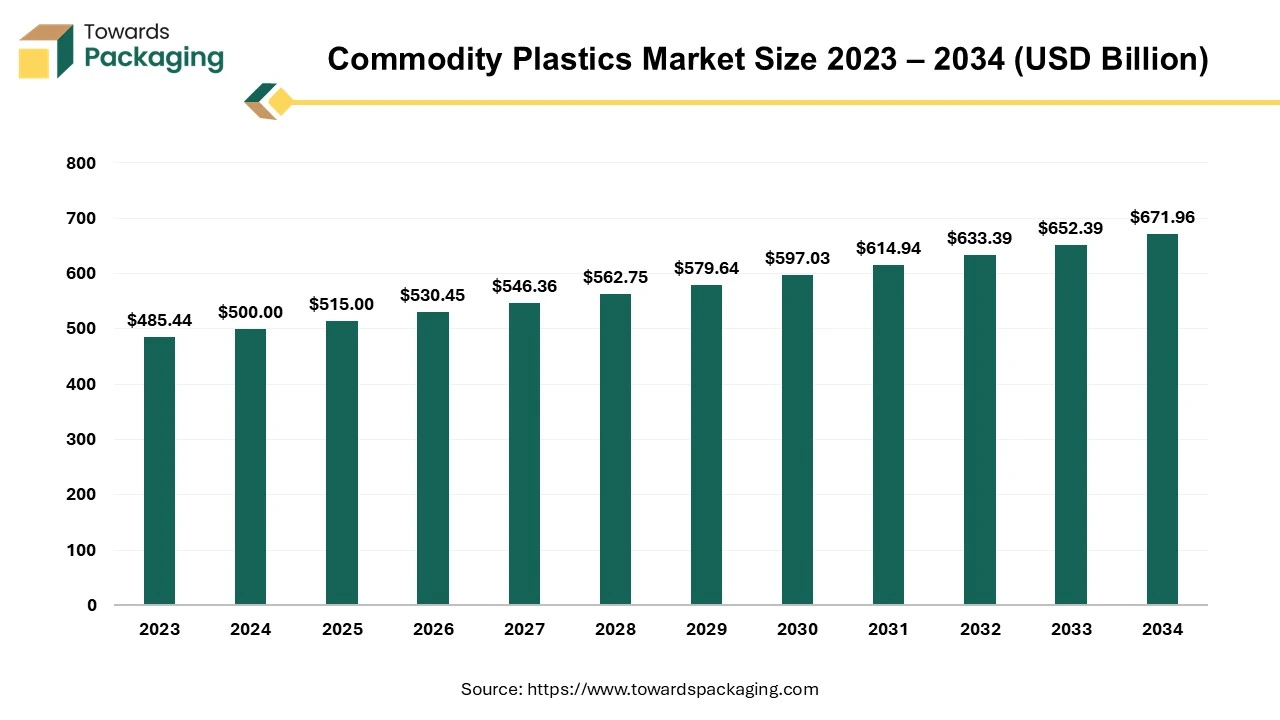
Key Insights into the Global Commodity Plastics Market
- North America dominated the commodity plastics market in 2025.
- Asia Pacific is expected to grow at a significant rate in the market during the forecast period.
- By product, the polyethylene (PE) segment registered its dominance over the global commodity plastics market in 2025.
- By end user, the packaging segment dominated the commodity plastics market in 2025.
Commodity Plastics Market Overview
The Commodity Plastics Market encompasses the production and widespread use of low-cost, high-volume plastics such as polypropylene (PP), polyvinyl chloride (PVC), polystyrene (PS), and polyethylene terephthalate (PET). These plastics are characterized by moderate physical properties and ease of processing, making them ideal for applications that do not require advanced performance. Due to their affordability, versatility, and manufacturability, commodity plastics dominate sectors including packaging, construction, automotive, and consumer goods. According to the American Chemistry Council, commodity plastics account for the majority of global plastic production, underscoring their critical role in everyday products and industrial applications.
Source: American Chemistry Council, Plastics Industry Overview (2023).
Sustainability-Driven Breakthroughs in the Commodity Plastics Market
Recent breakthroughs in the commodity plastics market reflect a global movement toward sustainable and circular plastic usage. Key developments include:
U.S. Plastics Pact Goals (2025):
India’s R-PET Mandate:
- Implementation of mandatory 30% recycled PET content in plastic packaging by 2025.
- Supports minimum content legislation aimed at reducing virgin plastic dependency.
- Encourages industry-wide investment in recycling infrastructure and innovation.
These advancements mark a significant step toward reducing environmental impact and promoting circular economy principles in the global commodity plastics market.
Source: Ellen MacArthur Foundation, U.S. Plastics Pact Roadmap 2025 (2023).
Key Metrics and Overview
| Metric |
Details |
| Market Size in 2025 |
USD 515.00 Billion |
| Projected Market Size in 2035 |
USD 692.12 Billion |
| CAGR (2026 - 2035) |
3% |
| Market Segmentation |
By Product, By End-Use and By Region |
| Top Key Players |
BASF SE, SABIC, Dow Inc., DuPont de Nemours, Inc. |
Key Trends Reshaping the Commodity Plastics Market: Sustainability, Innovation, and Strategic Shifts
The commodity plastics market is undergoing significant transformation, driven by environmental, technological, and economic factors. Key trends shaping the industry include:
- Sustainability and Eco-Friendly Plastics:
There is growing investment in recyclable, biodegradable, and bio-based plastics to address regulatory mandates and consumer demand for sustainable materials. Innovations such as seaweed-based bioplastics are emerging to combat plastic waste and reduce dependency on fossil-based materials.
- Circular Economy Initiatives:
The industry is advancing recycling technologies and designing products with end-of-life recyclability in mind. Companies are prioritizing closed-loop systems to reduce environmental impact and improve material recovery rates.
- Geopolitical and Economic Influences:
Ongoing geopolitical tensions, regulatory shifts, and economic instability, especially in Asia and Europe, are prompting strategic consolidations and operational adjustments among market leaders.
- Petrochemical Investments:
With the global shift toward electric vehicles reducing fuel demand, major oil companies are pivoting toward petrochemical investments. This underscores the growing importance of commodity plastics in offsetting revenue losses from traditional energy sources.
- Infrastructure and Capacity Expansion:
To meet rising global demand, companies are investing in new production facilities and upgrading existing infrastructure, particularly in emerging markets with increasing consumption needs.
Source: International Energy Agency (IEA), The Future of Petrochemicals (2023).
Artificial intelligence (AI) is increasingly revolutionizing the plastics industry by enhancing efficiency, quality, innovation, and sustainability. Key areas where AI is driving impact include:
- Real-Time Process Optimization:
AI systems monitor and analyze production processes in real time, identifying inefficiencies and recommending adjustments. This results in reduced energy consumption, minimized waste, and improved throughput.
- Defect Detection and Quality Control:
Machine learning models use image analysis and sensor data to detect manufacturing defects early. This ensures consistent product quality while reducing material loss and rework costs.
- Predictive Maintenance:
AI algorithms analyze data from machinery sensors to anticipate equipment failures. This enables proactive maintenance scheduling, significantly reducing unplanned downtime and maintenance expenses.
- Supply Chain Optimization:
AI enhances supply chain efficiency by forecasting demand, managing inventory, and streamlining logistics. These improvements lead to cost reductions and more responsive customer service.
- Accelerated Material Innovation:
Through simulation and data modeling, AI expedites the development of new plastic formulations and processing techniques, reducing the R&D timeline and cost.
- Sustainable Manufacturing:
AI supports eco-friendly initiatives by optimizing recycling processes, lowering carbon emissions, and enabling the design of biodegradable plastics.
Source: McKinsey & Company, How Artificial Intelligence is Changing the Chemicals Industry (2023).
E-Commerce Boom Driving Growth in the Commodity Plastics Market
The rapid expansion of the e-commerce sector is a significant driver fueling the demand for commodity plastics, particularly in the packaging industry. As online retail continues to grow, the need for secure, efficient, and cost-effective packaging solutions becomes increasingly critical. Key factors contributing to this trend include:
-
Rising Demand for Protective Packaging:
Products sold online require durable packaging to withstand handling and transit. Commodity plastics like polyethylene (PE) and polypropylene (PP) are widely used in bubble wrap, shrink wrap, and plastic mailers due to their impact resistance and flexibility.
-
Convenience and Utility of Single-Use Plastics:
Despite growing environmental concerns, single-use plastic materials such as air pillows and stretch films remain popular for their lightweight properties, cushioning ability, and low cost, supporting high-volume shipping needs.
-
Customization and Branding Capabilities:
E-commerce brands increasingly use printed packaging to boost customer engagement. Commodity plastics are easily customizable, allowing logos, colors, and branding messages to be applied, enhancing the unboxing experience.
-
Support for Rapid Fulfillment Models:
Same-day and next-day delivery models require packaging that is easy to handle, seal, and transport. Commodity plastics meet these requirements by offering durability and flexibility in high-speed fulfillment environments.
As e-commerce continues to reshape global retail dynamics, commodity plastics are expected to remain integral to packaging strategies across industries.
Source: Packaging Europe, E-commerce Packaging Trends and Sustainability Insights (2023).
Sustainability Challenges and Shifting Consumer Preferences Restrain the Commodity Plastics Market
The growth of the commodity plastics market is being increasingly restrained by evolving consumer preferences and mounting sustainability concerns. These challenges are compelling market players to reevaluate traditional plastic use and production models. Key restraining factors include:
- Rising Environmental Awareness:
Heightened global concern over plastic pollution and its ecological impact has led to a surge in demand for environmentally friendly alternatives. Public pressure and awareness campaigns are influencing purchasing behavior and policy frameworks.
- Regulatory Pressures:
Governments across regions are implementing stringent regulations to curb the use of single-use and non-recyclable plastics. These policies include bans, taxes, and mandated recycled content requirements, directly impacting the demand for commodity plastics.
- Consumer Shift Toward Eco-Friendly Products:
Modern consumers increasingly favor sustainable packaging and products. This shift is driving demand away from traditional commodity plastics toward bio-based and biodegradable alternatives, limiting market expansion.
- Emergence of Alternative Materials:
Materials such as biodegradable plastics, paper-based solutions, and reusable metal packaging are gaining traction. Their adoption across sectors like food & beverage, personal care, and e-commerce reduces reliance on conventional plastics.
These factors collectively pose a challenge to the commodity plastics industry, compelling manufacturers to innovate or pivot to sustainable material solutions to remain competitive.
Source: European Environment Agency (EEA), Plastics, the Environment and Human Health (2023).
Emerging Economies and Innovation Unlock Growth Opportunities in the Commodity Plastics Market
The commodity plastics market is poised for substantial growth, driven by expanding applications, regional industrialization, and innovation across sectors. Key opportunities include:
- Industrial Growth in Emerging Markets:
Rapid urbanization and economic development in regions such as Asia-Pacific, Latin America, and Africa are fueling demand for commodity plastics in packaging, construction, and automotive sectors. These regions are witnessing increased consumption of plastic-based consumer goods and infrastructure components.
- Healthcare and Medical Packaging Expansion:
The global rise in healthcare demand, particularly in light of recent health emergencies, has led to increased consumption of personal protective equipment (PPE), medical devices, and pharmaceutical packaging. Commodity plastics like polypropylene (PP) and polyethylene (PE) are critical for manufacturing syringes, IV bags, and sterile packaging, presenting lucrative market potential.
- Lightweighting in Automotive and Aerospace:
Regulatory mandates to reduce emissions and improve fuel efficiency are accelerating the replacement of metals with lightweight plastics in vehicles and aircraft. Commodity plastics provide a cost-effective solution that supports improved performance, lower fuel consumption, and compliance with emission standards.
These factors collectively represent a promising landscape for sustained investment and innovation in the commodity plastics industry.
Source: International Trade Administration (ITA), Global Plastics Market and Emerging Economy Outlook (2023).
Polyethylene Dominates the Commodity Plastics Market with High Versatility and Demand
In 2024, polyethylene (PE) emerged as the leading segment in the commodity plastics market, driven by its broad utility, cost-effectiveness, and favorable physical properties. Key factors contributing to its dominance include:
- Exceptional Versatility:
Polyethylene can be easily processed into various forms, such as films, sheets, containers, and pipes. This makes it suitable for diverse end-use applications across packaging, construction, and consumer goods.
- Durability and Lightweight Nature:
PE provides excellent strength-to-weight ratio, offering durability and impact resistance without adding bulk. This characteristic is particularly valued in packaging and transportation applications.
- Chemical and Moisture Resistance:
PE exhibits strong resistance to chemicals, moisture, and environmental stress cracking, making it a reliable material for packaging food, pharmaceuticals, and industrial chemicals.
- Growing Adoption of LDPE Films:
Low-density polyethylene (LDPE) is widely used for manufacturing thin, flexible films utilized in plastic bags, shrink wraps, and packaging films. Its transparency also enhances consumer product visibility, boosting its demand in retail and consumer packaging.
Polyethylene’s adaptability and high-performance characteristics ensure its continued dominance in the commodity plastics market, especially as demand for efficient and cost-effective materials grows across sectors.
Source: PlasticsEurope, Market Data & Trends in the European Plastics Industry (2024).
PMMA Segment Set for Fastest Growth in the Commodity Plastics Market (2024–2034)
The Poly Methyl Methacrylate (PMMA) segment is projected to register the fastest growth in the commodity plastics market between 2024 and 2034, driven by its unique combination of optical, physical, and aesthetic properties. Key growth drivers include:
- Exceptional Optical Clarity:
PMMA offers superior light transmission and clarity, often exceeding that of glass, making it the material of choice for applications like display panels, lenses, optical devices, and lighting fixtures.
- High Weather and UV Resistance:
The material retains its transparency and structural integrity even under prolonged exposure to sunlight and harsh environmental conditions. This resilience makes it ideal for outdoor applications such as signage, roofing sheets, and protective barriers.
- Aesthetic Versatility:
PMMA’s smooth surface, high gloss, and excellent coloration capabilities contribute to its widespread use in high-end consumer goods, decorative items, and furniture.
- Demand from Automotive and Electronics Industries:
With the expansion of automotive lighting, infotainment systems, and advanced electronic displays, PMMA is gaining traction due to its lightweight and durable nature compared to traditional glass.
Given its performance attributes and increasing application scope, PMMA is expected to play a key role in the evolving commodity plastics landscape over the next decade.
Packaging Segment Leads the Commodity Plastics Market with Cost-Effective Versatility in 2025
In 2024, the packaging segment held the largest share of the commodity plastics market, driven by the need for affordable, durable, and lightweight materials across various industries. Key factors contributing to the dominance of this segment include:
- Cost-Effectiveness:
Commodity plastics such as polyethylene (PE), polypropylene (PP), polyvinyl chloride (PVC), and polystyrene (PS) are economical to produce, making them an attractive option for high-volume packaging needs.
- Lightweight for Efficient Logistics:
The low weight of these plastics significantly reduces transportation costs and enhances handling efficiency, which is critical in large-scale distribution and e-commerce operations.
- Moldability and Design Flexibility:
These plastics can be easily formed into diverse shapes and sizes, enabling the production of bottles, containers, pouches, wraps, and films to meet varying packaging requirements.
- Strength and Durability:
Despite their lightweight nature, commodity plastics provide reliable mechanical strength and protection, ensuring the safety of goods during transit and storage.
Given their performance, affordability, and adaptability, commodity plastics remain the material of choice for packaging solutions across industries such as food and beverage, personal care, pharmaceuticals, and household products.
Source: Smithers, The Future of Packaging Materials to 2029 (2024).
Medical & Pharmaceutical Segment to Drive Highest CAGR in the Commodity Plastics Market
The medical & pharmaceutical segment is projected to register the highest compound annual growth rate (CAGR) in the commodity plastics market from 2024 to 2034. This growth is driven by rising healthcare demand, increasing production of medical devices, and the cost-efficiency of commodity plastics. Key growth factors include:
- Biocompatibility for Medical Applications:
Commodity plastics such as polypropylene (PP), polyethylene (PE), and polyvinyl chloride (PVC) are biocompatible, allowing safe use in contact with human tissues and fluids. This makes them essential for producing IV bags, catheters, syringes, and tubing.
- Chemical Resistance and Stability:
These plastics exhibit strong resistance to disinfectants, solvents, and pharmaceutical compounds. Their ability to maintain structural and chemical stability under exposure to various substances ensures reliability in clinical and packaging environments.
- Cost-Effective for Single-Use Devices:
Due to their low production cost, commodity plastics are ideal for manufacturing disposable medical devices and pharmaceutical packaging. This is especially critical for maintaining sterility and reducing infection risks.
- Growing Demand for Healthcare Infrastructure:
Expanding healthcare infrastructure, aging populations, and increased awareness of hygiene and safety post-pandemic have amplified the demand for plastic-based medical products globally.
As healthcare systems modernize and the global need for affordable, durable medical materials rises, the medical & pharmaceutical segment will remain a key growth driver in the commodity plastics industry.
Source: World Health Organization (WHO), Global Strategy on Health and Innovation (2024).
North America Leads the Commodity Plastics Market in 2025 with Strong Industrial and E-Commerce Momentum
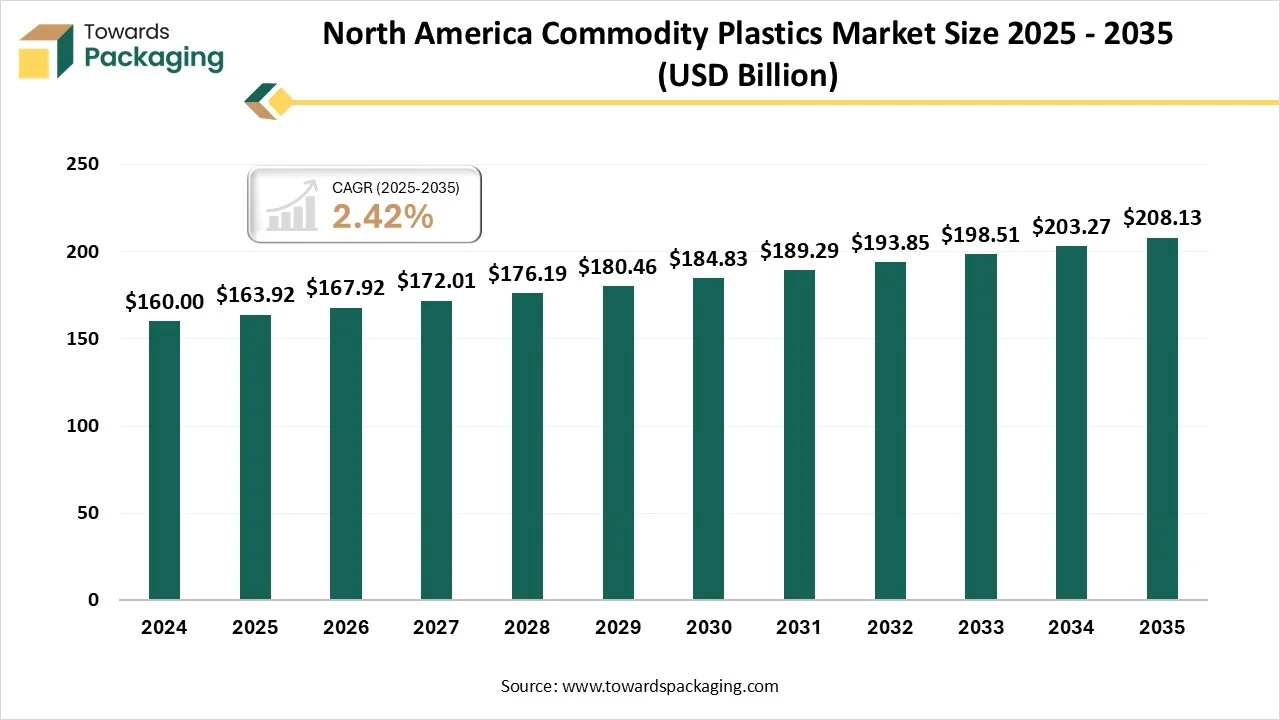
In 2024, North America emerged as a dominant region in the commodity plastics market, driven by a combination of industrial strength, technological advancement, and rapid e-commerce expansion. Key factors contributing to this leadership position include:
- Integrated and Resilient Supply Chains:
North America's well-developed industrial base supports local production of commodity plastics, reducing dependency on imports. This enhances operational efficiency and lowers production and transportation costs.
- Strong Manufacturing Ecosystem:
The U.S. boasts a large and diversified manufacturing sector that spans packaging, automotive, construction, and consumer goods key industries that rely heavily on commodity plastics like PE, PP, and PVC.
- Booming E-Commerce Sector:
E-commerce giants such as Amazon and Walmart continue to drive demand for plastic-based packaging solutions, including shrink wraps, mailers, and protective films, bolstering overall consumption of commodity plastics.
- Automotive Innovation and Growth:
Companies like Tesla are contributing to the demand for lightweight plastic components in electric vehicles, further stimulating the commodity plastics market across automotive applications.
The combination of strong industrial infrastructure, innovation leadership, and increasing end-use demand has solidified North America's role as a key growth engine for the global commodity plastics market.
Source: U.S. Department of Commerce, Manufacturing and Plastics Industry Trends Report (2024).
Asia Pacific to Witness Fastest Growth in the Commodity Plastics Market Driven by Automotive and EV Surge
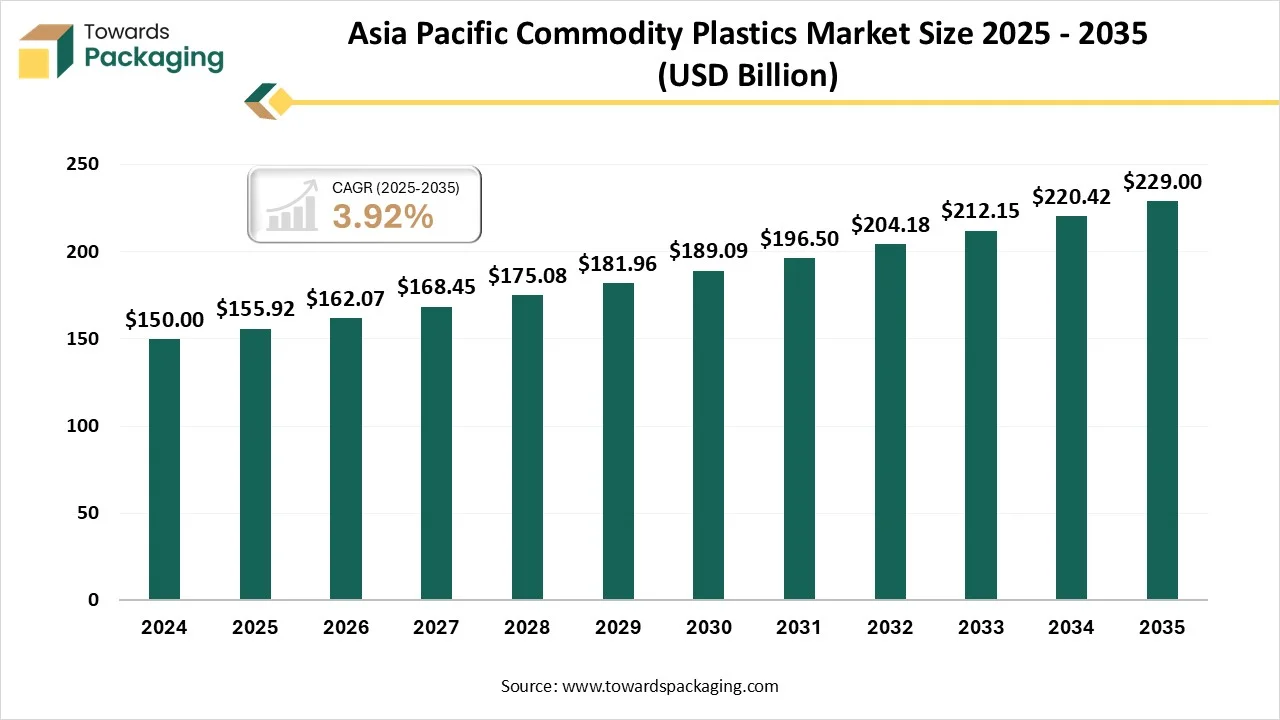
The Asia Pacific region is projected to experience the highest growth rate in the global commodity plastics market during the forecast period (2024–2034), fueled by its dominance in vehicle manufacturing and the rapid expansion of the electric vehicle (EV) sector. Key growth drivers include:
- Automotive Manufacturing Powerhouse:
Countries such as China, India, Japan, and South Korea are leading producers of automobiles, creating robust demand for commodity plastics used in dashboards, interior trims, bumpers, and other vehicle components.
- EV Market Expansion:
The accelerating adoption of electric vehicles across Asia Pacific is driving increased consumption of lightweight and durable plastic materials. Commodity plastics like polypropylene (PP) and polyethylene (PE) are essential for reducing vehicle weight, enhancing energy efficiency, and improving safety.
- Cost-Effective Manufacturing and Supply Chains:
The region benefits from lower production costs and a strong base of raw material availability and skilled labor, making it an attractive hub for commodity plastics production and consumption.
- Government Support and Infrastructure Development:
Supportive policies for clean energy vehicles, infrastructure investments, and a growing middle-class population further reinforce regional demand for plastics across automotive, consumer, and packaging sectors.
These factors collectively position Asia Pacific as a key driver of future growth in the global commodity plastics market.
Source: International Energy Agency (IEA), EV and Automotive Industry Outlook – Asia Pacific 2024.
Rapid Industrialization Fuels Commodity Plastics Market Growth in the Middle East and Africa
The Middle East and Africa (MEA) region is projected to witness notable growth in the commodity plastics market during the forecast period, driven by industrial expansion, resource availability, and strategic economic initiatives. Key factors influencing regional growth include:
- Industrialization and Urban Development:
Rapid industrialization, urbanization, and construction activities across MEA are increasing the demand for commodity plastics in packaging, infrastructure, and medical applications.
- Abundant Petrochemical Resources:
The region’s rich reserves of oil and natural gas ensure a stable, cost-effective supply of feedstock for petrochemical production, particularly polyethylene (PE) and polypropylene (PP).
- Strategic Infrastructure Projects:
Major developments like the PDH-PP project in Al Jubail, Saudi Arabia, scheduled to launch in Q1 2025, will add 800,000 tons/year of PP capacity, significantly strengthening regional supply.
- Growth in FMCG and Automotive Sectors:
Saudi Arabia is leading regional demand, especially in the fast-moving consumer goods (FMCG) sector, supported by rising disposable incomes and growing consumption of packaged goods and vehicles.
- Government Support and Policy Initiatives:
Programs such as Vision 2030 and the National Industrial Development and Logistics Program (NIDLP) are actively promoting industrial growth, plastic manufacturing, and downstream diversification.
- Global Trade Collaborations:
Strengthened ties with European, Asian, and African markets are expanding export opportunities and encouraging technology transfer and investment in plastics production.
Together, these factors make MEA a fast-emerging hub for commodity plastics, with Saudi Arabia at the forefront of regional expansion.
Source: Gulf Petrochemicals and Chemicals Association (GPCA), Annual Industry Report 2024.
Competitive Landscape
Tier 1 Companies
| Rank |
Company |
Headquarters |
Country |
Why Relevant |
Key Packaging Products/Services |
| 1 |
Dow |
Midland, Michigan |
USA |
Global leader in polyethylene resins and packaging materials |
PE resins, packaging polymers |
| 2 |
SABIC |
Riyadh |
Saudi Arabia |
Leading supplier of PP, PE, and circular polymers for packaging |
PE, PP, recycled polymers |
| 3 |
LyondellBasell |
Houston, Texas |
USA |
One of the world's largest producers of polyolefins for packaging |
PP, PE, circular polymers |
| 4 |
ExxonMobil |
Spring, Texas |
USA |
Major producer of polyethylene and polypropylene packaging resins |
Polyolefins, performance polymers |
| 5 |
INEOS |
London |
United Kingdom |
Global manufacturer of commodity polymers used in flexible and rigid packaging |
PE, PP, PS |
Tier 2 Companies
| Rank |
Company |
Headquarters |
Country |
Why Relevant |
Key Packaging Products/Services |
| 1 |
Indorama Ventures |
Bangkok |
Thailand |
Global leader in PET resins and recycled PET for beverage packaging |
PET and rPET resins |
| 2 |
Braskem |
São Paulo |
Brazil |
Major producer of PE, PP, and bio-based polyethylene |
Polyolefins and bio-PE |
| 3 |
Borealis |
Vienna |
Austria |
Strong supplier of polyolefin packaging materials and circular polymers |
PE and PP packaging resins |
| 4 |
Chevron Phillips Chemical |
The Woodlands, Texas |
USA |
Major HDPE and PE resin producer for packaging |
HDPE and PE resins |
| 5 |
Formosa Plastics |
Kaohsiung |
Taiwan |
Global supplier of PVC, PE, and PP resins |
Commodity plastic resins |
Tier 3 Companies
| Rank |
Company |
Headquarters |
Country |
Why Relevant |
Key Packaging Products/Services |
| 1 |
Reliance Industries |
Mumbai, Maharashtra |
India |
Major producer of polyethylene and polypropylene resins for packaging markets |
PE and PP resins |
| 2 |
Alpek |
San Pedro Garza García, Nuevo León |
Mexico |
Significant producer of PET resins for food and beverage packaging |
PET resins |
| 3 |
LOTTE Chemical |
Seoul |
South Korea |
Supplies commodity plastics for flexible and rigid packaging |
PE, PP, PET |
| 4 |
SCG Chemicals |
Bangkok |
Thailand |
Leading Southeast Asian producer of packaging polymers |
PE, PP, packaging resins |
| 5 |
Borouge |
Abu Dhabi |
United Arab Emirates |
Produces advanced polyethylene and polypropylene grades for packaging |
PE and PP packaging materials |
Key Players in the Global Commodity Plastics Market
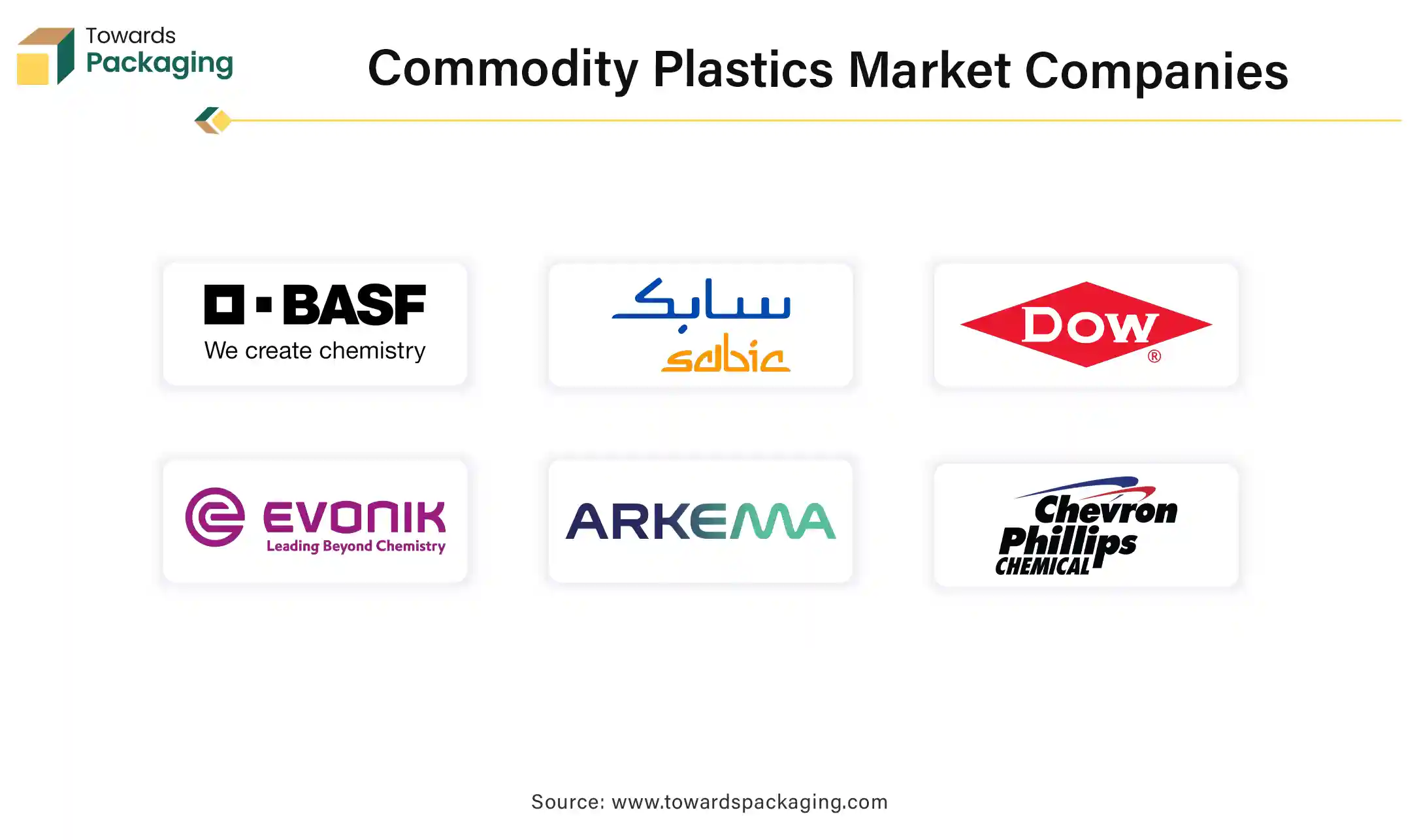
- BASF SE
- SABIC
- Dow Inc.
- DuPont de Nemours, Inc.
- Evonik Group
- Sumitomo Chemical Co., Ltd.
- Arkema
- Eastman Chemical Company
- Chevron Phillips Chemical Co., LLC
- Exxon Mobil Corporation
Commodity Plastics Market Segmentation by Product Type
- Polyethylene (PE)
- Polypropylene (PP)
- Polyvinyl Chloride (PVC)
- Polyethylene Terephthalate (PET)
- Polystyrene (PS)
- Poly Methyl Methacrylate (PMMA)
Commodity Plastics Market Segmentation by End-Use Industry
- Packaging
- Medical & Pharmaceutical
- Building & Construction
- Electrical & Electronics
- Automotive & Transportation
- Textile
- Consumer Durable Goods
- Others
Commodity Plastics Market Segmentation by Region
North America
Europe
- Germany
- United Kingdom (UK)
- France
- Italy
- Spain
- Sweden
- Denmark
- Norway
Asia Pacific
- China
- Japan
- India
- South Korea
- Thailand
Middle East and Africa (MEA)
- South Africa
- United Arab Emirates (UAE)
- Saudi Arabia
- Kuwait












 Table of Content
 sales@towardspackaging.com
 +1 804-441-9344
 Download Sample
 Schedule a Meeting