


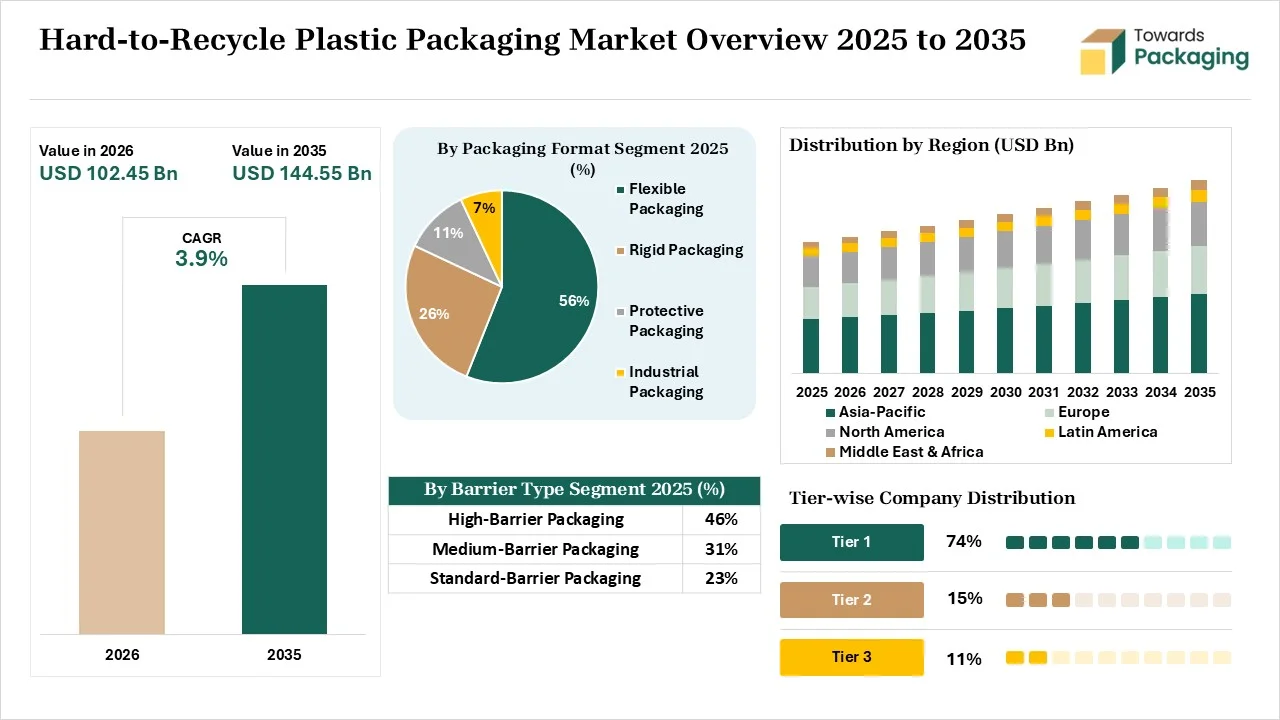
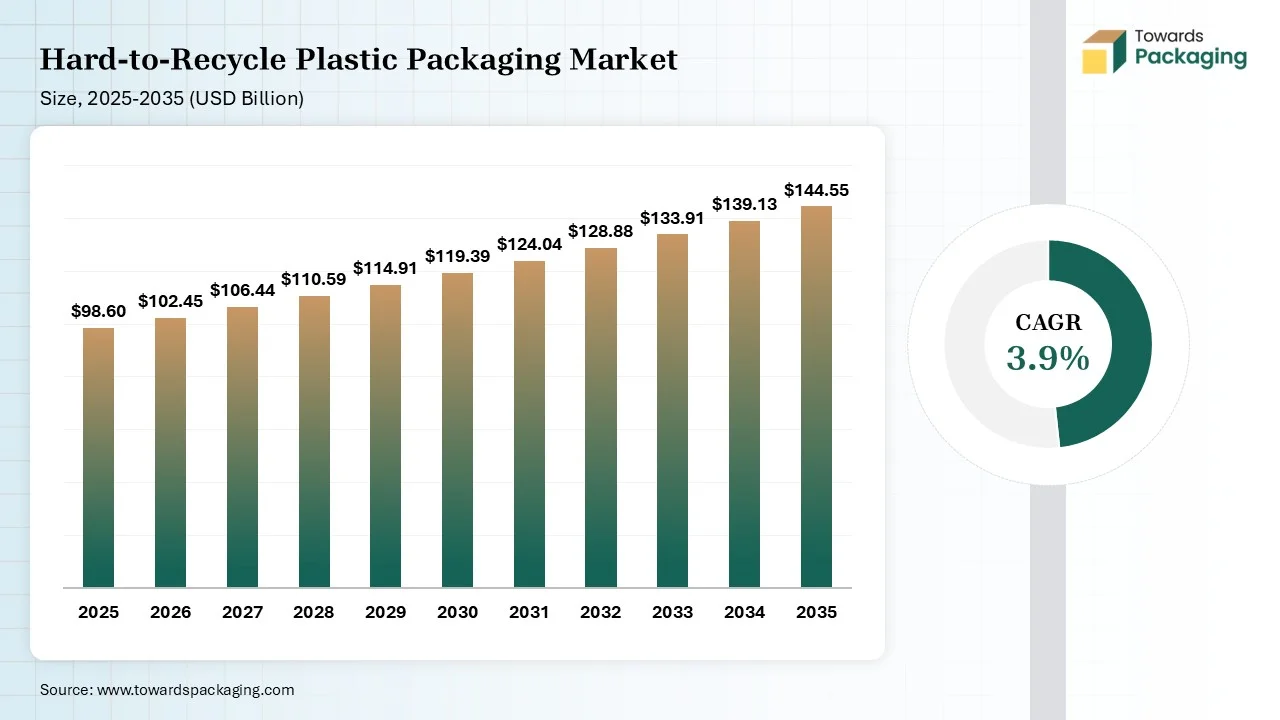
According to Vidyesh Swar, the hard-to-recycle plastic packaging market is forecasted to expand from USD 102.45 billion in 2026 to USD 144.55 billion by 2035, growing at a CAGR of 3.9% from 2026 to 2035. Factors like expanding chemical recycling, advanced R&D, single-use penalties, logistics growth, brand positioning, requirements for high-purity polymer, burgeoning AI-powered sorting, surging mono-material redesign, EPR Regulatory frameworks, and the demand for secondary polymer drive the market growth. The hard-to-recycle plastic packaging offers durability, barrier protection, and product safety to end-user industries. In personal care, it offers contamination defense and formula integrity. In food packaging, it offers waste reduction and extended shelf life. In industrial goods, it offers asset protection and extreme durability.
Hard-to-recycle plastic packaging is packaging that is difficult to process in standard recycling infrastructure. It has specialty chemical makeup and contains mixed materials. It offers benefits like damage reduction, space optimization, extended freshness, and lightweighting. The common types are flexible films, contact lens blisters, multi-layered plastics, and pigmented plastics. They fail in standard recycling systems due to the presence of chemical additives, multi-layer films, and incompatible resins. The high cost and sorting machine failures are hurdles in standard recycling.
The hurdles in standard sorting of plastics and the increased jamming of plastics in mechanical shredders & others equipment increased the recycling issues of hard-to-recycle plastic packaging in standard streams. The thermal mismatch issues in multi-polymer combinations increased demand for advanced recycling. The standard recycling incompatibility increases the utilization of pyrolysis. Advanced technologies like solvent-based delamination and full depolymerization are used for breaking down multi-layered plastics. Recently, plant-based integration and enzymatic breakthroughs have happened in the industry that support sustainability.
Materials like multi-layer plastic films, PVC, black plastic packaging, thermoset plastic packaging, multi-material plastic packaging, polystyrene, and metallized plastic films are included. Products like beverage packaging, personal care packaging, pet food packaging, e-commerce packaging, and food packaging are included. The end users, such as food & beverage manufacturers, personal care companies, industrial manufacturers, chemical companies, food & beverage manufacturers, retail, pharmaceutical companies, chemical companies, and e-commerce, are included. The geographies like North America, Asia Pacific, MEA, Europe, and North America are covered in the report.
The need for degradation prevention in medicines and the zero contamination requirements in the pharmaceutical industry increase the use of hard-to-recycle plastic packaging. The tamper-evident pharmaceutical packaging designs and the availability of multi-material blister packs help with expansion. The focus on preventing drug interaction and long storage durations of medicines increases the use of hard-to-recycle plastic packaging. Accidental ingestion prevention in medicines requires durable packaging. The increasing pharmaceutical packaging is a driver for market growth.
Buyers focus on protecting marine life, and interest in materials that are reusable increases demand for sustainable packaging. The harmful chemical migration in hard-to-recycle plastics and the intention for natural resource preservation increase use of sustainable packaging. The shopper eco value-driven choices and consumers' focus on brand carbon neutrality increase the use of sustainable packaging. The mindful purchasing habits of consumers and the compostable materials help with expansion. Consumer preference for sustainable packaging is a restraint for market growth.
The need to handle multi-material plastics and the demand for virgin-quality output increase adoption of chemical recycling. Brands trying to meet recycled-content mandates and environmental concerns increase the use of chemical recycling technologies. The ability to tolerate impurities and high-purity grade production in chemical recycling helps with expansion. Chemical recycling offers brand goal alignment and food-grade certification. Innovations like solvent-based dissolution, hydrothermal treatment, and enzymatic depolymerization create virgin-quality materials. The development of chemical recycling technologies creates opportunities for market growth.
The collaboration between packaging manufacturers, brands, and governments is happening to develop new processing methods and enhance collection infrastructure.
In July 2026, LyondellBasell collaborated with many key industrial players like Tagleef Industries, Mondelez International, and Amcor to launch flexible packaging for chocolate bars developed by Marabou. The packaging is developed using CirculenRevive polymers of LYB, and the collaboration provides specialized circular solutions.
The packaging is made using specialty resins, polyethylene, polystyrene, and other polymers. Polyethylene is available in two forms, including LDPE & HDPE, and is used in film wrappers and bags. Polypropylene is used in bottle caps and is a tough polymer. PET is widely used in developing beverage bottles. PS is available in lightweight foam, and aluminum foil combines with polymers to create an excellent barrier. The specialty resin is used to join incompatible plastics.
The high-performance laminate structures are widely used due to their product safety, physical durability, and brand appeal. Packaging applications like tea packaging, heavy snacks packaging, ready meals, and chemical goods packaging use high-performance laminate structures. The multilayer film materials trends are biodegradable layer integration, active packaging growth, and the development of computational designs.
The key metallization technologies are sputtering, vacuum thermal evaporation, and E-Beam evaporation. The specialized technologies are aluminum oxide coating and window metallization. The metallization applications are the development of confectionery bags, blister pack lidding manufacturing, decorative labels creation, beverage liners manufacturing, and the development of flexible cosmetics tubes.
The resin price depends on factors like crude oil price, energy costs, regional shortages, inventory levels, monomer pricing, and energy costs. The fluctuating cost of polymers and multilayer laminates increases the resin prices. Factors like geopolitical disruptions, regulatory compliance, and feedstock volatility decide the price of resin in the future.
The 40-50% cost is for raw materials, 10-15% is required for energy use, 8-12% is required for labor, 10-15% is required for the conversion process, 5-10% is required for printing applications, and 5-10% is required for tasks like warehousing & logistics.
The breakdown of average manufacturing price hard-to-recycle plastic packaging at USD 1520/Metric Ton is given as specialized feedstock blends and raw materials takes up to $836-$988 per metric tons, processing operations take up to $304 to $380 per metric tons, sorting & compliance takes up to $152 to $228, and final packaging specialized handling overheads, and tools take up to $76.
The breakdown of average selling price with $1920 is sorting procedures & feedstocks take up to $672, utilities & processing technologies take up to $480, facility & labor take up to $288, EPR & logistics take up to $288, and net margin is $192.
North America price is in the moderate-to-high range due to the high collection infrastructure. European pricing is highest due to the regulations and high energy expenses. Asia Pacific prices are low due to the low sorting cost. The pricing in diverse regions depends on labor costs and infrastructure maturity.
Raw materials like LDPE, PS, multi-layer plastics, additives, PVC, and dyes are required.
The stage includes methods like pyrolysis, gasification, depolymerization, and delamination.
Design focuses on multi-layer bonding, small formats, and dark colors. The prototyping methods are small-batch molding, digital simulation, and modular builds.
The multi-layer plastic films segment dominated the market with a 34% share in 2025. The focus on keeping medical supplies fresh and the need to save shipping costs increase the use of multi-layer plastic films. Expanding automotive applications and the development of resealable snack packs increase the use of multi-layer plastic films. The lightweight strength, higher product protection, and low weight of multi-layer plastic films drive the segment growth.
The metallized plastic films segment held a 7% market share in 2025 and is expected to grow at the fastest CAGR of 4.9% during the forecast period. Drug shelf life preservation and the need to cut carbon emissions increase the use of metallized plastic films. The integration of recyclable barrier designs and the preference for resource-light packaging increases the use of metallized plastic films. The low fuel emission and exceptional barrier protection in metallized plastic films support the segment growth.
The flexible packaging segment dominated the market with a 56% share in 2025 and is expected to grow at the fastest CAGR of 4.3% during the forecast period. The development of packaging that uses less raw material and a strong focus on cutting food waste increases the use of flexible packaging. The massive beverage industrial base and the avoidance of EOL recycling penalties increase the use of flexible packaging. The trending 15-minute delivery platforms and the interest in easy-tear notches increase the use of flexible packaging. Resource efficiency drives the segment growth.
The rigid packaging segment held a 26% market share in 2025. The stringent recycling regulations and the use of rigid containers for the transportation of chemically active components increase adoption of rigid packaging. The shift away from metal packaging and the high pharmaceutical production volumes increase the use of rigid packaging. The trend of single-serve drinks supports the segment growth.
According to my research, the food packaging segment dominated the market with a 42% share in 2025. The prevention of food rotting and the expansion of snack bags increase the use of hard-to-recycle plastic packaging. The avoidance of microscopic residual impurities in food and the reliance on on-the-go snacks increase the use of hard-to-recycle plastic packaging. The high plastic packaging consumption in the food industry supports the segment growth.
The pharmaceutical packaging segment held a 12% market share in 2025 and is expected to grow at the fastest CAGR of 4.8% during the forecast period. The high barrier needs in medications and the expansion of blister packs increase the use of hard-to-recycle plastic packaging. The rigorous safety testing in medical packaging and the chronic disease treatments increase the use of hard-to-recycle plastic packaging. The contamination concerns in recycling streams support the segment growth.
The high-barrier packaging segment dominated the market with a 46% share in 2025 and is expected to grow at the fastest CAGR of 4.7% during the forecast period. The shielding demand in food products from unwanted aromas & other factors and the beverage freshness maintenance demand increase the use of high-barrier packaging. Pharmaceutical spoilage due to oxygen and the higher safety standards increase the use of high-barrier packaging. The multi-layer complexity drives the segment growth.
The medium-barrier packaging segment held a 31% market share in 2025. The mono-material utilization and the brands' focus on aligning with packaging regulations increase the use of medium-barrier packaging. The growth in sensitive goods and local packaging collection rules increases the use of medium-barrier packaging. The sufficient protection and the higher processing efficiency in medium-barrier packaging support the segment growth.
The food & beverage manufacturers segment dominated the market with a 39% share in 2025. The need for moisture barriers in processed meals and exploding juice products increases the use of hard-to-recycle plastic packaging. The rigid purity standards and the surging portion-based packaging increase the use of hard-to-recycle plastic packaging. The high generation of complex waste due to daily consumption of food drives the segment growth.
The pharmaceutical companies segment held a 18% market share in 2025 and is expected to grow at the fastest CAGR of 4.9% during the forecast period. The rigorous drug validation and chemical stability demands in pharmaceutical packaging increase the use of hard-to-recycle plastic packaging. The drug efficacy maintenance and biosimilars drugs consumption help with expansion. The product integrity, patient protection, and the stringent compliance of pharmaceutical companies support the segment growth.
According to my research, the direct sales segment dominated the market with a 44% share in 2025. The brands focus on precise packaging specifications, and the reduction in indirect sales channels increases the use of direct sales. The prototyping requirements and the growing technical collaborations increase the use of direct sales. The predictable delivery schedules and the high commercial orders drive the segment growth.
The e-commerce segment held a 5% market share in 2025 and is expected to grow at the fastest CAGR of 5.2% during the forecast period. The surging use of flexible plastic mailers and minimal storage space utilization increases the use of e-commerce. The high return volumes and transit durability of e-commerce help with the expansion. The interest in online ordering and the frequent handling of packages in e-commerce supports the segment growth.
Asia Pacific held the 41% share in the hard-to-recycle plastic packaging market in 2025 and is expected to grow at the fastest CAGR of 4.8% during the forecast period. The growing everyday use of packaged items and the dependence on affordable multi-layer films increase the use of hard-to-recycle plastic packaging. The strong regional production infrastructure and the high investment in chemical recycling plants increase the use of hard-to-recycle plastic packaging. The growing use in the personal care industry and the presence of organized e-retail infrastructure drive the market growth.
China
China held the dominant position in the market in 2025. The growing export manufacturing industry and the vast presence of informal plastic processing networks increase the use of hard-to-recycle plastic packaging. The advanced mechanical recycling ecosystem and the transportation of international goods increase the use of hard-to-recycle plastic packaging. The concentration of petrochemical hubs and the highest plastic production supports the market growth.
India
India is expected to grow at the fastest CAGR during the forecast period. The government mandates for complex packaging waste processing, and the high volume of single-use packaging waste increases production of hard-to-recycle plastic packaging. The use of automated sorting machinery and the integration of digital platforms helps with the expansion. The rise in small-format plastic packaging boosts the overall market growth.
According to my research, Europe held a 25% market share in 2025. The strong recycling mandates and the stringent bans on waste exports increase the production of hard-to-recycle plastic packaging. The stricter plastic collection goals and the transition to chemical recycling services increase the use of hard-to-recycle plastic packaging. The increased processing of low-grade plastic waste and the rise in manufacturing of flexible bags drive the market growth.
Germany
Germany held the largest revenue share in the hard-to-recycle plastic packaging market in 2025. The stricter laws for plastic recovery and the integration of digital watermarks increase the production of hard-to-recycle plastic packaging. The processing of multi-layer polymers and the major automotive industry increase the use of hard-to-recycle plastic packaging. The high consumption of flexible plastic waste supports the market growth.
Poland
Poland is expected to experience the fastest growth in the market during the forecast period. The center for electronics packaging production and the huge volume of mixed polymer packaging increase the manufacturing of hard-to-recycle packaging. The brands' redesign of plastic packaging and the growth in depolymerization plants support the market growth.
North America held a 23% market share in 2025. The laws for taking responsibility for EOL packaging and the mandates for recycled plastics in the manufacturing of new packaging increase the use of hard-to-recycle plastics. The petrochemical base in Louisiana and AI sorting infrastructure increase the use of hard-to-recycle plastic packaging. The fluctuating virgin resin and intense public pressure increase the production of hard-to-recycle plastic packaging, driving market growth.
United States
The United States dominated the hard-to-recycle plastic packaging market in 2025. Consumer interest in single-serve packaging and the low prices of virgin plastics increase the production of hard-to-recycle plastic packaging. The heavy e-commerce industry and the abundance of post-industrial scrap increase the production of hard-to-recycle plastic packaging. The heavy logistics operations support the market growth.
Canada
Canada is growing in the market. The presence of AI-based optical sorting and the incorporation of recycled content increases the production of hard-to-recycle plastic packaging. The changing operational waste obligations and the growing flexible plastic recovery increase the use of hard-to-recycle plastic packaging. The focus on optimizing processing lines and the investments in molecular conversion boost the market growth.
Latin America held a 6% market share in 2025. The circular roadmaps for recycled content integration and FMCG pledges for PCR integration increase the use of hard-to-recycle plastic packaging. The boost in online parcel deliveries and the increased use of flexible materials increase the production of hard-to-recycle plastic packaging. The heavy investment in chemical recycling drives the market growth.
Brazil
Brazil held the largest revenue share in the hard-to-recycle plastic packaging market in 2025. The use of multi-layer pouches in F&B and the presence of informal waste pickers increase the use of hard-to-recycle plastic packaging. The advanced sorting infrastructure in Sao Paulo and the consumption of flexible food films support market growth.
Chile
Chile is expected to grow at the fastest CAGR in the market during the forecast period. The mandates for the collection of industrial packaging waste and the focus on reusability of plastic packaging increase the use of hard-to-recycle plastic packaging. The use of locally recycled content in the packaging helps with the expansion. The creation of durable formats using multi-material films boosts the market growth.
The Middle East & Africa held a 5% market share in 2025. The increased virgin plastic price due to geopolitical tensions and the growing recycling infrastructure investment increases the production of hard-to-recycle plastic packaging. The growth in retail delivery models and the spending on pre-packed meats increases the use of hard-to-recycle plastic packaging. The use of protective mailing films drives the market growth.
Saudi Arabia
According to my research, Saudi Arabia dominated the market with the highest revenue share in 2025. The raw polymer feedstock availability and the robust waste diversion targets increase the production of hard-to-recycle plastic packaging. The food packaging growth and the rise in local packaging conversion increase the production of hard-to-recycle packaging. The investment in waste recovery plants supports the market growth.
UAE
UAE is expected to grow at the fastest rate in the market during the forecast period. The bans on single-use cutlery and focus on managing the entire lifecycle of the product increase the production of hard-to-recycle plastic packaging. The investment in smart sorting and the key retail brands' presence supports the overall market growth.
The industry includes upstream polymer producers, downstream processing players, midstream converters, technology providers, and flexible packaging manufacturers. The competitive intensity is moderate in the industry. The competition is high among material suppliers and chemical recycling providers. Regional manufacturing capabilities depend on EPR mandates and advanced recycling infrastructure. The strong chemical recycling ecosystem is present across North America, Europe, and Northeast Asia. Companies like Berry Global Inc. and Amcor plc are major manufacturers.
| Sr. No. | Company | Product Range | Production Facilities | Sustainability Initiatives |
| 1. | TerraCycle | Flexible Plastic Packaging, Plastic Coffee Capsules, Multi-Layer Chip Bags, Plastic Shipping Envelopes, Polyethylene Foam, Flexible Refill Pouches, Laminated Juice Pouches |
United States, Brazil, Australia, South Korea, Hungary, Canada, Japan, China |
Material Upcycling, Hard-to-Recycle Processing |
| 2. | Amcor plc, | Forming Films, AmLite HeatFlex High Shield Pharma Laminates, Vacuum Skin Films |
Asia Pacific, Europe, Latin America, MEA, North America |
Recyclability Designs, Recycled Content Integration |
Factors like FMCG collaborations and innovations in chemical recycling decide the global positioning of manufacturers. The multinational companies like Berry Global and Amcor are major producers of hard-to-recycle plastic packaging. Companies like Loop Industries provide innovative chemical recycling. Companies like SUEZ offer integrated waste solutions. The major packaging redesigners are DS Smith and Amcor. The specialized recyclers are Deluxe Recycling, TerraCycle, and KW Plastics.
| Company Overview | The company manufactures flexible packaging solutions like institutional liners, stretch films, & others and focuses on advanced recycling innovations. |
| Manufacturing Footprint | Australia, Asia, South America, Africa, North America, and Europe |
| Product Portfolio | Plastic Bottles, Plastic Jars, Treat Canisters, Plastic Foodservice Cups, Plastic Specialty Nozzles, Plastic Caps |
| SWOT Analysis |
Strength Expertise in Raw Materials Weakness High Concentration of Polymers Opportunity Premium Pricing Threats Government Bans |
| Company Overview | The company incorporates PCR content into the flexible packaging lines and redevelops multi-material structures. |
| Manufacturing Footprint | Africa, Europe, and North America |
| Product Portfolio | Mono-Material Pouches, High-Barrier Films, Special Bags, Resealable Bags, PCR Solutions |
| SWOT Analysis |
Strength Active Innovation Range Weakness Recyclability Trade-Off Opportunity PCR Integration Threats Cost Inflation |
| Company Overview | The company specializes in flexible packaging materials and offers recycling technologies like Super-Clean De-inking, ReLAM 250, & single-pellet solutions. |
| Manufacturing Footprint | India, Egypt, Poland, Russia, Nigeria, UAE, Mexico, United States, Hungary |
| Product Portfolio | Flexible Laminates, Specialty Bags, Pre-Formed Pouches, Containers |
| SWOT Analysis |
Strength Global Presence Weakness Dependence on Collection Logistics Opportunity Expansion of Grassroots Threats Regulatory Shifts |
According to my research, the hard-to-recycle plastic packaging market is creating a negative impact due to habitat destruction, landfill accumulation, sorting machinery accumulation, and incineration pollution. Despite its negative impact, industries like pharmaceuticals, personal care, and F&B still uses its due to properties like shelf life extension and lightweight transportation. The focus on industries on hygiene, lightweight efficiency, and extending shelf life increases the use of hard-to-recycle plastic packaging. The food & beverage industry is the major consumer of hard-to-recycle plastic packaging due to delivery trends, stricter hygiene rules, and a focus on avoiding food residue contamination. The widely used formats are snack wrappers, cheese bags, cling film, takeaway clamshell containers, and flexible pouches across the F&B industry. Asia Pacific held the largest share due to the fragmented collection infrastructure and packaging affordability. Industrial leaders like TerraCycle, Indorama Ventures, ALPLA Group, Suez, Berry Global, KW Plastics, and Plastic Energy are major manufacturers and recycling solutions providers.
By Material Type
By Packaging Format
By Product Type
By Barrier Type
By End User
By Distribution Channel
By Region








Principal Research Analyst
Vidyesh Swar is a Senior Research Analyst at Towards Packaging, bringing over 4 years of dedicated expertise in market intelligence and strategic analysis across the dynamic world of packaging technologies and solutions.
Learn more about Vidyesh Swar

Reviewed By
Aditi Shivarkar, with 14+ years in packaging market research, specializes in food, beverage, and eco-friendly packaging. She ensures accurate, actionable insights, driving Towards Packaging Analytics & Consulting 's excellence in industry trends and sustainability.
Learn more about Aditi Shivarkar

Hard-to-Recycle Plastic Packaging Market
 Table of Content

 Download Sample
 Schedule a Meeting