


The middle east compostable packaging market is forecasted to expand from USD 548.2 million in 2026 to USD 857.76 million by 2035, growing at a CAGR of 5.1% from 2026 to 2035. The rising demand for ecological consciousness and strict ban on plastic usage has fuelled the development of market.
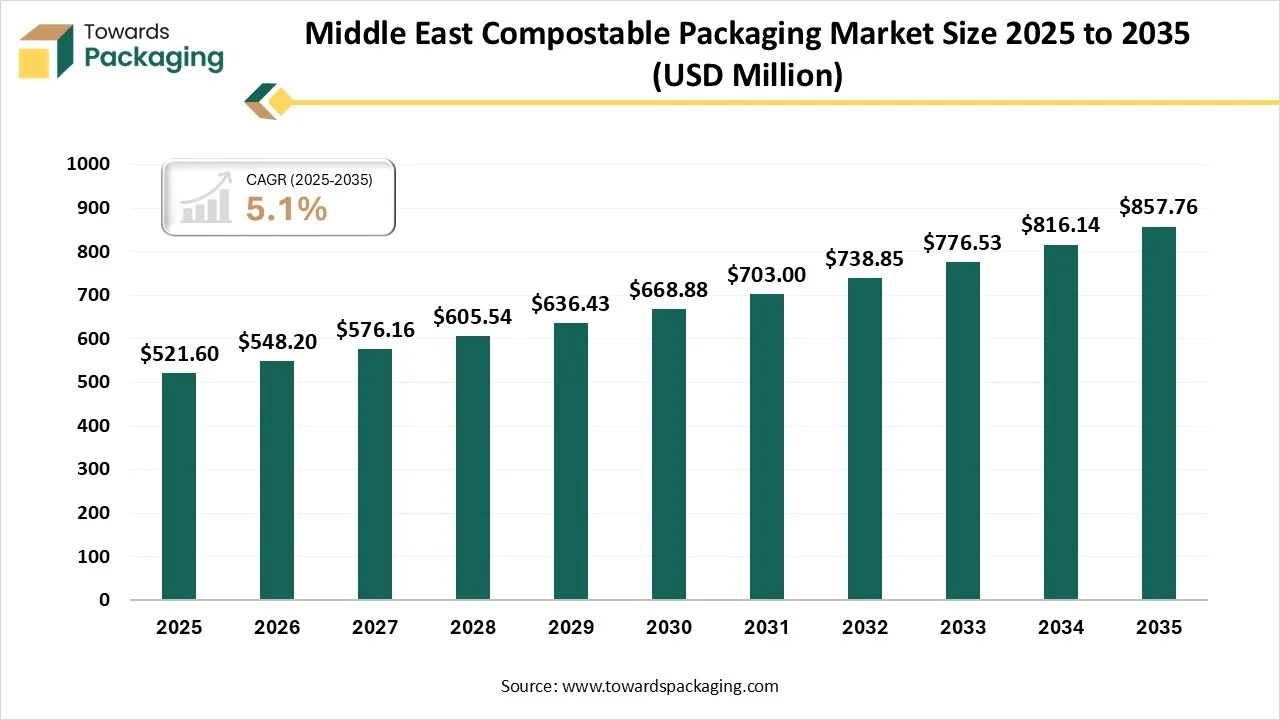
Middle East compostable packaging is packaging made up of plant-based materials, and these are eco-friendly options. These packages are majorly made up of cellulose, polylactic acid (PLA) which are planned to break down to organic components such as biomass and water. Ban on one-time use plastic packaging has raised innovation in this sector to raise its composability. These are non-toxic substitute for e-commerce, retail, and food service sector.
Technological transformation in the middle east compostable packaging market plays a significant role due to strict government guidelines. This innovation comprise agricultural residue and sea-weed based films for generating compostable packaging. Rapid shift towards smart packaging to track the freshness of the products while transporting and storage. Innovation of rapid composting machines and smart solutions for waste management has fuelled the growth of the market. Incorporation of advanced technology such as artificial intelligence help in production of error free packaging that enhance reliability of the market.
The major raw materials utilized in this market are bamboo pulp, bioplastics, recycled paper fiber, and sugarcane bagasse. These are majorly utilized for the manufacturing of lids, tableware, plastic plates, and beverages cups.
The component manufacturing in this market comprises polylactic acid, fiber-based substitute, and polyhydroxyalkanoates. Starch blend is widely utilized in the manufacturing of liners and compostable bags.
This segment ensures high quality transport of packages without causing any damage to it. It supports in expansion of specialized biodegradable and compostable packaging.
The PLA (polylactic acid) segment dominated the market with highest share of 57% in 2025 due to its alignment with government guidelines and versatility. Strict sustainability guidelines have pushed the adoption of such packaging which are highly eco-friendly in nature. These are highly versatile which allow the huge customization of packaging which has promoted this material usage. This material is highly clear and strong which make it a suitable option for packaging in the food & beverages industry. These are cost-effective and high-performance material available in this market which boosted the acceptance of such packaging. These are easily compostable which reduces landfill taxes of the consumers and boost the adoption of such packaging by using polylactic acid.
The PHA (polyhydroxyalkanoates) segment is expected to grow at the fastest CAGR during the forecast period. This segment is growing due to excellent biodegradability in soil and marine environment. Rapid change towards bio-based, sustainable, and eco-friendly goods. These are highly utilized with rising food delivery facilities has fuelled the demand for this material production. High-performance capacity of this material has fuelled its utilization demand. There is a strong change of consumers that push corporations to use eco-friendly packaging that in return attract a huge consumer base.
The food & beverage packaging segment dominated the market with highest share of 55% in 2025 due to restrictions on usage of single-use plastics. Increasing demand for sustainable packaging has raised the adoption of these compostable packaging in this sector. A rapid shift in the direction of compostable solution has fuelled the adoption of this market. Rising urbanization has enhanced the demand for compostable trays, wraps, and cups boost the demand for this section. High customer awareness towards increasing ecological issues which has raised the adoption of these packaging options. These packaging help in maintaining the integrity of the food products which encouraged the adoption of these packaging among major brands.
The consumer goods & e-commerce segment is expected to grow at the fastest CAGR during the forecast period. This segment is growing due to rising online shopping and ban on single-use plastics. Huge volume delivery of food products needs protective, sustainable, and durable packaging. Changing preference of consumers for sustainable packaging has boosted the demand for this market. Continuous innovation provide enhanced shelf life and material durability has boosted the demand for this packaging. Expansion in e-commerce sector encourage for huge production and innovation in compostable packaging in Middle East region.
The quick service restaurants segment dominated the market with highest share of 45% in 2025 due to convergence of regulatory mandates and changing consumer habits. Massive upsurge in the delivery-oriented dining has fuelled the adoption of compostable packaging. Huge extension of meal delivery services has boosted the adoption of these packaging. These are well-known for its high strength and clarity and widely utilized in manufacturing trays and cups. These are affordable and effective packaging which raise the demand for this market in quick service restaurants.
The retail & supermarkets segment is expected to grow at the fastest CAGR during the forecast period. This segment is growing due to high adoption rate of sustainable packaging. These are widely used in the packaging of dairy and bakery products. Retailers are highly choosing biodegradable packaging options such as PLA-PBAT blends as eco-friendly solution. Delivery services and e-commerce growth has raised the demand for strong and clear packaging which pushed the production of compostable packaging. These packaging plays an important role to meet recycling and recovery targets. This encourages retailers to engage higher charges of these materials.
Saudi Arabia held the largest share in the market share of 36% in 2025, due to huge investment and infrastructures. Presence of huge manufacturing unit help in producing innovative packaging which raise its adoption profoundly. Rapid growth of several industries such as e-commerce sector and food and beverage industry have fuelled the demand for this market. Increasing demand for flexible, compostable, and sustainable packaging has fuelled the demand for compostable packaging. Major cities contributing significantly towards the growth of the packaging sector are Dammam, Riyadh, and Jeddah. Increasing effort to decrease the utilization of plastics for packaging of products has fuelled the usage if this market.
Continuous innovation in bio-based materials have raised the demand for market in the United Arab Emirates. Rising emphasis on growing plant-based resources and high-barrier materials has fuelled the demand for this market. There is a huge demand for reducing packaging waste and sustainable packaging which push the demand for this market. Enhanced e-commerce sector increases the demand for protective and biodegradable packaging. These packaging are widely used in hospitality, food service, and retail sector in Abu Dhabi and Dubai. Presence of protective films, high clarity and strength promote the usage of the compostable packaging.
By Material Type
By Application
By End-User







Research & Advisory Analyst
Yogesh Kulkarni is an experienced Research Analyst specializing in the packaging sector, with a strong foundation in statistical analysis and market intelligence. He currently contributes his expertise to Towards Packaging.
Learn more about Yogesh Kulkarni

Reviewed By
Aditi Shivarkar, with 14+ years in packaging market research, specializes in food, beverage, and eco-friendly packaging. She ensures accurate, actionable insights, driving Towards Packaging Analytics & Consulting 's excellence in industry trends and sustainability.
Learn more about Aditi Shivarkar

Middle East Compostable Packaging Market
 Table of Content

 Download Sample
 Schedule a Meeting