


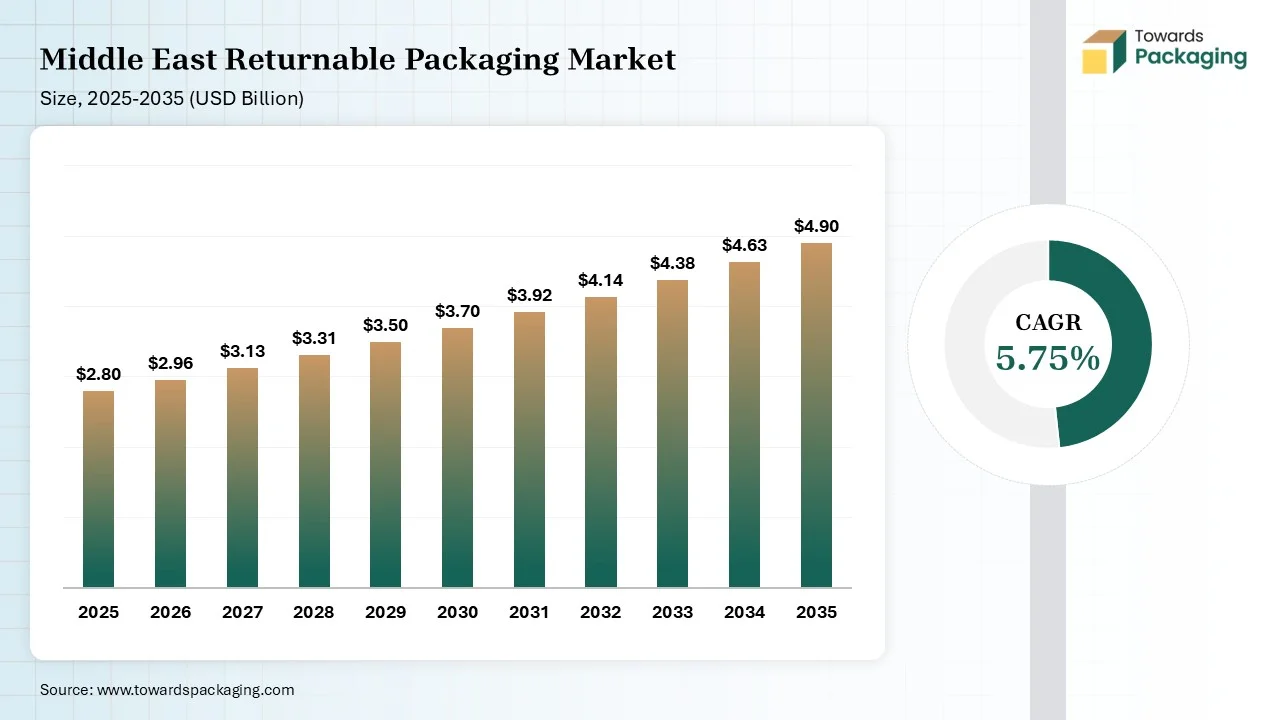
The Middle East returnable packaging market is projected to grow from USD 2.96 billion in 2026 to USD 4.9 billion by 2035, registering a CAGR of 5.75% during the forecast period. The report provides comprehensive coverage of market size, detailed segmentation analysis, regional trends across key Middle Eastern countries, and in-depth insights into leading companies. It also includes competitive analysis, value chain evaluation, trade data, and detailed information on manufacturers and suppliers, offering a complete view of the industry landscape.
Middle East returnable packaging states that durable, reusable transport products like drums, plastic crates, pallets, and IBCs are designed for several trips within the industrial, food and logistics sectors of this region. It is a sustainable process utilising durable containers like tanks, pallets, totes, and crates that are planned to be reused several times for shipping products between customers and suppliers. It quickly replaces one-time use of packaging, reducing waste and longer period charges in sectors such as manufacturing, automotive, and retail. These are primarily made from durable materials such as wood, plastic, and metal and are designed for frequent protection and handling.
Technological transformation in the Middle East returnable packaging market plays a significant role by advancing material science and design. Presence of advanced technology, such as real-time tracking facilities like IoT sensors, RFID tags, and GPS, that help in observing the quality of the product as well as the condition of the packaging. It supports the selection of high-quality material that can be used multiple times. The presence of smart manufacturing facilities and automation compatibility has fuelled the demand for this packaging sector. These advancements in packaging technology have supported in predicting the durability of the packaging.
The major raw materials utilised in this market are polypropylene (PP), high-density polyethene (HDPE), wood, and metal. These are widely used for the manufacturing of crates, pallets, and returnable totes.
The component manufacturing in this market comprises plastic crates and containers, metal containers, pallets, and intermediate bulk containers. Rising demand for sustainable packaging options has fuelled the demand for these components.
This segment offers real-time visibility that improves the safety of the product as well as packaging. Such facilities encourage the incorporation of advanced tracking technologies.
The plastic segment dominated the market in 2025, due to its enhanced performance and material versatility. These are highly durable packaging option available that is lightweight and cost-effective solution available for several industries. Rising integration of advanced technology has pushed the demand for these packaging materials. These are highly corrosion-resistant packaging options that make it suitable for a wide range of industries.
The metal segment is expected to grow at the fastest CAGR during the forecast period. This segment is growing due to its ability of high-end protection and industrial strength. Increasing transportation of heavy machinery and automotive parts has fuelled the demand for this segment. Rising concern towards safety from contamination has promoted the utilisation of this packaging material. Continuous innovation in the advancement of metal packaging has fuelled the demand for this material.
The pallets segment dominated the market in 2025, due to rapid automation and operational efficacy. It supports effortless stacking as well as storage that enhances logistics speed and decreases labour charges. It plays an essential role in the packaging of pharmaceutical products and their storage. The rising concern of major businesses towards ecological issues has pushed the market to grow rapidly. The rapid expansion of the retail and industrial sectors has fuelled the demand for this segment.
The IBCs segment is expected to grow at the fastest CAGR during the forecast period. This segment is growing due to its cost-effectiveness and sustainability properties. Rising optimisation for storage and stack ability has increased the demand for this segment profoundly. Reduced risk for product damage and cost-effective production have also pushed the adoption of this segment. High sustainability goals have enhanced the adoption of this segment.
The food & beverage segment dominated the market in 2025, due to increasing demand for risk-free high-volume distribution of food products. It offers enhanced supply chain efficacy and reduces the breakage of the food products. The presence of strict hygiene standards also promotes the adoption of this packaging industry. The aim of reducing plastic waste generation has pushed industries to accept this packaging solution. Rising cost-efficient packaging and concern for maintaining the freshness of the food products have fuelled the demand for this packaging sector.
The healthcare segment is expected to grow at the fastest CAGR during the forecast period. This segment is growing due to strict regulatory guidelines and the requirement for durable packaging. These packages are widely known for contamination control and safe transportation. These are highly durable and cost-effective solutions for the packaging of a wide range of products. Constantly rising concern towards safety features and traceability has pushed the demand for this packaging.
Saudi Arabia held the largest share in the market in 2025, due to sustainability mandates and huge infrastructure projects. The rapid growth of petrochemicals production and food processing needs durable and cost-effective packaging for logistics. High volume production in the food and beverages industry and its distribution requirements have pushed the demand for such packaging extensively. The presence of massive infrastructure support in the research and development work of the packaging helps in meeting the demand of the consumers. Massive development in industries like automotives pushed the demand for lightweight packaging, making this a suitable option for packaging and transportation.
UAE Middle East Returnable Packaging Market Trends
UAE expects the fastest growth in the market during the forecast period. Logistics efficiency and sustainability goals have pushed the demand for the Middle East returnable packaging market. Polypropylene (PP) and high-density polyethene (HDPE) are extensively utilised due to the huge demand for recyclable and durable packaging among consumers. Constant growth in the e-commerce sector and the food & beverages sector has enhanced the demand for this segment. Government initiatives and increasing awareness among people have pushed the utilisation of returnable packaging of products. Containers, crates, and plastic pallets are extensively used by major market players of several industries. Major companies are rapidly advancing these packages with the integration of RFID tags and sensors that promote the use of this sector.
By Material
By Product Type
By End Use
By Country



Research & Advisory Analyst
Yogesh Kulkarni is an experienced Research Analyst specializing in the packaging sector, with a strong foundation in statistical analysis and market intelligence. He currently contributes his expertise to Towards Packaging.
Learn more about Yogesh Kulkarni

Reviewed By
Aditi Shivarkar, with 14+ years in packaging market research, specializes in food, beverage, and eco-friendly packaging. She ensures accurate, actionable insights, driving Towards Packaging Analytics & Consulting 's excellence in industry trends and sustainability.
Learn more about Aditi Shivarkar

Middle East Returnable Packaging Market
 Table of Content

 Download Sample
 Schedule a Meeting