


The Europe molded fiber packaging market is projected to grow from USD 4.11 billion in 2026 to USD 7.43 billion by 2035, registering a CAGR of 6.8% during the forecast period. The study provides detailed segment-wise data across product types, material composition, and end-use industries, along with regional insights covering Western Europe, Eastern Europe, and Nordic countries. It also includes comprehensive company profiles, competitive landscape analysis, value chain mapping, and trade flow assessment, alongside detailed data on manufacturers and suppliers shaping the market.
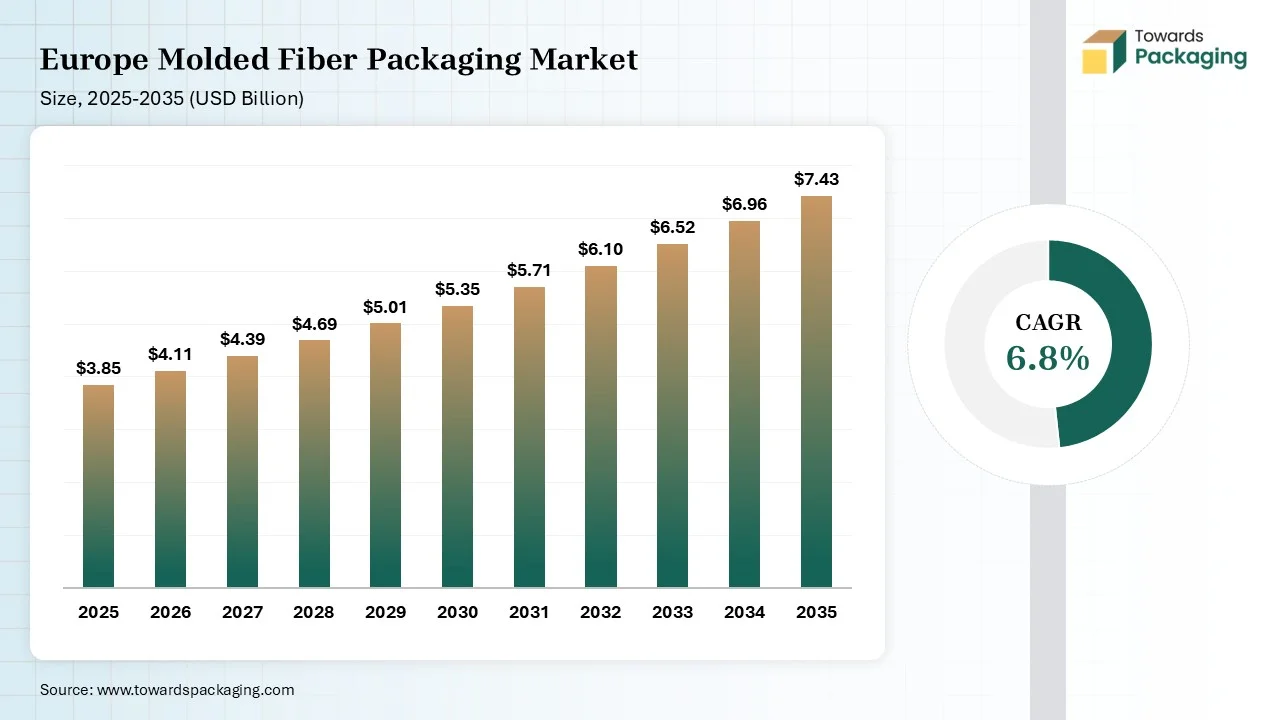
Market Size (2025): USD 3.85 Billion
CAGR (2025–2035): 6.8%
Market Volume (2025): 2.95 million Tons
Volume CAGR (2025–2035): 6.2%
Pricing Data (2025):
The fiber casting is also known as molded pulp, which is a sustainable material developed by using a wet processing procedure. This includes cultivating an aqueous fiber pulp created from cellulose or recycled paper into a mold and then drying them. The outcomes are recyclable, strong, and biodegradable molded fiber parts which are used in a single fiber shape in a huge variety of molded fiber packaging.
Molded fiber packaging is widely used in sectors such as molded fiber coffee cup holders, disposable food packaging containers, molded fiber food trays, and protective linings. Because of their constant design and natural look, they are excessively used in electronics, catering, and the retail logistics sectors.
Molded fiber has quickly developed as the popular packaging choice for the brands that are receiving recyclable and renewable choices to substitute single-use plastics, that has covered various sectors from electronics to food and beverages, e-commerce and cosmetics. Inside such packaging discovery, chemistry has played an important role, but then frequently has avoided the role. Without such, the making of functional cellulose-based molded packaging is not possible.
Cellulose-fiber packaging materials are renewable by nature, as they back the properties which are complicated food packaging which opposes moisture, grease oil and water. In molded fiber packaging, such barrier characteristics have regularly been received by using fluorochemicals (like PFAS and per-and polyfluoroalkyl substances.
Package Design and Prototyping: Molded pulp packaging or an molded fiber packaging is a three-dimensional space created from water-adjusted plant fibers which are specifically corrugated board, recycled paper or an agro-waste fibers like as bamboo and bagasse. Like flat corrugated sheets, molded pulp pieces that have collaborated as custom-perfectly fitted industrial packaging.
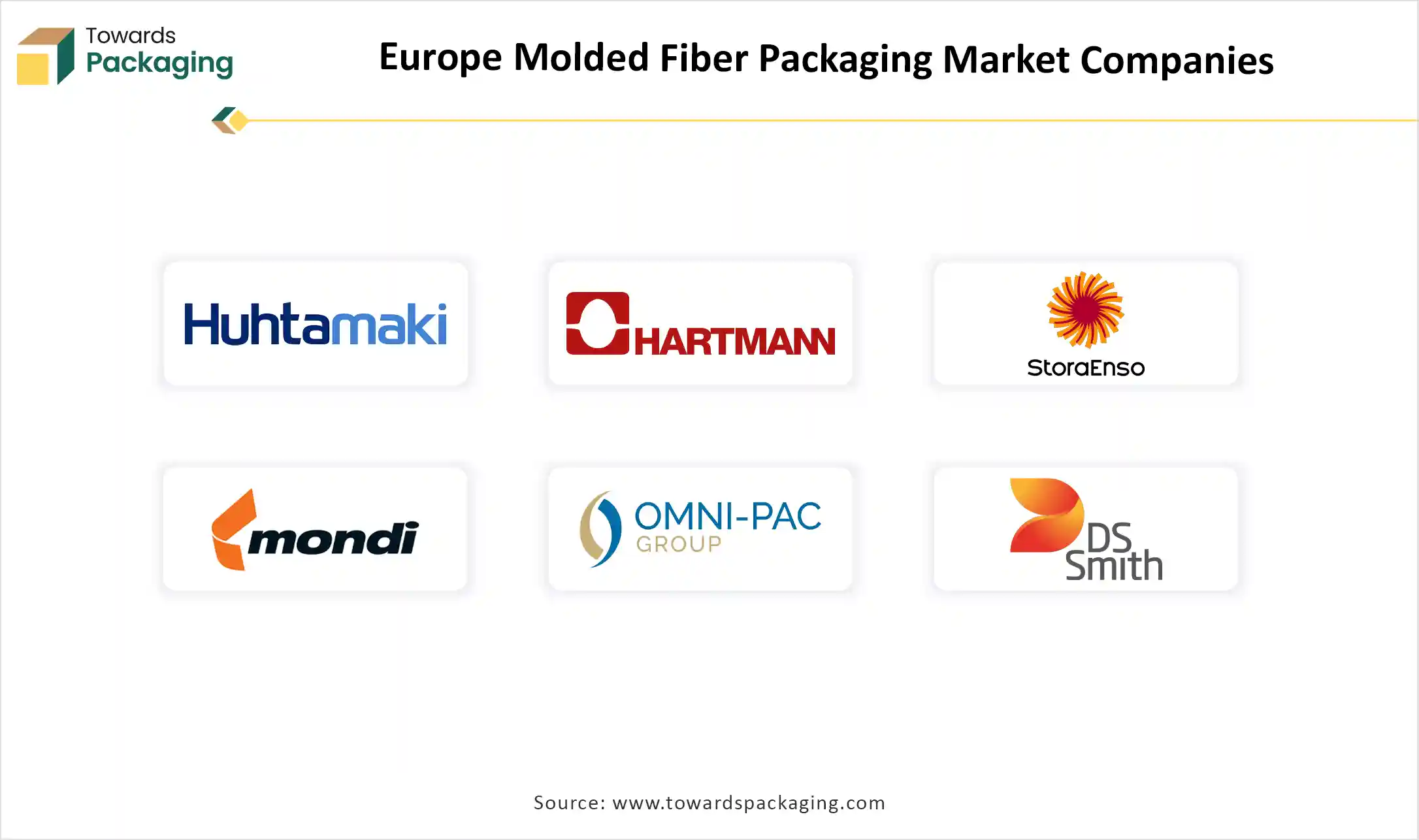
Companies: Pulp-Tec Limited, TRIDAS and Cullen
Recycling and Waste Management: Many life-cycle assessments (LCAs0 have officially been compared as protective packaging materials like honeycomb board, EPS foam and the molded pulp. A current sector LCA for a 1 cubic foot of a packaging, for instance has searched that molded pulp has lower packaging -platform which has greenhouse gas emissions as compared to EPS, that are completely climate effect on the respective disposal and material weights.
Companies: Omni-Pac Group, PAPACKS Sales GmbH and Mondi Group
Logistics and Distribution: Molded fiber packaging logistics stages are completely balancing the material’s secured advantages with issues of its susceptibility and great volume to eco-friendly factors. They are excessively used to substitute plastic foams in terms of high-volume supply chains for food service, electronics, and medical supplies because of their perfect sustainability and shock absorption.
Companies: Stora Enso, Brodrene Hartmann A S and Huhtamaki Oyj
Trays segment dominated the market with 32% share in 2025 because molded fiber taurus are a kind of packaging created from recycled paper fibers and other renewable materials. Such taurus are made by pressing wet pulp into a mold, which creates lightweight and strong designs which can break down and secure products while handling, storage and shipping. Molded fiber taurus are highly tailored solutions to perfectly align with different dimensions and shapes of home appliances. Additionally, they are compostable and biodegradable that lessens naturally after disposal.
Clamshell containers segment held 18% market share in 2025 because their rigid design makes sure that carefully made dishes stay intact while transit. Like an actual clamshell, it has opened and closed among with hinge, which has generally closed to store ingredients protectively. The design enables convenient packaging, that makes them perfect for cafes, restaurants, delis and food trucks. These containers are crafted to serve an easy and protective packaging solution, which makes them perfect for the urges of takeout services and food delivery.
Cups & Bowls segment held 16% market share in 2025 because as compared to plastic, eco-friendly paper cups can be recycled and break down chemically which are back to nature. This highlight has played a main role in waste disposal reduction. Paper products have implemented hygiene problems in drink sharing and food preparation. They are differently aimed for a single application which is a shift that has quickly lowered the risk of germ distribution and infection.
The wood pulp segment dominated the market with a 68% share in 2025 as they most prevalently used material that comes from virgin links or are created from corrugated and recycled paperboard. They are cost-effective, abundant, and greatly used in protective packaging uses such as end caps, inserts, and trays. This kind of fiber is versatile in nature but has still developed questions around forest management and eco-friendly regulations as the supply is not being officially certified under schemes like PEFC OR FSC.
Non-wood pulp segment held 32% market share in 2025 as bamboo fiber is among the fastest developing renewable link on the globe, which has become a main material in cutting-edge packaging. They are not only eco-friendly in nature but also serve natural antibacterial qualities and impressive mechanical power, who have updated developed layers which are neutral plastic or polystyrene alternative. Additionally, bagasse is a fibrous type -product made from sugarcane processing, who has become one of the most adjusting kind pf molded pulps in current years.
Transfer molded segment dominated the market with 38% share in 2025 as the manufacturing of egg cartons that takes egg cartons and recycled paper which has not passed the quality control and storing them in puller. A pulper is a machine crafted to integrate different paper products in hot water while mixing them purely which has made pulp slurry. Once the slurry is made, they are filtered as it has left the pulper. Such filters have avoided debris like staples, glue, and other pollutants which are stuck to the paper.
The thermoformed fiber segment held 28% market share in 2025 because for luxury uses, thermoformed fiber has currently revealed plastic in layer precision and smoothness. In overall perspective, plastics has still dominated in terms of high-volume and lesser costs contents, which are fiber-based solutions that deliver a future -ready complete balance of compliance, results and sustainability as plastics cannot be aligned. Thermoformed containers that have clamshells are utilized for collecting or stacking cheese cubes and slices. Their strong nature protects food items from pollutants and makes sure shelf appearance.
Processed pulp segment held 20% market share in 2025 because Paper pulp packaging is significantly created from recycled paper fibers and water. Such fibers are lowered down into a pulp by using chemical or mechanical procedure and then molded into different shapes by using machines or molds. The outcome packaging is compostable, biodegradable, and recyclable, which makes them a sustainable option for regular packaging materials like Styrofoam and plastic.
In electronic sector, paper pulp packaging is utilized to secure fragile elements while handling and shipping. They are shock-absorbing which assists in protecting pollutants from effect, as its lightweight nature lowers shipping amounts.
Food & Beverage segment dominated the market with 46% share in 2025 because this industry has become a main acceptor of dry molded fiber packaging discoveries because of developing regulatory pressure to lower plastic waste and align with user demand for sustainable food packaging. Dry molded fiber is a natural quality for such a sector, that serves perfect security qualities while aligning with hygiene standards and strong safety. Packaging is present for eggs, fresh produce, and ready-to-eat meals that have experienced an updated move towards dry molded fiber.
Electronics segment held 14% market share in 2025 because pulp molding machines are personalized mechanical equipment crafted to generate shaped fibers and molded fibers that transform wet paper pulp which can be recycled paper or virgin pulp into a molded and three-dimensional product. Such flexibility is attention -grabbing in many sectors like consumer electronics. Restored packaging for glass or electronics. Packaging brands use molded fibers which supply products which are sensitive, substitute plastic, or foam. With an accurate design of inserts, molds which can be snugly molded lower the contamination caused by transporting and delivers eco-friendly credentials to users.
Industrial Packaging  segment held 12% market share in 2025 as molded fiber is quickly substituting regular plastic and  the expandable polystyrene foam (EPS) that are excessive industrial uses due to its perfect shock absorption, strong rigidity and ideal environment-friendly credentials. Standard kind of heavy-duty industrial selection that has wall thickness in between 3/8 and 3/16 inches. They are made from single mold, which leaves behind a rough side and one of the smooth sides, and are updated for open-air curing.
Germany has dominated the market in 2025. The Germany molded fiber packaging is investing mainly to the economy because of inventions in sustainable materials and developing environment-friendly practices in the packaging. There are growing trends like developed user demand for sustainable products, partnerships between eco-conscious and sustainable products whose suppliers are predicted for further drive industry development. The industry is likely to change as it uses circular economy rules, that develops its actual role in lowering waste and marketing about recyclability inside the packaging sector.
France expects the fastest growth in the market during the forecast period. As the worldwide eco-friendly policies become strong, France's molded fiber packaging sector has experienced changed regulatory moves that will mainly encourage market shifts over the further decade. As per the European Union Circular Economy Action Plan, member states are included to match their packaging regulations with rigid biodegradability and recyclability standards by year 2030. The French government has actively included such directives into a national compliance, that gives importance to a single-use plastics and to market about sustainable alternatives.
By Product Type
By Source Material:
By Molded Type:
By End-Use Industry:




Research & Advisory Analyst
Yogesh Kulkarni is an experienced Research Analyst specializing in the packaging sector, with a strong foundation in statistical analysis and market intelligence. He currently contributes his expertise to Towards Packaging.
Learn more about Yogesh Kulkarni

Reviewed By
Aditi Shivarkar, with 14+ years in packaging market research, specializes in food, beverage, and eco-friendly packaging. She ensures accurate, actionable insights, driving Towards Packaging Analytics & Consulting 's excellence in industry trends and sustainability.
Learn more about Aditi Shivarkar


Europe Molded Fiber Packaging Market
 Table of Content

 +1 804-441-9344
 Download Sample
 Schedule a Meeting