


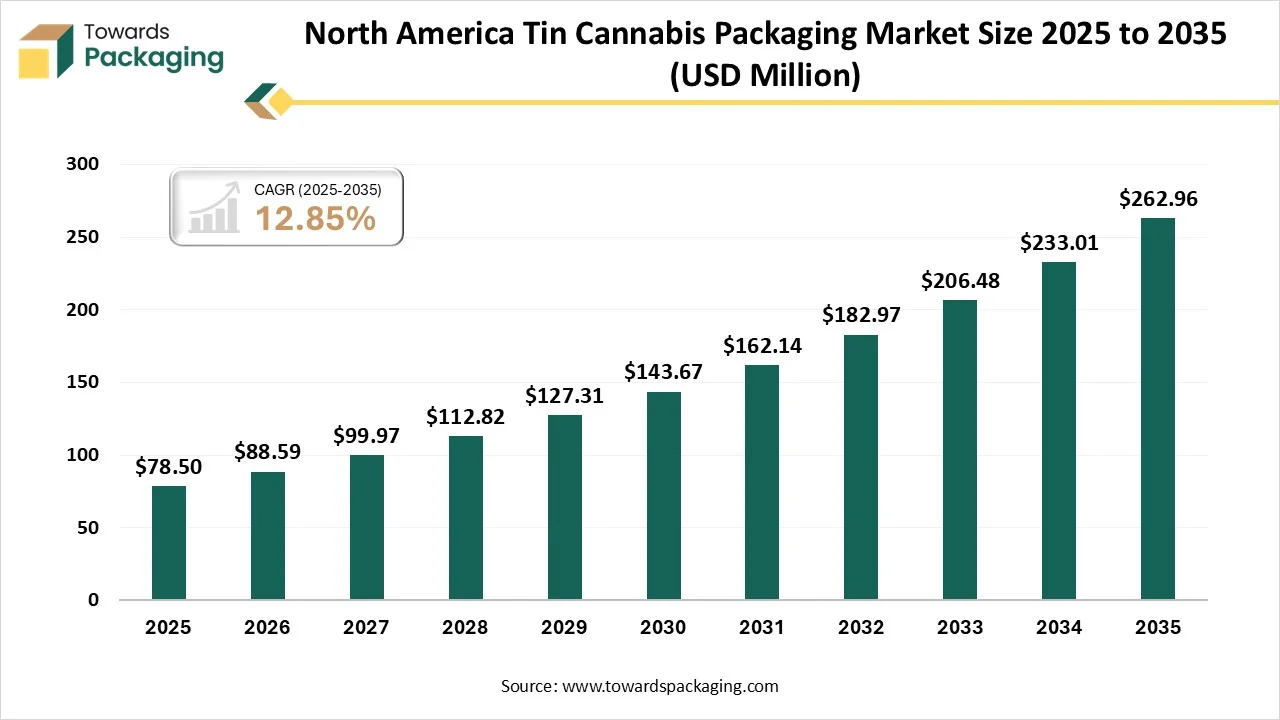
The North America tin cannabis packaging market is forecasted to expand from USD 88.59 million in 2026 to USD 262.96 million by 2035, growing at a CAGR of 12.85% from 2026 to 2035. The demand is due to the legalization of cannabis in many states and the display of a huge user base.
Tin metal containers for cannabis are strong enough, food-grade storage cans that lock in atoms and store flowers and food fresh. Tin storage containers are totally reusable and produced from 100% recyclable materials, which makes them an environmentally friendly and sustainable selection for each day's cannabis depository. Tin cannabis containers that have lids serve as protection, superior reliability, and portability as compared to plastic packaging.
Precise labelling is complicated for delivery of packaging compliance. The information needed generally counts.
Tinplate packaging has experienced a significant transformation in recent years, which is currently lighter and more sustainable and resource-effective than in the past. With the assistance of constant research and modern manufacturing procedures, material thickness has been almost subdivided over the last three years, while tracking the accurate level of stability. Additionally, the industry has given feedback on the rising surrounding alertness and updating the urges of users and producers. Through an constant study and cutting-edge manufacturing procedure, packaging steel is becoming lighter and thinner without losing stability.
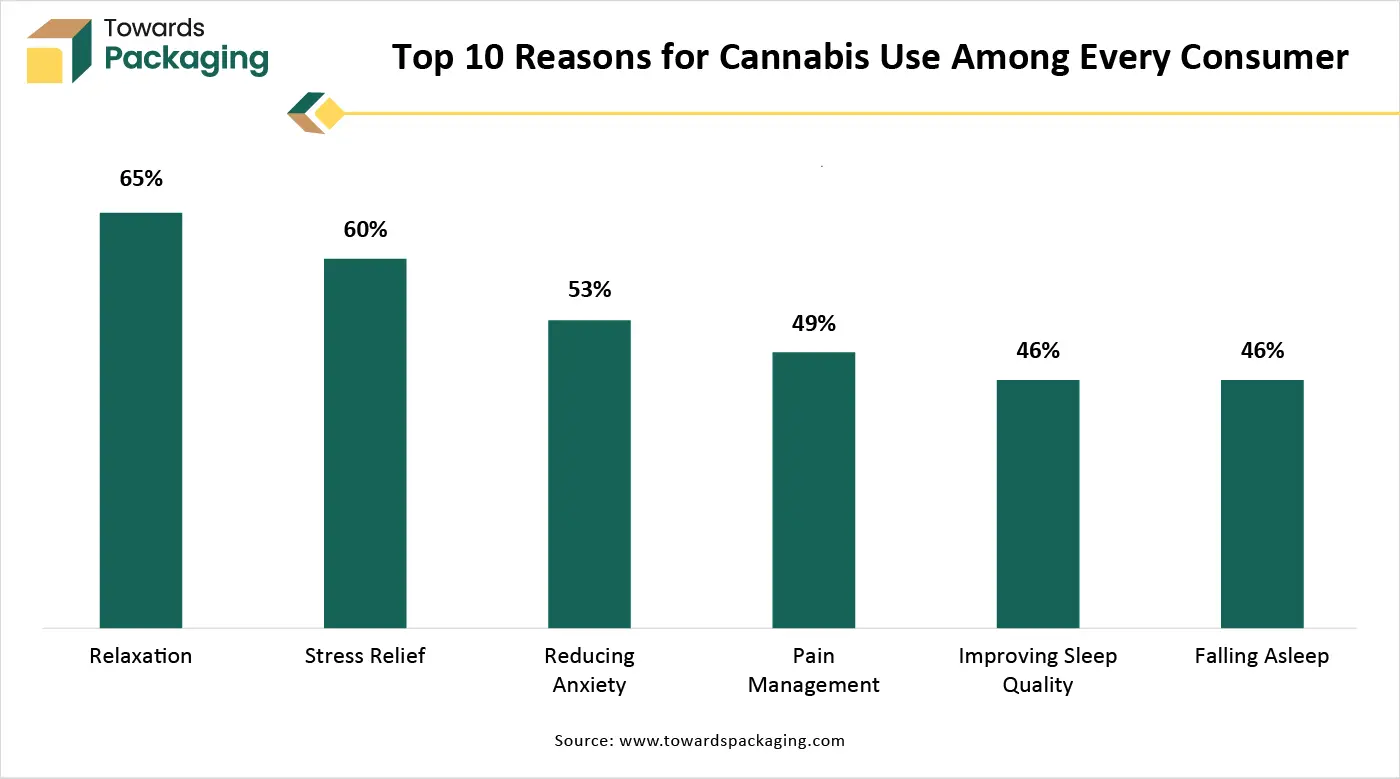
As the use of marijuana is more widely implemented and accepted, its importance for positive health benefits and effects on public health is developing. For veterans who have issues with PTSD, illicit drug usage, substance use, and more, the cannabis plant has emerged as a supplement for regular prescription drugs and regular health care.
Package Design and Prototyping: Like food, OTC drugs, and household supplies, Cannabis products should deliver a luxury packaging design to match a price tag and protect confidential content. Different formats serve n various purposes, as they count product prevention and attractive conspiracy of various sizes, shapes, and seals that go with a brand image. Most of the cannabis brands are moving towards resealable bags and stand-up pouches to package each product, from gummies and lozenges to pre-rolls and flowers. Pouches offer a cannabis packaging and luxury appearance that serves a sense of excitement and novelty for new users.
Recycling and Waste Management: Recyclable materials like tin and aluminum extend cannabis brands and environmentally friendly options for single-use plastic, aluminum, and tin packaging, which are recyclable, durable, and serve a luxury appearance and feel that stand out on the shelves. Such materials are perfect for cannabis brands that find sustainable options that are completely made of natural materials without compromising on look. On the other hand, direct printing on the tin packaging of cannabis enables us to count all essential information without any further labels, which avoids waste and develops recyclability. This strategy makes sure that all legal information mentioned is ideal while smoothing the overall pattern and lowering the materials.
Logistics and Distribution: Cannabis logistics are utilized to describe the procedure of tracing a cannabis product, storage, and transport between every link in the cannabis supply chain before it is bought by a user. Cannabis transport is one of the most complicated elements of cannabis logistics as its transporters get product from one moment to another in the supply chain, whether it is from the planter to the producer or from the extraction center to the dispensary.
The recreational use segment dominated the North America tin cannabis packaging market in 2025 as they are the cannabis that are used by several people who do not consume it for diagnosing any medical condition. In another scenario, folks use this drug just for the purpose of relation and enjoyment. Instead of being recommended by a doctor as a solution for an illness, people have to buy recreational marijuana at the drugstore, on condition that the individual is of the correct age, that is, generally 21 years old or older. The crucial reason why people use recreational marijuana is for the psychological results, which are particularly the demand for “high, affected by THC,” which is a primary factor. Recreational marijuana has a moderate stage of THC, as individuals who take cannabis for pleasure are more eager to get high than to diagnose a health problem.
The medical use segment is projected to witness the fastest CAGR during the forecast period. Medicinal cannabis is a type of cannabis that is prescribed by a doctor to relieve the symptoms of a medical situation. Some kinds of medical cannabis are initially accessible under a Therapeutic Goods Administration (TGA) and a Special Access Scheme. There are usually 3 important patterns of medicinal cannabis: pharmaceutical cannabis, which is checked by a company such as the TGA; unregulated and illegal herbal cannabis, which has an unknown count of cannabinoids and toxic impurities; and lastly controlled and standardized herbal cannabis, a plant product. For an action-oriented strategy, medicinal cannabis servers have begun using an aluminum tin for the medication storage. Aluminum is a far better material for long-term storage than plastic containers. It is frequently perfect for cannabinoid protection and terpene, as there is no possibility for unwanted chemicals that leak into the flower, and it is completely lightproof in nature.
The United States dominated the North America tin cannabis packaging market in 2025 because of a rigid urge for child-resistant packaging and tamper-proof seals, which are ready to set an important percentage for worldwide security standards. Main inventions such as fiber-based trays and recycled plastics are developing quickly in this region. The growing number of states are legalizing recreational and medicinal cannabis, which has integrated with its stringent packaging rules, which meet the demands for compliant and inventive solutions. The industry is being classified by a move towards child-resistant and sustainable packaging solutions, which match user expectations and regulatory rules. Top players are investing in R&D to make eco-friendly and security-sealed packaging designs that develop brand classification. The stretched arena and developing user choice position in the U.S. are a crucial force in the worldwide cannabis packaging sector.
The North America Tin Cannabis Packaging Market is seen to be the fastest-growing in Canada, as licensed carriers are totally responsible for adhering to the behavior and its regulations, and apart from this, other legislation, including health, credibility, and safety of the regulatory systems, is included in other factors being used for other services. Health Canada does not review or pre-check labels and packages of cannabis products. They apply a risk-dependent strategy for enforcement and compliance, as risk belongs to safety, health, and credibility.
Cannabis products that have restricted ingredients may be toxic to the health of the customer of a cannabis product, with respect to Regulations that rely on the features and deep application of the specific product. Health Canada has strongly pushed license holders to make use of the hotlist while seeking to check whether cautionary lines are accurate for a specific content when used in cannabis topicals.
By Application
By Country








Research & Advisory Analyst
Yogesh Kulkarni is an experienced Research Analyst specializing in the packaging sector, with a strong foundation in statistical analysis and market intelligence. He currently contributes his expertise to Towards Packaging.
Learn more about Yogesh Kulkarni

Reviewed By
Aditi Shivarkar, with 14+ years in packaging market research, specializes in food, beverage, and eco-friendly packaging. She ensures accurate, actionable insights, driving Towards Packaging Analytics & Consulting 's excellence in industry trends and sustainability.
Learn more about Aditi Shivarkar

North America Tin Cannabis Packaging Market
 Table of Content

 Download Sample
 Schedule a Meeting