


Flexible packaging pouches, wraps, bags, and rollstock manufacturing from aluminum foil, paper, plastic film, or a mixture of these resources has become the fastest-developing format in the world packaging sector, and one of the most contested. It prevents food products from spoiling, reduces transportation weight as well as charges, confirms the single-serve, and enhances shelf life, e-commerce-ready formats that new retail relies on. Meanwhile, it sits at the center of the world’s plastic waste crisis: packaging is the largest end-use for plastics worldwide, and flexible formats are among the most difficult to recycle because they combine multiple materials in thin, multilayer structures.
This matters now as 2025 and 2026 have brought the market’s two defining forces to a head all together: sweeping new guidelines in the EU and US states that will reshape what flexible packaging is permitted to look like, and an upsurge of company association, caused by the Amcor-Berry Global union and Sealed Air's transfer to go isolated, that is redesigning who makes it.
The rapid development of e-commerce has led to a notable increase in packaging waste, mainly from corrugated cardboard, resulting in higher resource expenditure, logistical ineffectiveness, and ecological concerns. As e-commerce grows, the requirement for smart and sustainable packaging options is becoming progressively urgent. Former meeting insights focus on how resource science and supply chain planning can inform AI-influenced packaging optimization and have shown that the composting behaviour of paper–cardboard waste is driven by its mechanical and chemical properties, mainly its carbon-to-nitrogen ratio, information that can improve AI models evaluating resource degradation and sustainability. As corporations struggle to enhance sustainability while preserving cost-effectiveness, AI is developing as a transformative instrument in enhancing packaging structure and waste management.
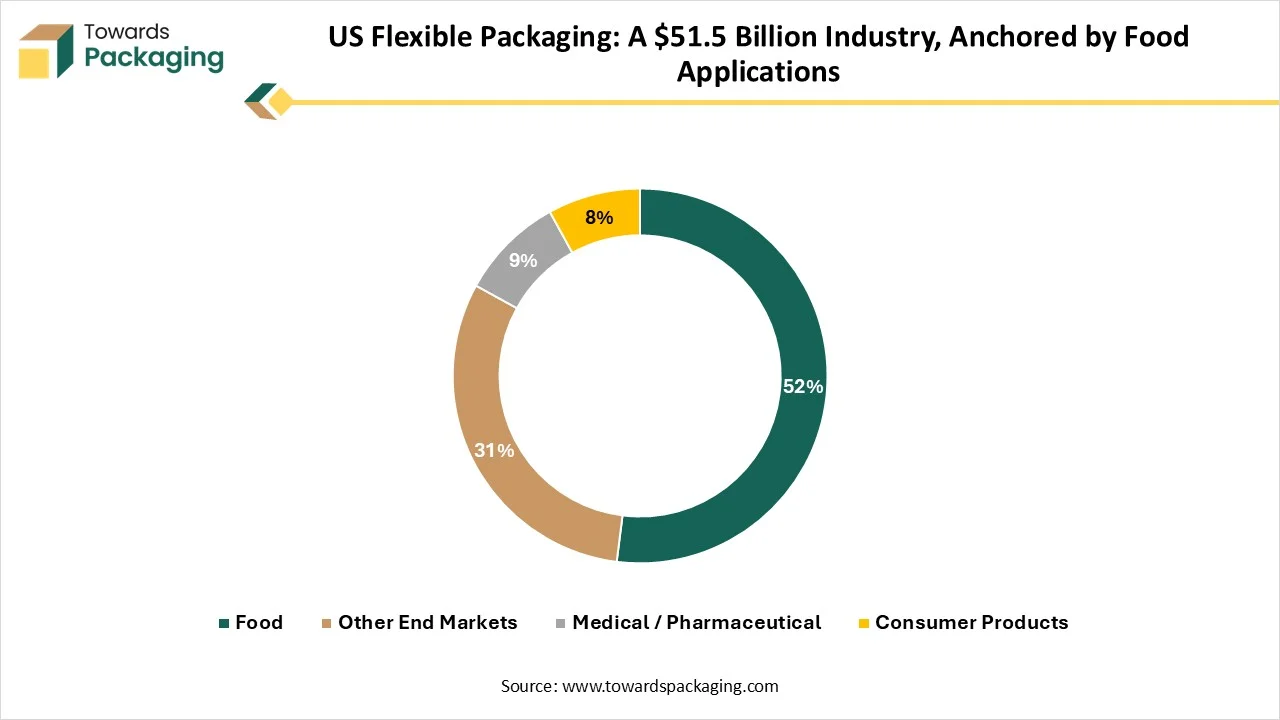
The Flexible Packaging Association (FPA), the leading activist for the U.S. flexible packaging sector, has announced the publication of its 2025 State of the U.S. Flexible Packaging Industry Information. The annual information offers converters, providers, stockholders, and predictors an inclusive outlook of market performance over the past year. According to FPA’s evaluation, the U.S. flexible packaging sector achieved $42.6 billion in yearly sales in 2024, up from $41.4 billion in 2023, a 2.9% growth rate. These standards are intended to utilize U.S. Census information and other sector sources and show industry output instead of shipments. The flexible packaging sector is rocking and rolling as it preserves a uniform development trajectory during a flurry of obstacles, involving mounting regulatory pressures, tariffs, and appointing customers in sustainable packaging options.
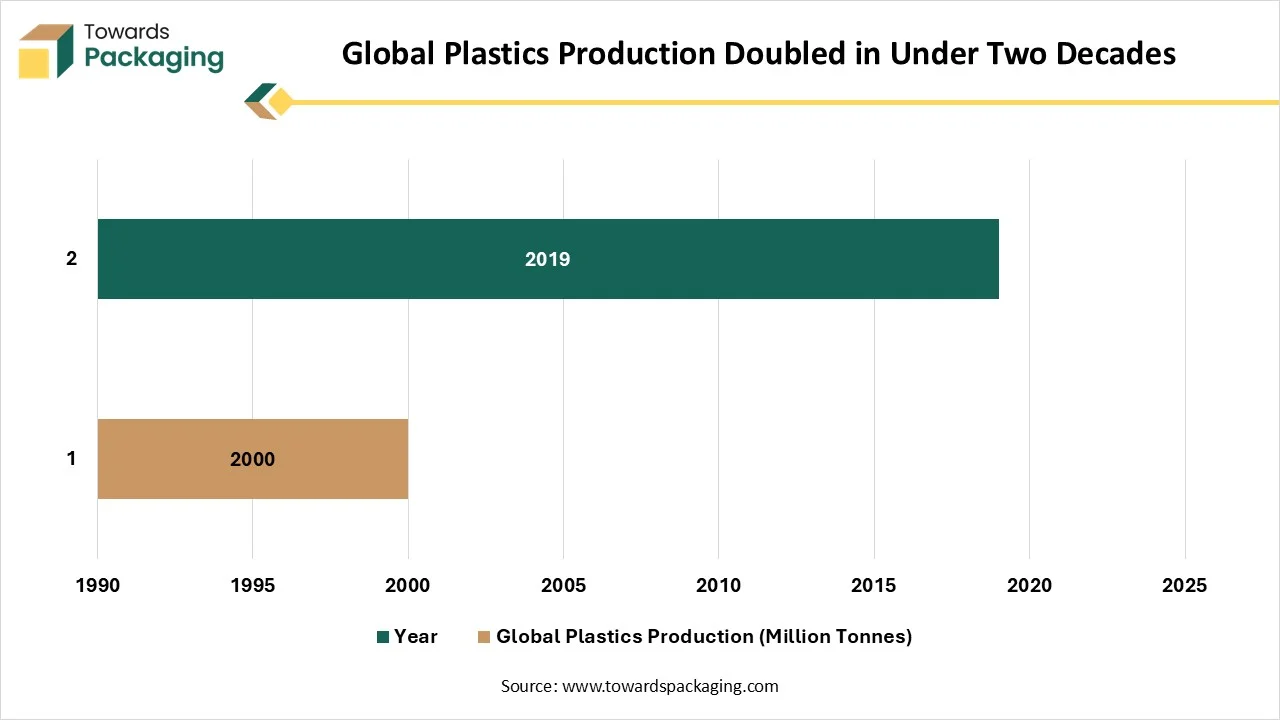
Global plastic production has increased at an excellent speed, doubling between 2000 and 2019. As per the Organization for Economic Cooperation and Development, yearly global plastic manufacturing rose from around 234 million tonnes in 2000 to 460 million tonnes in 2019; increasing earnings and rising demand for plastic-based products are considered major factors in this development. The huge expansion has also intensified the worldwide waste challenge. Dury similarly during the same time, yearly plastic waste generation exceeded two times, increasing from 156 million tonnes to 353 million tonnes. The development is essential as plastic is extensively utilized in packaging, transportation, and construction, which combined account for more than 60% of worldwide plastic utilisation by weight. The United Nations Environment Programme also states that worldwide plastic manufacturing reached about 460 million tonnes in 2019. This huge rise shows the need to decrease non-essential plastic utilization, reinforce waste management process commerce scale efficient recycling and reuse options, and enhance product design.
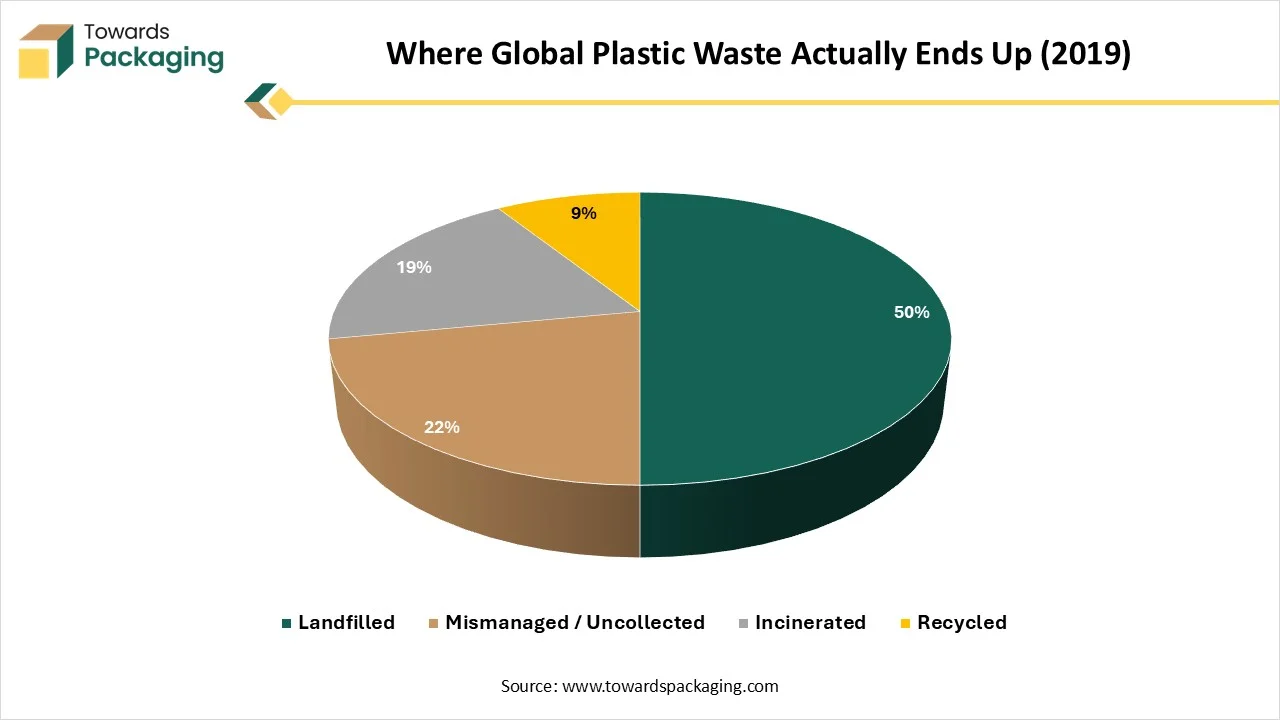
Only a small fraction of the world's plastic waste is recycled effectively. As per the Organization for Economic Cooperation and Development, only 9% of global plastic waste was recycled in 2019, after evaluating for losses throughout the recycling process. This shows that most of the plastic waste followed other disposal pathways, focusing on the notable gap between plastic consumption and efficient circularity.
Recycling restrictions stem from various aspects. Several plastic products are hard to uneconomical to recycle due to their material composition, complex structures, contamination, or additives. Moreover, waste collection and recycling organization remain insufficient for several reasons. Enhancing this condition is more than rising recycling potential. Enhanced product design, reuse guidelines, producer responsibility commerce systems, strong collection processes, and enhanced product design Vijay decrease unnecessary non-essential plastic consumption are also important.
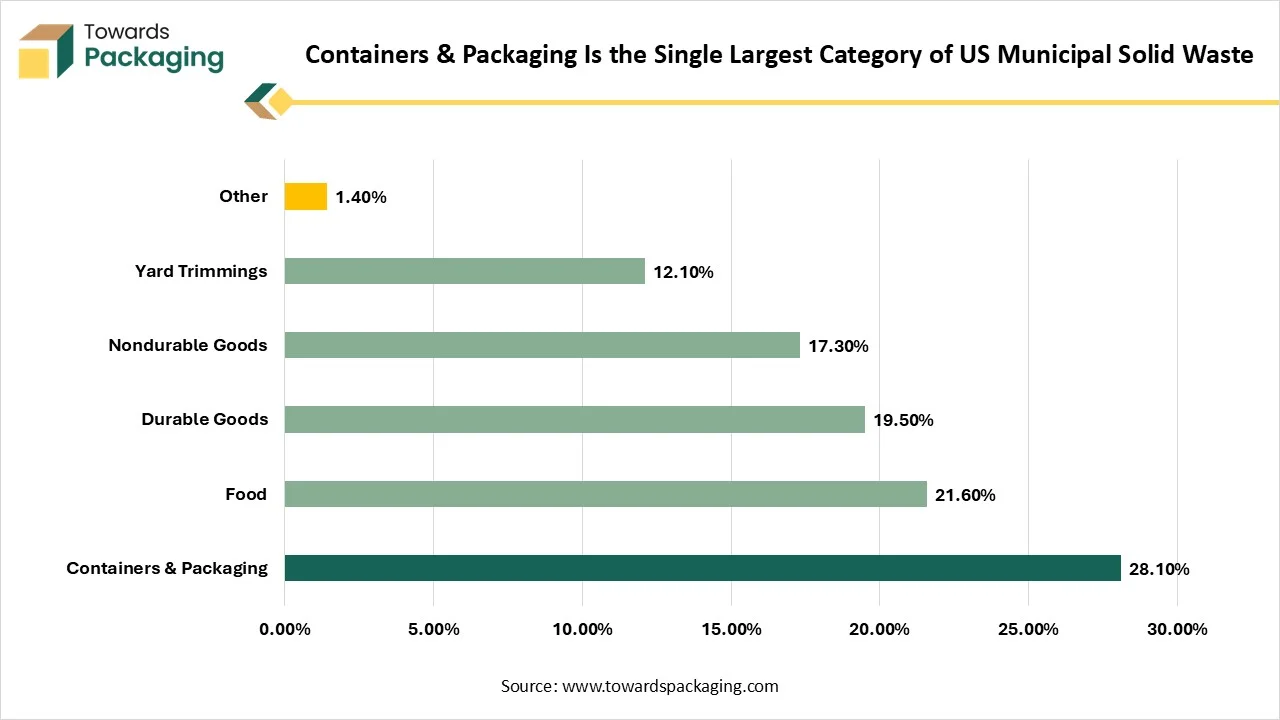
Packaging shows the largest single product category in America's municipal solid waste stream, as per information from the US Environmental Protection Agency. In 2018, the United States created nearly 292.4 million tonnes of municipal solid waste, of which vessels and packaging were responsible for more than 82.2 million tonnes, which is 28.1% of all the waste generated. This was a huge share in comparison to durable products, yard trimmings, non-durable products, food, and various other individual product categories. The EPA def defines containers and packaging widely as products utilised to adapt, contain, or protect products, comprising packaging for medicines, cosmetics, food, and beverages. The group comprises paper and paperboard, glass, and metals.
This variety shows how deeply packaging is embedded in daily consumption and commercial activity. Corrugated cardboard is responsible for around 33.3 million tons, which makes it the largest individual packaging product group. Its recycling rate was exceptionally high at nearly 96.5%, which shows that some packaging resources can attain robust recovery when collection processes and markets are established. These figures show why packaging plays an essential role in America's waste reduction efforts. Designing packaging for recyclability and reuse, decreasing non-essential resource utilization, and enhancing collection and recycling organization can notably reduce the country's overall waste footprint.
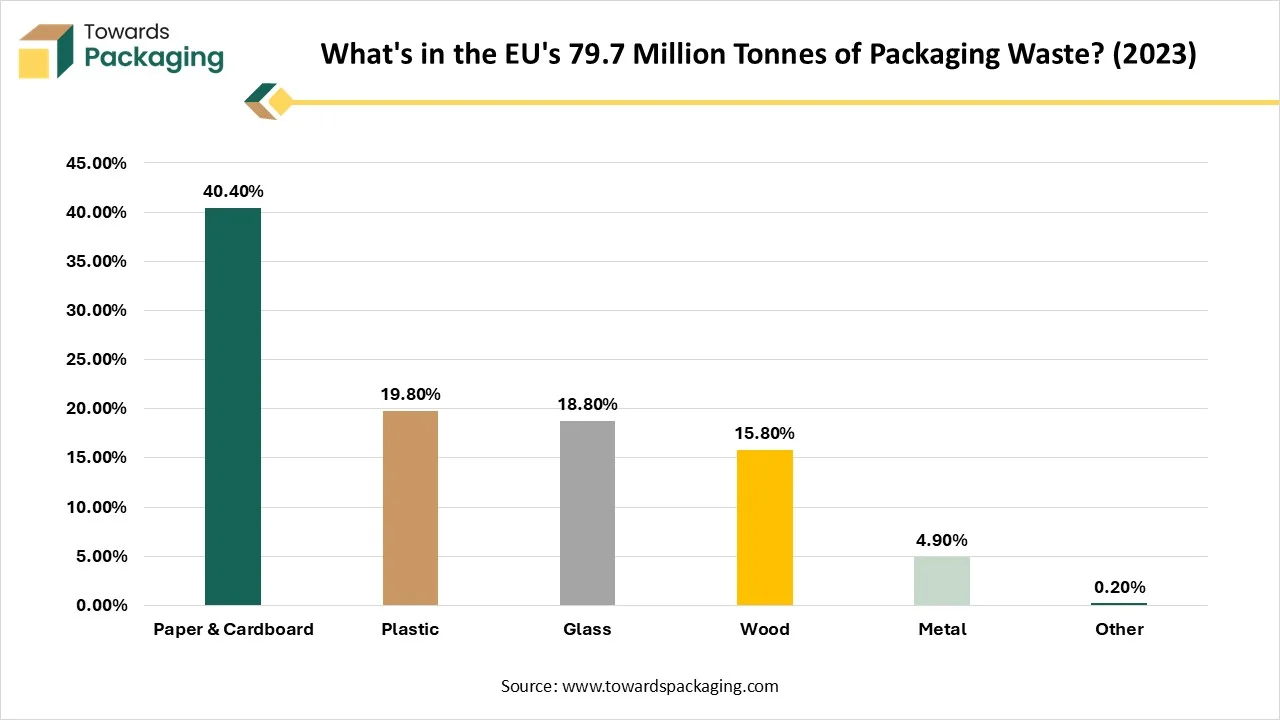
When people think about packaging waste, plastic sometimes comes first in mind. However, official European information reflects that paper and cardboard make up the largest share of plastic waste in the European Union, ahead of last week Plastic. In 2023, the European Union created nearly 79.7 million tons of plastic waste, which is equal to 177.8 kg per person what's wrong in total. In total, paper and cardboard reported for 40.4%, where is plastic shows 19.8%, glass is calculated up to 18.8%, metal is 4.9%, and wood is 15.8% food stop this shows. This shows that paper and cardboard packaging created more than two times and as much waste by weight as plastic packaging.
These figures challenge the general perception that plastic dominates Europe's packaging waste stream. In terms of resources like cardboard boxes, paper-based packaging, and various other fiber-based packaging combinedly show the largest share. Eurostat shows that paper and cardboard are responsible for 41% of the European Union's packaging waste in 2022, in comparison with 19% for plastic, 16% for wood, 19% for glass, and 5% for metal. Paper and cardboard also have a significant role in Europe's recycling process. The European Environment Agency states that paper and cardboard are homogeneous resource streams and benefit from available collection and recycling processes in several countries.
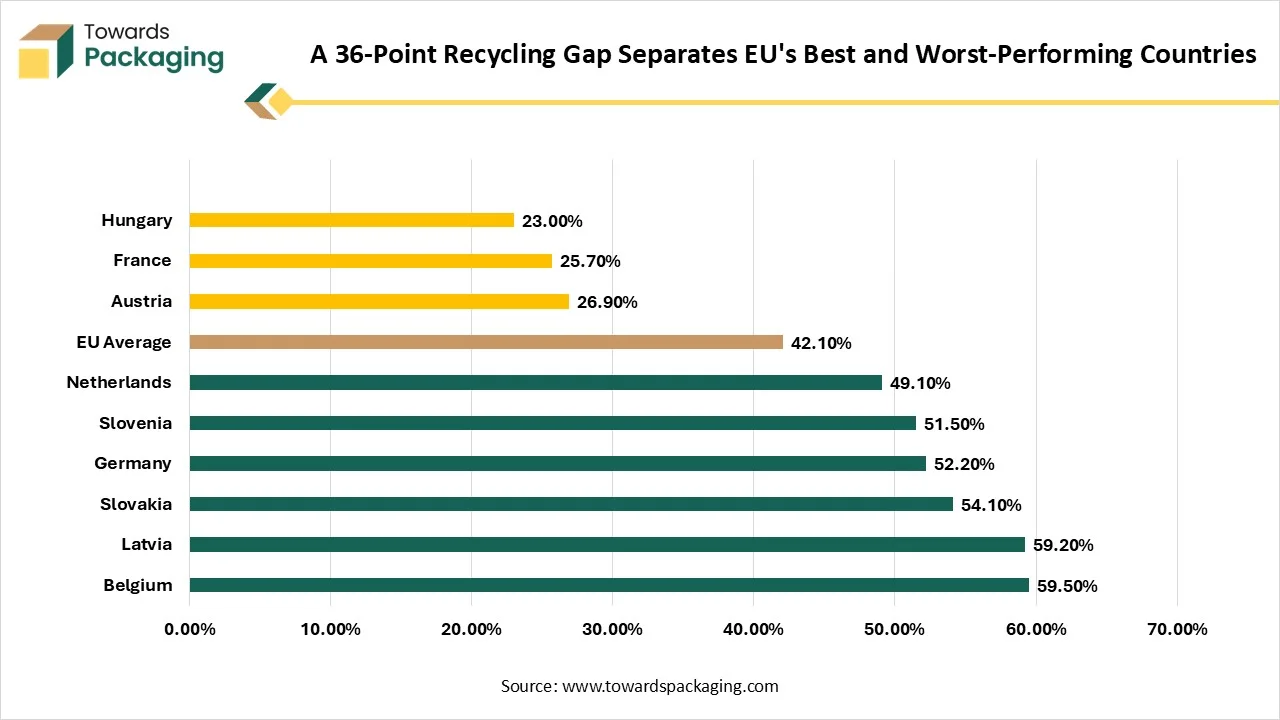
Europe's plastic packaging recycling performance differs drastically from one country to another. The new comparable Eurostat information shows that, in 2023, Belgium had the EU's highest plastic packaging recycling rate at 59.5%, whereas Hungary had the lowest at 23.0%. That shows a 36.5-point gap between the best and the worst performers. The difference shows that the recycling process is uneven perform across Europe. Whereas the EU recycled 42.1% of its plastic packaging waste in 2023, the performance of each country ranged from well below one quarter to almost 60%. These differences are not just explained by consumer behaviour.
Recycling performance relies on the efficiency of collection, sorting, and treatment organization, as well as national waste management processes and policy scales. Deposit return processes, for example, can show enhancement of collection of beverage packaging by generating incentives for customers to return utilised vessels. The European Environment Agency shows notable differences in waste management performance between European countries, showing differences in infrastructure, guidelines, and implementation.
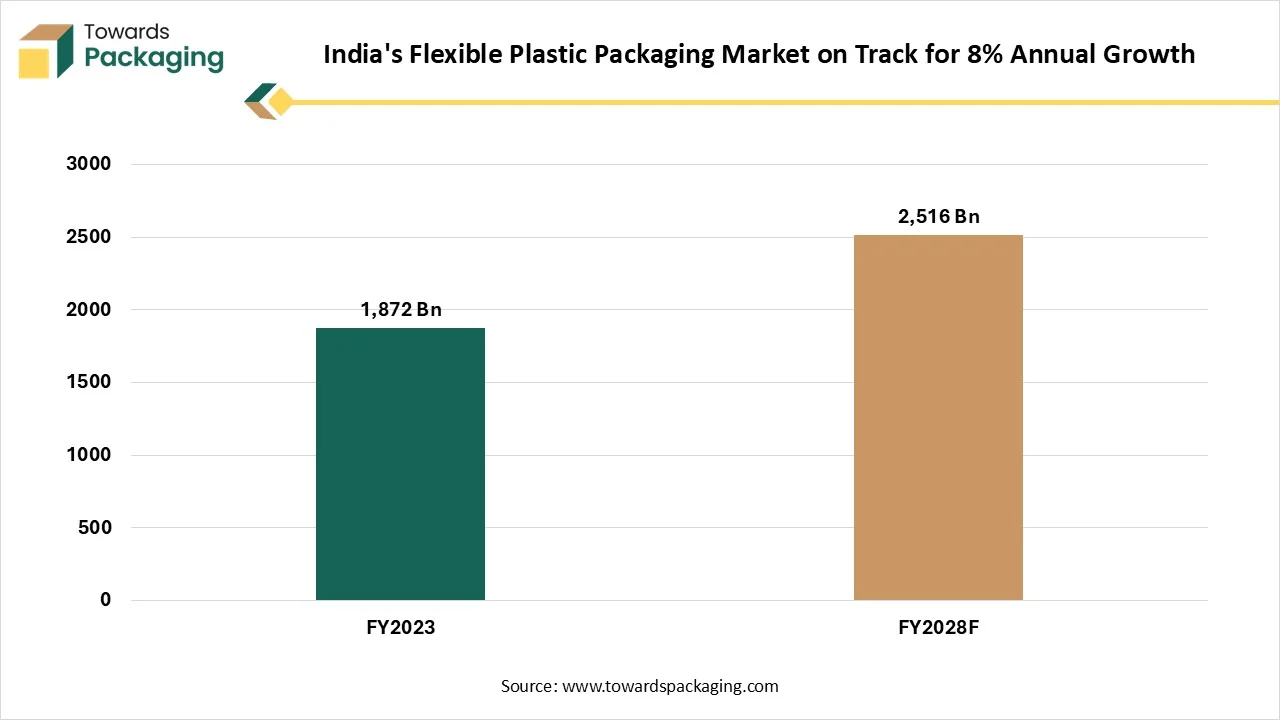
India's flexible packaging market is poised for substantial extension as switching customer habits, e-commerce, urbanization, and the development of packaged food continue to rise demand. However, the claim that the market will grow 34% by FY 2028 requires qualification. Present industry research does not support 34% as the complete market growth rate. Flexible packaging is significantly essential in India as it provides lightweight, convenient, and cost-efficient formats like bags, wraps, pouches, and pills. The food and FMCG industries are major demand drivers, helped by rising consumption of packaged and ready-to-eat products.
The modern retail and e-commerce sector is also generating opportunities for packaging that offers product protection while decreasing transportation and storage necessities. Sustainability is also a significant factor in shaping this market. Indian packaging producers are progressively exploring recyclable designs, material reduction, and substitute materials as guidelines and brand sustainability commitments rise. The plastic waste management rules and extended producer responsibility outline are also pushing corporations towards enhanced management of plastic packaging waste.
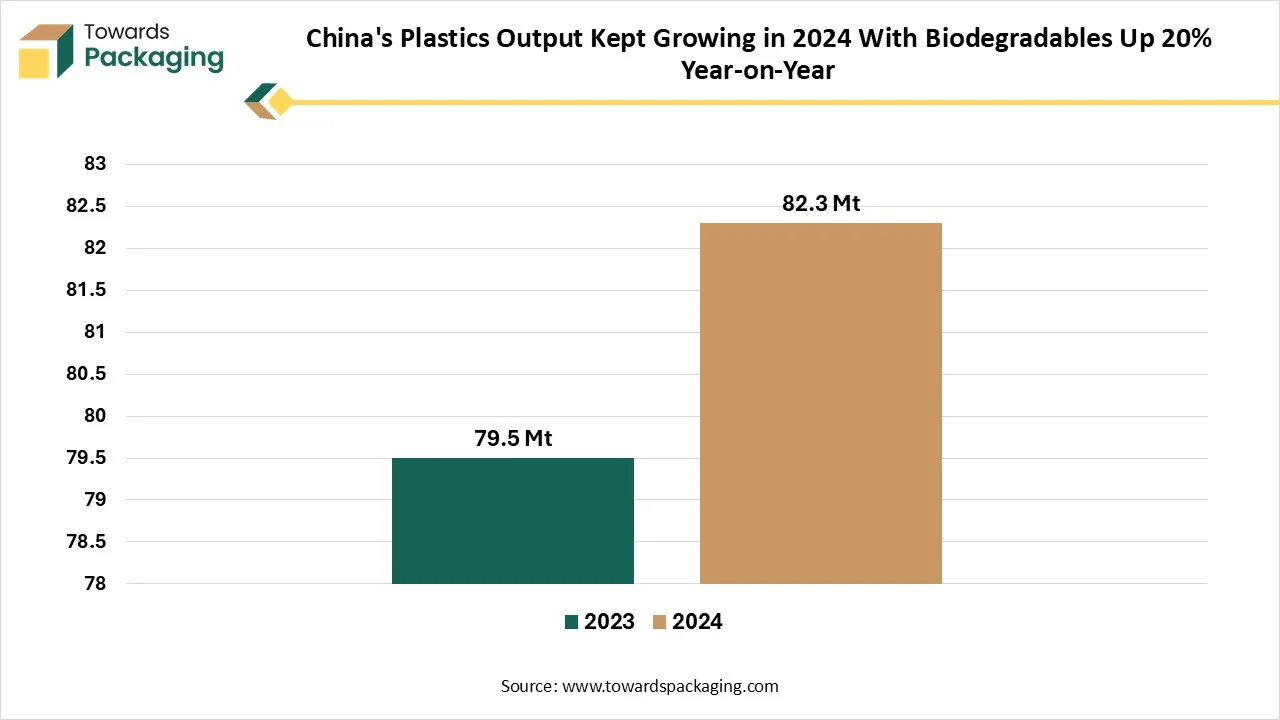
China remains the world’s largest plastic-producing base, and official 2024 data demonstrate that traditional plastic manufacturing continued to expand. As per China's Ministry of Industry and Information Technology, China's plastic products market manufactured 77.076 million tonnes in 2024, up 2.9% from 2023. This information is sourced from the National Bureau of Statistics of China. This development offers essential context for the National Bureau of Statistics of China 2024 plastic industry statistical bulletin graph utilised here. Meanwhile, China's biodegradable plastic sector is growing at a considerably faster speed. China state administration for market regulation stated in 2025 that biodegradable plastic shopping bag manufacturing potential recorded a compound annual growth rate of 20% between 2020 and 2024.
In 2024, manufacturing of biodegradable shopping bags reached 500,000 tons, with industry output worth exceeding RMB 10 billion. Government policy is supporting this change. China has presented measures to decrease traditional single-use plastics while support while supporting the growth of bio-based and biodegradable resources. MIIT has specifically focused on the growth of biodegradable resources comprising non-food biomass-based resources, as part of its industrial guidelines. Overall, the statistics show a changing market: China's traditional plastic sector remains huge, while biodegradable resources are gaining momentum at a faster rate.
The European Union's new packaging guidelines are structured to reshape how packaging is manufactured, utilised, and handled over more than a decade. Regulation 2025/40 established a series of milestones with increasingly strict requirements for packaging reduction, reuse, recyclability, and recycled content. This provides corporations time to restructure packaging, expand supply chains, and grow the infrastructure necessary to fulfill the new guidelines. A major milestone will arrive in 2030. From that year, packaging must fulfill recyclability requirements mainly under the guidelines, where various reuse and waste prevention measures start to take effect.
The timeline extends further into the 2030s. The guidelines require packaging to fulfill progressively demanding recyclability requirements, comprising necessities connected with recycling at scale. The Commission's guidance confirms that certain recyclability requirements apply from 2030; wire recycling at scale requirements commonly become relevant from 2035. By 2040, the framework is expected to reach its longer-term goals, generating a substantial difference in packaging sector from one of from the one governed by previous guidelines. Therefore, the EU's new packaging guideline is best understood not as a single compliance deadline but as a long-term regulatory pathway running from 2026 through 2040.
California’s SB 54 shows one of the most notable shifts to plastic packaging guidelines in the United States. Signed into law in June 2022, the Plastic Pollution Prevention and Packaging Producer Responsibility Act changed much of the accountability for handling single-use packaging and plastic food facility ware from local governments and customers to manufacturers. The law established an extended producer responsibility process necessitating manufacturers to participate in an industry-run program overseen by California's Department of Resources Recycling and Recovery. Its long-term goals are ambitious: by 2032, covered manufacturers must decrease single-use plastic packaging and food service ware by 25%, achieve a 10% to 65% recycling rate, and ensure that 100% of covered packaging and plastic food service ware is recycled or compostable.
A major element is the $5 billion California plastic pollution mitigation fund. Under SB 54, the manufacturers' responsibility infrastructure must remit $500 million annually starting in 2027, generating $5 billion in funding over 10 years. The money is predicted to address the ecological impacts of plastic pollution and support groups disproportionately affected by those impacts. The note on the importance of SB 54 therefore grows beyond the $5 billion figure; it emphasizes a manufacturer-funded process intended to decrease plastic at its source, enhance recycling, and support a more circular packaging economy. The 2022 to 2026 period marks the shift from signing the law to building the guidelines and economic organization required for its 2032 goals.
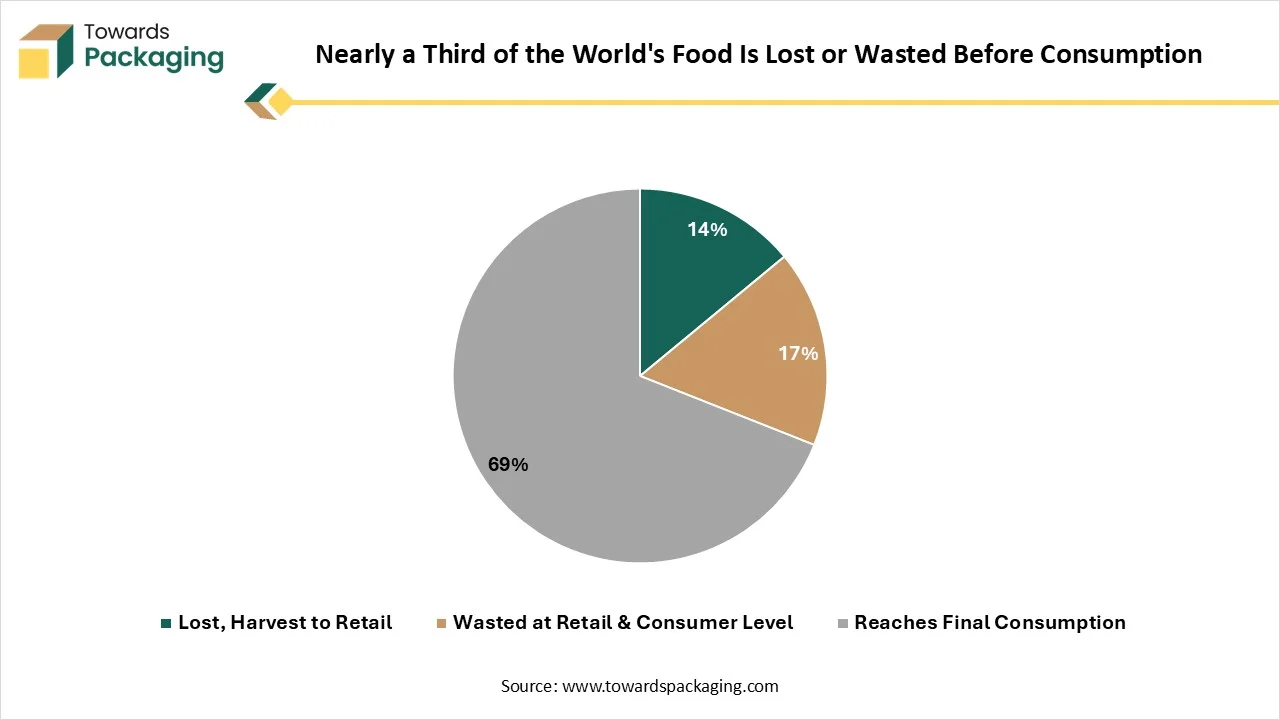
Nearly a third of the food produced for human consumption is wasted or lost worldwide, meaning huge amounts of food never contribute to human nutrition. The Food and Agriculture Organization of the United Nations has historically calculated that nearly one-third of food produced for human consumption is wasted or lost across the supply chain. More recent UN calculations offer a clear difference between food loss and food waste. According to the latest information from FAO, nearly 13.2% of food is lost after harvest and before reaching retail. Losses can happen throughout harvesting, transportation, processing, storage, and distribution. Inappropriate storage organization, insufficient management, adverse weather, market constraints, and various other supply chain issues can cause food to degrade before it reaches customers. Food that reaches the retail or consumption stage faces another issue: waste.
The UN Environment Programme Food Waste Index Report 2024 calculates that 1.05 billion tons of food were wasted in 2022 across household, retail, and food service. This represents around 19% of food available to customers. Households were responsible for 60% of this waste, followed by food service at 28% and retail at 12%. The ecological consequences extend far beyond the food itself. When food is lost or wasted, the land, energy, labor, water, and various other resources utilized to manufacture, process, and transport are also wasted. The UN Sustainable Development Goal 12.3 calls for worldwide food waste to be reduced by 50% by 2030, making prevention and measurement progressively essential for governments, corporations, and customers.
The flexible packaging value chain is not restricted to the corporations that produce bags from films and pouches. It is an associated process that starts with raw resources and ends with customers and waste handling. Mapping the chain across five key stages helps explain where waste is generated and where circularity challenges arise.
Raw materials and film manufacturing: the chain begins with polymers, aluminium foil, paper, adhesives, and several other substrates. These resources are changed into films or various other flexible packaging substrates. Resource selection at this stage significantly influences the package's performance and recyclability.
Printing and converting: Films and substrates are tinted, slit, quoted, converted, and laminated into certain formats like pouches, roll stock, sachets, and bags. Converters translate packaging precision into designs that offer essential barrier, functionality, and strength.
Filling and packing: Brand owners or bow Packers fill and seal the packaging with personal care products, food and beverages, pharmaceuticals, and various other products. Packaging must share the product while remaining compatible with enhanced speed filling and supply systems.
Distribution, retail, and consumption: Finished products shift via warehouses, retailers’ commerce suppliers, and progressively e commerce sectors before reaching customers. Packaging performs its primary function here, shielding boosts throughout transportation, storage, and utilization.
Collection, sorting, and recycling: After utilization, packaging enters waste handling processes. Collection and sorting decide whether resources can reach recyclers, while recycling processes decide whether recovered resources can return to productive use. The European Environment Agency focuses that recycling quality relies on the complete recycling chain, from collection to secondary material markets.
Four outside forces drive each stage: regulation, consumer behaviour, technology, and economics. Regulation progressively need packaging to become recyclable and decrease virgin resource utilization; for example, the EU Packaging and Packaging Waste Regulation ensures the packaging lifespan from design through waste management. Technology drives resource development, sorting, recycling, and printing. Customer preferences demand for sustainability and convenience, while economics comprising raw resource prices, collection charges, and recycled resource markets, determines which solution can grow. Understanding these five stages and four external forces demonstrates why flexible packaging cannot be manufactured circular through one intervention alone.
The packaging sector entered 2025 within a noticeable wave of consolidation, with huge transactions reshaping the competitive landscape across flexible, rigid, and paper-based packaging. Three growth drivers demonstrate how the market was shifting: scale-driven mergers, regulatory scrutiny, and strategic portfolio reshaping.
Scale-driven mergers: The most significant example of the amalgamation of Amcor and Berry Global, completed on April 30, 2025. The all-stock transaction together flexible films, healthcare packaging corporations, containers and closures, generating a wider worldwide packaging platform. Amcor recognized nearly $6 50,000,000 in total yearly synergies, showing one of the central motivations behind consolidation: attaining huge scale while mixing contemporary technologies, consumers, and production networks.
Portfolio reshaping: Strengthening was not just about acquiring competitors. Industries were also re-evaluating which corporations fit their long-term strategies. Berry, for instance, stated the completion of the spin-off of its Health, Hygiene, And Specialties Global Nonwoven and Films corporation and the subsequent combination with Glatfelter in late 2024. It also sold its tax business apps in early 2025. These shifts represent how packaging categories were streamlining portfolios while focusing resources on customer and healthcare packaging opportunities.
Regulatory scrutiny: huge packaging amalgamation progressively phased competition reviews as consolidation can affect distributors, consumers, and regional industries. International papers proposed $7.2 billion acquisition of DS Smith received European Commission approved in January 2025, but only after International Paper committed to divest 5 European plants. The European Commission’s situations show how regulators can permit consolidation while necessitating remedies to protect competition.
Combinedly, these three parts reflect that the 2025 consolidation wave was about more than just making industries larger. Packaging categories where pursuing scale, functional synergies, technology and stronger industry positions, while simplifying portfolios and navigating progressively essential supervisory barriers. For packaging consumers, distributors and converters, the result is sector in which some large industries may control wider goods portfolios and geographic footprints.
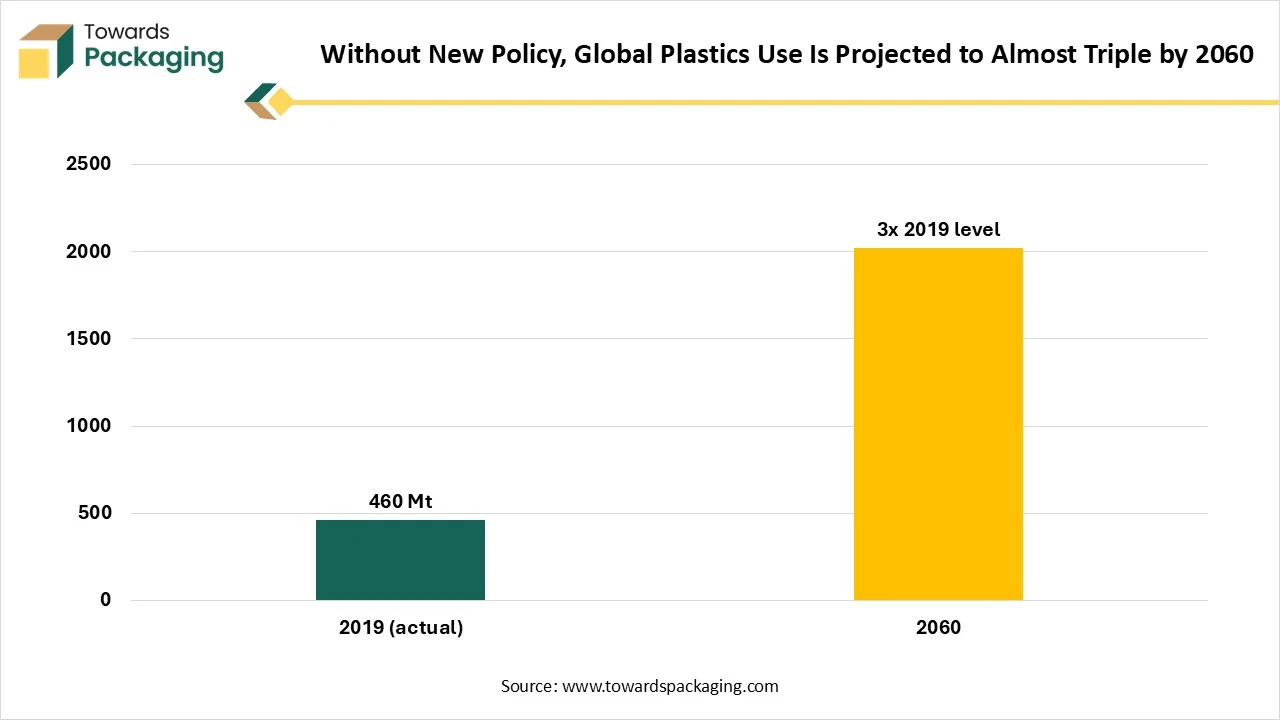
Without stronger policy action, worldwide plastic utilization is estimated to almost triple by 2060, increasing from nearly 460 million tonnes in 2019 to 1.231 billion tons. The race comes from the OE series global plastics outlook policy scenarios 2060, which model how plastics use, waste, and ecological leakage would change under existing guidelines. The projected rice growth is closely associated with economic and population development. While plastics used in OECD countries are anticipated to double between 2019 and 2060, much faster development is expected in rising economies. The OECD projects plastics used to triple in Asia and grow six-fold in sub-Saharan Africa.
As earnings grow and economics rice, demand for plastic products is anticipated to expand across packaging, transportation, consumer goods, construction, and various other industries. The consequences extend beyond the amount of plastic consumed. Under the OECD’s baseline scenario, worldwide plastic waste is also anticipated to almost triple, rising from 353 million tonnes in 2019 to 1.014 billion tons by 2060. Approximately half of this waste could still be sent to landfill,; less than 1/5 would be recycled.
Plastic leakage into the ecology is anticipated to double reaching nearly 44 million tonnes yearly by 2060. The framework also represents why recycling alone cannot resolve this issue. All those secondary plastics are anticipated to rise faster than primary plastics, recycled resource wood account only for 12% of total plastic utilised by 2060 under the baseline scenario. The OECD calculates that the plastic life span would be only 14% circular by that point. Significantly, the projection is not inevitable. The OECD models policy scenarios include scales like plastic taxes, extended producer responsibility, enhanced waste management, recycled content necessities, and reuse incentives. Stronger worldwide action could decrease plastics utilization by nearly 1/3 compared with the baseline by 2060.
Plastic is one resource, but governments are taking various diverse approaches to control its ecological impact.
California: Manufacturer responsibility, and scalable outcomes. California's SB 54 positions a robust focus on extended producer responsibility. Manufacturers of covered packaging and food service ware are needed to participate in a producer responsibility system, while the law established 2032 goals for decreasing plastic packaging and food service ware, enhancing recycling, and confirming covered packaging is compostable and recyclable. CalRecycle's permanent SB 54 guidelines received final confirmation from the Office of Administrative Law on May 1, 2026.
European Union: lifespan guidelines and harmonization. Guidelines regulation EU 2025/40 takes a wider, product lifespan approach. The guideline applies to all packaging, regardless of resource, and addresses design, substances of concern, recyclability, waste prevention, waste management, reuse, and extended producer responsibility. It also sets packaging waste reduction goals of 5% by 2030, 10% by 2035, and 15% by 2040, compared with 2018 levels.
India: EPR combined with restrictions and targets. India's MOEFCC has built its approach across the Plastic Waste Management Rules and the 2022 EPR regulations for plastic packaging. These build accountability for manufacturers, importers and brand owners, alongside recycling, recycled content and reuse obligations. India has also limited particular single-use plastic products and thin plastic carry bags.
China: Industrial scale growth alongside ecological policy. China's approach mixes ecological guidelines with management of a huge production sector. National Bureau of Statistics data demonstrate that plastic articles manufacturing reached 75.4 9 million tonnes in 2024, up 6.7% year on year, demonstrating the measure of the industry that policy must address.
Collectively, these approaches show a significant point: there is no single global plastic guideline model. California emphasizes producer responsibility, Europe focuses on lifespan circularity, India combines EPR with limitations, and China maintains ecological management with industrial-scale manufacturing. The resources the same, but the regulatory philosophy is not.

Aditi serves as Vice President at Towards Packaging, bringing over 15 years of experience in market research, innovation, and business strategy within the packaging industry. She works across segments such as sustainable packaging, flexible materials, and industrial packaging solutions. Aditi studies evolving consumer demands, material advancements, and regulatory changes, then turns those insights into clear strategies for businesses. She helps organizations stay competitive, improve product positioning, and respond effectively to shifting market trends.

Aman Singh has spent more than 13 years working in research and consulting, with a strong focus on the global packaging sector. He tracks developments in areas like eco-friendly materials, smart packaging technologies, and supply chain changes. At Towards Packaging, Aman leads the research team and ensures every study delivers accurate and useful insights. He breaks down complex industry developments and helps companies understand where opportunities lie and how to act on them.

Piyush Pawar works as Senior Manager for Sales and Business Growth at Towards Packaging, bringing over a decade of experience in client-facing roles within the packaging industry. He connects businesses with the right research and helps them apply insights to real-world decisions. Piyush understands market challenges and works closely with clients to provide solutions that support growth. He focuses on building strong partnerships and helping companies turn industry knowledge into practical results.
What Is Flexible Packaging And Why Is It Growing Globally


 Request Consultation

