


According to Vidyesh Swar, who is an expert in Algae-based films, packaging services, and manufacturing processes with 5+ years of experience in the industry and market research. His specialization showcases strong growth opportunities in the field of the algae-based film market. The global algae-based film market size was estimated at USD 165 million in 2025 and is predicted to increase from USD 186.29 million in 2026 to approximately USD 555 million by 2035, and is expected to grow at a CAGR of 12.90% during 2025-2035. His research indicates that the market is growing due to eco-friendly consumer habits, focus on low resource footprint, and strong government rules. The key market leaders are Sway, Kelpi, Notpla, FlexSea, and Evoware.
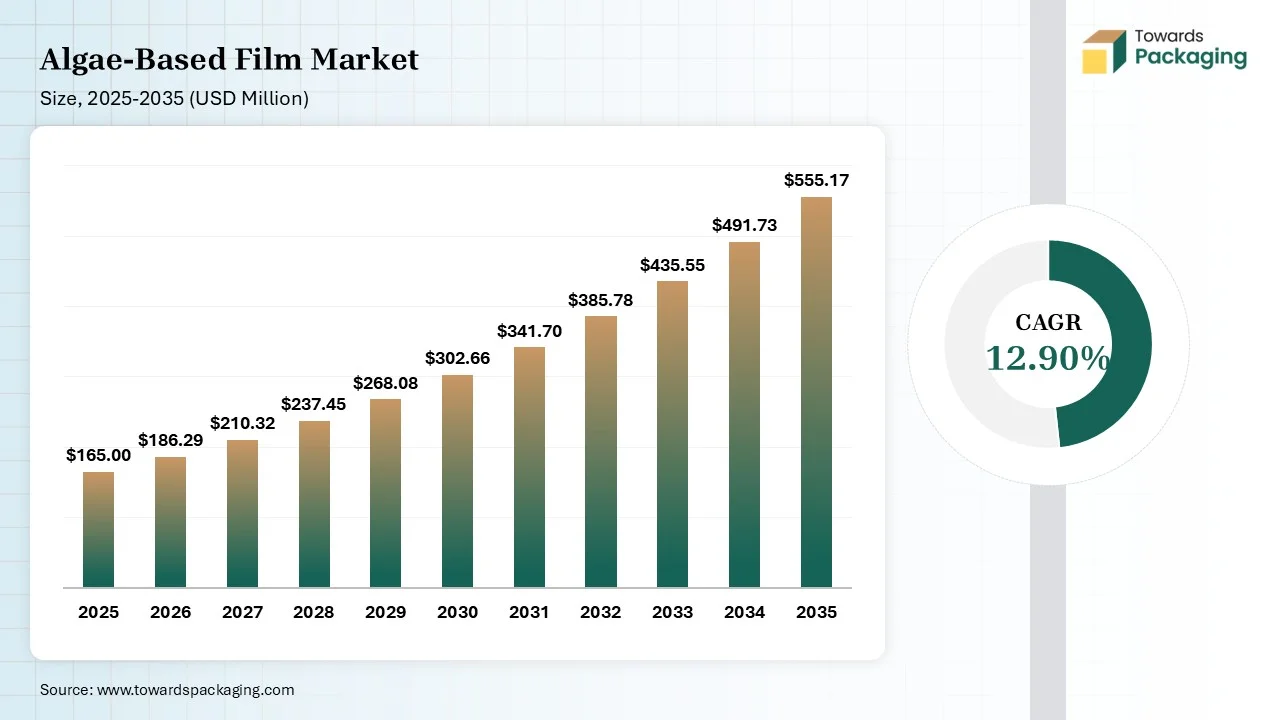
By Vidyesh Swar- August 2026- the global algae-based film market size was estimated at USD 165 million in 2025 due to growing eco-friendly buyers, faster production capabilities, and growing food packaging. The market is predicted to increase to USD 186.29 million in 2026 due to the interest in eco-friendly goods and the rise in flexible films. The market is expected to grow to approximately USD 555 million by 2035, expanding at a CAGR of 12.90% from 2026 to 2035 due to better production economies and expansion of agricultural mulch films.
Algae-based films are biodegradable films made up of microalgae extracts. It features characteristics like renewable sourcing, natural preservation, UV blocking, antioxidant activity, biodegradability, elasticity, high tensile strength, and strong antimicrobial performance. It offers benefits like fast degradation, edible options, low resource use, and extended shelf life. Algae-based films are used in applications like edible wraps, fresh produce coatings, nursery plant pots, drug delivery, and mulch films. In 2025, the algae-based film market size was estimated at USD 165 million because of higher requirements for eco-friendly packaging, abundant microalgae supply, and increasing material advancements. The growing demand for superior material traits and expanding regional manufacturing increases the production of algae-based films.
Source:- Towards Packaging Database
The market is expected to grow to approximately USD 555 million by 2035, due to the growing industrial scalability, rising marine degradability, and the focus on creating net-positive raw materials. Growing sectors like agriculture, cosmetics, and F&B packaging help drive growth. The focus on improving packaging consistency and absorbing carbon dioxide present in nature increases the use of algae-based films. The upgradation of extrusion and the cultivation using energy-efficient photobioreactors contribute to the growth.
Source:- Towards Packaging Database
The market is expanding at a CAGR of 12.90% from 2026 to 2035, driven by the interest in certified alternatives, brands' strong focus on a carbon-negative footprint, and ongoing material innovation. The optimization of closed-loop manufacturing, availability of advanced polymer extruders, and rising harsh penalties increase the use of algae-based films. Key companies like Sway Innovation, Loliware, Notpla, and Evoware will contribute to the growth. Advancements like genetic optimization, advanced polymer blending, and AI-driven cultivation will help drive growth.
Source:- Towards Packaging Database
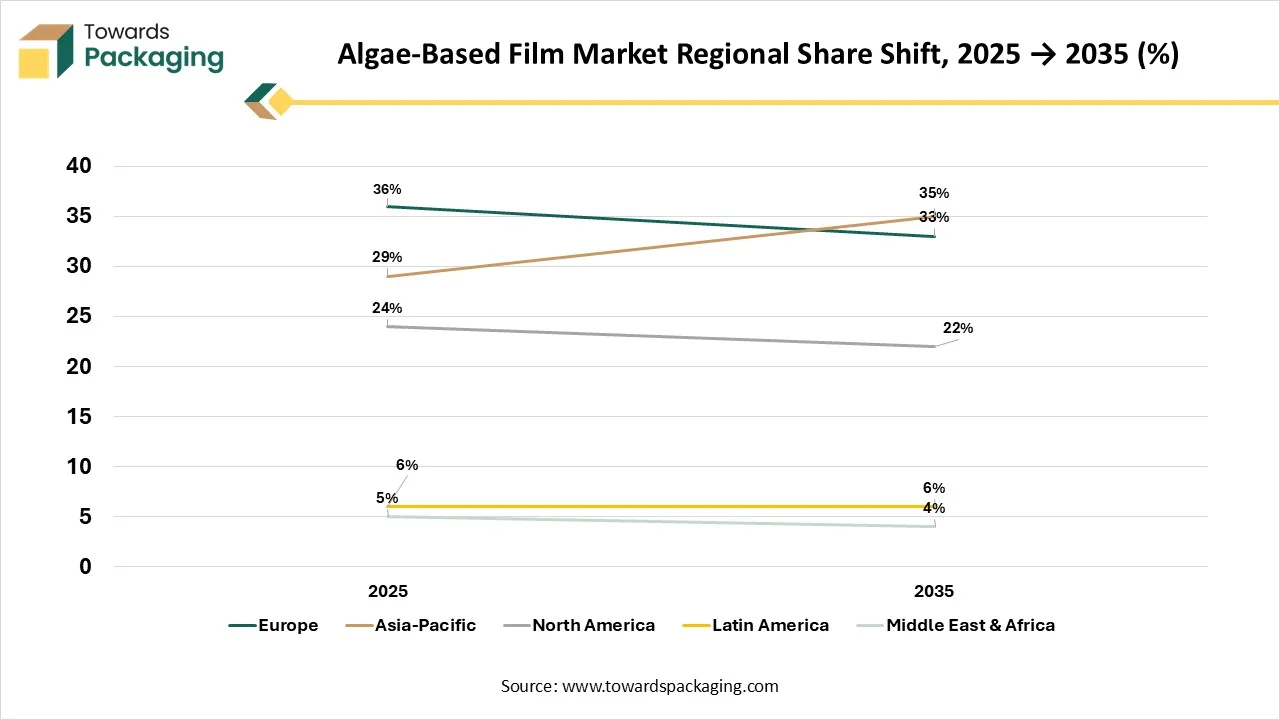
Europe held the 36% market share, driven by the strong biopolymer research center and the rising FMCG integration with algae-based film. Asia Pacific held the 29% market share due to the vast coastlines, plastic waste bans, and the robust growth in the packaging sector. North America held the 24% share in the market in 2025 due to growing corporate partnerships, strong biotech R&D, and the rise in plastic-free packaging. Latin America held the 6% share in 2025, driven by policy changes and agro-energy integration. The MEA held the 5% share in the market due to the strong environment for microalgae cultivation and the robust backing for sustainable manufacturing.
Source:- Towards Packaging Database
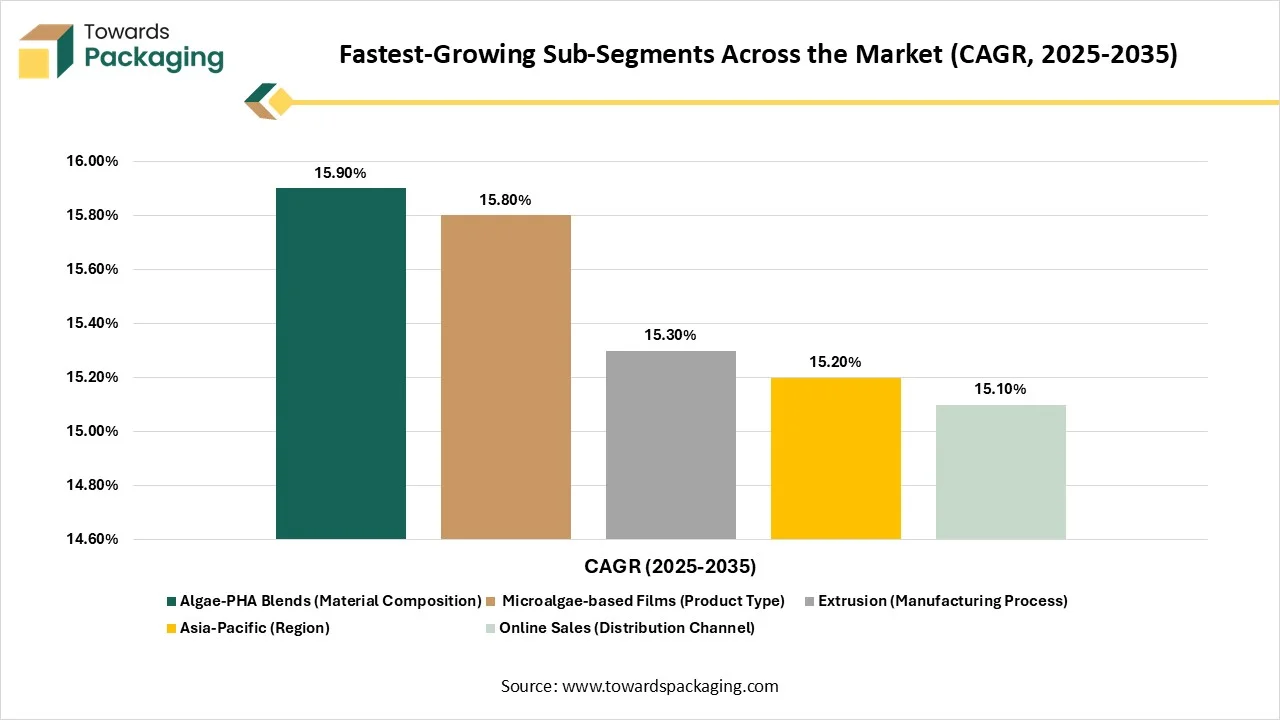
The fastest-growing sub-segments are algae-PHA blends by material composition, microalgae-based films by product type, extrusion by manufacturing process, online sales by distribution channel, and Asia Pacific by region. The algae-PHA blends are expected to grow at 15.9% CAGR in the market during the forecast period due to the higher use in packaging applications and cost efficiency. The microalgae-based films are expected to grow at 15.8% CAGR during the predicted timeframe due to their active food preservation. The extrusion is expected to grow at a 15.3% CAGR during the forecast period due to its energy-saving ability and uniformity. Online sales are expected to grow at a 15.1% CAGR during the predicted timeframe due to the expansion of D2C startups. Asia Pacific is growing at a 15.2% CAGR in the market during the forecast period due to the availability of multi-year government subsidies for the production of algae-based films.
Source:- Towards Packaging Database
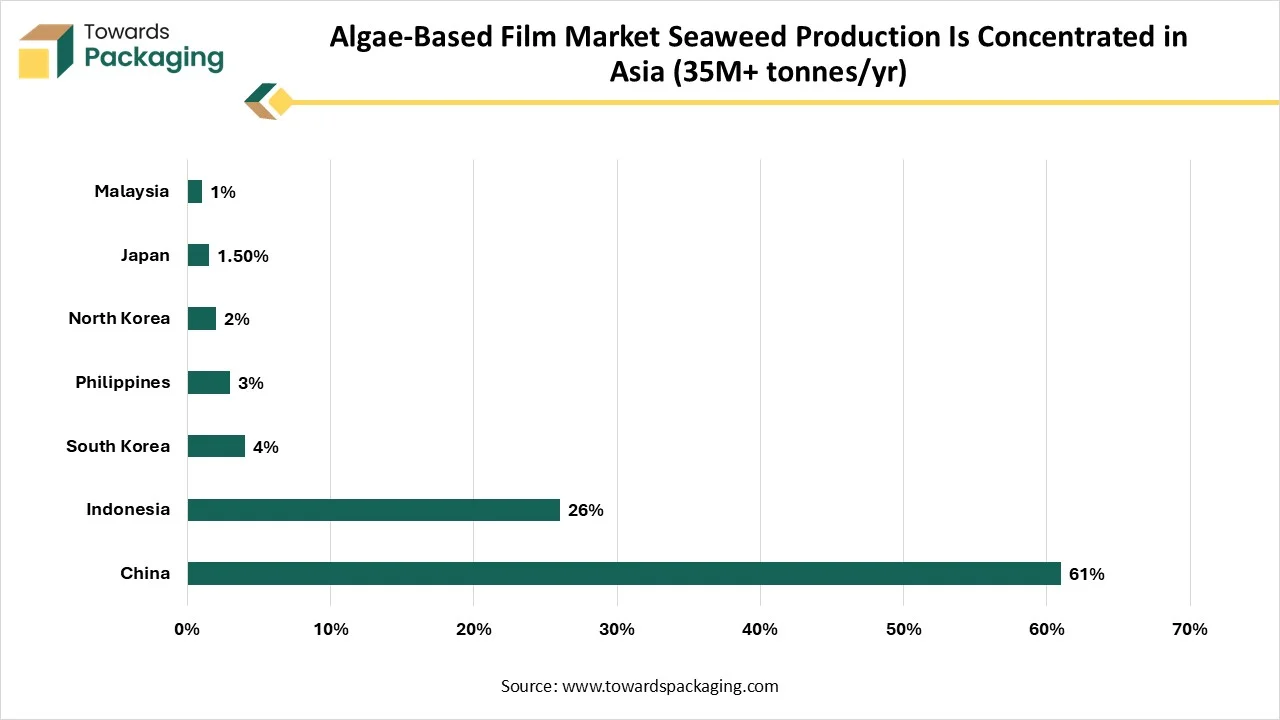
From 2019 to 2021, global seaweed production reached approximately 35 to 36 million tonnes per year. The production is driven by the rise in direct food consumption, leading aquaculture, rising demand for industrial hydrocolloids, and growing environmental uses. China is leading in the production of seaweed. Countries like Indonesia, Philippines, China, South Korea, North Korea, Malaysia, and Japan are part of global production. Asia Pacific held a 97-98% share in the global production due to advanced aquaculture systems, high culinary consumption, growing direct state investments, and favorable geography. China held a 57-61% share in the global production due to the availability of high-yield cultivation processes and strong marine farming.
Source:- FAO (2022, 2023) Seaweed Production Statistics
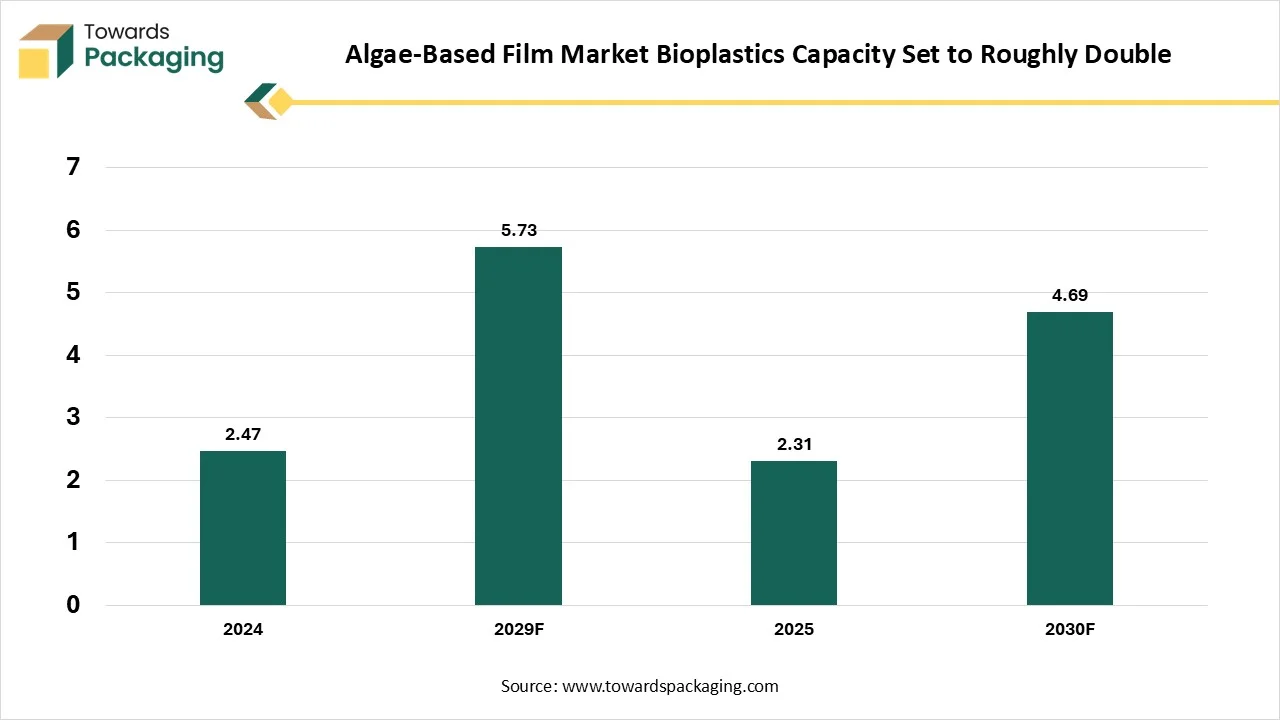
Aman’s research showcases that the global bioplastics produced in the year 2024 are 2.47 million tonnes. Factors like packaging growth, eco-friendly demand, focus on small footprint, development of automotive parts, and regulatory uncertainty drive the use of bioplastics. Global bioplastic production is expected to reach 5.73 million tonnes by 2029. The expansion is driven by polymer innovation, climate regulations, and growing new application areas. Global bioplastic production reached 2.31 million tonnes in 2025 due to the regulatory push, industrial diversification, and corporate sustainability. Global bioplastic production is forecasted to reach 4.69 million tonnes in 2030 due to growing retailer demand, expanding automotive components, and stricter international targets. Packaging application is the highest shareholder in 2025 with 41.3%. Corporate sustainability, shorter product lifecycles, and massive F&B support packaging growth.
Source:- european-bioplastics.org.
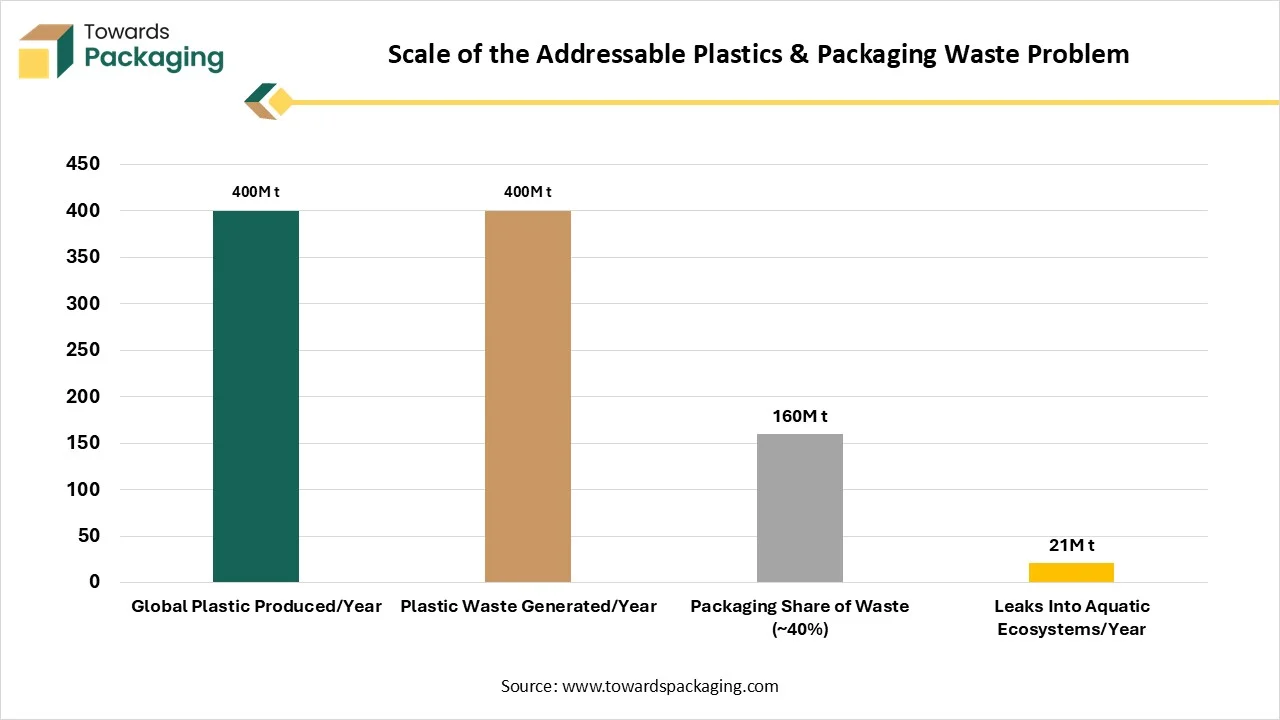
Plastic production reached approximately 400-431 million tonnes in 2024. The production drivers are single-use demand, cheap manufacturing, and growing versatility. The plastic waste generated in 204 is approximately 400 million tonnes due to the massive production infrastructure, rise in single-use design, and lower recycling rates. Packaging holds approximately a 40% share by weight of total waste generated due to e-commerce growth, expansion of single-use design, and increasing use across every sector. Each year, 19-23 million tonnes of plastic drip into aquatic infrastructure due to open dumps, wastewater overflows, poor collection ecosystems, and stormwater runoff. It spreads diseases, harms animals, and releases toxic chemicals in water.
Source:- UNEP Annual Report (2024/2025) and OECD Chart Data
Aman’s research indicates that over 100 countries have prohibited the use of single-use plastic bags, which increases the adoption of algae-based films. Countries like Bangladesh, Kenya, China, Australia, Canada, Germany, Rwanda, India, France, and many other banned single-use plastic bags. The banned its due to wildlife harm, low recycling, clogging waterways, and increasing pollution. These countries give preference to reusable and recyclable packaging. Some countries also restricted the use of drink-mixing sticks and covered cutlery. The bans occurred due to high waste volumes, growing water pollution, and non-biodegradability. Regulations like the SUPD by the EU, the Single-use Plastics Prohibition Regulations by Canada, the Plastic Waste Management Amendment Rules by India, and many other regulations increase adoption of eco-friendly materials. Instead of plastic items, consumers and brands are shifting to eco-friendly materials. For instance, India banned single-use plastic items like plates, trays, earbuds with plastic sticks, ice-cream sticks, plastic forks, plastic straws, and many more.
Source:- OECD Chart Data
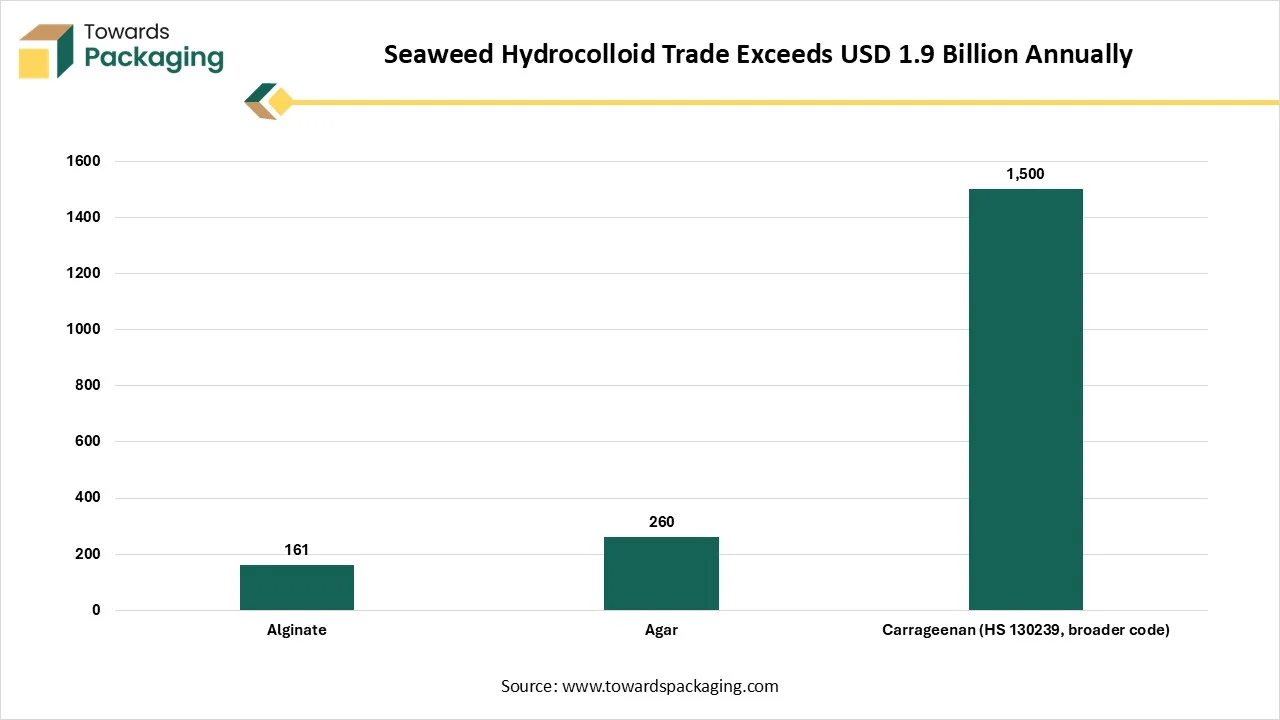
Global agar exports in 2021 were USD 260 million. The exported agar is widely used in industries like food, biotechnology, pharmaceuticals, microbiology, and cosmetics. The global alginate exports in 2021 were USD 161 million. The exported alginate is widely used across food processing, industrial applications, medical products, textiles, and other applications. The carrageenan HS 130239 exports in 2021 were USD 1.5 billion. The export is driven by the plant-based diet boom, meat stabilization growth, and clean-label trends.
Source:- UN Comtrade (2023) Data
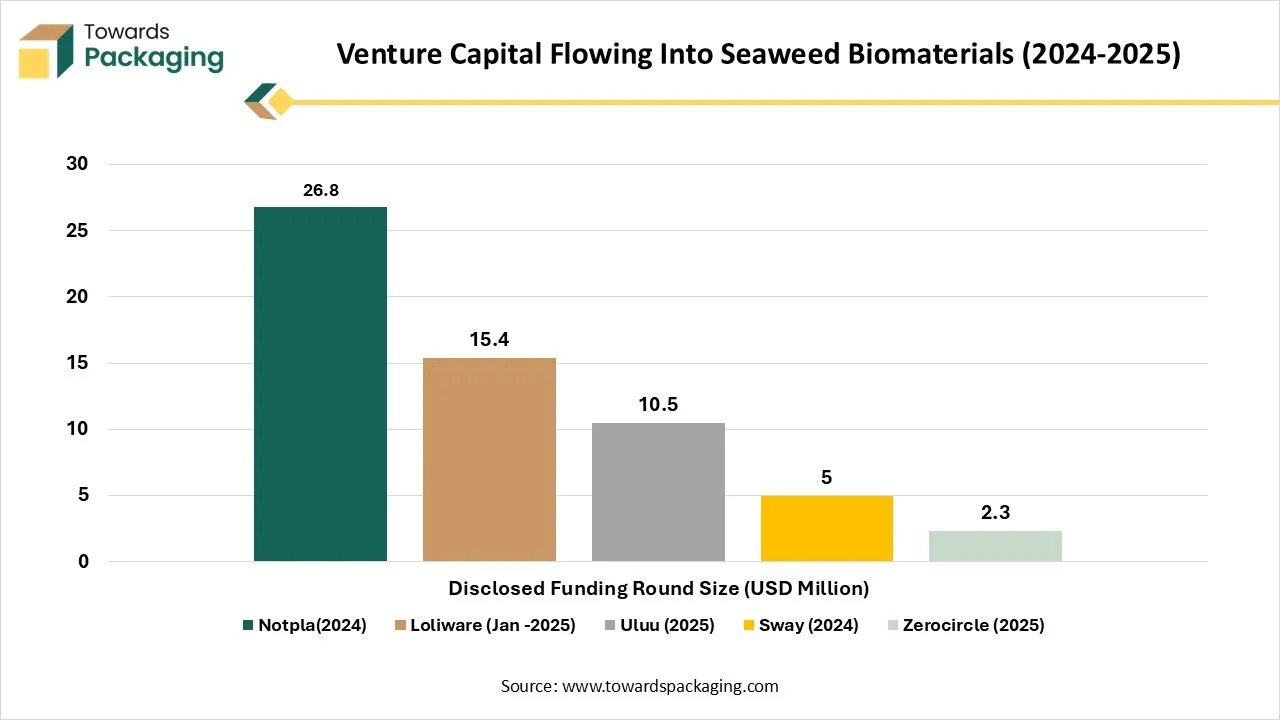
At least $43 million investment made in 2024 in 7 biopolymer or seaweed companies. Notpla received a $26.8 million investment to increase manufacturing capacity, replace single-use items, and expand its presence in North America. Uluu got a $ 10.5 million investment in a 2025 Series A funding round to scale up production. The major investor in Uluu is Burda Principal Investments. Zerocircle received a $2.3 million investment in 2025 for the expansion of the team, manufacturing, and optimization of supply chains. The company serves regions like the Middle East and Europe. Loliware got $15.4 million in a pre-Series A round in 2025 for the development of new seaweed products. Sway got $5 million in a 2024 seed round and received $2.5 million in 2021 in pre-seed round to enhance manufacturing capabilities and expand the product portfolio. The leading investor in Sway was Third Nature Investment.
Source:- Phyconomy, "Seaweed in 2025: The Year in Review" (Jan 2026); Packaging Europe, Vegconomist, AgFunderNews, TechFundingNews funding announcements (2024–2025)
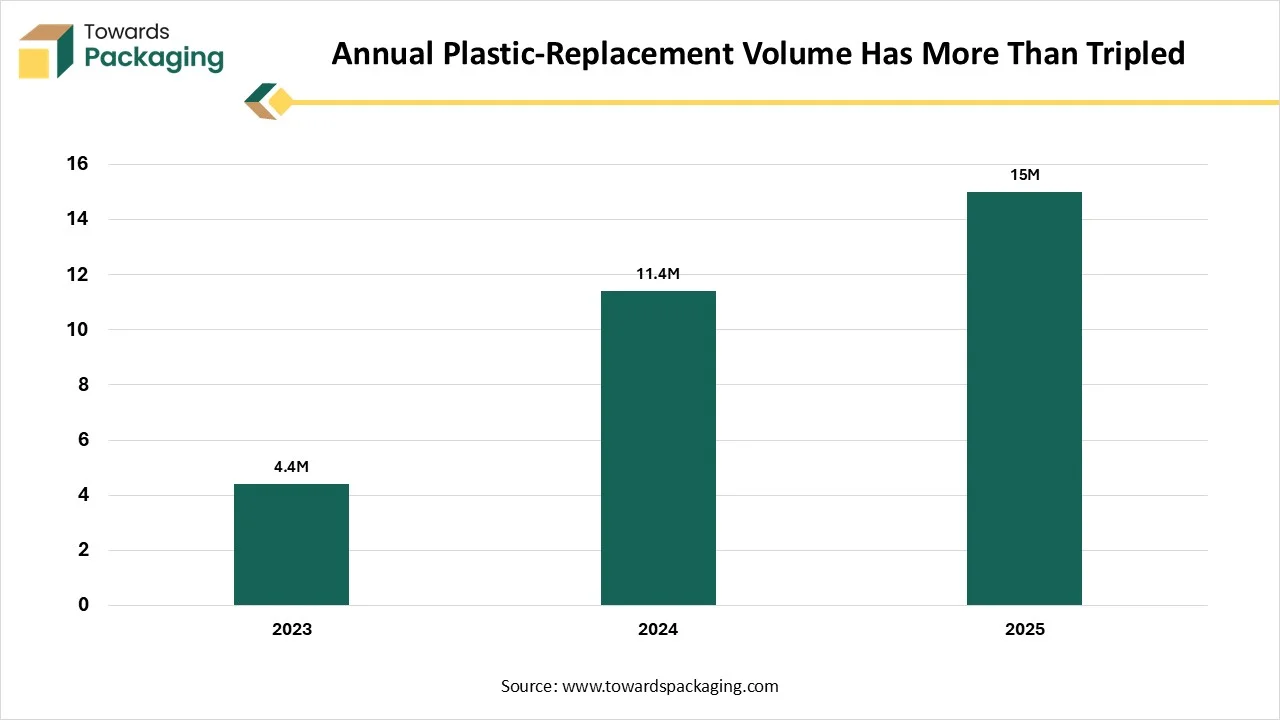
Notpla replaces 4.4 million single-use plastic items in 2023. The company replaced items like takeaway food packaging, drink containers, condiments, food coatings, and others. Notpla replaced 11.4 million single-use plastic items in 2024 and 15 million in 2025. Instead of plastic items, the company shifted to seaweed-based alternatives. The company replaced items like takeaway containers, liquid sachets, edible bubbles, utensils, pipettes, compostable bubbles, and tableware. The company replaced items to tackle microplastic-based health issues and ocean plastic pollution. The company replaced old items with new solutions like seaweed-lined board, Notpla pipettes, and Ooho bubbles.
Source:- Phyconomy, "Seaweed in 2025: The Year in Review" (Jan 2026); Notpla company statements via Packaging Europe and Vegan/Plant Based News (2024).
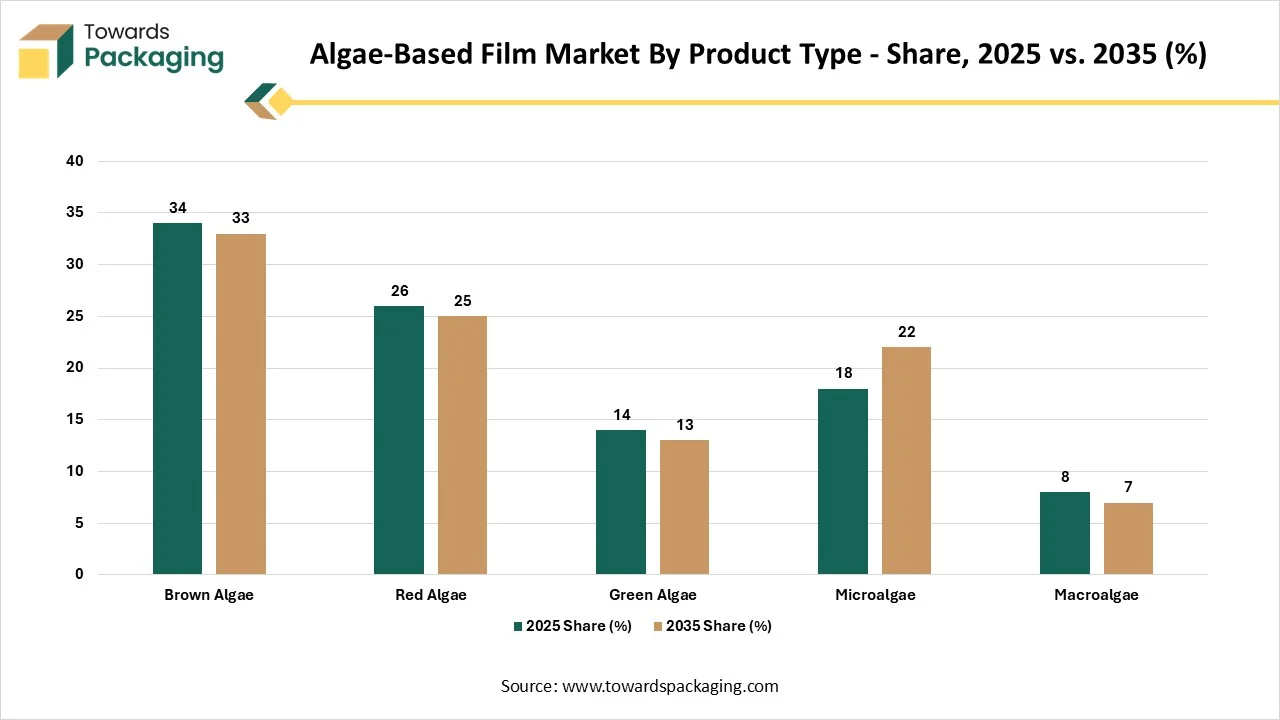
The market is categorized into product types like brown algae-based films, green algae-based films, microalgae-based films, red algae-based films, and microalgae-based films. According to Sudeep Pednekar’s research, brown algae-based films dominated the algae-based film market with a 34% share in 2025 due to the abundance of raw materials and their exceptional physicochemical qualities. The increased development of standalone biodegradable wrapping and the moisture loss reduction in fresh produce increase the use of brown algae-based films. The microalgae-based films are growing at the fastest CAGR of 15.8% during the forecast period due to their faster growth and low carbon footprint. Factors like food packaging demand, rise in active barrier packaging, and need for biocompatible films increase the use of microalgae-based films. The red algae-based films held a 26% share in 2025 in the market due to their carbon-negative footprint and active preservation qualities. The development of biocompatible wound dressing and edible coatings increases the use of red algae-based films.
Source:- Towards Packaging Database
The material composition is categorized as pure algae-based films, algae-PLA blends, algae-starch blends, algae-PHA blends, algae-cellulose composites, and other biopolymer blends. The algae-PLA blends dominated the market with a 29% share in 2025, driven by the balanced mechanical strength and low feedstock pressure. The development of rigid packaging films increases the use of algae-PLA blends due to their high strength. The algae-PHA blends are growing at the fastest CAGR of 15.9% during the forecast period due to their lower cost and better performance. The creation of compostable food bags, interest in crop mulch sheets, and the rise in biocompatible wrapping increase the use of algae-PHA blends. The pure algae-based films held a 21% share in 2025 due to the focus on eliminating toxic residues and the consumer interest in zero-waste options. The rising use of moisture-barrier liners and the higher demand for protective nursery films increase the use of pure algae-based films.
Source:- Towards Packaging Database
The film types like biodegradable packaging films, barrier films, water-soluble films, edible films, agricultural films, and specialty films are considered in the market. The biodegradable packaging films held the dominant position in the market with a 38% share in 2025 and are expected to grow at the fastest CAGR of 13.8% during the forecast period due to their shelf-life extension and versatility. The rise in consumer-facing retail displays, interest in certified materials, and their compatibility with bioplastics help drive growth. According to my research, edible films held a 20% market share due to the clean-label demand and high sustainability. The growing demand for dissolvable sachets, expansion of oral medicine strips, and the development of skincare masks increase the use of edible films. The barrier films held the 15% market share due to the rising integration of active packaging and expansion of composite blends. The transition away from heavy rigid containers and the need to avoid premature food spoilage increase the use of barrier films.
Source:- Towards Packaging Database
The manufacturing processes like solvent casting, compression molding, coating & lamination, extrusion, and blow film extrusion are used in the manufacturing of algae-based film. Solvent casting dominated the market with the highest revenue share of 39% in 2025 due to the uniform dispersion and low equipment cost. The compatibility with research, need for uniform mixing, and focus on minimal equipment investment increase the use of solvent casting. Extrusion is expected to experience the fastest growth in the market at a CAGR of 15.3% during the forecast period due to its direct processing and enhanced performance. The interest in freshness-keeping wraps and the rise in clean-sterile packaging increases the use of the extrusion process. Compression molding held a 10% market share in 2025 due to its ability to achieve better blends and gentle processing. The focus on cost-effective manufacturing of functional sheets and the demand for home-degradable films increases adoption of compression molding.
Source:- Towards Packaging Database
According to research, food packaging held the dominant position with a 41% market share in 2025 due to the high plastic generation and the shift to zero-waste design. The growing preference for renewable materials, natural antimicrobial functions, and the food industry transition to compostable options increases the use of algae-based film. The Cosmetic & personal care packaging held an 11% share in the market in 2025 and is expected to grow at the fastest CAGR of 14.5% during the forecast period due to the expansion of luxury cosmetic branding. The cruelty-free beauty demand, rise in product laminates, and the focus on minimalist cosmetic branding increase adoption of algae-based films. The retail & consumer goods packaging held a 12% market share in 2025, driven by the preference for green brand appeal. The focus on differentiating dry goods, interest in premium positioning, and preference for sustainable retail positioning increase use of algae-based films.
Source:- Towards Packaging Database
The food & beverage industry dominated the algae-based film market with a 44% share in 2025 due to the need for functional preservation in food items, the rise in single-serve pods, expanding frozen seafood, and the development of soluble seasoning sachets. The healthcare & pharmaceutical industry is growing at the fastest CAGR of 14.4% during the forecast period. The growth is driven by the drug maker transition to algae polymer. Sensitive drug manufacturing, focus on mucosal pharmaceutical administration, and development of transdermal patches increase the use of algae-based films. Personal care & cosmetics held the 13% market share in 2025. The growing interest in vegan packaged cosmetics and the rise in zero-waste beauty brands increase demand for algae-based films. The growing sample windows in cosmetics help with the growth.
Source:- Towards Packaging Database
The distribution channel is classified as distributors & traders, online sales, and direct sales. Among all these distribution channels, direct sales dominated the market with a 64% share in 2025 due to the demand for extensive technical proof. The tailored formulation creation, rise in small-scale biotech developers, and the interest in direct feedback increase the use of direct sales. The distributors & traders held a 29% share in the market in 2025. The distributors & traders' growth is driven by factors like focus on bridging scaling gaps, rise in local businesses, and expansion of low to minimum orders. Online sales are growing at the fastest CAGR of 15.1% during the forecast period due to the expansion of digital sourcing among specialty buyers. The growing demand for green unboxing, expansion of B2B portals, niche product access, and focus on low overhead increases the use of online sales.
Source:- Towards Packaging Database
According to my research, Europe dominated the algae-based film market with a 36% share in 2025 due to growing public funding. The European Green Deal and aggressive domestic regulations increase the production of algae-based films. The presence of biopolymer research centers and the abundance of marine biomass harvesting increase the use of algae-based films. The adoption of biodegradable mulching films in the agricultural industry drives the market growth. Germany leads in the European region due to the local waste targets. The mature composting infrastructure and increased funding in material science increase the production of algae-based films. The rise in sustainable crop protection boosts the growth.
Source:- Towards Packaging Database
According to my research, Asia Pacific held a 29% share in the algae-based film market in 2025 and is expected to grow at the fastest CAGR of 15.2% during the forecast period. Mass algae cultivation and affordable shipping increase the production of algae-based film. The rise in green subsidies and the interest in transparent consumer goods increase the use of algae-based films. The need to lower plastic accumulation in soil and strong material processing infrastructure increase the production of algae-based films. The massive packaged food industry supports the growth. India is rapidly expanding in the market due to the large seaweed farming and growing regulatory pressures. The rapid development of seaweed-based films in Indian enterprises and the preference for plant films helps with expansion. The increased presentation of green-label products drives the growth.
Source:- Towards Packaging Database
North America held the 24% market share in 2025. The retailers' pledge for net-zero targets and the growing investment in algae cultivation increase the production of algae-based film. The development of plastic-free goods and expanding utilization in agricultural films helps with the expansion. The well-developed material firms drive the growth. The United States is a key contributor to the market due to the interest in transparent packaging materials. The utilization of photobioreactors and the expansion of algae extraction increases the use of algae-based films. The advanced technical capabilities and the rapid expansion of marine-degradable films support the growth.
Source:- Towards Packaging Database
Latin America held a 6% market share in 2025. The burgeoning modern farming activities and the regulatory demand for green options increase the use of algae-based films. The extensive coastlines and high crop cultivation increase local production of algae-based films. The growing open dumpsite issues and increased testing of bio-based materials help with expansion. Brazil is a key player in the Latin American region. The carbon-reduction corporate goals and the presence of subtropical climates increase the production of algae-based films. The strong bioenergy framework and the rise in harvesting of tropical seaweeds increase the development of algae-based films. The expanding protective films and advanced ethanol ecosystem boost the growth.
Source:- Towards Packaging Database
The Middle East & Africa held a 5% market share in 2025. The heavy investment in the cultivation of desert algae and exploding greenhouse farming increases the use of algae-based film. The shrinking arable lands and plentiful sunlight increase the development of algae-based films. The expansion of sustainable manufacturing programs boosts growth. The UAE is robustly expanding in the market. The interest in bio-films and the presence of desert biotech climate increase the production of algae-based films. The rapid biopolymer conversion and the explosion of seaweed-based polymers support the overall market growth.
Source:- Towards Packaging Database
According to my study, the algae-based film market is expanding rapidly. The market is moving towards the development of single-use food wrappers and fashion bags that are compostable at home. The market is witnessing strong demand for sustainable wrappers, bio-based mulch films, compostable films, and sustainable sachet films. The future growth depends on factors like material performance, cost reduction, and feedstock economies. The partnerships between extrusion providers, upstream cultivation, and key brands will develop new solutions.
Vidyesh Swar led the primary research, including market size, market CAGR, segmentation, regional growth, competition, methodology development, and market trends.
Aman collected information about global bioplastic production, plastic prohibitions across regions, seaweed trade, investment, annual plastic replacement, and global seaweed production that helps strengthen estimations of the market.
Aditi analyzed the complete research document, corrected anomalies, performed quality inspection, and concluded the entire structure of the report and ensured overall clarity of the report.
By Product Type
By Material Composition
By Film Type
By Manufacturing Process
By Application
By End-use Industry
By Distribution Channel
By Region











Principal Research Analyst
Vidyesh Swar is a Senior Research Analyst at Towards Packaging, bringing over 4 years of dedicated expertise in market intelligence and strategic analysis across the dynamic world of packaging technologies and solutions.
Learn more about Vidyesh Swar

Reviewed By
Aditi Shivarkar, with 14+ years in packaging market research, specializes in food, beverage, and eco-friendly packaging. She ensures accurate, actionable insights, driving Towards Packaging Analytics & Consulting 's excellence in industry trends and sustainability.
Learn more about Aditi Shivarkar


Algae-Based Film Market
 Table of Content
 sales@towardspackaging.com
 +1 804-441-9344
 Download Sample
 Schedule a Meeting