


The Latin America flexible packaging market is projected to grow from USD 10.77 billion in 2026 to USD 14.72 billion by 2035, expanding at a CAGR of 3.53% during 2026–2035. The report provides detailed insights into market size, segment data by material, product type, and end-use industries, along with regional analysis across North America, Europe, Asia Pacific, Latin America, and the Middle East & Africa.
The study further reviews transportation and logistics performance such as shipping costs, handling time, and distribution networks, along with consumer demand trends, regional preferences, and sustainability regulations influencing packaging adoption. In addition, the report analyzes competitive strategies of major companies, packaging innovation, and advancements in printing and recyclable materials, helping businesses understand market dynamics and identify growth opportunities in the Latin America flexible packaging market.

Latin America flexible packaging refers to a market which is widely known for bendable packaging resources, such as wraps, pouches, and bags, manufactured from resources such as paper, plastics, and films. It is influenced by customer demand for sustainability and convenience, e-commerce development, and efficacy in sectors such as personal care, food & beverages. Major trends comprise the growing usage of environment-friendly and recyclable choices, like kraft paper and bioplastics, and the growth of "smart packaging" with services like freshness pointers.
Technological transformation in the market plays a significant role in its expansion. Rising customer demand for environment-friendly choices such as recyclable films and bioplastics, the requirement to confirm food security through traceability, and the boost for cost-efficiency and higher presentation from inventions as multilayer films. Continuous innovation in the packaging process with integration of technology such as QR codes and several others.
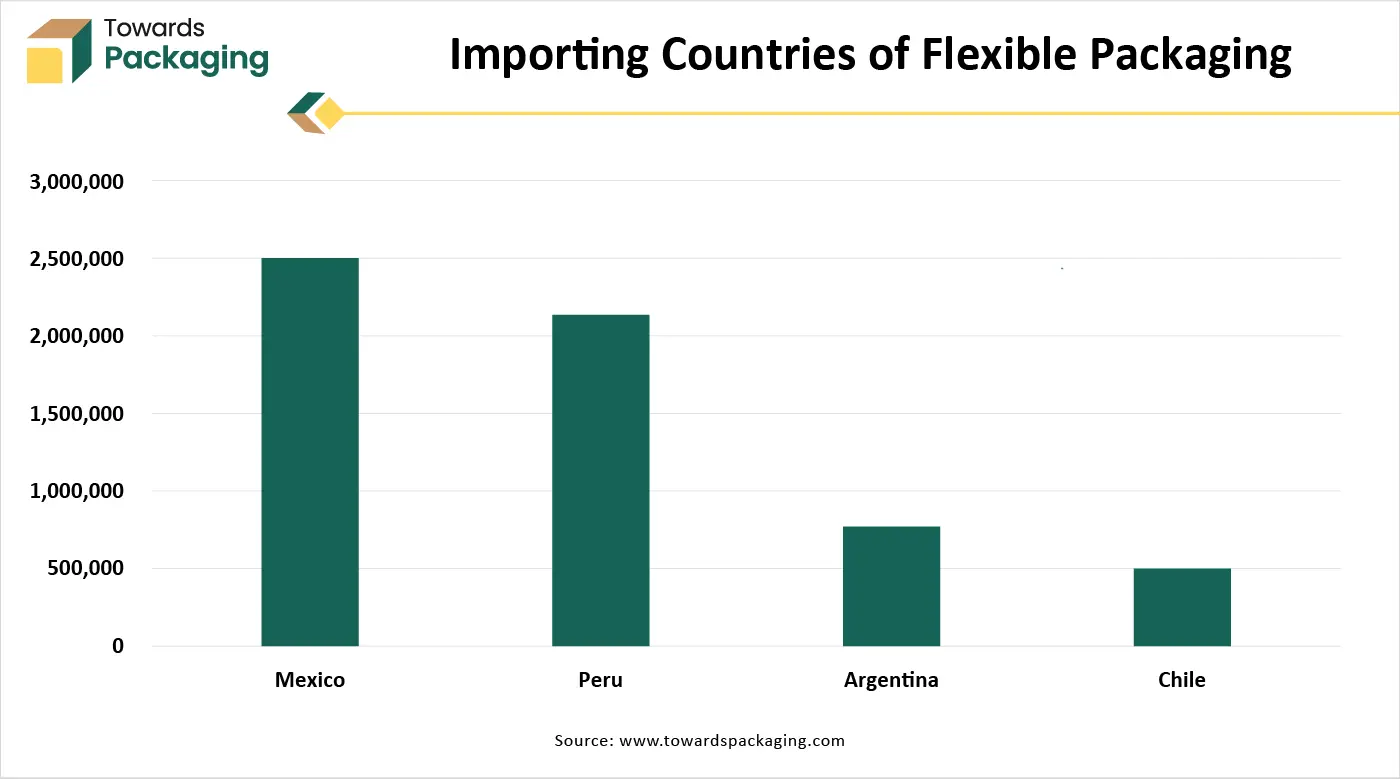
The major raw materials utilized in this market are plastic, paper, and foil.
The component manufacturing in this market comprises aluminum foil, polyethylene (PE), and polypropylene (PP).
This segment is growing focus on the development of e-commerce, demand for convenience, and the change towards more sustainable.
| Product Type Segment | Market Share 2025 (%) |
| Printed Rollstock | 45% |
| Preformed Bags and Pouches | 30% |
| Other Product Types | 25% |
The printed rollstock segment dominated the market with highest share in 2024 due to increasing demand for sustainable packaging and technological advancement. Progressions in printing skills, particularly digital printing, are allowing more personalization. There is a trend for utilizing more sustainable resources, like paper and bio-plastics, and producing more recyclable packing options. This comprises the acceptance of environment-friendly resources like compostable and recyclable films are driving the market by applying stricter ecological guidelines.
The preformed bags and pouches segment is expected to grow at the fastest CAGR during the forecast period. This segment is growing due to its cost-effectiveness and convenience. The rapid extension of e-commerce sector in Latin America is growing the demand for packing options that are efficient, durable, and lightweight for transportation, all features that bags and pouches offer. The emphasis on decreasing plastic waste has resulted in the growth and acceptance of biodegradable and recyclable resources in bags and pouches packaging, positioning with rising consumer ecological concern and government guidelines.
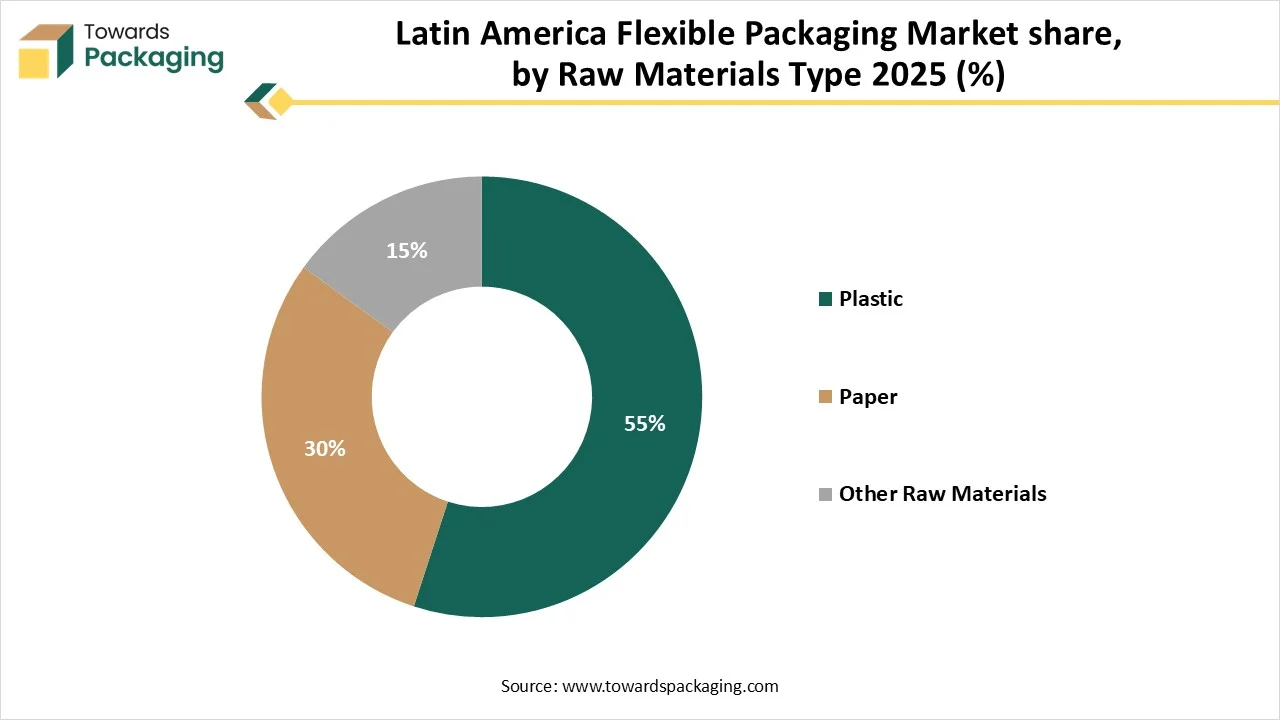
The plastic segment dominated the market with highest share in 2024 due to its durability, versatility, and cost-effectiveness. This segment is influenced by growing e-commerce, demand for advanced packaging, and rising emphasis on sustainability, mainly through bioplastic and recyclable choices. The growing e-commerce industry, amplified demand for cost-operative and advanced packaging in the personal care, food and beverage trades, and the growth of global exports of packed products. This material is dominating due to its impact and chemical resistance, lightweight property, and moisture absorbing properties.
The paper segment expects the fastest growth in the market during the forecast period. This segment is growing due to increasing demand for environment-friendly and sustainable packaging. Increasing customer apprehension for the ecological influence of packing and a common change towards environment-friendly options is a major driver. The rising urbanization in Latin America enhanced the demand for convenient packaging. Companies are emerging new paper-based options to enhance functionality and performance, focusing to strive with plastic packaging.
The aluminum foil segment expects the significant growth in the market, as it comprises superior barrier properties, sustainability effort, packaging trend, and expanded e-commerce sector. It offers a superior barrier to microbes, light, oxygen, and moisture, which is important for preserving goods freshness and prolonged shelf life. The extension of online shopping rises the necessity for strong packaging which can shield products at the time of shipping, a necessity that aluminum foil supports to fulfil. The growth of sustainable, recyclable aluminum foil packing resolutions is also supporting to influence adoption.
| Printing Technology Segments | Market Share 2025 (%) |
| Flexography Printing | 50% |
| Digital Printing | 35% |
| Other Printing Technologies | 15% |
The flexography segment dominated the market with highest share in 2024 due to evolving consumer preferences, economic factors, and cost-efficiency. Continuous rising demand for consumer packed products, beverages, and food items is a primary growth factor. It is favoured for its efficiency and affordability in comparison to old-style rigid packaging. Companies are capitalizing in options to fulfil increasing demand for environment-friendly packaging, like biodegradable resources and goods made with recycled material. Growing investments in packing infrastructure are anticipated to boost the research and development in this segment.
The digital segment is expected to grow at the fastest CAGR during the forecast period. This segment is growing due to its durability and lightweight nature. The growing popularity of e-commerce sector is a primary factor for the growth of this segment. It is planned to enhance supply chain efficacy for online retail requirements. It permits for more flexible and modified packaging, comprising branding and designing facilities. These technologies offer advantages such as improved traceability, freshness observing, and direct customer engagement.
The rotogravure segment expects the significant growth in the market, as it comprises high-value and high-quality printing for personal care as well as food brands. It is growing rapidly due to its capability to generate consistent and vibrant printed packaging. Its complex pattern at high speeds has made it suitable for brands emphasized on visual appearance and luxurious packaging choices. This technology provides excellent color reproduction which can manage complex patterns that is making it an ideal option for brands focusing to improve their visual branding.
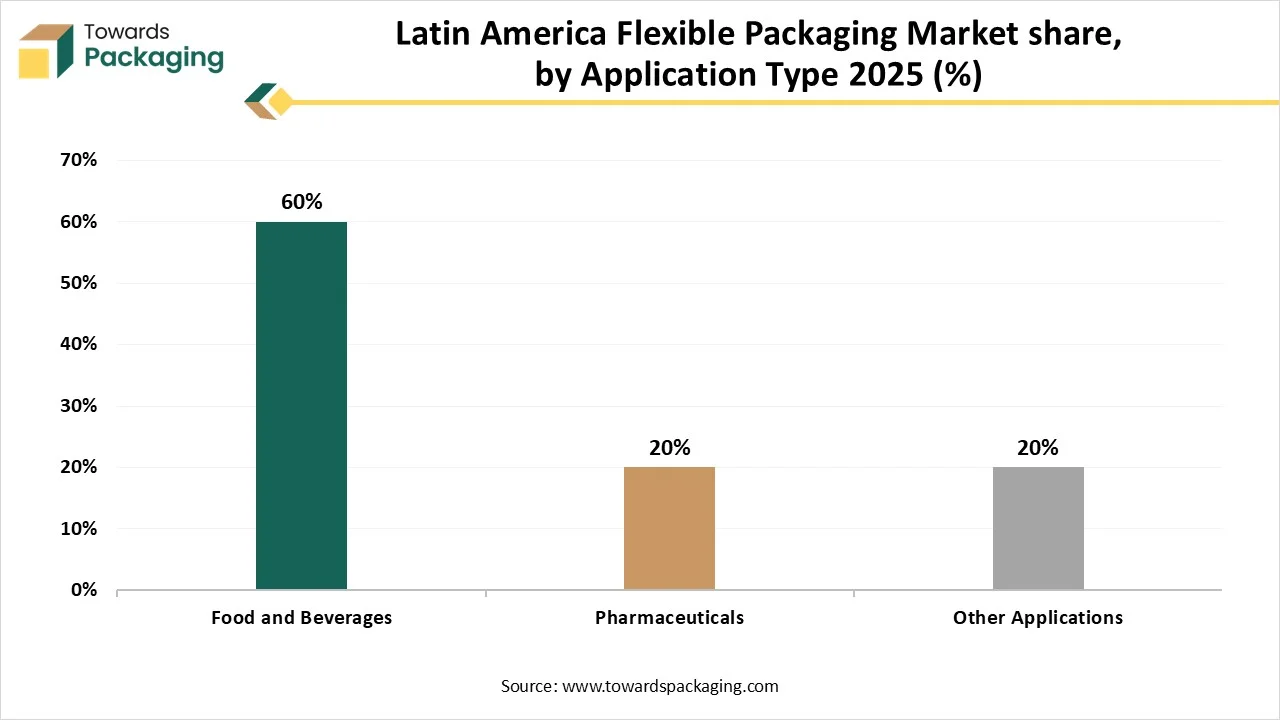
The food and beverages segment dominated the market with highest share in 2024 due to its versatility, convenience, and longer shelf life. It is widely accepted for goods like ready-to-consume food items and snacks as it spreads shelf life and provides suitability for customers on the go. The rising e-commerce industry, comprising online food shipping, is making a solid demand for flexible packaging of products, which are preferred for delivery and transport. It is utilized for an extensive variety of products, from frozen foods to snacks. There is a noteworthy push in the direction of more sustainable choices, with corporations discovering and integrating recycled resources to decrease ecological impact.
The pharmaceuticals segment is expected to grow at the fastest CAGR during the forecast period. This segment is growing due to increasing healthcare requirements and regulatory standards. Rapid shift towards flexible packaging is influenced by the necessity for shelf-life extension and convenience. Increasing focus on green and recyclable resources because of enhanced consumer consciousness and ecological regulations.
The cosmetics segment expects the significant growth in the market, as it comprises premiumization and sustainability. Rising e-commerce sector and increasing consumer consciousness of sustainable packing are noteworthy influencers, boosting brands toward environment-friendly flexible choices. There is a developing trend for premiumization of the luxury cosmetic products, which drives packaging pattern and material selections, with plastic offering a premium appearance and paper-based choices boosting their luxury appearance through finishes.
Argentina held the largest share in the Latin America flexible packaging market in 2024, due to government initiatives, consumer behaviour, and strong domestic industry. Customers are progressively discriminating and are influencing the demand for sustainable substitutes, like mono-material packaging and films which are manufactured from recycled content. Rise in demand of consumers is boosting companies to search for resource-effectual and strong packaging resolutions to control charges. Companies are capitalizing in new technologies to fulfil developing customers and regulatory requirements, such as progressive printing technologies and sustainable resources.
Rising e-commerce industry and increasing focus towards sustainability has enhanced the demand for the market. The rapid development of online shopping has generated a robust necessity for effectual and durable transport and delivery packaging, like flexible mailer bags. The industry is being influenced by demand for sustainable packing choices, comprising those manufactured with bio-based plastics and recycled content. Companies are answering with funding in new technologies and resources to fulfil both customer and supervisory expectations.
The major factors influencing the growth of market are increasing food & beverages industry, expanding e-commerce industry, portability and convenience, and expanding pharmaceutical industry. The industry is majorly supported by wider consumer trends favouring sustainability and convenience. The growing demand for ready-to-consume food, processed, and snacked, influenced by busy consumer lifestyles and urbanization, has boosted the necessity for packaging options that provide extended shelf life and convenience. It helps decrease shipping charges and enhance logistics and storing space in comparison with heavier, rigid substitutes.
By Product Types
By Raw Materials
By Printing Technologies
By Applications










Research & Advisory Analyst
Yogesh Kulkarni is an experienced Research Analyst specializing in the packaging sector, with a strong foundation in statistical analysis and market intelligence. He currently contributes his expertise to Towards Packaging.
Learn more about Yogesh Kulkarni

Reviewed By
Aditi Shivarkar, with 14+ years in packaging market research, specializes in food, beverage, and eco-friendly packaging. She ensures accurate, actionable insights, driving Towards Packaging Analytics & Consulting 's excellence in industry trends and sustainability.
Learn more about Aditi Shivarkar


Latin America Flexible Packaging Market
 Table of Content

 Download Sample
 Schedule a Meeting