


The non-barrier bag market is projected to grow from USD 16.03 billion in 2026 to USD 22.33 billion by 2035, registering a CAGR of 3.75% during the forecast period. The report provides detailed insights into market size, segment-wise analysis by material type, product form, and end-use industries, along with comprehensive regional data across North America, Europe, Asia-Pacific, Latin America, and the Middle East & Africa. It also includes in-depth company profiles, competitive landscape analysis, value chain evaluation, trade data, and detailed information on manufacturers and suppliers, highlighting the increasing demand for durable, non-woven, recyclable, and eco-friendly packaging solutions.
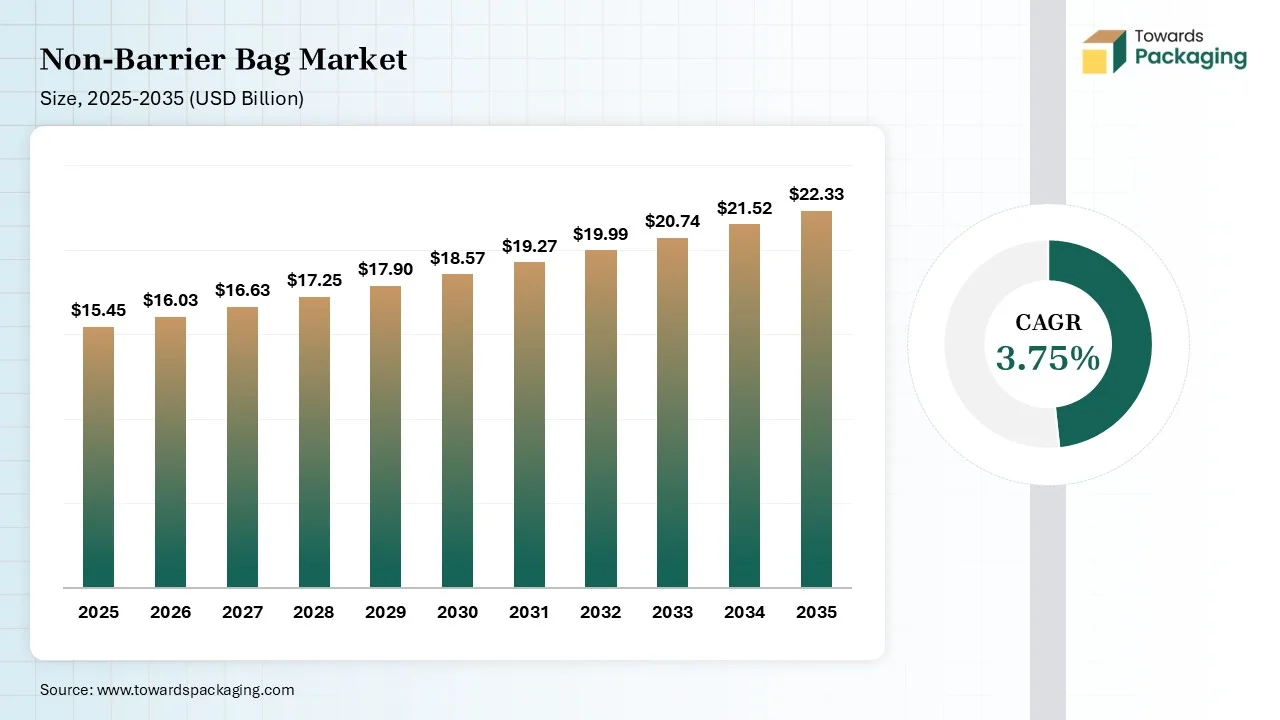
Non-barrier bags are flexible packaging options that lack dedicated layers or coatings planned to aroma ingress/egress, block oxygen, or moisture. It is utilised mainly for physical suppression, these are cost-efficient, regularly breathable, and suitable for goods with those needing minimal or shorter shelf lives, short-period preservation.
Technological transformation in the non-barrier bag market plays a significant role in developing sustainable and eco-friendly packaging. These are widely useful in manufacturing multi-layers laminate. It supports in developing enhanced-quality post-consumer recycled content. The development of smart bags with RFID tags and QR codes have raised the demand for this sector.
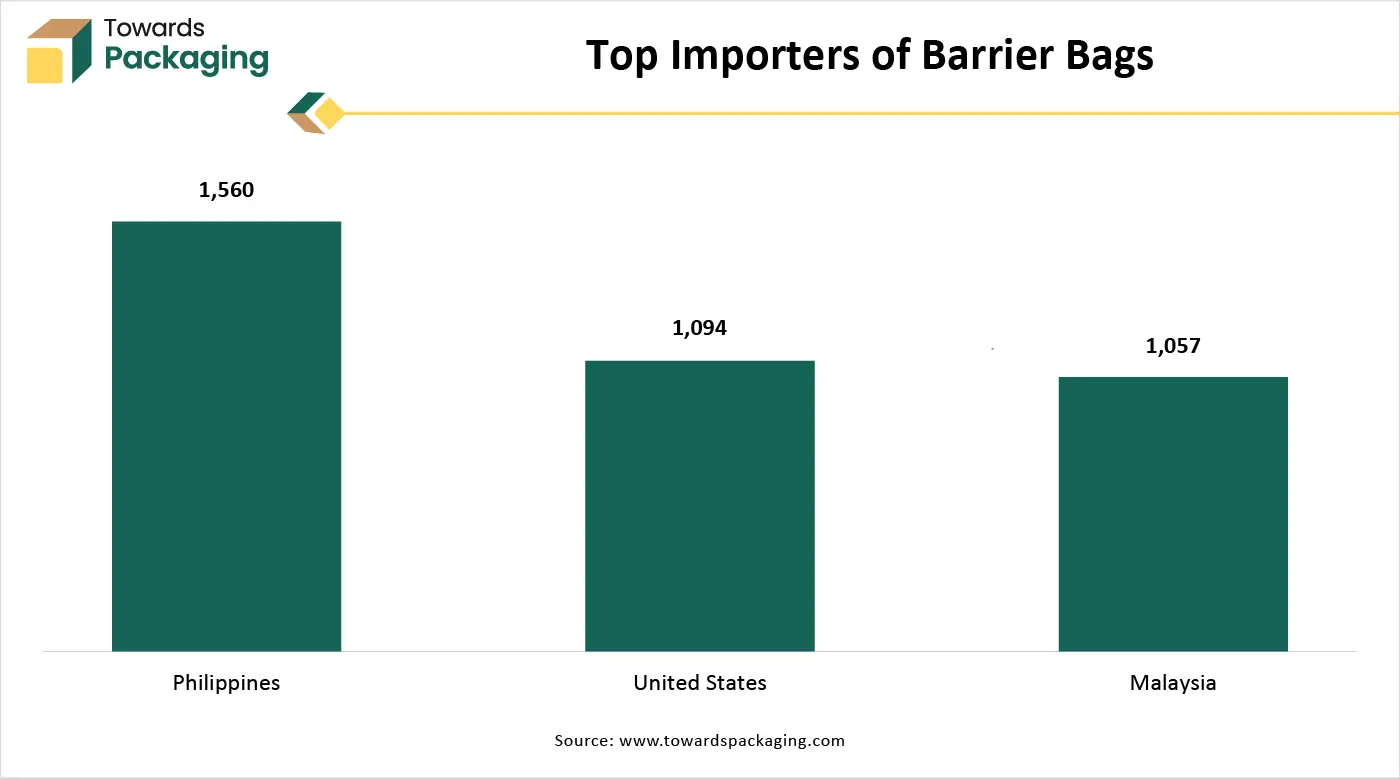
The major raw materials utilised in this market are polypropylene and polyethylene. These are useful in the production of durable and strong bags for product packaging.
The component manufacturing in this market comprises additive-free films, closures, non-woven fabric, and sealing agents. These support in the production of highly transparent and cost-effective bags for packaging.
This segment ensures safe handling and transportation of the products. It highly support in meeting the demand of the consumers by directly connecting consumers and manufacturers.
The polyethylene (PE) segment dominated the market with 44% share in 2025. Due to its cost-effectiveness, durability, and versatility. These are widely used for high-volume packaging of the products. These are high-recyclable packaging options which has raised its demand profoundly.
The polypropylene (PP) segment held the 18% market share in 2025. Due to its lightweight and durability quality. This segment is widely known for its chemical resistant and high strength. These are widely used for its flexibility that support in huge customisation.
The paper segment is expected to experience the fastest growth in the market with 4.2% CAGR during the forecast period. Due to the increasing demand for the adoption of eco-friendly packaging. These are highly recyclable and biodegradable packaging which has raised its usage in a wide range if industries. The presence of strict packaging guidelines has fuelled the demand for this sector.
The biodegradable / compostable segment held 12% market share in 2025. Due to the rising concern for ecological issues which has raised the demand for this segment. These are widely known for its tensile strength and durability which has raised the adoption of these packages. The rapid innovation in the production of compostable packaging has fuelled the demand for this segment.
The others segment held the 11% market share in 2025. Due to its enhanced potential to protect products from external factors such as moisture and air. The increasing trend for customisation and sustainable packaging has fuelled the demand for this sector. The diversified need of these packaging has pushed huge production demand.
The food & beverage segment dominated the market with 48% share in 2025. Due to its versatility and capacity to protect the quality of products. These are widely used in the packaging of snacks and bakery products. It is a non-perishable packaging option available for dry products packing. The rapid shift towards urban areas has pushed the growth of this market.
The ecommerce & retail segment is expected to experience the fastest growth in the market with 5.0% CAGR during the forecast period. Due to its lightweight and cost-effectiveness. These packages provide enhanced protection to the products which has fuelled the demand for this sector. The huge space for digital printing on these packages support in branding strategies.
The industrial & logistics segment held the 12% market share in 2025. Due to its versatility, durability, and cost-effectiveness. These packaging can be easily customised and has high moisture resistant. These are widely used for transportation of huge-volume products.
The personal care & cosmetics segment held the 8% market share in 2025. Due to its eco-friendly, lightweight, and aesthetically pleasing quality which has appealed huge consumer base. The increasing adoption of biodegradable packaging has pushed the demand for this segment. These packages offer high-quality printing space which has pushed the demand for huge production.
The healthcare & pharmaceuticals segment held the 6% market share in 2025. Due to huge demand for sterile, non-reactive, and high-quality packaging in this sector. It needs biodegradable packaging that reduce the generation of packaging waste and fuelled its adoption. These packages ensure the protection of the quality of drugs which raised its adoption.
The others segment held the 4% market share in 2025. Due to its potential for specialised packaging which has pushed the adoption of this sector. These are widely accepted in a huge variety of industries in several shapes and sizes. It has high versatility and these can be customised easily which attract several industries to use these packaging.
The flat bags segment dominated the market with 30% share in 2025. Due to its simplicity, versatility, and cost-effectiveness. These bags required low production charges which raised its adoption in several sectors. The huge adaptability across several industries the demand for production of these bags increasing rapidly.
The gusseted bags segment held the 22% market share in 2025. Due to its huge capacity and versatility. These bags are widely used in the food industry for transportation due to its capacity to hold high-volume products. This design allows bags to expand and store huge number of products.
The standup bags segment is expected to experience the fastest growth in the market with 4.5% CAGR during the forecast period. Due to its reseal ability potential and convenience to consumer. This quality encourages the packaging of snacks and bakery products. It offers enhance shelf life to the packaged products which has raised its adoption rapidly.
The zipper bags segment held the 12% market share in 2025. Due to its high versatility and cost-effectiveness. These bags are highly flexible which raise its adoption in a wide range of industries. These bags come with high strength which raised its usage for transportation of products.
The roll bags segment held the 10% market share in 2025. Due to its cost-effectiveness and convenience in packaging. These bags are widely accepted in the industrial and logistics sectors. These are considered highly versatile, economical and lightweight packaging.
The pouches segment held the 7% market share in 2025. Due to huge demand for functional and convenient packaging. These packaging support in enhancing the shelf life of the products. These pouches are used for the packaging of small products. This segment is widely used in the packaging of special food and cosmetic products.
The spout bags segment held the 4% market share in 2025. Due to its high flexibility and lightweight packaging. It has high reusability, ability to store products, and enhanced convenience. It decreases transportation charges and reduces packaging waste generation.
The retail segment dominated the market with 35% share in 2025 and is expected to experience the fastest growth in the market with 4.4% CAGR during the forecast period. Due to increasing retail expansion, convenient, and cost-effectiveness. The rapid shift towards sustainable packaging has fuelled the demand for this segment. The presence of high durability and low production charges has pushed the utilisation of this sector.
The food service segment held the 25% market share in 2025. Due to the increasing demand among consumers for portable as well as convenient packaging has pushed the demand for this sector. The strong shift towards biodegradable packaging has fuelled the demand for this industry. The increasing QSRs and restaurants has influenced the demand for short-shelf packaging necessity.
The logistics & shipping segment held the 15% market share in 2025. Due to its high tensile strength, enhanced material quality, and cost reduction. These are used for high volume transportation of products. It has high tear resistance and enhanced strength has fuelled the demand for this segment.
The manufacturing segment held the 12% market share in 2025. Due to the rising demand for moisture-barrier packaging production. It supports in meeting the huge-volume packaging demand. These are highly used in electronics, semiconductors, and several other sectors.
The healthcare segment held the 7% market share in 2025. Due to the rising demand for chemical inert, safe, and flexible packaging. These packaging are used in transportation and storage purpose. The increasing concern for patients has raised specialised packaging of the products.
The agriculture segment held the 6% market share in 2025. Due to high-volume transportation of the agricultural products. The rapid expansion of agriculture sector has pushed the demand for this sector. These are widely used for the packaging of pesticides and fertilisers.
Asia Pacific dominated the non-barrier bag market with 36% share in 2025, due to the presence of strict packaging guidelines. Rapid shift towards urban areas has also raised the demand for packaged products. These are cost-effective packaging solution which has fuelled its adoption. Continuous innovation to meet the demand of the consumers has pushed the expansion of this sector.
China Non-Barrier Bag Market Trends
The rising demand for high tensile strength and puncture resistance have fuelled the demand for the non-barrier bag market in China. The presence of major market players has fuelled its production process. Huge investment in this sector has improve research and development process of this industry. The capacity of high-volume production has fuelled the usage of these packaging.
Latin America held the 8% market share in 2025 and expects the fastest growth in the market with 4.5% CAGR during the forecast period. The huge adoption of recyclable, biodegradable, and compostable packaging has pushed the demand for this sector. The incorporation of advanced technology in this sector has pushed its demand. The huge requirement for versatile packaging has fuelled the demand for this sector.
Mexico Non-Barrier Bag Market Trends
The rising demand for flexible packaging has fuelled the demand for the non-barrier bag market in Mexico. The presence of strict packaging guidelines has pushed the demand for this industry. The increasing demand for cost-effective packaging has pushed the demand for this sector. The rapid expansion of e-commerce sector has pushed the demand for this packaging sector.
By Material Type
By Application
By Product Type
By End User
By Distribution Channel
By Regions









Research & Advisory Analyst
Yogesh Kulkarni is an experienced Research Analyst specializing in the packaging sector, with a strong foundation in statistical analysis and market intelligence. He currently contributes his expertise to Towards Packaging.
Learn more about Yogesh Kulkarni

Reviewed By
Aditi Shivarkar, with 14+ years in packaging market research, specializes in food, beverage, and eco-friendly packaging. She ensures accurate, actionable insights, driving Towards Packaging Analytics & Consulting 's excellence in industry trends and sustainability.
Learn more about Aditi Shivarkar

Non-Barrier Bag Market
 Table of Content

 Download Sample
 Schedule a Meeting