


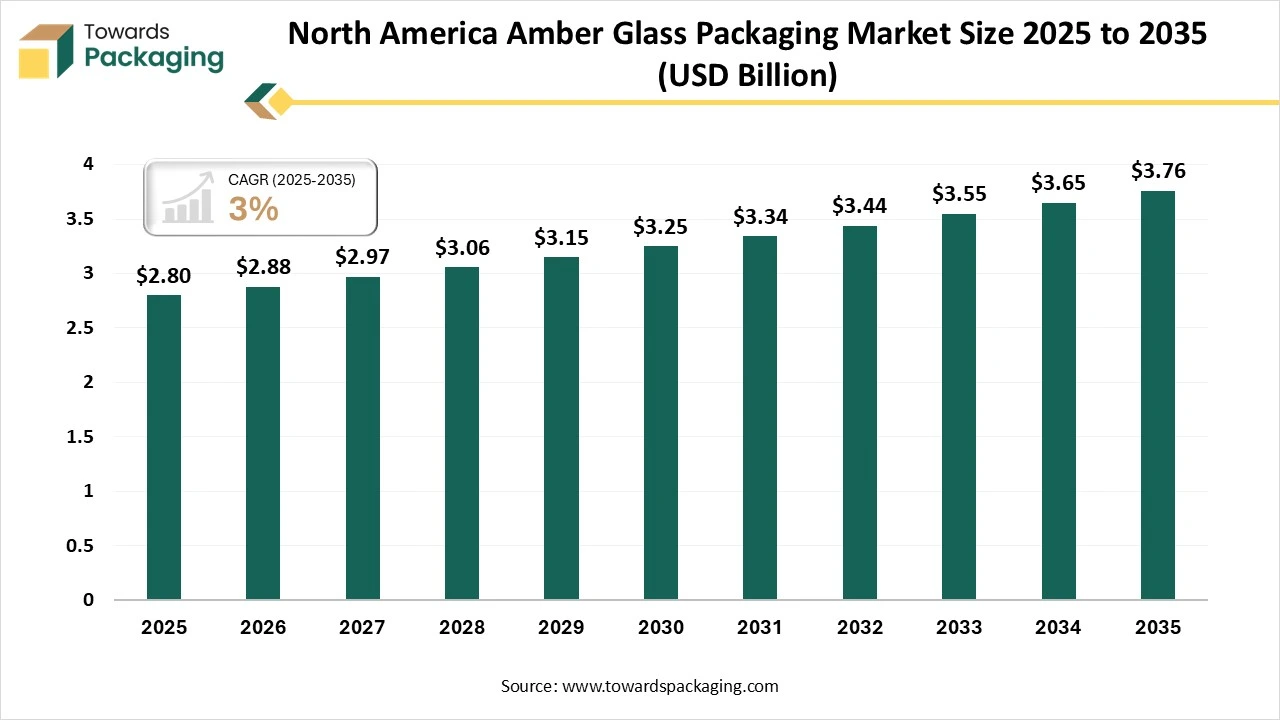
The North America amber glass packaging market is forecasted to expand from USD 2.88 billion in 2026 to USD 3.76 billion by 2035, growing at a CAGR of 3% from 2026 to 2035. The growth is due to long-period development, which is primarily driven by growing demand for effective and safe medication delivery systems.
The amber glass packaging is non-toxic, safe, and prevalent in sectors like food, cosmetics, and pharmaceuticals. It is made from materials such as soda ash, silica, and limestone, which, with its amber color, is made by adding minerals that do not liberate toxic chemicals. It is well-known for blocking UV light, and amber glass assists in protecting light-sensitive products such as medicines and essential oils, which ensures that their quality remains over a long period.
Amber pill bottles are one of the most prevalent and crucial packaging designs in the pharmaceutical sector. The main reason for their wide application is their accurate light-locking potential. Pharmacies extensively use amber medicine bottles for prescriptions including Sulphur and iron compounds during production. Amber glass smoothly absorbs blue light and ultraviolet light with a wavelength of 290 to 450 nanometers. There are three types of pill bottles: blue, green, and transparent ones.
Blue pill bottles are generally used for packaging products that are fragile to UV light but less sensitive to visible light, such as homeopathic remedies and herbal products.
Green glass pill bottles are not prevalent in pharmaceutical packaging, as they have an industry in particular in areas such as herbal supplements and natural medicines, too.
Clear Pill Bottles: Transparent pill bottles enable the contents to be completely visible. Such packaging designs are initially used for drugs that are not fragile to light or for products for which patents require direct monitoring of the drug’s integrity.
Scientists are making the latest formulations of amber glass, which offer even more rigid UV resistance, thereby developing product longevity. With developments in smart packaging, some of the amber glass bottles now provide UV indicators that change colour when they are exposed to excessive light. Amber glass is a perfect packaging choice as they have scientifically proven its barrier against UV oxidation, degradation, and chemical breakdown. Apart from protection, amber glass is a sustainable packaging selection. Like plastic, which degrades over time, amber glass is 100% recyclable and can be reused infinitely.
The bottles segment dominated the North America amber glass packaging market in 2025, as they are accessible in a huge range of sizes to perfectly fit in various product types. From small containers to big storage bottles, there is a size for approximately every usage scenario. The buyers can frequently choose from several usage quantities as they rely on how many units they demand. UV light can lower the active content in products such as herbal extracts or essential oils, which lowers their smoothness. Their bright colors assist in protecting the ingredients present inside, which extends the shelf's life and tracks the quality of products through different shipping and storage conditions.
The containers and jars segment is projected to witness the fastest CAGR during the forecast period. Amber glass jars serve an integration of sustainability, durability and UV protection that makes them an ideal choice for different sectors. One can buy them for personal or commercial applications by selecting the correct lid, size, and branding options that make sure they suit your specific needs. Amber glass jars remain a practical packaging choice. On the other hand, containers have become a mainstay in the packaging sector for their unique features and evergreen uses. They serve different benefits in terms of protecting contents that are perfect for cosmetics and pharmaceuticals.
The pharmaceutical segment dominated the North America amber glass packaging market in 2025 as amber-colored glass serves a chemically filled surrounding, as they avoid the risk of feedback in contents and packaging. Like plastic bottles, such material does not strain toxic chemicals and fully guarantees safety and authenticity for stored pharmaceuticals. Other colors, such as green or blue, can have aesthetic requests but serve restricted protection from UV light. Tinctures, syrups, and other liquid formulations easily form the UV-blocking properties of such packaging material. Such bottles help in preserving the stability of liquids, as they make sure they stay effective and safe.
The dietary supplements segment is expected to experience the fastest CAGR during the forecast period. The amber glass flask designed liquid supplement bottles have matched black phenolic cone liquid caps, which are available for any nutraceutical product series. Such amber glass vitamin bottles serve an overall prevention from UV light, which makes them perfect for light-exposed vitamins such as fish oil products. The black phenolic cone-lined caps count an LDPE cone, which adds a sealing that ensures any products stay potent and fresh.
The United States dominated the North America amber glass packaging market in 2025, as it is witnessing a rapid development because of growing pharmaceutical acceptance, the increasing importance of light-sensitive drugs, and the strict regulatory needs for product safety. The urge for amber glass bottles and vials is being driven by the demand to protect the fragile active pharmaceutical ingredients (APIs) from UV light exposure, which can deteriorate their smoothness. Furthermore, developments in production procedures and the acceptance of recyclable and sustainable materials are further driving market growth. The growing target on tailored medicine and the injectable drugs are also investing in the developing urge for specialized amber glass packaging solutions in the country.
The North America Amber Glass Packaging market is seen to be the fastest growing in Canada, which is initially being driven by the growing urge for smooth and safe packaging solutions for sensitive medications. Amber glass serves as perfect protection against UV Light, which completely lowers the pharmaceuticals, ensuring efficacy and stability. The developing pharmaceutical R&D activities and the growth of the healthcare industry have meant market development. There are strict regulatory standards for drug packaging, and the rising choice for recyclable and sustainable materials also encourages demand. Furthermore, the growing importance of chronic disease complications, such as reliable packaging solutions, is driving market growth. Technological growth in glass production, such as the development of customization and reliability selections, has further assisted in market development.
By Product
By Application








Research & Advisory Analyst
Yogesh Kulkarni is an experienced Research Analyst specializing in the packaging sector, with a strong foundation in statistical analysis and market intelligence. He currently contributes his expertise to Towards Packaging.
Learn more about Yogesh Kulkarni

Reviewed By
Aditi Shivarkar, with 14+ years in packaging market research, specializes in food, beverage, and eco-friendly packaging. She ensures accurate, actionable insights, driving Towards Packaging Analytics & Consulting 's excellence in industry trends and sustainability.
Learn more about Aditi Shivarkar

North America Amber Glass Packaging Market
 Table of Content

 Download Sample
 Schedule a Meeting