


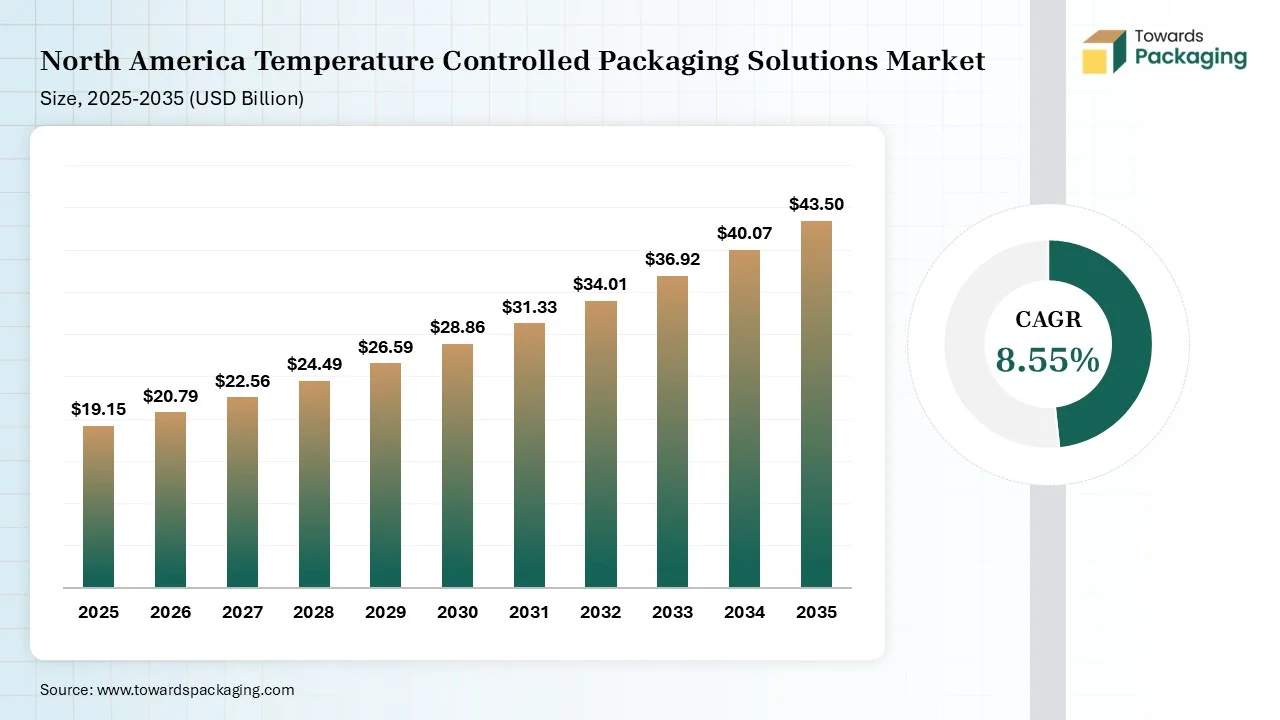
According to Vidyesh Swar, who is a specialist in bio-based packaging, packaging materials, conventional packaging, and advanced packaging. The North America temperature controlled packaging solutions market was estimated at $19.15B in 2025 and is expected to grow at an 8.55% CAGR during 2026-2035. The market is forecasted to reach $43.50B by 2035. Factors like biotechnology expansion, higher demand for perishable foods, investments in IoT sensors, and rigorous compliance drive the growth. Companies like Sonoco ThermoSafe, Cold Chain Technologies, Inmark, FedEx Corporation, and Pelican BioThermal drive the overall growth.
Temperature-controlled packaging solutions are shipping solutions that maintain consistent temperature during transit to protect sensitive products. It includes key components like outer containers, thermal buffer elements, temperature monitoring devices, insulation material, and thermal media. It includes temperature ranges like frozen, controlled ambient, deep frozen, and refrigerated. It offers benefits like protecting medicine, cutting replacement costs, ensuring reliability, and preventing spoilage. Temperature-controlled packaging solutions are widely used in safeguarding pharmaceuticals, protecting clinical trials, shielding cosmetics, last-mile delivery, and protecting reactive materials.
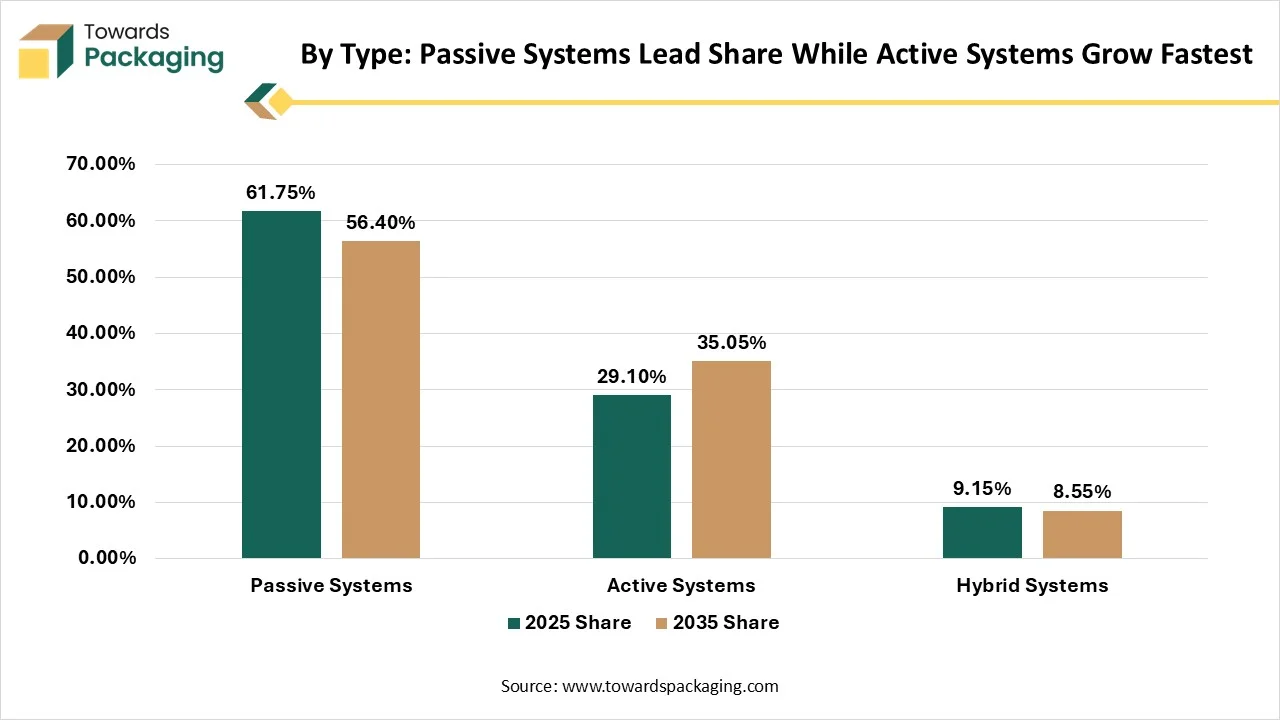
The North America temperature controlled packaging solution size was $19.15B in 2025. The market is giving preference to validated thermal protection. Specialty medicines, advanced therapies, biologics, and vaccines increase demand for temperature controlled packaging solutions. Passive systems dominated with a 61.75% share in the market in 2025.
Source: Towards Packaging Analytics & Consulting
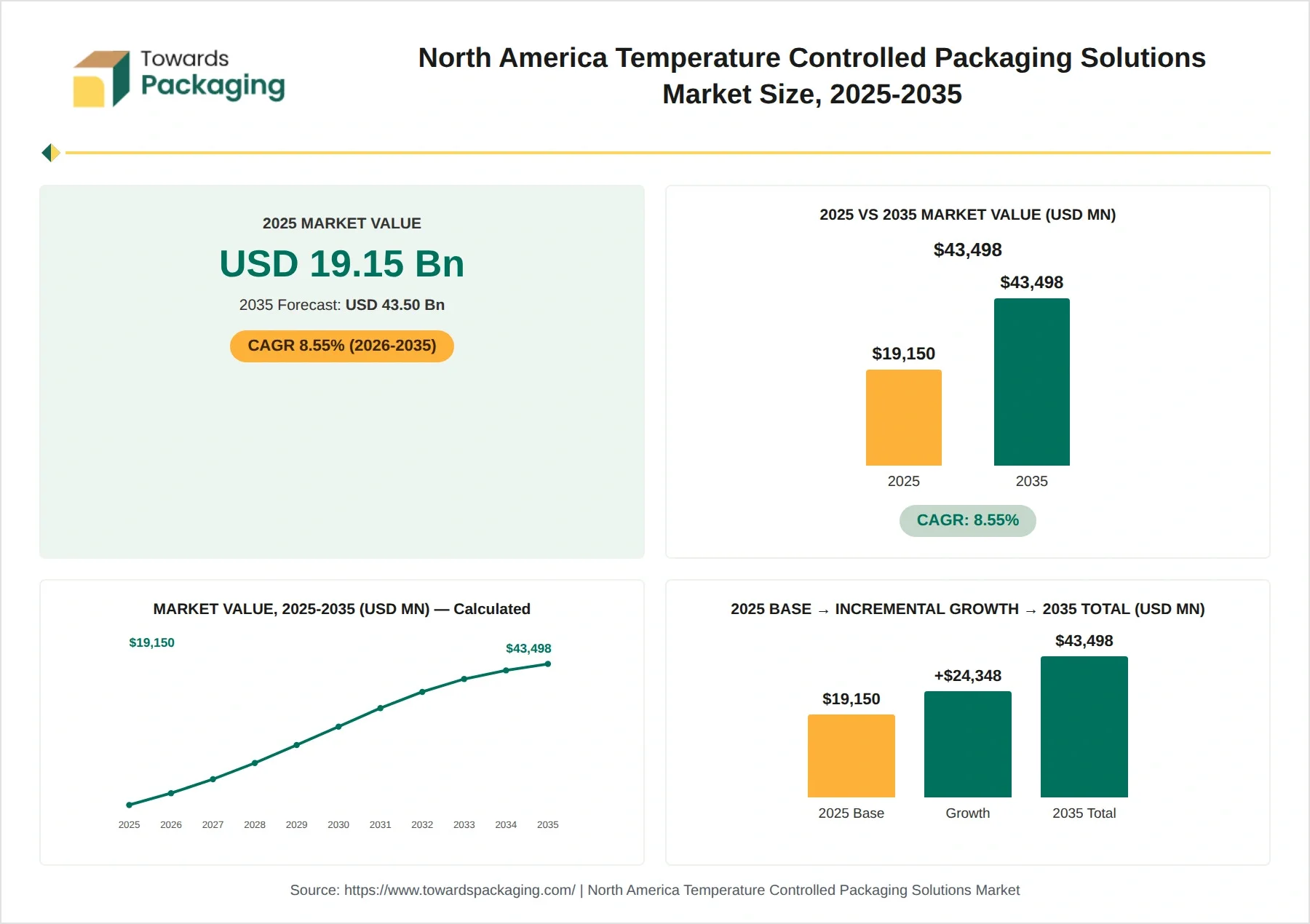
The North America temperature controlled packaging solutions market was estimated at $19.15B in 2025. The market is expected to grow at a CAGR of 8.55% during the forecast period. Factors like rising biopharmaceutical production, rise in online meal kit shopping, shift to standard ice packs, interest in reusable thermal packaging, growing vaccine logistics, increasing investments in cold-storage facilities, rise in advanced passive containers, expansion of real-time wireless sensors, and advancements in active containers support the growth. The top players like Pelican BioThermal, Softbox Systems, Sonoco ThermoSafe, and Cold Chain Technologies drive the growth.
The market is predicted to reach $43.498B by 2035. The incremental growth value of the market is $24.348. Drivers for the market are a surge in specialty pharma, a rise in e-commerce groceries, incorporation of smart tracking, transition to multi-use thermal shippers, advancing insulation materials, complexity in last-mile delivery, burgeoning decentralized clinical trials, and innovations in PCM. Companies like Sonoco ThermoSafe, CSafe Global, Va-Q-Tec AG, and Cold Chain Technologies will support the growth.
Passive Systems Holds the Highest Share
Source: Towards Packaging Analytics & Consulting
Passive Systems dominated the North America temperature controlled packaging solutions industry with a 61.75% share in 2025. The strong demand for safe vaccine transportation and developed regional logistics networks increases the use of passive systems. The stringent temperature maintenance demand in the healthcare industry and the high cost of active refrigeration units increase the use of passive systems. Active systems are expected to grow with the fastest CAGR of 10.60% in the market during the forecast period. The growing demand for precise transportation for specialty biologics and the need for high temperature accuracy increase the use of active systems. The IoT sensors incorporation in the active systems and long-term reusability support the overall growth.
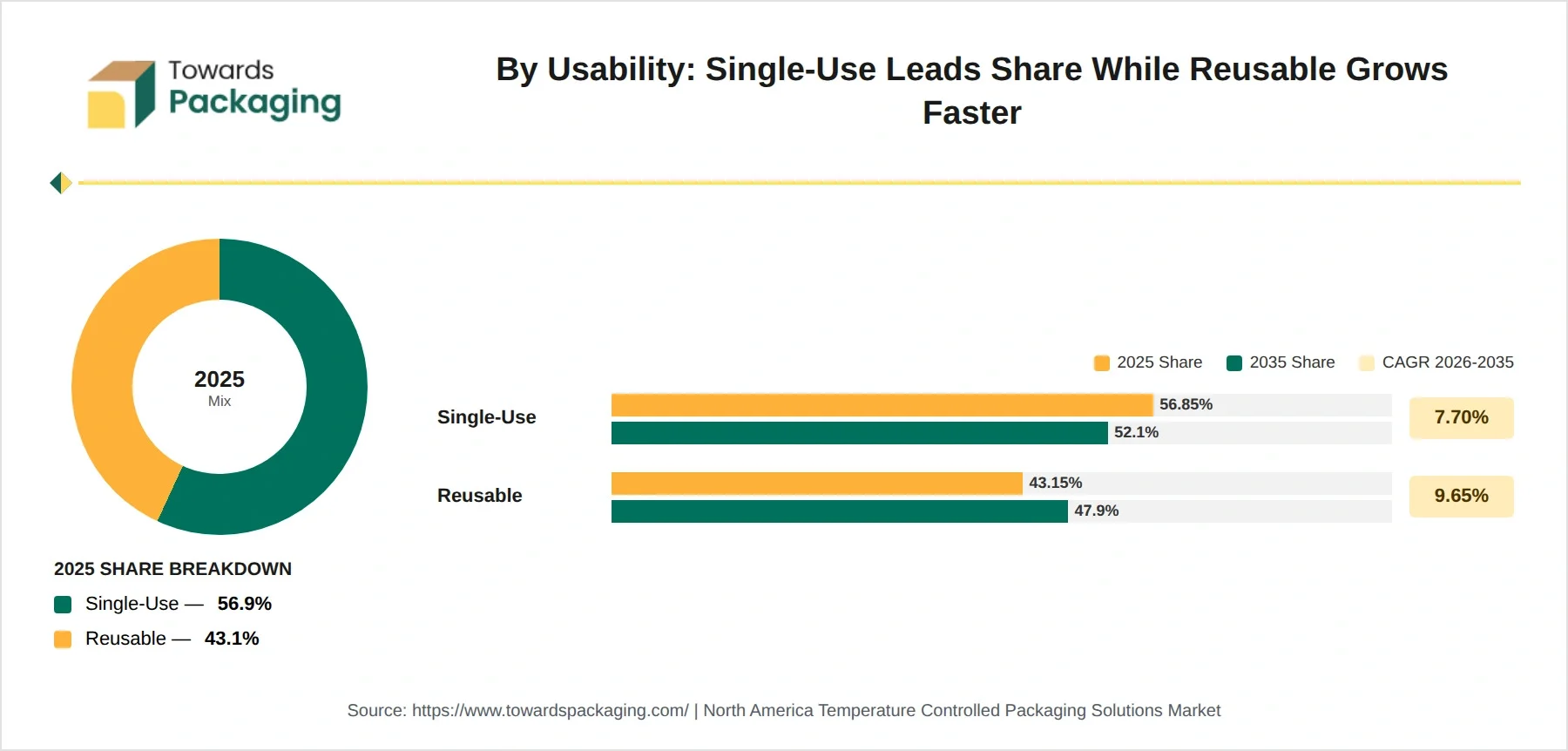
Single-use dominated the North America temperature controlled packaging solutions industry with a 56.85% share in 2025. The well-established active biotech facilities and the integrity of cold-chain increases use of single-use. The growing medication home delivery and rise in single-shipment biologics increase use of single-use packaging. Reusable is expected to grow with the fastest CAGR of 9.65% during the forecast period. The need for validated protection systems in pharmaceuticals and the increased replacement of single-use storage containers increase adoption of reusable packaging. The integration of data loggers in reusable containers and the interest in modular containers boost the overall growth.
Source: Towards Packaging Analytics & Consulting
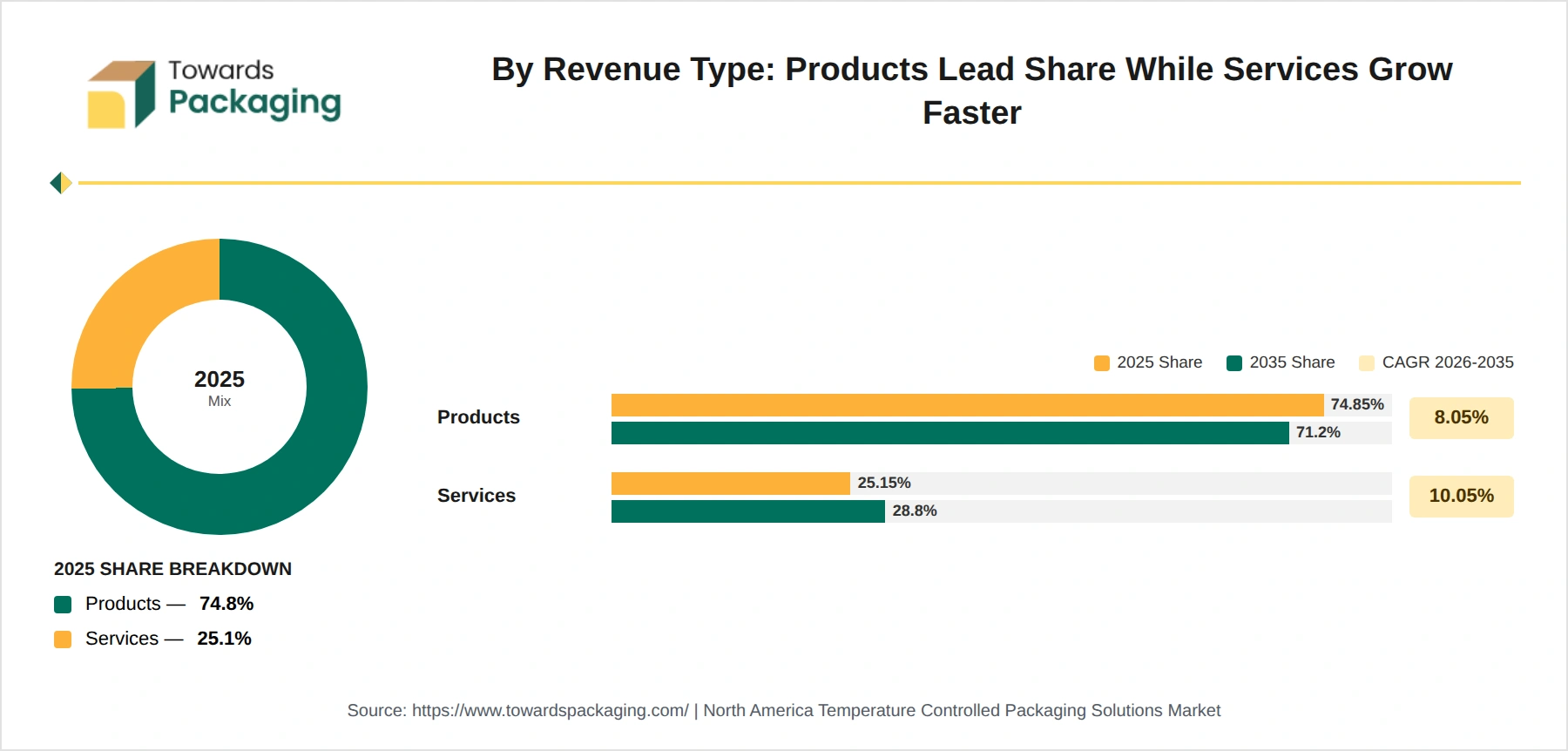
Products dominated the North America temperature controlled packaging solutions industry with a 74.85% share in 2025. The stricter regulations on drug safety and growth in frozen food sales increase the use of temperature-controlled packaging solutions. The rise in validated product packaging and the expansion of reusable insulated products drive the growth. Services are expected to grow with the fastest CAGR of 10.05% during the forecast period. The growing demand for temperature-sensitive cell therapies and complexity in distribution networks increase the use of services. The surge in custom packaging design supports the overall growth.
Key Insights:- Services are expected to grow with the fastest CAGR.
Source: Towards Packaging Analytics & Consulting
Source: Towards Packaging Analytics & Consulting
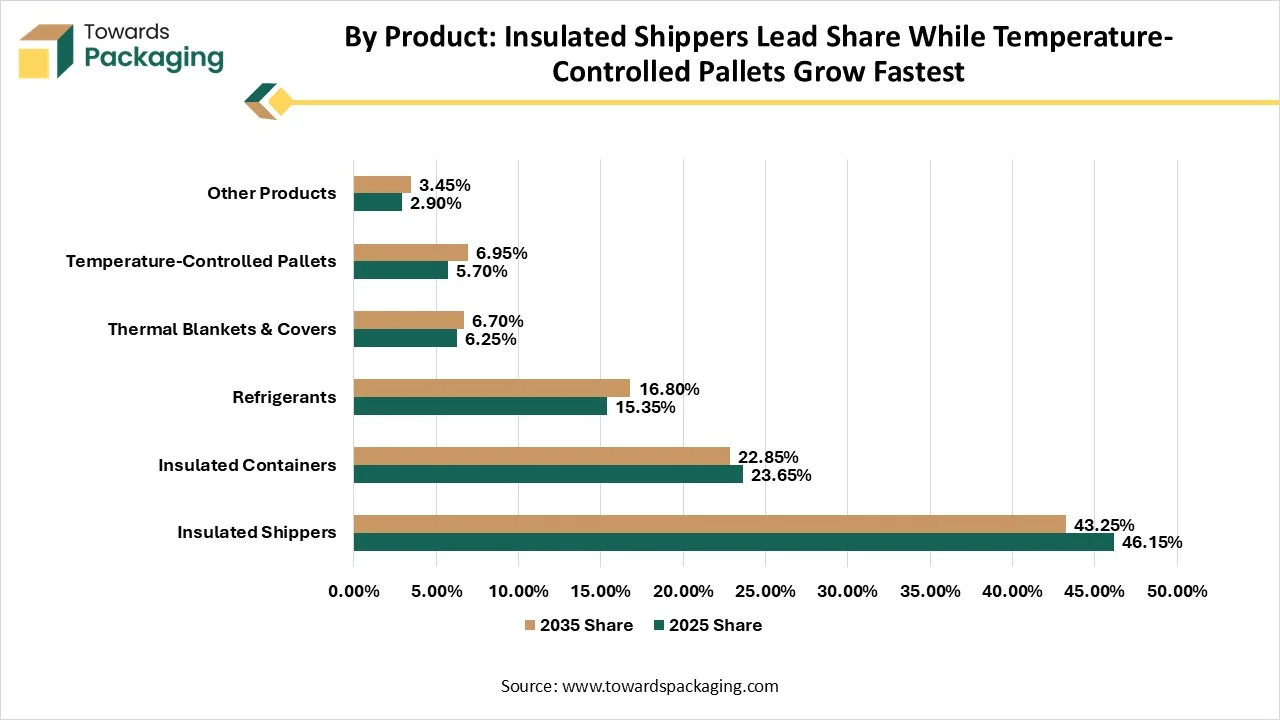
Insulated shippers dominated the North America temperature controlled packaging solutions industry with 46.15% in 2025. The large drug manufacturing hub and government safety guidelines increase the use of insulated shippers. The surging fresh seafood shipping and rapid final distribution of medications drive the growth. Temperature-controlled pallets are expected to grow with the fastest CAGR of 10.40% in the market during the forecast period. The manufacturing of complex biologics and high-value medical distribution increases the use of temperature-controlled pallets. The demand for pallet-level protection in vaccines and increased dairy shipping supports the overall growth.
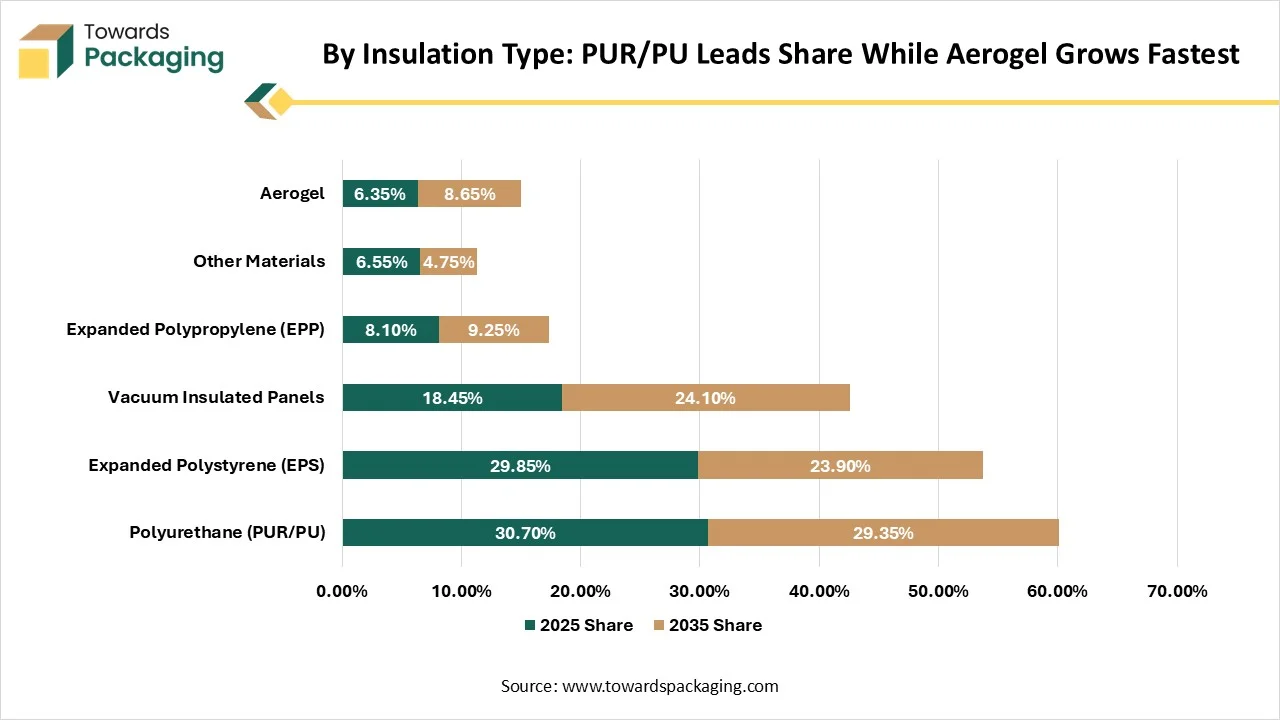
Polyurethane (PUR/PU) dominated the North America temperature controlled packaging solutions industry with 30.70% in 2025. The growth in perishable shipments and the rise in handling clinical trials increase the use of polyurethane. The excellent insulation efficiency and structural rigidity of polyurethane drive the growth. Aerogel is expected to grow with the fastest CAGR of 11.95% in the market during the forecast period. The expansion of biotechnology cold chains and the shift to energy-efficient materials increase the use of aerogel. The exceptional thermal performance and weight savings in aerogel boost the overall market growth.
Source: Towards Packaging Analytics & Consulting
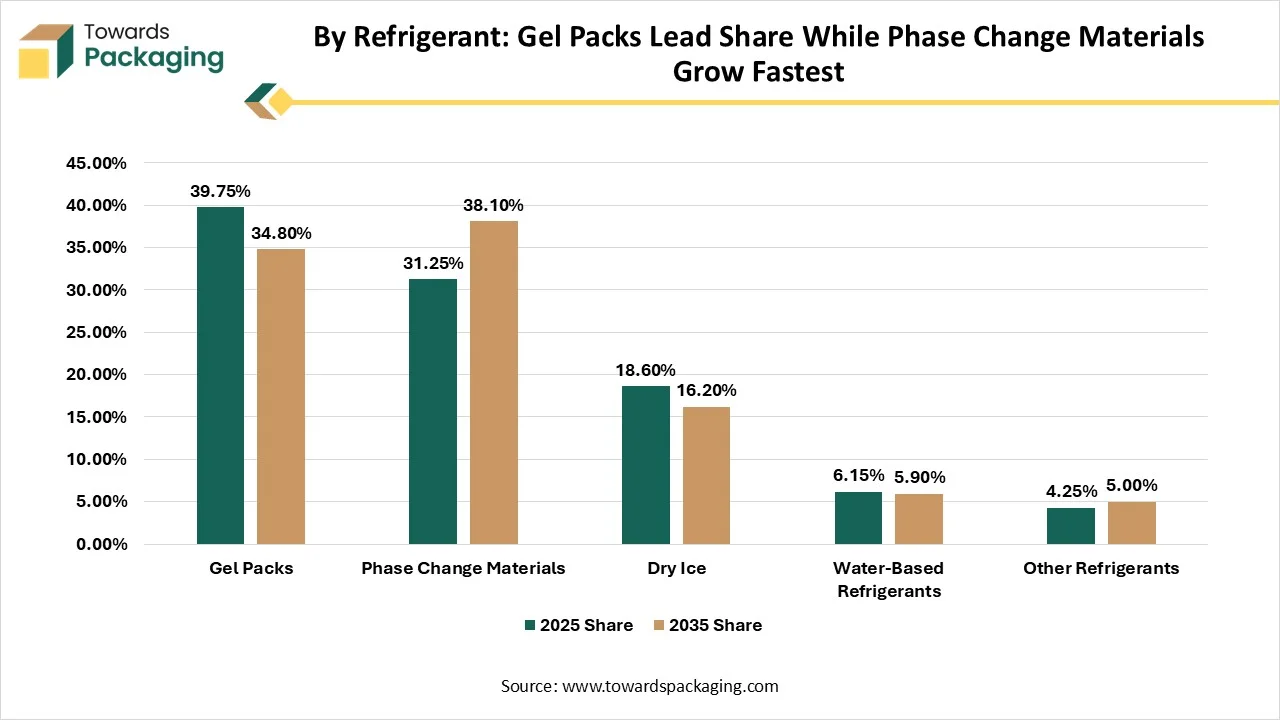
Gel packs dominated the North America temperature controlled packaging solutions industry with a 39.75% share in 2025. The massive concentration of pharmaceutical companies and the rise in direct-to-patient medication delivery increase the use of gel packs. The shipping of gene therapies and gel packs' compatibility with passive thermal containers drives the overall growth. Phase change materials are expected to grow at the fastest CAGR of 10.70% during the forecast period. The prevention of overheating in drugs and companies' transition to recyclable materials increases the use of phase change materials. The improved encapsulation and enhanced thermal stability of phase change materials boost the overall growth.
Source: Towards Packaging Analytics & Consulting
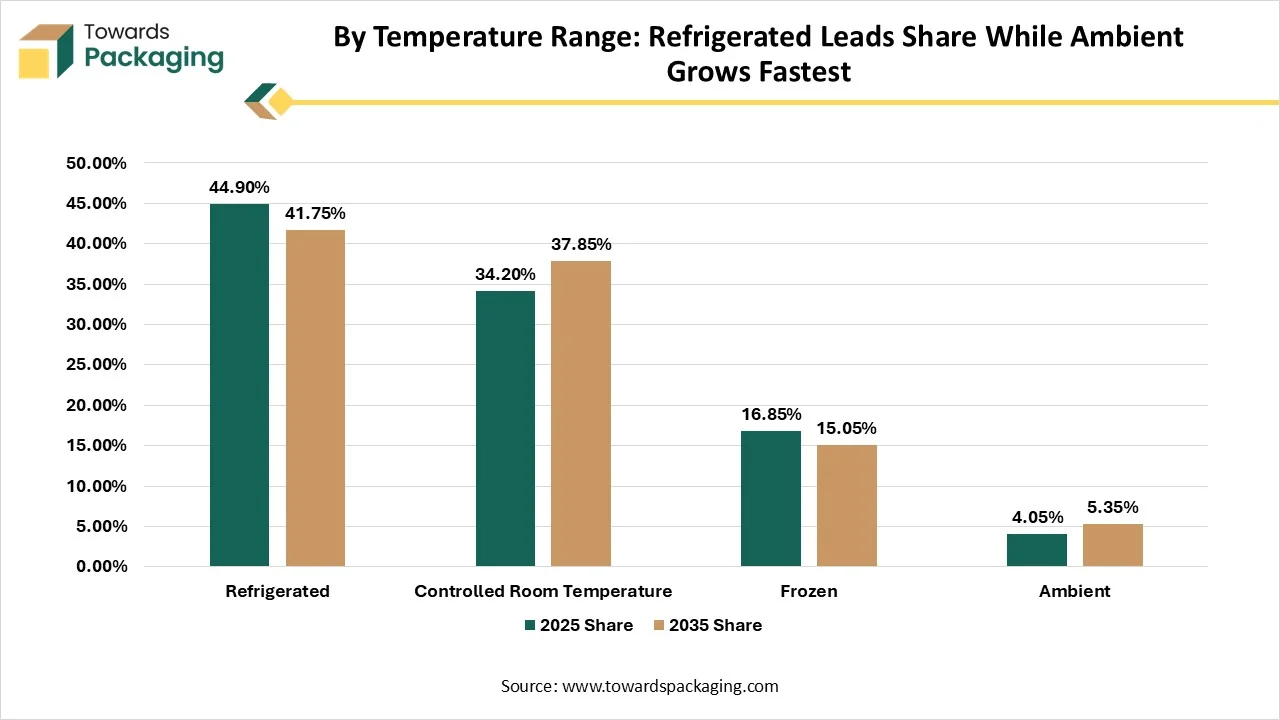
Refrigerated dominated the North America temperature controlled packaging solutions industry with a 44.90% share in 2025. The growth in biotech firms and high frozen meal consumption in North America help drive expansion. The wide distribution distances and focus on maintaining product efficacy drive the overall growth. Ambient is expected to grow at the fastest CAGR of 11.25% during the forecast period. The specialty drugs distribution and the incorporation of smart supply chains increase the use of ambient temperature. The increased online grocery ordering and the transportation of specialized therapeutics support the growth.
Source: Towards Packaging Analytics & Consulting
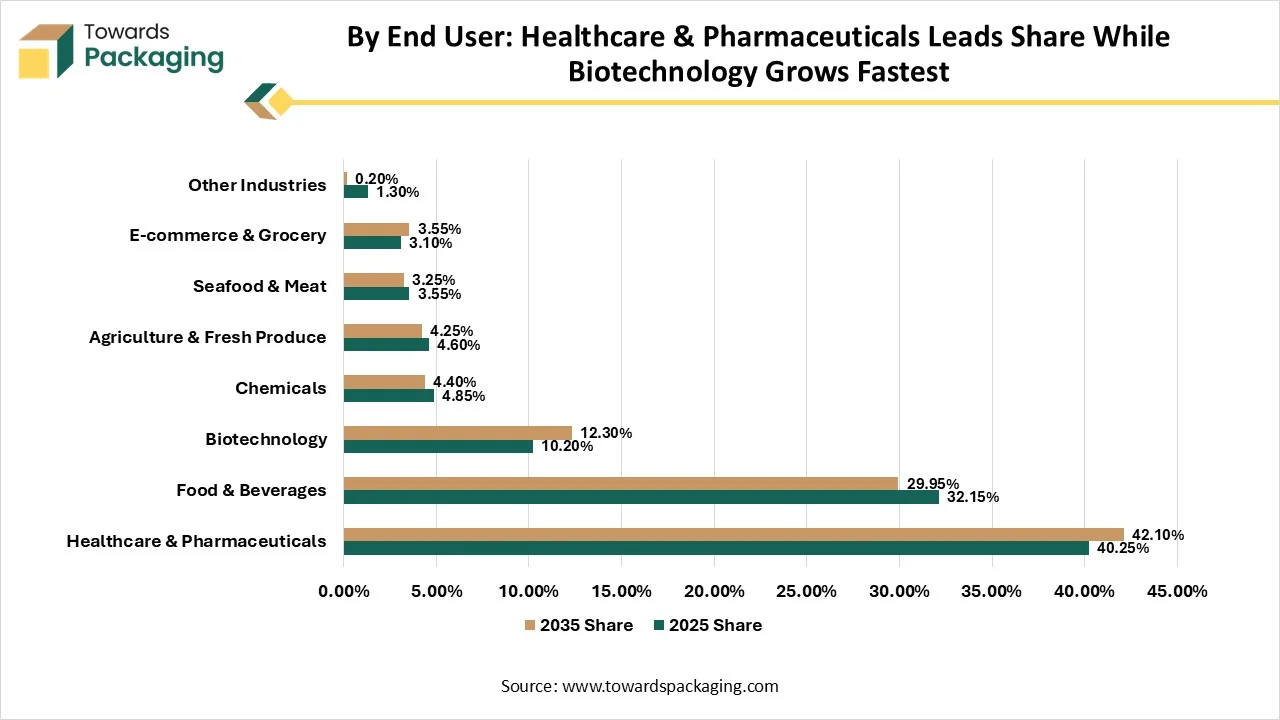
Healthcare & pharmaceuticals dominated the North America temperature controlled packaging solutions industry with a 40.25% share in 2025. The large biopharmaceutical base and advanced cold-storage ecosystem increase the use of temperature-controlled packaging solutions. The increasing number of home healthcare patients and FDA rules for medication transportation drive the growth. Biotechnology is expected to grow with the fastest CAGR of 10.45% in the market during the forecast period. The distribution of antibodies and advancing treatments increases demand for temperature-controlled packaging. The availability of specialized refrigerated warehouses and innovative biologics boosts the overall growth.
Source: Towards Packaging Analytics & Consulting
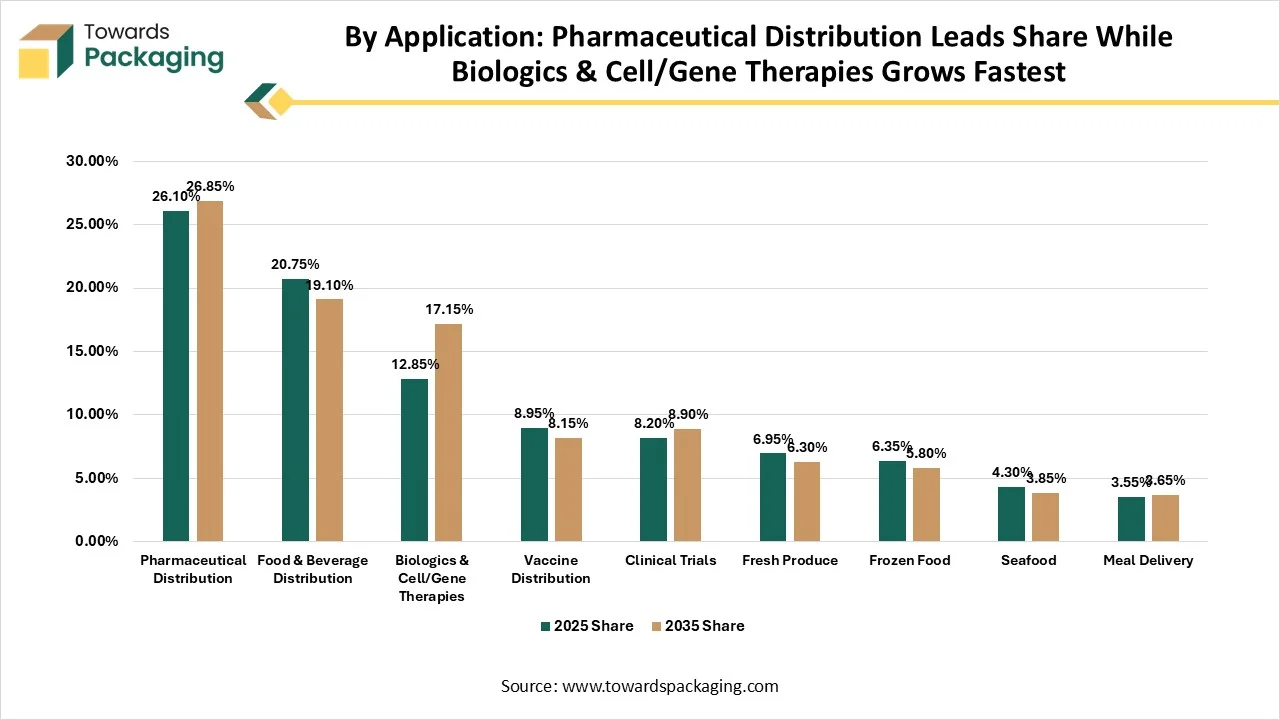
Pharmaceutical distribution dominated the North America temperature controlled packaging solutions market in 2025 with a 26.10% share. The concentration of biotechnology manufacturing plants and growing R&D in personalized medications increases the use of temperature controlled packaging solutions. The high performance packaging use in pharmaceutical distribution drives growth. Biologics & cell/gene therapies are expected to grow with the fastest CAGR of 12.05% in the market during the forecast period. The focus on the thermal sensitivity of monoclonal antibodies and the shift to cryogenic medication storage helps with expansion. The preference for vacuum insulation panels and expanding sensitive shipments boost the overall growth.
Source: Towards Packaging Analytics & Consulting
Source: Towards Packaging Analytics & Consulting
United States
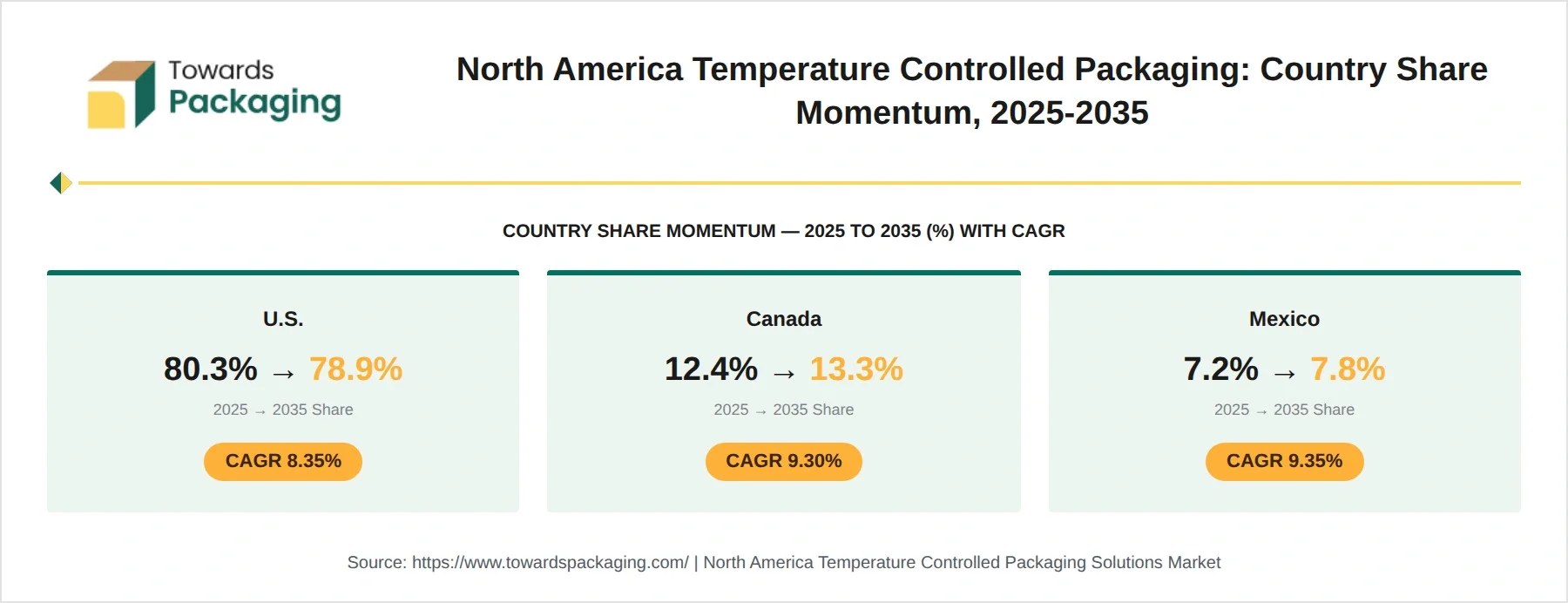
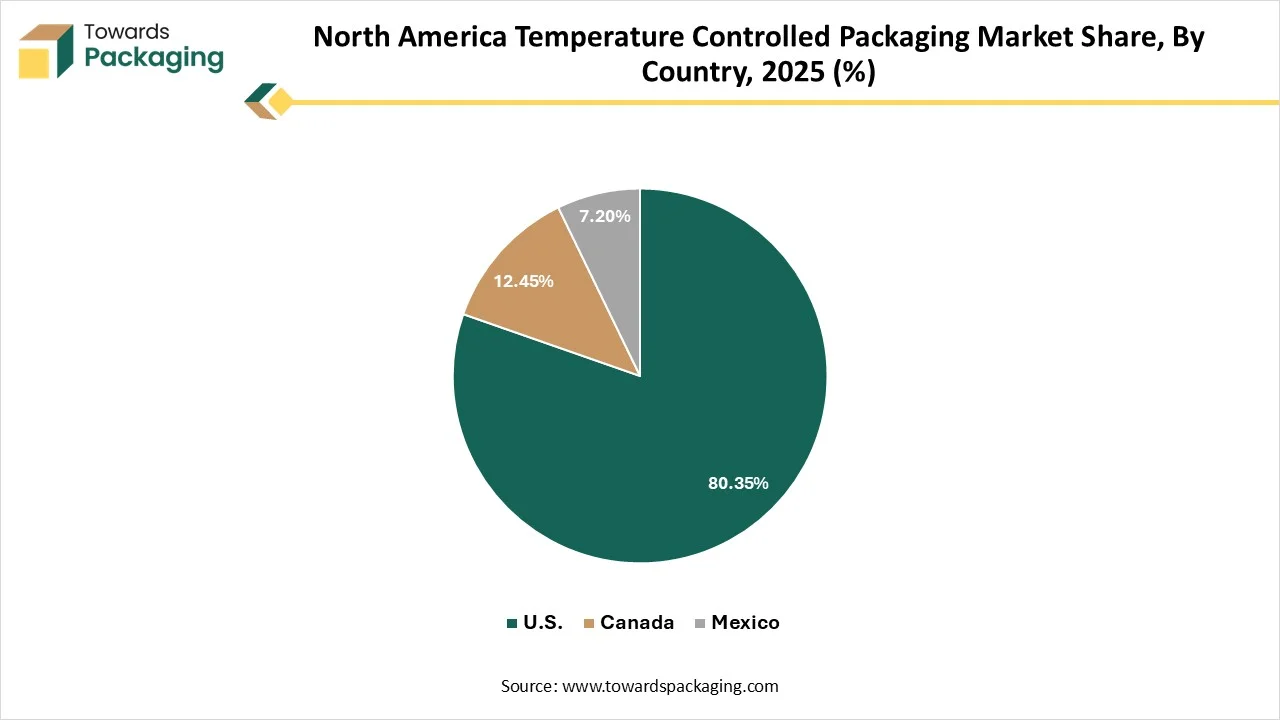
United States dominated the North America temperature controlled packaging solutions market with an 80.3% share in 2025. The presence of active advanced biotechnology production facilities and robust validation requirements increases the use of temperature-controlled packaging solutions. The rigorous transport networks and the increased investment in cold-chain tracking help with expansion. Companies like Eli Lilly, Pfizer, and Cold Chain Technologies drive the growth.
Canada
Canada held a 12.4% share in the market in 2025. The booming manufacturing of gene therapies and Health Canada regulations increase the use of temperature controlled packaging solutions. The increased purchasing of ready-to-cook foods and increased regional seafood exports help with expansion. The utilization of advanced insulation materials supports the overall growth.
Mexico
Mexico held a 7.2% share in the market in 2025 and is expected to grow with a 9.35% CAGR during the forecast period. The manufacturing of sensitive personalized medications and the established food export hub increase the use of temperature-controlled packaging solutions. High investments in insulated containers and the expansion of delicate vaccines increase the use of temperature-controlled packaging, supporting the overall growth.
Source: Towards Packaging Analytics & Consulting
United States held an 80.35% share in the market in 2025 due to the presence of above 6000 pharmaceutical manufacturing centers, mature medical goods logistics networks, and a surge in smart tracking. Canada held the second-largest share of 12.45% in the market in 2025 due to the focus on keeping medications safe, increased buying of frozen foods, and advancing insulation materials. Mexico held a 7.20% market share in 2025 due to the high use of export-compliant packaging, local pharmaceutical expansion, and major agricultural exports.
Source: Towards Packaging Analytics & Consulting
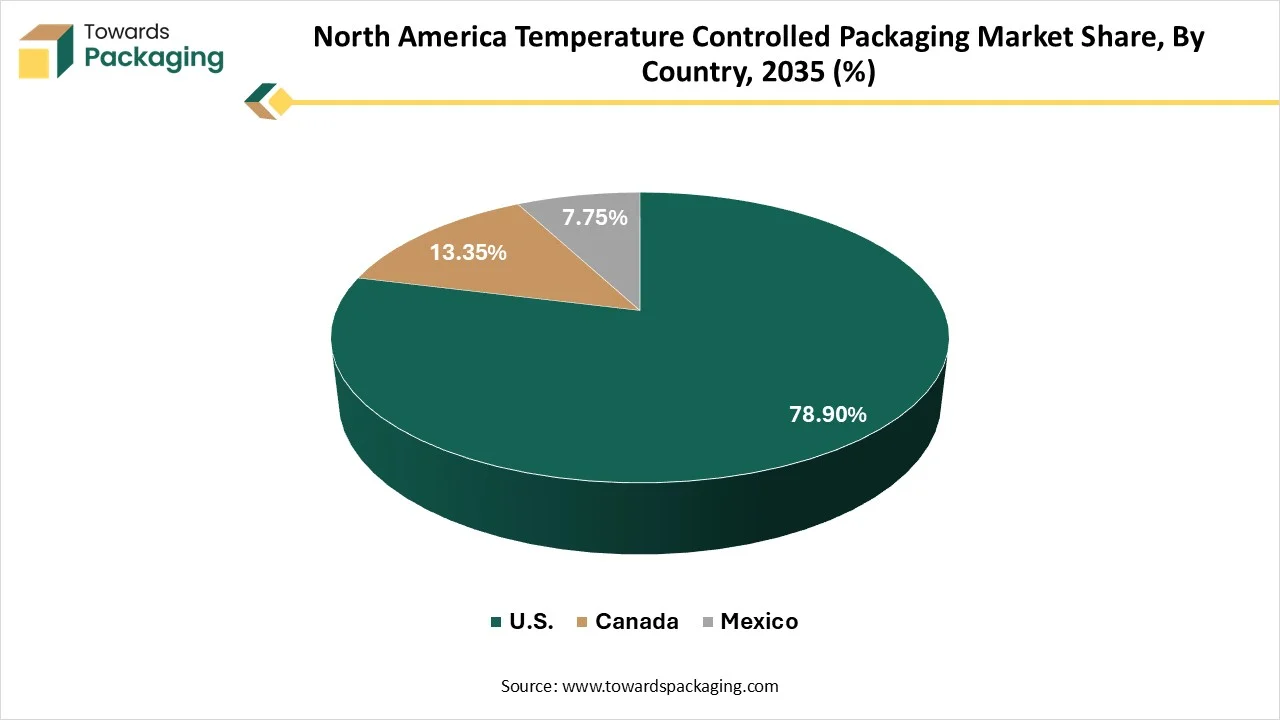
United States is expected to hold a 78.90% share in the market by 2035 due to the presence of players like Pfizer, advanced cold chain networks, and the rise in specialty fresh foods. Canada is expected to hold a 13.35% market share by 2035 due to huge shipping of temperature-sensitive vaccines, high investment in refrigerated hubs, and transportation of agricultural goods. Mexico is expected to hold a 7.75% market share by 2035 due to the high utilization of pallet shippers, increased domestic manufacturing of clinical therapies, and the rise in cross-border transit.
Source: Towards Packaging Analytics & Consulting Database Data
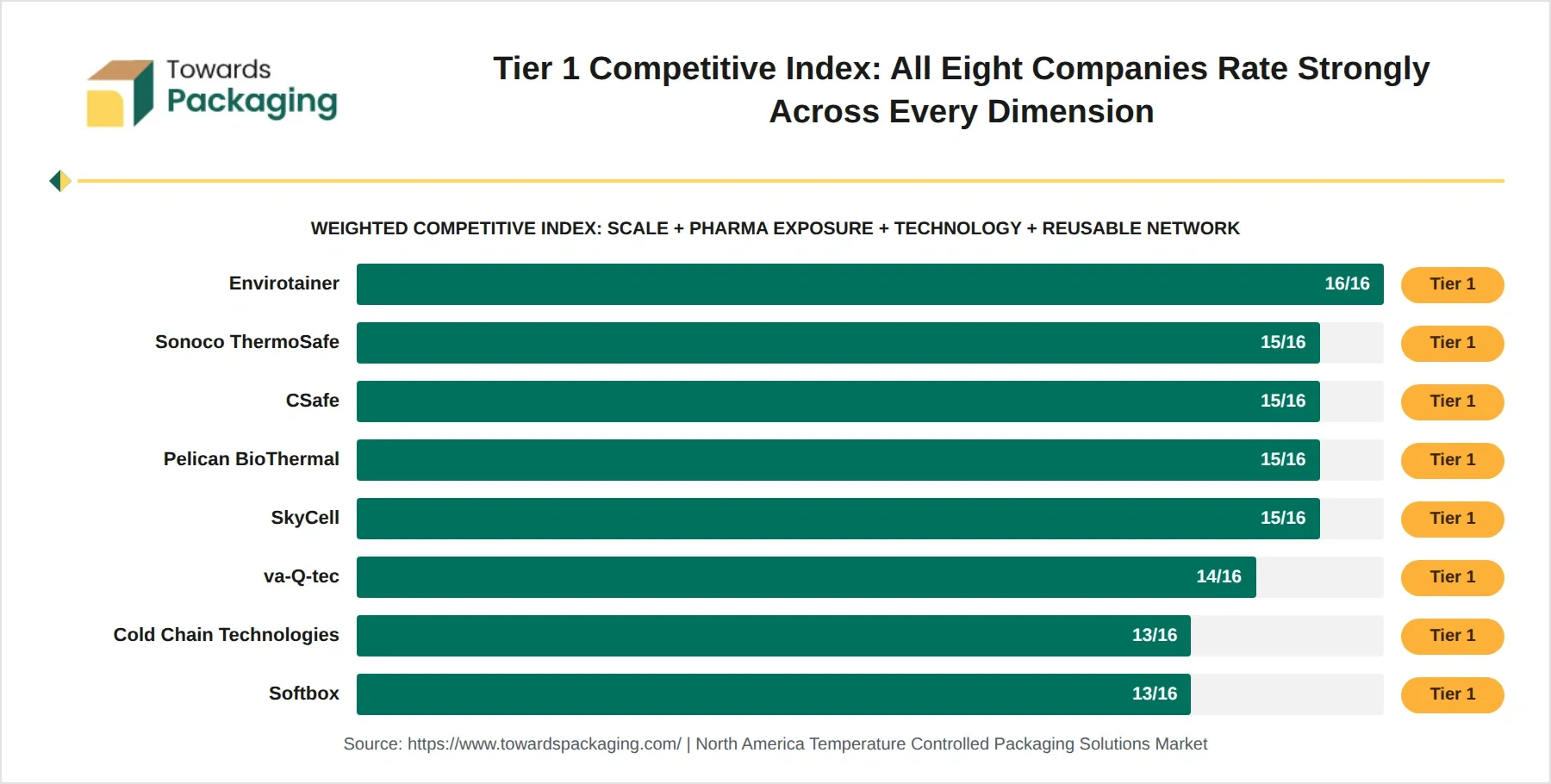
The competitive score of Envirotainer is 16/16 due to the high manufacturing of active temperature-controlled containers, focus on expanding portfolios, and high reliability. The competitive score of Sonoco Thermosafe is 15/16 due to advanced thermal innovation and strong thermal testing facilities. The competitive score of CSafe is 15/16 due to the strong availability of passive and active packaging. The competitive score of Pelican BioThermal is 15/16 due to their patented reusable packaging and integration of advanced tracking platforms. SkyCell’s competitive score is 15/16 due to the integration of AI analytics, circular container designs, and excellent precision. Va-Q-Tech’s competitive score is 14/16 due to the wide temperature portfolio and patented quality assurance. Cold Chain Technologies' competitive score is 13/16 due to the availability of single-use passive packaging and innovative PCM. Softbox's competitive score is 13/16 due to ULT innovations and sustainability focus.
Source: Towards Packaging Analytics & Consulting Database Data
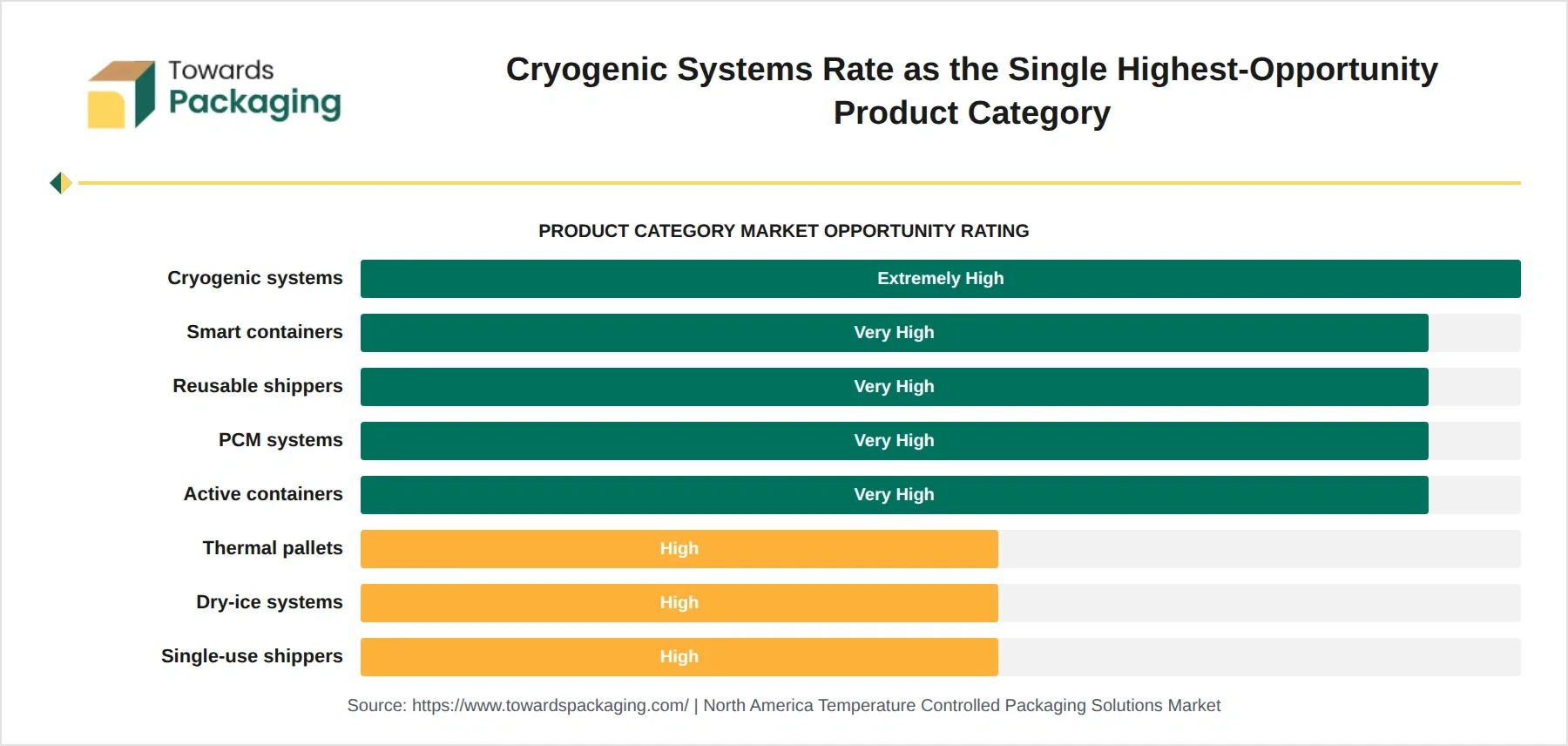
Cryogenic systems rank much higher due to the commercialization of cell therapies and a strong industrial gas supply ecosystem. Smart container usage is very high due to demand for high-value biotechnology and high availability of 5G. Reusable shipper use is also very high due to the dependence on high-value biologics, strong return networks, and government restrictions. PCM systems utilization is very high due to the growing CRT demand and high reusability goals. Active container utilization is also very high due to biopharma hubs, advanced rental ecosystem, and multimodal transit. Thermal shippers' rates are high due to the direct-to-patient growth and advanced parcel networks. Dry-ice systems' rates are high due to ultra-low temperature demand and use in meal kit shipping. Single-use shippers' rates are also high due to vaccine growth and e-commerce.
Source: Towards Packaging Analytics & Consulting Database Data
Cell & gene therapy packaging rating is extremely high due to the advanced tracking needs, extreme temperature sensitivity, and high patient impact. Ultra-cold pharmaceutical logistics ranking is also extremely high due to FDA compliance and specialized materials demand. Direct-to-patient delivery ranking is very high due to a surge in specialty therapeutics and e-commerce scaling. The ranking of reusable packaging is very high due to the closed-loop ecosystems and biologics demand. The ranking of smart temperature monitoring is very high due to the surging specialty drugs and interest in real-time visibility. The ranking of sustainable insulation is very high due to the meal-kit surge and advancing material science. The ranking of biologic shipments is very high due to the telehealth boom and high biologics sensitivity. The ranking of clinical trials logistics is high due to huge clinical trial volume and advancements in therapies. The ranking of home healthcare is high due to the expansion of DTP delivery models and advancing smart technology. The ranking of food e-commerce is high due to demand for freshness and increased online grocery buying.
| Market Driver | Data/Indicator | Strategic Implication |
| U.S. pharmaceutical spending | More than USD 700 billion annually | Sustains demand for high-value pharmaceutical cold-chain infrastructure |
| Biologics share of pharmaceutical innovation | Biologics account for a substantial share of new drug approvals | Increases demand for tightly controlled temperature ranges |
| U.S. specialty-drug spending | More than half of U.S. medicine spending is associated with specialty medicines | Higher-value products justify validated thermal packaging |
| Cell & gene therapies | Rapidly expanding pipeline of temperature-sensitive therapies | Creates demand for ultra-cold and cryogenic solutions |
| Direct-to-patient distribution | Increasing pharmaceutical products shipped directly to patients | Moves cold-chain packaging requirements closer to residential delivery |
| E-commerce food delivery | Growing online grocery and meal-delivery penetration | Expands insulated packaging demand beyond traditional pharmaceutical logistics |
| Temperature-sensitive pharmaceutical logistics | Increasing proportion of pharmaceutical products require controlled temperatures | Supports premium packaging and monitoring solutions |
Source: Towards Packaging Analytics & Consulting Database Data
U.S. Pharmaceutical Spending
The research into the pharmaceutical industry and stringent thermal ranges in pharmaceuticals increases the use of temperature-controlled packaging. United States consumers spend more than $700 billion annually on pharmaceuticals. The huge clinical trials and FDA drug safety mandates increase adoption of temperature-controlled packaging.
U.S. Specialty Drugs Spending
The consumer interest in advanced therapies and the manufacturing of high-volume injectables help with expansion. The rise in patient-specific routing and popularity of advanced phase change materials increases spending on specialty drugs. More than half of pharmaceutical spending is on specialty drugs. These drugs increase use of validated thermal packaging.
Cell & Gene Therapies
Expanding cell therapy clinical pipelines and the rise in patient-specific logistics increase use of temperature-controlled packaging solutions. The increased commercial approvals for gene therapies and the strict regulations for advanced therapies help with expansion. Cell & gene therapy increases use of cryogenic and ultra-cold solutions.
E-Commerce Food Delivery
The increased consumer purchasing of RTE meals and changing outside weather increases use of temperature-controlled packaging. The buyers focus on high product freshness and the need for tracking food quality increases use of insulated shippers and time-temperature indicators. The use of insulated packaging in e-commerce food delivery helps with expansion.
| Pricing Factor | Lower-Complexity Solution | Premium Solution |
| Temperature range | 2-8C | -80C / cryogenic |
| Packaging type | Single-use parcel shipper | Validated reusable system |
| Payload | Small | Large commercial payload |
| Insulation | EPS / standard foam | VIP / advanced insulation |
| Refrigerant | Gel packs | PCM / dry ice |
| Monitoring | None | IoT / GPS / temperature logger |
| Validation | Basic qualification | Full lane qualification |
| Typical economic positioning | Low | High |
Source: Towards Packaging Analytics & Consulting Database Data
Temperature Range
The per-shipment cost of 2-80C temperature depends on factors like packaging material type, freight weight, monitoring tools, thermal duration, and preparation label. The cryogenic temperature range is a premium pricing solution.
Packaging Type
The per-shipment cost for packaging type depends on factors like thermal architecture material, transit duration, refrigerant strategy, and dimensional weight. Single-use parcel shippers is low complexity solution, and their price depends on PCMs, accessories, insulation materials, & DIM weight. The validated reusable system is a premium solution.
Payload
Payload price depends on factors like payload volume, thermal duration, and DIM weight. Small payload requires a lower price, and large commercial payload requires premium pricing.
Insulation
Insulation cost depends on factors like unit price, route duration, regulatory testing, and sustainability. EPS or standard foam is a low-complexity solution, and VIP or advanced insulation is a premium solution.
Refrigerant
Refrigerant per shipment cost depends on factors like type of refrigerant, freight cost, transit duration, and preparation. Gel packs is low complexity solution, and PCM or dry ice is a premium solution.
Monitoring
Monitoring device costs depend on thermal technology, IoT hardware, carrier fees, and regulatory validation. IoT, GPS, or temperature loggers are premium pricing solutions.
Validation
Factors like upfront validation, freight weight, monitoring, lifecycle model, and packaging material decide the validation cost. The basic qualification is a low-complexity solution, and full lane qualification is a premium solution.
| Demand Segment | Demand Intensity | Packaging Requirement |
| Biologics | Very High | 2-8C / frozen |
| Vaccines | Very High | Validated temperature protection |
| Cell & gene therapy | Extremely High | Ultra-low / cryogenic |
| Specialty pharmaceuticals | Very High | Validated passive systems |
| Clinical trials | High | Flexible small-batch systems |
| Food & beverage | High | Refrigerated / frozen |
| Meal delivery | Medium-High | Short-duration thermal protection |
Source: Towards Packaging Analytics & Consulting Database Data
Biologics demand intensity is very high due to the chronic disease burden, biosimilar adoption, and high spending on R&D. Vaccines demand intensity is very high in North America due to aging populations and an advanced healthcare base. Cell & gene therapy demand intensity is extremely high due to disease prevalence and advanced research infrastructure. Specialty pharmaceuticals demand is very high due to the growing rare disease rates and advancements in precision medicines, which use validated passive systems. Clinical trials demand is high due to strong therapeutic focus and supportive regulation. The food & beverage demand intensity is very high due to demand for prepared foods and the high emergence of functional drinks. The demand intensity for meal delivery is medium-high, which increases demand for short-duration thermal protection.
| Value-Chain Stage | Major Value Drivers |
| Insulation | EPS, PUR, VIP, aerogel |
| Refrigerants | PCM, gel packs, dry ice |
| Packaging conversion | Shippers, totes, containers |
| Validation | ISTA, ASTM, GDP qualification |
| Monitoring | Data loggers, IoT sensors |
| Logistics | Air freight, parcel, refrigerated transport |
| Reverse logistics | Reusable packaging collection and refurbishment |
Source: Towards Packaging Analytics & Consulting Database Data
Insulation
Insulation focuses on slowing heat transfer, protecting product quality, and maintaining thermal equilibrium. The common types of insulation are expanded polystyrene, VIPs, aerogel, and polyurethane foam.
Refrigerants
The refrigerants focus on phase regulation, weight efficiency, heat absorption, and product integrity. Refrigerants like gel packs, dry ice, phase change materials, ice packs, and liquid nitrogen are used.
Packaging Conversion
Packaging conversion focuses on converting raw materials into custom-fit protective containers. Their role is thermal lamination, precision die-cutting, structural assembly, and regulatory printing. Packaging converters create products like containers, shippers, and totes.
Validation
Validation focuses on thermal testing, sensor tracking, validation time, and compliance documentation. Validations like GDP, ISTA, and ASTM are required for temperature-controlled packaging.
Monitoring
Monitoring focuses on real-time intervention, packaging improvement, quality assurance, and regulatory compliance. Technologies like IoT sensors and data loggers are needed for monitoring.
Logistics
Logistics focuses on thermal packaging, controlled transport, cold storage, and real-time monitoring. Refrigerated transport, air freight, and parcels are drivers for logistics.
Reverse Logistics
Reverse logistics focuses on reusable asset recovery, cost reduction, cold chain tracking, and safe disposal. Refurbishment and reusable packaging collection are drivers for reverse logistics.
| Technology | Competitive Advantage | Adoption Outlook |
| Phase-change materials | Precise thermal control | Very High |
| Vacuum insulated panels | High insulation efficiency | Very High |
| Advanced EPS | Lightweight and cost-efficient | High |
| Aerogel | Extremely high insulation performance | Emerging |
| IoT sensors | Real-time monitoring | Very High |
| Cloud monitoring | Shipment visibility | High |
| AI-assisted thermal modelling | Faster packaging optimization | Emerging |
| Reusable systems | Lower lifecycle waste | Very High |
Source: Towards Packaging Analytics & Consulting Database Data
Phase-Change Materials
The innovations in PCMs are bio-based PCMs, SSPCMs, custom eutectic blends, advanced encapsulation, and flexible nanocomposite films. Phase-change materials offer precise thermal control.
Vacuum Insulated Panels
It offers high insulation efficiency. The innovations include aerogel-enhanced cores, gas-vapor-tight films, sensor integration, active vacuum quality control, and advanced microporous silicas.
Advanced EPS
It is a cost-efficient and lightweight material. The technological innovations include graphite-enhanced EPS, hybrid VIP integration, and precision steam-chest molding in advanced EPS.
Aerogel
It offers extremely high insulation performance. The key innovations include cellulose aerogels, active functionality, and fiber-reinforced hybrid films.
IoT Sensors
The innovations include battery-free IoT, miniaturized sensors, cloud integration, and advanced wireless protocols. These sensors help in real-time monitoring.
Cloud Monitoring
Cloud monitoring offers high shipment visibility. The key innovations include cellular data loggers, AI-based predictive analytics, and blockchain-integrated traceability.
AI-Assisted Thermal Modelling
It supports faster packaging optimization, and innovations include generative design and real-time lane-specific weather integration.
Reusable Systems
Reusable systems lower lifecycle waste by integrating aerogel insulation, using real-time IoT sensors, integrating battery-powered units, and incorporating advanced insulation.
| Regulatory/Quality Area | Market Impact |
| FDA requirements | High |
| Good Distribution Practices | Very High |
| Temperature mapping | Very High |
| Lane qualification | Very High |
| Stability requirements | Very High |
| Temperature excursion management | Extremely High |
| Serialization / traceability | Increasing |
| Digital monitoring | Increasing |
Source: Towards Packaging Analytics & Consulting Database Data
FDA Requirements
FDA core regulations include 21 CFR Parts 203 and 211, FSMA, and 21 CFR Part 205.50. The key requirements are record integrity, thermal validation, and continuous monitoring.
Good Distribution Practices
GDP focuses on thermal control ranges, temperature monitoring, temperature validation, excursion management, and active & passive systems.
Temperature Mapping
Temperature mapping focuses on identifying variations, compliance, and stress testing. Temperature mapping has a very high impact on the market.
Lane Qualification
Lane qualification focuses on performance verification, environmental profiling, and testing standards.
Stability Requirements
The stability requirements focus on temperature ranges like frozen, controlled room temperature, cryogenic, and refrigerated temperatures.
Temperature Excursion Management
Temperature excursion management focuses on the impact assessment, CAPA, detection, and disposition decision.
Serialization
Serialization focuses on unique identification, cold chain integration, and track & trace.
Digital Monitoring
Digital monitoring components are cloud analytics, smart sensors, and real-time communication. It is widely used for food integrity and pharmaceutical safety.
| Company | Core Strength |
| Sonoco ThermoSafe | Pharmaceutical thermal packaging |
| CSafe | Active and passive temperature-controlled solutions |
| Softbox Systems | Pharmaceutical passive packaging |
| va-Q-tec | Vacuum insulation / PCM technology |
| Cryoport | Advanced cold-chain logistics |
| Pelican BioThermal | Reusable thermal packaging |
| Cold Chain Technologies | Pharmaceutical thermal packaging |
| Envirotainer | Active temperature-controlled containers |
| SkyCell | Smart hybrid temperature-controlled containers |
| Tower Cold Chain | Reusable pharmaceutical systems |
| Inmark | Thermal packaging |
| Intelsius | Temperature-controlled packaging |
| EcoCool | Cold-chain packaging |
| FedEx Custom Critical | Healthcare logistics |
| UPS Healthcare | Healthcare cold chain |
| DHL Life Sciences & Healthcare | Global pharmaceutical logistics |
| World Courier | Specialty healthcare logistics |
| Marken | Clinical-trial logistics |
| Sealed Air | Food and protective packaging |
| Tempack | Pharmaceutical thermal packaging |
| American Aerogel | Advanced insulation |
Source: Towards Packaging Analytics & Consulting Database Data
Sonoco ThermoSafe
The company’s headquarters are located in Illinois, United States. The company offers products like reusable parcel containers, diagnostic shippers, advanced passive pallet shippers, and single-use solutions. The core strength of the company is pharmaceutical thermal packaging.
CSafe
The headquarters is present across Monroe, Ohio, United States. The product portfolio includes CSafe RAP, AcuTemp Plus Series, Silverskin RE, CSafe RKN, and AX56L. The core strength of the company is the manufacturing of passive and active temperature-controlled packaging solutions.
Softbox Systems
The product portfolio includes Silverpod, AEON, Tempcell Series, SilverSkin, and skypod. The core strengths are ultra-low temperature control, sustainable designs, and pharmaceutical passive thermal insulation.
va-Q-tec
The company offers solutions like va-Q-proof, va-Q-one, va-Q-box, thermos trolley, va-Q-med, va-Q-gel, and va-Q-tray. The company’s strengths are vacuum insulation panels and passive temperature control.
Cryoport
The headquarters is located in Brentwood, Tennessee, United States. The temperature product portfolio includes refrigerated, cryogenic, ultra-cold, and controlled room temperature. The company’s strengths are advanced thermal design and integrated intelligence.
| Company | Scale | Pharma Exposure | Technology | Reusable Network | Indicative Position |
| Sonoco ThermoSafe | Very High | Very High | Very High | High | Tier 1 |
| CSafe | High | Very High | Very High | Very High | Tier 1 |
| Pelican BioThermal | High | Very High | Very High | Very High | Tier 1 |
| Cold Chain Technologies | High | Very High | High | High | Tier 1 |
| va-Q-tec | High | Very High | Very High | High | Tier 1 |
| Envirotainer | Very High | Very High | Very High | Very High | Tier 1 |
| SkyCell | High | Very High | Very High | Very High | Tier 1 |
| Softbox | High | Very High | High | High | Tier 1 |
Source: Towards Packaging Analytics & Consulting Database Data
Sonoco ThermoSafe
The company offers packaging solutions like Orion Box Rental, Refrigerants, Pegasus ULD, and insulated shippers. Bio-based insulation is a key technology of the company. They offer reusable networks like the Orion r Program and Pegasus ULD.
CSafe
They offer passive air cargo, clinical trial support, CGT, and active air cargo. They provide technologies like advanced insulation, digital tracking, and active temperature control. They offer reusable products like Silverskin SE, Active ULDs, Silverpod MAX RE, and CSafe Advanced.
Pelican BioThermal
They offer pharmaceutical solutions like Credo Vault, NanoCool, and Credo Cube. The core technologies include VIP, evaporative cooling engines, thermal modelling, and dry ice-compatible packaging.
Cold Chain Technologies
The company focuses on real-time packaging monitoring, thermal packaging, and CCT smart solutions. The core technologies include multi-use insulated containers, patented container designs, certified thermal testing, and advanced digital monitoring.
| Company | Passive | Active | Reusable | Smart Monitoring | Pharmaceutical |
| Sonoco ThermoSafe | Yes | Yes | Yes | Yes | Yes |
| CSafe | Yes | Yes | Yes | Yes | Yes |
| Pelican BioThermal | Yes | Yes | Yes | Yes | Yes |
| va-Q-tec | Yes | Yes | Yes | Yes | Yes |
| Envirotainer | No | Yes | Yes | Yes | Yes |
| SkyCell | Yes | Yes | Yes | Yes | Yes |
| Cold Chain Technologies | Yes | No | Yes | Yes | Yes |
| Softbox | Yes | No | Yes | Yes | Yes |
Source: Towards Packaging Analytics & Consulting Database Data
| Company Name | Passive Packaging | Active Packaging | Reusable Packaging | Smart Monitoring | Pharmaceutical |
| Sonoco ThermoSafe |
|
|
|
|
|
| CSafe |
|
|
|
|
|
| Pelican BioThermal |
|
|
|
|
|
| Geography | Market Position | Key Growth Drivers |
| United States | Dominant | Pharmaceutical manufacturing, biologics, healthcare logistics |
| Canada | Emerging / High Potential | Biopharmaceuticals, food exports, healthcare logistics |
| Northeast U.S. | Very Strong | Pharma and biotech concentration |
| California | Very Strong | Biotech and advanced therapies |
| Midwest | Strong | Manufacturing and food logistics |
| Texas | Strong | Healthcare and logistics infrastructure |
Source: Towards Packaging Analytics & Consulting Database Data
United States held the dominant position in the market due to high pharmaceutical manufacturing and strong healthcare logistics. Canada is an emerging player in the market due to growing healthcare logistics, biopharmaceutical production, and export of food. Northeast United States holds a very strong position in the market due to the high biotech and pharma concentration. California holds a very strong position in the market, driven by demand for advanced therapies and a huge biotechnology sector. Midwest U.S. held a strong position due to strong manufacturing infrastructure and increasing food logistics. Texas held a strong market position due to the well-established logistics and healthcare infrastructure.
According to my research, the North America temperature controlled packaging solutions market is expanding rapidly due to the high presence of drug makers, stringent adherence standards, rise in direct delivery, pharmaceutical expansion, and sustainability targets. Mexico is growing with the fastest CAGR during the forecast period. The passive system held a 61.75% share in the market in 2025. Leading industrial players like Pelican BioThermal, Inmark LLC, ThermoSafe, Cryopak Industries, and CCT are major contributors to the growth.
Vidyesh Swar researched the forecasted market size, 2025 market value, segmental insights, and North American country shares.
Aman worked on competitive score, white-space ranking, market dynamics, product category, pricing analysis, regulatory environment, value-chain analysis, and competitive landscape.
Aditi corrected errors in the report, identified inconsistencies, maintained quality, verified references, and created the report according to organizational needs.
By Type
By Usability
By Revenue Type
By Product
By Insulation Type
By Refrigerant
By Temperature Range
By End User
By Application
By Country






















Principal Research Analyst
Vidyesh Swar is a Senior Research Analyst at Towards Packaging, bringing over 4 years of dedicated expertise in market intelligence and strategic analysis across the dynamic world of packaging technologies and solutions.
Learn more about Vidyesh Swar

Reviewed By
Aditi Shivarkar, with 14+ years in packaging market research, specializes in food, beverage, and eco-friendly packaging. She ensures accurate, actionable insights, driving Towards Packaging Analytics & Consulting 's excellence in industry trends and sustainability.
Learn more about Aditi Shivarkar


North America Temperature Controlled Packaging Solutions Market
 Table of Content

 Download Sample
 Schedule a Meeting