


The single-use plastic water bottles market is projected to see rapid growth from 2026 to 2035, with significant revenue gains. The North America region dominates the market in 2025, holding the highest market share. Asia Pacific is expected to grow at the fastest CAGR due to rising urbanization and increasing demand for convenient hydration options. Polyethylene terephthalate (PET) is the most used material, contributing the largest share in 2025. The market is supported by major players like Coca-Cola, PepsiCo, and Nestlé, and key packaging manufacturers such as Berry Global and Amcor. Trade statistics show China as the top exporter, followed by the United States as the leading importer.
Single-use plastic water bottles are sealed plastic containers those are generally used once and then thrown away. These are disposable containers manufactured majorly from polyethylene terephthalate (PET) which is planned for one-time drinking of water. These are generally thrown away instead of reusing or refilling. These are light weight, transparent and cost-effective bottles.
| Metric | Details |
| Major Players | Nestlé Waters, Coca-Cola Company, PepsiCo, Danone, Cott Corporation |
| Leading Region | North America |
| Market Segmentation | By Material Type, By Application and By Region |
| Top Key Players | Berry Global, Amcor, Novolex, Pactiv Evergreen |
The single-use plastic water bottles market is experiencing major technological shift due to enhanced material formulation to resolve the rising ecological concern. The major innovation in this market comprises production of bio-based plastics and biodegradable plastic packaging. Improvement in the recycling technology plays an important role in enhancing the adoption of such packaging. The major packaging companies are producing sleek and smart connected water bottles. Personalized hydration demand has enhanced the adoption of these bottles which add convenience to the consumers.
The major raw materials utilized in this market are polycarbonate, high density polyethylene (HDPE), and polyethylene terephthalate (PET).
The major components used in this market are bottle body, cap, and label.
This segment comprises well-coordination among supply chain distributors.
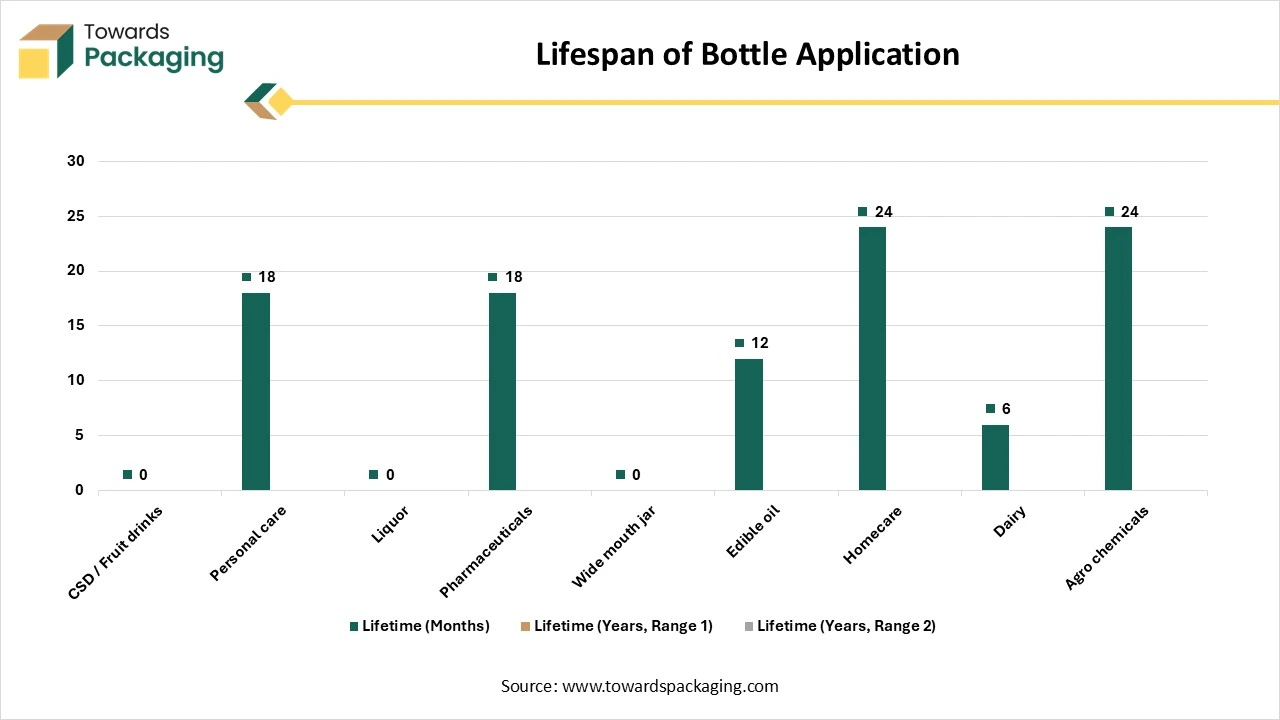
Different bottle applications have different usage lifespans depending on what they hold. Short-life products like CSD, fruit drinks, and wide-mouth jars are used for only a few months. Personal care, pharma, homecare, and edible oil bottles last longer, typically 12–24 months. The longest-lasting applications are liquor and agrochemical bottles, which may stay in use for more than two years. These lifespan ranges help estimate how long PET packaging remains in circulation before it becomes waste, which is important for recycling and circular-economy planning.
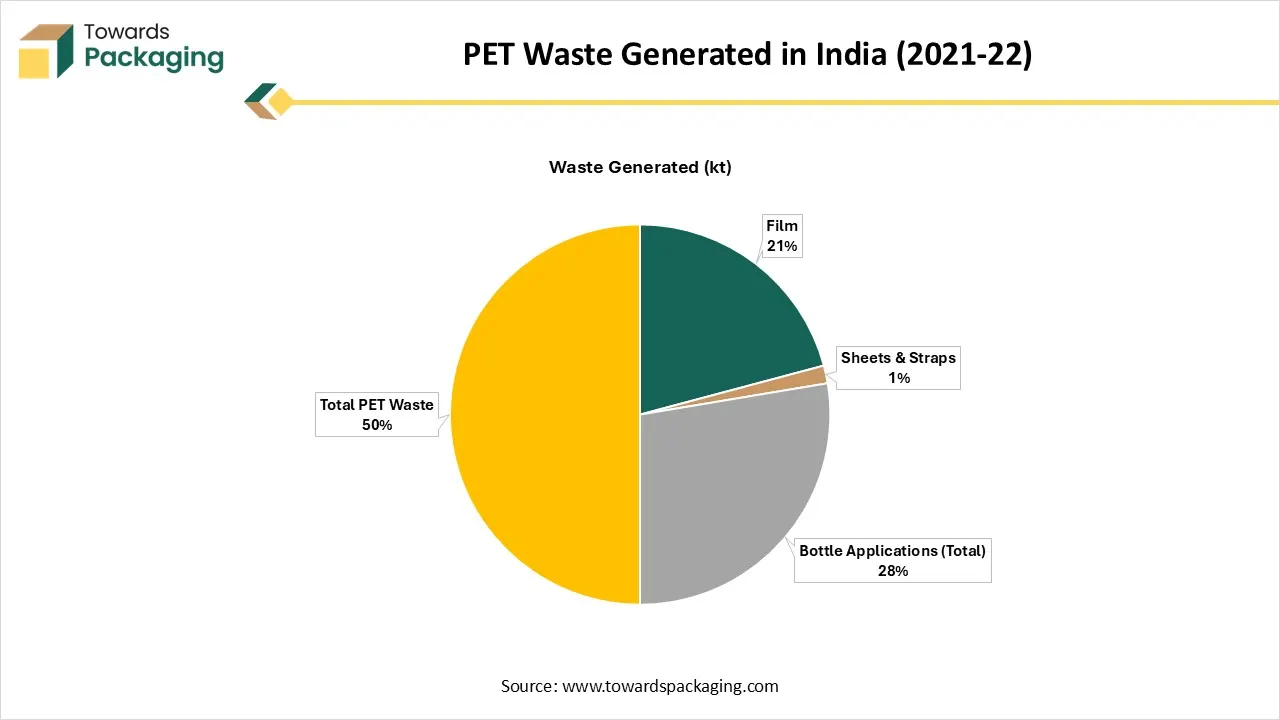
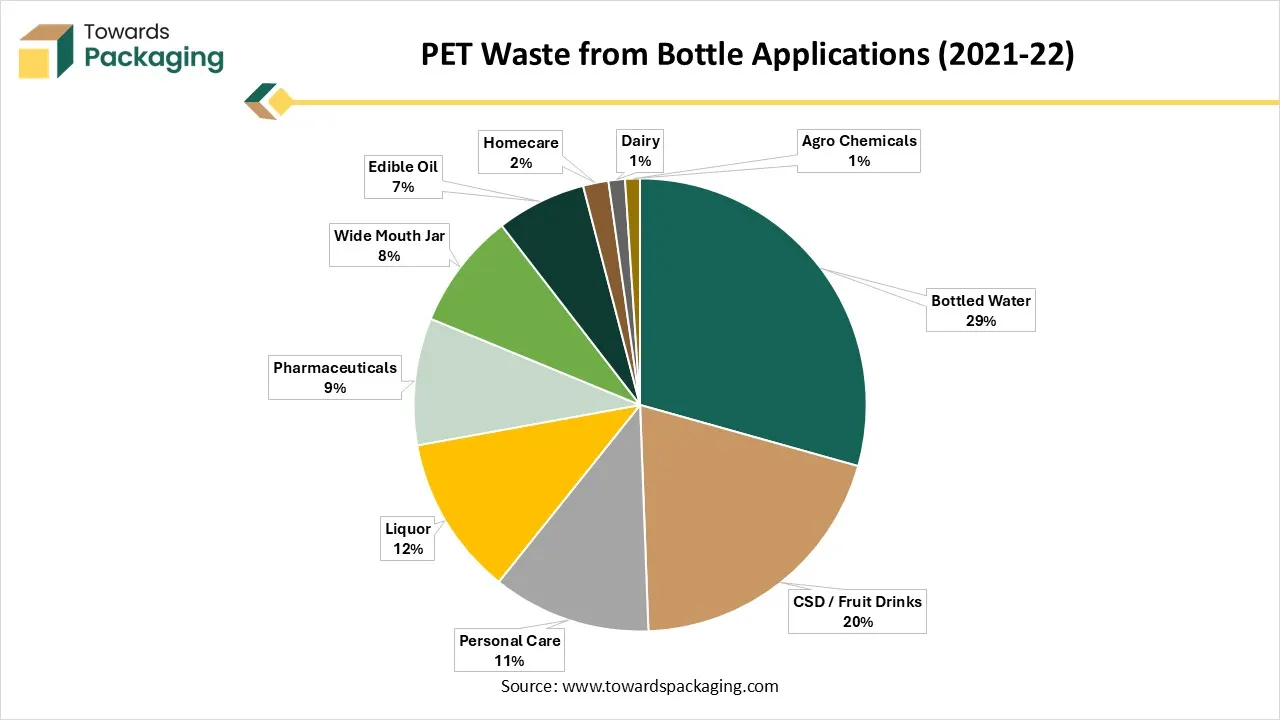
In 2021-22, India generated 1.69 million tonnes (kt) of PET waste. A large share of this came from film applications (around 706 kt), which are widely used in flexible packaging. Bottle applications were the second biggest contributor, generating 936 kt of waste, mainly from bottled water, CSD/fruit drinks, and personal care bottles.
The polyethylene terephthalate (PET) segment dominated the market with highest share in 2025 due to its cost-effectiveness and lightweight. It is cheaper than glass with low risk of damage. These bottles are durable, easy to handle, and transport which is fulfilling several purposes. The increasing food and beverages sector with the declaration of carbonated drinks boosting the packaging of the products. These are balancing between safety, durability, and transparency. The rapid advancement in the recycling technologies has influenced the demand of this segment.
The polypropylene (PP) segment is expected to grow at the fastest CAGR during the forecast period. This segment is growing due to the balance between chemical and mechanical strength of the material. This material is widely used for manufacturing closures, caps, and other packaging closures. These are highly recyclable, and eco-friendly nature has promoted the utilization of this material. It has superior heat-resistant properties which boost the adoption of this segment.
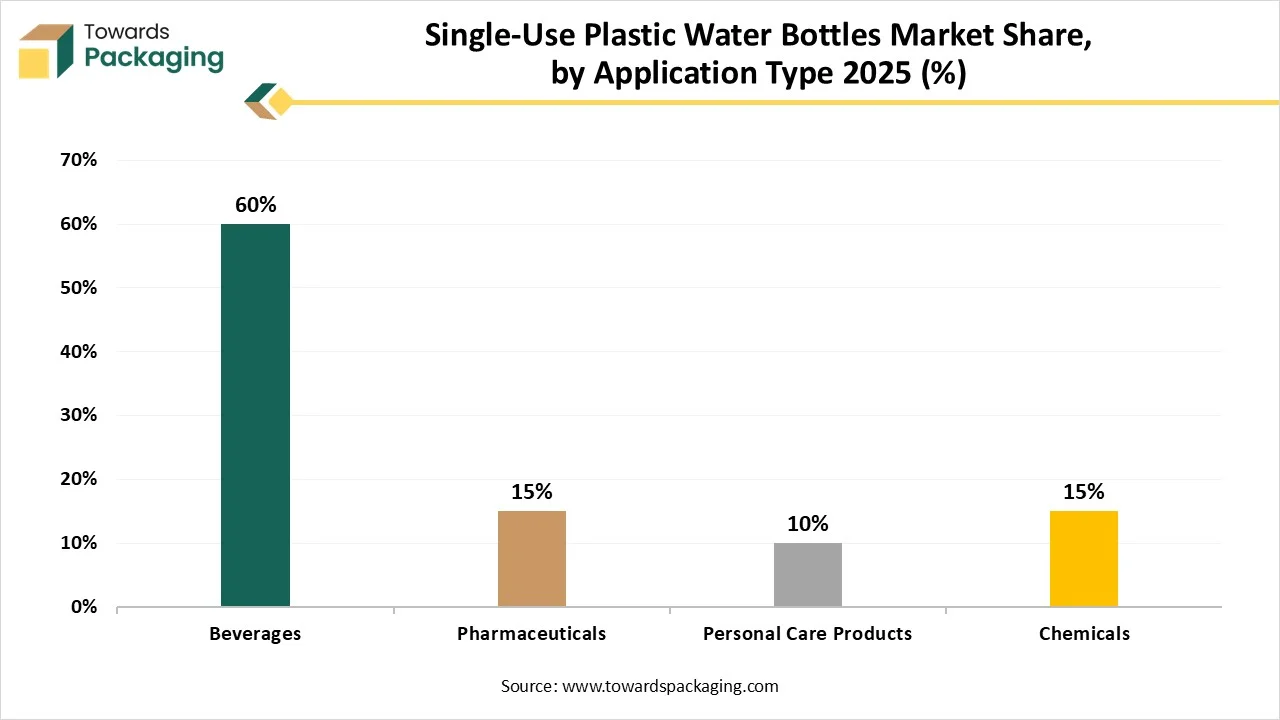
The food & beverages segment dominated the market with highest share in 2025 due to increasing consumption of packaged water. The rising health concern, urbanization, and changing lifestyle of people has influenced the adoption of this market in beverages sector. These bottles provide superior durability, cost-efficacy, and lightweight designs has boost its demand in the single-use plastic water bottles sector. Continuous advancement and enhancement in the recycling potential of the plastic bottles have expanded this market in the segment. With the evolving circular economy and sustainability of the food & beverages sector is investing continuously for innovation in this field.
The pharmaceuticals segment is expected to grow at the fastest CAGR during the forecast period. This segment is growing due to rising storage of medicines and various other healthcare related products. There is a huge upsurge in the demand for contamination-free, safety, and sterility while storing healthcare products for longer period. It is widely utilized for the packaging of saline water, oral medication, nutritional supplements, and several other healthcare products. This type of packaging help in maintaining the integrity of the medicines and prevent microbial growth.
| Material Types Compared | Plastic Types Included | Geographic Scope | Functional Unit | Single-Use / Reusable |
| Single-use plastic bottles | Virgin PET, Recycled PET, Bio-based PET | USA | 0.5 L PET bottle | Single-use |
| Single-use plastic bottles | Fossil-based PET, Bio-based PET | USA | 1 kg of PET bottles (~100 × 0.5 L bottles) | Single-use |
| Single-use plastic bottles | PET, PLA | Thailand | 1000 units × 0.25 L bottles | Single-use |
| Plastic vs glass vs carton | PET, HDPE | Denmark, Finland, Norway, Sweden | 1000 L chilled/ambient beverages | Single-use |
| Plastic vs glass vs carton | PET, HDPE, PP | Belgium, Ireland, Netherlands, UK | 1000 L chilled/ambient beverages | Single-use |
| Glass vs aluminium vs PET | PET | UK | 1 L carbonated drink | Single-use (Reusable analysed in sensitivity) |
| Reusable bottles | Steel, Aluminium | N/A | N/A | Reusable |
| PET bottles vs Non-container options (water at home) | PET | India | 20,000 L drinking water at consumer home | Mixed |
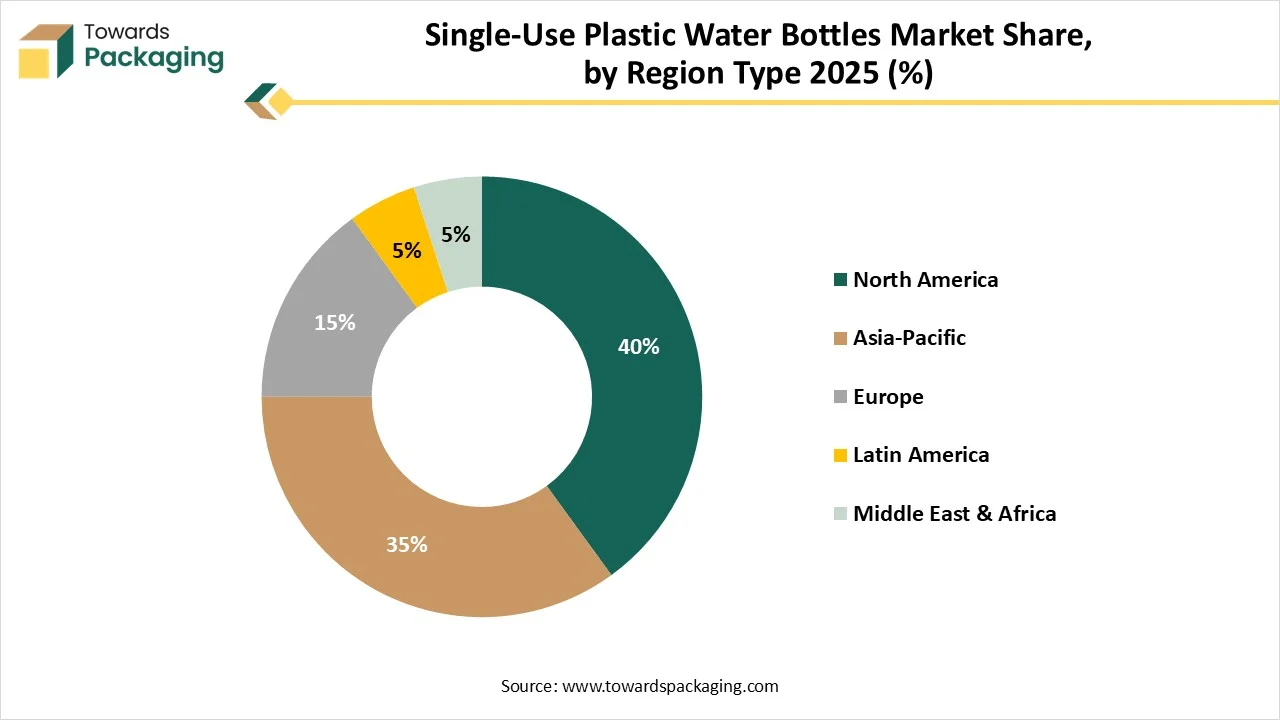
North America held the largest share in the single-use plastic water bottles market in 2025, due to widespread availability of plastics. Busy lifestyle of the consumers in this region has fuelled the demand for portable, convenient, and lightweight water bottles which are easily accessible. The rising health and wellness concern has enhanced the demand for single-use plastic water bottles. Increasing consumption of carbonated sodas has raised the production process of the plastic bottles. The functional and premium packaging demand has enhanced the adoption of this market.
Canada displays a rigid development towards lowering the single-use plastic water bottles, which is being driven by the municipal bars, federal regulations, and developed consumer environmental awareness, and a rising market for sustainable alternatives. Hence, the move experiences opposition from the plastic sector and doubts too from current legal challenges.
Rising environmental awareness among users is an initial driver for the reusable water bottle industry. Hence, the past years have witnessed big strides that are being made to address the huge plastic issue. Particulars around the globe are personally creating up[updates in their lifestyle to cut down on the plastic usage, and several of the governments around the globe have made strides to reduce or avoid the single-use plastics in an overall manner.
The rising demand for consumer convenience for carrying and widely accessible facilities promote this market in the U.S. Continuous innovation in this sector has evolved this market to grow rapidly as it fulfils the demand of the consumers. The rising preference for portable hydration options has influenced the expansion of this market rapidly. Presence of various major market players has a prominent impact in the growth of the industry. There is a huge manufacturing hub of rPET in the U.S. and the estimated PET bottles available for recycling in 2023 was 5,952 million pounds approximately.
Asia Pacific expects the significant growth in the single-use plastic water bottles market during the forecast period. This market is growing due to growing urban population in some countries of this region has influenced the growth of this market. Several other factors such as rising disposal earning and increasing adoption of plastic packaging majorly in food & beverages sector boosting the growth of this market. Some countries such as China, India, Japan, Thailand, and many others are demanding for enhanced hygienic bottled water. The rising concern towards consumption of tap water which result in the spread of several diseases has raised the demand for bottled water.
In China, a rising middle class and fast urbanization have led to a developed demand for the easy, on-the-go hydration procedure. For many, bottled water is the easiest solution. With more spending greatness, users are eager to pay a luxury for water, which is perceived as safer or healthier water. The government’s marketing for healthier lifestyles has moved consumer choices from sugary drinks to bottled water. Some of the Barbados give importance to this by featuring mineral content and water quality too.
Producers and users are witnessing reusable water bottles from sustainable materials like glass, stainless steel, and durable plastics, too. Intelligent water bottles having characteristics like hydration tracking and temperature control are also gaining attention.
Single-use plastic water bottle consumption in Japan is classified by a high volume of waste that has strong recycling rates, which includes incineration and rising governmental and user efforts to move towards a circular economy. Japan is chosen as a top leader in collecting PET bottles for recycling, which makes an impressive collection rate of 94% in the year 20222. Hence, the recycling process counts as a nuance for what is typically recognized as recycling by European Standards. While the collection rate is high, over half of the collected plastics are being thermally recycled instead of being reprocessed into current materials. Material recycling, in which bottles have shifted into the latest textiles and bottles, only accounts for half of the total.
There is huge demand for clean drinking water to avoid the usage of tap water consumption encouraged the demand market in India. Increasing demand for convenience and portability has raised the demand for these packaging sector. The rising expansion of middle-class population has boosted the demand for this market with affordable packaging. The expansion of e-commerce and retail sector are enhancing the accessibility of this sector.
Europe is notably growing due to strong recyclable infrastructure has influenced the demand of market. High demand for consumer trust in convenience, safety, and purity has upsurge the demand for this market. The rising awareness among consumers, and advanced recycling technologies has raised the demand for the usage of single-use of plastic water bottles. Various countries such as the UK, France, Germany, Italy, and many others has contributed significantly towards the development of this market.
Rising consumption of packaged water bottles has influenced the demand for the market. The major factor driving this market in France is affordability of these water bottles with low risk of breakage. There is a huge demand for convenient packaging with easy-to-carry bottles has raised the demand for this market. Presence of huge working professionals raised the demand for portable water bottles with lightweight packaging.
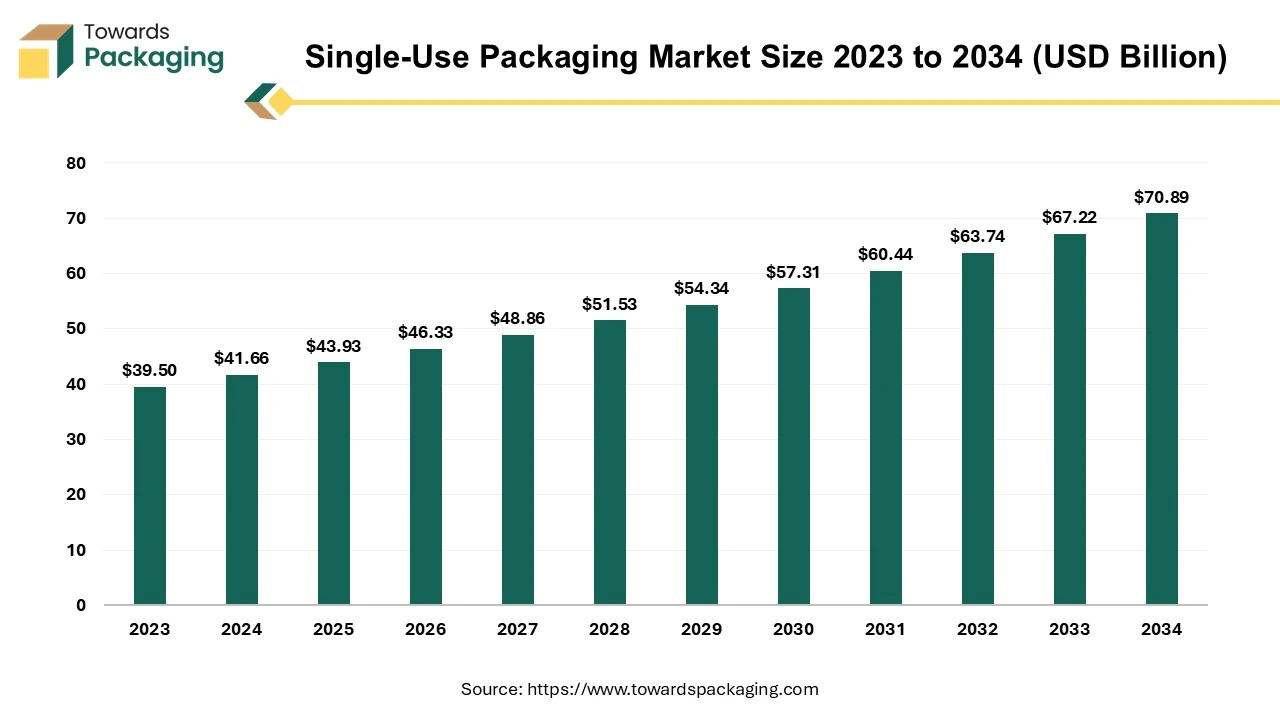
The single-use packaging market is projected to grow from USD 43.93 billion in 2025 to USD 70.89 billion by 2034, at a CAGR of 5.46%. The market is divided into key segments by material (Plastic, Paper, Glass, and others) and type (Food & Beverage, Pharmaceuticals, Personal Care). The Asia-Pacific region leads with the highest market share, while North America and Europe show steady growth, especially in the healthcare and beverage sectors. Key players include Pactiv LLC, Sealed Air Corporation, and Winpak Limited, with competitive analysis focusing on sustainable practices and packaging innovations.
The single-use pouches market is experiencing rapid expansion, with revenue expected to reach hundreds of millions of dollars between 2026 and 2035. This growth is driven by the increasing demand for lightweight, convenient, and eco-friendly packaging solutions across industries such as food & beverages, pharmaceuticals, and personal care.
The single-use pouches market is expected to experience significant growth during the forecast period. The single-use pouches are designed for one-time use. These pouches are made-up of flexible materials like plastic, paper as well as combination of materials and come with features such as zippers, spouts or tear notches to improve its usability. They are commonly utilized across industries such as food and beverages, pharmaceuticals, cosmetics and household products, where convenience, portability and lightweight packaging are important. Single-use pouches can be utilized for products such as snack packs, sauces, personal care items and pharmaceutical doses. Due to their lightweight nature, they also reduce the transportation costs as well as environmental impact compared to the traditional rigid packaging.
The single-use glass packaging market is booming, poised for a revenue surge into the hundreds of millions from 2026 to 2035, driving a revolution in sustainable transportation. The rising expansion of the retail and e-commerce sector, rapid economic growth, increasing demand for premium packaging, rising trend toward reducing plastic waste, growing demand from emerging markets, and increasing demand for single-use glass packaging from various industries food and beverage, cosmetics, pharmaceuticals, and personal care, and others, are expected to drive the global single-use glass packaging market over the forecast period. Single-use glass packaging is designed with excellent finishes that enhance the product's appeal. The integration of smart technologies in single-use glass packaging solutions is expected to fuel the market’s expansion in the coming years.
Single-use glass packaging is equipped with sensors that provide real-time data on its contents. This technology offers valuable information that assists in more effective inventory tracking and management. Sustainability is increasingly becoming a key focus in the packaging industry, which has compelled the prominent players to heavily focus on adopting recycled packaging materials. Additionally, the market is expanding exponentially in various developing and developed regions, particularly Europe, fuelled by the growing demand for single-use glass packaging from multiple industries and growing emphasis on sustainability.
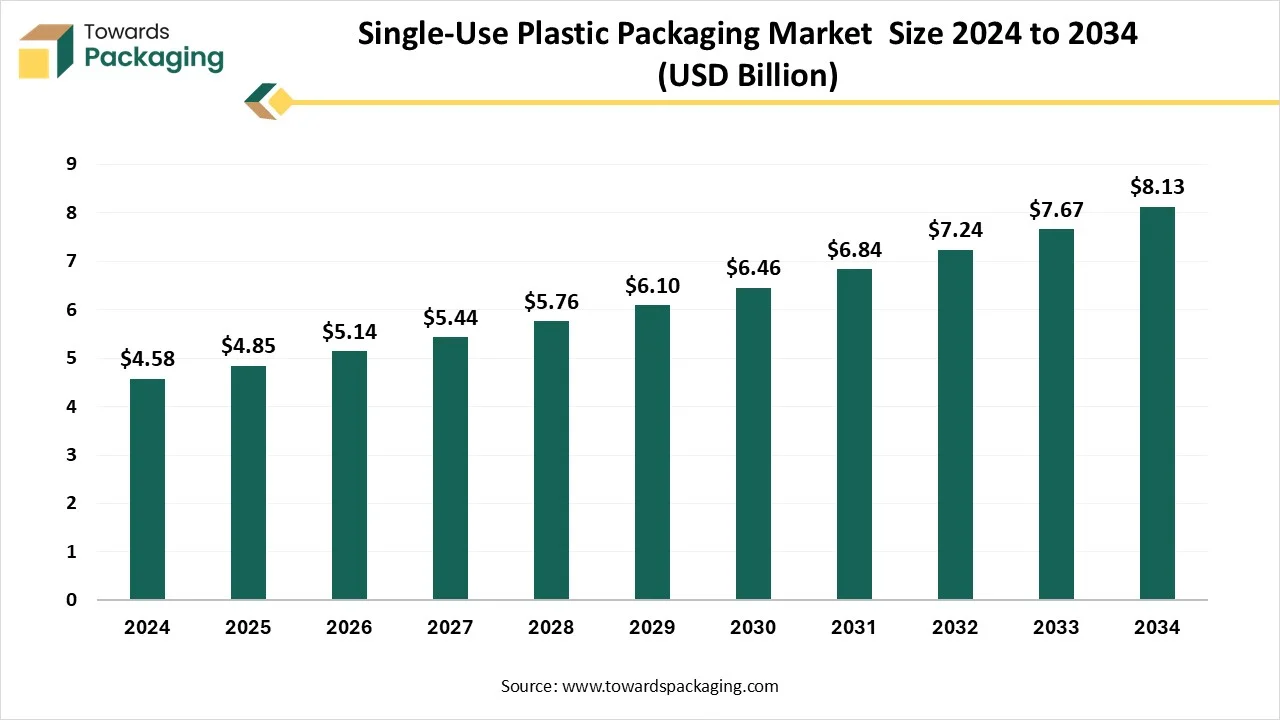
The single-use plastic packaging market is projected to reach USD 8.13 billion by 2034, expanding from USD 4.85 billion in 2025, at an annual growth rate of 5.90% during the forecast period from 2026 to 2035.
The rising demand for cost-effective, durable, and hygienic packaging has influenced the development of the single-use plastic packaging market. Continuous innovation in this sector to fulfil the shifting demand of the consumers has influenced the growth of this market. Due to the presence of major market players and investors, this industry is dominating in the Asia Pacific region.
By Material Type
By Application
By Region













Principal Research Analyst
Vidyesh Swar is a Senior Research Analyst at Towards Packaging, bringing over 4 years of dedicated expertise in market intelligence and strategic analysis across the dynamic world of packaging technologies and solutions.
Learn more about Vidyesh Swar

Reviewed By
Aditi Shivarkar, with 14+ years in packaging market research, specializes in food, beverage, and eco-friendly packaging. She ensures accurate, actionable insights, driving Towards Packaging Analytics & Consulting 's excellence in industry trends and sustainability.
Learn more about Aditi Shivarkar

Single-Use Plastic Water Bottles Market
 Table of Content

 Download Sample
 Schedule a Meeting