


The U.S. rigid thermoform plastic packaging market is forecasted to expand from USD 13.91 billion in 2026 to USD 20.14 billion by 2035, growing at a CAGR of 4.2% from 2026 to 2035. The growth and demand for such packaging is that it delivers to various sectors, which include food and beverages, where it ensures safety and freshness. In personal care and cosmetics, it serves as functional and attractive packaging that enhances product appearance.
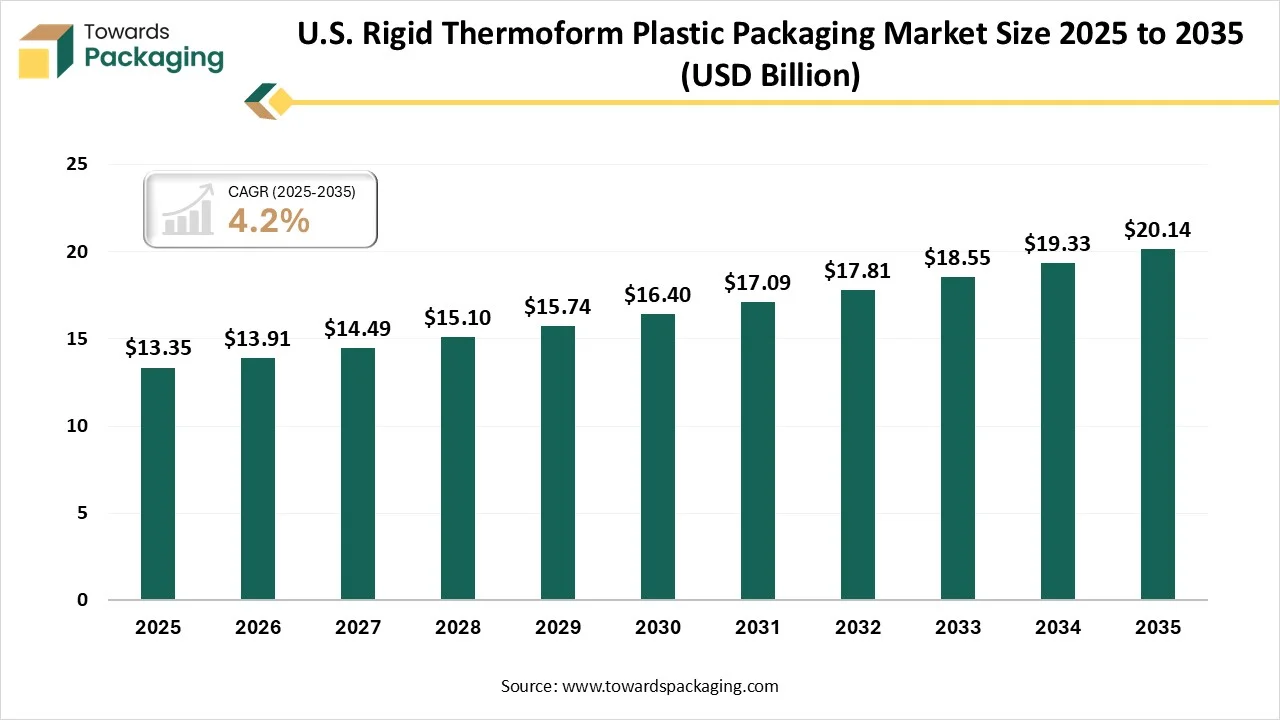
The U.S. market is a global leader in thermoforming adoption, driven by a highly mature food retail sector and a massive pharmaceutical base. Unlike other regions where flexible packaging is gaining ground for weight reduction, the U.S. maintains a strong preference for rigid formats due to the high demand for "shelf-ready" packaging, tamper-evidence, and product protection during long-haul logistics.
As the food sector shifts towards a more sustainable future, thermoforms are proving to be a necessary machine in lowering the environmental impact. On the other hand, updating material usage to assist in biodegradable and recyclable packaging for developing energy efficiency, thermoforms assist in food production that aligns with both consumer expectations and regulatory needs for sustainability. For food processing procurement and engineering specialists, time is needed to check how thermoforming technology can develop sustainability efforts.
The Polyethylene Terephthalate (PET) segment dominated the U.S. rigid thermoform plastic packaging market with 44.8% share in 2025, as polyethylene terephthalate (PE) is initially the material most in demand in terms of thermoforming synthetic packaging industry. It is an exceptional element that is perfect for a transparent nature, which is like that of glass and its feature advantage for its big mechanical power that enables the manufacturing of constant rigid packaging with likely small wall thickness, which is perfect for oxygen barrier qualities that make it perfect for fresh foodstuffs.
The biobased/compostable segment is projected to witness the fastest CAGR during the forecast period. It is a plant-based and compostable bioplastic created from fermented sugars like sugarcane, corn, or cassava. It serves stiffness, good clarity, and food contact safety, which makes it famous for clamshells, cold cups, and 3-printing filaments. Due to industrial composting conditions, PLA can be separated into C02, biomass, and water that assist in reducing the dependency on fossil-based plastics. Hence, it has restricted heat resistance, which demands recycling or a composting design.
The clamshells segment dominated the U.S. rigid thermoform plastic packaging market with 36.2% share in 2025, as PET (polyethylene terephthalate) is among the most conventional plastics that are utilized for clamshell containers. Such materials are famous in the food sector because of their durability, clarity, and potential to prevent ingredients from contaminants and moisture. The incredible usage of such PET clamshell blister packaging is often used for fruit, bakery products, and sandwiches. Their transparent feature displays the product before buying, which develops trust and the possibility of a sale.
The containers segment is projected to witness the fastest CAGR during the forecast period. Once the shaping procedure is completed, the plastic should be cool to mold its design. Cooling systems, such as water sprays or fans, assist in speeding up such a procedure. Once the plastic material becomes hard, extra plastic is cut down to make a finished and clean product. Trimming makes sure the container aligns with accurate dimensions and is then ready for application. The thermoforming process ensures that every container meets strong industry standards for safety and hygiene.
The food & beverages segment dominated the U.S. Rigid thermoform plastic packaging market with 52.4% share in 2025, as the current thermoforming machine serves a series of characteristics that are crafted to develop smoothness and accuracy in the food packaging solutions. Advanced control systems enable operators to track pressure, temperature, and timing with an accuracy that ensures unity in each manufactured unit. Elements such as servo-driven transportation and automatic sheet stretching have reduced waste and developed product consistency. Furthermore, the potential to generate a variety of packaging designs with a single machine makes such machines a reliable choice for US manufacturers.
The pharmaceuticals segment is projected to witness the fastest CAGR during the forecast period. The thermoforming procedure uses heat to soften plastic films like VDC-coated PVC, PVC, or PET, which are then formed into blisters. Such a procedure is flexible and fast, and enables the development of product visibility, which can be reviewed and checked for both pharmacists and patients. Thermoform blister packaging is a necessary solution in the current landscape of pharmaceutical packaging solutions, which serves not only clarity but is also crucial for tamper-evident packaging characteristics, which makes our product safe. The application of a thermoformed plastic in this process guarantees that each kind of packaging is personalized to align with the particular demands of the product while tracking effectiveness and reliability.
State Level Analysis
The U.S. rigid thermoform plastic packaging market is expected to grow notably in California because this state is witnessing a higher growth driven by macroeconomic moves, which include growing demand for sustainable materials and lightweight packaging solutions. As users select a pivot in terms of environmentally friendly products, producers are progressively outsourcing thermoforming procedures to tailor subcontractors that can deliver cost-efficient and innovative eco-friendly solutions. This trend is further reimplemented by the current digitization of production, which allows real-time tracking, fast prototyping, and hence reduces lead times.
By Material
By Product Type
Application Type







Principal Research Analyst
Vidyesh Swar is a Senior Research Analyst at Towards Packaging, bringing over 4 years of dedicated expertise in market intelligence and strategic analysis across the dynamic world of packaging technologies and solutions.
Learn more about Vidyesh Swar

Reviewed By
Aditi Shivarkar, with 14+ years in packaging market research, specializes in food, beverage, and eco-friendly packaging. She ensures accurate, actionable insights, driving Towards Packaging Analytics & Consulting 's excellence in industry trends and sustainability.
Learn more about Aditi Shivarkar


U.S. Rigid Thermoform Plastic Packaging Market
 Table of Content

 Download Sample
 Schedule a Meeting