


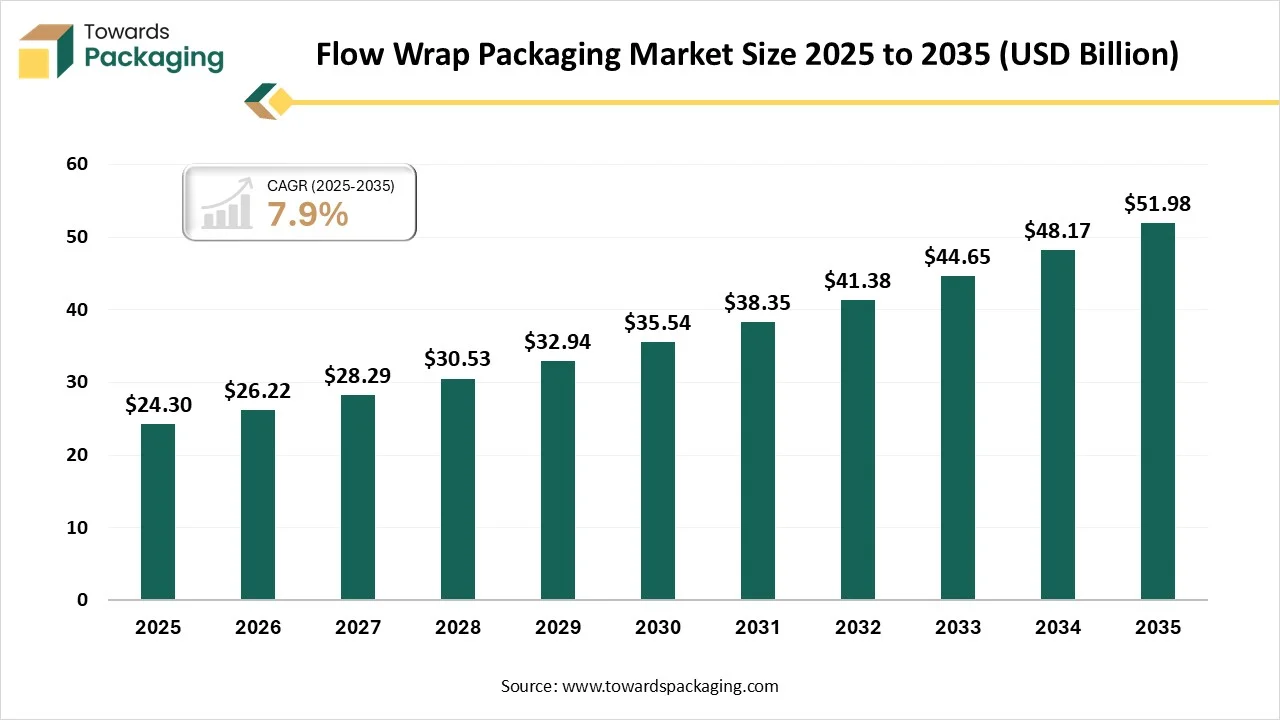
The flow wrap packaging market is forecasted to expand from USD 26.22 billion in 2026 to USD 51.98 billion by 2035, growing at a CAGR of 7.9% from 2026 to 2035. The flow wrap technology develops automation by growing the packaging automation, speed, and tracking the constant sealing quality by lowering the material waste and developing a tamper-evident and protective seal.
The study further covers transportation and logistics costs, shipment handling, consumer demand trends, and regional preferences. It also examines regulatory standards, sustainability practices, and new packaging technologies, along with competitive strategies and market positioning of key companies. These insights help businesses understand operational performance, innovation trends, and growth opportunities across the global flow wrap packaging market.
Flow wrapping is a packaging procedure in which a product is kept on a polypropylene or polyethylene sheet that is shifted horizontally and packed at both ends. The most prevalent type is a horizontal flow wrapper. This procedure is also called horizontal bagging, crimp seal wrapping, fin seal wrapping, and pillow pouch packaging.
It is an airtight form of packaging. The escape of oxygen prevents the product from linking with moisture and any airborne pollutant, like dust. This also assists in protecting the shelf's life and perfect freshness.
Plastic flow wrap creates an airtight barrier that extends the shelf life and lowers food waste. Flow wrap technology makes protective and rigid seals that protect against leaks and tears, which serve the main advantages from a perfect hygiene point of view. While the expanded life and lower pack weight were the significant advantages of shifting the complete product to flow wrap.
On the other hand, secure seals also point to a perfect user experience for luxury products like cakes and biscuits, while removing the oxygen, which makes life longer and the products that remain longer or fresher.
The plastic segment dominated the flow wrap packaging market in 2025, as polyethylene is a widely used plastic in terms of flow wrap technology because of its durability and flexibility. It delivers excellent resistance and mixture, which makes them perfect for food products. PE films are also recyclable, which matches the rising surrounding sustainability efforts. Additionally. PVC is an evergreen plastic that is used in flow wrap packaging for its strength and clarity. It serves as perfect protection against the prevention against pollutants and is frequently used for packaging medical machines, particularly food products, and toys.
The paper-based segment is expected to experience the fastest CAGR during the forecast period. As sustainability becomes important, paper flow wrap packaging solutions are developing. In the current year, organizations are concentrating on biodegradable materials. Such a move means using recycled fibers instead of plastics. The creativity of paper flow wraps is another main advantage. They can smoothly package a huge series of products. From food products to user goods, they serve as a relevant solution. Several producers feature that such wraps can track product freshness while ensuring a requested presentation.
The packaged snacks segment dominated the market in 2025 as flow wrap packaging has become necessary in the food packaging sector, which is specifically for frozen foods, cheese packaging, sauces, snacks, and bakery items. Its potential is to create airtight seals that avoid pollutants and expand the shelf life of sensitive goods. For instance, in cheese packaging, polyethylene-based flow wraps make sure that cheese stays fresh while serving a clear and visually appealing appearance for users.
The chocolate and confectionery segment is projected to experience the fastest CAGR during the forecast period. The horizontal flow-wrap machines generate pillow-pack wraps for confectionery and bars. Molten chocolate pieces are being filled into constant film tubes that are being cut and sealed. The high-speed flow wrappers can package thousands of bars per minute. They can carry different chocolate shapes and utilise films as foil and plastic laminates. Flow wrapping machines, which are frequently known for folder-gluers, cover singular chocolates in foil, paper, and bioplastic bands. A specific fold wrapper can cover bars or block-shaped chocolates by folding tight envelopes around them.
The food and beverages segment has dominated the market in 2025, as flow wrap machines are specifically useful for the packaging of refrigerated and frozen foods, as they deliver a quick and smooth way to wrap products in preventive films that prevent exposure to moisture, air, and contaminants. Furthermore, for frozen foods, the potential to quickly and protectively monitor products is necessary to track their temperature and protect them from freezer burn. Flow wrap machines can conveniently package products like meats, frozen vegetables, and ready-to-eat meals, which ensures that the packaging stays intact through transport and storage.
The medical and pharma segment is expected to witness the fastest CAGR during the forecast period. Flow-pack packaging serves high protection for the pharmaceutical sector by utilizing a heat-sealing system. Hermetic packages make sure that the fragile products are overall prevented from external contaminants like light, dust, and bacteria, too. Therefore, the quality and productivity of the product are protected throughout its entire lifetime. Moreover, flow pack machines can be used with various film types with particular elements, such as gas resistance and moisture, that are necessary for products that can degrade or oxidize. Films with protective barriers can expand the lifetime limit of products by tracking the smoothness of fragile active ingredients.
Asia Pacific dominated the flow wrap packaging market in 2025, as this kind of packaging solution is utilized to wrap products, specifically in the food and beverage sector, which serves protection, expanded shelf life, and ease. Main trends count the move towards sustainable materials, which is the acceptance of digital printing for developed branding, and growing automation in the packaging process. The drivers of development count the growing urge for ready-to-eat products, packaged, and the demand for reliable and smooth packaging for e-commerce, and advances in packaging technology, which improve product appeal and protection.
How is the Flow Wrap Packaging Market Growing in India?
There is a fast entry of online retail and grocery delivery, which has made a surge in demand for lightweight, reliable, and protective packaging that can firmly withstand handling and shipping too. There is a rigid move towards high-speed automation and the AI-driven packaging systems to update manufacturing lines and lower labor costs. So, the flow wrapping is excessively used for blister packs, medical devices, and hygiene products such as sanitizing wipes, which serve as tamper-evident seals and the management of surrounding factors. There is growing environmental alertness and government regulations that are used for single-use plastics, which are encouraging producers towards bio-based, paper-based, and recyclable films, too.
North America expects the fastest growth in the flow wrap packaging market in 2025. It has emerged as an important region in the huge packaging sector, which is driven by the region’s fast-growing user goods sector, which develops the demand for easy foods, and technological developments in the packaging solutions. The flow wrap packaging is classified by its potential to effectively use the products in a constant, smooth film, which serves several benefits such as expanded shelf life, developed product visibility, and lastly enhanced operational smoothness.
Why is the United States using the Flow Wrap Packaging Market Importantly?
The United States flow wrap packaging market is witnessing main development by the growth in packaging technology, the growing urge for flexible packaging solutions across different sectors, and a growing focus on sustainability. As users select the move towards longer shelf life and convenience for packaged goods, producers are investing in inventive machines that develop smoothness, lower waste, and ensure product integrity. The market is also differentiated by a demand for digital integration and automation, which allows for product integrity. The market is also classified by demand in the food and beverage industry, which remains constant as the market is meant for constant development, which is being assisted by regulatory standards and user trends that favour cost-effective and eco-friendly packaging solutions.
By Material
By Application
By End-Use
By Region







Principal Research Analyst
Vidyesh Swar is a Senior Research Analyst at Towards Packaging, bringing over 4 years of dedicated expertise in market intelligence and strategic analysis across the dynamic world of packaging technologies and solutions.
Learn more about Vidyesh Swar

Reviewed By
Aditi Shivarkar, with 14+ years in packaging market research, specializes in food, beverage, and eco-friendly packaging. She ensures accurate, actionable insights, driving Towards Packaging Analytics & Consulting 's excellence in industry trends and sustainability.
Learn more about Aditi Shivarkar


Flow Wrap Packaging Market
 Table of Content

 Download Sample
 Schedule a Meeting