


The recycle-ready packaging market is booming, poised for a revenue surge into the hundreds of millions from 2026 to 2035, driving a revolution in sustainable transportation. The increasing focus towards developing sustainable packaging, strict government guidelines, changing circular economy, and rapid innovation has influenced the demand for the market. Strict packaging guidelines and consumers awareness has influenced several sectors to adopt this type of packaging. Development of new material such as high-barrier paper and mono-material plastics has enhanced the demand for this market.
Recycle-ready packaging includes packaging solutions designed to be compatible with existing recycling streams, primarily using mono-material structures such as polyethylene, polypropylene, and paper-based formats. These packages support circular economy goals by reducing landfill waste and improving material recovery efficiency. Demand is increasing due to sustainability regulations, brand commitments to recyclable packaging, and rising consumer preference for eco-friendly products. Applications span food & beverages, personal care, household goods, pharmaceuticals, and industrial sectors seeking cost-effective, sustainable, and easily recyclable packaging formats.
Technological transformation in the market plays a significant role in its expansion. This market is majorly driven due to development of mono-material packaging, bio-based materials, and fibre-based barriers for safe packaging of products. Rapid advancement in the recycling infrastructures with advanced machineries has raised the adoption for this market. Advanced technology is highly acquired due to enhancing focus towards reduction of waste generation and contamination.
The major raw materials utilized in this market are rPP, rPET, rHDPE, recycled paper, and bio-based foams.
The component manufacturing in this market comprises mono-material shift, advanced barrier coatings, fitments & dispensers, and PE laminates, and polyethylene (PE) innovation.
This segment ensures efficient collection, recycling process and manage from sourcing to production procedure.
| Material Type Segments | Market Share 2025(%) |
| Polyethylene (PE) | 45.60% |
| Polypropylene (PP) | 25% |
| Other Materials | 29.40% |
The polyethylene (PE) segment dominated the market with highest share of 45.6% in 2025 due to its versatility and strong recyclability potential. It is a majorly used in the food and beverage sector due to its high flexibility. It is extensively utilized for the manufacturing of bottles, films, containers, and bags for packaging in the pharma, food, and personal care products. The evolving recycling technology has influenced the usage of this material. It is highly known for adaptability and recyclability. The rapid expansion for sustainable packaging solution.
The polypropylene (PP) segment is expected to grow at the fastest CAGR during the forecast period. This segment is growing due to strict regulatory push and cost-effective solution. Significant trends comprise mono-material patterns for progressive sorting tech, easier recycling, and increasing venture in food-grade rPP to fulfil brand promises and supervisory mandates. It provides superior clarity, barrier possessions, heat resistance, stackability, and rigidity, making it suitable for several usages. This material type is low charge, and lightweight properties make it an appealing option for packaging.
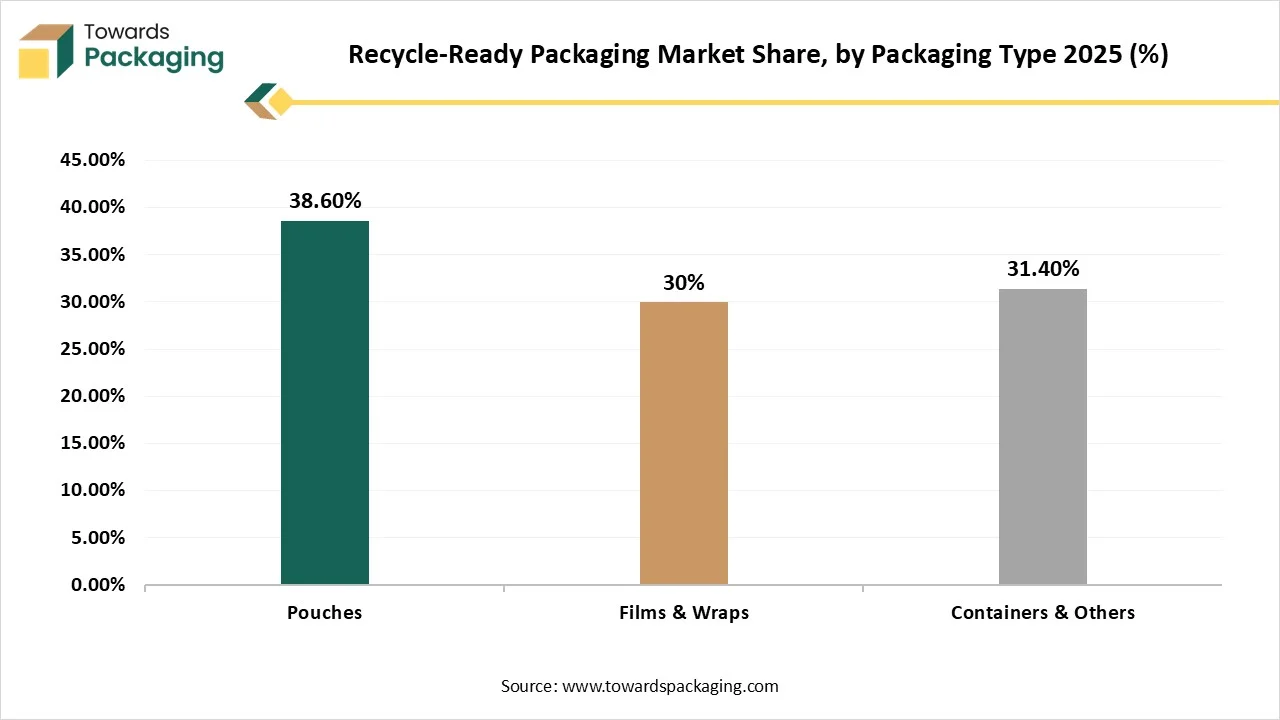
The pouches segment dominated the market with highest share of 38.6% in 2025 due to its sustainability advantages. It offers robust barrier defence against oxygen and moisture is important for food protection, with invention emphasizing on preserving this block in recyclable setups. These are light weight, visually attractive, and cost-efficient solutions available in recyclable packaging sector. Resealable zippers and portability of this segment have raised the adoption of such packaging. The increasing trends for travelling have also raise the adoption of pouch packaging.
The films & wraps segment is expected to grow at the fastest CAGR during the forecast period. This segment is growing due to increasing demand for convenience and strict packaging films. It is essential for packaging of frozen food, snacks, and personal care products. It plays a significant role in protecting products from light, air, and moisture which enhance the demand for this segment. The increasing goal of companies to meet strict guidelines and circularity demand among customers has evolved the development of this packaging segment.
| Application Segments | Market Share 2025(%) |
| Food & Beverages | 42.40% |
| Personal Care & Cosmetics | 25% |
| Pharmaceuticals & Medical | 15% |
| Industrial & Other | 17.60% |
The food & beverages segment dominated the market with highest share of 42.4% in 2025 due to increasing concern towards ecological issues. Governments inspire or command recyclable resources to decrease plastic waste. The increasing consumption of packaged food products has influenced the demand for this packaging market. Enhanced barrier properties of the recycle-ready packaging are the major factors behind the adoption in this segment. These packaging enhance brand image among consumers. Growing recycling infrastructures and waste collection has supported the demand for such packaging.
The personal care & cosmetics segment is expected to grow at the fastest CAGR during the forecast period. This segment is growing due to rising e-commerce sector and premiumization. Increasing demand for aesthetic packaging has influenced the adoption of such packaging. This market holds a wide range of customization option which has influenced the demand for this packaging. Reusability option is playing a significant role in rising the adoption of this market. Increasing advancement in technology has fuelled the growth of this packaging sector.
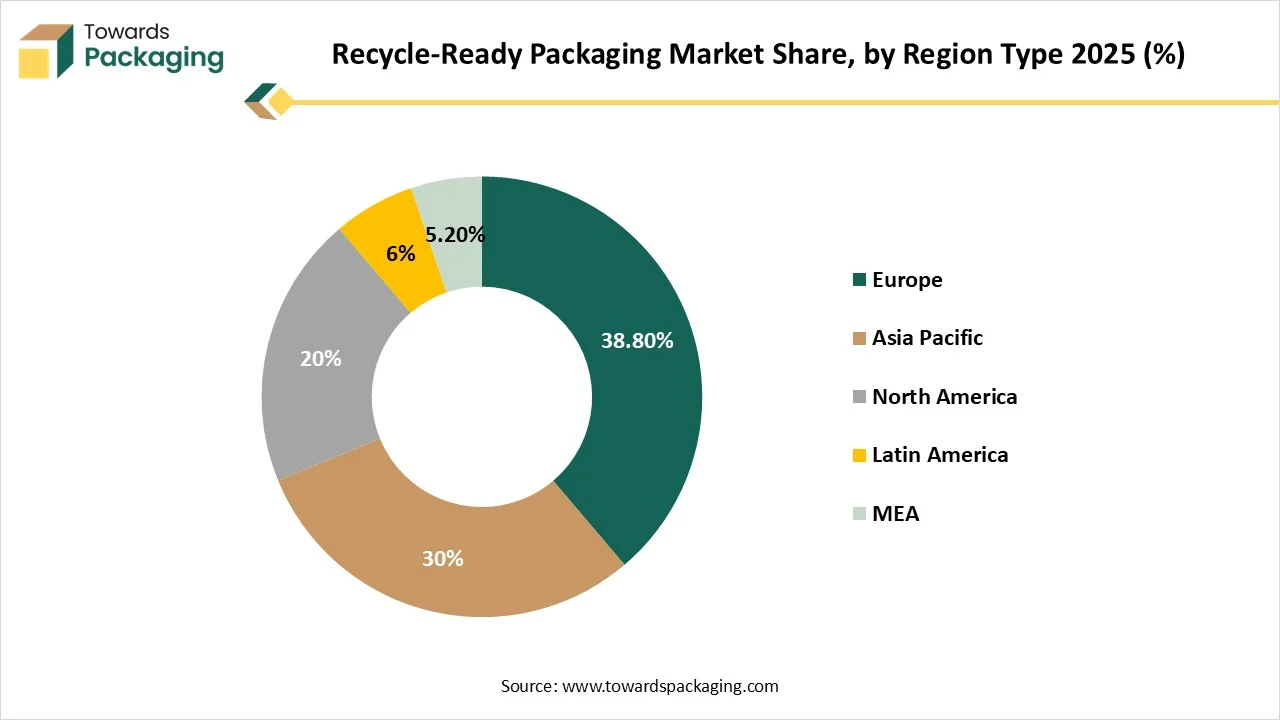
Europe held the largest share in the market share of 38.8% in 2025, due to presence of strict packaging guidelines. The major market players are investing profoundly towards development of recycling infrastructures which has raised adoption of these types of packaging. Brands are majorly focusing towards the advancement of recycling process which increase the adoption of this market. Rising ecological awareness among consumers has raised the demand for recycle-ready packaging in various sectors. This robust demand push brands to accept sustainable packaging to preserve a competitive control and expand their brand impression.
Advanced recycling infrastructures has enhanced the demand for market in Germany. Rapid shift from single-use packaging has influenced brands to adopt such packaging. It supports in enhancing consumer base which that push this market to evolve. Consumers enthusiastically looking out products with environment-friendly packaging like paper-based packaging options. Increasing corporate sustainability goals has fuelled the demand for this sector.
Rising urbanization and changing consumers preferences have driven the demand for the market. Increasing populations and enhanced city living influence demand for packaged products, generating sustainable options crucial. Customers demand environment-friendly options, driving brands to shift to sustainable and recyclable packaging. Inventions in automation and resource science improve the efficacy and feasibility of recycling. A sturdy drive for a circular economy, resulting in enhanced demand for recycled plastics, paper, and advanced materials.
Rapid growth of e-commerce sector has driven the development of the market in China. Fast online retail development requires packaging which is both defensive for transportation and shelf-ready, favouring lightweight, and recyclable packaging. Advanced recycling technologies are widely accepted to fulfil sustainability aims and fuel supply chain efficacy. Eco-conscious customers progressively choose sustainable brands, fuelling manufacturers to accept recyclable packaging.
The primary factors influencing the growth of market are consumer demand, strict government regulations, and rising corporate sustainability focus. Increasing grouping of strict ecological guidelines and increasing customer demand for sustainable items. Rising ecologically concern and enthusiastically looking out for products with environment-friendly packaging. These aims influence substantial speculation and invention in recycle-ready resources and skills. Advancement in the manufacturing material has influenced the adoption and production of such packaging.
The rising corporate sustainability goals has fuelled the development of the market. This change influences invention in resources and packaging patterns that decrease waste, lesser carbon footprints, and enhance supply chain logistics, bring into line business performs with ecological goals and market prospects. Companies are incorporating sustainable packing into their ESG reports and planning to fulfil ecological goals and fuel brand impression. Recycled resources frequently have lesser production charges than virgin plastics, as well as low-weight recycled packaging decreases transportation expenditures.
Presence of strong e-commerce as well as food & beverages sector has raised the adoption of recycle-ready packaging. The rapid extension of e-commerce as well as food delivery facilities in this region has improved the requirement for effectual and sustainable packaging options. This generates a demand for advanced, durable, and environment-friendly packing that can resist intricate supply chains. Incorporation of sustainability packaging into their core planning and committing to ecological advancement has raised the demand for this type of packaging.
Rising incentives and investments are the major reason behind the rapid growth of market in Saudi Arabia. Huge investment for the advancement of recycling technology has fuelled the growth of this market. Continuous research and development in this sector have enhanced the acceptance of such packaging in a wider range of industries. Enhancing efficiency and lowering charges in the recycling process also boost the growth of this market. The rising concern among brands to establish unique image with recycled and recyclable packaging has enhanced the production of these packaging.
Rapid technological & material innovation has influenced the growth of the market in South America. Advancement in recycling technology and new resources provide operational substitute to old-style plastics as well as laminates. Enhanced investment in recycling services helps in the infrastructure required for such packaging formats. Rising ecological concern makes customers favor brands utilizing environment-friendly, reusable or recyclable packaging.
Restriction on usage of single-use packaging has raised the demand for market in Colombia. Customers are progressively concern for ecological issues and are demanding environment-friendly packing. This change in customer preference forces corporations to accept sustainable solutions to preserve brand status and fulfil market prospects. It is because of an amalgamation of strict government guidelines, increasing customer ecological consciousness, and the noteworthy economic opportunities showed by a circular economy.
By Material Type
By Packaging Type
By Application
By Region



Research & Advisory Analyst
Yogesh Kulkarni is an experienced Research Analyst specializing in the packaging sector, with a strong foundation in statistical analysis and market intelligence. He currently contributes his expertise to Towards Packaging.
Learn more about Yogesh Kulkarni

Reviewed By
Aditi Shivarkar, with 14+ years in packaging market research, specializes in food, beverage, and eco-friendly packaging. She ensures accurate, actionable insights, driving Towards Packaging Analytics & Consulting 's excellence in industry trends and sustainability.
Learn more about Aditi Shivarkar

Recycle-Ready Packaging Market
 Table of Content
 sales@towardspackaging.com
 +1 804-441-9344
 Download Sample
 Schedule a Meeting