


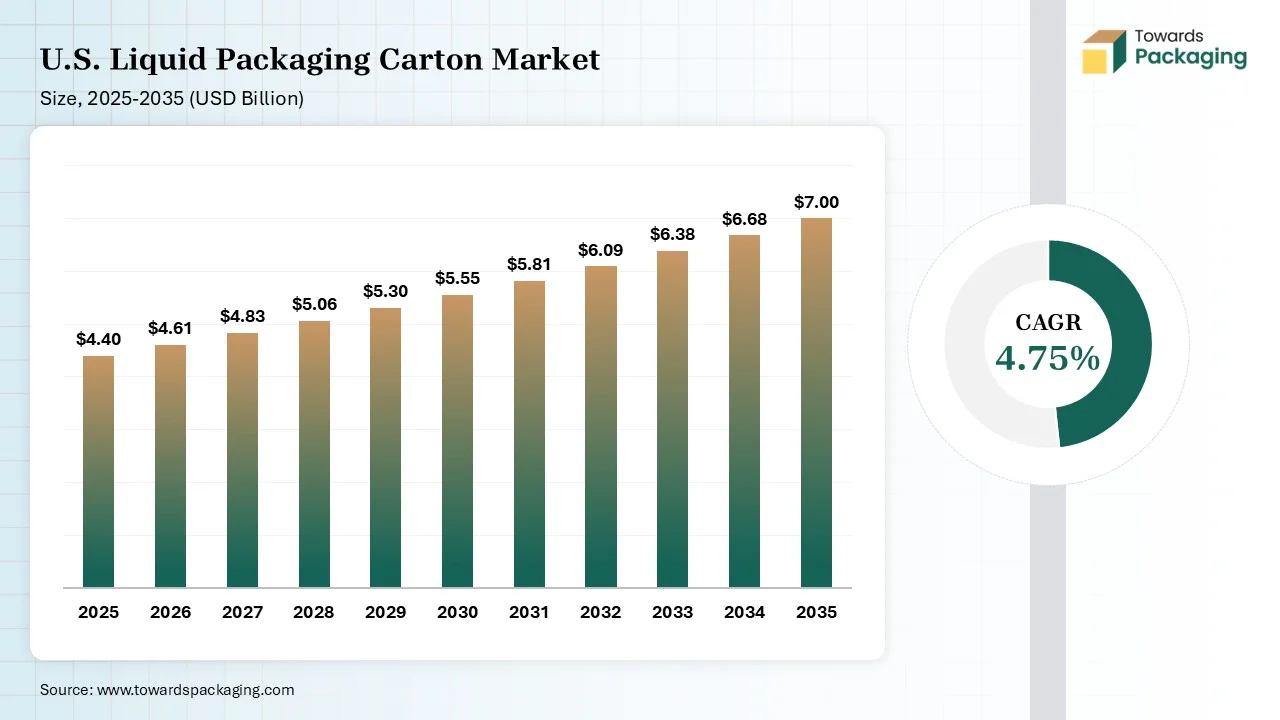
The U.S. liquid packaging cartons market is projected to grow from USD 4.61 billion in 2026 to USD 7 billion by 2035, registering a CAGR of 4.75% during the forecast period. The report provides detailed insights into market size, segment-wise analysis by material type, packaging format, and end-use industries, along with regional trends across the U.S. It also covers key company profiles, competitive landscape, value chain structure, and trade data, including import-export statistics, as well as comprehensive data on manufacturers and suppliers operating in the market.
Liquid packaging cartons point to tailored designs and materials utilized to securely contain, transport, and keep liquids. It includes a huge range of solutions personalized to align with different issues linked with carrying liquids, such as leakage prevention, tracking product integrity, and ensuring convenience for application end-users.
Packaging selections are crafted to align with different liquid types, which include chemicals, beverages, personal care, and pharmaceutical products. Strategic considerations in terms of liquid packaging count barrier protection, reliability, convenience of usage, and sustainability. Materials such as metals, plastics, cartons, and glass are prevalently used, with every serving that has benefits depending on the usage and liquid type.
The latest materials have come up in the frontline in the field, and one of them is bio-based plastics. These are particularly created from sugarcane, corn flour, or other renewable sources. Glass, plus, and metal packaging are becoming more lightweight in nature. Active packaging is developing in the current scenario. Antimicrobial coatings, moisture absorbers, and oxygen scavengers are some of the solutions in such a space, in which we can extend the shelf life and track product quality. Digital printing is perfect for tailored packaging in bulk mode as the organizations can accept restricted -edition patterns and tailored labels. Additionally, refillable packaging systems are here when it comes to waste reduction. Now, users can get their products in terms of reusable containers or tote refill stations.
Brick liquid cartons segment dominated the market in 2025 because carton bricks are one of the most widely used packaging designs in the food and beverage sector, which are well known for its structural power, versatility, and sustainability. Such brick-shaped cartons, which are frequently created from layered materials, including plastic, paperboard, and aluminium foil, are crafted to protect product integrity while serving ideal shelf presence and logistical smoothness. Carton bricks are classified depending on their functional design, shape, material composition, and intended usage. Every type delivers a different role in developing ease, product protection, supply chain efficiency, and brand visibility.
The gable top cartons segment is expected to witness the fastest CAGR during the forecast period. They are crucially designed from paperboard received from well-maintained forests in which the latest trees are being planted to track a cycle of resources. Gable top crayons assist in lowering every dependency on fossil fuels by using materials that do not come from petroleum, like PET bottles. They are made with storing the recycling in mind for classification into the paperboard, aluminium, and polyethylene elements, which are to be recycled into various new products.
Long shelf-life cartons segment dominated the market in 2025 because one of the main factors that affects the shelf life of products that are being packed in liquid board is the barrier elements of the material. Barrier coatings are utilized to develop the resistance of the board to oxygen, moisture, and other external factors that can lead to spoilage. Such coatings not only assist in expanding the shelf life of the product but also track its quality and freshness. Prevalent barrier solutions count EVOH-based coatings, polyethylene layers, and water-dependent dispersion coatings, as each one is crafted to solve needs for oxygen protection, moisture resistance, and recyclability.
The short shelf-life cartons segment is expected to witness the fastest CAGR during the forecast period. The procedure starts in the product growth stage, in which experiments with content are conducted, and the desired product elements are received. Once the complete formulation is completed, we can test user acceptance to make sure the product aligns with market demands. After that, it’s important to conduct shelf-life tests to check how long any product maintains its quality. This is the phase in which packaging plays a crucial role. It is where natural products will witness changes and suddenly pollute over time.
The liquid dairy products segment dominated the market in 2025, as liquid packaging cartons are a type of paperboard that is particularly created for the packaging of liquid products like dairy and milk. They are covered with a thin surface of polyethylene on every side to deliver moisture resistance and prevent leakage. Such integration of paperboard and polyethylene creates a liquid board, which is a perfect selection for liquid containers, as it serves both barrier properties and structural integrity. In general liquid packaging designs, the paperboard surface serves shape stability and stiffness as the polyethylene layers behave as sealing layers and moisture barriers during the filling and forming step.
The alcoholic drinks segment is expected to witness the fastest CAGR during the forecast period. Carton drink packaging has become regular in this industry because of its exceptional hygiene, durability, and eco-friendly advantages. Such containers are crafted to prevent liquid content from contamination, physical damage, and spoilage throughout their lifecycle procedure, right from manufacturing and traveling to usage and storage. The integration of high-level smart design, materials, and sustainable practices ensures that carton drinks maintain the safety, freshness, and structural integrity over a period.
Country Level Analysis
The U.S. Liquid Packaging Cartons market is expected to grow notably as the liquid packaging cartons industry has displayed a different and dynamic scenario, encouraged by market demand, regional elements, and user choices. This market is being driven by a strong beverage sector, which includes juices, dairy products, and ready-to-drink beverages. The developing alertness that is linked to sustainable packaging solutions is marketing the application of environmentally friendly cartons. The region’s high-level retail designs and consumer movement in terms of convenient packaging are further developed for market development.
Demographic trends display a growing urbanization and population that leads to higher usage of packaged beverages, particularly among health-conscious and millennial users. Factors that encourage buying decisions include sustainability, product convenience, and brand reputation. The move towards on-the-go consumption will further develop the urge for liquid packaging cartons.
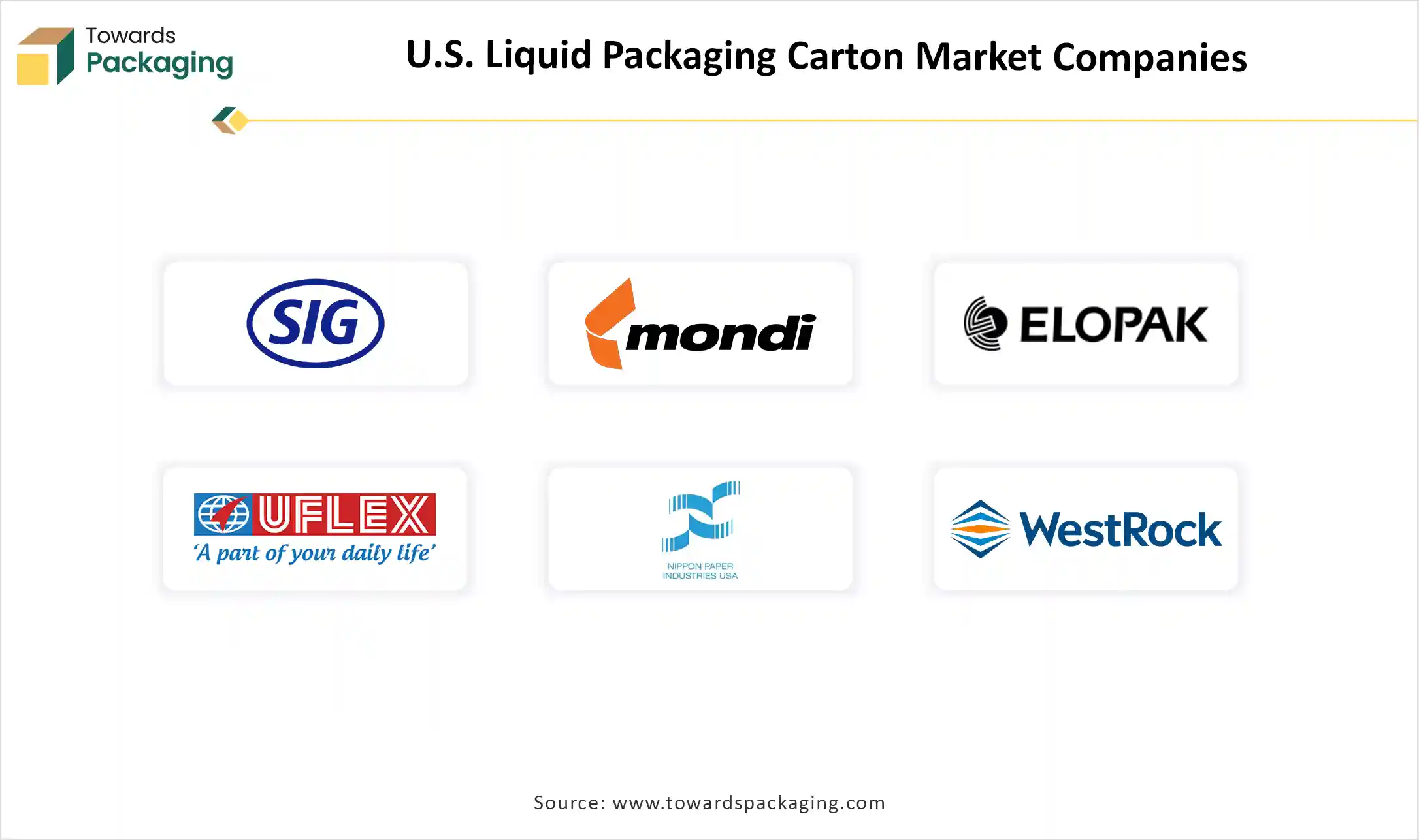
In April 2025, Elopak, which is a Norwegian-owned manufacturer of sustainable packaging for liquid food products, began its first U.S. production platform at the Port of Little Rock in Arkansas. This installation is filled with current innovative technology for smooth and effective manufacturing of Pure-Pak cartons for a series of products that include juices, liquid dairy, liquid eggs, and plant-based products.
By Carton Type
By Shelf-Life
By End-Use



Principal Research Analyst
Vidyesh Swar is a Senior Research Analyst at Towards Packaging, bringing over 4 years of dedicated expertise in market intelligence and strategic analysis across the dynamic world of packaging technologies and solutions.
Learn more about Vidyesh Swar

Reviewed By
Aditi Shivarkar, with 14+ years in packaging market research, specializes in food, beverage, and eco-friendly packaging. She ensures accurate, actionable insights, driving Towards Packaging Analytics & Consulting 's excellence in industry trends and sustainability.
Learn more about Aditi Shivarkar

U.S. Liquid Packaging Cartons Market
 Table of Content

 +1 804-441-9344
 Download Sample
 Schedule a Meeting