


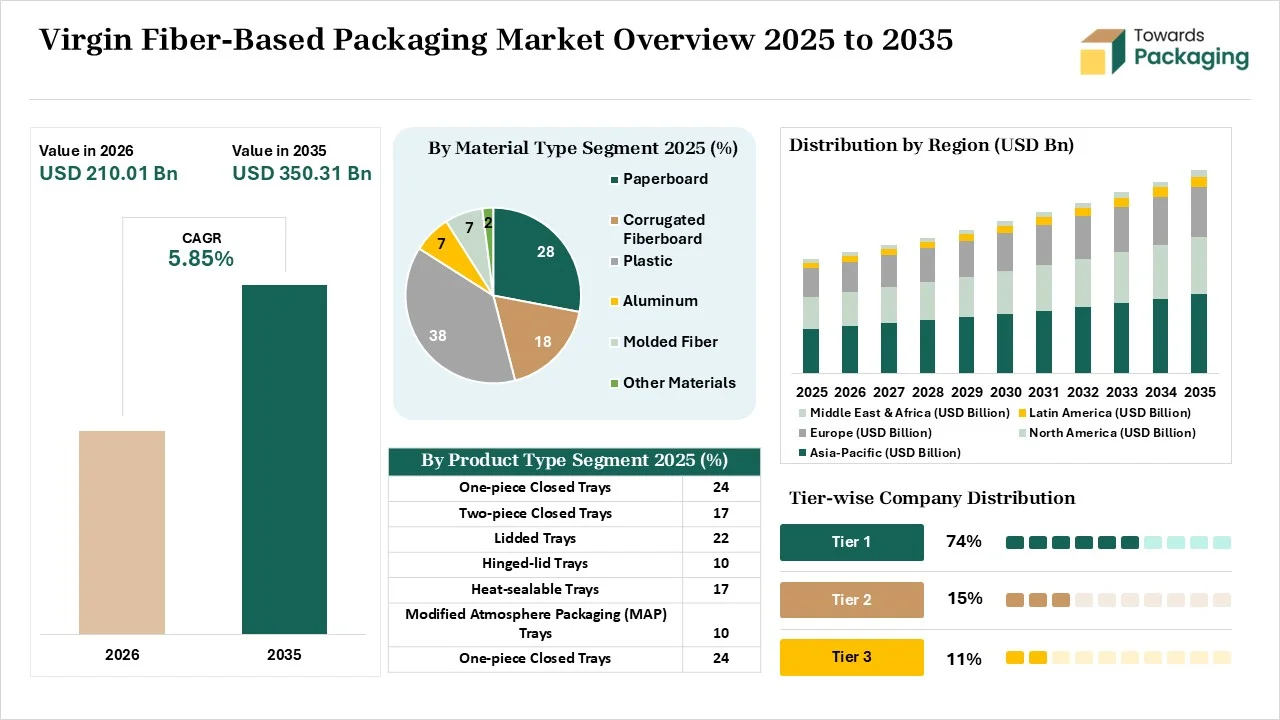
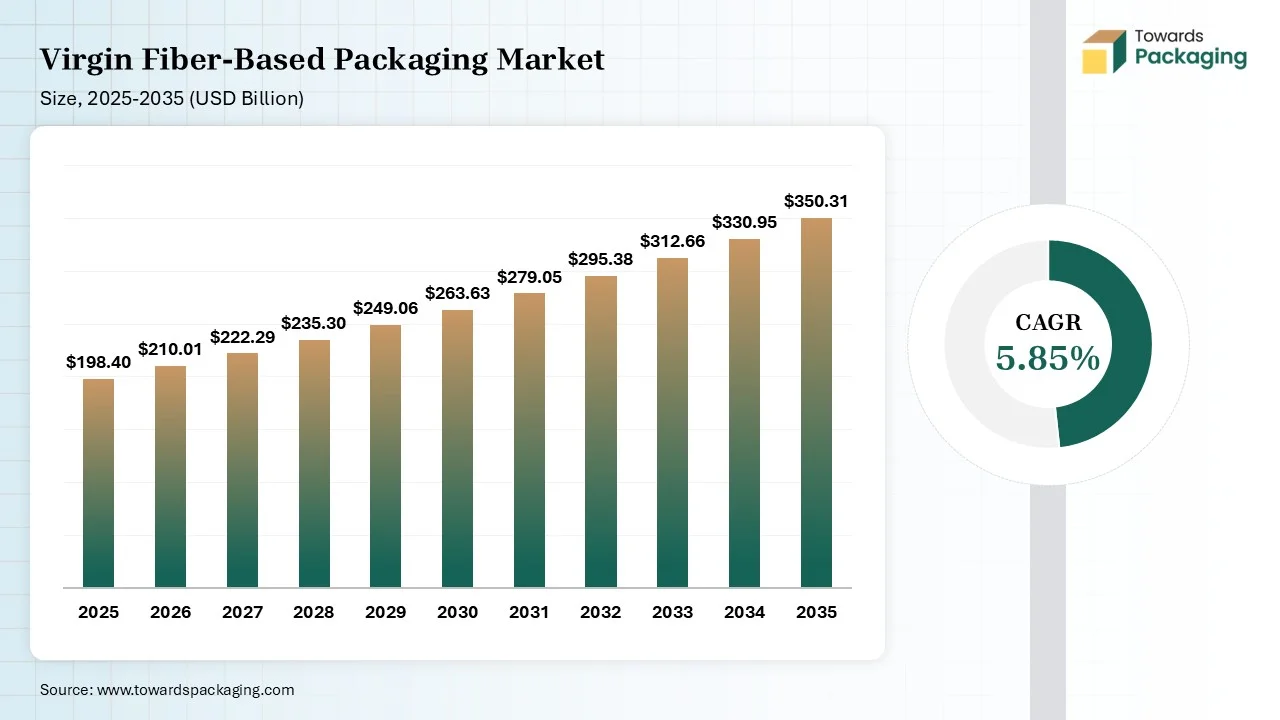
The virgin fiber-based packaging market is projected to grow from USD 210.01 billion in 2026 to USD 350.31 billion by 2035, registering a CAGR of 5.85% during the forecast period. This report provides detailed market size and forecast analysis, segment-wise insights by material, packaging type, application, and end-use industry, regional and country-level market data, company profiles, competitive landscape, market share analysis, value chain assessment, raw material and supply chain evaluation, import-export trade data, pricing trends, and comprehensive manufacturers and suppliers analysis. It also covers key growth drivers, emerging opportunities, technological advancements, sustainability trends, and strategic developments shaping the global market.
Virgin fiber-based packaging is a packaging solution developed from fresh wood pulp. It offers features like superior strength, hygienic purity, taste neutrality, high performance, premium printability, and recyclability. It offers benefits like durability, guaranteed food safety, carbon sequestration, streamlined sorting, material optimization, and odor neutrality. The types of virgin fiber-based packaging are folding cartons, grease-resistant papers, molded fiber, corrugated board, and kraft paper. It includes products like boxboard, heavy-duty corrugated board, liquid packaging boards, tableware, and molded fiber packaging. Virgin fiber-based packaging is used in applications like high-performance industrial transport, electronics packaging, medical device packaging, and foodservice disposables.
The research conducted by Vidyesh Swar demonstrates that factors like stricter petroleum-based plastic bans, net-zero pledges, younger demographics shift to green packaging, rise in luxury branding, shifting away from aluminum lamination, surge in AI-based lightweighting, surge in plastic-free unboxing, Asia-Pacific urbanization, rise in heavy-duty stacking, enforcing anti-greenwashing directives, beverage purity demand, revolution in LPB, and burgeoning paper-based shipping.
The virgin fiber-based packaging market is undergoing several technological developments, like predictive engineering, machine vision, digital twins, and automated configuration software, which help in enhancing precision and providing structural integrity. The major technological development in the industry is the incorporation of AI, which helps in lowering mill downtime and material usage.
AI optimizes the thickness of the board and helps in barrier research. AI optimizes the digestion processes and easily predicts sheet breaks. AI adjusts flute geometries and easily identifies moisture issues. AI helps in eco-fee calculations and monitors the critical parameters. AI simulates stacking stability and identifies variability of raw materials. AI monitors the packaging plant and speeds up barrier testing. According to my survey, AI supports lightweighting, materials research, and supply chain optimization.
Raw materials like wood pulp, bamboo, industrial hemp, sugarcane bagasse, and wheat straw are required.
Material processing includes raw material processing, paper formation, 3D conversion, barrier coating application, printing, and finishing. Conversion includes coating, printing, corrugating, creating structural designs, die-cutting, and assembling into the final product.
The stage includes steps like conceptualization, 3D modelling, material selection, prototyping, and testing.
In January 2026, LOreal invested $ 119 million in acquiring Raiku Packaging luxury wood-based filler material. The filler material is developed from woven wood fabrics and wooden springs. The filler material lowers resource utilization by 90% and minimizes global packaging pollution.
The virgin kraft paper segment dominated the market with 34% share in 2025. The growing heavy transit of parcels and focus on contaminant-free pharmaceutical packaging increase the adoption of virgin kraft paper. The fragile items transition and the expansion of fast food wrappers increase the use of virgin kraft paper. The drop-test standards in e-commerce shipping increase the use of virgin kraft paper. The consistent aesthetics, maximum flexibility, high mechanical reinforcement, and excellent tensile strength of virgin kraft paper drive the segment growth.
The virgin corrugated fiberboard segment held the 23% market share in 2025 and is expected to grow at the fastest CAGR of 6.5% during the forecast period. The deep supply chains in e-commerce and the FDA standards in pharmaceutical applications increase the adoption of virgin corrugated fiberboard. The spending on luxury consumer goods and the automated sorting hubs increases the use of virgin corrugated fiberboard. The development of premium retail display and the fluctuating humidity levels increase the use of virgin corrugated fiberboard, supporting the overall segment growth.
The study led by the analyst states that the boxes & cartons segment dominated the market with 42% share in 2025. The growing direct dairy packaging and the moisture resistance focus increase the use of boxes and cartons. The surge in high-end cosmetics and the burgeoning luxury beverage industry increases demand for boxes and cartons. The thriving juice packaging and the demand for shelf-differentiating aesthetics increase the adoption of boxes and cartons. The excellent edge-crush resistance and exceptional purity of boxes and cartons drive the segment growth.
The trays segment held the 10% market share in 2025 and is expected to grow at the fastest CAGR of 6.8% during the forecast period. The focus on preventing odor tainting and the packaging of eggs increases the use of trays. The need to survive complex chains and the Styrofoam phase-outs increases the use of trays. The packaging of premium meats and the higher price points of food products increase the use of trays. The storage of oily foods and the high interest in shock-absorbing packaging increase the use of trays. The carbon-pricing policies support the overall segment growth.
The rigid packaging segment dominated the market with 52% share in 2025. The online buying of consumer electronics and the rise in primary food packaging increase the use of rigid packaging. The explosion of high-end beverages and the burgeoning D2C shipping increases the use of rigid packaging. The heavy-duty structural demand and the developments of luxury finishes in brands increase the use of rigid packaging. The odorless packaging demand and the rise in rigid folding cartons drive the segment growth.
The flexible packaging segment held the 28% market share in 2025 and is expected to grow at the fastest CAGR of 6.7% during the forecast period. The low contaminant standards in the medical device industry and the autoclave sterilization cycles increase the use of flexible packaging. The replacement of rigid plastics and the interest in premium paperboard structures increase the use of flexible packaging. The PFAS-free coatings and the need for protective void-fills increase the use of flexible packaging. The rise in recycled content blending supports the overall segment growth.
The bleached virgin pulp segment dominated the market with 38% share in 2025. The expansion of fast-food clamshells and the need for high-performance packaging increases the use of bleached virgin pulp. The high-quality canvas needs and the interest in retail branding increase the adoption of bleached virgin pulp. The growing packaging of delicate edibles and the printing of premium finishes increase the use of bleached virgin pulp. The consistent uniformity and exceptional strength of bleached virgin pulp drive the segment growth.
The chemical pulp segment held the 22% market share in 2025 and is expected to grow at the fastest CAGR of 6.3% during the forecast period. The focus on beverage safety and the demand for stronger fibers increases the adoption of chemical pulp. The premium beverage expansion and the rise in to-go containers increase the use of chemical pulp. The robust structural foundation demand in packaging and the production of tear-resistant packaging increases the use of chemical pulp. The better barrier capabilities, lightweighting, and exceptional printability of packaging by using chemical pulp support the segment growth.
The coated segment dominated the market with 56% share in 2025 and is expected to grow at the fastest CAGR of 6.4% during the forecast period. The growing sensitive pharmaceutical industry and the supply chains heavier weights increase the use of coated packaging. The moisture repellency demand and the thriving luxury printing activities increase the use of coated packaging. The development of coated paper-based options helps with the expansion. The growing foil stamping and the expansion of boutique packaging increase the use of coated packaging. The coated papers compatibility with automation drives the segment growth.
The uncoated segment held the 44% market share in 2025. The creation of natural aesthetics and the expanding gourmet food brands increases the use of uncoated packaging. The plastic containers alternative demand and the surging production of bakery items increase the use of uncoated packaging. The consumer interest in coatings free from PFAS and the rise in embossing in the luxury industry increase the use of uncoated packaging. The premium eco-aesthetics and enhanced recyclability of uncoated type support the segment growth.
The food packaging segment dominated the market with 31% share in 2025. The focus on avoiding bacterial contamination in food packaging and the moisture-heavy environments increases the use of virgin fiber-based packaging. The booming takeout containers and the interest in bright surfaces in food branding increase the use of virgin fiber-based packaging. The hygiene regulations in the meat industry and the heavy-duty perishables increase the use of virgin fiber-based packaging. The increased buying of coffee cups drives the segment growth.
The e-commerce packaging segment held the 18% market share in 2025 and is expected to grow at the fastest CAGR of 7.2% during the forecast period. The costly shipping damage and the brands focus on providing a luxury feel while opening the parcels increase the use of virgin fiber-based packaging. The grocery purchasing through online platforms and the need to enhance the sustainability metrics of e-commerce increase the use of virgin fiber-based packaging. The green aesthetics in e-commerce and brand storytelling increase the use of virgin fiber-based packaging, supporting the segment growth.
The food & beverage segment dominated the market with 39% share in 2025. The creation of paper straws and the expansion of milk cartons increase the use of virgin fiber. The single-use alternative demand in the worldwide F&B industry and the takeaway cup expansion increase the use of virgin fiber-based packaging. The protection demand for fragile fresh produce and the use of responsibly forested packaging help with the expansion. The highest growth in food deliveries on e-commerce platforms drives the segment growth.
The e-commerce & retail segment held the 18% market share in 2025 and is expected to grow at the fastest CAGR of 7.1% during the forecast period. The transit packaging growth and the focus on compression withstanding in distribution increases the use of virgin fiber-based packaging. The competitive e-commerce ecosystems and the automated handling of parcels increase demand for virgin-based fiber packaging. The rise in e-commerce groceries and the expanding Gen Z shoppers increases the use of virgin fiber-based packaging, supporting the overall segment growth.
The direct sales segment dominated the market with 46% share in 2025. The focus on stabilizing costs and the stricter purity demand increases the use of direct sales. The elevation of aesthetic appeal and the creation of unique product lines increase the adoption of direct sales. The long-term volume security and the integrated logistics planning increase the use of direct sales. The custom-fit packaging development and the demand for steady raw material supply increase the use of direct sales, driving the segment growth.
The packaging converters segment held the 28% market share in 2025 and is expected to grow at the fastest CAGR of 6.4% during the forecast period. The development of damage-resistant packaging and the interest in printable virgin paperboard increase the use of packaging converters. The step towards recyclable fiber and the complexity in omnichannel supply chains increase the use of packaging converters. The tailored protective inserts and the investment in specialized trays increase the adoption of packaging converters. The growing demand in end-use industries supports the segment growth.
Asia Pacific dominated the virgin fiber-based packaging market in 2025 with a 39% share and is expected to grow at the fastest CAGR of 6.80% during the forecast period. The robustly enacted legislation and the growing expansion of live-streaming sales increase the adoption of virgin fiber-based packaging. The transition to sustainable packaging formats and the dependence of QSR on SBB increase the production of virgin fiber-based packaging. The uncompromised hygiene standards and the major demand for corrugated boxes help with the expansion. The large suppliers of agro-residue materials increase the production of virgin fiber-based packaging, driving the overall growth of the market.
China held the largest share of the market. The ban on the import of recycled fiber and the high investment in upstream integration by packaging companies increase the production of virgin fiber-based packaging. The expanding food-delivery channels and the purchasing of pharmaceutical goods increase the use of virgin fiber-based packaging. The presence of massive tech brands and the rising use of primary packaging increases the adoption of virgin fiber, supporting the overall growth of the market.
India is rapidly growing in the market. The growing use of paper in secondary packaging and bags helps with the expansion. The demand for packaging ideal for direct food contact and the increased buying of luxury goods increases the use of virgin fiber-based packaging. The export of agricultural products and electronics assemblers in India increases the use of virgin fiber-based packaging. The 2024 Forest Conservation Act increases the local manufacturing of pulp, boosting the overall market growth.
Europe held the 28% market share in 2025. The companys focus on eliminating complex to recycling plastic and the premium packaging demand increases the use of virgin fiber-based packaging. The stringent traceability standards and the push away from plastic in the retail industry increase the use of virgin fiber-based packaging. The increased procurement of virgin fibers from certified European forests drives the overall growth of the market.
Germany held the major share in the market in 2025. The heavy financial incentive for plastic and the pharmaceutical safety standards increase the adoption of virgin fiber-based packaging. The manufacturing of premium folding cartons and the focus on moving away from plastic linings in packaging increase the use of virgin fibers. The well-developed cardboard collection networks support the market growth.
The United Kingdom is rapidly growing in the market. The high fees on non-recyclable plastics and the rapidization of grocery delivery increase the use of virgin fiber-based packaging. The huge demand for cosmetic products and the interest in legally compliant material increase the use of virgin fiber-based packaging. The expanding liquid foods and the demand for food-safe solutions increase the use of virgin fiber-based packaging, boosting the overall market growth.
As per my research, North America held the 24% market share in 2025. The use of molded fiber in the major FMCG brands and the rising shipping of perishable items increases the use of virgin fiber-based packaging. The bio-developments across the food industry and the move away from plastic air pillows in the major brands like Amazon increase the adoption of virgin fiber-based packaging. The personal care brands focus on creating an unblemished appearance, and the innovative bio-coatings drive the market growth.
The United States held the highest share in the market. The brand strong focus on no contamination risk, and the high-end retail expansion increases the use of virgin fiber-based packaging. The high demand for molded fiber inserts in the e-commerce industry and the phase-out of EPS increase the adoption of virgin fiber-based packaging. The environmental responsibility of brands and interest in plant-based materials support the market growth.
Canada is expanding in the market. The large distribution of sustainable virgin wood fiber and the huge need for protective packaging increase the use of virgin fiber-based packaging. The advancements in grease-proof coatings and the shift to compostable fiber-based materials increase the production of virgin fiber-based packaging. The luxury packaging demand and the strong sustainable forestry infrastructure increase the use of virgin fiber-based packaging, supporting the market growth.
Latin America held the 5% market share in 2025. The long-haul transit of fresh fruits and the eco-regulations in the export industry increase demand for virgin fiber-based packaging. The high plantations of sustainable timber and the massive use of corrugated containerboard increase demand for virgin fibers. The shift to mono-material paper and the customers demand for easy disposable materials increase the use of virgin fiber-based packaging, driving the overall market growth.
Brazil held the dominant position in the market in 2025. The rapidly growing eucalyptus in the region increases the virgin pulp production. The presence of premium packaging papers and the favorable exchange rates increases the production of virgin fiber-based packaging. The huge export orders and the focus on expanding packaging capacities increase the use of virgin fiber-based packaging. The flawless ESG compliance and the superior material purity demand in the medical sector increase the use of virgin fiber-based packaging, supporting the overall market growth.
Argentina is majorly expanding in the market. The plantations of sustainable pine and the stringent health standards increase the adoption of virgin fiber-based packaging. The dominant food industry and the growing adoption of paperboard in various markets like cosmetics & others increase the use of virgin fiber-based packaging. The massive investment in molded-pulp manufacturing boosts the overall market growth.
As per a research analyst, the Middle East & Africa held the 4% market share in 2025. The strong beauty care industry and the focus on luxurious brand appeal increase the use of virgin-based fiber packaging. The massive demand for shipping materials and the government mandates for recyclable paper alternatives increase the production of virgin fiber-based packaging. The use of recycled paper in beverage packaging and the high interest in printable carton boards drive the market growth.
Saudi Arabia dominated the market in the MEA region. The shift to kraft paper carriers and the requirements for fiber-based mailers increase the adoption of virgin fibers. The booming heavy-duty shipping and the luxury packaging demand in the personal care industry increase the use of virgin fiber-based packaging. The FSC certifications and the skyrocketed export demand increase the use of fiber-based packaging, supporting the market growth.
The UAE is robustly expanding in the market. The push away from polystyrene foodservice items and the surging luxury cosmetics sectors increases the adoption of virgin fiber-based packaging. The top-class logistics infrastructure and UAE Net Zero 2050 initiatives increase the use of virgin fiber-based packaging. The growing beverage applications and the large RTE delivery markets increase the use of virgin fiber-based packaging, boosting the overall market growth.
According to my report, virgin fiber-based packaging is revolutionizing the packaging industry by providing an alternative to single-use plastics and strengthening the sustainability economy. The food & beverage industry is a robust contributor to the market due to the growing demand for eco-friendly materials. The increasing use of high-grade cartonboard, sturdy folding cartons, and takeout trays helps in the growth. The liquid dairy products mainly use the virgin fiber-based packaging.
The United States is a key contributor to the market. The adoption of next-generation fiber packaging helps with expansion. Factors like advanced manufacturing infrastructures, food service expansion, and the forestry abundance are responsible for the growth. The Stora Enso company is a robust manufacturer of virgin fiber-based packaging. The company produces products like formed fiber, sack papers, consumer board, containerboard, and tray packaging.
The virgin fiber-based packaging market includes global packaging converters and paper corporations. This company offers diverse products like folding cartons, boxes, molded fiber bowls, takeaway containers, and oil-resistant papers to serve diverse industries. The companies leading the sectors are Smurfit WestRock, DS Smith, Nippon Paper Industries Co., Ltd., Amcor plc, Mayr-Melnhof Karton AG, Pratt Industries, Brodrene Hartmann A/S, International Paper Company, Graphic Packaging Holding Company, Packaging Corporation of America, Sonoco Products Company, and Billerud AB. The table below offers the top companies and their product portfolio:
| Rank | Company | Headquarters | Country | Major Contribution to Virgin Fiber-Based Packaging Market | Key Packaging Products and Services |
| 1 | International Paper Company | Memphis, Tennessee, United States | United States | As per my research, the company follows sustainable sourcing standards for virgin fibers. The company uses carbon-neutral biomass byproducts to generate a significant fraction of energy. | Corrugated Packaging, Laminated Bulk Bins, Automotive Packaging, Safe Sender, Produce Trays |
| 2 | Stora Enso | Helsinki, Finland | Finland | The global presence of the company is in over 50 countries. The company manufactures 100% virgin kraftliners and invested Euro 1.1 billion for the transformation of Oulu Mill. | Cupforma, Foodbox, AvantForte, Liquid Packaging Board, Premium Consumer Boards, Containerboard |
| 3 | DS Smith | London, United Kingdom | United Kingdom | According to my research, the company is present in over 37 countries and acquires virgin fiber from a traceable forest. The company heavily invests in alternative fiber research. | Virgin Containerboard, Sustainable Paper Bgs, Multi-Wall Boxes, Corrugated Pallets, Coated Papers |
| 4 | Amcor | Zurich, Switzerland | Switzerland | The company uses bio-based barrier coating developed by Kelpi. The company collaborated with Metsa Group to manufacture molded fiber products. | EcoGuard, AmFiber Performance Paper, AmFiber Cold-Seal Sachets, AmFiber Heat-Seal Sachets |
| 5 | Sonoco Products Company | Hartsville, South Carolina, United States | United States | The operational centers of the company are present across 37 countries. The company focuses on developing 100% recycled rigid paper containers and expanding rigid paper can production capacity across the United States facilities. | Rigid Paper Containers, Paper Containers with Paper Bottoms, GreenCan Containers, Fiber Cartridges |
| 6 | Smurfit WestRock | Dublin, Ireland | Ireland | The company invested approximately €600 million to modernize its facility in France. The company sources virgin fibers from non-controversial origins. | Folding Cartons, ReliaKraft, FibreSeal, Virgin Fiber Containerboard |
| 7 | Mondi Group | Weybridge, England, United Kingdom | United Kingdom | The company operates sustainable working forests and offers a virgin containerboard portfolio. The company mainly uses Stretch Wrap Technology and also manufactures paper-based pouches. | ProVantage, EPS-free Packaging, Re/cycle FunctionalBarrier Papers, PerFORMing, Aseptic Cartons,Corrugated Trays, Ad/Vantage StretchWrap |
| 8 | Graphic Packaging International | Atlanta, Georgia, United States | United States | The company focuses on expanding its capacity in Europe and North America. The company focuses on plastic replacement and developing circular economy-based packaging designs. | Unbleached Paperboard, Beverage Multipacks, Sterile Medical Barrier Papers, Food & Beverage Containers, Barrier Papers, IntegraPak Bag-in-Box |
| 9 | Huhtamaki | Espoo, Finland | Finland | The company provides a dedicated fiber operation segment and utilizes virgin food fiber packaging for food safety. | Paper Cups, Future Smart Duo Fiber Lids, BioV Clamshells, Fresh Trays, Food Containers |
| 10 | Nippon Paper Industries | Tokyo, Japan | Japan | The company focuses on liquid packaging expansion and offers a high-barrier paper solution as an alternative to plastics. | SHIELDPLUS, NP-PAK, SPOPS, NS-Fuji pak, NEVIA, NSATOM, Specialty Paperboard, Wrapping Papers, Linerboard, Heat-Sealable Papers |
By Material Type
By Packaging Type
By Product Form
By Pulp Type
By Coating Type
By Application
By End User
By Distribution Channel
By Region








Principal Research Analyst
Vidyesh Swar is a Senior Research Analyst at Towards Packaging, bringing over 4 years of dedicated expertise in market intelligence and strategic analysis across the dynamic world of packaging technologies and solutions.
Learn more about Vidyesh Swar

Reviewed By
Aditi Shivarkar, with 14+ years in packaging market research, specializes in food, beverage, and eco-friendly packaging. She ensures accurate, actionable insights, driving Towards Packaging Analytics & Consulting 's excellence in industry trends and sustainability.
Learn more about Aditi Shivarkar


Virgin Fiber-Based Packaging Market
 Table of Content

 Download Sample
 Schedule a Meeting