





In 2026, buyers of transparent disposable drinkware are under more pressure than ever. It is no longer enough to source a clear cup that looks sustainable on paper. Importers, foodservice brands, distributors, and private-label packaging buyers are now expected to evaluate whether a cup is commercially practical, application-appropriate, documentation-ready, and aligned with real end-market expectations.
That shift is exactly why compostable plastic cups have become a more serious sourcing topic. For many cold beverage applications, transparent presentation still matters. Cafés, juice bars, takeaway drink brands, dessert chains, and deli operators want clarity, clean appearance, stackability, and efficient lid matching. At the same time, buyers are being asked to move away from vague environmental claims and toward more verifiable packaging choices.
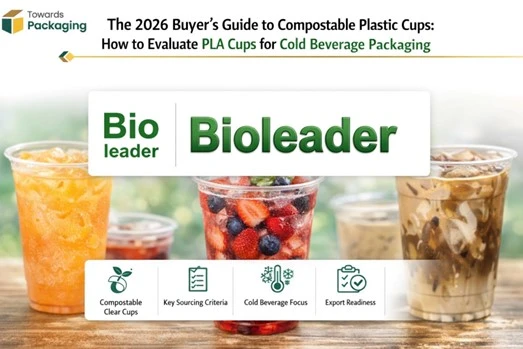
Among the options now widely discussed, buyers often begin by reviewing supplier resources when comparing cup formats, size ranges, and cold-drink packaging alternatives. Suppliers such as Bioleader PLA Cups Manufacturer have helped push this discussion beyond simple material claims and toward more practical questions around application fit, export readiness, and sourcing stability. But selecting PLA cups well is not simply a matter of switching materials. It is a procurement decision that should be based on application fit, specification clarity, performance boundaries, and supplier execution.
For serious buyers, the real question is no longer whether PLA cups sound sustainable. The real question is whether they are the right transparent packaging choice for the intended beverage format, service model, and market channel.
Transparent cold cups remain commercially important. In many beverage and grab-and-go foodservice settings, visibility affects perceived freshness, product appeal, and customer confidence. For smoothies, iced coffee, fruit drinks, juice, bubble tea, parfaits, dessert cups, and chilled takeaway beverages, transparent packaging continues to deliver strong shelf and counter appeal.
This is why Compostable Plastic Cups have gained attention. Buyers want a clear cup format that can support modern sustainability positioning without losing the practical advantages of transparency. However, the category is often misunderstood. Terms such as biodegradable, compostable, eco-friendly, plant-based, and sustainable are frequently used together, even though they do not all mean the same thing in procurement, compliance, or end-use reality.
That confusion leads to avoidable sourcing mistakes. Some buyers focus only on the material story and forget to evaluate use conditions. Others approve samples based on appearance alone, without asking enough about temperature suitability, lid fit, stacking stability, or export documentation. In 2026, these are no longer minor details. They directly affect complaint rates, operational reliability, and reorder confidence.
PLA cups are best understood as a clear packaging solution for selected cold beverage and presentation-driven applications. Their commercial value usually comes from a combination of transparency, clean visual appearance, compostable positioning in appropriate channels, and compatibility with modern takeaway beverage formats.
That said, PLA cups should not be treated as a one-size-fits-all replacement for every type of clear cup. Professional buyers know that good sourcing starts with application clarity. A cup that works well for iced drinks, cold desserts, and chilled display use may not be suitable for hot-fill or high-heat service conditions. The strongest suppliers are not the ones who promise universal suitability. They are the ones who explain the right use boundaries from the beginning.
In practical sourcing terms, that means buyers should evaluate PLA cups not as a generic “green cup” category, but as a transparent cold-use packaging format that must be matched carefully to beverage type, operational handling, lid system, and end-market expectations.
The first sourcing rule is simple: never buy the wording before reviewing the actual support behind it.
Many clear cup suppliers use attractive language in catalogs and quotation sheets. Words such as compostable, biodegradable, sustainable, eco-friendly, and plastic-free alternatives are used widely across the market. But experienced buyers know that product language and practical procurement evidence are not the same thing.
For compostable plastic cups, the key issue is whether the product is being presented with realistic, well-supported positioning. Buyers should review whether the supplier can explain what the claim means in practical terms, what documents are available, and whether the message is being used responsibly rather than as a shortcut for sales. A trustworthy supplier should be able to discuss documentation scope, product specification consistency, and the intended application of the cup clearly and without hesitation.
In 2026, buyers are increasingly judged not only by the products they source, but also by the credibility of the claims attached to those products. That makes documentation discipline and wording discipline equally important.
One of the most common mistakes in this segment is assuming that all transparent cups can be evaluated in exactly the same way. They cannot.
When sourcing PLA cups, the most important early question is not price. It is use case. What exactly will go into the cup? Is it iced coffee, fruit tea, juice, lemonade, smoothie, yogurt, or dessert? Will the cup be used in a quick-serve takeaway model, a refrigerated display setting, or a high-turn beverage counter? Will it be sealed quickly and consumed fast, or will it sit in delivery circulation for longer periods?
These questions matter because packaging performance is always application-specific. A supplier that understands PLA cups professionally should be able to discuss where the format works well and where buyers should exercise caution. That kind of honesty is not a weakness. It is one of the clearest signs that the supplier understands real commercial use rather than just product marketing.
For buyers, this is an important sourcing filter. If a manufacturer describes PLA cups as suitable for everything, that is usually a warning sign. Reliable exporters usually take the opposite approach: they define the best-fit scenarios first and avoid overselling the category.
Clear cups are often chosen because they look clean, modern, and premium. But transparency is not just a design preference. It is also a business feature.
In foodservice and beverage retail, visibility changes how customers perceive freshness, ingredient quality, and brand presentation. This is particularly important in premium juices, cold brew, fruit drinks, layered desserts, healthy takeaway beverages, and other categories where appearance directly influences purchase behavior.
That is why PLA cups continue to attract interest. They allow brands to maintain clear visual presentation while aligning packaging selection with a more sustainability-conscious brand story. For many buyers, that combination is the real attraction.
However, transparency should still be evaluated with commercial discipline. The right question is not “Does the cup look good?” The right question is “Does this clear cup format support the way the product will actually be sold, handled, stacked, sealed, transported, and consumed?” The strongest packaging decisions balance presentation, practicality, and procurement control.
Many sourcing failures happen not because the cup material is wrong, but because the specification system around the cup is incomplete.
For transparent beverage packaging, cup size and lid compatibility are fundamental. Buyers should review rim diameter, height, cup volume, nesting logic, stack stability, sealing fit, and matching lid options before they treat a quotation as complete. A clear cup program is only commercially stable when the cup and lid system function together without confusion or operational friction.
This matters even more in export business. A cup that looks correct in a sample may still create trouble if the rim system is not stable, if the stack count affects automatic filling, if carton planning is inefficient, or if a buyer receives incomplete information about fit across multiple sizes. Professional suppliers should be able to explain their size logic in a structured way and confirm which lids match which cups with clarity.
Serious buyers should also pay attention to how a supplier presents specifications. A clear, organized size range is often a sign of stronger internal control. A vague or inconsistent size presentation usually predicts future mistakes.
| Evaluation Point | What Strong Suppliers Usually Provide | What Weak Suppliers Often Miss |
| Product Positioning | Clear explanation of best-fit cold beverage applications | Generic “eco cup” language without use boundaries |
| Size System | Consistent oz range, rim logic, and matching lid guidance | Incomplete cup-lid information |
| Commercial Clarity | Transparent discussion of MOQ, packing, and export execution | Attractive quotation with weak practical details |
| Documentation Support | Organized file response and specification confirmation | Delayed or vague follow-up |
| Application Fit | Real discussion of use conditions and limitations | Overpromising across all drink types |
This table does not replace technical validation, but it highlights a practical truth: supplier quality is often revealed not by a catalog photo, but by the clarity of the sourcing conversation.
A supplier can make a clear cup and still be a poor export partner.
For international buyers, export readiness includes much more than the ability to produce the item. It includes packaging accuracy, repeat order stability, carton labeling discipline, shipping preparation, specification consistency, and communication control during the order cycle. These factors become even more important when buyers are dealing with multiple cup sizes, matching lids, customized branding, or destination-specific expectations.
This is why experienced importers should pay attention to how a supplier behaves during the quotation stage. Does the supplier confirm specification details clearly? Can it explain MOQ logic rationally? Does it distinguish standard items from custom items? Can it discuss packing structure in a commercially sensible way? Can it answer practical export questions without improvising?
In 2026, the strongest cup suppliers are not just product makers. They are execution partners. They understand that a successful beverage packaging program depends on consistency across production, packing, shipment, and replenishment. This is one reason buyers increasingly pay attention to experienced exporters such as Bioleader (China) when reviewing supplier shortlists for transparent compostable drinkware.
Customization is often treated as a branding question, but in clear cup sourcing it is also a business control question.
Printing, cup graphics, logo placement, and branded beverage presentation can be commercially valuable. But buyers should evaluate customization only after they confirm that the underlying product format is already the right one. There is little value in branding a cup beautifully if the size logic is wrong, the lid fit is unstable, or the application suitability has not been clarified.
A professional supplier should help the buyer think in the right order. First confirm the cup format. Then confirm the lid system. Then confirm the packaging logic. Then move into customization. That sequence reduces rework, lowers avoidable cost, and improves project stability.
Strong suppliers also know when to recommend standardization instead of unnecessary customization. In many export projects, the most efficient result is not the most heavily customized one. It is the one that balances brand presentation with scalable execution.
Junso Zhang, Export Sales Manager at Bioleader (China), notes that most problems in transparent cup sourcing begin long before production. They begin when buyers and suppliers assume too much and clarify too little.
From a practical export perspective, buyers should confirm four things as early as possible: the real beverage application, the exact size range required, the matching lid system, and the expected order scale. These four points determine far more than unit price. They affect sample relevance, MOQ logic, packing strategy, shipping efficiency, and repeat-order stability.
According to Junso Zhang, the most reliable PLA cup sourcing programs are usually the ones where the supplier does not rush to say yes to everything. Instead, the supplier asks structured questions, defines the intended use clearly, and aligns product recommendation with actual service conditions. That approach may seem slower at first, but it usually creates a much more dependable commercial result.
The final check is the most strategic one.
By 2026, packaging buyers are not only choosing products. They are choosing risk exposure. A supplier that quotes aggressively but communicates poorly, explains applications vaguely, or handles specifications loosely may still look attractive at first glance. But that advantage usually disappears once inconsistency, misunderstanding, or complaint cycles begin.
In contrast, a supplier that communicates clearly, defines use boundaries honestly, structures specifications carefully, and supports export decisions professionally often creates much greater long-term value. That value does not always show up on the first quotation line. It shows up in smoother repeat orders, fewer operational surprises, more stable customer outcomes, and stronger procurement confidence.
That is the real sourcing difference in compostable plastic cups today.
Buyers sometimes compare PLA cups, conventional clear cups, and other transparent drinkware formats as if they differ only in price. In reality, application fit, positioning, and commercial handling should be reviewed much more carefully.
A good-looking sample is useful, but it does not prove long-run specification consistency, export stability, and reliable order execution.
Branding matters, but only after the correct product structure, size system, and use conditions are confirmed.
Compostable plastic cups are not simply a trend category. For many cold beverage and transparent takeaway applications, they can be a commercially attractive packaging format when sourced with discipline and matched to the right operational use.
But good sourcing in 2026 requires more than surface-level sustainability language. Buyers should evaluate PLA cups through the lens of application fit, transparency value, size accuracy, lid compatibility, export readiness, and supplier communication quality. The right supplier is not the one who makes the broadest promises. It is the one who helps the buyer make the most commercially stable decision.
For serious beverage packaging buyers, that is the real advantage: not just finding a clear compostable cup, but choosing a clear cup program that is practical, scalable, and professionally supported.
04 September 2026
03 September 2026
02 September 2026
02 September 2026