


The polypropylene foam trays market is forecasted to expand from USD 1.73 billion in 2026 to USD 3.32 billion by 2035, growing at a CAGR of 7.5% from 2026 to 2035. The market is driven by increasing demand for sustainable packaging, growth in fresh food distribution, rising usage in retail and foodservice, and expanding adoption of recyclable and temperature-stable packaging solutions.
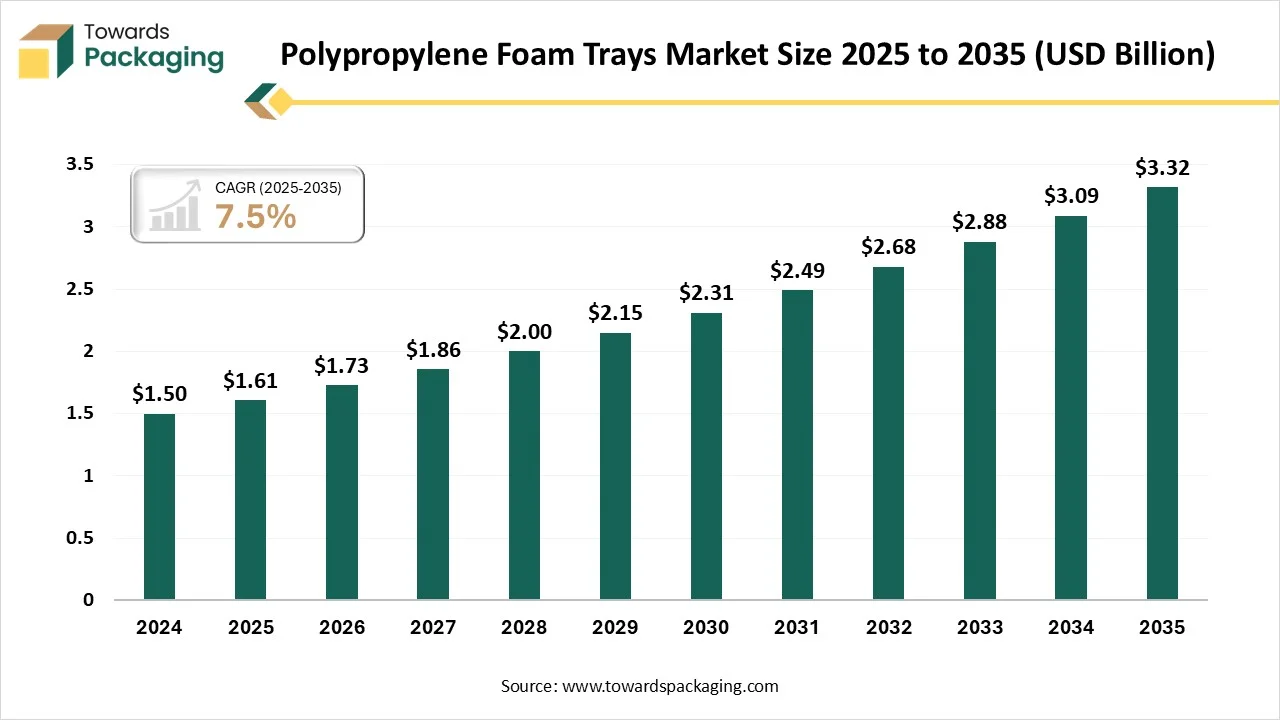
The polypropylene foam trays market includes lightweight, durable, and heat-resistant trays made from expanded polypropylene (EPP) or extruded polypropylene foam. These trays are widely used in food packaging, ready meals, pharmaceuticals, electronics, and industrial applications due to their high impact strength, insulation, recyclability, and cost-effectiveness.
An alternative moisture quantification procedure, which contains microwave moisture tracking, radio frequency sensing, and capacitance measurements, has been discovered for inline tracking. Microwave moisture analysis uses dielectric heating to measure moisture levels, while the radio frequency sensing counts capacitance or impedance updates due to moisture. Capacitance measurement procedure that tracks dielectric property fluctuations with moisture are perfectly suited for mixing in a manufacturing line for real-time readings.
These procedure changes are due to sensitivity, precision, and suitability for various plastics and conditions, and have yet to be completely accepted for the plastic waste that features the demand for a strong and non-destructive moisture quantification procedure for recycling uses.
Raw Material Sourcing: The primary step in manufacturing EPP includes choosing good-quality polypropylene (PP) particles as the foundation material, with the consistency and purity of these particles, which directly affect the mechanical and physical properties of the outcome EPP item. In addition to PP resin, auxiliary materials such as catalysts, foaming agents, and stabilizers are used. Such additives ensure structural stability, effective foaming, and developed product performance with precise proportioning, while making it complicated to achieve consistent outcomes.
Component Manufacturing: Polypropylene Foam consists of polymers that come from propylene monomers, which makes a thermoplastic design that is resilient and tough but also lightweight. Its closed-cell designs develop its opposition to moisture and water, and the foam is also resistant to several solvents, chemicals, and greases too.
Logistics and Distribution: Aeronautical and airport procedures have limitless tools, parts, and users per day. PP sheet parts, bins, and crates are a very lightweight and reusable storage solution. It stands to a weight which is less than a metal or wooden storage option, which means less fuel usage in the vehicles that shift them. PP storage solutions also give perfect reasons in humid and changing temperatures around cargo or hangar areas.
| Product Type Segments | Market Share 2025 (%) |
| Expanded Polypropylene Foam Trays | 64.60% |
| Extruded Polypropylene Foam Trays | 20% |
| Others | 15.40% |
The expanded polypropylene foam trays segment dominated the market in 2025 with 64.6% share because it is a versatile and lightweight material, which is well known for its exceptional insulating and cushioning characteristics. EPP Foam is prevalent in different sectors like automotive manufacturing, packaging, and consumer goods production. It is being used for its potential to absorb effects and to protect sensitive items during handling and transport. EPP foam is also resilient, reliable, and resistant to moisture and chemicals, which makes it appropriate for a wide range of applications.
The extruded polypropylene foam trays segment is expected to experience the fastest CAGR of 5.6% during the forecast period. This foam is a kind of closed-cell foam created from polypropylene, a thermoplastic polymer. Like regular foams, which are made with the assistance of blowing agents, Xpp foam is manufactured via an extrusion procedure. This includes melting polypropylene pellets and pressing the molten material with the help of a die that creates a constant sheet or profile, which is cooled and cut into desired shapes.
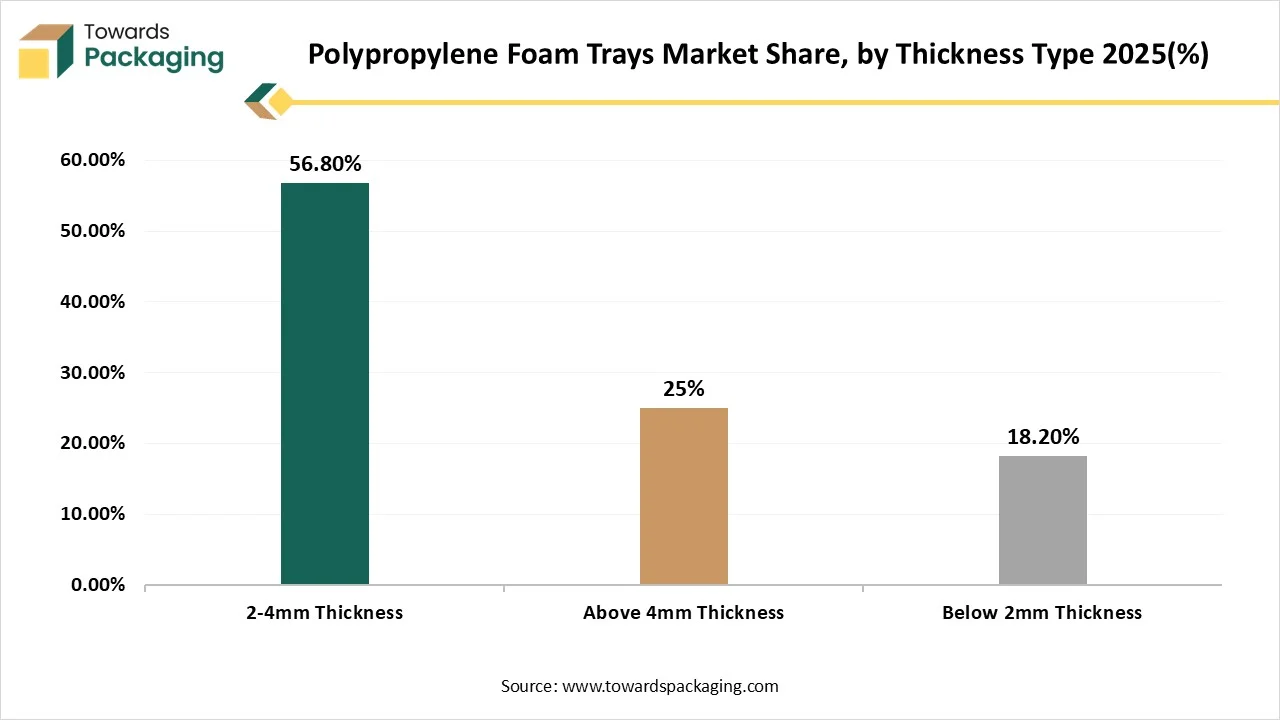
The 2-4 mm segment dominated the market in 2025 with 56.8% share as polypropylene foam in this thickness, which is available in different forms, initially as Expanded Polypropylene (EPP), and is utilised for shock absorption, floor protection, and packaging. It is expanded polyethylene for floor protection. Expanded Polyethylene is a prevalent alternative that is more widely available in this thickness series for the same uses.
The above 4mm segment is expected to experience the fastest CAGR of 5.5% during the forecast period. This thick polypropylene foam is a permanent, lightweight, and closed-cell material that is known for its perfect chemical resistance, thermal stability, and shock absorption characteristics. It is greatly used across different sectors in the creation of rolls, sheets, and tailored products. It is utilised for interior elements such as door panels, headliners, and dashboards because of its sound insulation and heat resistance. It is greatly used in expansion joints, industrial fixtures, and other uses, which require a chemical-resistant, durable material.
| Application Segments | Market Share 2025 (%) |
| Food Packaging | 28.60% |
| Retail & Foodservice | 25% |
| Industrial Applications | 17.50% |
| Others | 29% |
The food packaging segment dominated the market in 2025 with a 28.6% share, as the PP plastic food tray is one of the most famous plastic packaging currently, as it is utilised to pack vegetables, meat, fruits, dry food, fresh food, and processed food. It is created by high-quality polypropylene plastic, which is chemical-resistant, food-grade, heat-resistant, and non-toxic to health. It is a perfect food tray that is a perfect choice for the food sector, available in transparent and black colors. Black plastic food trays have features that match the color of food, which delivers a modern and elegant image.
The retail & foodservice segment is expected to experience the fastest CAGR of 5.7% during the forecast period. In foodservice, polypropylene is utilised to make different products such as cups, food containers, cutlery, and food storage bins. Its heat opposition makes it perfect for dishwasher usage and microwave, which makes it a famous choice for reusable food storage containers and takeout containers too. On the other hand, PP foam is very lightweight yet rigid and impact-resistant, which assists in protecting during handling and transporting in fast-paced retail surroundings. They are also shatter-resistant even in cold environments, which makes them ideal for frozen foods.
| End-Use Industry Segments | Market Share 2025 (%) |
| Supermarkets & Hypermarkets | 34.30% |
| Food Processors | 25% |
| Food Service Chains | 15% |
| Others | 25.70% |
The supermarkets and hypermarket segment dominated the market in 2025 with 34.3% share as they initially use polypropylene foam trays to showcase, package, and transport fresh food products such as poultry, meat, fruits, vegetables, and seafood too. These trays serve a necessary functionality to track product quality and hygiene with the help of the supply chain. PP foam trays make a hygiene barricade that protects the food from external pollutants and lowers the risk of bacterial spread. They prevent items from leaking, which is important for tracking the cleanliness of the display unit and freezer, too.
The food processors segment is expected to experience the fastest CAGR of 5.8% during the forecast period. Polypropylene (PP) foam trays are utilised by food processors as lightweight, durable, and hygienic packaging solutions for different ready-to-eat items and are sensitive to. They are a famous alternative option to regular foam polystyrene trays and are compatible with current processing equipment. The trays serve a sanitary and safe procedure for the packaging of frozen and fresh protein products that protects them from physical damage and contamination.
| Tray Type Segments | Market Share 2025 (%) |
| Single-Use Trays | 43.60% |
| Multi-Use Trays | 30% |
| Others | 26.40% |
The single-use trays segment has dominated the market with a 43.6% share in 2025, as they are frequently used for food packaging that is available from different industrial suppliers and online retailers. Such trays are being valued for being durable, lightweight, and perfect for both cold and hot food uses. But the actual and standard foam trays are frequently made from polystyrene (EPS) and not polypropylene, which is typically used for PP material.
The multi-use trays segment is expected to experience the fastest CAGR of 5.8% during the forecast period. Multi-use polypropylene foam trays are a lightweight, versatile, and durable solution that are applied in various industries that include industrial parts, food packaging, and scientific and laboratory uses. They serve advantages like moisture proofing, chemical opposition, and reusability, which make them ideal for environmentally friendly alternatives to single-use options. They are conveniently available in many shapes and sizes, which leads to options with multiple compartments.
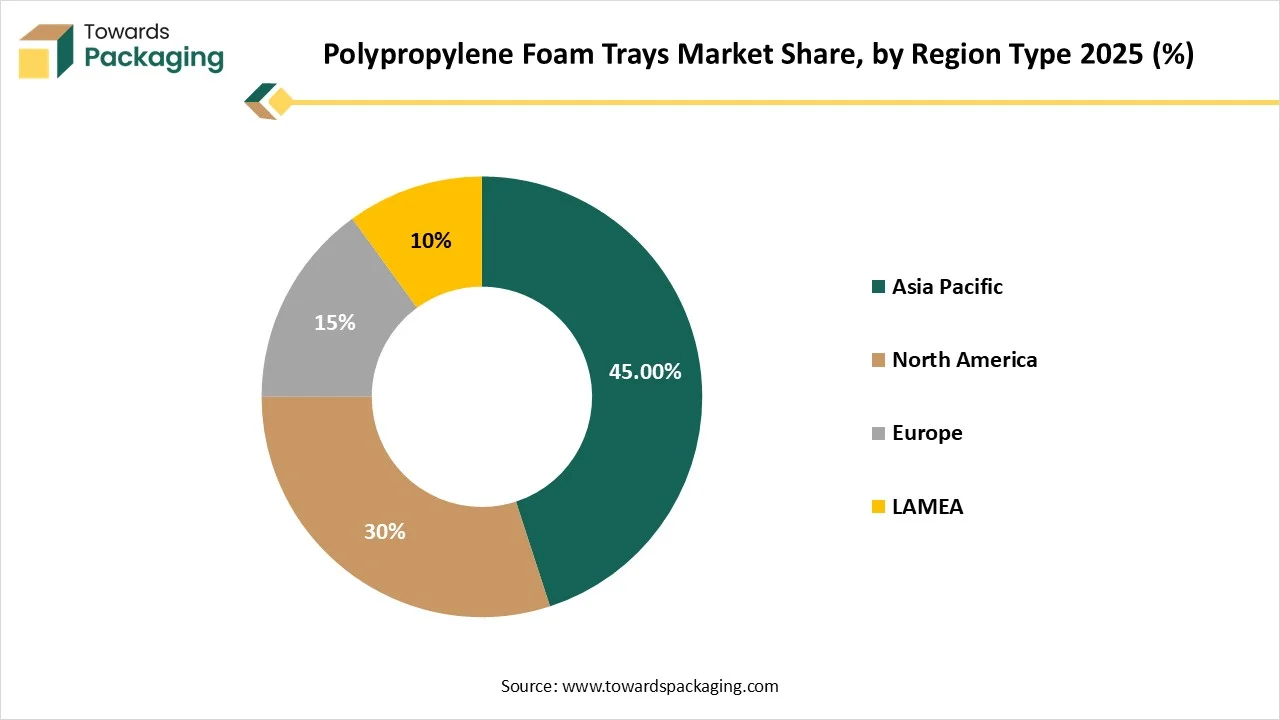
Asia Pacific held the largest share in the market in 2025 with a 46.8% share because the development of the food and beverage industry is being linked with the rise of e-commerce, take-away food services, and online grocery deliveries as a main driver. PP Foam trays are perfect for these uses because of their heat resistance and durability, which makes them perfect for these uses due to their durability and moisture barrier characteristics. Fast urbanization, industrialization, and growing disposable incomes across countries like India, China, and Southeast Asian nations are driving user investment in convenience and packaged foods.
The demand for polypropylene (PP) foam trays in India is witnessing fast development, initially driven by the growth of the food packaging and automotive sectors, as well as the rising importance of sustainable and recyclable solutions. The packaging industry is a major user of polypropylene, accounting for approximately 40% of the total PP demand in India. Additionally, the automotive sector is a main driver of demand for PP foam, which is utilised in seat cores, battery trays, interior trims, and bumper systems for its lower weight and perfect energy absorption characteristics.
The urge for polypropylene foam trays in North America is strong and rising because of their application in automotive parts and the industrial uses, which is driven by demand for durable, lightweight, and cost-effective solutions. The encouragement for fuel smoothness and electric vehicles has developed for the application of polypropylene foam in door panels and seating to lower the vehicle weight without compromising safety. Also, organizations are concentrating on product invention, like developing foam trays with developed characteristics like stackable designs, anti-microbial coatings, and microwave safety too.
The United States government and industry players are transforming the application of recyclable and biodegradable materials to match global sustainability goals. Additionally, rising e-commerce entry and the demand for protected and damage-proof packaging solutions are pushing the acceptance of high-performance PP foam trays. The Current growth of inventive production procedures that push the strength-to-weight ratio and promote customization has also urged the market development.
The main factors influencing the growth of the polypropylene foam trays market are demand for eco-friendly imperatives, regulatory compulsion, and industry development. European Commission policies push sustainable packaging and the circular economy usage, which are developing the findings in recyclable PP foam technologies. Food safety frameworks made mandatory by the European Food Safety Authority (EFSA) are also pushing packaging upgrades across the meat, fresh produce, and dairy industries.
Germany is utilizing this foam mainly due to its strict environmental regulations, which push the application of biodegradable and recyclable materials. As legislative bodies shift to ban single-use polystyrene foam. PP foam trays are a compliant and viable alternative option that aligns with a circular economy strategy. Additionally, the biggest driver is the developing retail sector and food processing, with rising demand for ready-to-eat, convenient, and fresh produce packaging.
The polypropylene foam trays market in the Middle East & Africa (MEA) region has a material that has perfect thermal insulation elements that are important for tracking food freshness at the time of storage and transport, as well as for energy-efficient building insulation. In Africa, foam packaging helps solve food preservation issues in which cold chain infrastructure can be limited. Also, the packaging sector is the biggest end-user of polypropylene in the MEA region. Fast urbanization, growing disposable incomes, and the stretching of e-commerce and retail are filling the demand for hygienic and safe food packaging, for which polypropylene foam trays are perfect.
Technological developments in foam production develop product versatility and quality, which further fulfill market growth. Government initiatives market sustainable construction practices and the growth of smart cities, which also contribute at a crucial level. Furthermore, the stretching logistics industry is in urgent need of protective packaging solutions, for which EPP foam serves. Overall, an integration of technological invention, infrastructural growth, and sustainability trends is a main factor that encourages market development.
In South America, the polypropylene foam trays market is growing steadily as rising environmental awareness and rigid regulations on single-use plastics address issues. At the same time, it drives a trend towards the growth of recyclable, sustainable, and potentially bio-based polypropylene foam solutions with companies like Braskem in Brazil that discover bio-based selections from sugarcane ethanol. Also, polypropylene’s foam is reliable and cost-effective, which makes it a preferred choice over regular materials in price-sensitive South American markets.
Surfacing trends feature the mixing of Industry 4.0 Technologies like AI-powered quality control and IoT -allowed supply chain tracking that changes the manufacturing traceability and efficiency both. User selection is moving towards convenience, and smart-focused packaging with a big shelf life and freshness preservation is highlighted. Such trends are making possibilities for companies that invest in eco-conscious and innovative polypropylene foam solutions to capture share and encourage competitive positioning.
By Product Type
By Thickness
By Application
By End Use
By Tray Type
By Region









Principal Research Analyst
Vidyesh Swar is a Senior Research Analyst at Towards Packaging, bringing over 4 years of dedicated expertise in market intelligence and strategic analysis across the dynamic world of packaging technologies and solutions.
Learn more about Vidyesh Swar

Reviewed By
Aditi Shivarkar, with 14+ years in packaging market research, specializes in food, beverage, and eco-friendly packaging. She ensures accurate, actionable insights, driving Towards Packaging Analytics & Consulting 's excellence in industry trends and sustainability.
Learn more about Aditi Shivarkar


Polypropylene Foam Trays Market
 Table of Content

 Download Sample
 Schedule a Meeting