


The PVDC-Free packaging solution market is booming, poised for a revenue surge into the hundreds of millions from 2026 to 2035, driving a revolution in sustainable transportation. Growth is driven by regulatory pressure, recycling requirements, sustainability mandates, and the shift toward circular packaging. Manufacturers increasingly adopt PVDC-free structures for improved recyclability and reduced environmental impact.
The PVDC-free packaging solution market includes barrier films, coatings, laminates, and mono-material structures designed to replace polyvinylidene chloride (PVDC) in food, pharmaceutical, personal care, and industrial packaging. These solutions provide moisture, oxygen, and aroma barriers using sustainable alternatives such as EVOH, PET, PE, PP, metallized films, acrylic coatings, and biodegradable materials.
| Material | Contribution to Barrier Properties |
| Polyamide (PA) | It develops mechanical strength and a gas barrier |
| Polyvinylidene chloride (PVDC) | Provides an excellent barrier against oxygen and moisture |
| Polypropylene (PP) | Delivers the rigidity and moisture resistance |
| Ethylene Vinyl Alcohol (EVOH) | Gives superior oxygen barrier properties |
Vinylidene Chloride, also known as VDC, which can be utilised as a raw material for the manufacturing of PVDC, which is widely used in high-quality food packaging. The PVD has high air tightness and crystallinity, so it has good water vapour and oxygen characteristics, and is irreplaceable for other barrier materials. Currently, the supply of polyvinylidene chloride is in short supply, so the research on its manufacturing is specifically crucial. With respect to that, VDC can also be utilised as a raw material for the manufacturing of VDF, which is a developing product.
Polyvinylidene chloride 9PVDC) manufacturing for the packaging initially includes polymerization, which is followed by processing into the films or a high-barrier coating on other, less expensive materials like PVC or PET. It is industrially produced with the assistance of suspension or emulsion polymerization of the vinylidene chloride (VDC).
PDC is greatly used for its perfect barrier against oxygen and moisture, which is important for sensitive products like certain foods and pharmaceuticals. PVDC-free alterations like specific multi-layer films or the Alu-Alu foil should serve the same protection in order to manage shelf life and track product stability at the time of transportation and storage.
| Material Type | Market Share |
| Polyethylene | 36.50% |
| EVOH | 30% |
| Polyamide | 15% |
| Other Materials | 18.50% |
The polyethylene segment dominated the market in 2025 with a 36.5% share, as it is another very prevalent PVDC-free packaging option. It delivers perfect high strength and clarity that gives the package a luxury appearance. As compared to PET, PVC, which has great gas-barrier properties, makes it look exceptional at storing oxygen out. Most crucially, PET is fully recyclable, and most nearside recycling programs accept PET and recycled PET (rPET) conveniently. This recyclability has made PET a favorite in the industry that concentrates on sustainability.
The EVOH segment is expected to experience the fastest CAGR during the forecast period. It is an ethylene-vinyl alcohol polymer, which is highly glossy and transparent and has perfect resistance to hydrocarbons, organic solvents, and oils. Also, the coatings have been applied to different substrates in the past days, which are known to give a barrier to the transfer of oxygen. Applications, such as condiment packaging, PVOH has been utilised to prevent the flavor of the condiments while passing through the packaging.
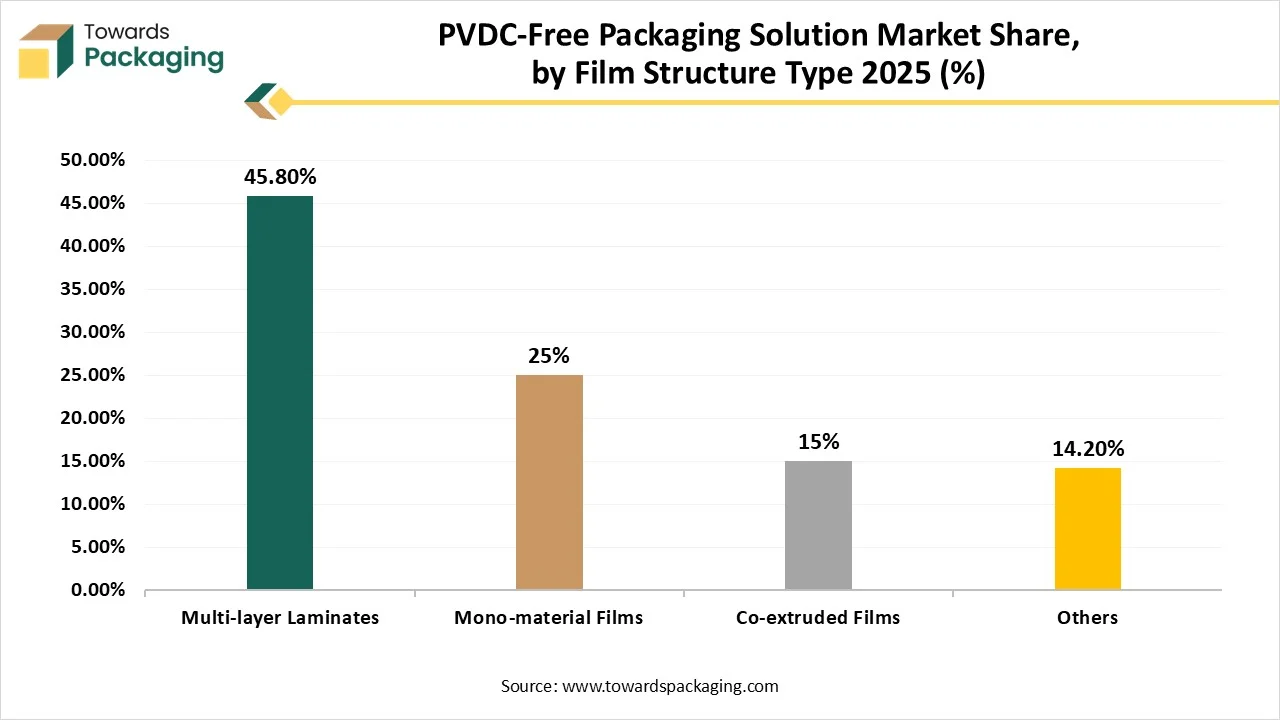
The multi-layer laminates segment dominated with the share 45.8% in 2025. Plastic barrier laminate, frequently known as PBL, is a multi-layered packaging material that is crafted to serve barrier protection and track the product integrity, which serves various advantages. The outer layer generally consists of polyethylene terephthalate (PET), which gives heat resistance and high strength too. The middle layer often has aluminum foil that serves as the biggest barrier protection against the moisture, gases, and light, too. And lastly, the inner layer specifically uses polyethylene to lock the product and prevent leakage.
The mono-material films segment is expected to experience the fastest CAGR during the forecast period. As it precisely sounds like the packaging that is created completely from a single kind of material. Like conventional packaging, it frequently integrates layers of aluminium, plastics, paper, and other elements too, as it makes the procedure simple. By optimizing material recovery and lowering the pollutants, this invention mainly develops recyclability and diminishes the environmental impact that develops as a lamp of hope for committed sustainable packaging systems. It uses only a single type of material (same as 100% polyethylene or 100% polypropylene instead of integrating layers like plastic, metal, and paper, too, which makes the recycling cheap, easy, and environment-friendly too.
| Barrier Type | Market Share |
| High-barrier | 53.50% |
| Ultra-high barrier | 23% |
| Medium-barrier | 18% |
| Low-barrier | 5.50% |
The high-barrier type segment has dominated the market with the share of 53.5% in 2025 because it is a top material in terms of high-barrier packaging due to its exceptional and constant barrier to water vapor, aromas, oxygen, and oils, which has stretched the product shelf life mainly. Developing the PVDC-free solutions often needs complicated co-extrusion or the multi-coating procedure to receive comparable performance, which increases manufacturing cost or complexity.
The ultra-high barrier segment is expected to experience the fastest CAGR during the forecast period. PVDC Latex is an aqueous mixture initially made from polyvinylidene chloride, as it serves exceptional oxygen and water vapour advantages when used as a coating to films or other substrates. PVDC-coated films are broadly used across different sectors. Alike other barrier materials that specifically protect against either oxygen or water vapour. PVDC Latex serves as a dual barrier, which makes it perfect for applications that demand oxygen and protection.
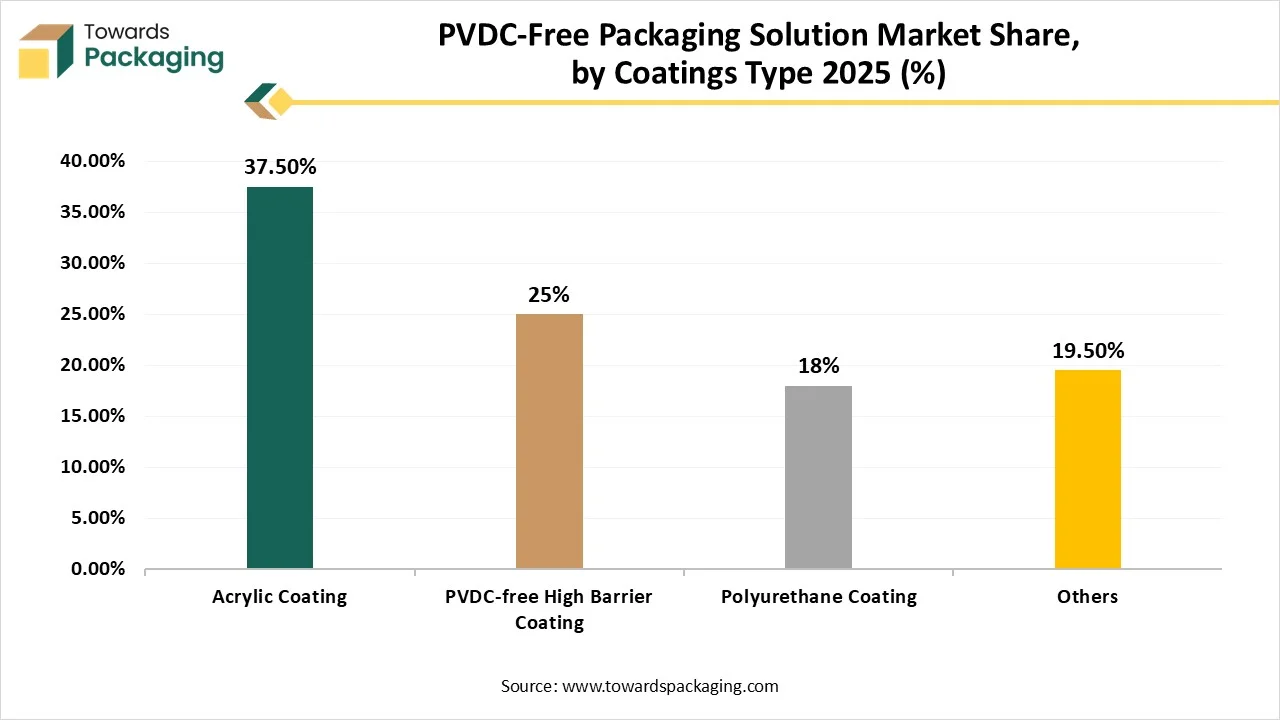
The acrylic coating segment has dominated the market with a share of 37.5% in 2025, as they are used as a protective layer on the surface to encourage its resistance and durability to surrounding elements. This kind of coating is specifically made from acrylic resins that serve a glossy and hard finish that helps to protect the steel from UV damage, corrosion, and moisture, too. They are prevalently used in sectors such as automotive, construction, and marine to stretch the lifespan of the material while tracking its aesthetic look.
The PVDC-free high barrier coating (EVOH and polymer) segment is expected to experience the fastest CAGR during the forecast period. These barrier costings are essential in marketing sustainable packaging solutions by lowering food waste and stretching the product shelf life. By just protecting products from spoilage, such coatings assist in lowering the amount of waste created, thus contributing to a more sustainable ecosystem. Hence, the usage of sustainable materials in the barrier coatings meets the rising demand for eco-friendly packaging options.
| Application | Market Share |
| Food Packaging | 32.40% |
| Pharmaceutical Packaging | 28% |
| Personal Care & Cosmetics | 15% |
| Industrial & Other Packaging | 24.60% |
The food packaging has dominated the market with a 32.4% share in 2025 as it has rigid barrier properties against moisture and oxygen that smoothly protect meat products from discoloring, spoiling, and updating taste during sale and storage. Furthermore, PVDC can also protect the flavor of the meat products from declining because of moisture loss that stretches the shelf life of hams, sausages, and other meat products. Additionally, PVDC multilayer co-extruded film can effectively block moisture, oxygen, and light, which prevents the decomposition and oxidation of nutrients in liquid foods like juice, milk, and other beverages.
The pharmaceutical packaging segment is expected to experience the fastest CAGR during the forecast period. PVDC sheets effectively pause gas and moisture absorption. Pharmaceutical packaging needs this, as even a minute amount of air or moisture can compromise the integrity of sensitive medications. OTR and WVTR -coated films are much less than those of aluminium foil laminates and EVOH. The PVDC-coated sheets in the blister packaging safeguard pills and capsules from moisture. This facilitates humid areas, as constant moisture damage is important to them.
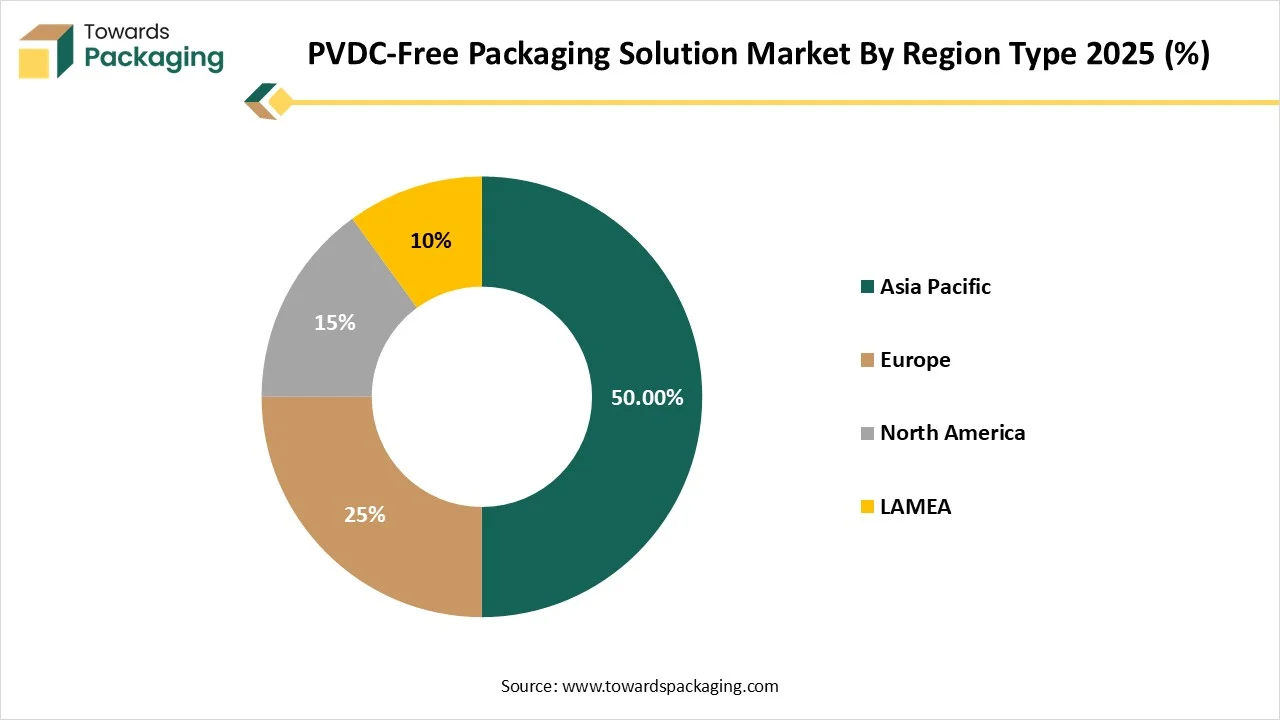
Asia Pacific has dominated the region with a 46.5% share in 2025 as it is currently the biggest and fastest-growing market for PVDC-coated film worldwide, which is driven by the increasing disposable incomes, rapid urbanization, and the developing processed pharmaceutical and food sectors in countries like India and China. The perfect moisture and oxygen barrier characteristics of PVDC stretch the shelf life and lower the food waste, which is a main driver of its constant usage.
The Indian government concentrates on plastic waste management, which includes the ban of particular single-use plastic products, which pushes the invention of sustainable packaging materials. With growing eco-friendly alertness, Indian users are displaying a developing choice for the greener packaging options that count recycled and bio-based materials.
Europe expects the fastest growth in the market during the forecast period. Asia is witnessing the main development, which is driven by the growing demand for high-performance packaging solutions across different industries. AS users and producers give importance to product safety, freshness, and the expanded shelf life, PVDC materials have become important in pharmaceutical, food, and industrial packaging too. This overall tracking serves insights into the market trends, size, and future possibilities within the main European Countries, which shows direction for industry and stakeholders.
Germanys Packaging Act (VerpackG) and the latest EU packaging regulations, such as the EU Packaging Regulation 2025, are compulsory for higher recycling efficiency and the usage of convenient recyclable materials. Organizations that sell packaged goods in the Germany should definitely connect with the Central Packaging Register and match with the minimum standard for checking the recyclability of the packaging”.
The PVDC-Free Packaging Solution Market in the North America region is developing because it is witnessing main development which is driven by the growing demand for the high-barrier packaging solutions that stretches the shelf life and protect the product quality as users choose the move towards sustainability, convenience and safety for the food producers which are increasingly accepting PVDC-based packaging die to its perfect barrier elements against oxygen, moisture and aromas.
Companies like the Canada Plastics Pact serve resources and the directories of the companies that are loyal to their design rules. PVDC serves perfect barrier characteristics against the moisture and oxygen that stretches product shelf life ,hence, it has regularly been used in the multi-material layers which are challenging to recycle.
The PVDC-Free Packaging Solution Market in the Middle East & Africa (MEA) region is being driven by government initiatives that market food safety standards and have exported regulations, also pushing the acceptance of high-level packaging materials. Technological development in the PVDC manufacturing and a rising concentration on lightweight and sustainable packaging solutions have further pushed market growth. Hence, the market stretching is also being adapted by changing the raw material prices and the regional economic conditions that can affect manufacturing costs and the funding decisions.
The UAE economic shifting, rising urban population, and rigid consumer choice for easy packaged goods constantly drive the demand for smooth packaging solutions. The growth of advanced production infrastructure and the step-by-step collaboration in the region also assist the PVDC markets growth. The UAE, like GCC countries, is revealing regulations that made environmental standards for packaging which count demand for material composition.
In South America, the PVDC-free Packaging Solution market is growing steadily as this region uses PVDC-coated films, which are widely used in the food sector for products like processed meat, cheese, snacks, and ready-to-eat meals due to their perfect barrier characteristics against oxygen, moisture, and aroma loss. They are also a backbone in the pharmaceutical industry, specifically for the blister packaging of the moisture-sensitive drugs.
Brazil PVDC packaging films industry serves convincing development possibilities driven by the growing urge for high-performance and safety-compliant packaging solutions across the main sectors. The recent market dynamics are linked with Brazils deliberate regional position, which creates an opportunity for new participants. The optimal product must concentrate on the eco-friendly and high-barrier PVDC films personalized for pharmaceutical and food uses that give importance to safety and sustainability.
By Material Type
By Film Structure
By Barrier Type
By Coating Technology
By Application
By Region









Research & Advisory Analyst
Yogesh Kulkarni is an experienced Research Analyst specializing in the packaging sector, with a strong foundation in statistical analysis and market intelligence. He currently contributes his expertise to Towards Packaging.
Learn more about Yogesh Kulkarni

Reviewed By
Aditi Shivarkar, with 14+ years in packaging market research, specializes in food, beverage, and eco-friendly packaging. She ensures accurate, actionable insights, driving Towards Packaging Analytics & Consulting 's excellence in industry trends and sustainability.
Learn more about Aditi Shivarkar

PVDC-Free Packaging Solution Market
 Table of Content

 Download Sample
 Schedule a Meeting