


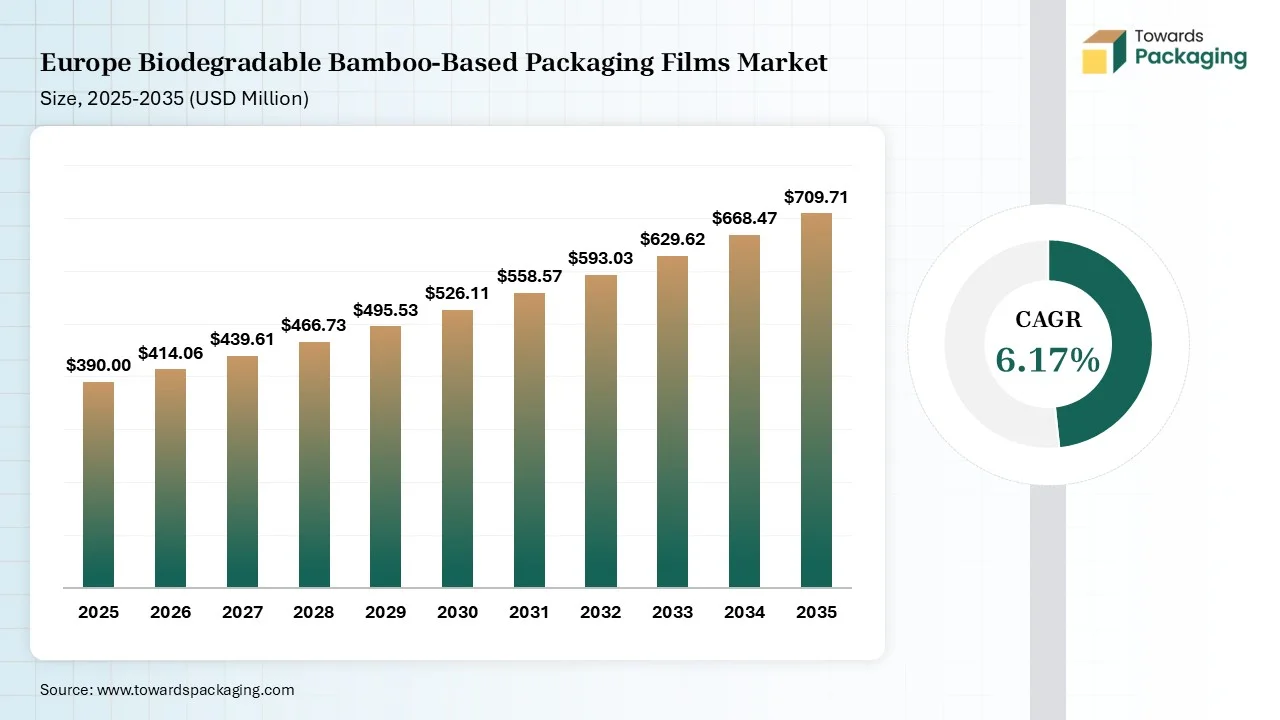
According to Vidyesh Swar, who is a specialist in eco-friendly packaging, packaging materials, and advanced packaging. The Europe biodegradable bamboo-based packaging films market size was $390M in 2025 and is expected to grow at a CAGR of 6.17% during the forecast period. The market is expected to reach $709.7M by 2035. The restrictions on traditional plastics, focus on technological enhancements, and the growing abundance of renewables drive the overall growth. Companies like Stora Enso, Huhtamaki, Amcor, Green Box, and Mondi are key contributors to the growth.
Biodegradable bamboo-based packaging films are sustainable sheets developed from bamboo-based fibers. It is made using cellulose extraction and precision extrusion. Their features are renewable sourcing, high natural resistance, full biodegradability, and high transparency. It offers benefits like high purity, non-toxicity, low carbon footprint, and fast decomposition. Biodegradable bamboo-based packaging films are used in applications like sterile medical packaging, mulch films, general shipping, anti-static packaging, anti-static wrapping, and shipping tapes.
The diverse types of bamboo-based packaging films are bamboo cellulose films, bamboo-reinforced biopolymer films, fiber-based films, blended biodegradable films, and pulp-based films. These films are converted into wraps, lidding films, pouches, and sachets for diverse applications. The supply of bamboo material is import-dependent in Europe.
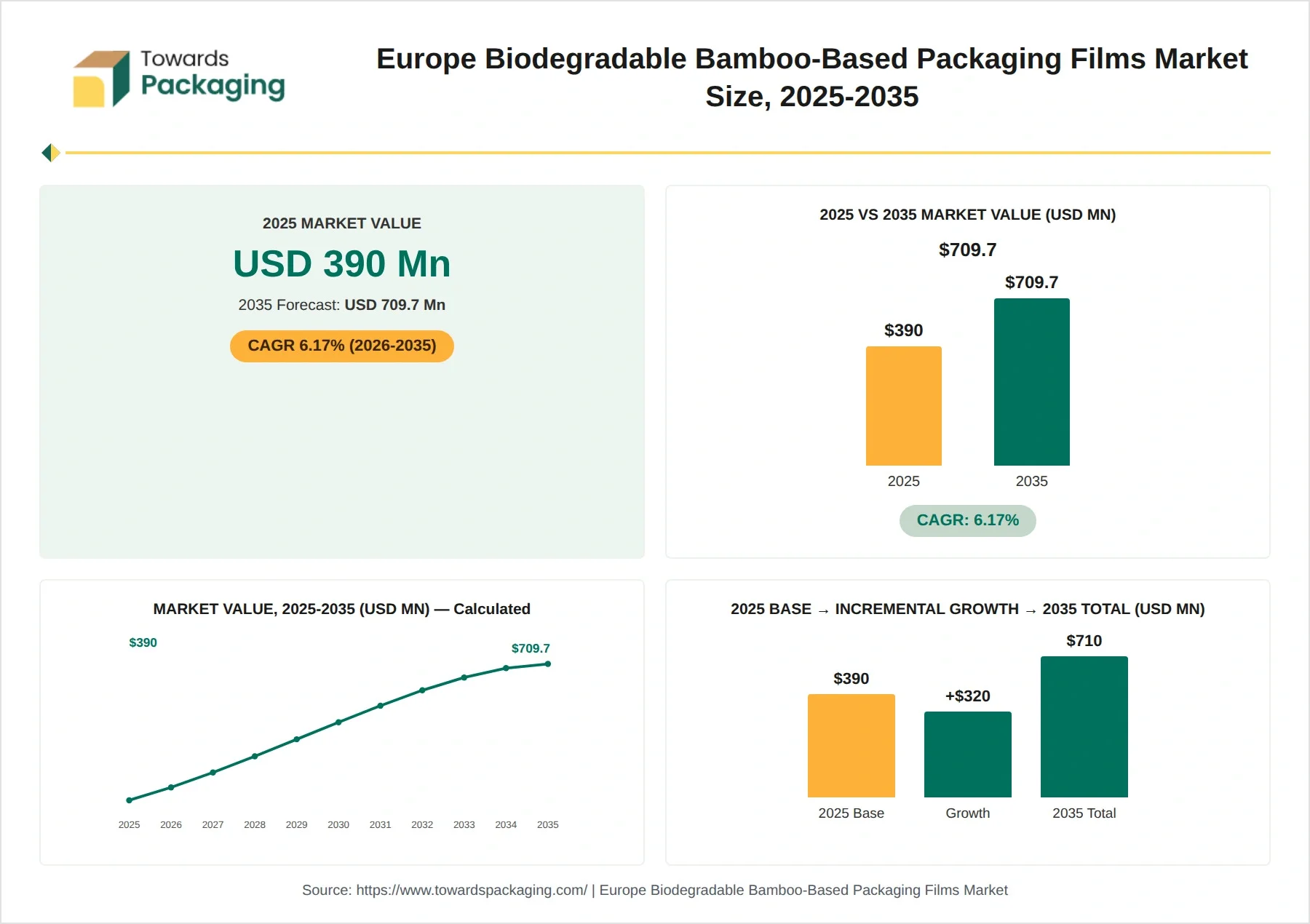
The Europe biodegradable bamboo-based packaging films market size was estimated at $390M in 2025. The market is expected to grow at a CAGR of 6.17% in the market during the forecast period. Factors like bans on conventional plastics, focus on lowering persistent landfill waste, surging use of eco-friendly products, high bamboo biomass supply, continuous expansion in the organic food industry, and the growing composting infrastructure drive the growth. Leading companies like Novamont S.p.A., Amcor plc, Smurfit Westrock, Futamura Chemical Co., BASF SE, and Amcor plc are major contributors.
The market is forecasted to reach approximately $709.7M by 2035. The incremental growth value of the market is $319.7M. Factors like plastic bans in the European Union, demand for earth-friendly packaging materials, continuous rise in e-commerce shopping, strong composting environments, rise in research funding, rapid bamboo growth, and rise in new processing technology boost the overall growth. Top companies like Amcor, NatureWorks, TIPA Corp Ltd., Danimer Scientific, BASF, and Mondi will contribute to growth.
Source: Towards Packaging Analytics & Consulting; calculated compounding
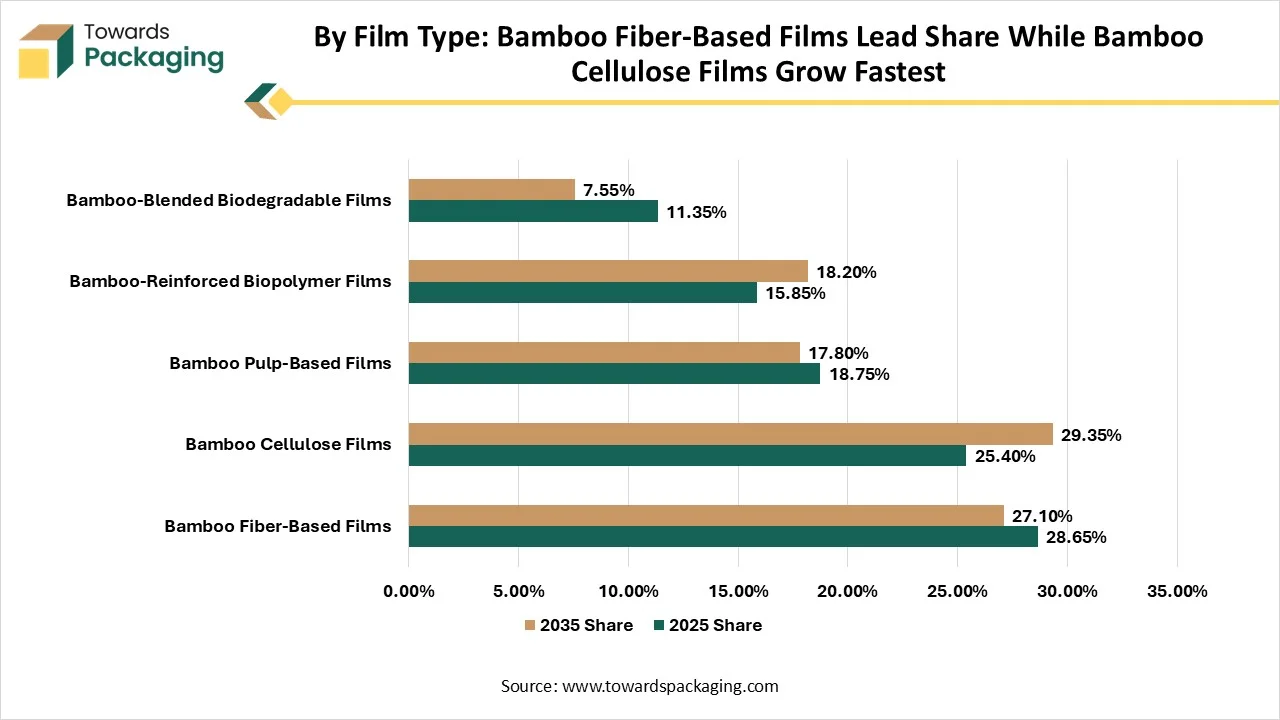
Bamboo fiber-based films dominated the Europe biodegradable bamboo-based packaging films industry with a 28.65% share in 2025. The increasing use of certified compostable packaging and the shift away from conventional starch polymers are increasing the use of bamboo fiber-based films. The better moisture barrier, rapid renewability, and exceptional tensile strength of bamboo fiber-based films drive the market growth. Bamboo cellulose films are expected to grow at the fastest CAGR of 7.65% in the market during the forecast period. Industries' transition to compostable solutions and increased bamboo renewability increase the production of bamboo cellulose films. The thriving retail packaging and the consumer interest in eco-labeled packaging increase the use of bamboo-cellulose films.
Source: Towards Packaging Analytics & Consulting
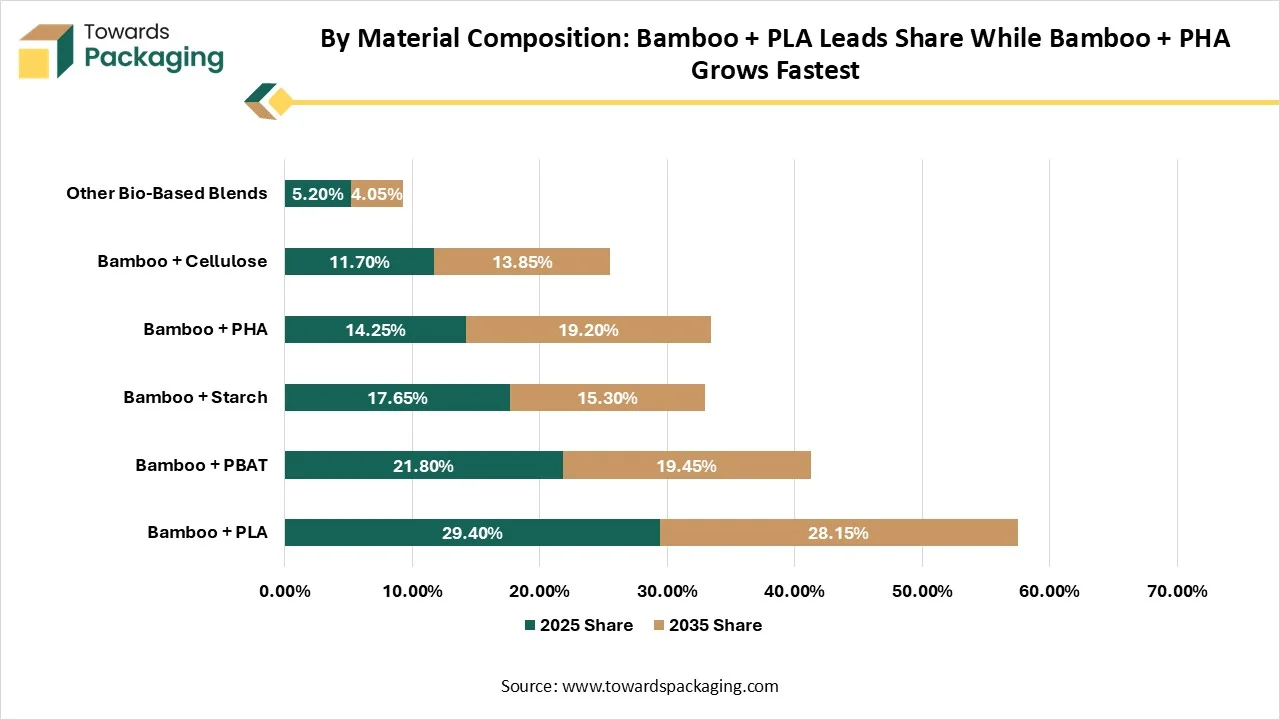
Bamboo + PLA dominated the Europe biodegradable bamboo-based packaging films industry with a 29.40% share in 2025. The move away from fossil-fuel plastics and the creation of certified compostable solutions are increasing the use of bamboo + PLA. The excellent mechanical strength, exceptional mechanical performance, and true biodegradability of bamboo + PLA drive the overall growth. Bamboo + PHA is expected to grow with the fastest CAGR of 9.40% during the forecast period. The high use of advanced biopolymers and the focus on marine degradability increase the use of bamboo + PHA. The strong sustainability profile, exceptional flexibility, and improved grease resistance of bamboo + PHA boost the overall growth.
Source: Towards Packaging Analytics & Consulting
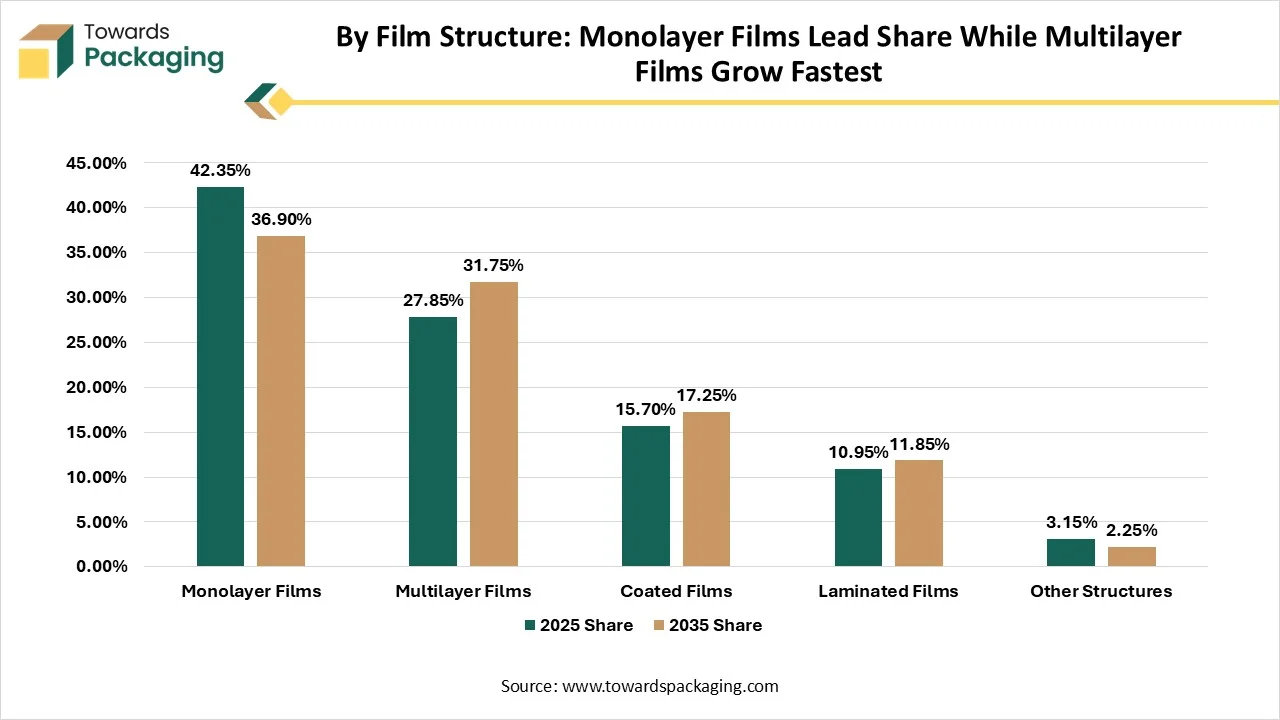
Monolayer films dominated the Europe biodegradable bamboo-based packaging films industry with a 42.35% share in 2025. The presence of organic recycling loops and a move away from multi-material combinations increases the use of monolayer films. The simpler production and lower cost of monolayer films help with expansion. These films are widely used in food service items, which drives the growth. Multilayer films are expected to grow at the fastest CAGR of 7.55% during the forecast period. The rise in eco-friendly multilayer films and the popularity of green packaging help with expansion. The longer shelf life and enhanced barrier protection in multilayer films boost the overall growth.
Source: Towards Packaging Analytics & Consulting
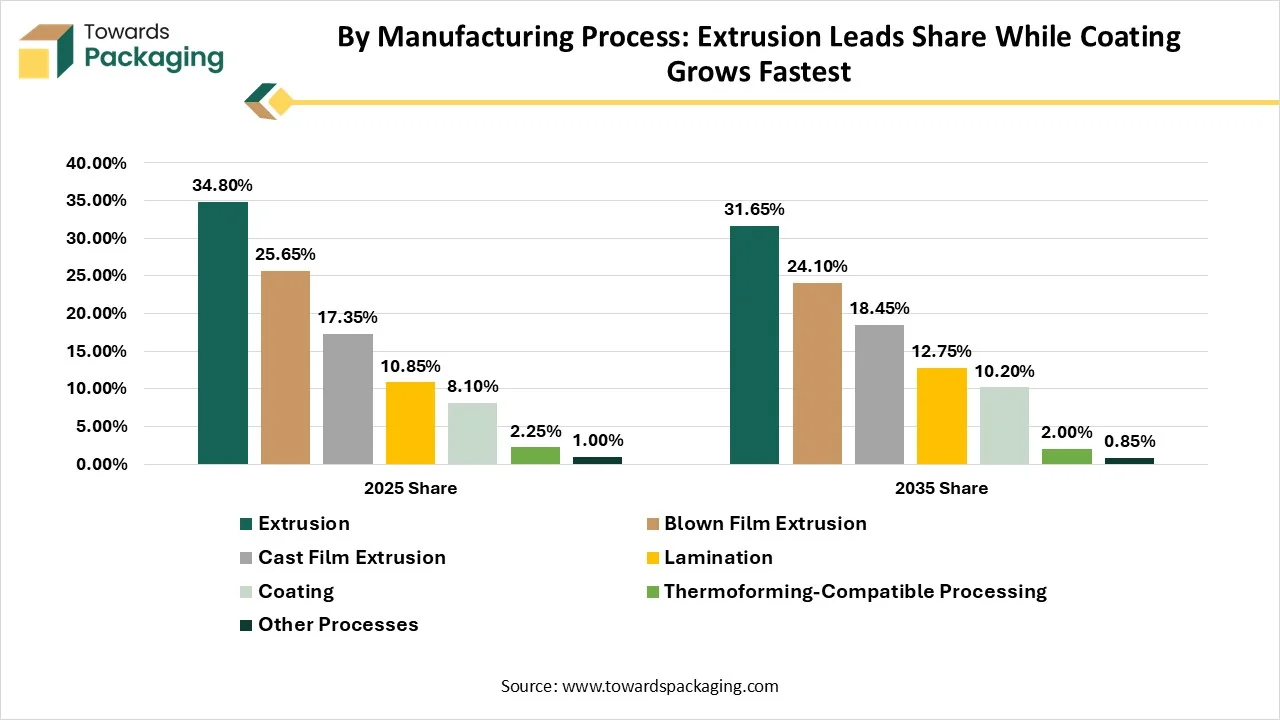
Extrusion dominated the Europe biodegradable bamboo-based packaging films industry with a 34.80% share in 2025. The creation of natural fiber blends and the development of high-performance medical packaging are increasing the use of extrusion. The multilayer capabilities, high equipment compatibility, and exceptional scalability of extrusion drive the growth. Coating is expected to grow at the fastest CAGR of 8.75% in the market during the forecast period. The need to avoid ruining perishable goods and focus on resisting tearing in packaging increases the use of coating. The high interest in dispersion coatings and the expansion of non-toxic coatings support the growth.
Source: Towards Packaging Analytics & Consulting
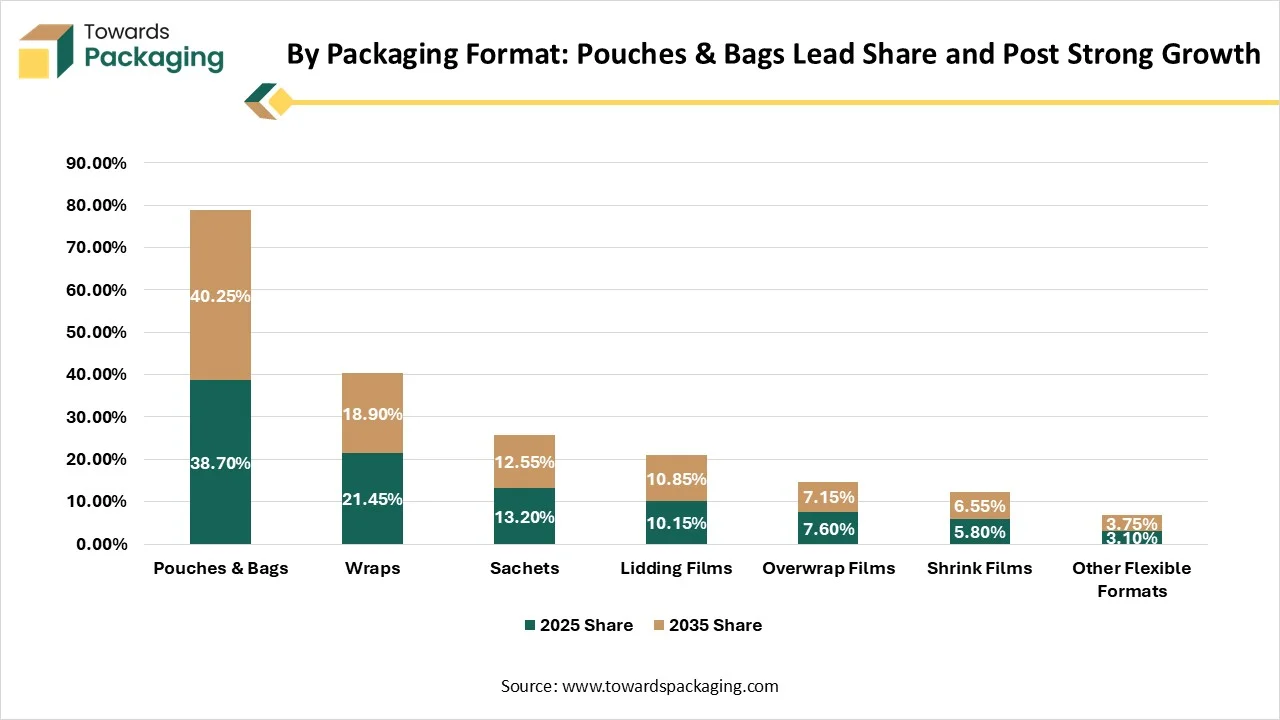
Pouches & bags dominated the Europe biodegradable bamboo-based packaging films industry with a 38.70% share in 2025. The rise in packaged coffee and the consumer demand for easy-to-store packaging increase the use of pouches & bags. The rise in bamboo-based multi-layer pouches and dependence on flexible bags in e-commerce drives the overall growth. Other flexible formats are expected to grow at the fastest CAGR of 8.15% in the market during the forecast period. The development of diverse flexible geometries and the e-commerce shift to space-saving packaging increases the adoption of flexible formats. The high cellulose content, low transportation weight, and no landfill congestion in bamboo-based other flexible formats boost the overall growth.
Source: Towards Packaging Analytics & Consulting
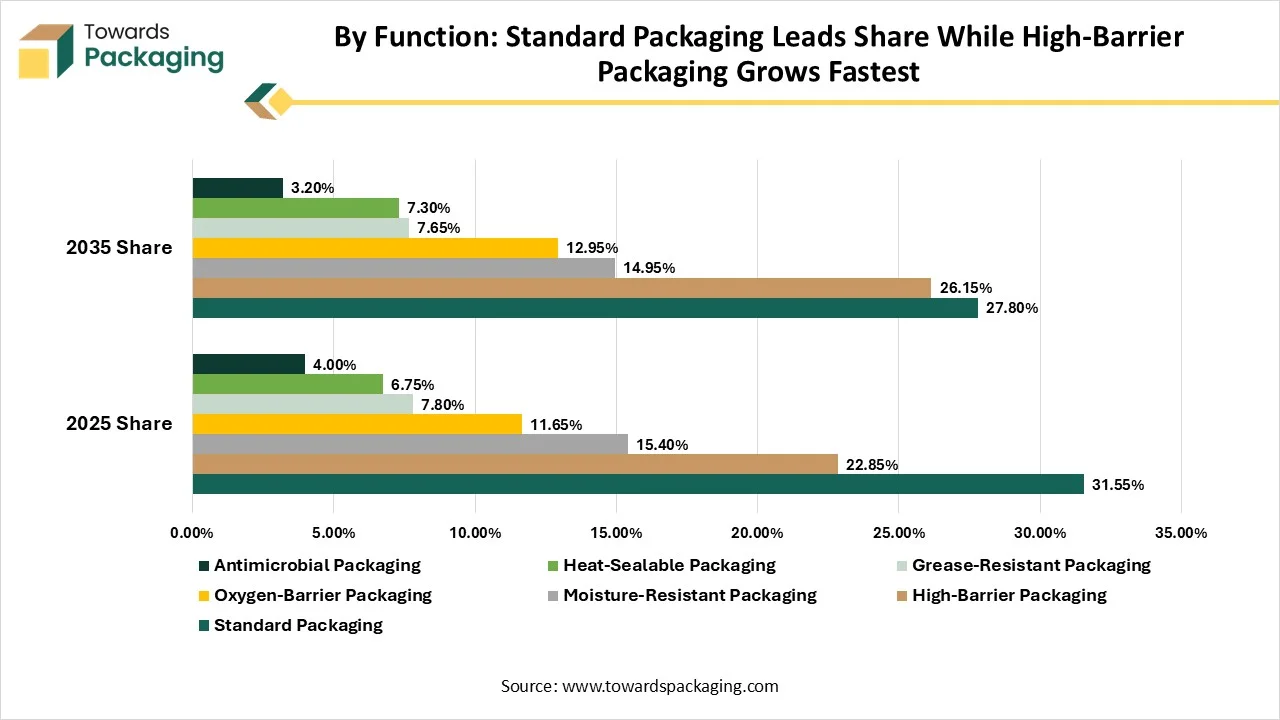
Standard packaging dominated the Europe biodegradable bamboo-based packaging films industry with a 31.55% share in 2025. Beverage distribution expansion and a focus on low processing costs increase the use of standard packaging. The rise in general merchandise and the focus on avoiding expensive retooling increase the use of standard packaging. High-barrier packaging is expected to grow at the fastest CAGR of 7.65% during the forecast period. The focus on preventing pharmaceutical breakdown and the interest in premium substitutes increase the use of high-barrier packaging. The advancements in processing methodologies and cosmetic brands push towards plant-based solutions, increasing the use of high-barrier packaging.
Source: Towards Packaging Analytics & Consulting
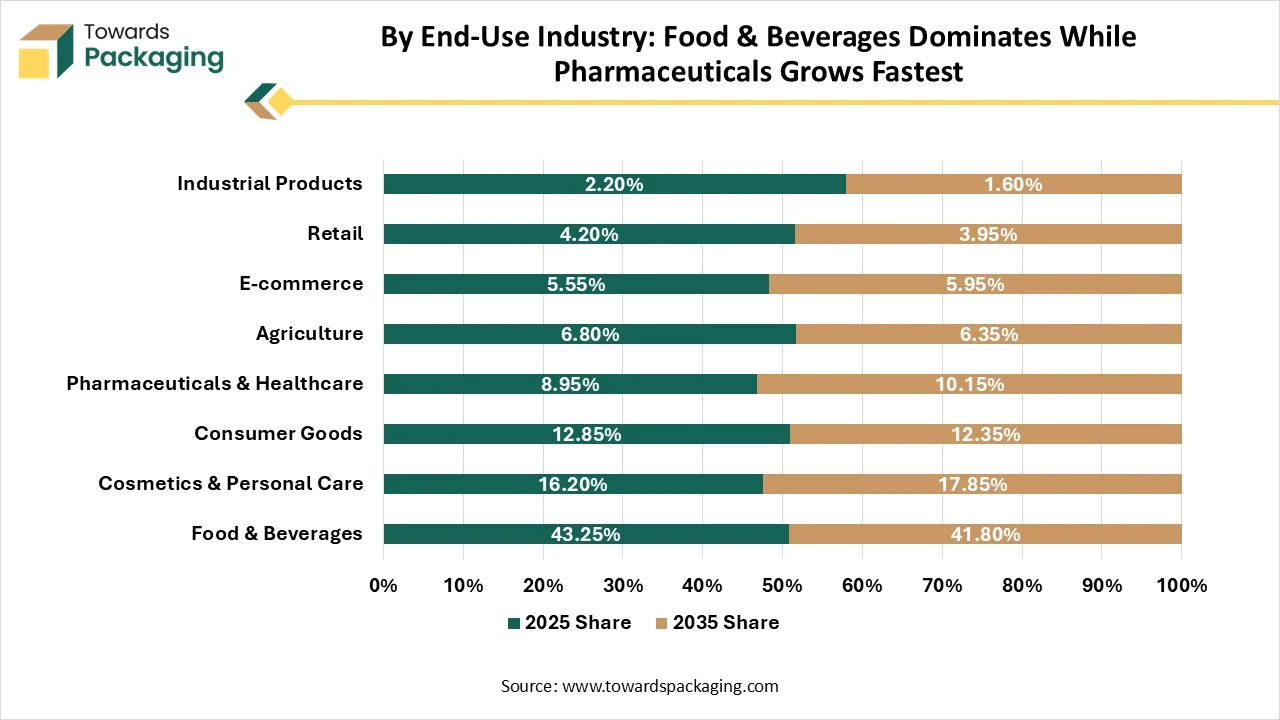
Food & beverages dominated the Europe biodegradable bamboo-based packaging films industry with a 43.25% share in 2025. The increased following of green deal goals in the food sector and the rise in buying low-waste groceries increase the use of biodegradable bamboo-based packaging films. The growing convenience meal delivery services and sharp need for freshness preservation drive the growth. Pharmaceuticals & healthcare are expected to grow at the fastest CAGR of 7.45% during the forecast period. Healthcare companies' sustainability transformation and shielding of sensitive drugs increase adoption of biodegradable bamboo-based packaging films. Pharmaceutical firms focus on minimizing the carbon footprint of supply chains, and the rise in home-care treatments boosts the overall growth.
Source: Towards Packaging Analytics & Consulting
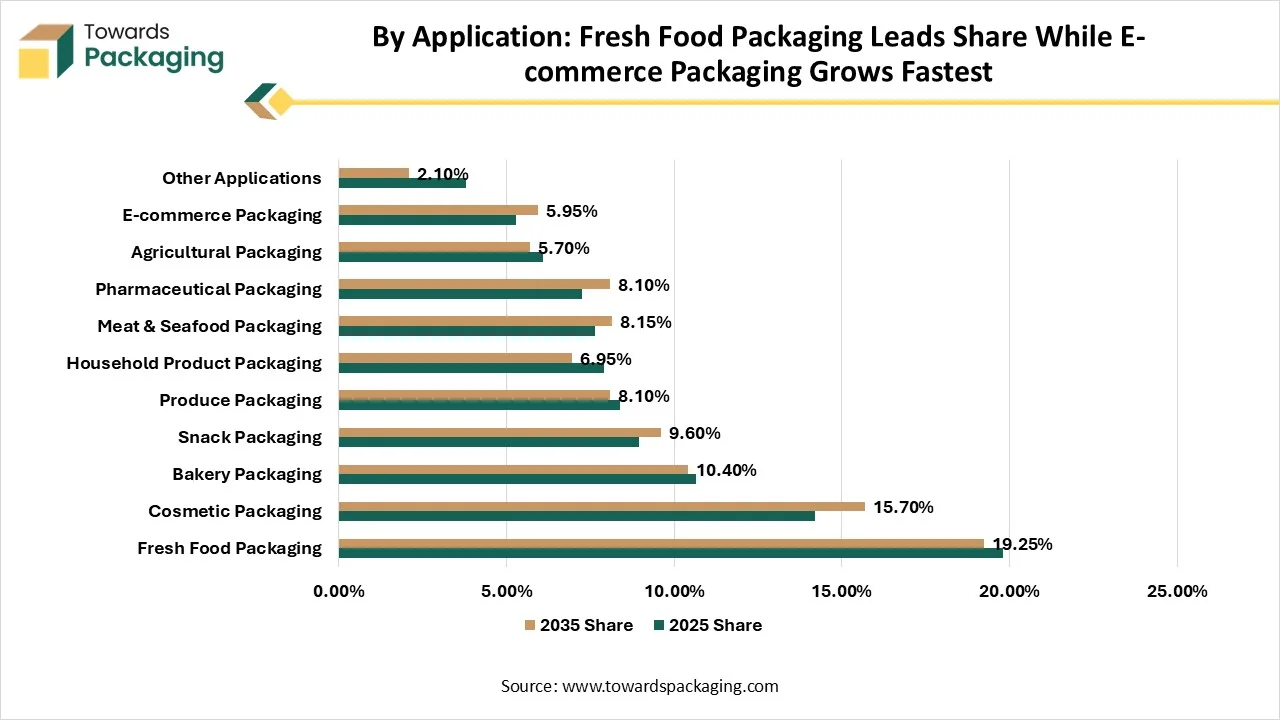
Fresh food packaging dominated the Europe biodegradable bamboo-based packaging films industry with a 19.80% share in 2025. The increased replacement of vegetable plastic wraps and the protection of fruits from air increase the use of biodegradable bamboo-based packaging films. The purchasing of daily grocery items and rapid growth in fresh food drive the growth. E-commerce packaging is expected to grow at the fastest CAGR of 7.35% during the forecast period. E-commerce retailers' transition to biodegradable packaging and interest in eco-conscious e-commerce brands increase the use of biodegradable bamboo-based packaging films. The burgeoning online volume in Europe and interest in plant-based parcel unboxing boost the overall growth.
Source: Towards Packaging Analytics & Consulting
Source:- Towards Packaging Analytics & Consulting
Germany
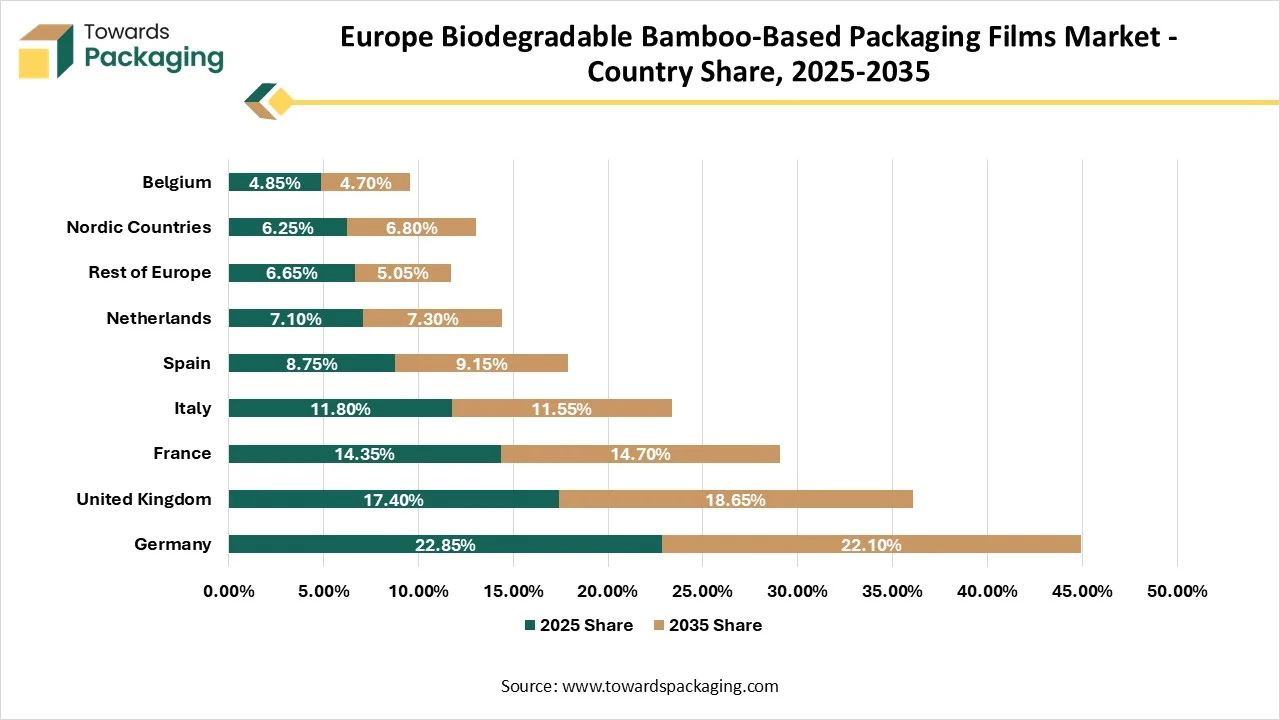
Germany dominated the Europe biodegradable bamboo-based packaging films market with a 22.85% share in 2025. The local waste management programs and strong biopolymer research hub increase the production of biodegradable bamboo-based packaging films. The high availability of bamboo fiber and major retail brands helps with expansion. The mature industrial composting and the regional investment in research drive the market growth.
United Kingdom
United Kingdom held a 17.40% share in the market in 2025 and is expected to grow at a 6.90% CAGR during the forecast period. The consumer willingness to support zero-waste packaging and the presence of high renewal capabilities increase the use of biodegradable bamboo-based packaging films. U.K.'s strong food service industry and the robust financial penalties on conventional packaging help with expansion.
France
France held a 14.35% share in the market in 2025. The stricter laws for packaging waste and the high use of premium beauty products increase the adoption of biodegradable bamboo-based packaging films. The investment in renewable fibers and innovations in multi-layer extrusion help with expansion. The expanding French luxury-goods industry drives growth.
Italy
Italy held an 11.80% share in the market in 2025. Businesses' push towards environmentally friendly alternatives and restrictions on non-biodegradable bags increase the use of biodegradable bamboo-based packaging films. The rise in eco-conscious beverage companies and organic composting ecosystems helps with expansion. The high presence of luxury exporters boosts the growth.
Nordic Countries
Nordic Countries held a 6.25% share in the market in 2025 and are expected to grow at a 7.05% CAGR during the forecast period. Nordic companies' commitments to net-zero and countries' demand for lightweight packaging films increase the use of biodegradable bamboo-based packaging films. Nordic buyers' preference for rewarding brands and Finland’s material-recycling targets boost the overall growth.
Source:- Towards Packaging Analytics & Consulting
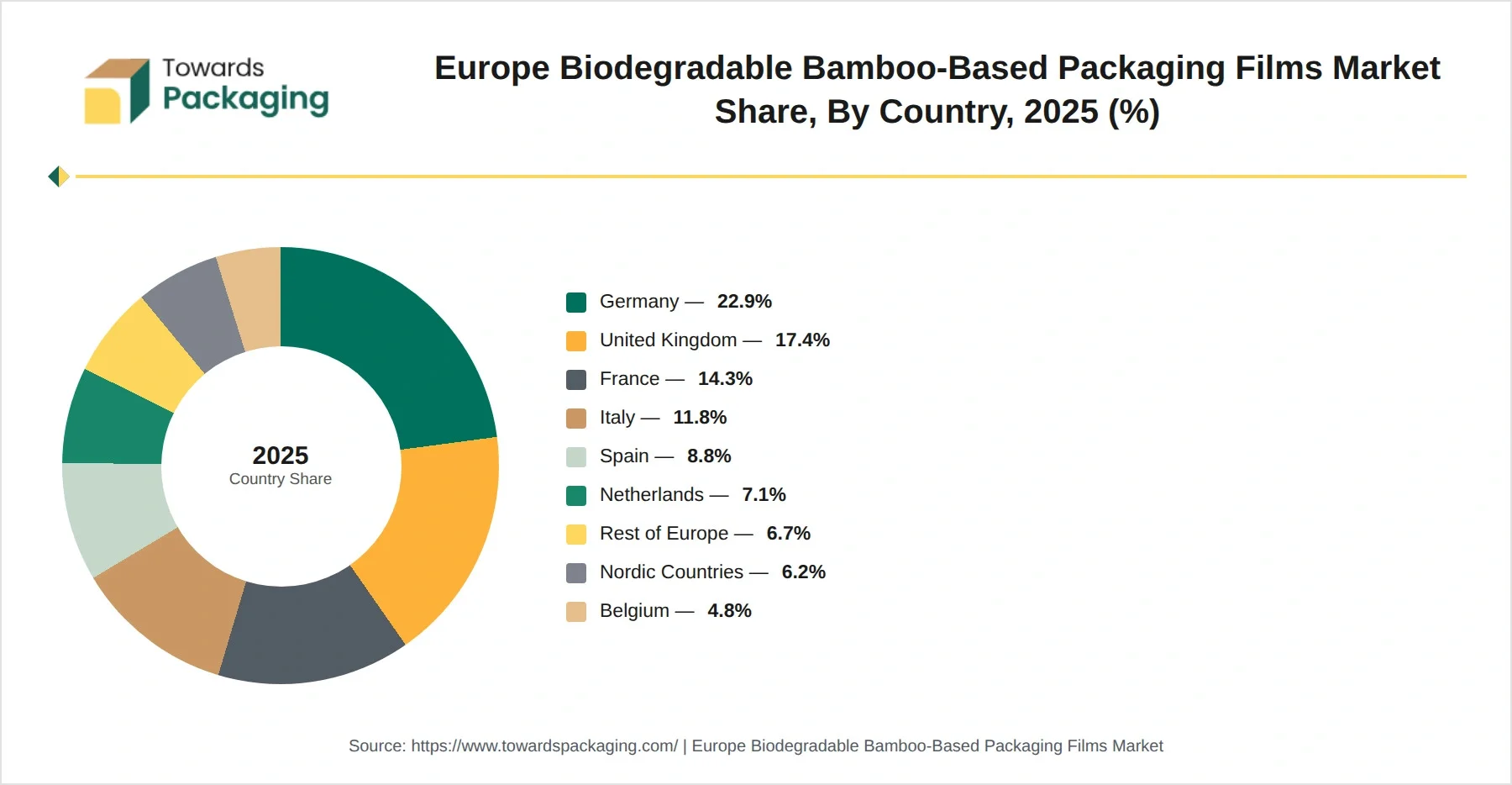
Germany held a 22.9% share in the market in 2025 due to the rapid adoption of bio-based packaging, massive biopolymer production, and the growing online retail fulfillment. United Kingdom held the second-largest share of 17.4% in the market in 2025 due to the transition to zero-plastic films and food service providers' demand for bio-based containers. France held a 14.3% market share in 2025 due to the high government funding for bio-based materials and corporate preference for meeting green targets. Italy held an 11.8% market share in 2025 due to the restrictions on plastic carrier bags and the presence of bioplastic innovators. Spain held an 8.8% market share in 2025 due to the growing agricultural applications, abundance of natural bamboo fibers, and Spanish food industry commitments to sustainability.
Source:- Towards Packaging Analytics & Consulting
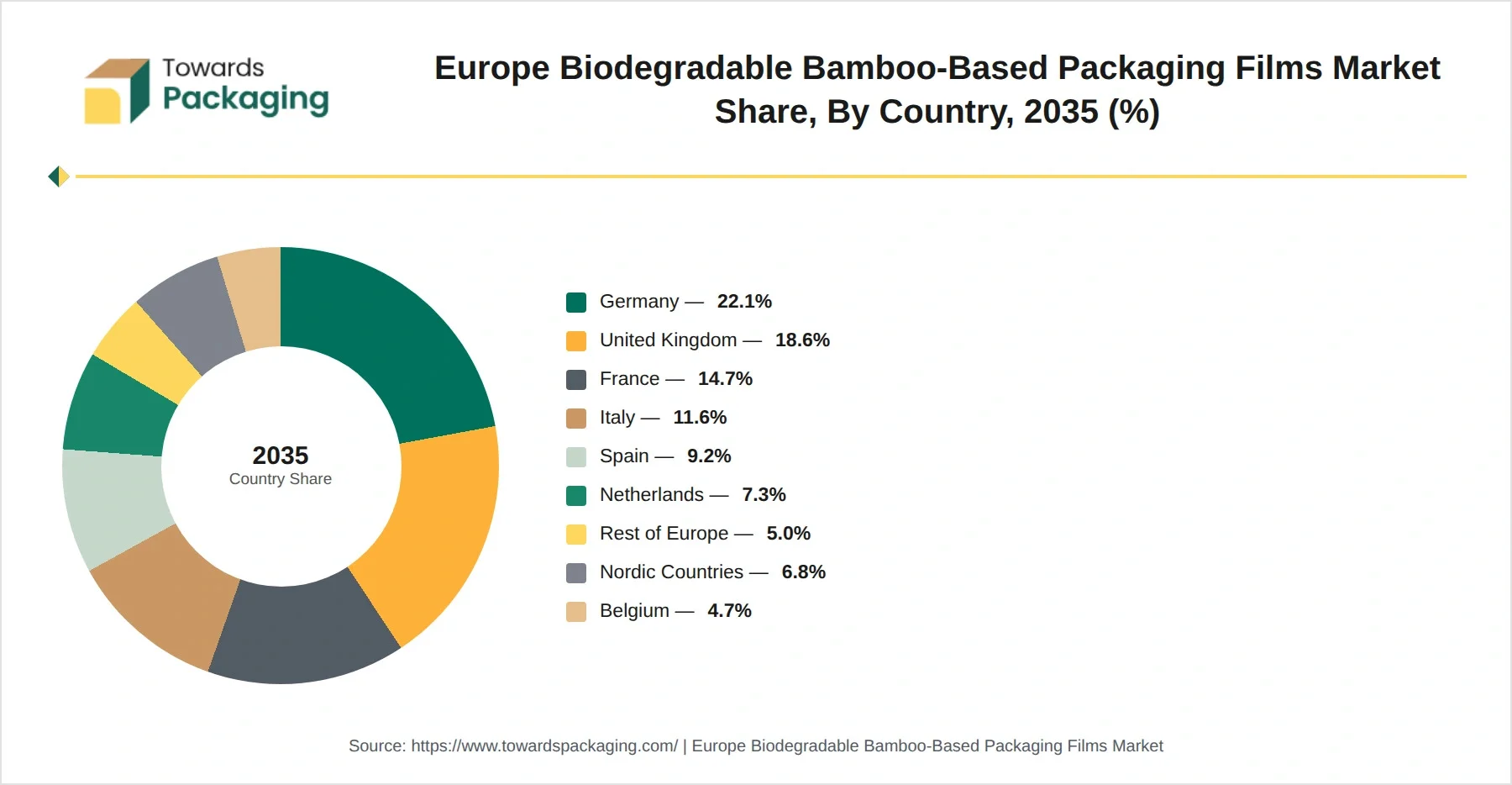
Germany is expected to hold a 22.1% market share by 2035 due to national regulatory laws, a mature waste collection system, and utilization of digital tools. United Kingdom is expected to hold an 18.6% market share by 2035 due to the priority given to materials that decompose quickly and the interest in highly biodegradable packaging. France is expected to hold a 14.7% market share by 2035 due to the food brands' focus on complying with national laws and aggressive packaging directives. Italy is expected to hold an 11.6% market share by 2035 due to an established starch-based bioplastic ecosystem and a developed agricultural industry. Spain is expected to hold a 9.2% market share by 2035 due to the demand for reusable organic materials and a regional food brand shift to natural packaging.
| Metric | Statistical Data | Entity/Geography |
| EU bamboo-material average import price | €4.46/kg | EU |
| EU bamboo-material import value | €206.2M | EU |
| EU bamboo-material import volume | 46.2M kg | EU |
| China-origin bamboo-material import share | 68.6% | EU |
| Vietnam-origin import share | 25.1% | EU |
| Reported premium for bamboo packaging vs. conventional materials | 20-60% | EU |
Source: EU trade statistics (bamboo vegetable-material import category)
EU Bamboo-Material Average Import Price
The average import price of bamboo-material in the EU depends on factors like landed cost, certifications, material type, duties, regulatory compliance, and processed form. The average import price is Euro 4.46 per kg.
EU Bamboo-Material Average Import Value
The import value of bamboo-material in the EU is determined by factors like EU regulations, transport cost, processing level, sector demand, certifications, and bamboo species. The bamboo-material import value in the EU is Euro 206.2M.
EU Bamboo-Material Import Volume
The import volume is determined by factors like sustainability, supply chain, regulatory bans, and sector consumption. The bamboo-material import volume in the EU is 46.2M kg.
China-Origin Bamboo-Material Import Share
The import share of China-origin bamboo-material is 68.6%. The import share is high due to mature bamboo forest infrastructure in China, EU plastic reduction goals, and a lack of bamboo production in the EU.
Vietnam-Origin Import Share
The import share of Vietnam-origin bamboo material is 25.1%. Factors include Free Trade Agreements, EU demand for recycled raw materials, and the presence of craft villages in Vietnam, which drive the Vietnam import share.
Bamboo Packaging vs. Conventional Materials
Bamboo grows rapidly, whereas conventional packaging materials require decades to grow. Bamboo is biodegradable, and conventional packaging takes more time to degrade.
| Metric | Statistical Data | Entity/Geography |
| EU bamboo-material imports | 46.2M kg | EU |
| EU bamboo-material exports | 1.6M kg | EU |
| Import/export ratio by value | ~6.7x | EU |
| Trade deficit | €175.5M | EU |
| China import contribution | €141.4M | EU |
| Vietnam import contribution | 25.1% | EU |
Source: EU trade statistics
EU Bamboo-Material Imports
The total imports of bamboo-material in the EU are 46.2M kg. Imports are high due to low local cultivation, diversified industrial use, and interest in eco-friendly alternatives.
EU Bamboo-Material Exports
The total exports of bamboo-material in the EU are 1.6M kg. Factors like the shift to renewable textiles, environmental directives, and the rise in green construction drive exports.
Import/Export Ratio by Value
The import & export ratio is approximately 6.7x. The import of bamboo-material is higher than exports. The green-building initiatives increase the import of bamboo-material.
Trade Deficit
The trade deficit in the EU is Euro 175.5M. EU is highly dependent on the import of bamboo-material. The export of bamboo-material is low in the EU. The burgeoning domestic demand and production gaps increase imports of bamboo-material.
China Import Contribution
The total import contribution of China is Euro 141.4M. The import contribution driven by an abundance of feedstock and a plastic replacement initiative.
Vietnam Import Contribution
The total import contribution of Vietnam is 25.1%. Factors like dependence on low-value goods, stringent international codes, and small-scale enterprises drive the import.
| Value-Chain Indicator | Statistical Data | Entity/Geography |
| EU bamboo-material imports | €206.2M | EU |
| China share | 68.6% | EU supply |
| Vietnam share | 25.1% | EU supply |
| Combined China + Vietnam share | 93.7% | EU supply |
| EU bamboo-material trade deficit | €175.5M | EU |
| Import concentration HHI | 5,348 | EU |
Source: EU trade statistics
| Technology/Indicator | Statistical Data | Entity/Geography |
| Bamboo-based film-specific patent count | No consolidated public statistic identified | Europe |
| European biodegradable-packaging revenue | USD 148,982.2M, 2024 | Europe |
| European biodegradable-packaging CAGR | 6.3%, 2025-2033 | Europe |
| Films & wraps | Fastest-growing format | Europe |
| Pouches & bags | 28.19% share, 2024 | Europe |
Source: European biodegradable-packaging market data; EU trade statistics
The total revenue of European biodegradable packaging is $148982.2M in 2024. Factors include sustainable product awareness, expanding organic food, and Green Deal mandates, helps in increasing European biodegradable packaging revenue. The European biodegradable-packaging market is expected to grow at a 6.3% CAGR during 2025-2033. The market is growing due to changing consumer packaging demand. The films & wraps segment is experiencing the fastest growth in the market. Factors like corporate sustainability pledges and a focus on lightweight efficiency increase the use of films & wraps. The pouches & bags held a 28.19% share in the market in 2024. The foodservice boom and the preference for compostable goods increase the use of pouches & bags.
| Indicator | Statistical Data | Entity/Geography |
| Europe share of global biodegradable-packaging revenue | 29.7%, 2024 | Europe |
| European biodegradable-packaging revenue | USD 148.98B, 2024 | Europe |
| European biodegradable-packaging forecast | USD 258.04B, 2033 | Europe |
| European biodegradable-packaging CAGR | 6.3%, 2025-2033 | Europe |
| EU bamboo-material import dependency | ~75-85% | EU |
Source: European biodegradable-packaging market data; EU trade statistics
Europe held a 29.7% share in the global biodegradable packaging revenue due to biodegradable packaging research institutes and high shopper awareness. The European biodegradable-packaging revenue is $148.98B in 2024 due to bans on fossil-fuel plastics, EPR policies, and a rise in high-barrier bioplastics. The European biodegradable-packaging revenue is predicted to reach $258.04B by 2033 due to corporate goals and increased material innovations. The market is expected to grow at a 6.3% CAGR during 2025-2033 due to expansion of plant-based films and demand for virgin plastic replacement. The bamboo-material import dependency in the EU is approximately 75-85%.
| Application | Statistical Data | Entity/Geography |
| Food & beverage share | ~40-45% | EU bamboo packaging |
| E-commerce/logistics growth | ~15-20% annually | EU |
| Cosmetics & personal care | Growing application | Europe |
| Electronics | Established niche application | Europe |
| Agriculture & horticulture | Established application | Europe |
| Films & wraps | Fastest-growing broader biodegradable-packaging format | Europe |
Source: EU bamboo packaging application data
The food & beverage industry held approximately a 40- 45% share in EU bamboo packaging due to the focus on enhancing the aesthetics of food brands and the heavy manufacturing of takeaway food boxes. E-commerce and logistics are growing approximately 15- 20% annually due to demand for lightweight materials, rapid online growth, and penalty avoidance. Cosmetics & personal care is also growing in the EU bamboo packaging due to the production of luxury skincare jars and Gen Z preference for eco-friendly cosmetics. Electronics is a niche application in EU bamboo packaging. Agriculture & horticulture is an established application in EU bamboo packaging due to the rise in local bamboo cultivation and focus on sustainable bamboo plots. Films & wraps are the fastest-growing segment in biodegradable packaging due to massive use in the food industry and the development of green wrap.
| Company | Quantifiable Competitive Indicator | Relevance |
| Mondi | ~€8.9B revenue, 2024 | Sustainable packaging |
| Amcor | ~US$14.5B FY2025 sales | Flexible packaging |
| Huhtamaki | ~€4.2B net sales, 2024 | Food packaging |
| Tetra Pak | ~€11.7B net sales, 2024 | Food & beverage packaging |
| BASF | €59.9B sales, 2024 | Biopolymers/materials |
| Novamont | Bioplastics specialist | Compostable materials |
| NatureWorks | Biopolymer/PLA producer | Compostable-film ecosystem |
| TIPA | Compostable flexible packaging specialist | Flexible films |
Source: Company disclosures (annual reports/investor releases)
Mondi
Mondi generated approximately €8.9B in revenue in 2024. The company offers sustainable solutions like mono-material pouches, corrugated solutions, flexible paper bags, and FunctionalBarrier Papers.
Amcor
Amcor’s FY2025 sales are approximately $14.5B. The company’s sustainable packaging portfolio includes AmFiber Performance Paper, AmSky, AmPrima Recycle Ready Solutions, and AmLite HeatFlex.
Huhtamaki
Huhtamaki net sales in 2024 are approximately €4.2B. The company offers bamboo-based products like takeaway containers and bamboo bowls.
Tetra Pak
Tetra Pak's 2024 net sales are approximately €11.7B. Its sustainable packaging portfolio includes Tetra Brik Aseptic, paper-based barrier innovations, Tetra-Rex Plant-based, and Tetra Recart.
BASF
BASF generated €59.9B in revenue in 2024. The company offers Joncryl BRC Resins, ecvi biopolymers, Acrodur Binder Technology, and ecoflex biopolymers for plant-based packaging.
Novamont
Novamont is a specialist in the production of bioplastics. The product line includes bard extrusion coating, capsules, flexible films, BioBag, rigid packaging, and multilayer barrier packaging.
NatureWorks
NatureWorks is a major producer of PLA. The company's sustainable portfolio includes foam trays, the Ingeo Extend platform, folding cartons, rigid packaging, and flexible films.
TIPA
TIPA specializes in the production of compostable flexible packaging. The compostable packaging lines include high-barrier films, fruit stickers, single-ply films, zippers, and multi-ply laminates.
| Country/Region | Statistical Data | Indicator |
| Germany | 20.7% of EU imports | Largest EU member-state importer of NC8 46021100 |
| China | 68.6% of extra-EU imports | Main external supplier |
| Vietnam | 25.1% of extra-EU imports | Second-largest supplier |
| France | 33.5% of EU imports of NC8 44187310 | Leading importer for bamboo mosaic-floor category |
| Europe | 34.56% of global bamboo-packaging benchmark, 2025 | Regional share |
Source: EU trade statistics (Combined Nomenclature NC8 46021100 and NC8 44187310)
| Indicator | Statistical Data | Entity/Geography |
| EU bamboo-material imports | 46.2M kg | EU |
| EU bamboo-material exports | 1.6M kg | EU |
| Import volume/export volume ratio | 28.9x | EU |
| EU import value | €206.2M | EU |
| EU export value | €30.6M | EU |
| Trade deficit | €175.5M | EU |
Source: EU trade statistics
| Indicator | Statistical Data | Entity/Geography |
| Food & beverage demand share | ~40-45% | EU |
| E-commerce/logistics growth | ~15-20% annually | EU |
| EU external bamboo-material imports | €206.2M | EU |
| Germany's share of EU bamboo-material imports | 20.7% | Germany |
Source: EU bamboo packaging application data; EU trade statistics
In bamboo packaging, Food & beverage is valued at approximately a 40- 45% share. The e-commerce and logistics industry is growing at approximately 15-20% annually. External bamboo-material imports across the EU were estimated at Euro 206.2M. Germany is the leading importer and held a 20.7% share in the total import volume.
| Indicator | Statistical Data | Entity/Geography |
| EU bamboo packaging volume growth projection | 12-16% CAGR, 2026-2035 | EU |
| E-commerce/logistics growth | 15-20% annually | EU |
| Bamboo harvest cycle | 3-5 years | Bamboo |
| Timber harvest comparison | 20-30 years | Timber |
| EU raw/semi-processed bamboo import dependency | 75-85% | EU |
Source: EU bamboo packaging market data; bamboo agronomic data
The EU bamboo packaging volume is projected to grow at a 12-16% CAGR during 2026-2035. E-commerce and logistics are expected to grow at an annual rate of 15-20% in EU bamboo packaging volume. The time required for bamboo harvesting is 3-5 years. The harvesting time helps build maximum mechanical strength. The timber harvesting process requires 20-30 years, and winter is the best season for timber harvesting. European imported 75-85% of raw or semi-processed bamboo.
| Positioning Category | Quantifiable Basis |
| Packaging scale leaders | Multi-billion-euro/US-dollar corporate revenues (Mondi, Amcor, Huhtamaki, Tetra Pak) |
| Sustainable-material specialists | Dedicated biodegradable/compostable product portfolios (TIPA, Novamont) |
| Flexible-packaging specialists | Film and flexible-packaging manufacturing footprint |
| Bio-material specialists | Dedicated biopolymer production and R&D (BASF, NatureWorks) |
| Bamboo specialists | Direct bamboo product exposure |
Source: Derived from named company disclosures and public positioning
According to my research, the Europe biodegradable bamboo-based packaging films market is growing at a notable rate. The market is growing due to bans on traditional plastics, innovations in bamboo pulp processing, and key brands' shift to compostable packaging. Germany held the highest revenue share in the market in 2025. Bamboo fiber-based films held the leading market share in 2025. Top market players like Novamont S.p.A., BioBag International AS, BASF SE, Biome Bioplastics, and Futamura Chemical Co. Ltd. are contributing to the market growth.
By Film Type
By Material Composition
By Film Structure
By Manufacturing Process
By Packaging Format
By Function
By End-Use Industry
By Application
By Country
Towards Packaging Analytics & Consulting Europe Biodegradable Bamboo-Based Packaging Films Market: market sizing, CAGR, and full segmentation tables (Film Type, Material Composition, Film Structure, Manufacturing Process, Packaging Format, Function, End-Use Industry, Application, Country), 2025-2035.
Towards Packaging Analytics & Consulting Deep Competitive & Strategic Analysis - 16 sections (Pricing, Demand-Supply, Value Chain, Technology & Innovation, Regulatory & Sustainability Environment, Customer & Application Analysis, Competitive Landscape, Geographic Competitive Landscape, Manufacturing & Capacity Benchmarking, Customer & Channel Benchmarking, Strategic Developments, M&A Landscape, Company Profiles, Company Strategic Positioning, Opportunity & White-Space Analysis, Industry Structure), drawing on EU trade statistics (Combined Nomenclature codes NC8 46021100 and NC8 44187310) and named company financial disclosures.
Company disclosures - Mondi (~€8.9B revenue, 2024), Amcor (~US$14.5B FY2025 sales), Huhtamaki (~€4.2B net sales, 2024), Tetra Pak (~€11.7B net sales, 2024), BASF (€59.9B sales, 2024).



















Principal Research Analyst
Vidyesh Swar is a Senior Research Analyst at Towards Packaging, bringing over 4 years of dedicated expertise in market intelligence and strategic analysis across the dynamic world of packaging technologies and solutions.
Learn more about Vidyesh Swar

Reviewed By
Aditi Shivarkar, with 14+ years in packaging market research, specializes in food, beverage, and eco-friendly packaging. She ensures accurate, actionable insights, driving Towards Packaging Analytics & Consulting 's excellence in industry trends and sustainability.
Learn more about Aditi Shivarkar

Europe Biodegradable Bamboo-Based Packaging Films Market
 Table of Content

 Download Sample
 Schedule a Meeting