


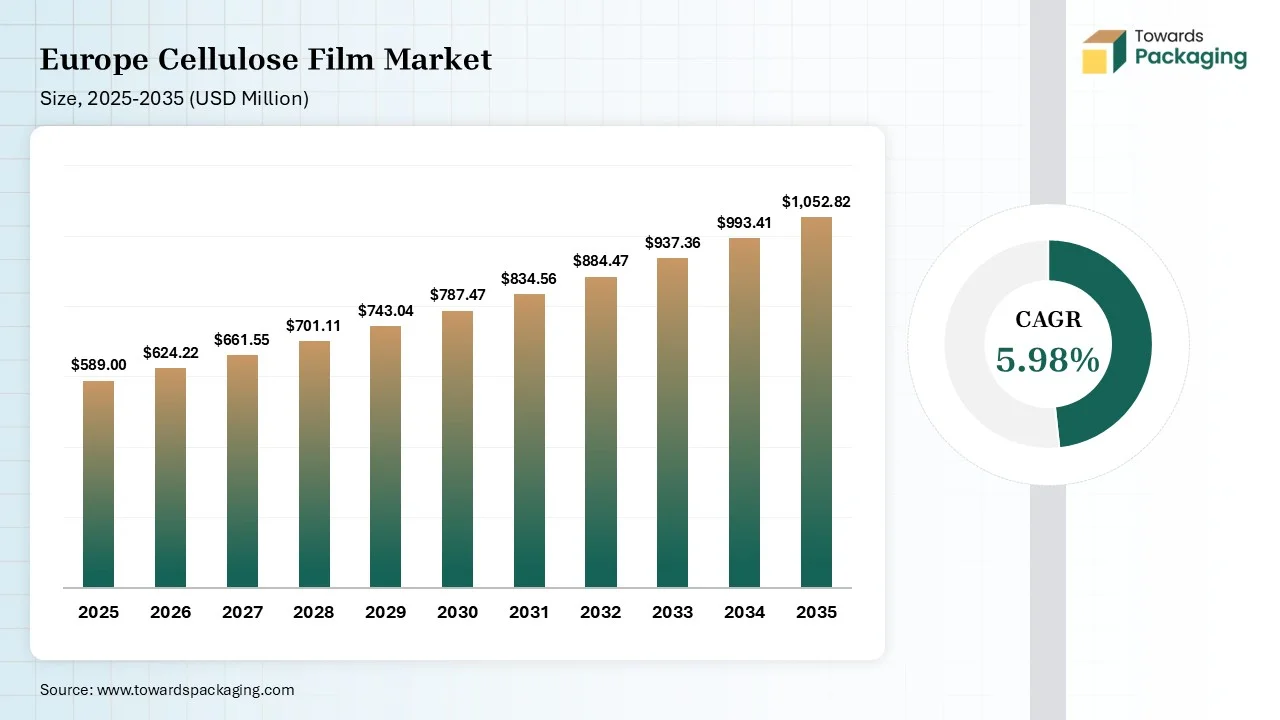
According to Vidyesh Swar, who is highly experienced in packaging materials, smart packaging, conventional packaging, and advanced packaging. The Europe cellulose film market was estimated at $589M in 2025 and is forecasted to grow at a 5.98% CAGR during the forecast period. The market is expected to reach $1052.8M by 2035. Factors like advanced industrial infrastructure, the EU's focus on biodegradable materials, the rise in premium food items, and advancements in material science drive the overall market growth. The top market players like Innovia Films, Eastman Chemical Company, Futamura Group, and Celanese Corporation contribute to the growth.
Cellulose film is a transparent film made up of cellulose. The key characteristics include high transparency, exceptional mechanical strength, strong gas interaction, high thermal stability, and strong biodegradability. Its benefits are renewable sourcing, high clarity, anti-static quality, and easy processing. It is made up of plant-based materials, eco-friendly additives, and regenerated cellulose. Cellulose film is widely used in eco-friendly retail, food packaging, and specialty wraps.
Europe cellulose film market reached $589M in 2025. Cellulose film is diversified into coated, regenerated, cellophane, and uncoated cellulose films. Europe’s sustainable packaging transition increases use of cellulose film. Coated cellulose film is expected to grow at the fastest CAGR during the forecast period. Futamura is the leading company in the Europe cellulose film industry.
Source: Towards Packaging Analytics & Consulting
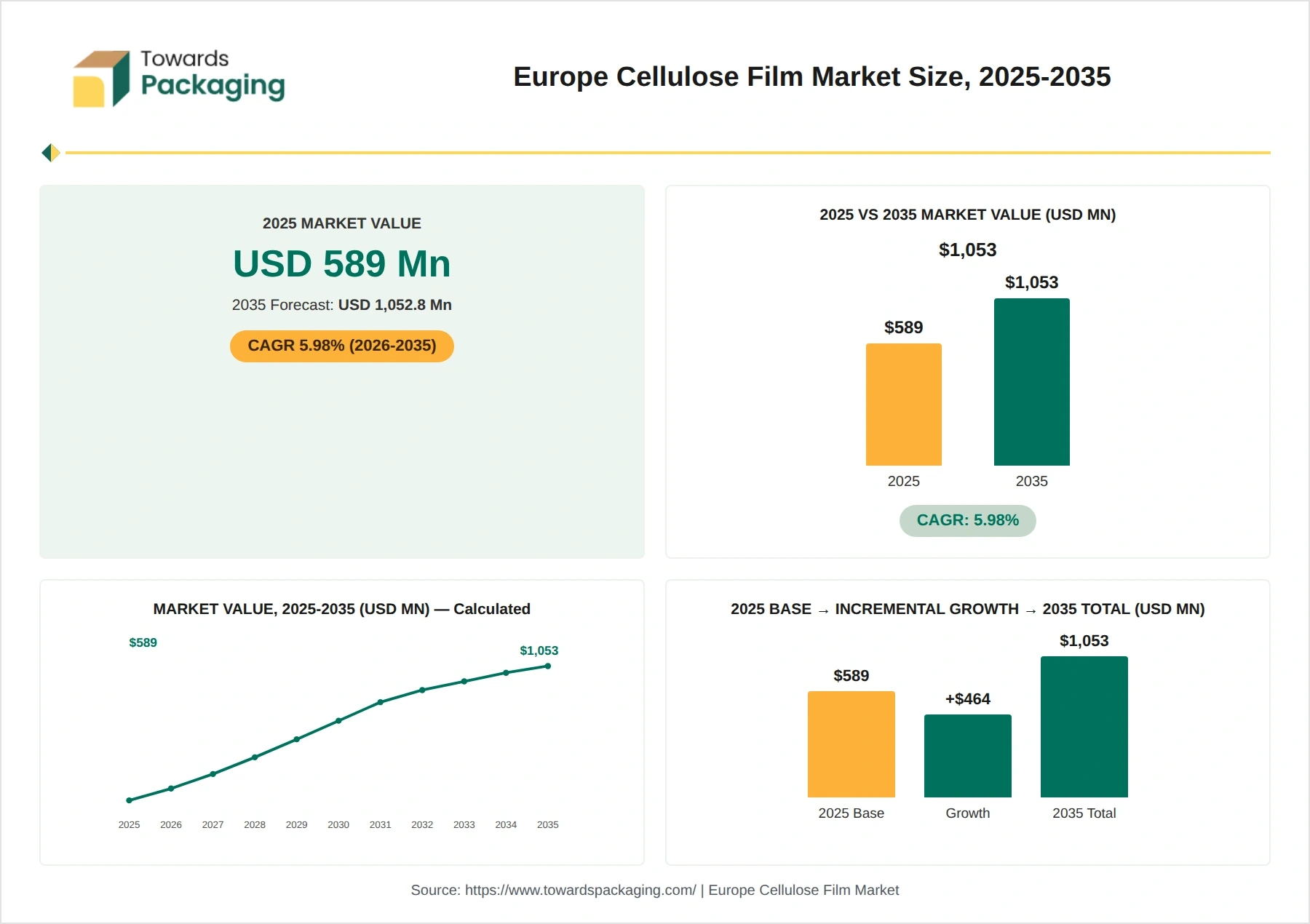
The Europe cellulose film market value was estimated at $589M in 2025 and is expected to grow at a CAGR of 5.98% during the forecast period. The key growth drivers for the market are national packaging laws, nanotechnology advancements, shelf-life demand in fresh produce, expansion of pharmaceutical blister packs, rise in home-compostable formulations, growth in eco-labeled goods, rise in gourmet foods, and the rise in clean beauty marketing. Europe cellulose film companies like Innovia Films, Sappi Limited, Futamura Group, and Celanese Corporation drive the market growth.
The market is predicted to reach $1052.8M by 2035. The incremental growth of the market is $464M. Factors include regional shift away from fossil-fuel plastics, interest in plastic-free packaging, rise in home-compostable certifications, growth in the locally labeled food industry, development of certified sustainable forestry, and the rise in nanotechnology coatings, which will contribute to the market growth. Companies like Futamura Group, Rotofilm, Daicel Corporation, and Innovia Film are emerging by 235.
Source: Towards Packaging Analytics & Consulting
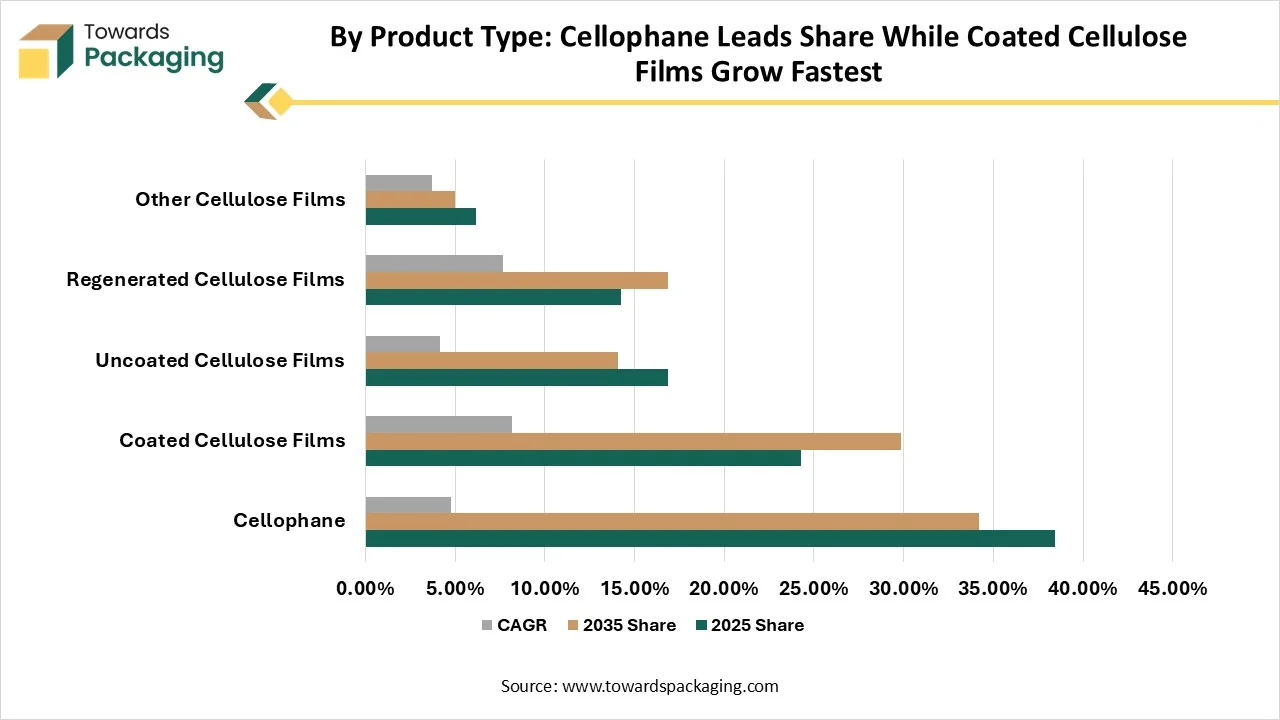
Cellophane dominated the Europe cellulose film industry with a 38.45% share in 2025. Europe's targets on conventional plastics and the rise in eco-labeling in premium goods increase demand for cellophane. Buyers' preference for green labels and the expanding luxury food brands increase the use of cellophane. The clear visibility and superior barriers of cellophane drive the growth. Coated cellulose films are expected to grow at the fastest CAGR of 8.20% in the market during the forecast period. The rise in new coating technologies and the expansion of organic labelled goods increase the use of coated cellulose films. The rise in European industrial packaging and the growing number of medicine brands increase the use of coated cellulose films, supporting the market growth.
Key Insights:- Coated cellulose films are expected to grow at the fastest CAGR.
Source: Towards Packaging Analytics & Consulting
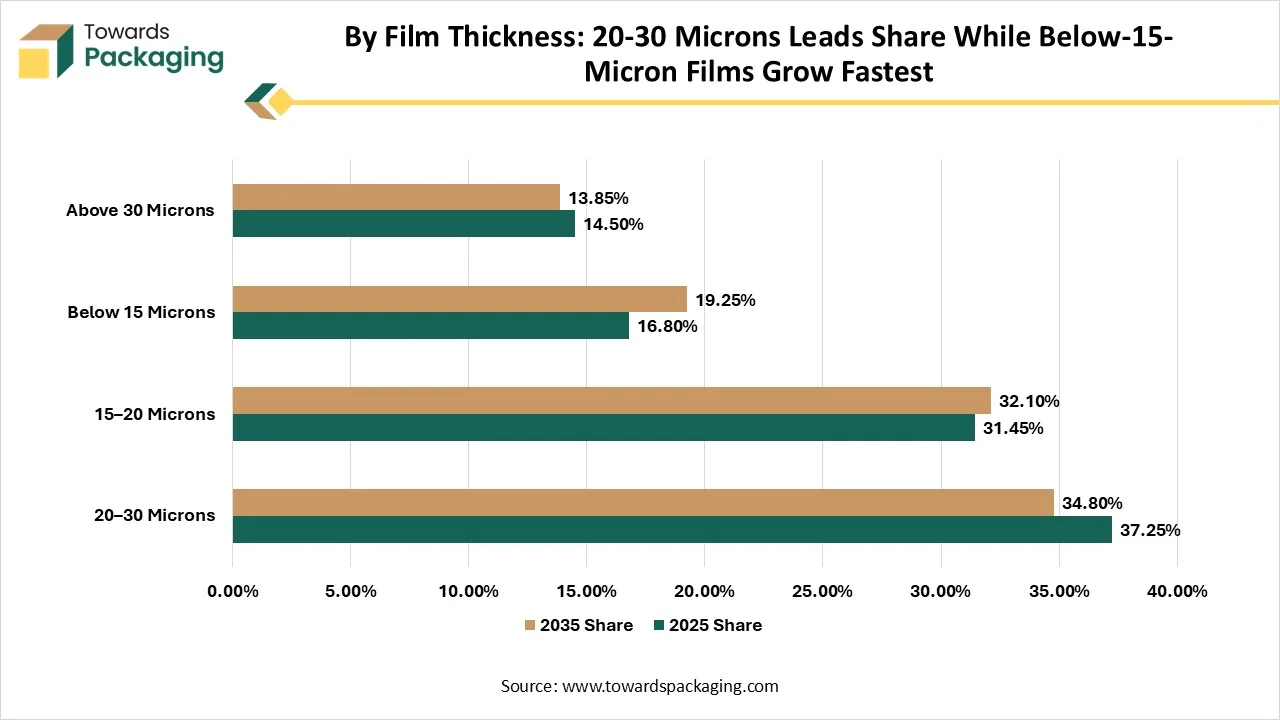
25-40 microns dominated the Europe cellulose film industry with a 35.10% share in 2025. The focus on protecting delicate baked goods and the need for machine flexibility increase the use of 25-40 microns. The high durability, compatibility with standard machinery, and optimal barrier performance of 25-40 microns drive the growth. Below 15 microns is expected to grow at the fastest CAGR of 7.85% during the forecast period. The European material efficiency mandates and the burgeoning nano-cellulose technology increase the use of below 15 microns. The organic food wrapping and the rise in micro-packaging increase the use of 25-40 microns, supporting the overall growth.
Key Insights:- Below 15 microns is growing with the fastest CAGR.
Source: Towards Packaging Analytics & Consulting
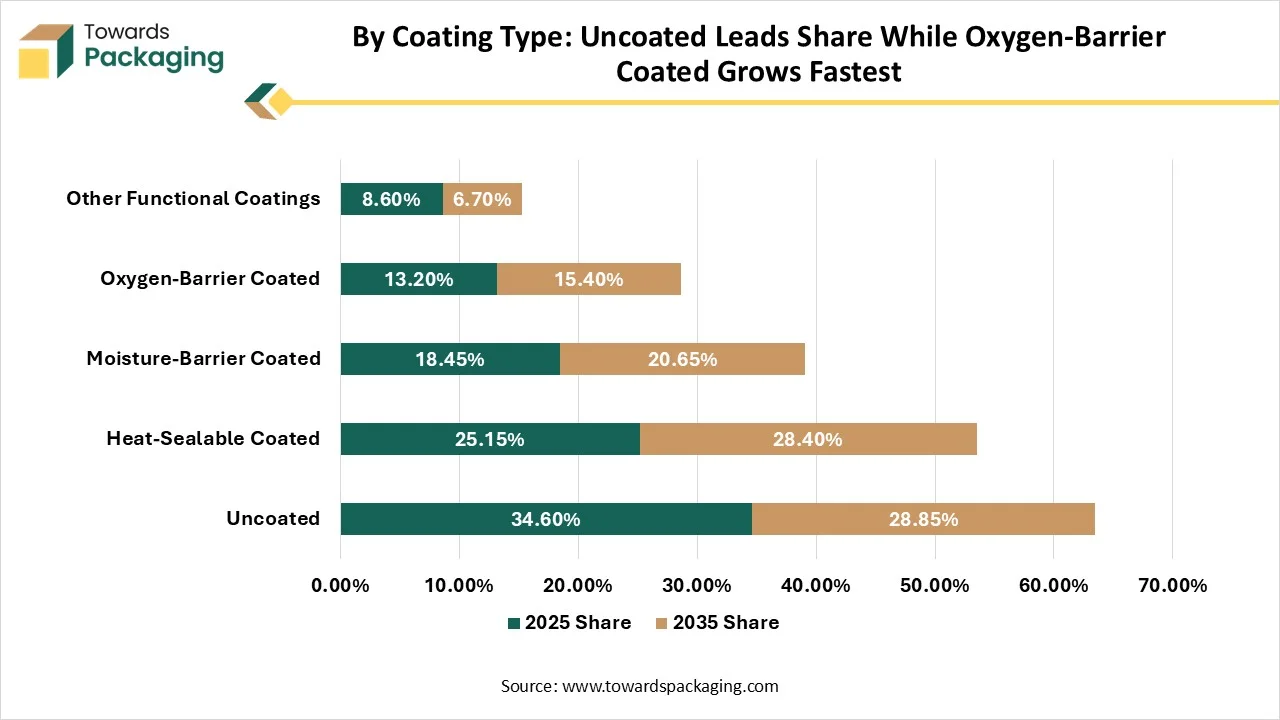
Uncoated dominated the Europe cellulose film industry with a 34.60% share in 2025. The interest in simpler production and development of window wrapping increases the use of uncoated films. The high natural gloss, excellent industrial compostability, and smooth performance of uncoated films drive the growth. Oxygen-barrier coated is expected to grow at the fastest CAGR of 8.15% during the forecast period. The focus on preventing food oxidation and the need for high performance standards increases the use of oxygen-barrier coated films. The focus on minimal carbon footprint and flavor loss prevention in dairy uses oxygen-barrier coated films, boosting growth.
Key Insights:- Oxygen-barrier coated is expected to grow with the fastest CAGR.
Source: Towards Packaging Analytics & Consulting
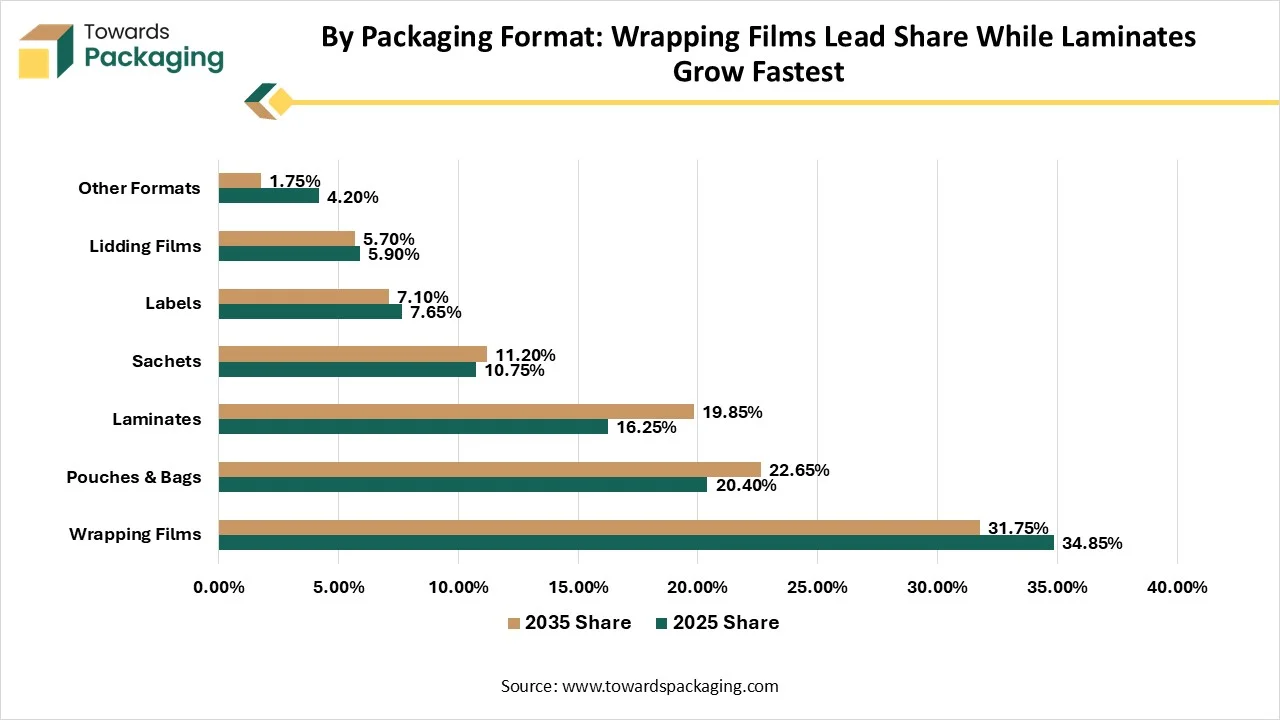
Wrapping films dominated the Europe cellulose film industry with a 34.85% share in 2025. The growing organic produce and shoppers' active interest in sustainable products increase the use of wrapping films. The major grocery brands and the transition away from petrochemical plastic films increase adoption of wrapping films. Laminates are expected to grow at the fastest CAGR of 8.10% during the forecast period. The demand for advanced barrier performance and interest in eco-friendly convenience increase adoption of laminates. The surge in high-performance laminates and the focus on home compostability boost the overall growth.
Source: Towards Packaging Analytics & Consulting
Food packaging dominated the Europe cellulose film industry with a 42.60% share in 2025. The increased packaging of baked goods without preservation and the massive presence of premium-labeled food increase the use of cellulose films. The zero-waste focus on food brands and barrier performance needs in organic produce are driving overall growth. Personal care & cosmetics are expected to grow at the fastest CAGR of 8.15% during the forecast period. The rise in plant-based packaging in cosmetic brands and the facial sheet mask production increases the use of cellulose films. The focus on ethical cosmetic brand image and the rise in individual cosmetic pods supports the overall growth.
Key Insights:- Personal care & cosmetics are growing with the fastest CAGR.
Source: Towards Packaging Analytics & Consulting
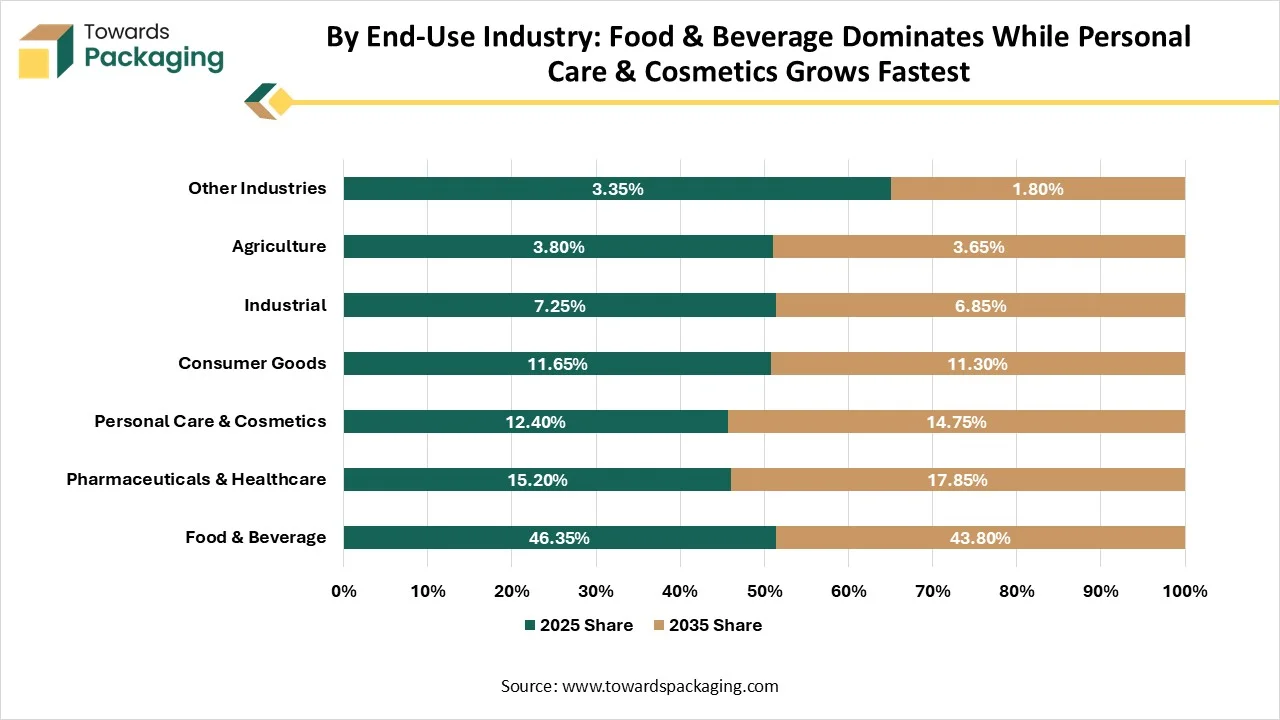
Food & beverage dominated the Europe cellulose film industry with a 46.35% share in 2025. The need to extend snack freshness and the increasing choice of organic foods increase the use of cellulose films. The demand for aroma barriers in food wrapping and the need for transparency in the confectionery industry drive the overall growth. Personal care & cosmetics are expected to grow at the fastest CAGR of 8.05% in the market during the forecast period. The high use of coated cellulose films in the cosmetic industry helps with expansion. The need for zero-waste cosmetic products and the interest in plastic-free personal care boost the overall growth.
Key Insights:- Personal care & cosmetics are expected to grow with the highest CAGR.
Source: Towards Packaging Analytics & Consulting
Germany
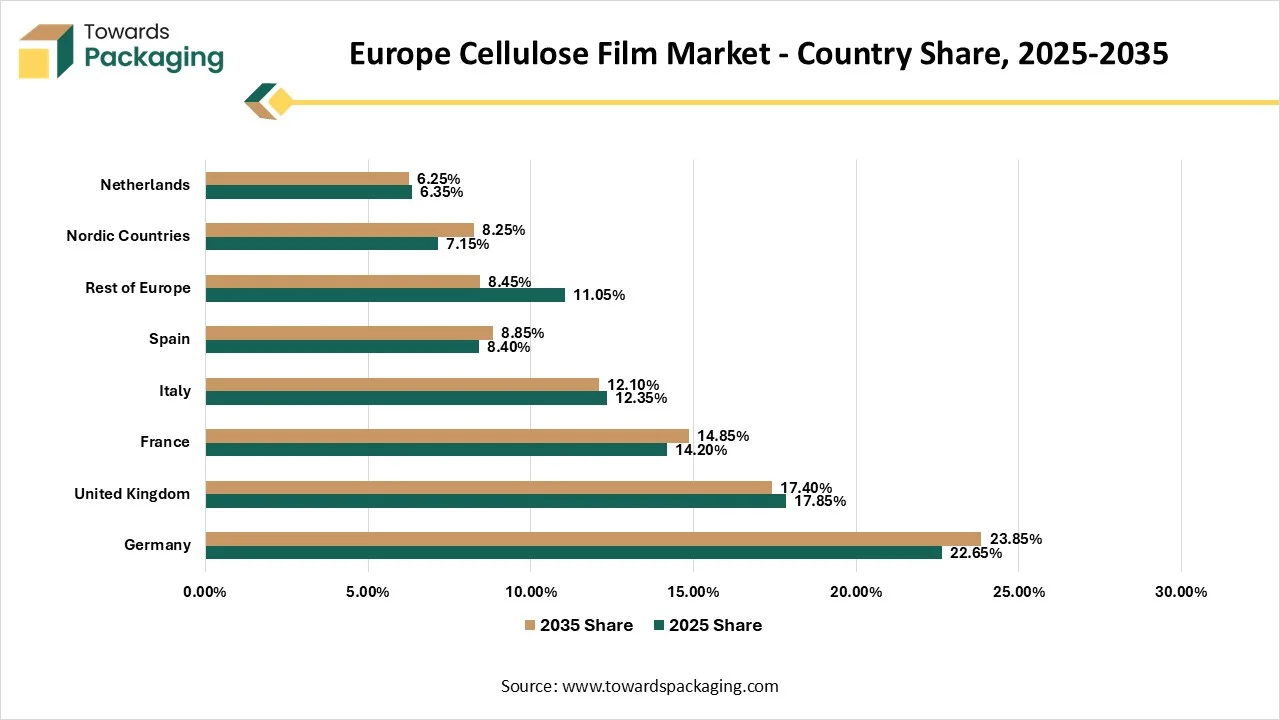
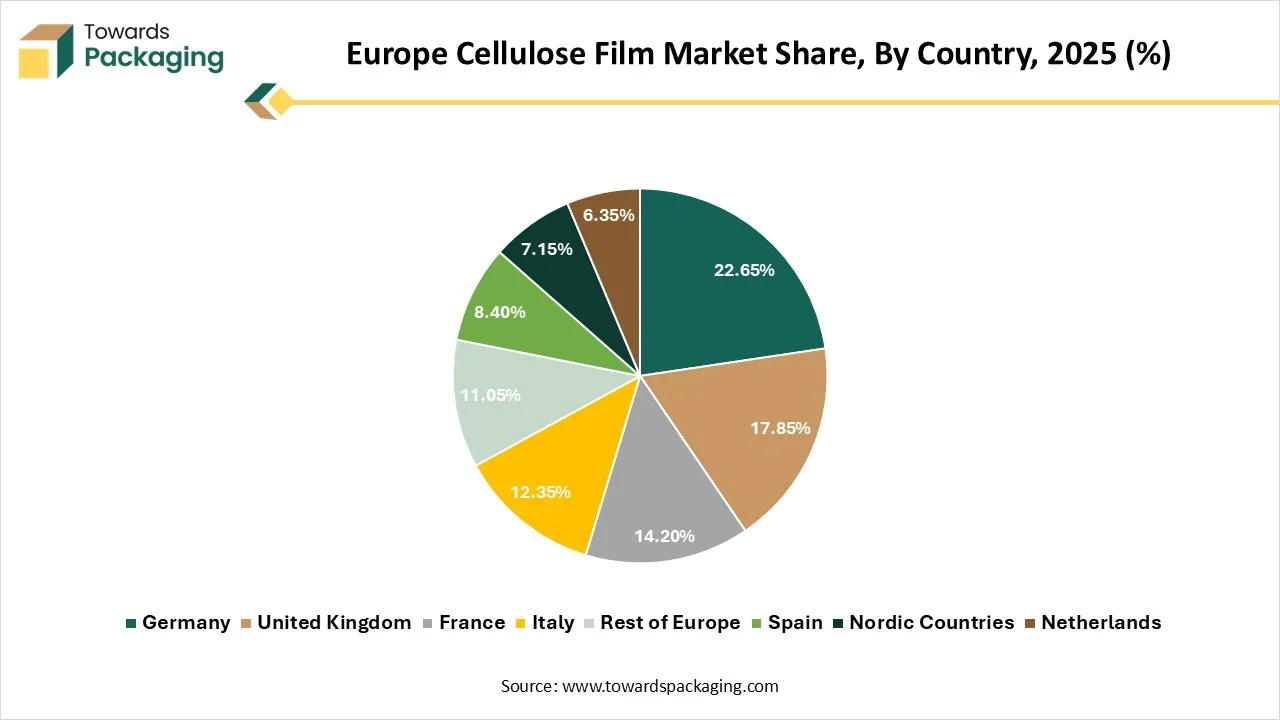
Germany dominated the Europe cellulose film market with a 22.65% share in 2025. The extensive food processing base and increased investment in sustainable technologies increase the adoption of cellulose film. The need for premium barrier packaging in industrial sectors and strong chemical infrastructure increases the use of cellulose films. The rise in customized cellulose films boosts the overall growth.
United Kingdom
United Kingdom held a 17.85% share in the market in 2025. The increased awareness of compostable packaging and the expanding takeaway wrapping increase the use of cellulose film. The massive volume of medical packaging and the availability of renewable materials increase the production of cellulose films, supporting the overall growth.
France
France held a 14.20% share in the market in 2025. The plastic packaging restrictions on many fruits and the presence of high-value industries increase the use of cellulose films. The demand for clear wraps in food packaging and the high-end cosmetic industry increases the use of cellulose films. The demand for breathable packaging supports the overall growth.
Italy
Italy held a 12.35% share in the market in 2025. The expansive textile export and the increased packaging of short-lifespan items increase the use of cellulose films. The focus on enhancing green brand positioning and preference for bio-based films helps with expansion. The strong local luxury food industry boosts the overall growth.
Nordic Countries
Nordic countries held a 7.15% share in the market in 2025 and are expected to grow at a CAGR of 7.55% during the forecast period. The availability of wood pulp materials and the presence of the VTT Technical Research Centre increase the production of cellulose films. The move towards home compostable alternatives and strong paper expertise boost the overall growth.
Key Insights:- Germany is expected to gain share by 2035.
Source: Towards Packaging Analytics & Consulting
Germany held the largest share of 22.65% in the market in 2025 due to increased efforts to cut down on plastic, high-tech manufacturing, and strong recycling systems. United Kingdom held a 17.85% market share in 2025 due to the rise in bakery wrapping, a mature processing hub, and eco-friendly branding. France held a 14.20% market share in 2025 due to the rise in medical wrapping, expansion of plant-based cosmetics, and luxury labeling. Italy held a 12.35% market share in 2025 due to the huge premium food exports and expanding apparel industry. Spain held an 8.40% market share in 2025 due to high confectionery exports, expanding coated films, and robust domestic tourism.
Key Insights:- Germany dominated the market in 2025.
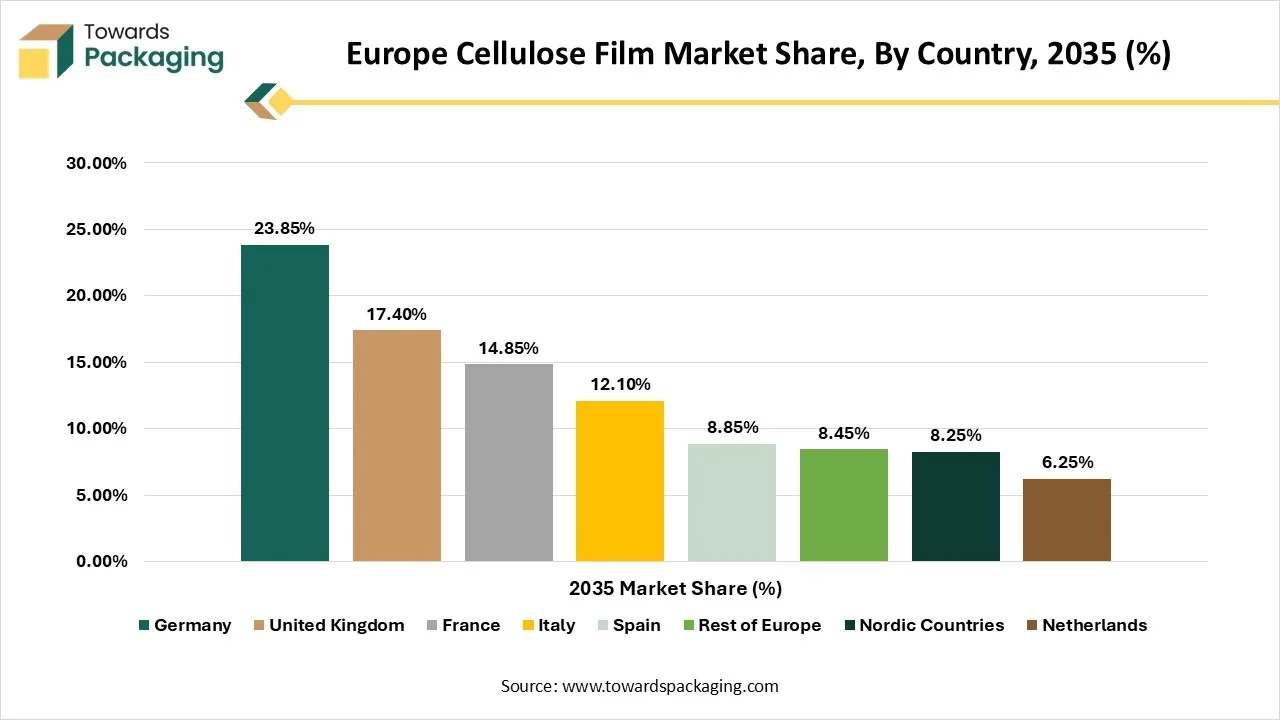
Germany is expected to hold the largest share of 23.85% in the market by 2035 due to the domestic restrictions on plastics, advanced waste management infrastructure, and a vast local packaging base. United Kingdom is expected to hold a 17.40% market share in 2035 due to the high investment in compostable technologies and enhancements in eco-friendly branding. France is expected to hold a 14.85% market share in 2035 due to the AGEC law, demand for specialty films, and polymer innovation. Italy is expected to hold a 12.10% market share in 2035 due to the increased specialty goods packaging and advanced compostable ecosystem. Spain is expected to hold an 8.85% market share in 2035 due to the expanded gourmet food exports and rise in plastic-free wrapping.
Key Insights:- Germany is expected to gain share by 2035.
| Company | Country/European Base | Main Company Focus |
| Futamura | United Kingdom | Cellulose and compostable films |
| Innovia Films | United Kingdom / Germany / Poland | Specialty packaging films |
| Sappi | Europe | Cellulose-based and specialty materials |
| UPM | Finland | Renewable biomaterials |
| Mondi | Austria / United Kingdom | Flexible and sustainable packaging |
| Ahlstrom | Finland | Specialty fiber materials |
| Walki Group | Finland | Sustainable packaging materials |
| Billerud | Sweden | Fiber-based packaging |
| Taghleef Industries | Multiple European locations | Specialty packaging films |
| Rotofil | Italy | Flexible packaging films |
| FKuR | Germany | Bio-based materials |
Source: Towards Packaging Analytics & Consulting
Futamura
The company is mainly located across Europe. They focus on developing high-performance cellulose films. They offer Cellophane Films and NatureFlex Films.
Innovia Films
The company is present across the United Kingdom, Germany, Poland, and Belgium. They focus on the development of high-performance films and specialty packaging films.
Sappi
The headquarters is located in Belgium, with 12 sales offices across Europe. They focus on dissolving wood pulp and specialty papers. They offer biomaterials and flexible packaging papers.
UPM
The company has a strong presence across Europe in countries like Finland, Germany, Poland, Ukraine, and many others. They focus on advanced materials and renewable fibers. They offer the RafBio Cellulose Range and Forest Film.
Mondi
The company is present across numerous European countries. Their key business is uncoated fine paper, corrugated packaging, and flexible packaging. They offer Sustainex biodegradable polymer films and water-soluble biodegradable films.
Ahlstrom
The company's headquarters is present across Finland. They mainly focus on consumer and food packaging. They offer transparent cellulose papers and industrial lamination aids.
Walki Group
The company is located across Finland, Spain, Germany, France, and many other countries. The main business focus is on industrial packaging and consumer packaging. They offer Bioska 50, WalkiNatur, and other products.
| Company/Facility | Statistic |
| Futamura Group historical cellulose film production | 37,000 tonnes/year |
| Innovia Films Schkopau line | 35,000 tonnes/year |
| Futamura Wigton capacity increase | 25% (not an annual tonnage figure) |
| Innovia Schkopau line width | 8.8 meters |
| Innovia Schkopau film thickness range | 15-50 microns |
Source: Towards Packaging Analytics & Consulting
| Country | Companies with Relevant Manufacturing/Major Operations |
| United Kingdom | Futamura, Innovia Films |
| Germany | Innovia Films, FKuR |
| Finland | UPM, Ahlstrom, Walki |
| Sweden | Billerud |
| Poland | Innovia Films |
| Italy | Rotofil |
| Austria | Mondi |
| Belgium | Innovia Films |
Source: Towards Packaging Analytics & Consulting
Source: Towards Packaging Analytics & Consulting
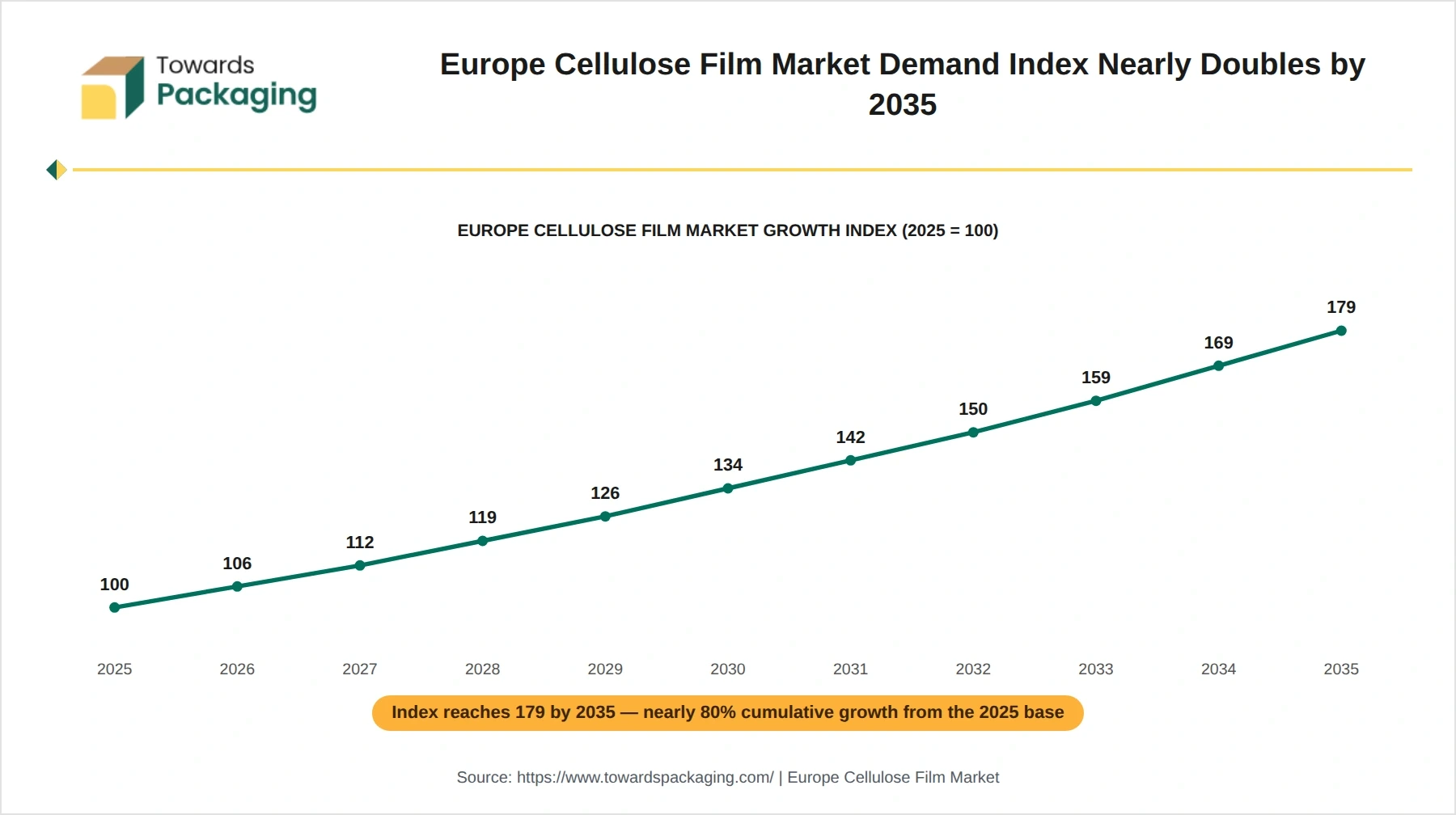
The demand index of Europe cellulose film market reached 100 in 2025. The demand index is predicted to reach 179 by 2035. The demand index is expected to increase by nearly 80% by 2035. The demand index is growing due to regulatory pressures, consumer sustainability preference, booming organic groceries, and consumer sustainability preferences. Cellophane leads the product type in 2025. Germany is the dominant region, and food & beverage is a dominant industry in the market in 2025.
Key Insights:- The demand index is expected to reach 179 by 2035.
| Company | European Production Locations Identified |
| Innovia Films | 4 |
| Futamura Cellulose Films | 1+ |
| Sappi Europe | 8 |
| UPM | Multiple |
| Mondi | Multiple |
Source: Towards Packaging Analytics & Consulting
| Company Name | Production Facilities/Countries |
| Innovia Films |
Wigton, United Kingdom Schkopau, Germany Plock, Poland Belgium |
| Futamura Cellulose Films | Wigton, Cumbria, United Kingdom |
| Sappi Europe |
Alfeld Mill Condino Mill Gratkorn Mill Maastricht Mill Carmignano Mill Ehigen Mill Kirkniemi Mill |
| UPM |
Finland Estonia Belgium Germany Austria Italy France Poland United Kingdom Spain Ukraine |
| Mondi |
Austria Poland Sweden Slovakia Germany Czech Republic Italy |
| Company | Main Products | Primary Packaging Use |
| Futamura | NatureFlex, Cellophane | Food and consumer packaging |
| Innovia Films | BOPP and specialty films | Labels and flexible packaging |
| Mondi | Paper and flexible packaging | Food and consumer products |
| UPM | Renewable biomaterials | Packaging materials |
| Sappi | Specialty materials | Packaging applications |
| Ahlstrom | Fiber-based materials | Specialty packaging |
| Billerud | Paper and fiber materials | Consumer packaging |
| Walki | Coated and flexible materials | Sustainable packaging |
Source: Towards Packaging Analytics & Consulting
| Company | Product Portfolio |
| Futamura |
NatureFlex Cellophane |
| Innovia Films |
Propafilm Range Propacast KF Rayoface Range WPE Films |
| Mondi |
Fibromer Sustainex PerFORMing re/cycle HiProtex Paper |
| UPM |
UPM Raflatac Forest Film RafBio Cellulose Films RafBio Adhesives |
| Sappi |
Dissolving Wood Pulp Valida Fibrillated Cellulose Integrated Cellulose Laminates |
| Ahlstrom |
Cristal Transparent Papers OptiLayup FluroFree Greaseproof Papers |
| Billerud |
Billerud ConFlex HeatSeal Billerud Performance Barrier Billerud ConFlex Wrap S Billerud Basix Repel Pure Billerud FibreForm |
| Walki |
Walki Bioska MDO-PE Films Walki Lamibel |
| Application | Companies Active in the Segment |
| Confectionery | Futamura |
| Dry foods | Futamura, Mondi |
| Fresh produce | Futamura |
| Tea and coffee | Futamura |
| Ready meals | Futamura |
| Labels | Innovia Films, Futamura |
| Sachets | Futamura |
| Flow wraps | Futamura |
| Pouches | Futamura, Mondi |
| Consumer packaging | Mondi, Billerud, Walki |
Source: Towards Packaging Analytics & Consulting
| Company | Investment Value |
| Futamura UK (2026) | £15 million |
| Innovia Films Germany (2025) | €70 million |
Source: Towards Packaging Analytics & Consulting
Source: Innovia Films and Futamura company/industry disclosures
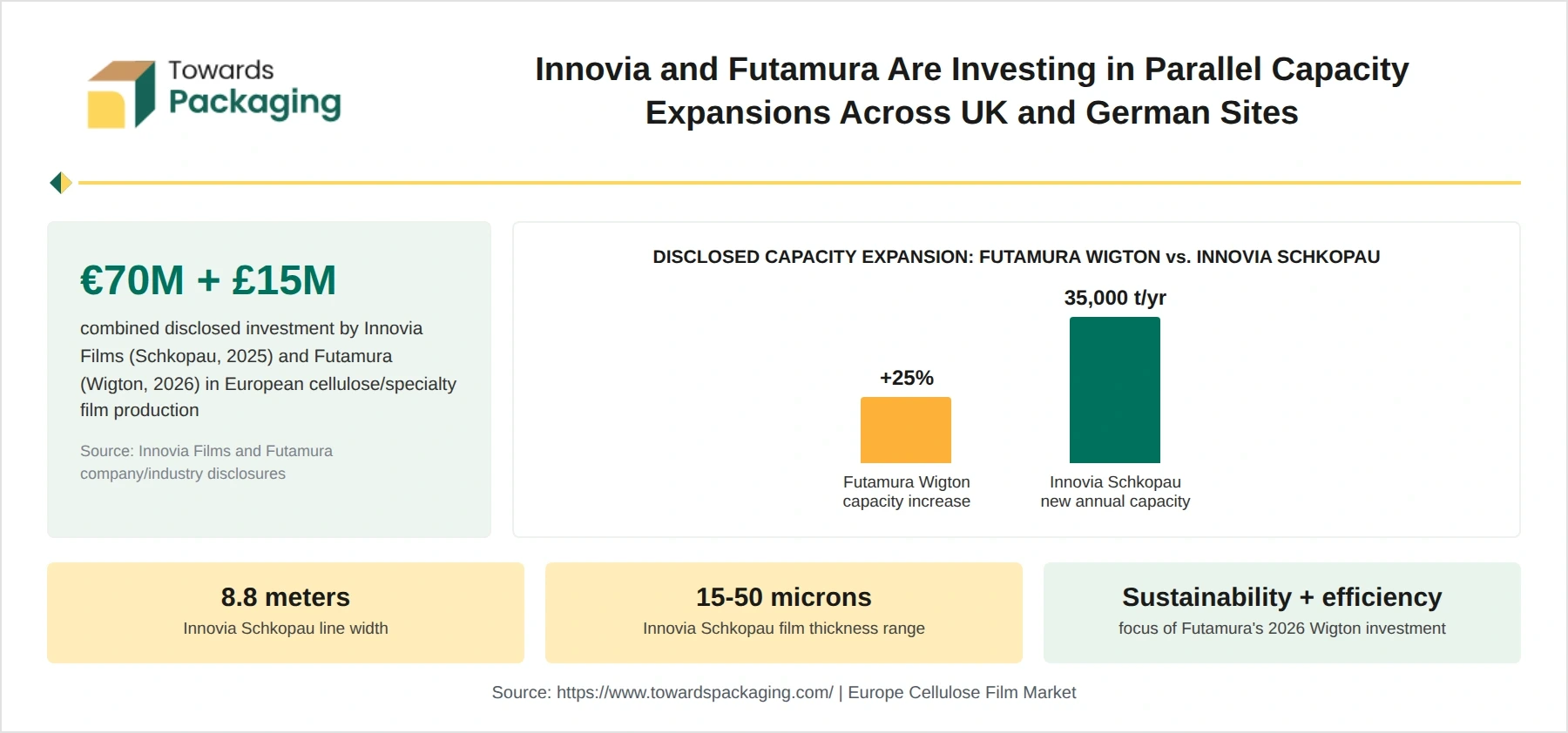
In the European region, Futamura and Innovia Films invested €70 million and £15 million to expand capacity. Innovia Films invested €70 million in Schkopau, Germany, for specialty film production. The Innovia Films facility produces 15- 50-micron films. The facility meets EU PPWR compliance and uses LISIM technology. Futamura invested £15 million in Wigton, UK. The UK government funded £4.5 million for the Wigton facility. The facility focuses on grid independence and emission reduction. The Wigton facility’s main aim is energy efficiency and sustainability.
Key Insight: Futamura Wigton expanded its capacity by 25%.
| Company | Production/Material Technology |
| Futamura | Regenerated cellulose film |
| Futamura | Renewable wood-pulp feedstock |
| Innovia Films | Multi-layer co-extrusion |
| Innovia Films | LISIM simultaneous stretching |
| Mondi | Flexible and paper material conversion |
| UPM | Biomaterial development |
| Sappi | Cellulose and specialty material technology |
| Ahlstrom | Fiber-based material engineering |
Source: Towards Packaging Analytics & Consulting
Futamura
The company provides regenerated cellulose film like Cellophane and NatureFlex. They are made using sourced wood pulp, viscose conversion, extrusion, washing, and drying. They offer benefits like food safety and eco-friendliness.
Renewable wood-pulp feedstock is sourced from responsible forestry. The pulp-to-film conversion process includes extraction, dissolution, regeneration, and finishing.
Innovia Films
Innovia Films offers multi-layer co-extrusion technology. The technology is used for resin selection, layer combination, orientation, and cooling. The technology produces thinner gauges and offers custom surface properties.
The company’s LISIM technology produces BOPP films. The technology is manufactured by Bruckner Maschinenbau. It offers advantages like balanced material orientation, thin-gauge downgauging, high thermal stability, and carbon efficiency.
Mondi
They offer transparent cellulose window technology for applications like retail and food packaging. They provide cellulose-fiber compounding for the logistics, automotive, and electronics industries.
UPM
They provide technologies like Forest Film Bio-Naphtha extrusion, NFC, and RafBio cellulose for diverse applications like plastic-free film labels, cosmetic labels, and high-barrier packaging.
Sappi
It offers technologies like functional flexible packaging, DWP technology, and fibrillated cellulose technology.
Ahlstrom
It offers specialized cellulose composites, GVP technology, and high-degree fiber refining for developing 100% cellulose films.
| Company/Project | Previous Capacity | New Capacity | Change |
| Futamura Wigton | 100 (index) | 125 (index) | 25% increase |
| Innovia Schkopau | 0 | 35,000 tonnes/year | New capacity |
| Futamura Expansion | Existing base | Expanded | Increasing |
Source: Towards Packaging Analytics & Consulting
Futamura increased its production capacity by 25% across the Wigton facility. The total production capacity increased by 25%. The facility aims to meet increasing global demand for NatureFlex. Innovia Films opened a new facility in Schkopau, Germany. The facility’s production capacity is 35000 tonnes per year. The new facility minimizes transport emissions and manufactures thin polymer films.
Source: Towards Packaging Analytics & Consulting
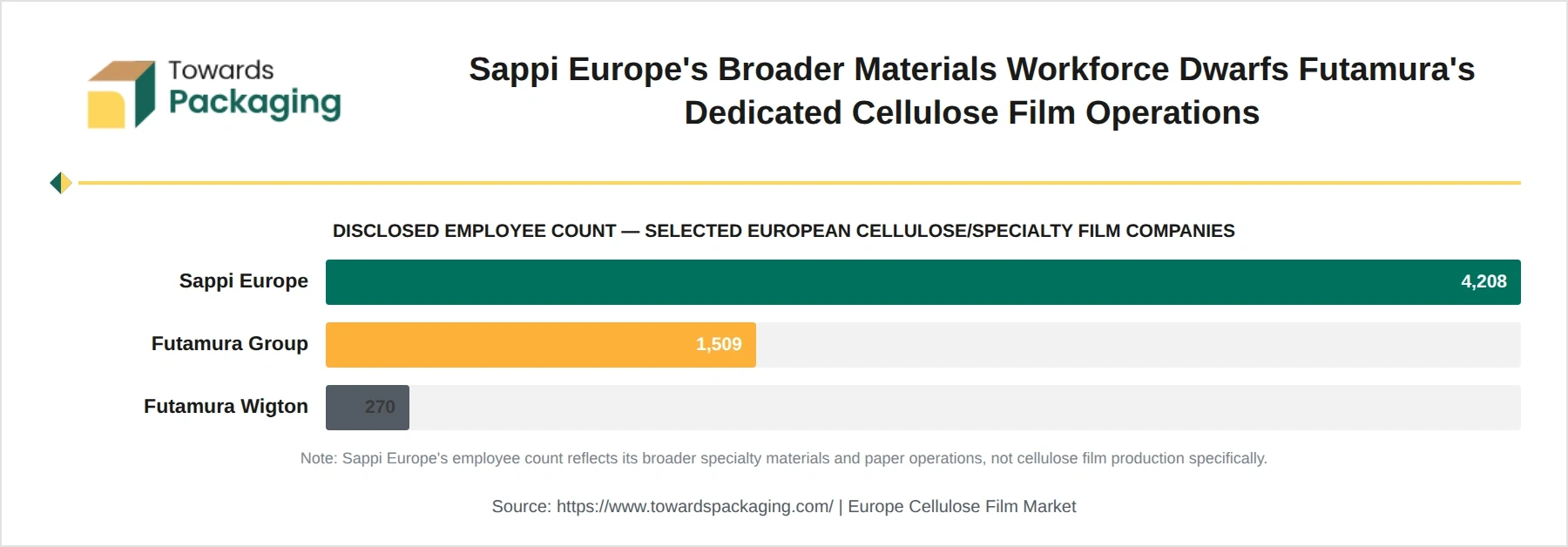
Sappi Europe headquarters in Brussels, Belgium consists of 4208 employees. The company has 7 to 10 manufacturing facilities across Europe. They manufacture biobased solutions and woodfibre-based items. Futamura Group has 1500 employees, and their key products are MEATLONN, NatureFlex, and Cellophane. The employee count of Futamura Wigton is 270. They manufacture renewable packaging films. They focus on sustainability and workforce growth.
Key Insights:- Sappi Europe's employee count is higher than Futamura Wigton and Futamura Group.
| Company | Employees |
| Sappi Europe | 4,208 |
| Futamura Group | 1,500 |
| Futamura Wigton | 270 |
Source: Towards Packaging Analytics & Consulting
Sappi Europe has the highest number of employees, and its total employee count is 4208. The Sappi Europe production facilities include Sappi Alfeld, Sappi Italy Operations Spa, Sappi Ehingen, and several others. Futamura Group's employee count is 1500, and its Wigton facility's employee count is 270. The Futamura Group is located in Cumbria, United Kingdom.
According to my research, the Europe cellulose film market is growing at a notable rate. Factors like adoption of certified compostable materials, technological innovations in advanced barriers, FMCG circularity targets, and consumer preference for premium goods drive the market growth. Germany leads with the highest share in 2025. Coated cellulose films are growing with the fastest CAGR during the forecast period. Food & beverage is the major shareholder in the market in 2025. The top companies like Futamura Group, Sappi Limited, Innovia Films, and Celanese Corporation are key growth drivers.
By Product Type
By Film Thickness
By Coating Type
By Packaging Format
By Application
By End-Use Industry
By Country



















Principal Research Analyst
Vidyesh Swar is a Senior Research Analyst at Towards Packaging, bringing over 4 years of dedicated expertise in market intelligence and strategic analysis across the dynamic world of packaging technologies and solutions.
Learn more about Vidyesh Swar

Reviewed By
Aditi Shivarkar, with 14+ years in packaging market research, specializes in food, beverage, and eco-friendly packaging. She ensures accurate, actionable insights, driving Towards Packaging Analytics & Consulting 's excellence in industry trends and sustainability.
Learn more about Aditi Shivarkar


Europe Cellulose Film Market
 Table of Content

 Download Sample
 Schedule a Meeting