


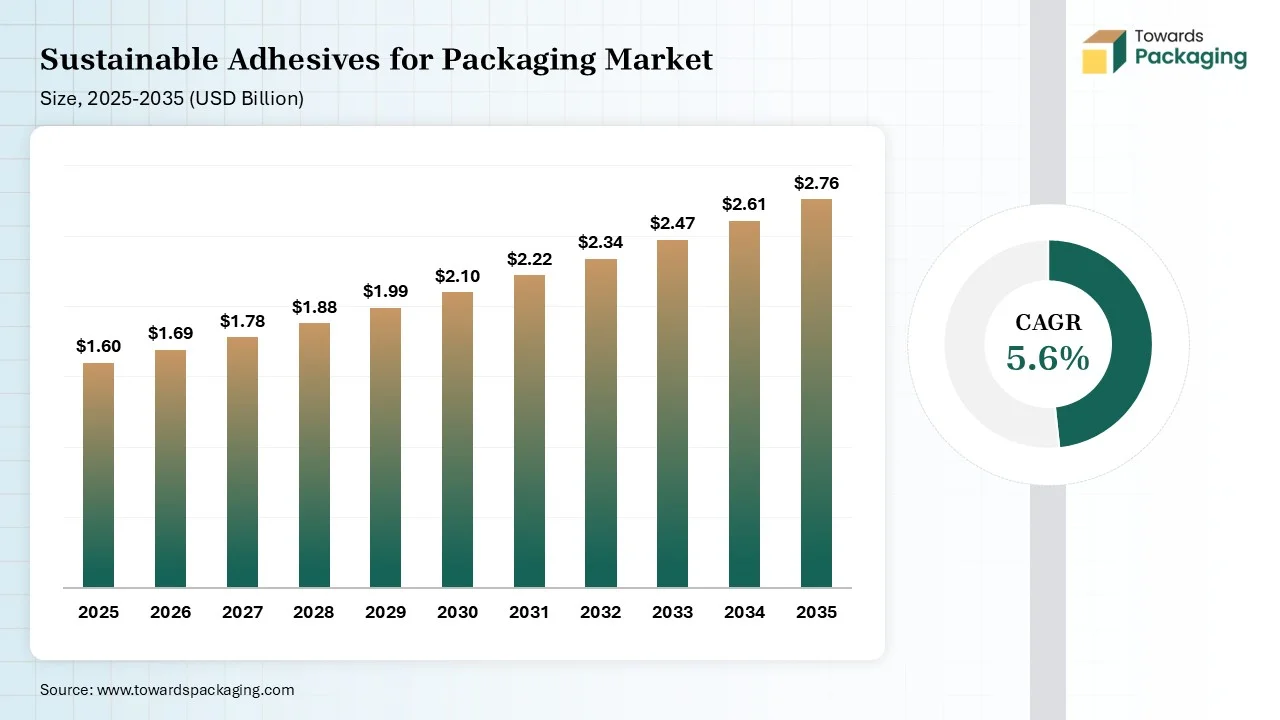
The sustainable adhesives for packaging market is projected to grow from USD 1.69 billion in 2026 to USD 2.76 billion by 2035, registering a CAGR of 5.6% during the forecast period. This report covers detailed market size analysis along with in-depth segmentation by product type, application, and end-use industries. It further includes comprehensive regional insights across North America, Europe, Asia-Pacific, Latin America, and the Middle East & Africa. The study also provides profiles of key companies, competitive landscape analysis, value chain evaluation, trade data, and extensive information on manufacturers and suppliers shaping the industry.
Sustainable adhesives for packaging are developed to decrease ecological impacts by using bio-based, renewable resources or by allowing easier composting and recycling processes. Major types comprise bio-based, recyclable, water-based, and solvent-free adhesives, focused on decreasing carbon footprints and increasing recyclability. These options, like those that support circular economies by substituting plastic and reducing waste in usage, include food packaging.
AI has been attentive in all sectors since it arrived in the tech world. In this market, AI attends the operational unit with its popular AI models that help in managing huge amounts of data on chemical properties. This enhances the formulation of new bio-related adhesives. Since sustainability is a popular trend, the use of AI helps the market meet the sustainable goals. While the AI software models sharpen the application patterns and the cutting process.
This reduces the waste of glue with its perfect measurement of required adhesive. The AI tools hold the potential to assess the adhesive’s nature and analyse its capacity in the recycling process. AI’s power in biological research highlights a massive number of potent natural adhesive proteins promoting intelligent hydrogels and binders.
Technological transformation in the sustainable adhesives for packaging market plays a significant role in designing wash-off adhesives. It ensures the material quality, which raises the reliability of the consumers. Progressive technology support in advancing recycling technology. These innovations help in developing adhesives that loose its properties after a required time.
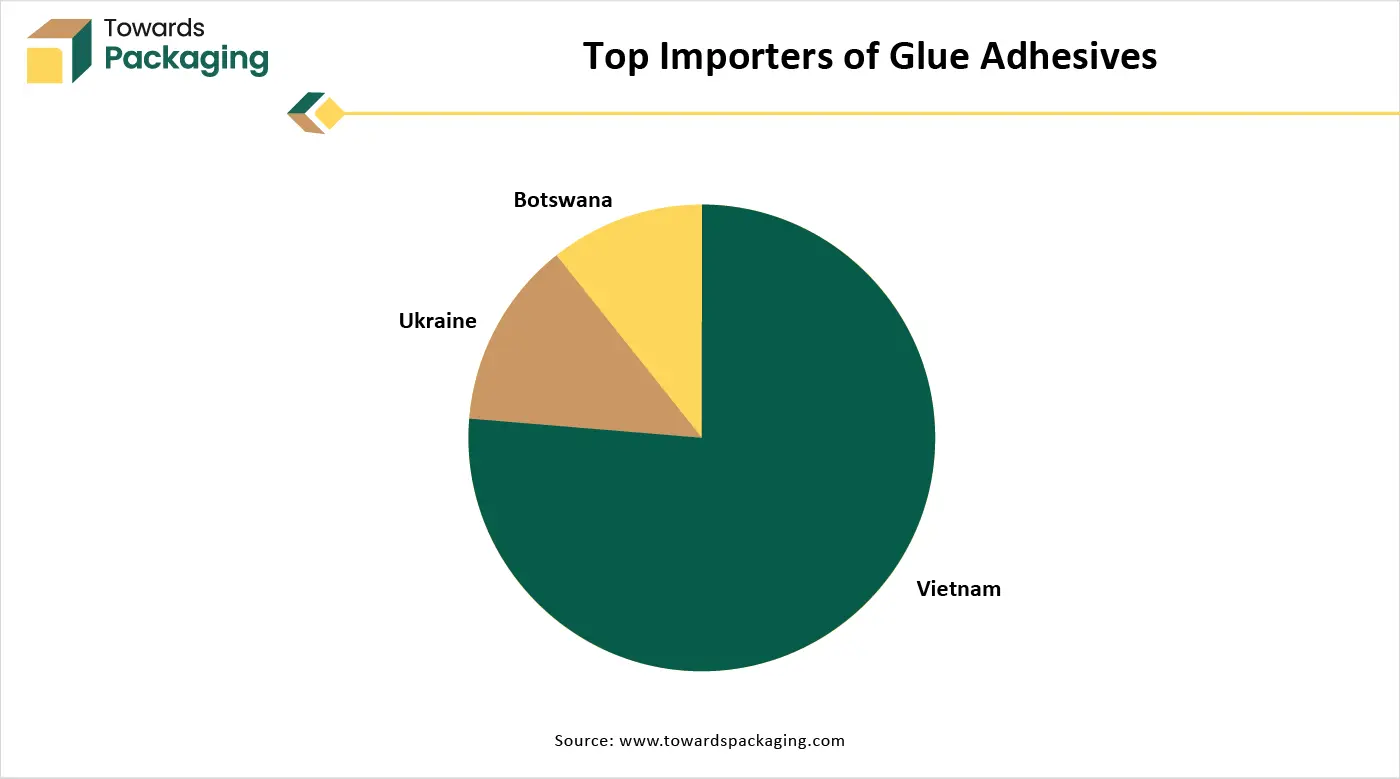
The major raw materials utilised in this market are sulfur, sugarcane, corn, lignin, potato starch, cellulose, silica, and soybeans. These sources provide strength to the adhesives for long-lasting use.
The component manufacturing in this market comprises water-based, bio-based, biodegradable hot melt, and solventless adhesives. These enhance the recyclability of the adhesives.
This segment supports reducing waste and maintaining high-performance adhesives. It supports the expansion of the adhesive sector.
The water-based adhesives segment dominated the market with 42% share in 2025 due to rising ecological compliance. Enhanced bonding potential has fuelled the demand for this segment. There is a huge demand for sustainable options available in this sector, mainly in the food packaging sector. These are the cost-effective solutions available in this sector.
The hot melt adhesives segment expects the fastest growth in the market with 8.5% CAGR during the forecast period. Due to its high performance, the e-commerce and packaging sector has enhanced the demand for this segment. Rising focus towards eco-friendly packaging solutions has promoted these adhesives. It decreases carbon footprints as well as VOC emissions, which appeal huge number of consumers towards it.
The reactive adhesives segment held the third largest share of 14% in 2025. Due to rising eco-friendly innovations, and high-performance demand has raised the demand for this segment. A strong industrial shift has promoted the demand for the production of these adhesives. High sealing strength and sustainable solutions have raised the demand for such adhesives.
The solvent-based adhesives segment held the fourth largest share of 10% in 2025. Due to sustainability trends and the superior performance of these adhesives. These are widely used in the food and beverage industries to avoid any risk of damage while transporting. It has a high recyclability capacity that raises its adoption in a huge variety of sectors.
The synthetic adhesives (eco-optimized) segment dominated the market with 46% share in 2025. Due to its non-toxic formulation, it is considered safe for several industries such as cosmetics and the food and beverages sectors. It allows easy separation, that provide convenience to consumers and reduces the risk of tearing while opening the packages. Rising consumption of packaged food has promoted this segment to grow extensively.
The bio-based adhesives segment expects the fastest growth in the market with 9.1% CAGR during the forecast period. Due to rising concern towards eco-friendly adhesives, this has fuelled the demand for this segment. These offer superior bonding and low charges has fuelled the demand for this segment. Continuously, the demand for eco-friendly adhesives has enhanced the demand for such adhesives.
The hybrid adhesives segment held the third largest share of 16% in 2025. Due to the rising demand for sustainable adhesives, there has been an increase in the demand for hybrid adhesives. It has low toxicity, which has pushed a wide range of industries to use such segments. These are highly recyclable packaging that influences the demand for these hybrid adhesives.
The flexible packaging segment dominated the market with 48% share in 2025 and expected to be the fastest growing in the market with 8.8% CAGR during the forecast period. Due to the increasing demand for lightweight, eco-friendly, and recyclable materials. The presence of strict guidelines, mono-material solutions, and sustainable solutions has raised the demand for this segment. Polyethene (PE) is the key material used in this due to its high barrier properties. This segment improves the recyclability that has fuelled the demand in the packaging industry.
The rigid packaging segment held the second-largest share of 32% in 2025. Due to rising demand for recyclability, durability, and eco-friendly properties has raised its demand among consumers. These are highly preferred in the pharmaceutical and food industries. Huge demand for versatility and efficiency has appealed to a huge consumer base towards this segment.
The labels & tapes segment held the third largest share of 20% in 2025. Due to the huge demand for tamper-evident, branding and tracking facilities. These labels are useful in providing all the necessary information important for consumers as well as producers. There is a huge demand for high-quality adhesives as these labels play a significant role in proving the authenticity of the products.
The food & beverage segment dominated the market with 40% share in 2025. Due to the huge demand for reducing waste generation. Huge demand for recyclable as well as lightweight adhesives has pushed the demand for innovation in this sector. Rising demand for biodegradable and lightweight packaging has pushed the adoption of this sector. There is a rapid shift towards bio-based adhesive has boosted the production process in this sector.
The healthcare & pharmaceuticals segment expects the fastest growth in the market with 8.9% CAGR during the forecast period. Due to strict packaging guidelines for the reduction of waste generation and enhanced protection of the drugs. The huge production process in this sector has raised the demand for high-quality adhesives. It requires a tamper-evident blister pack with enhanced quality adhesives to maintain the integrity of the products.
The e-commerce & logistics segment held the third largest share of 16% in 2025. Due to the increasing adoption of corrugated packaging boxes and paper-based mailers. Huge demand for eco-friendly options in packaging has raised the demand for this sustainable adhesive industry. These adhesives can be recycled easily, which has boosted the demand for this sector profoundly.
The personal care & cosmetics segment held the fourth largest share of 14% in 2025. Due to rising demand for flexible packaging with less toxic products, to enhance the shelf life of the products. Increasing demand for portable and aesthetic packaging has pushed the market to grow rapidly. Major brands are shifting towards eco-friendly options available in the packaging industry.
The industrial packaging segment held the fifth largest share of 12% in 2025. Due to increasing concern for a sustainable bonding solution for the packaging of heavy products that require enhanced safety. Rapid growth in the industrialisation sector has also promoted the demand for high-quality adhesives that enhance reliability. The presence of strict regulatory guidelines and less toxicity has fuelled the demand for this segment.
North America dominated the sustainable adhesives for packaging market with 38% share in 2025, driven by the increasing adoption of water-based, eco-friendly adhesive options. Rising technology for automated packaging and an upsurge in the e-commerce sector have fuelled advancement in adhesive quality. Enhanced corporate sustainability goals among major companies have pushed a huge production of adhesives. Rising awareness, as well as government initiatives toward eco-friendly adoptions in all sectors, have promoted the demand for this sector.
The U.S. Sustainable Adhesives for Packaging Market Trends
Rising corporate sustainability goals have fuelled the demand for sustainable adhesives for the packaging market in the U.S. Strict ecological guidelines have influenced the huge demand for water-based or bio-based adhesives. The presence of major industries has promoted the innovation process in the adhesives sector and encouraged its adoption. These are highly used in the corrugated packaging sector to improve the reliability during transportation or storage.
Asia Pacific expects the fastest growth in the market with 9.2% CAGR during the forecast period. Rising corporate sustainability goals have fuelled the demand for sustainable adhesives for the packaging market in the Asia Pacific. Water-based adhesive formulas are getting popular due to their biodegradability. There is a huge demand for recyclable packaging adhesives solutions that have promoted the expansion of this industry. Rising disposable earnings are a major factor behind the growth of this segment. There is an upsurge in the demand for recyclable adhesives, which has pushed the production and innovation in this industry.
China Sustainable Adhesives for Packaging Market Trends
A huge manufacturing ecosystem has fuelled the demand for sustainable adhesives for the packaging market in China. With the booming e-commerce sector, there is a huge demand for high-performance adhesives. The rapid shift towards water-based adhesives has pushed the adoption of this industry in the packaging sector. These are the cost-efficient solutions available for the packaging industry. Increasing investment towards research and development in this sector has pushed this industry to grow significantly. Enhanced suitability for labelling and flexible packaging has pushed the growth of this industry.
Europe is expected to grow at a notable CAGR in the foreseeable future, due to its strong promotion of the European Union’s Packaging and Packaging Waste Regulation. The recyclable content is driven under this regulation. The regional efforts for the betterment of the environment feature the best-in-class coordination among the leaders and introduce smart innovations in the market. The Design-for-Recycling guidelines are a valuable effort by the region, helping manufacturers to make a transition in the adhesives featuring easy removable or water solubility.
Germany Market Trends
Switchable adhesives are the popular trend that highlights smart segregation during the recycling process, which strengthens the packaging’s potential for recyclability and integrity. The famous German Packaging Act promotes the zero-waste trend, ensuring clean segregation and encouragement to the manufacturers to innovate best-in-class, eco-friendly adhesives.
The Middle East and Africa region is considered to be a significantly growing area, due to its confident and comprehensive repulpable and debonding systems that highlight the performance of smart adhesives suitable for the recycling procedure. The use of UV-cured and solvent-free technologies is strongly driving the advancement of food-safe adhesives.
Saudi Arabia Market Trends
Saudi Arabia’s trends are aligned with national policies to reduce the stress of single-use plastics while highlighting the power of biodegradable packaging. The e-commerce perk is encouraging adhesive innovations for the feather-light packaging format. While the solvent-free and water-based adhesives trend is gaining traction in corrugated box and flexible packaging manufacturing simply improves the recyclability, contributing sincerely to the environment.
By Technology
By Raw Material
By Application
By End-Use Industry
By Adhesive Functionality
By Regions









Principal Research Analyst
Vidyesh Swar is a Senior Research Analyst at Towards Packaging, bringing over 4 years of dedicated expertise in market intelligence and strategic analysis across the dynamic world of packaging technologies and solutions.
Learn more about Vidyesh Swar

Reviewed By
Aditi Shivarkar, with 14+ years in packaging market research, specializes in food, beverage, and eco-friendly packaging. She ensures accurate, actionable insights, driving Towards Packaging Analytics & Consulting 's excellence in industry trends and sustainability.
Learn more about Aditi Shivarkar

Sustainable Adhesives for Packaging Market
 Table of Content

 Download Sample
 Schedule a Meeting