


The hot drinks packaging market is forecasted to expand from USD 16.63 billion in 2026 to USD 25.14 billion by 2035, growing at a CAGR of 4.7% from 2026 to 2035. The market’s expansion is observed owing to the growing variety of hot beverages across the globe.
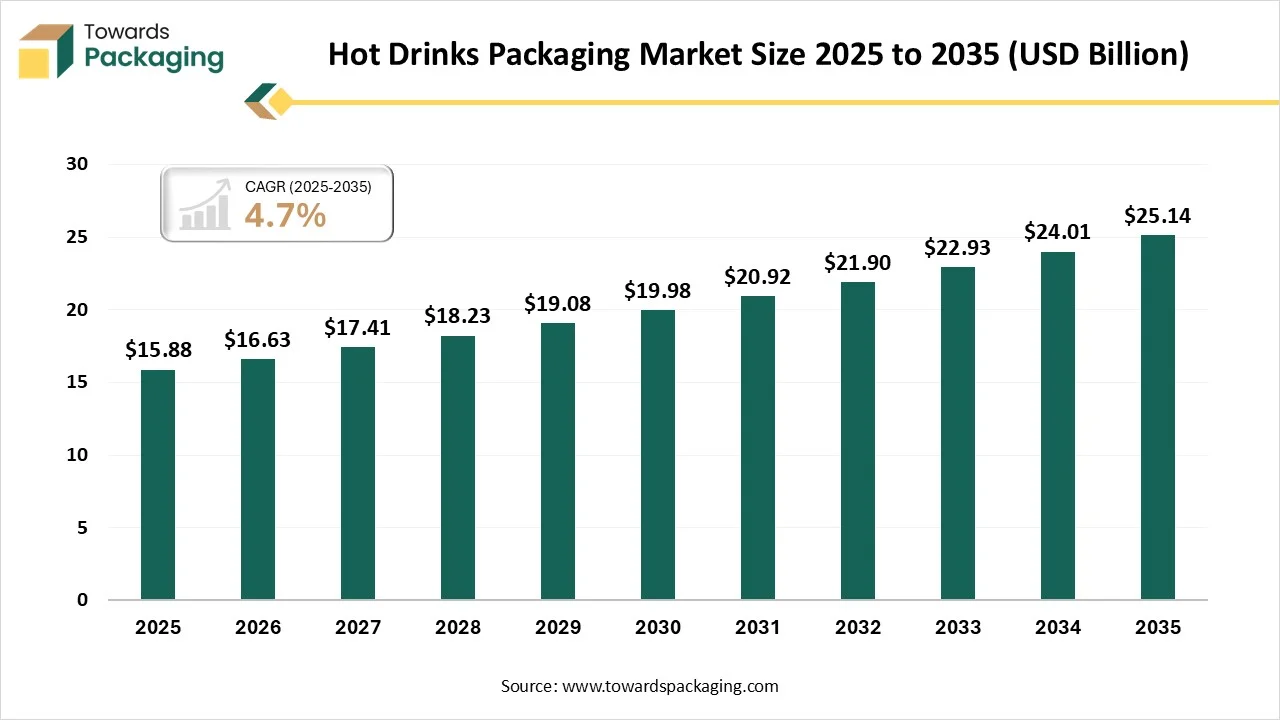
The hot drinks packaging market refers to the industry involved in the design, production, and distribution of packaging solutions used for hot beverages such as coffee, tea, hot chocolate, and other heated drinks. This market includes packaging formats that safely contain hot liquids, preserve temperature, maintain product quality, and ensure consumer convenience during storage, transport, and consumption.
Packaging types in this market include cups, lids, sleeves, cartons, pouches, bottles, and cans, made from materials such as paperboard, plastics, metal, glass, and biodegradable or compostable materials. The market serves a wide range of end users, including cafés, quick service restaurants, vending services, offices, retail brands, and ready to drink beverage manufacturers.
The hot drinks packaging market is experiencing significant technological advancements aimed at enhancing functionality, sustainability, and consumer experience. Innovations include the development of advanced insulation materials such as double-walled and vacuum-sealed designs that improve heat retention and prevent burns, ensuring beverages stay hot longer while maintaining user safety.
Additionally, smart packaging technologies are emerging, incorporating features like QR codes and NFC tags that provide consumers with detailed product information, authenticity verification, and interactive brand engagement. The market is also seeing progress in sustainable materials, with companies investing in biodegradable, compostable, and recyclable packaging solutions that minimize environmental impact without compromising durability.
The hot drinks packaging market holds substantial growth potential driven by several key factors. Increasing global consumption of hot beverages like coffee, tea, and hot chocolate, fueled by urbanization, rising disposable incomes, and changing lifestyles, continues to expand demand. The growing culture of on-the-go consumption and takeaway services further boosts the need for convenient, durable, and innovative packaging solutions. Additionally, the rising emphasis on sustainability is encouraging manufacturers to develop eco-friendly materials and recyclable designs, opening new avenues for market differentiation and consumer appeal.
The hot drinks packaging market faces several challenges that could affect growth and innovation. One major issue is environmental impact, as single-use cups, lids, and plastic components contribute to waste and pollution. Despite the rise of biodegradable and recyclable materials, high costs and limited recycling infrastructure in many regions hinder widespread adoption. Regulatory compliance is another challenge, with strict food safety, labeling, and chemical migration standards requiring constant monitoring and adaptation. Additionally, balancing product functionality with sustainability ensuring packaging retains heat, prevents leaks, and remains durable while being eco-friendly—can be technically complex and costly.
The value chain begins with the procurement of raw materials such as paperboard, plastics, aluminum, glass, and biodegradable alternatives. Sustainable sourcing and material innovation are critical at this stage to meet environmental standards and cost requirements.
Raw materials are processed into packaging components like cups, lids, sleeves, cartons, and bottles. This stage involves converting materials into functional, durable, and thermally efficient packaging, incorporating technologies like heat insulation and barrier coatings.
Packaging design focuses on usability, brand differentiation, and sustainability. Companies invest in research and development to create ergonomic, spill-proof, and visually appealing packaging that aligns with regulatory compliance and consumer preferences.
Brand identity and product information are added through printing technologies, including eco-friendly inks and digital printing. This step enhances consumer engagement and helps communicate sustainability credentials and safety instructions.
Packaging products are distributed to beverage manufacturers, cafes, retailers, and foodservice providers. Efficient logistics and lightweight packaging materials reduce transportation costs and environmental impact during this phase.
Paper and paperboard materials segment dominate the hot drinks packaging market due to their excellent insulation properties, cost-effectiveness, and environmental appeal. These materials are widely used for cups, sleeves, and cartons, offering good heat retention while being lightweight and easy to customize with branding. Additionally, paper-based packaging is increasingly favored for its recyclability and biodegradability, aligning with rising consumer and regulatory demand for sustainable packaging solutions.
Metal packaging, though a smaller segment, is the fastest growing in this market. Metals such as aluminum provide superior barrier properties, protecting hot drinks from contamination and extending shelf life. Metal cans and containers are also durable and recyclable, appealing to environmentally conscious consumers. Innovations in lightweight metals and coatings further enhance usability and sustainability, making metal packaging an increasingly attractive choice for premium and ready-to-drink hot beverages.
Cans and containers segment hold the largest share in hot drinks packaging market because of their convenience, durability, and ability to preserve beverage quality. They are widely used for ready-to-drink coffee, tea, and other hot beverages due to their strong sealing, heat resistance, and portability. The versatility of cans and containers in various sizes and designs makes them popular in retail and foodservice sectors, supporting both on-the-go consumption and retail display.
Pouches and sachets segment are the fastest growing packaging type, driven by the demand for single-serve, easy-to-use, and portable solutions. These flexible packages reduce material usage and shipping costs while offering convenience and extended shelf life through airtight seals. Their growth is propelled by innovations in barrier films and sustainable materials, as well as increasing consumer preference for instant hot drink mixes like coffee, tea, and hot chocolate.
Coffee segment dominated the hot drinks packaging market, reflecting its status as the most consumed hot beverage worldwide. The robust demand for various coffee formats, including ready-to-drink cans, cups, and single-serve pods, drives packaging innovation and volume. Coffee packaging emphasizes heat retention, freshness preservation, and brand differentiation, supporting both retail sales and foodservice applications.
Tea segment is the fastest growing segment, benefiting from rising health consciousness and expanding product varieties such as herbal, green, and specialty teas. The increasing popularity of ready-to-drink and instant tea products has stimulated demand for innovative packaging formats like pouches, cartons, and recyclable bottles. Growth in emerging markets and premium tea segments further fuels the need for attractive and functional packaging solutions tailored to diverse consumer preferences.
Household segment dominated the market in 2025. The household or retail segment holds dominance in the hot drinks packaging market, as most consumers purchase hot beverages for home consumption. This segment demands convenient, single-use, or resealable packaging that ensures freshness and ease of preparation. Retail packaging tends to prioritize shelf appeal and sustainability to influence purchase decisions, with coffee and tea products leading in volume.
Foodservice segment expects the fastest growth in the market during the forecast period. The foodservice sector is the fastest growing end-user, fueled by the expansion of cafes, quick-service restaurants, and on-the-go consumption trends. This segment requires packaging solutions that offer portability, spill resistance, insulation, and brand visibility. Innovations such as compostable cups, double-walled containers, and custom printed sleeves are gaining traction, as foodservice providers strive to enhance customer experience while addressing environmental concerns.
North America dominates the market in 2025, due to its high consumption of coffee, tea, and other hot beverages across foodservice, retail, and on-the-go channels. The region hosts major beverage brands and advanced packaging manufacturers that drive continuous innovation in cup design, insulation, and functionality. Strong sustainability initiatives are accelerating the adoption of recyclable, compostable, and fiber-based packaging solutions.
U.S. Hot Drinks Packaging Market Trends
The U.S. market, due to its large consumer base with high coffee and tea consumption, coupled with widespread adoption of on-the-go lifestyles, drives demand for convenient, single-serve packaging. Leading U.S. companies leverage advanced packaging technologies, such as insulated cups, biodegradable materials, and innovative lids, enhancing both product safety and environmental appeal.
Asia Pacific is experiencing the fastest growth in the market, driven by rising disposable incomes, urbanization, and increasing coffee and tea consumption, particularly among younger consumers. Expanding café culture and the proliferation of quick-service restaurants are boosting demand for convenient, single-use packaging solutions. Local manufacturers are adopting innovative materials, including eco-friendly and biodegradable options, to meet growing environmental awareness and regulatory requirements.
India Hot Drinks Packaging Market Trends
India’s market is rapidly evolving, fueled by a growing coffee and tea culture and increasing demand for ready-to-drink beverages. Consumers are showing a strong preference for convenient, single-serve, and on-the-go packaging formats such as cups, sachets, and pouches. Rising environmental awareness is driving the adoption of eco-friendly, biodegradable, and recyclable packaging solutions among both manufacturers and consumers.
Europe is witnessing notable growth in the market, driven by strong coffee and specialty tea consumption across both Western and Northern regions. Increasing consumer preference for premium, sustainable, and recyclable packaging solutions is pushing manufacturers to innovate with eco-friendly materials and designs. The rise of coffee chains, artisanal cafés, and ready-to-drink beverages is expanding the demand for convenient and high-quality packaging. Strict environmental regulations and government incentives are encouraging the adoption of biodegradable, compostable, and reusable packaging options.
Germany Hot Drinks Packaging Market Trends
Germany's market is experiencing steady growth, driven by high coffee and specialty tea consumption and a strong café culture. Consumers increasingly demand sustainable and eco-friendly packaging, prompting manufacturers to adopt recyclable, biodegradable, and compostable materials. Robust retail networks, including supermarkets, cafes, and online platforms, ensure widespread distribution and accessibility.
By Material Type
By Packaging Type
By Product Type
By End-User
By Region







Principal Research Analyst
Vidyesh Swar is a Senior Research Analyst at Towards Packaging, bringing over 4 years of dedicated expertise in market intelligence and strategic analysis across the dynamic world of packaging technologies and solutions.
Learn more about Vidyesh Swar

Reviewed By
Aditi Shivarkar, with 14+ years in packaging market research, specializes in food, beverage, and eco-friendly packaging. She ensures accurate, actionable insights, driving Towards Packaging Analytics & Consulting 's excellence in industry trends and sustainability.
Learn more about Aditi Shivarkar


Hot Drinks Packaging Market
 Table of Content

 Download Sample
 Schedule a Meeting